
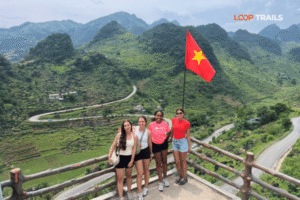
M Pass Ha Giang: The Hidden Viewpoints After Ma Pi Leng
Facebook X Reddit Table of Contents Learn more: Ha Giang Loop Tours Most travelers researching Ha Giang start with the same list:
Thúy Kiều( Grace) is a travel blogger and content contributor for Loop Trails Tours Ha Giang. She holds a bachelor’s degree in Sustainable Tourism from Vietnam National University, Hanoi, and has a strong passion for exploring and promoting responsible travel experiences in Vietnam’s northern highlands.
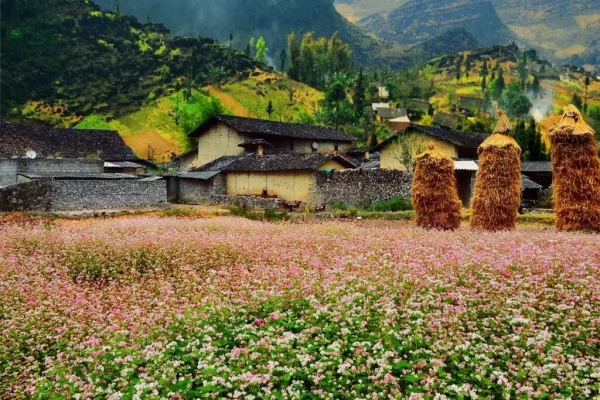
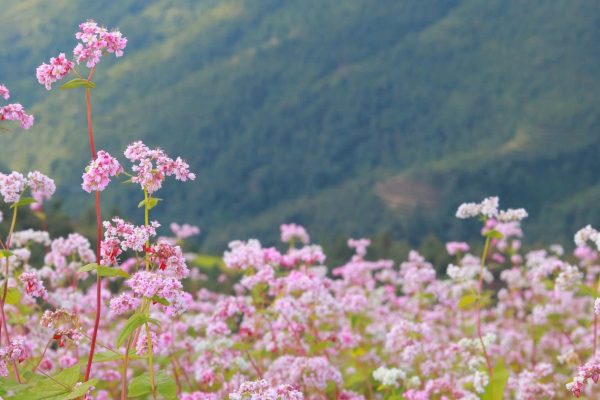
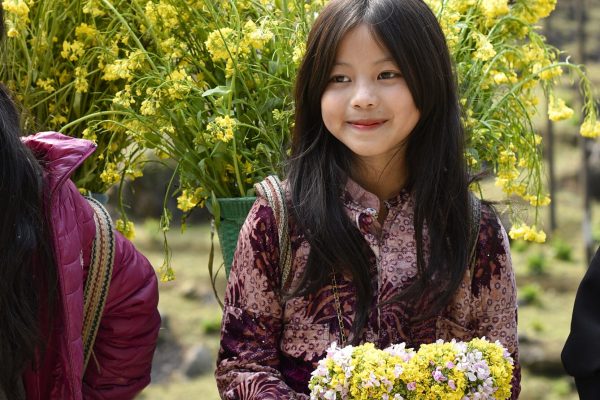
The first time you see Ha Giang’s buckwheat fields in full bloom, it stops you cold. Not because they’re dramatically colorful like Provence lavender or Dutch tulips, but because of the sheer scale and unexpectedness. Pink and white flowers carpet entire mountainsides, flowing down valleys and wrapping around traditional H’Mong houses like someone draped the landscape in pastel fabric.
Most travelers hear about the Ha Giang Loop for its dramatic passes and ethnic villages, then stumble across information about buckwheat season during trip planning and wonder if they should adjust their dates. The short answer: if you can time your visit for late October through November, yes, absolutely do it. The longer answer involves understanding what you’re actually seeing, where the best fields are, and whether the crowds during peak season are worth dealing with.
This isn’t a flower festival with organized events and tour buses depositing people at designated viewing platforms. The buckwheat fields are working agricultural land where local farmers grow crops for food and income. The fact that they’re stunning to photograph is almost incidental to their primary purpose. That practical reality shapes how you approach visiting during flower season.
Learn more: Best Ha Giang Loop Tours 2026
Learn more: Ha Giang Loop Tours
Buckwheat isn’t a grain despite the name—it’s a flowering pseudocereal that H’Mong farmers have cultivated in Ha Giang’s highlands for generations. The plant thrives in poor soil and high altitudes where rice won’t grow, making it perfect for the rocky Dong Van Karst Plateau region.
The flowers themselves are small and delicate, appearing in clusters that range from pure white to various shades of pink depending on the variety. Individual flowers aren’t particularly impressive up close, but when you plant entire hillsides with buckwheat, the cumulative effect is remarkable. The fields create waves of color that shift with the wind and change character throughout the day as light angles vary.
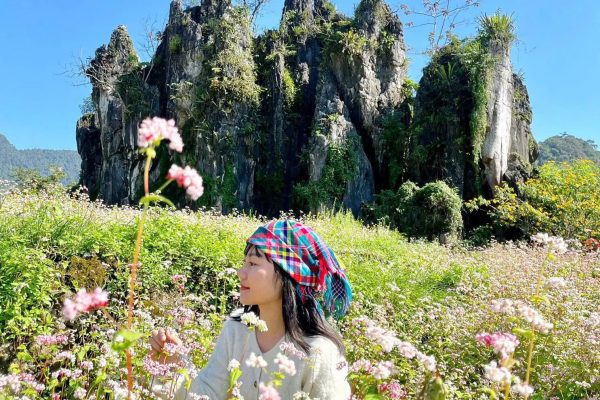
What makes these flowers different from other agricultural bloom seasons is the landscape they grow in. We’re not talking flat plains with neat rows—buckwheat fields follow the contours of dramatic mountain terrain, creating layers of color that cascade down valleys and wrap around limestone karst formations. The combination of the delicate flowers with Ha Giang’s aggressive geology creates contrast you don’t find in more conventional flower destinations.
The buckwheat season has become Ha Giang’s most photogenic period, which is saying something for a region already known for dramatic scenery. Photographers come for several reasons beyond just the flowers themselves.
First, the timing coincides with excellent weather. October and November offer clear skies, comfortable temperatures, and morning mist that adds atmospheric layers to landscape shots. The flowers provide foreground interest for compositions that might otherwise be just mountains and sky.
Second, the scale allows for both wide landscape shots and intimate detail photography. You can shoot the endless fields from high viewpoints showing the full scope, then walk into the fields for close-ups of individual flowers with mountains in soft focus behind them. The variety of possible compositions keeps photographers busy.
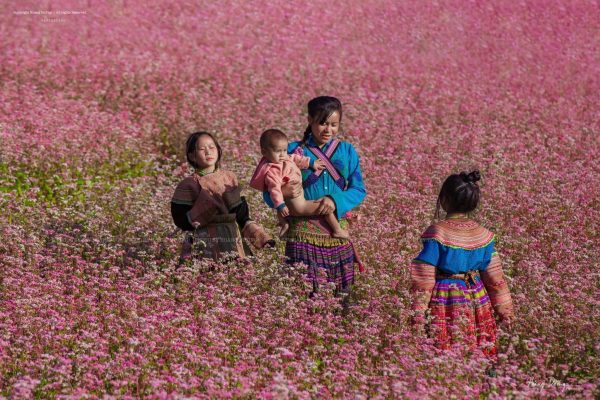
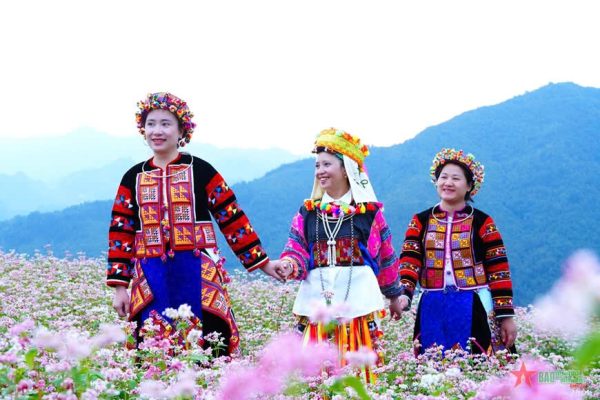
Third, the cultural element adds depth to flower photography that’s missing from commercial flower farms. Local H’Mong farmers working their fields, children playing among the flowers, and traditional houses surrounded by blooms provide human elements that make images more engaging than pure landscape photography.
The Instagram factor certainly drives some of the interest now, but the flowers attracted photographers well before social media existed. They’re genuinely photogenic in ways that translate across different photography styles and skill levels.
For H’Mong communities in Ha Giang, buckwheat isn’t decorative—it’s practical agriculture that’s been part of their farming system for centuries. The grain gets ground into flour for making traditional foods, and the entire plant cycle integrates with other crops in the seasonal rotation.
Farmers plant buckwheat in late summer after the main rice harvest. The crop grows quickly, tolerates poor soil and high altitudes, and can be harvested before the coldest winter months arrive. This timing makes it perfect for the short growing season available at high elevations.
The bloom period when travelers visit for photos is actually just one phase of the crop cycle. Farmers are less concerned with peak flower aesthetics and more focused on timing the harvest for optimal grain production. The fact that tourists want to photograph their fields during bloom is relatively recent, and responses vary from welcoming to indifferent depending on the individual farmer and location.
Understanding this agricultural context matters when you’re visiting. You’re walking through working farmland, not a park designed for tourists. Respecting planted rows, asking before entering fields, and being mindful of crops matters to the people who depend on these harvests for food and income.
Learn more: Ha Giang Loop 2 Days 1 Night
Buckwheat flower season in Ha Giang runs roughly from October through December, but “season” is a flexible term that varies by elevation, weather, and planting schedules.
October: Early season in lower elevations. Some fields are blooming fully while others are just starting. Weather is typically excellent with clear skies and comfortable temperatures (15-25°C). Tourist numbers are increasing but not yet at peak. This is prime time if you want flowers without maximum crowds.
November: Peak bloom across most regions. The majority of fields hit full flower simultaneously, creating the most dramatic visual impact. This is the month when everyone times their visit if they can, which means more tourists, fuller accommodations, and higher demand for tours. Weather remains stable with occasional cool mornings (10-20°C). Best overall month for maximum flower coverage.
December: Late season flowers at higher elevations while lower areas begin harvest. Fields start looking patchy as some areas are cut while others still bloom. Early December can still be beautiful, but by mid-month, you’re past peak in most locations. Weather gets colder (5-15°C) with increased chance of rain or even light snow at high elevations.
The Practical Window: If you’re planning specifically for buckwheat flowers, target late October through mid-November. This gives you the best probability of hitting peak bloom while weather remains optimal for riding and photography.
The flower experience changes significantly depending on when you visit within the season.
Early Season (Early-Mid October):
Peak Season (Late October – Early November):
Late Season (Mid-Late December):
Your tolerance for crowds versus desire for peak flower coverage determines which window works best. Personally, I prefer the early October window—slightly fewer flowers but significantly fewer people competing for the same photo spots.
Buckwheat bloom timing isn’t fixed to calendar dates. Several weather factors influence when fields peak:
Planting Timing: Farmers plant based on when their main rice harvest finishes, which varies by elevation and local conditions. A wet summer that delays rice harvest pushes buckwheat planting later, shifting bloom timing accordingly.
Temperature During Growth: Warmer temperatures accelerate growth and bring blooms earlier. Cooler conditions slow development and extend the time to flowering. Year-to-year variations of 1-2 weeks in peak bloom timing are normal.
Rainfall: Adequate rain during growth produces healthier plants with more flowers. Drought stress reduces bloom quality and coverage. However, excessive rain during bloom can damage flowers and shorten the peak period.
Elevation Variation: Lower elevation fields (around 1,000-1,200m) bloom first, typically in early October. Higher elevation fields (1,400-1,600m+) bloom later, often peaking in November. This elevation gradient extends the overall season and allows you to chase blooms from low to high areas.
Checking Current Conditions: Unlike scheduled events, buckwheat bloom doesn’t have official announcements. The best way to verify current conditions is checking recent photos from tour operators, travel blogs, or social media posts from people currently in Ha Giang. Tour companies running daily loops usually have real-time information about which areas are currently at peak bloom.
Weather and agricultural timing mean there’s no guarantee of perfect flowers on specific dates. Late October gives you the best probability, but nature doesn’t run on fixed schedules.
Learn more: Ha Giang Loop 3 Days 2 Nights
The buckwheat fields aren’t concentrated in one location—they’re spread across the Dong Van Karst Plateau region, with different areas offering different perspectives and densities.
The Dong Van area hosts some of the most extensive buckwheat cultivation in Ha Giang. The plateau’s relatively flat sections (by mountain standards) allow for larger continuous fields compared to steeper areas.
Best Viewing Areas Around Dong Van: The road from Yen Minh to Dong Van passes through several excellent fields, particularly in the stretch between Pho Cao and Dong Van town. Look for fields on both sides of the road where buckwheat covers entire valleys with traditional H’Mong houses dotted throughout.
Sung La village area, about 10 km before Dong Van when coming from Yen Minh, typically has strong buckwheat cultivation. The fields here flow down hillsides in layers, creating depth in landscape compositions. Early morning mist often lingers in this valley, adding atmospheric quality to photos.
Around Dong Van town itself, fields appear on the outskirts heading toward Lung Cu. These tend to be smaller plots mixed with other crops, but the proximity to town makes them accessible for travelers with limited time.
What Makes Dong Van Fields Special: The scale. You’re looking at buckwheat fields measured in hectares, not small garden plots. The flowers create continuous coverage across complex terrain, giving you that “endless fields” feeling that makes the season so special.
The Meo Vac district has excellent buckwheat fields, particularly along the stretch between Dong Van and Meo Vac town via Ma Pi Leng Pass.
Ma Pi Leng Pass Area: The sections before and after Ma Pi Leng Pass feature buckwheat fields that combine the flowers with Ha Giang’s most dramatic road scenery. Fields cling to steep mountainsides above the Nho Que River canyon, creating vertigo-inducing compositions where flowers seem to cascade into the abyss.
These fields are smaller and more scattered than the Dong Van plateau areas, but the combination of buckwheat blooms with Ma Pi Leng’s extreme geography creates unique photo opportunities. The technical challenge is finding safe places to stop on roads with limited shoulders and frequent blind corners.
Meo Vac Town Surroundings: The valleys around Meo Vac town host substantial buckwheat cultivation. The road heading south from Meo Vac toward Khau Vai (off the main loop route) passes through particularly strong fields. If you have extra time and want to escape crowds, this direction offers excellent flowers with minimal tourist traffic.
Timing Note: Meo Vac area fields often peak slightly later than Dong Van plateau areas due to marginally higher average elevation. If you’re visiting in late October or early November, Meo Vac may be your best bet for peak bloom.
The road from Dong Van to Lung Cu Flag Tower passes through excellent buckwheat country. This section sees fewer tourists than the main loop since Lung Cu is a side trip from Dong Van rather than on the through route.
What You’ll Find: Fields on both sides of the road with China border mountains as backdrop. The landscape here is particularly stark—gray karst peaks, simple H’Mong villages, and then these soft pink and white flower fields creating unexpected contrast.
Lung Cu village itself (at the base of the flag tower hill) often has strong buckwheat cultivation in surrounding valleys. If you’re making the side trip to the northernmost point of Vietnam anyway, the flowers add bonus value during season.
Access Considerations: Lung Cu requires detouring from the main loop, adding 2-3 hours to your day including the flag tower climb. If you’re on a tight 2-day or 3-day itinerary, you might skip this. The 4-day loop itinerary includes Lung Cu with time to properly enjoy the flowers.
Some of the most photogenic buckwheat fields hide along less-traveled sections between major towns.
Pho Cao Area: The small town of Pho Cao sits roughly midway between Yen Minh and Dong Van. The valleys around Pho Cao often feature excellent buckwheat fields with fewer tourists stopping. Local farmers here seem more accustomed to photographers, and the fields are accessible without trespassing through multiple planted areas.
Tham Ma Pass Vicinity: The area around Tham Ma Pass and its dramatic switchbacks sometimes has buckwheat fields on terraced slopes. These are smaller and less reliable year-to-year (farmers rotate crops), but when present, they’re stunning due to the combination with the pass roads.
Random Roadside Fields: Some of the best flower moments happen at unmarked spots where you round a corner and suddenly there’s a perfect valley filled with blooms. These can’t be mapped in advance—you find them while riding. The advantage of self-drive or being on a flexible tour is the ability to stop at these spontaneous discoveries.
Photography Permission: When you’re at famous viewpoints, photographers are expected and tolerated. When you want to enter fields in less-visited areas, ask permission from farmers if they’re present. A smile and gesture toward your camera usually communicates the question even without shared language. Most farmers are fine with respectful photography, some may ask for a small tip (20,000-50,000 VND is reasonable).
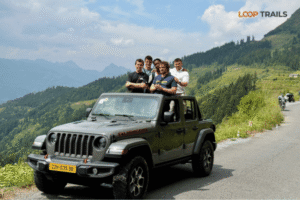
Learn more: Ha Giang Loop Jeep Tours
The buckwheat fields are spread along the loop route, not concentrated in one area you can visit separately. This means any standard Ha Giang Loop tour during season will include flowers—the question is whether you have time to appreciate them properly.
3-Day Loop During Flower Season: The standard 3-day itinerary covers all major areas where buckwheat grows. You’ll pass through Dong Van plateau fields, see flowers around Meo Vac, and encounter blooms throughout the route. The limitation is time—you’re riding 80-110 km each day, which leaves limited flexibility for flower photography stops.
If you’re primarily interested in riding the loop and flowers are a bonus, 3 days works fine. You’ll see plenty of buckwheat, take photos at obvious stops, and experience the seasonal landscape without needing to maximize flower encounters.
4-Day Loop During Flower Season (Recommended): The extra day makes a significant difference during buckwheat season. The 4-day itinerary’s more relaxed pace allows for:
The 4-day version includes stops that the 3-day rushes past: more time in Dong Van plateau areas, the full Lung Cu detour, and generally enough schedule slack to pursue good flower spots without sacrificing other highlights.
Cost Difference: 4-day self-drive runs 4,190,000 VND vs 3,390,000 VND for 3-day (800,000 VND difference, roughly $33 USD). 4-day Easy Rider is 5,090,000 VND vs 3,990,000 VND for 3-day (1,100,000 VND difference, roughly $45 USD). For the additional flower opportunities plus better overall pacing, the upgrade makes sense if budget allows.
The multi-day nature of the loop means you’ll experience different areas on different days. Understanding the route helps you optimize for flowers.
Standard 3-Day Routing:
Best Days for Flowers: Day 1 offers maximum buckwheat encounters. Day 2 has some flowers but Ma Pi Leng Pass is the priority. Day 3 has fewer fields.
Standard 4-Day Routing:
Best Days for Flowers: Days 1 and 2 are prime buckwheat days. Day 3 has some flowers. Day 4 focuses on other attractions.
Photography Strategy: If you’re serious about flower photography, plan to wake early on Days 1-2 (4-day tour) or Day 1 (3-day tour). Morning light from 6:30-8:30 AM offers the best quality for landscape photography, and fields near your homestay can be explored before breakfast. Evening light (4:30-6 PM) is also excellent if you’re willing to arrive at your next stop slightly later.
The buckwheat season doesn’t change the loop’s other major attractions—Ma Pi Leng Pass, ethnic villages, dramatic viewpoints all remain the same. What changes is the landscape aesthetic as you experience these places.
Enhanced by Flowers:
Not Affected by Flowers:
Season Trade-offs: November flower season means cooler temperatures (good) and more tourists (less good). You’re trading off the solitude of low season for enhanced scenery from blooms. Whether that’s worthwhile depends on your priorities—photographers generally say yes, riders who prefer empty roads might prefer off-season.
Alternative Approach: If your dates are flexible and you’re not specifically flower-focused, consider late September or early October. You might catch early blooms at lower elevations while avoiding peak season crowds, or you might miss flowers entirely but have a quieter loop experience. The risk-reward depends on your priorities.
Learn more: Ha Giang Loop weather
Light quality transforms buckwheat field photography. The same field that looks washed out and flat at midday becomes magical in proper light.
Golden Hour (6:00-7:30 AM and 5:00-6:30 PM): This is prime time. Low angle sunlight brings out texture in the flowers, creates long shadows that add depth, and warms the pink tones to their most attractive color. The downside is you’re typically riding during these hours rather than parked at ideal photo locations.
Strategy: Scout locations during the day’s ride, note GPS coordinates or landmarks, then return early next morning or late afternoon if you’re staying nearby. Alternatively, stop at promising fields during evening golden hour and accept arriving at your homestay slightly after dark.
Overcast Days: Clouds work surprisingly well for buckwheat photography. Soft, even light eliminates harsh shadows and allows for better detail in both flowers and surrounding landscape. The subtle pink colors often appear more saturated under clouds than in harsh sun. Overcast conditions also make it easier to shoot throughout the day without worrying about bad light.
Midday (11 AM – 3 PM): The worst light for flower photography. Overhead sun creates minimal shadows, washes out colors, and produces high contrast that challenges camera dynamic range. If you must shoot midday, look for compositions that work with flat light—detail shots of individual flowers, patterns, workers in fields—rather than trying to make broad landscape shots work.
Mist and Fog: Morning mist is common in Ha Giang valleys during October-November. This creates moody, atmospheric conditions that work beautifully for flower photography. Fields emerging from fog, with mountains barely visible behind, capture the mystery of the region better than clear-day photos. The challenge is mist burns off quickly (usually by 8-9 AM), so you need to be in position early.
Learn more: Ha Giang Cao Bang 5 Days 4 Nights
Certain spots along the loop offer particularly strong compositions combining flowers with landscape.
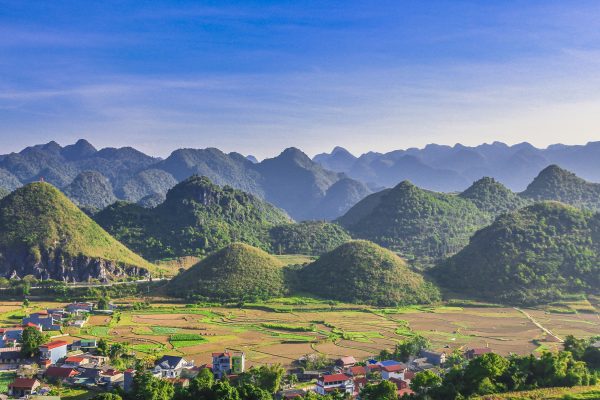
Heaven Gate Viewpoint: The official viewpoint at Quan Ba looks over the Fairy Mountains (twin peaks). During buckwheat season, fields below and around the viewpoint add foreground interest to the classic mountain composition. Arrive early (before 8 AM) to avoid crowds and catch morning light.
Pho Cao to Dong Van Road: The 20 km stretch from Pho Cao toward Dong Van offers multiple pull-off points where fields meet road. Look for sections where the road curves through valleys with flowers on both sides. These spots don’t have formal names or markers—you’ll see them while riding and need to judge whether stopping is safe.
Sung La Village Area: About 10 km before Dong Van (coming from Yen Minh), the road passes through valleys with excellent buckwheat coverage. Traditional H’Mong houses among the flowers provide cultural context. The village itself isn’t a viewing platform—you’re looking for fields visible from the road or accessible with short walks.
Lung Cu Approach Road: The road from Dong Van to Lung Cu Flag Tower passes through strong buckwheat country. Fields here are less photographed than Dong Van plateau areas simply because fewer people make the side trip. Stop along the route rather than just rushing to the flag tower and back.
Safety Note: Most prime flower fields are along roads with limited shoulders, blind corners, and truck traffic. When stopping for photos:
The buckwheat fields are private property and active farmland. Approaching photography with respect for farmers and their crops matters.
Basic Etiquette:
Communication Without Shared Language: Most H’Mong farmers speak minimal English or Vietnamese. Gestures work: point to camera, point to field, questioning expression. The answer is usually clear from body language. Some farmers will actively wave you in and pose for photos, others prefer you keep distance. Both responses are valid.
Photographing People: If you want photos of farmers working the fields (which adds human interest to flower shots), ask permission clearly. Point to them, point to camera, wait for acknowledgment. Many farmers are fine with this, some aren’t interested. Never photograph children without parental permission present.
When to Offer Payment:
Areas with Heavy Tourism: In heavily visited spots (near Dong Van, along main roads), farmers are accustomed to photographers and the interaction is more routine. In more remote areas, your presence is more unusual and courtesy matters more. When in doubt, err on the side of more respectful rather than less.
Learn more: Ha Giang in September & October
November is Ha Giang’s busiest month, and buckwheat season drives much of that traffic. Understanding the crowd dynamics helps set realistic expectations.
Who’s Visiting: Mix of international backpackers (October-November is peak season for northern Vietnam overall), domestic Vietnamese tourists (particularly weekends), and serious photographers. The demographic is similar to off-season but with significantly higher numbers.
Crowded Spots:
Still Quiet Spots:
Crowd Comparison: Even during peak buckwheat season, Ha Giang’s “crowds” are modest compared to major tourist destinations. You’re not dealing with Halong Bay or Hoi An levels of tourism. The difference is noticeable compared to off-season, but it’s relative—you’ll still have plenty of solitary moments.
Weekday vs Weekend: Domestic tourism spikes on weekends (Friday-Sunday). If you can time your loop for Monday-Thursday start, you’ll encounter fewer Vietnamese tour groups. International backpackers distribute more evenly across weekdays.
Learn more: How to get from Hanoi to Ha Giang
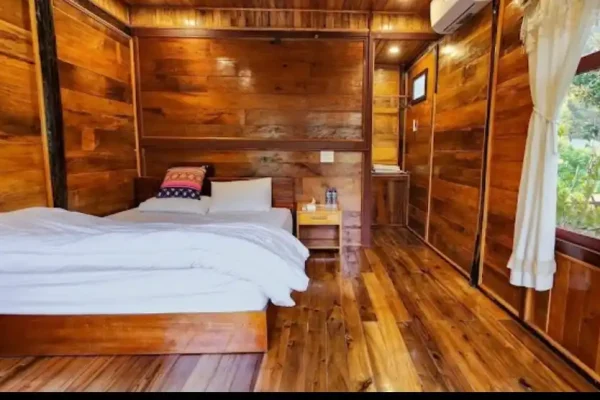
Homestays and hotels along the loop fill faster during flower season, especially November.
Booking Timeline:
Package Tour Advantage: If you book a complete tour package (bike rental + accommodation + meals), the tour company handles homestay reservations. This removes the stress of calling around for bookings, particularly valuable when language barriers complicate direct booking.
Independent Travelers: If you’re arranging your own accommodation, November requires planning ahead. Dong Van fills first (most popular overnight stop), followed by Yen Minh and Meo Vac. Du Gia, being smaller and less developed, has limited capacity that books early.
Backup Options: Most towns have multiple homestay options. If your first choice is full, there are alternatives, though you might end up at a less convenient location or slightly lower quality facility. You won’t be stranded, but you might not get your preferred choice without advance booking.
Price Increases: Some homestays raise rates slightly during November peak season (maybe 50,000-100,000 VND more per night). Others maintain consistent pricing year-round. Package tours lock in rates regardless of season.
October-November is generally Ha Giang’s best weather window, which is part of why it’s peak season for both flowers and general tourism.
Typical Weather:
Road Conditions: By October, summer monsoon damage has usually been repaired. Roads are in their best annual condition. Construction zones still appear (Ha Giang perpetually upgrades roads), but generally less disruptive than summer months.
Micro-Climate Variation: The loop covers significant elevation changes (800m to 1,600m+), creating weather variation on the same day. You might start in fog, ride through clear conditions midday, and encounter clouds on high passes in afternoon. Layer clothing to adapt.
Extreme Weather Risk: Low but not zero. Early season cold fronts occasionally arrive in late October, bringing temperature drops and rain. By November, conditions stabilize. December increases cold weather probability with rare frost or light snow at highest elevations.
Impact on Flowers: Heavy rain during peak bloom can damage flowers and shorten the prime viewing window. This is uncommon in October-November but possible. There’s no backup plan for weather—you work with whatever conditions arrive. Overcast days actually benefit flower photography, while rain means waiting it out or accepting wet riding conditions.
Learn more: Ma Pi Leng Pass
Buckwheat gets the attention, but Ha Giang’s elevation and climate diversity support flower seasons throughout much of the year.
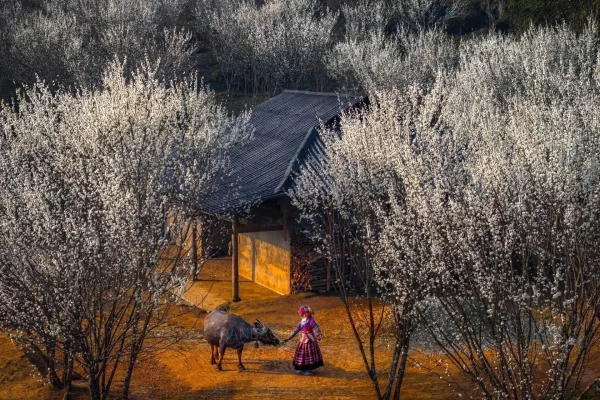
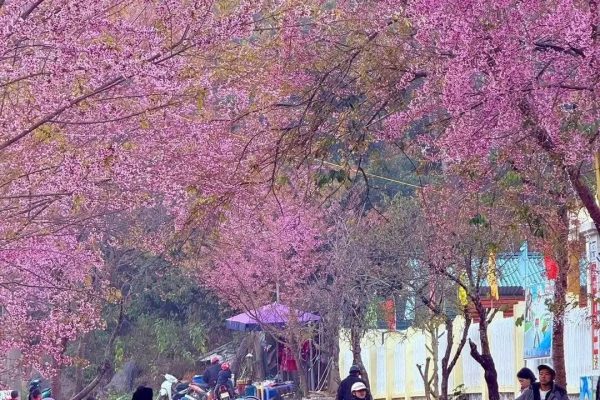
After buckwheat season ends, plum blossoms take over in late winter. These white and pale pink flowers appear on plum trees around Lunar New Year (late January to mid-February depending on lunar calendar).
Where to See: Plum blossoms concentrate in Meo Vac district and areas around Dong Van. Unlike buckwheat’s field coverage, plum trees grow in scattered locations—around houses, on hillsides, mixed with other vegetation.
Character: Plum blossoms create a different aesthetic than buckwheat. Individual trees are more dramatic, and the flowers appear against bare winter branches creating stark beauty. The landscape is browner and more dormant than October’s green buckwheat fields.
Tourism Impact: Plum blossom season attracts domestic tourists (associated with Tet holiday), but international tourism is lower than buckwheat season. Roads are quieter, accommodation easier to book.
Weather Consideration: January-February is cold (5-15°C, sometimes lower). You need proper winter riding gear. Some years bring frost or light snow, which creates beautiful scenes but challenging riding conditions.
Learn more: Ha Giang Loop Itinerary
March brings peach blossoms, apricot flowers, and early wildflowers as spring begins.
Peach Blossoms (March): Pink peach blossoms appear throughout the region in March. Like plums, these grow on individual trees rather than in fields, but they’re more common and create stronger visual impact. The combination of blooming trees with Ha Giang’s landscape is beautiful, though still different from buckwheat’s field coverage.
Wildflowers (April-May): As temperatures warm, various wildflowers appear on hillsides and roadside areas. These aren’t cultivated crops so coverage is random, but the diversity of species creates colorful variety. April-May transitions into rainy season, so flowers often appear mixed with changing weather patterns.
Spring Tourism: March-April sees moderate tourist numbers—more than winter but less than October-November buckwheat peak. It’s a good balance of pleasant weather, blooming flowers, and manageable crowds.
January-February: Plum blossoms (cold weather) March: Peach blossoms, early wildflowers (warming temperatures) April-May: Various wildflowers (transition to wet season) June-September: Limited flowering (rainy season, focus on agriculture) October-December: Buckwheat flowers (peak season)
Gaps: Summer months (June-August) don’t offer significant flower attractions. The landscape is green from rain and crops are growing, but there’s no dramatic bloom period like buckwheat provides.
Photography Implications: Each flower season creates different photographic opportunities. Buckwheat offers scale and color coverage, plum/peach blossoms provide intimate tree portraits, wildflowers add variety and spontaneity. Serious flower photographers could visit Ha Giang multiple times per year targeting different blooms.
Learn more: Ha Giang Loop by Car
Visual Enhancement: The flowers objectively improve Ha Giang’s already impressive scenery. Fields of pink and white blooms add color and texture to a landscape that’s otherwise gray karst rock and green vegetation. If you care about photography or simply appreciating beautiful landscapes, flower season offers clear advantages.
Optimal Weather: October-November weather is Ha Giang’s most reliable. You’re avoiding wet season and haven’t yet hit deep winter cold. Clear skies, comfortable temperatures, and minimal rain make riding more enjoyable and photography more successful.
Complete Experience: Seeing the buckwheat fields puts you in sync with local agricultural rhythms. You’re experiencing the landscape as it actually exists during this period rather than imagining what it might look like. There’s something satisfying about visiting places during their peak seasonal character.
Photography Opportunities: If you’re into photography, flower season is non-negotiable. The combination of blooms, excellent light, and dramatic landscape creates image opportunities that don’t exist other times of year. Many Ha Giang’s most iconic photos were shot during buckwheat season for good reason.
Cultural Context: The flowers aren’t decoration—they’re agriculture. Seeing farmers working the fields, understanding how buckwheat fits into H’Mong cultivation, and experiencing this aspect of local life adds depth to your visit beyond just scenery.
Increased Crowds: November is peak season. You’ll share viewpoints with other photographers, encounter more traffic on roads, and find homestays fuller. If you strongly prefer solitary travel, this works against you.
Higher Demand: Tours and accommodation book faster. You need to plan further ahead rather than showing up and arranging things on the fly. Some travelers dislike this reduced spontaneity.
Pressure to Optimize: When you’ve specifically timed your visit for flowers, there’s pressure to maximize photo opportunities and catch peak bloom. This can create stress and reduce the relaxed vibe of the trip. Some people prefer visiting off-season when there’s no expectation of perfect conditions.
Seasonal Rate Variations: Some (not all) accommodations and services charge more during November. The difference is typically modest, but costs are slightly higher than shoulder season.
Fixed Timing: Planning around flower season reduces flexibility. You can’t easily shift dates if other parts of your Vietnam itinerary change, and you’re committed to specific weeks rather than having open-ended timing.
Just Before or After Peak: Early October or late November/early December offers a middle ground. You might catch partial flowers at lower tourist density, or you might miss peak bloom entirely. It’s a calculated gamble that works well if your primary interest is riding the loop rather than maximizing flower coverage.
Completely Off-Season: May-June (just before heavy rains) or February-March (after winter cold, before spring crowds) provide quiet loop experiences. No buckwheat, but fewer logistics hassles and more solitary road time. Some travelers prefer this approach.
Plum Blossom Season: If you’re interested in flowers but want to avoid crowds, January-February plum blossoms attract fewer tourists than buckwheat. Weather is colder and riding more challenging, but you get flower photography with minimal crowds.
Weather-First Priority: October-November timing based on weather rather than flowers gives you best riding conditions. The flowers are a bonus, but you’re primarily optimizing for clear skies and comfortable temperatures.
No Wrong Answer: The loop is excellent year-round. Buckwheat season is special, but Ha Giang doesn’t become mediocre without flowers. Choose based on your priorities: flowers and photography favor October-November, solitude and flexibility favor off-season, comfort and reliability favor October-April regardless of blooms.
Learn more: Ha Giang Motorbike Rental
Ha Giang’s buckwheat season deserves its reputation. The scale of flowering fields combined with the region’s dramatic topography creates something genuinely special that you won’t experience elsewhere in Southeast Asia. The question isn’t whether it’s worth seeing—it clearly is—but whether it’s worth the timing constraints and peak season crowds for your particular trip.
If you’re a photographer, plan for it absolutely. If you’re flexible on dates and photography is secondary to riding, the flowers add significant value to an already excellent loop. If your dates are fixed and happen to fall outside flower season, don’t stress—the loop’s other attractions more than justify the journey.
The Ha Giang Loop works as 3-day, 4-day, or even 5-day combinations extending to Cao Bang. During flower season, the 4-day option gives you better flexibility for flower photography without sacrificing the loop’s other highlights. Loop Trails runs all tour types (self-drive, Easy Rider, and jeep) throughout the season with regular departures. Current bloom conditions and availability can be checked directly, or you can message via WhatsApp with specific date questions.
The buckwheat fields bloom whether or not you’re there to see them. The only question is whether you want to be there when they do.
Buckwheat is a flowering pseudocereal (not actually wheat) that H’Mong farmers cultivate for food at high elevations. The plant thrives in Ha Giang’s poor soil and mountainous terrain where rice won’t grow. The flowers—small pink and white blooms appearing in clusters—are simply part of the crop cycle before grain develops. The plants are grown for harvest, not for tourism, but the bloom period creates stunning landscapes that attract photographers.
Late October through mid-November offers the highest probability of peak blooms. However, exact timing varies year-to-year based on weather, planting schedules, and elevation. Early October catches early-season blooms with fewer crowds, while late November risks being past peak in some areas. The most reliable window is the last week of October through the first week of November.
Absolutely. The loop’s main attractions—Ma Pi Leng Pass, ethnic villages, dramatic mountain roads, cultural experiences—are excellent year-round. Buckwheat season enhances the scenery but isn’t essential for a great trip. Many riders prefer off-season for quieter roads and easier logistics, accepting the trade-off of no flower coverage.
The strongest fields are on the Dong Van Plateau, particularly between Pho Cao and Dong Van town, around Sung La village, and along the road to Lung Cu Flag Tower. Meo Vac district also has excellent fields. The best photos often come from spontaneous discoveries while riding rather than specific viewpoints. Early morning (6:30-8:30 AM) and late afternoon (4:30-6 PM) offer optimal light.
November is Ha Giang’s busiest month, but “crowded” is relative. You’ll encounter more tourists than off-season, particularly at famous viewpoints and in Dong Van town. However, compared to major Southeast Asian destinations, Ha Giang remains relatively quiet. Early mornings, off-route areas, and random roadside fields stay peaceful even during peak season. Weekdays are less busy than weekends.
The fields are private farmland. If you want to enter fields, ask permission from farmers when they’re present (gestures work without shared language). Shooting from public roads doesn’t require permission. Most farmers are fine with respectful photography; some appreciate small tips (20,000-50,000 VND) if you’re spending significant time in their fields. Never trample crops or pick flowers.
The 4-day tour provides better flexibility for flower photography and includes areas like Lung Cu that the 3-day rushes past. The additional 800,000-1,100,000 VND (depending on tour type) buys you more time at flower fields without sacrificing other attractions. If you’re specifically traveling for buckwheat season, the 4-day option is worth the upgrade.
October-November requires layers for varying temperatures (15-25°C daytime, 10-15°C mornings/evenings). Bring warm jacket for early starts, sunscreen for midday, and rain jacket as backup despite low rain probability. Photographers should pack tripod for low-light work and extra batteries (cold mornings drain power faster). Otherwise, standard loop packing applies.
Yes, the 2-day loop passes through major buckwheat areas, but you’re rushing through with minimal stop time. Day 1 covers the main flower regions between Ha Giang and Dong Van. You’ll see the flowers and can take quick photos, but you won’t have flexibility for proper photography or exploring fields. The 2-day works if flowers are a bonus rather than primary goal.
Buckwheat season offers different character than typical flower tourism (Japan’s cherry blossoms, Thailand’s sunflowers). The scale is impressive—entire mountainsides covered in blooms—but individual flowers are small and subtle. The main attraction is the combination of flowers with Ha Giang’s dramatic karst landscape rather than the flowers alone. It’s agricultural landscape photography rather than garden tourism.
Yes. Plum blossoms appear January-February around Lunar New Year, peach blossoms bloom in March, and various wildflowers appear April-May. Each offers different photographic opportunities and timing. Buckwheat is the most dramatic in terms of coverage and landscape impact, but other seasons provide their own flower attractions for visitors who can’t make October-November dates.
For November (peak month), book 1-2 weeks ahead for weekends, 3-5 days for weekdays. If you’re booking a complete tour package, the company handles homestay reservations which removes this stress. Independent travelers need to plan ahead or risk limited accommodation choice, though you won’t be stranded—alternative homestays exist in most towns.
Contact information for Loop Trails
Website: Loop Trails Official Website
Email: looptrailshostel@gmail.com
Hotline & WhatSapp:
+84862379288
+84938988593
Social Media:
Facebook: Loop Trails Tours Ha Giang
Instagram: Loop Trails Tours Ha Giang
TikTok: Loop Trails
Office Address: 48 Nguyen Du, Ha Giang 1, Tuyen Quang
Address: 48 Nguyen Du, Ha Giang 1, Tuyen Quang
Facebook X Reddit Table of Contents Learn more: Ha Giang Loop Tours Most travelers researching Ha Giang start with the same list:
Facebook X Reddit Table of Contents Learn more: Ha Giang Loop Tours Stand on the road between Trung Khanh and Phục Hòa
Facebook X Reddit Table of Contents Learn more: Ha Giang Loop Tours You’re traveling with three friends. Or maybe it’s four of