


Thúy Kiều( Grace) is a travel blogger and content contributor for Loop Trails Tours Ha Giang. She holds a bachelor’s degree in Sustainable Tourism from Vietnam National University, Hanoi, and has a strong passion for exploring and promoting responsible travel experiences in Vietnam’s northern highlands.
Let’s cut through the confusion right away, because if you’re reading this, you’ve probably already gotten conflicting information. Maybe your hostel in Hanoi said “no one checks,” or a blog post from 2018 claimed you could ride with just your passport. Maybe a rental shop told you it’s perfectly fine to rent without any license at all.
Here’s what you need to know before you book that motorbike rental in Ha Giang.

Learn more: Ha Giang Loop 3 Days 2 Nights

Learn more: Ha Giang Loop by Car
Vietnamese law is clear: to legally operate a motorbike in Vietnam, you need a valid motorcycle license and an International Driving Permit (IDP) that specifically covers motorcycles. Your home country driver’s license for cars doesn’t count. Your optimism and confidence don’t count either.
This isn’t about being paranoid or overly cautious. It’s about understanding the legal requirements, the enforcement reality, and most importantly, the insurance implications if something goes wrong.
The Ha Giang Loop attracts thousands of travelers annually, many of whom complete the journey without ever being stopped by police. This creates a false sense that licenses don’t matter. But the question isn’t just “will I get caught?” The real questions are: “What happens if I do get stopped?” and “What happens if I crash?”
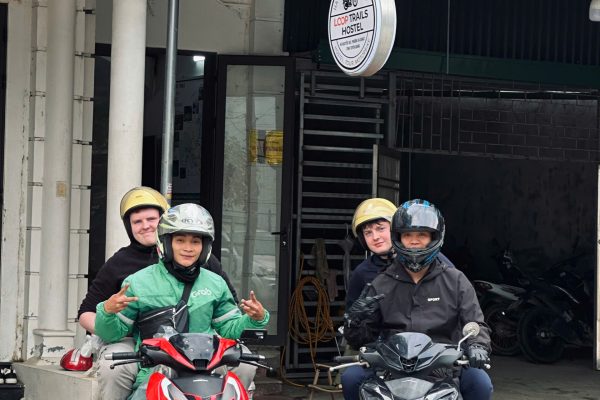
Vietnamese authorities have been increasing enforcement along popular tourist routes, particularly the Ha Giang Loop. Checkpoints that were rare five years ago now appear regularly, especially during Vietnamese holidays and peak tourist seasons. The rules haven’t changed, but enforcement definitely has.
Learn more: Ha Giang Loop Self-Driver Guide
The gold standard is a Vietnamese motorcycle license. If you’re living in Vietnam long-term, you can convert your home country license to a Vietnamese one through the Department of Transport. This involves paperwork, possibly a driving test, and several days of processing.
For tourists passing through, getting a Vietnamese license isn’t practical. You’re in Vietnam for a few weeks, not relocating permanently. This is where the IDP comes in.
An International Driving Permit is a document that translates your home country driving license into multiple languages, including Vietnamese. It’s not a standalone license—it must be carried alongside your original license.
The IDP must specifically authorize motorcycles. Many travelers make the mistake of getting an IDP that only covers cars, assuming it’s universal. It’s not. When you apply for your IDP, you need to indicate that you want motorcycle authorization, and you must hold a valid motorcycle license in your home country for this authorization to be granted.
Vietnamese law requires an IDP issued under the 1968 Vienna Convention on Road Traffic. Some countries issue IDPs under the older 1949 Geneva Convention. Vietnam officially only recognizes the 1968 version, though enforcement of this distinction varies.
Your original motorcycle license from your home country must be valid and must be carried with you alongside the IDP. The IDP is essentially a certified translation of your home license—without the original, the IDP is meaningless.
This means you need a motorcycle license from your home country, not just a car license. In many countries, car licenses don’t automatically permit you to ride motorcycles. If you only have a car license back home, you’re not legally permitted to ride in Vietnam, regardless of having an IDP.
There aren’t any. Some travelers have heard rumors about “tourist exemptions” or “special permits” that exempt foreigners from license requirements. These don’t exist in Vietnamese traffic law.
The confusion likely stems from the fact that many tourists ride without proper documentation and don’t face consequences. But lack of enforcement doesn’t equal legal exemption. The law applies equally to tourists and residents.

Learn more: Ha Giang Tours
Think of an IDP as an official translation of your driving license, not a separate permit that grants new driving privileges. If you’re not licensed to ride motorcycles in your home country, an IDP won’t magically make you legal to ride them in Vietnam.
The IDP contains multiple languages, allowing police officers who don’t speak English to verify your license details. It includes your photo, license information, and authorizations for different vehicle classes.
IDPs are standardized internationally, following formats established by UN conventions. The document should have a gray cover if it’s issued under the 1968 Vienna Convention, which is what Vietnam officially recognizes.
The process varies by country, but it’s generally straightforward:
In the US, Canada, UK, Australia, and most European countries, you apply through your national automobile association (AAA in the US, CAA in Canada, AA in the UK, etc.). The process typically involves:
The IDP is valid for one year from the date of issue. You can’t extend it while abroad—you’d need to return to your home country to apply for a new one.
Apply for your IDP several weeks before your trip. While many organizations offer same-day service, you don’t want to be scrambling for passport photos and finding the local AAA office days before your flight.
The biggest mistake is getting an IDP without motorcycle authorization. When you apply, you’ll see different vehicle categories listed. Make sure motorcycles are checked. If you only have a car license, the organization won’t authorize motorcycles on your IDP—and that’s correct because you’re not qualified to ride them.
Another common error is ordering an “IDP” from sketchy websites promising instant digital downloads. Legitimate IDPs are physical documents issued by official organizations. Any website claiming to email you an IDP PDF is selling fake documents that police will immediately recognize as fraudulent.
Some travelers also forget to bring their original license alongside the IDP. The IDP must be presented together with your home country license—the IDP alone isn’t valid.
No. The IDP must always be accompanied by your original valid motorcycle license. Police want to see both documents together. Having just your IDP without your home license, or having just your home license without an IDP, technically doesn’t meet Vietnamese requirements.
In practice, showing a clear motorcycle license from a Western country sometimes suffices at checkpoints, especially if the officer can read English. But “sometimes suffices” isn’t the same as “legally compliant.” If you’re involved in an accident or dealing with insurance claims, the technical requirements suddenly matter much more.

Learn more: Ha Giang Loop 4 Days 3 Nights
Checkpoints in Ha Giang appear in several common locations: just outside Ha Giang City on the road toward Quan Ba, near Yen Minh, approaching Dong Van, and occasionally along the Ma Pi Leng Pass route. Mobile checkpoints can pop up anywhere, though they’re less predictable.
When stopped, police will ask for your license, registration documents, and sometimes passport. They’re specifically looking for proper motorcycle authorization. Showing a car license or no license at all will result in a fine.
The checkpoint experience varies. Some officers are professional and straightforward—they check documents, issue fines if necessary, and send you on your way. Others may use language barriers to create confusion, suggesting larger fines than are legally required.
Official fines for riding without a proper license range from 800,000 to 1,200,000 VND (approximately $32-48 USD). The fine increases if you’re involved in an accident or other violation alongside the license issue.
However, checkpoint fines often get “negotiated.” An officer might claim the fine is 2,000,000 or 3,000,000 VND, knowing most tourists will bargain down to 1,000,000 and think they got a deal. This gray area negotiation happens frequently, though it’s technically not how fines should work.
Some checkpoints will confiscate your motorbike if you can’t produce any license. You’d then need to go to the police station, pay the fine, and retrieve your bike—losing several hours of your day and considerable hassle.
Here’s where lack of proper documentation becomes genuinely serious. If you’re involved in an accident and don’t have proper licensing, your travel insurance will almost certainly deny any claims.
Travel insurance policies have standard exclusions for illegal activities. Riding without a proper license is illegal, which means any injuries, medical expenses, or liability claims arising from an accident while riding unlicensed won’t be covered.
This isn’t a technicality that insurance companies overlook. Claim denial for unlicensed riding is one of the most common insurance disputes among travelers. You could be facing thousands of dollars in medical bills, bike repair costs, or liability claims—all out of pocket.
A British traveler on the Ha Giang Loop in 2023 crashed while descending from Ma Pi Leng Pass. He had travel insurance but was riding with only a car license and no IDP. His insurance denied coverage for his broken collarbone treatment, citing the license violation. His out-of-pocket medical costs exceeded $8,000 USD.
An Australian couple got stopped at a checkpoint near Yen Minh. They had IDPs but they only authorized cars, not motorcycles. The police issued a fine and let them continue, but they spent the rest of the loop anxious about every police presence they spotted.
These aren’t worst-case scenarios designed to scare you—they’re representative of what happens when the licensing issue moves from theory to practice.

Learn more: Ha Giang Motorbike Rental
Checkpoint frequency varies by season and location. During Vietnamese holidays (Tet, National Day, reunification Day) and summer months when domestic tourism peaks, checkpoints increase significantly.
In the shoulder seasons (March-April, September-November), you might encounter one or two checkpoints during a typical 3-4 day Ha Giang Loop. During peak enforcement periods, that number can increase to four or five.
Some travelers complete the loop without seeing a single checkpoint. Others hit three in one day. The unpredictability is part of the current enforcement landscape.
At checkpoints, police primarily verify:
Most officers can identify a motorcycle license versus a car-only license, even if they can’t read English. License designs internationally tend to show vehicle categories with pictograms. An experienced officer knows what to look for.
If you have a legitimate IDP with motorcycle authorization plus your home motorcycle license, checkpoints typically take 30 seconds. They glance at your documents, see everything’s in order, and wave you through.
February through April tends to see lighter enforcement as authorities focus on other priorities post-Tet. May through August brings increased checkpoints as domestic and international tourism rises.
September through November maintains moderate enforcement. December and January can be unpredictable—sometimes quiet, sometimes very strict as the year-end and new year approach.
These patterns shift based on central government directives and local campaigns. A province-wide traffic safety initiative can suddenly triple checkpoint frequency for weeks.

Learn more: Ha Giang Cao Bang Loop Jeep tour Guide
Most travelers focus on avoiding fines, but the insurance issue is far more consequential. A 1,000,000 VND fine ($40 USD) is annoying. An uncovered $15,000 medical bill from a crash is life-changing.
The Ha Giang Loop involves challenging mountain roads with steep drops, tight curves, and variable surfaces. Even experienced riders crash occasionally. The majority of accidents aren’t caused by recklessness—they result from unexpected gravel patches, misjudged corners, or avoiding oncoming vehicles on blind curves.
When an accident happens, having valid insurance coverage becomes critical. Without proper licensing, you’ve voided your insurance before you even left the rental shop.
Standard travel insurance policies cover medical expenses, emergency evacuation, and liability claims arising from accidents. However, these coverages all include clauses excluding claims resulting from illegal activities.
The fine print typically states something like: “Coverage is excluded for any claims arising from activities undertaken in violation of local laws.” Riding without a proper license violates local law, triggering this exclusion.
Some travelers assume their insurance company won’t check or won’t find out about the license issue. Insurance companies investigate significant claims thoroughly. They’ll request police reports, hospital records, and witness statements—all of which will document whether you had proper licensing.
Motorbike rental companies in Ha Giang sometimes offer “insurance” for an extra daily fee. This typically covers damage to the bike itself, not your medical expenses or liability to third parties.
Even this bike damage coverage often includes clauses excluding claims for unlicensed riders. Read the rental agreement carefully. If it states coverage requires proper licensing and you don’t have it, you’re liable for full bike repair or replacement costs if something happens.
Some rental shops don’t mention insurance at all, or they hand you a helmet and keys without any paperwork. These informal arrangements offer zero protection. If you crash their bike, you’re negotiating repair costs directly with the owner, who can demand whatever amount they want.

Learn more: Ha Giang Sleeper Bus Guide 2026
Easy rider tours pair you with an experienced Vietnamese driver who pilots the motorbike while you ride as a passenger. This is the most common alternative for travelers who want the Ha Giang experience without self-driving.
The advantages are substantial: your driver handles all navigation, knows the best stops and viewpoints, can communicate with locals, and takes responsibility for the vehicle. You focus on enjoying the scenery and taking photos.
From a licensing perspective, you need no documentation as a passenger. The driver carries proper licensing and handles any checkpoint interactions. The legal responsibility is entirely on the driver, not on you.
Easy rider tours cost more than self-drive rentals—typically $40-60 USD per day versus $8-12 for a rental bike—but the price includes the driver’s expertise, meals often, and the peace of mind of legal compliance.
Jeep tours accommodate 2-4 travelers in a vehicle with a professional driver. This works well for couples, families, or anyone who prefers four wheels over two.
The jeep option provides comfort advantages: protection from weather, space for luggage, easier conversation between travelers, and less physical fatigue. For the Ha Giang Loop specifically, you still see all the main highlights—the route accommodates both motorbikes and cars.
Cost runs higher than motorbikes—typically $150-200 per day for the vehicle and driver, split among passengers. For a couple, this often ends up comparable to two easy rider tours.
Licensing requirements for passengers are identical to easy riders: none. You’re a passenger, and the professional driver handles all legal requirements.
Choose self-drive if:
Choose easy rider if:
Choose jeep tours if:

Learn more: Ha Giang Easy Rider Tours
The process starts months before your trip. First, verify you have a valid motorcycle license in your home country. If you only have a car license, you have two options: get your motorcycle license before the trip, or plan to use easy rider or jeep tours instead of self-driving.
If you have a motorcycle license, apply for your IDP. Contact your national automobile association (AAA in the US, for example) at least one month before departure. Gather the required documents:
When completing the IDP application, explicitly indicate you need motorcycle authorization. Double-check the issued IDP to confirm motorcycles are listed.
Purchase travel insurance that covers motorcycle accidents. Read the policy carefully to confirm it doesn’t exclude motorbikes or require specific licensing. Some policies have motorcycle exclusions or caps on coverage.
Carry your documents properly. Keep your original motorcycle license, IDP, and passport accessible but secure. Many travelers use a waterproof document pouch worn under clothing.
Make copies of all documents and store them separately from the originals. Phone photos of your documents serve as backup references.
When you rent a motorbike, bring your license and IDP to the rental shop. Legitimate shops should request to see your license. If a shop doesn’t ask for any license at all, that’s a red flag about their professionalism.
Choose rental companies that operate professionally. They should:
Ask about insurance coverage explicitly. What does their insurance cover? What are the exclusions? What happens if you’re in an accident?
Photograph the bike before leaving the rental shop. Document any existing scratches, dents, or mechanical issues. This protects you from being charged for pre-existing damage.
Confirm the bike’s registration documents are with the bike. You should have the vehicle registration card (blue card) with you while riding—it’s legally required and police will ask for it at checkpoints.

Many rental shops in Ha Giang will rent to anyone with money, regardless of licensing. Their business model depends on volume, and requiring proper documentation would eliminate a large portion of potential customers.
When a rental shop says “it’s fine” or “no problem,” they mean “I’m willing to rent to you.” They don’t mean “this is legal” or “you’re covered if something goes wrong.”
The rental shop bears no liability for your legal compliance or insurance coverage. If you get fined, that’s your problem. If you crash and your insurance denies the claim, that’s your problem. If you damage the bike and the shop demands payment, you’re legally obligated to pay regardless of whether you were properly licensed.
Rental shops have no incentive to verify your licensing or educate you about requirements. Their incentive is to rent as many bikes as possible.
Thousands of travelers do complete the Ha Giang Loop without proper licensing. This creates powerful social proof—if everyone else is doing it, it must be fine, right?
This logic breaks down quickly. Everyone else riding illegally doesn’t change the law, reduce checkpoint frequency, or make your travel insurance cover unlicensed riding. It just means lots of people are taking the same risk.
Most travelers who ride unlicensed complete their trip without consequences. But “most people don’t face consequences” isn’t the same as “there are no consequences.” The travelers facing $10,000+ in uncovered medical bills or fighting with insurance companies represent the other side of “most people are fine.”
Theoretically, yes. In practice, it’s complicated and time-consuming enough that it’s not realistic for most tourists.
The process requires:
A few long-term travelers or expats go through this process. For someone visiting Vietnam for 2-3 weeks, it’s not feasible.
Learn more: Cao Bang Loop Tours Vietnam best kept secret
At this point, you understand the legal requirements, the enforcement reality, and the insurance implications. The decision about how to proceed is yours.
Some travelers will choose to ride without proper licensing, accepting the risks of fines and insurance denial. That’s a conscious choice made with full information. Others will decide the risks aren’t worth it and opt for easy rider or jeep tours.
There’s no judgment either way. What matters is that you’re making an informed decision rather than assuming “it’ll be fine” based on outdated blog posts or casual advice from other travelers.
If you do choose to ride without proper licensing:
If you choose to get proper licensing:
If you choose easy rider or jeep tours:
The Ha Giang Loop is incredible regardless of how you experience it. The question isn’t whether to go—it’s how to go in a way that aligns with your risk tolerance, budget, and legal comfort level.
Yes, Vietnamese law requires an IDP alongside your home country motorcycle license. While enforcement isn’t constant, checkpoints do happen, and more importantly, your travel insurance will deny claims for accidents if you were riding without proper licensing. The IDP isn’t just about avoiding fines—it’s about maintaining insurance coverage.
No. Vietnamese law requires a motorcycle-specific license. A car license, even with an IDP, doesn’t authorize you to ride motorbikes. Many rental shops will still rent to you, but that doesn’t make it legal or insure you’re covered if something goes wrong.
You’ll face a fine of 800,000-1,200,000 VND (approximately $32-48 USD), and police may confiscate your motorbike until you pay. In some cases, you can negotiate the fine amount. The immediate fine is frustrating but manageable—the bigger risk is riding without proper licensing makes any accident uncovered by your insurance.
IDPs cost $20-50 USD depending on your country. Get them from your national automobile association (AAA in the US, CAA in Canada, AA in the UK, etc.). Apply at least a few weeks before your trip. The IDP is valid for one year.
It depends on your specific policy. Many travel insurance policies cover motorcycle accidents, but they all exclude coverage for unlicensed riding. Read your policy carefully and verify that riding motorcycles is covered and that you meet the licensing requirements. Some policies have specific exclusions for motorbikes or require additional coverage.
Yes. If you’re a passenger on an easy rider tour or in a jeep, you don’t need any licensing documents. The driver carries all necessary documents and bears the legal responsibility. You’re just along for the ride, which requires no special documentation.
If you plan to self-drive in Ha Giang, yes. The IDP takes minimal effort to obtain—usually just filling out a form, providing photos, and paying a small fee. The peace of mind knowing you’re legally compliant and your insurance is valid far outweighs the minor inconvenience of getting the document.
An IDP that only authorizes cars doesn’t permit you to ride motorcycles in Vietnam. You’d need to apply for a new IDP that includes motorcycle authorization, which requires holding a motorcycle license in your home country. If you only have a car license, your option is easy rider or jeep tours rather than self-driving.
Most rental shops don’t rigorously check licensing documents, if they ask at all. However, this doesn’t change the legal requirements or insurance implications. Just because a shop is willing to rent to you doesn’t mean you’re legal to ride or that you’re covered if something happens.
Checkpoints aren’t the only issue. If you’re involved in an accident—even a minor one—police will be called and will request your license. If you can’t produce proper documentation, you’ll face fines and, more seriously, your insurance will deny any claims. The real risk isn’t getting caught at a checkpoint; it’s being uncovered if you crash.
For travelers without proper licensing, easy riders aren’t just worth the cost—they’re the legal way to experience Ha Giang on a motorbike. Beyond legality, easy riders offer navigation, local knowledge, safety, and the ability to focus on scenery rather than the road. The price difference between a $10/day rental and a $50/day easy rider is significant, but it’s buying a completely different experience along with legal compliance.
Requirements vary by country, but you generally need a full motorcycle license—not a learner’s permit or provisional license. The license should authorize you to ride motorcycles with engine sizes of at least 125cc, as that’s the typical minimum for Ha Giang Loop bikes. Check your home country’s license classifications to confirm you’re properly endorsed for motorcycles.

Learn more: Ha Giang Cao Bang by Jeep and Motorbike
The Ha Giang Loop doesn’t require perfect licensing to be beautiful—the mountains, the curves, the villages, and the views remain incredible regardless of your documents. But experiencing it legally, with proper insurance coverage and peace of mind, makes the journey better.
You have the information you need to make a smart decision. Get your IDP if you want to self-drive, or book an easy rider or jeep tour if you prefer someone else handling the navigation and legal requirements.
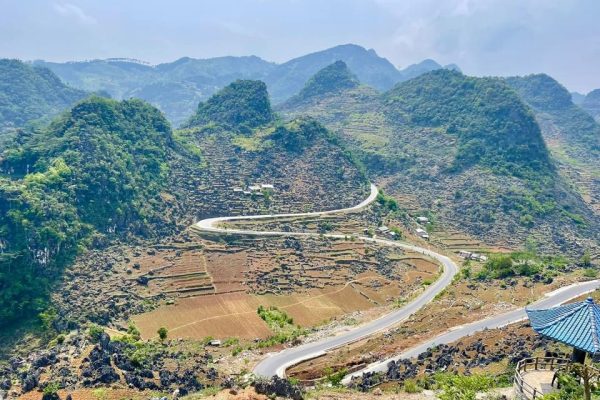
The loop is waiting. The roads wind through some of Vietnam’s most spectacular landscapes, and the experience lives up to the hype regardless of whether you’re piloting the bike or riding as a passenger.
Explore our Ha Giang tour options—easy rider, self-drive, and jeep tours all available with professional guides, maintained vehicles, and the local knowledge that makes the difference between a good trip and an unforgettable one. Get in touch via WhatsApp to discuss which option fits your situation and start planning your legal, insured, properly documented Ha Giang adventure.
The mountains aren’t going anywhere, but the best time to ride them is when you’re covered, confident, and free to focus on the experience rather than worrying about the next checkpoint.
Contact information for Loop Trails
Website: Loop Trails Official Website
Email: looptrailshostel@gmail.com
Hotline & WhatSapp:
+84862379288
+84938988593
Social Media:
Facebook: Loop Trails Tours Ha Giang
Instagram: Loop Trails Tours Ha Giang
TikTok: Loop Trails
Office Address: 48 Nguyen Du, Ha Giang 1, Tuyen Quang
Address: 48 Nguyen Du, Ha Giang 1, Tuyen Quang
Facebook X Reddit Table of Contents Learn more: Ha Giang Loop Tours The Ha Giang Loop is one of the most talked
Facebook X Reddit Table of Contents Learn more: Ha Giang Loop Tours There is a specific moment on the Ha Giang Loop