
Ha Giang Easy Rider Tour: A Full Day, Hour by Hour
Facebook X Reddit Table of Contents Learn more: Ha Giang Loop Tours You have probably read the lists. “Ma Pi Leng Pass:

Thúy Kiều( Grace) is a travel blogger and content contributor for Loop Trails Tours Ha Giang. She holds a bachelor’s degree in Sustainable Tourism from Vietnam National University, Hanoi, and has a strong passion for exploring and promoting responsible travel experiences in Vietnam’s northern highlands.
Planning to rent a motorbike and ride the Ha Giang Loop? Maybe you’re considering self-driving in Vietnam and wondering about license requirements. The International Driving Permit (IDP) question confuses almost every traveler who comes to Vietnam.
Here’s what makes it complicated: Vietnamese law says one thing, rental shops do another thing, and police enforcement follows yet another pattern entirely. Some travelers ride for weeks without proper documents and face zero issues. Others get stopped at their first checkpoint and pay fines.
This guide cuts through the confusion. You’ll learn what an IDP actually is, whether you legally need one, how to get a legitimate permit, what really happens at checkpoints, and which tour options make the entire license question disappear. Let’s start with the basics and work toward practical solutions.
Learn more: Ha Giang Loop 3 Days 2 Nights
Learn more:Ha Giang Loop Weather
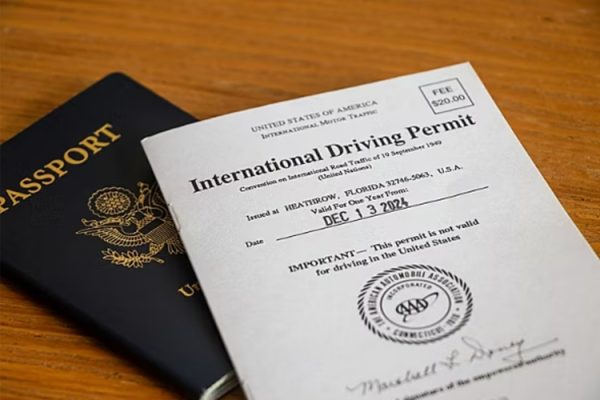
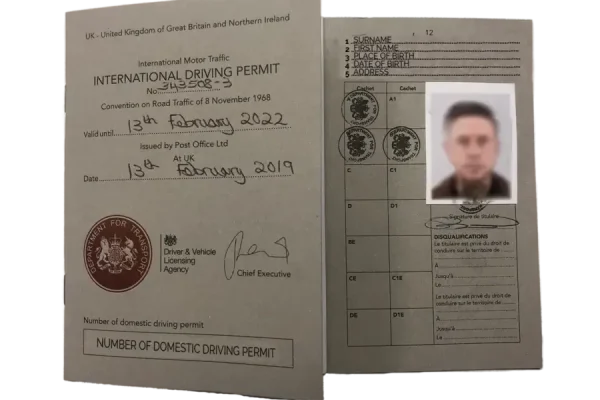
An International Driving Permit is not a license. Read that again—it’s crucial. The IDP is a translation document that converts your home country’s driver’s license into multiple languages. It follows a standardized UN format that police and rental agencies worldwide can recognize and read.
Think of it like a translator for your license. Your UK license says “motorcycle” in English. Vietnamese police see English text and may not understand it. An IDP translates that authorization into Vietnamese, French, Spanish, and other languages using standardized symbols and categories.
The term “International Driver’s License” is actually incorrect, though you’ll hear it constantly. No such thing exists. What people call an “international license” is really an International Driving Permit paired with their home country license. The two documents work together—neither functions alone.
Vietnam follows the 1968 Vienna Convention on Road Traffic, which recognizes International Driving Permits. According to Vietnamese traffic law, foreign visitors can drive in Vietnam using an IDP alongside their valid home country license for up to three months from entry.
IDP 1949 is not valid in Vietnam.
The critical detail: your IDP must match your home license. If your home license only authorizes cars (category B), your IDP only covers cars. Adding a motorcycle category to your IDP when your home license doesn’t include motorcycles is both illegal and useless.
Your IDP lists driving categories using international codes. Category A covers motorcycles, category B covers cars, category C covers trucks, and so on. Vietnamese authorities recognize these categories based on the 1968 Convention standards. At least, that’s how it works in theory.

Learn more: Ha Giang Motorbike Rental
Vietnamese law requires motorcycle operators to hold either a Vietnamese motorcycle license or a valid IDP with motorcycle authorization (Category A) plus the corresponding home country motorcycle license. This applies to all motorcycles above 50cc, which includes virtually every rental bike available.
For bikes 50cc and below, regulations are more relaxed. However, finding a 50cc bike to rent in tourist areas is nearly impossible. Most rental bikes range from 110cc semi-automatics to 150cc manual bikes. These all require proper licensing under Vietnamese law.
The three-month limit matters too. Your IDP remains valid for up to one year from issue, but Vietnamese law only allows foreigners to drive on foreign licenses for three months per entry. If you’re staying longer, you technically need to obtain a Vietnamese license through their conversion process.
Driving cars in Vietnam with an IDP is more straightforward than motorcycles. Most travelers who rent cars have valid car licenses in their home countries, get legitimate IDPs that include Category B authorization, and meet the legal requirements correctly.
Vietnamese car rental companies usually insist on seeing both your home license and IDP before handing over keys. This stems partly from legal requirements and partly from insurance requirements—many policies become void if the driver lacks proper documentation.
That said, car checkpoints are less frequent than motorcycle checkpoints, especially in tourist areas. Police tend to focus more on local Vietnamese drivers and commercial vehicles than foreign tourists in rental cars.
Here’s where things get messy. The legal requirement exists clearly on paper: IDP with motorcycle authorization plus home motorcycle license equals legal riding. But enforcement is wildly inconsistent.
Some travelers ride the entire length of Vietnam—Hanoi to Ho Chi Minh City, through Ha Giang, across to Phong Nha—without encountering a single checkpoint. Others hit checkpoints in their first hour and get fined for missing documents. Predicting which situation you’ll face is impossible.
Rental shops add another complication. Many hand bikes to anyone with a passport and deposit money, never asking about licenses. Others request IDPs or licenses but accept obviously inadequate documents. A few legitimate operators refuse to rent without proper motorcycle-endorsed IDPs.
Insurance creates the biggest real-world risk. If you crash while riding without proper licensing, your travel insurance likely won’t cover medical costs or bike damage. This matters more than checkpoint fines—a serious accident could leave you personally liable for massive expenses.
Learn more: Ha Giang Cao Bang 5 Days 4 Nights
United States: Only two organizations issue legitimate IDPs in the US: the American Automobile Association (AAA) and the American Automotive Touring Alliance (AATA). Visit any AAA office with your valid driver’s license, two passport photos, and $20. They issue IDPs on the spot.
United Kingdom: The UK Post Office issues IDPs. Bring your valid UK driving license, a passport-style photo, and £5.50. Processing takes about 15 minutes at most Post Office branches.
Canada: CAA (Canadian Automobile Association) issues IDPs at their offices. Requirements: valid Canadian license, two passport photos, $25 CAD. Same-day processing available.
Australia: AAA (Australian Automobile Association) through state-based offices (NRMA in NSW, RACV in Victoria, etc.) issues IDPs. Cost around $42 AUD, requires valid Australian license and passport photo.
The pattern is consistent: go to your country’s official automobile association, bring your license and photos, pay a small fee, receive your IDP immediately or within days. These are the only legitimate sources.
Search “International Driving Permit online” and you’ll find dozens of websites offering IDPs without requiring you to visit an office. Most are scams. Some charge $50-200 for fancy-looking documents that have zero legal validity. Others are outright fraudulent operations.
Red flags for fake IDP services:
A few countries do allow online IDP applications through official channels. The UK Post Office offers online ordering with mail delivery. Australia’s state automobile clubs have similar options. But these still require you to prove you hold a valid license first.
When in doubt, stick with in-person applications at official automobile associations. The small inconvenience beats discovering your “IDP” is fake when police examine it at a Vietnamese checkpoint.
In-person applications at official offices typically provide same-day service. Walk into AAA in the US, present your documents, wait 10-15 minutes, receive your IDP. Same process for most countries’ automobile associations.
Mail-in applications (where available) take 1-2 weeks for processing and delivery. Online applications through official UK Post Office channels take similar timeframes. Factor in shipping if you’re ordering close to your travel dates.
The IDP itself takes about 30 seconds to fill out. The document is essentially a pre-printed booklet where they add your name, license details, photo, and official stamps. No tests, no verification beyond checking your existing license is valid.
All IDPs expire one year from the issue date. This is standardized internationally—you can’t get a 2-year or 5-year IDP. The one-year limit exists because the document references your home license, which authorities expect you to keep valid and up to date.
If your home license expires while your IDP is still valid, the IDP becomes invalid too. The permit can’t authorize driving privileges you no longer possess. Keep your home license current throughout your travels.
Costs remain reasonable at official sources:
Anything significantly higher suggests you’re dealing with an unofficial or fraudulent service.

Learn more:Ha Giang Loop Self-Driver Guide
This is the single biggest misconception causing problems in Vietnam. Many travelers assume their car driving license automatically allows them to ride motorcycles. It doesn’t work that way—not in your home country, not on your IDP, and definitely not in Vietnam.
Your IDP can only include vehicle categories that appear on your home license. Hold a UK car license (Category B) but never took a motorcycle test (Category A)? Your IDP will only show Category B. No amount of requesting, explaining, or hoping will add motorcycle authorization that you don’t legitimately possess.
Some fake IDP services online will happily add motorcycle categories to your permit even when your home license lacks them. This creates an illegal document. Vietnamese police who check carefully will notice the mismatch between your home license and IDP. You’ve now gone from “riding without proper documents” to “carrying fraudulent documents”—a worse situation.
Legitimate IDPs follow a standardized format established by UN conventions. The document is a small booklet, usually gray or white, with multiple language sections, standardized symbols for vehicle categories, and official stamps from recognized automobile associations.
Signs of a fake IDP:
Vietnamese tour operators see fake IDPs constantly. Some rental shops in Hanoi and Ha Giang have become experts at spotting them. Getting caught with a fake at a checkpoint creates more problems than having no IDP at all—honesty about lacking documents works better than presenting fraudulent ones.
Your IDP is worthless without your original home country driver’s license physically present. The two documents function as a pair. Police who check documents want to see both—the IDP for translation and standardization, the home license as the actual authorization.
Some travelers leave their home license at their accommodation for safekeeping and carry only the IDP. This defeats the purpose. If stopped at a checkpoint, you can’t produce the license your IDP references. The officer will treat this the same as having no license at all.
Always carry both documents when riding or driving in Vietnam. Keep them together in a waterproof pouch. Bring copies if you’re worried about losing originals, but understand that checkpoints prefer to see real documents.
Your IDP expires exactly one year from the issue date printed on it. There’s no grace period, no extensions, no renewals of existing permits. When it expires, it becomes invalid immediately.
Getting a new IDP requires the same process as getting your first one: visit an official automobile association office (or use their online service if available), present your still-valid home license, pay the fee, receive a new permit. You can do this before your current IDP expires, so there’s no gap in coverage.
If your home country license is about to expire, renew that before getting your IDP. The IDP references your license number and expiry date. Starting with a fresh home license gives you the longest useful period for your IDP.

Learn more: Ha Giang Loop 2 Days 1 Night
Ha Giang, Ninh Binh, and coastal routes see regular police checkpoints. Officers wave motorcycles to the side, request documents, and check for violations. What happens when they ask for your license depends heavily on individual circumstances.
Best-case scenario: You present a valid IDP with motorcycle authorization plus your home motorcycle license. The officer examines both, confirms the documents match, and waves you through. Total interaction time: 2-3 minutes.
Common scenario: You present your IDP and home license, but the officer doesn’t fully understand foreign documents. They might call a colleague who speaks better English, take extra time examining the papers, or simply decide it’s too much trouble and let you go with a warning.
Problem scenario: You lack proper motorcycle authorization on your IDP, or you’re riding without an IDP entirely. The officer indicates a violation exists and mentions a fine. This is when negotiation begins—typical amounts range from 2,000,000-3,000,000 VND ($80-120 USD).
Rental shop policies vary wildly. Hanoi’s Old Quarter has dozens of shops, each with different document requirements. Some want to see IDPs and home licenses. Others ask for a passport and deposit, nothing more. A few specifically cater to foreigners without proper licensing.
Professional rental companies with good reputations tend to check documents more carefully. They’re protecting themselves from liability and insurance issues. Budget backpacker shops often skip the documentation checks entirely.
Ha Giang rental companies see so many tourists without proper licensing that many have stopped asking. They know most customers lack motorcycle-endorsed IDPs. They rent bikes anyway because turning away 80% of potential customers hurts business.
This creates a trap: just because a rental shop gives you a bike doesn’t mean you’re legal to ride it. The shop’s willingness to rent and the legal requirement to have proper licensing are completely separate issues.
Travel insurance policies almost universally exclude claims arising from unlicensed vehicle operation. Crash a motorcycle while riding without a valid motorcycle license (or without the IDP that validates your foreign license in Vietnam), and your insurance company will deny your medical and liability claims.
This matters more than checkpoint fines. Medical evacuation from remote areas like Ha Giang can cost $1,000+. Serious injuries requiring extended hospital stays run into tens of thousands of dollars. Damaging rental bikes or other vehicles creates additional liability.
Some travelers assume they’ll be careful and avoid crashes. But Ha Giang’s mountain roads are challenging—sharp corners, loose gravel, steep grades, unpredictable weather. Even experienced riders have accidents. Insurance exists for the unexpected, and riding unlicensed makes that coverage disappear.
Real-world consequences of riding without proper IDP and home motorcycle license vary significantly:
Checkpoint scenarios:
Accident scenarios:
Rental shop scenarios:
The unpredictability is what makes this frustrating. No universal standard exists. Enforcement changes based on location, timing, individual officers, and sometimes just luck.

Learn more: Ha Giang Loop Itinerary 2026
Ha Giang province sits along the Chinese border, creating a security-conscious environment. Checkpoints appear more frequently than in central or southern Vietnam. That said, license checks at these checkpoints remain inconsistent.
Some checkpoints focus purely on passport and visa verification—they want to confirm you’re legally in Vietnam and not attempting to cross into China illegally. Motorcycle licenses don’t interest them. Other checkpoints specifically target traffic violations, including unlicensed riding.
Timing affects enforcement. Vietnamese holiday periods (Tet in late January, National Day in September) often see increased checkpoint activity and stricter document scrutiny. Regular weekdays outside peak tourist seasons may see more relaxed enforcement.
The famous Ma Pi Leng Pass usually has no checkpoints on the actual pass—it’s too narrow and winding. Checkpoints more commonly appear at district boundaries: entering Quan Ba, before Dong Van, near Meo Vac. These locations make administrative sense for monitoring who enters different regions.
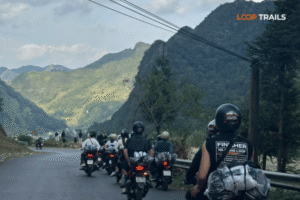
Easy Rider tours fundamentally change the licensing equation. When you book an Easy Rider tour, your guide operates the motorcycle. You sit behind as a passenger. The guide holds a Vietnamese motorcycle license and handles all documentation requirements.
At checkpoints, police check the driver’s (your guide’s) license, not yours. Your IDP becomes irrelevant. You need your passport for identification, but motorcycle licensing falls on your guide. This eliminates the biggest stress point for travelers without proper documentation.
Self-drive tours put full responsibility on you. Renting a motorcycle and riding it yourself means you’re the operator. You need the proper license authorization. Choosing self-drive without a motorcycle-endorsed IDP means accepting the risk of fines, potential confiscation, and insurance problems.
Loop Trails offers both options. Easy Rider tours range from 3,490,000 VND/person for a 2-day loop to 10,990,000 VND/person for the 5-day Ha Giang-Cao Bang route. Self-drive options cost less (3,590,000-10,590,000 VND/person) but require you to handle your own licensing situation.
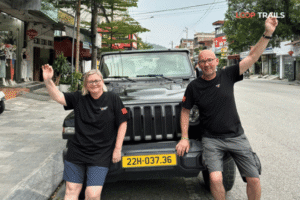
Jeep tours remove the licensing question entirely. You’re a passenger in a 4×4 vehicle driven by a professional with all proper documentation. No motorcycle license needed, no IDP required, no checkpoint concerns beyond basic passport verification.
This works perfectly for travelers who want the Ha Giang scenery without the riding experience—or who know they lack proper licensing and want zero stress about it. Families, couples where one person doesn’t ride, and groups mixing riders with non-riders all benefit from Jeep options.
Loop Trails runs Jeep tours for 1-4 passengers. The 3D2N Ha Giang Loop costs 8,990,000-22,900,000 VND depending on group size. The 4D3N version runs 11,990,000-30,990,000 VND. The extended 5D4N Ha Giang-Cao Bang Jeep tour starts at 31,990,000 VND for 2 people.
All Jeep tour prices include the private vehicle, driver, accommodations, meals, and activities. You see the same spectacular views—Heaven’s Gate, Ma Pi Leng Pass, Nho Que River, Lung Cu Flag Tower—without any personal riding or licensing requirements.

Learn more: Ha Giang Loop by Jeep
The Easy Rider model exists specifically to solve the foreign licensing problem. Vietnam’s complex license conversion process, the IDP confusion, the enforcement unpredictability—all of this disappears when you’re a passenger instead of the operator.
Beyond solving the license issue, Easy Rider tours offer genuine advantages over self-driving:
Local knowledge: Guides know roads intimately, including sections where GPS fails, shortcuts that avoid traffic, and secret viewpoints tourists miss.
Cultural access: Guides speak Vietnamese and local dialects, facilitating interactions with ethnic minority communities that self-drivers can’t access.
Safety: Experienced guides navigate Ha Giang’s challenging roads daily. They know which corners have loose gravel, where landslides occur, and how to handle sudden weather changes.
Stress reduction: No navigation worries, no accommodation hunting, no meal planning, no wondering if you’re taking the right turn. Follow your guide and enjoy the scenery.
The cost difference between Easy Rider and self-drive is modest—typically 800,000-900,000 VND per day. That premium buys professional guiding, local expertise, cultural insights, and complete elimination of license stress. For many travelers, especially first-timers to Vietnam, the value clearly justifies the cost.
Self-drive remains the right choice for certain travelers:
Experienced riders with legitimate motorcycle licenses in their home countries and properly endorsed IDPs enjoy the freedom and flexibility of riding at their own pace.
Solo travelers who prefer independence and don’t want to coordinate with a group or follow a guide’s schedule.
Skilled navigators comfortable using GPS, reading maps, and handling unexpected route changes.
Budget-conscious riders willing to accept some licensing risk in exchange for lower tour costs.
If you fall into these categories and have proper documentation, Loop Trails offers self-drive options. The 3D2N Ha Giang Loop costs 3,590,000 VND/person, the 4D3N version is 4,690,000 VND/person, and the 5D4N Ha Giang-Cao Bang route runs 10,590,000 VND/person.
Prices include motorcycle rental (typically Honda XR150 or similar semi-automatic), accommodations in homestays, and basic support. You’re responsible for your own navigation, checkpoint handling, and ensuring you have proper licensing.
Some travelers have zero interest in riding motorcycles, regardless of licensing. Others feel uncomfortable on two wheels, lack riding experience, or simply prefer a more relaxed way to see Ha Giang’s mountains.
Jeep tours serve all these situations perfectly:
Families with children who can’t ride motorcycles but want to experience Ha Giang together
Couples where one person rides but the other doesn’t, or both prefer traveling together in comfort
Photographers who want to focus on capturing images rather than operating a motorcycle
Older travelers who might find multi-day motorcycle riding physically demanding
Anyone without proper licensing who wants absolutely zero checkpoint concerns
The tradeoff is cost—Jeep tours cost more per person than motorcycle tours. But you’re getting a private vehicle, professional driver, and the same itinerary hitting all major highlights. For groups of 3-4 people, the per-person cost becomes reasonable.

Learn more:Ha Giang Loop Easy Riders
United States: AAA and AATA issue IDPs. Your US driver’s license must specifically include motorcycle endorsement (usually noted as “M” class) for your IDP to cover motorcycles. Most US licenses list authorized vehicle types clearly. Cost: $20 USD.
Canada: CAA offices across provinces issue IDPs. Canadian licenses show motorcycle authorization as Class 6 or M (varies by province). Ensure your license includes this before getting your IDP. Cost: $25 CAD.
Australia: State-based automobile associations (NRMA, RACV, RAC, etc.) issue IDPs. Australian motorcycle licenses are Class R or RE depending on engine size and experience level. Your IDP will match your home license classification. Cost: $42 AUD.
United Kingdom: Post Office issues IDPs. UK motorcycle licenses show categories A1 (light motorcycles), A2 (medium), or A (full). Your IDP will only include categories you’ve passed tests for. Cost: £5.50.
All four countries follow the 1968 Vienna Convention, making their IDPs fully recognized in Vietnam under current traffic laws.
Most European nations issue IDPs through their national automobile associations. The standardized EU driving license format makes this relatively straightforward.
Germany: ADAC (Allgemeiner Deutscher Automobil-Club) issues IDPs. Cost around €15-20.
France: Automobile Club de France issues IDPs. Cost approximately €15.
Netherlands: ANWB (Algemene Nederlandse Wielrijders Bond) issues IDPs. Cost around €18.
Spain: Real Automóvil Club de España issues IDPs. Cost approximately €10.
Italy: ACI (Automobil Club d’Italia) issues IDPs. Cost around €20.
European licenses clearly display motorcycle categories (A, A1, A2) using standardized symbols. Make sure your home license includes the motorcycle category before obtaining your IDP.
Singapore: AA Singapore and Singapore Motor Sports Association issue IDPs. Cost around SGD $25.
Japan: Japan Automobile Federation (JAF) issues IDPs. Japanese motorcycle licenses (普通二輪 or 大型二輪) convert to IDP Category A. Cost approximately ¥2,400.
South Korea: Korea Automobile Association issues IDPs. Cost around ₩8,000.
Hong Kong: Hong Kong Automobile Association issues IDPs. Cost approximately HKD $80.
Asian country IDPs work in Vietnam under the same rules as Western IDPs—they must accurately reflect your home license categories and be paired with the original license.
No. A car license authorizes cars, not motorcycles. This is true both in our home country and in Vietnam. You need a motorcycle-specific license (and matching IDP) to legally ride motorcycles, regardless of engine size.
Legally, yes—Vietnamese law requires it. Practically, enforcement is inconsistent. Many travelers ride without IDPs and never face issues, while others get stopped and fined. The legal requirement exists whether or not every checkpoint enforces it.
Only through official channels in certain countries (UK Post Office, some Australian automobile associations). Most “online IDP” services are scams offering fake documents. Safest approach: visit an official automobile association office in person.
On-the-spot fines negotiated at checkpoints typically range from 200,000-500,000 VND ($8-20 USD). Official fines processed through police stations can be higher but are less common.
No. You’re a passenger, not the operator. Your guide’s Vietnamese motorcycle license covers the vehicle operation. You only need your passport for identification purposes.
Then you’re not legally authorized to ride motorcycles in Vietnam. Your IDP can only include vehicle categories that appear on your home country license. Riding motorcycles with a car-only IDP is the same as riding without an IDP.
No. IDPs must be issued by your country of residence and reference your valid driver’s license from that country. Getting an IDP from a country you visited but don’t live in creates a fraudulent document.
Sometimes. Checkpoint officers might check passports only, or they might request full license documentation. It’s unpredictable, which makes relying on lax enforcement a gamble.
Almost certainly not. Most travel insurance policies explicitly exclude claims arising from unlicensed vehicle operation. Check your specific policy, but assume you’ll be personally liable for all costs.
IDPs remain valid for one year from issue. However, Vietnamese law only allows foreigners to drive on foreign licenses for three months per entry. For stays longer than three months, you’d need to convert to a Vietnamese license.
No. IDP renewals require returning to your home country (or a country where you hold a valid license) and getting a new permit issued. You can’t renew or extend an IDP internationally.
Jeep tours genuinely require no motorcycle license or IDP from passengers. You’re riding in a vehicle with a licensed driver. Only your passport is needed for identification at checkpoints.
Learn more: How to get from Hanoi to Ha Giang
The IDP question ultimately comes down to your specific situation and risk tolerance. Here’s a practical decision framework:
Get a legitimate IDP if:
Choose Easy Rider or Jeep tours if:
Skip the fake IDP services:
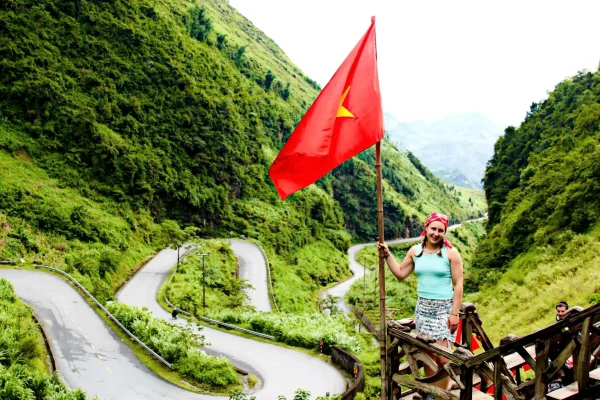
The Ha Giang Loop is one of the world’s great motorcycle journeys. The limestone karsts, the winding mountain passes, the ethnic minority villages—these experiences await whether you ride yourself or sit behind a guide.
Don’t let IDP confusion stop you from going. If you have proper licensing, get your IDP through official channels and ride confidently. If you don’t, choose an Easy Rider or Jeep tour that eliminates the question entirely. Both paths lead to the same spectacular scenery.
Loop Trails operates all three tour types—Easy Rider, self-drive, and Jeep—with experienced guides, well-maintained vehicles, and transparent pricing. We’ve helped thousands of travelers navigate the IDP question and find the right option for their situation.
Contact us via WhatsApp to discuss which tour style matches your licensing situation and travel preferences. Whether you’re bringing a legitimate IDP or need a solution that bypasses licensing entirely, we’ll help you experience Ha Giang without unnecessary stress.
The mountains are waiting. The decision isn’t whether to go—it’s simply choosing the best way to get there.
Contact information for Loop Trails
Website: Loop Trails Official Website
Email: looptrailshostel@gmail.com
Hotline & WhatSapp:
+84862379288
+84938988593
Social Media:
Facebook: Loop Trails Tours Ha Giang
Instagram: Loop Trails Tours Ha Giang
TikTok: Loop Trails
Office Address: 48 Nguyen Du, Ha Giang 1, Tuyen Quang
Address: 48 Nguyen Du, Ha Giang 1, Tuyen Quang
Facebook X Reddit Table of Contents Learn more: Ha Giang Loop Tours You have probably read the lists. “Ma Pi Leng Pass:
Facebook X Reddit Table of Contents Learn more: Ha Giang Loop Tours The number two passengers most often punch into a Ha

Facebook X Reddit Table of Contents Learn more: Ha Giang Loop Tours Most travelers researching Ha Giang start with the same list: