

Thúy Kiều is a travel blogger and content contributor for Loop Trails Tours Ha Giang. She holds a bachelor’s degree in Sustainable Tourism from Vietnam National University, Hanoi, and has a strong passion for exploring and promoting responsible travel experiences in Vietnam’s northern highlands.
You’re planning your northern Vietnam trip, and you’ve narrowed it down to two names that keep appearing in every travel forum: Ha Giang and Sapa. Both promise mountains, minority cultures, and rice terraces. Both get hyped as unmissable destinations. But they’re completely different experiences, and picking the wrong one for your travel style means disappointment.
I’ve seen travelers show up in Ha Giang expecting Sapa’s infrastructure and easy hikes, then realize they’re about to spend three days on a motorcycle navigating cliff roads. I’ve also watched adventure seekers arrive in Sapa expecting raw exploration, only to find themselves on paved tourist trails with souvenir vendors every 500 meters.
This isn’t about which destination is “better.” It’s about which one matches what you actually want from northern Vietnam. Let’s break down the real differences so you can choose confidently.
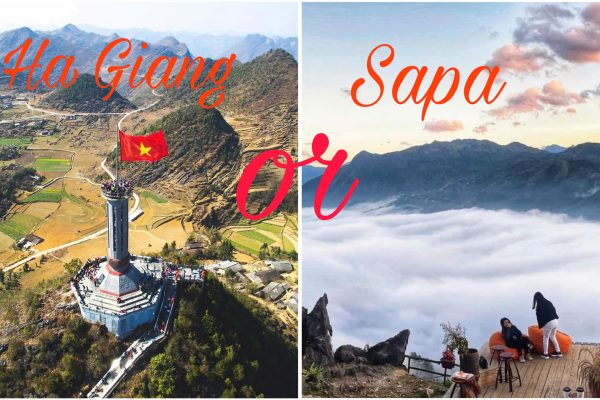
Learn more: Ha Giang Loop Tours
Learn more: Ha Giang Loop 3 Days 2 Nights
Choose Ha Giang if you want:
Choose Sapa if you want:
Quick Comparison Table:
| Factor | Ha Giang | Sapa |
|---|---|---|
| Main Activity | Motorcycle touring | Hiking/trekking |
| Tourism Level | Low-medium | High |
| Difficulty | Challenging | Easy-moderate |
| Duration Needed | 2-4 days minimum | 1-3 days typical |
| Infrastructure | Basic | Well-developed |
| Scenery Type | Cliff passes, canyons | Terraced valleys, peaks |
| Cultural Authenticity | High | Medium (tourist-adapted) |
| Budget | Moderate | Moderate-high |
| Best Season | Sept-Nov, Mar-May | Sept-Nov, Mar-Apr |
The simplest distinction: Ha Giang is about the journey on two wheels through extreme mountain geography. Sapa is about trekking through terraced landscapes with convenient town-based comfort. Both are stunning, but they scratch completely different travel itches.
Learn more: Ha Giang Easy Rider Tours
On paper, they sound similar: mountainous northern Vietnam, ethnic minorities, rice terraces, cool climate. In reality, they might as well be different countries.
Ha Giang’s Character:
Ha Giang Province sits at the Chinese border, about 300 kilometers north of Hanoi. The attraction is the Ha Giang Loop—a 300+ kilometer motorcycle route through Dong Van Karst Plateau Geopark. You’re riding roads carved into limestone cliffs, crossing passes at 1,500+ meters elevation, and staying in villages where tourism is still relatively new.
The landscape is dramatic in the extreme sense: vertical limestone karsts, deep canyons like Tu San and Nho Que River, roads that cling to cliff faces with 1,000-meter drops. The famous Ma Pi Leng Pass isn’t something you view from a distance; you ride it, feeling every hairpin turn and exposed section.
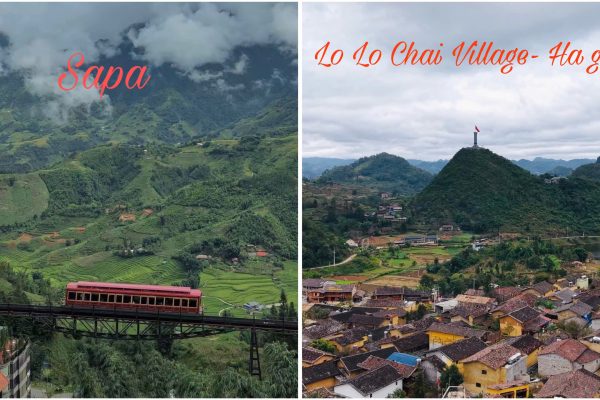
Villages here—places like Du Gia, Lao Xa, and Lo Lo Chai—remain working agricultural communities. Tourism exists but hasn’t fundamentally changed daily life. You’re staying in actual homestays where families still farm and weave, not purpose-built tourist lodges pretending to be homestays.
Sapa’s Character:
Sapa town sits at 1,600 meters in Lao Cai Province, about 350 kilometers northwest of Hanoi. It’s been a tourist destination since French colonial times and has infrastructure to match: paved roads, international hotels, restaurants serving western food, tour agencies on every corner.
The landscape is beautiful but different: rolling mountains covered in terraced rice fields, with Fansipan (Vietnam’s highest peak at 3,147 meters) dominating the skyline. Villages like Cat Cat, Ta Van, and Lao Chai are within easy walking or short driving distance from Sapa town.
The tourism here is well-established. That means convenience—you can book tours same-day, find ATMs, get vegetarian food, stay in hotels with hot showers. It also means crowds, vendor persistence, and experiences that feel somewhat packaged.
The Core Difference:
Ha Giang is adventure-first. You’re committing to multi-day motorcycle travel through remote areas with basic infrastructure. Sapa is comfort-first. You’re basing in town and doing day trips to surrounding areas with easy return to amenities.
Neither is “authentic” or “inauthentic” in absolute terms, but Ha Giang feels less modified by tourism because it simply hasn’t had the same visitor volume and timeframe that Sapa has experienced.

Learn more: Ha Giang Loop 4 Days 3 Nights
What you actually do in each place is fundamentally different.
Motorcycle Touring: This is the entire point. You’re covering 250-350 kilometers over 2-4 days, depending on your route. The riding itself is the activity. You’re navigating mountain passes, managing challenging road conditions, and experiencing landscapes from the saddle.
Options include:
The motorcycle component isn’t optional if you want to see Ha Giang properly. The distance between points and road conditions make walking or cycling impractical.
Pass Riding: Ma Pi Leng Pass is the headline attraction—a narrow road carved into cliff faces 1,000+ meters above Nho Que River. But you’re also riding Tham Ma Pass, Heaven Gate, and numerous smaller passes. These aren’t observation points you drive to; they’re technical roads you navigate.
Village Overnight Stays: You’re sleeping in homestays in places like Dong Van, Du Gia, and Yen Minh. These are real minority villages (H’Mong, Tay, Lo Lo) where you share meals with families and sleep in simple dorm-style rooms.
Cave & Waterfall Visits: Side activities include Lung Khuy Cave near Quan Ba, Du Gia waterfall for morning swims, and boat rides on Nho Que River through Tu San Canyon.
Market Experiences: If timing works out (mainly Sundays), you might catch Dong Van or Meo Vac markets where minority groups come from surrounding mountains to trade. These are working markets, not tourist shows.

Learn more: Ha Giang Loop Weather
Trekking: This is Sapa’s core activity. Day hikes through terraced valleys visiting minority villages. Routes range from easy 2-hour walks to challenging 6-8 hour treks. Popular routes include Cat Cat Village, Ta Van, Lao Chai, and Y Linh Ho.
You’re walking on established trails through rice terraces with views of mountains. Guides are available but not always necessary for shorter routes. Most treks can be done as day trips returning to Sapa town.
Fansipan Summit: Vietnam’s highest peak (3,147 meters) is accessible via cable car from Sapa. You can ride the cable car up and walk the final steps to the summit, or trek the full mountain (2-3 days, physically demanding). The cable car option means summit access without serious mountaineering.
Town-Based Exploring: Sapa town itself has activities: the weekend market, Sapa Lake, Ham Rong Mountain viewpoint, French-era stone church. You can easily spend time just walking around town, trying restaurants, and people-watching.
Village Markets: Bac Ha Market (Sundays) and Can Cau Market (Saturdays) are larger ethnic minority markets within day-trip distance. These involve 2-3 hour drives from Sapa but offer bigger, more traditional market experiences than Sapa town market.
Motorcycle Day Trips: Some travelers rent motorcycles in Sapa for day trips to surrounding areas, but it’s not the primary way people experience the region. Roads are paved and less challenging than Ha Giang.
Ha Giang demands more from you physically and mentally. You’re managing hours on a motorcycle, dealing with weather exposure, sleeping in basic conditions, and navigating actual remoteness. If something goes wrong—bike breaks down, you get sick—you’re dealing with it in villages hours from real medical facilities.
Sapa is physically easier. Trekking is exercise, but you’re returning to town with amenities afterward. If weather turns bad, you can cut a trek short. If you’re tired, you can take a rest day without disrupting a multi-day route.
The tradeoff is that Ha Giang delivers adventure in the genuine sense—uncertainty, challenge, and reward for pushing through. Sapa delivers beautiful experiences in a controlled, comfortable framework.
Learn more: Ma Pi Leng Pass Guide
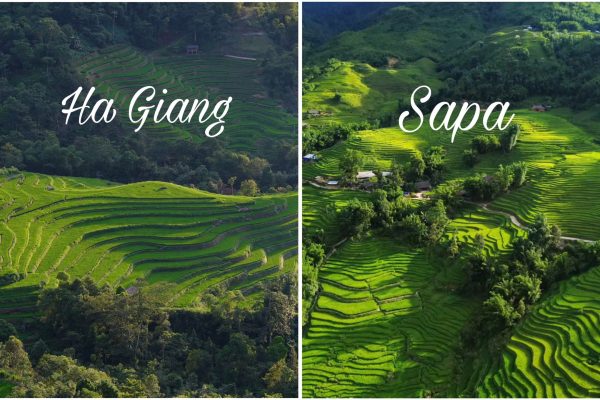
Both destinations are photographically stunning, but the visual character differs significantly.
Ha Giang’s Landscape:
The scenery is vertical and dramatic. You’re looking at limestone karst formations shooting straight up from valleys, roads carved into sheer cliff faces, and canyons that drop 1,000+ meters. The scale is overwhelming—Tu San Canyon, one of Asia’s deepest, is something you see while riding past, not as a dedicated viewpoint destination.
Ma Pi Leng Pass gives you Nho Que River far below, turquoise water cutting through canyon walls. The Dong Van Karst Plateau is a UNESCO Geopark for good reason—the rock formations, elevation changes, and geological features are unique.
Rice terraces exist in Ha Giang (particularly around Du Gia and Quan Ba), but they’re secondary to the mountain drama. The terraces aren’t as expansive or perfectly manicured as Sapa’s because Ha Giang’s terrain is more extreme—steeper slopes, rockier ground.
Colors vary by season: green during growing season (May-September), golden yellow at harvest (September-October), brown-gray in winter. Buckwheat flowers add pink-white blooms to hillsides in October-November.
Sapa’s Landscape:
The scenery is about rolling mountains covered in terraced rice fields. The terraces here are extensive, well-maintained, and create the classic “stairway to heaven” photos. Muong Hoa Valley offers some of the most photogenic terracing in Vietnam.
Fansipan dominates the background of most views—a proper peak that looks like a mountain should look. The geography is less extreme than Ha Giang; mountains are high but slopes are gentler, allowing for the famous terracing.
Villages sit in valleys surrounded by rice fields, with mountains rising on all sides. The visual composition is softer than Ha Giang—less rock, more greenery, more cultivated appearance.
Rice terrace colors shift dramatically: bright green water-filled terraces in May-June, deep green growing rice in July-August, golden yellow at harvest in September-October. The golden period is particularly photogenic.
Photography Perspective:
Ha Giang gives you road trip photography: bikes on cliff edges, dramatic passes, wide canyon vistas, sweeping curves. You’re often shooting from the motorcycle or roadside, capturing the journey itself.
Sapa gives you landscape photography: terraced valleys, minority people working fields, mountain backdrops. You’re hiking to viewpoints, taking time to compose shots from specific angles.
Both are “epic” but in different ways. Ha Giang’s epic comes from scale and exposure. Sapa’s epic comes from composition and agriculture meeting nature.
Learn more: Ha Giang Cao Bang Combined 5 Days Tours
Both regions are home to ethnic minorities—mainly H’Mong, Dao, Tay, and smaller groups—but how you experience these cultures differs.
Ha Giang’s Cultural Scene:
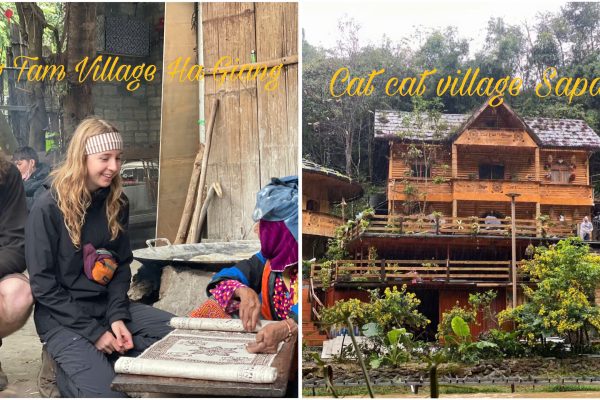
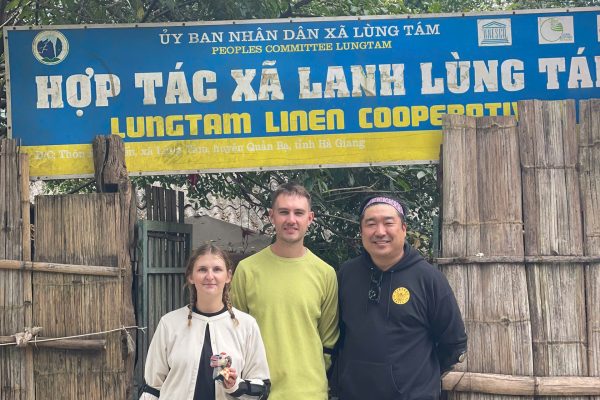
Villages in Ha Giang see tourists but aren’t built around tourism. In places like Du Gia, Lung Tam, and Lao Xa, you’re staying with families who farm, raise livestock, and weave during the day. Tourism provides extra income but isn’t their primary livelihood.
Interactions feel more organic because there’s less commercial transaction involved. You share meals with families (included in tour prices), sit on porches drinking rice wine (“happy water”), and watch daily life happen around you. People wear traditional clothing because it’s what they actually wear, not costumes for tourists.
Markets in Dong Van and Meo Vac (Sundays) are working markets where minorities come to trade livestock, produce, and textiles. Tourism has added some vendor stalls, but the core function remains local commerce.
Language barriers exist. Many older people speak limited Vietnamese, let alone English. Guides translate, but you’re not having deep conversations. The authenticity comes from observing life that continues regardless of whether tourists are present.
The homestay experience in Ha Giang is genuinely rustic: sleeping on mats or simple beds, eating whatever the family cooks, using squat toilets, cold water showers. It’s not glamping.
Sapa’s Cultural Scene:
Villages around Sapa have adapted heavily to tourism. Cat Cat Village, the closest to town, operates almost entirely on tourism—handicraft shops, photo opportunities with villagers in costume, staged performances. It’s not fake, but it’s definitely modified for visitor consumption.
More remote villages like Ta Van or Lao Chai retain more authenticity, but even there, homestays are purpose-built guest facilities rather than actual family homes with rooms added. Meals are prepared for tourist tastes (less spicy, more variety than home cooking).
H’Mong women in Sapa are famous for being persistent vendors—they’ll walk entire treks with you, chatting and eventually selling textiles. This creates interactions, but they’re commercial transactions. Some travelers find this charming, others find it exhausting.
Sapa town market has shifted almost entirely to tourist goods: embroidered bags, silver jewelry, traditional clothes. Real produce markets happen early morning before most tourists wake up.
The benefit of Sapa’s tourism development is English proficiency. Many guides, guesthouse owners, and even some villagers speak functional English. You can have actual conversations about culture, history, and daily life without everything being filtered through a guide.
Which Feels More Authentic?
“Authentic” is complicated because both regions are undergoing tourism development. Ha Giang is where Sapa was 15-20 years ago—early enough in tourism that daily life hasn’t fundamentally restructured around visitors. Sapa has evolved into a tourism economy where culture is preserved but also packaged for consumption.
Neither is wrong. Ha Giang offers more raw, less mediated cultural exposure. Sapa offers more accessible, easier-to-understand cultural experiences with better infrastructure for learning about minority traditions.
If you want to feel like you’re discovering something untouched, Ha Giang wins. If you want to actually learn about minority cultures through museums, guides, and conversations, Sapa provides better educational infrastructure.

Learn more: Ha Giang Motorbike Rental
Ha Giang Difficulty Factors:
Physical: You’re sitting on a motorcycle 4-6 hours daily. That’s manageable for easy rider passengers but can be tiring. Self-drive riders need to actively control the bike through challenging terrain—exhausting if you’re not experienced. Altitude can cause headaches (peaks above 1,500m).
Technical: If self-driving, you need motorcycle skills. Narrow roads, hairpin turns, steep grades, occasional loose gravel. Not beginner-level riding. Easy rider and jeep options remove this barrier entirely.
Comfort: Homestays are basic. Squat toilets, cold showers, dorm sleeping, inconsistent electricity. Beds are firm mats or simple mattresses. If you need comfort to enjoy travel, this is challenging.
Flexibility: You’re committed to a multi-day route. Weather changes, bike issues, or personal fatigue don’t easily allow for cutting trips short. You’re in remote areas hours from real towns.
Mental: Remoteness can feel intense for some travelers. Limited phone signal, language barriers, unfamiliar food, and being far from cities creates either adventure or anxiety depending on personality.
Ha Giang is NOT for you if:
Sapa Difficulty Factors:
Physical: Trekking involves hours of walking on uneven terrain, climbing hills, and navigating muddy trails (especially rainy season). Fitness level matters, but most routes have easy/moderate/difficult options. You can adjust daily based on how you feel.
Technical: Walking doesn’t require special skills. Even inexperienced hikers can manage easier routes. Guides handle navigation.
Comfort: You’re based in Sapa town with hotels ranging from budget to luxury. Hot showers, western toilets, real beds, consistent electricity, wifi. Homestays in villages (if you choose them) are more comfortable than Ha Giang’s—purpose-built guest facilities.
Flexibility: Complete flexibility. You can book treks day-by-day, skip days if tired or weather is bad, change plans easily. Not locked into multi-day commitments.
Mental: Sapa feels accessible and safe. You’re never far from town, always surrounded by other tourists, and infrastructure makes everything straightforward. Less adventure but also less stress.
Sapa is NOT for you if:
First-Timer Recommendation:
If this is your first time in Vietnam, Sapa is easier to manage. The infrastructure handles cultural and logistical barriers. You can focus on enjoying scenery without worrying about navigation, language, or comfort.
Ha Giang rewards experience—either motorcycle experience, Southeast Asia travel experience, or high comfort with challenging conditions. It’s not impossible for first-timers, but it demands more.
That said, if you’re specifically seeking adventure and willing to accept discomfort, Ha Giang delivers even for first-timers. Just do easy rider or jeep tours, not self-drive.
Learn more: Book your Ha Giang Adventure
Let’s break down actual costs for each destination.
Ha Giang Costs:
Tour Prices (Loop Trails):
What’s Included: All meals (breakfast, lunch, dinner), dorm accommodation at homestays, guide services, activities (cave visits, boat rides where applicable), permits.
What’s NOT Included: Bus transport to/from Hanoi (250,000-400,000 VND each way), private room upgrades (100,000-200,000 VND per night when available), drinks beyond meals, personal expenses.
Total Ha Giang Budget (3 days):
Sapa Costs:
Tours: Highly variable. Day treks range from 300,000-800,000 VND per person depending on distance and village. Multi-day treks with homestays run 1,500,000-3,000,000 VND for 2-3 days. Private guides cost more than group tours.
Accommodation:
Transport to Sapa: Buses from Hanoi run 250,000-450,000 VND each way. Train to Lao Cai plus bus to Sapa runs 300,000-600,000 VND depending on train class.
Meals: Restaurants in Sapa town offer wide range. Budget meals: 50,000-100,000 VND. Mid-range restaurants: 150,000-300,000 VND per meal. Western food is available but pricier.
Fansipan Cable Car: 750,000 VND round trip (check current pricing as this changes).
Total Sapa Budget (3 days, mid-range):
Cost Comparison Analysis:
Ha Giang on organized tours is actually more straightforward budgeting—you pay one price, everything’s included except transport and extras. Sapa requires more decision-making and costs vary based on accommodation level, restaurant choices, and activity selection.
For budget travelers, Ha Giang’s all-inclusive tours can be more economical than Sapa when you factor in accommodation, meals, and activities separately. Sapa allows more control but requires constant spending decisions.
For comfort-seekers willing to pay more, Sapa offers better accommodation options. Ha Giang’s homestays are basic regardless of what you pay.
Learn more: Ha Giang Sleeper Bus
Reaching Ha Giang:
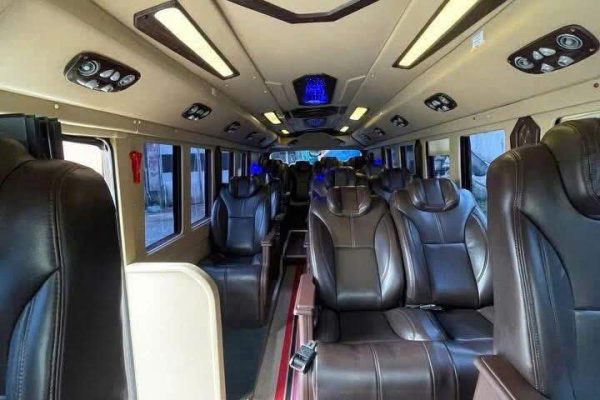
From Hanoi: Sleeper bus is the standard method. Buses depart Hanoi between 9 PM-11 PM, arriving Ha Giang City 5-7 AM (6-7 hour journey). Multiple bus types:
You can also take buses from other northern destinations (Ninh Binh, Ha Long, Cat Ba, Sapa) though schedules are less frequent.
Private car is an option (expensive, 3,000,000-4,000,000 VND) but rarely worthwhile unless you’re a group splitting costs.
From Ha Giang City to the Loop: Tours typically start from Loop Trails Hostel in Ha Giang City. After the night bus arrives, you check in, rest, have breakfast, and begin the loop around 9 AM.
Reaching Sapa:
From Hanoi: Two main options:
Bus from Lao Cai to Sapa adds 50,000-100,000 VND.
The train is popular because you sleep while traveling and wake up near Sapa. Direct buses are simpler but can be less comfortable.
Access Winner: Sapa is marginally easier since you can take trains or buses with more frequency. Ha Giang has fewer transport options and longer distances from Hanoi. However, both require overnight travel to maximize time at destination.
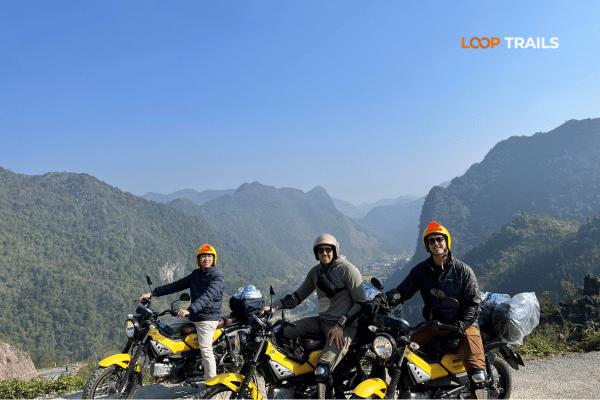
Learn more: Self- Driver Motorcycle Tours
Weather patterns differ slightly between the two destinations.
Ha Giang Seasonal Breakdown:
September-November (Best Overall):
December-February (Cold but Rideable):
March-May (Spring Transition):
June-August (Wet Season):
Sapa Seasonal Breakdown:
September-November (Peak Season):
December-February (Cold Winter):
March-May (Pleasant Spring):
June-August (Monsoon Season):
Season Comparison:
Both destinations share similar best months: September-November offers optimal conditions. March-May is the backup sweet spot. June-August is manageable but wet. December-February is cold but has charm.
Key difference: Sapa gets colder in winter (higher base elevation) and sometimes sees snow. Ha Giang stays slightly warmer but can have road ice at highest passes.
For photography, time your visit around:
Weather is unpredictable in mountains. Even “dry season” can have sudden rain. Bring layers and rain gear regardless of when you visit.
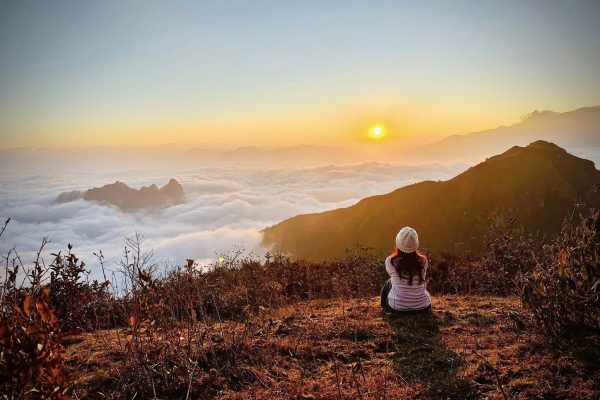
Learn more: Ha Giang Loop Itinerary
Ha Giang Time Requirements:
Minimum Viable Trip: 2 days, 1 night. This covers Ha Giang City → Dong Van → Ma Pi Leng Pass → Meo Vac → return. You see the main highlights but it’s rushed. Only do this if you’re seriously time-constrained.
Recommended Duration: 3 days, 2 nights. This is the classic Ha Giang Loop that balances time with proper enjoyment. You’re not racing through, can actually stop for photos and short hikes, and get real interaction at homestays.
Comfortable Duration: 4 days, 3 nights. Adds Lung Khuy Cave, extended time at Lung Cu Flag Tower, morning swim at Du Gia waterfall, and splits riding into shorter daily distances. Less exhausting, more relaxed.
Extended Option: 5 days, 4 nights for Ha Giang + Cao Bang combined tour. Adds Ban Gioc Waterfall, Nguom Ngao Cave, and Cao Bang Province’s remote passes. For serious adventure seekers with time to spare.
Total Trip Including Transport: Add 2 travel days (night bus to Ha Giang, night bus returning to Hanoi). So:
Sapa Time Requirements:
Minimum Viable Trip: 1 day (day trip from Hanoi possible but exhausting), or overnight with 1 trek.
Recommended Duration: 2-3 days in Sapa. This gives you:
Comfortable Duration: 3-4 days. Allows multiple treks to different valleys, flexibility for weather, time to genuinely relax in town, possibly a day trip to Bac Ha or Can Cau markets.
Total Trip Including Transport: Night bus/train both ways means:
Comparison:
Both destinations need similar calendar time (4-6 days total including transport). The difference is in what you’re doing with that time.
Ha Giang fills every day with movement—you’re covering distance, riding passes, changing locations. Rest time happens only in evenings at homestays.
Sapa allows more flexible daily pacing. You can take rest days, do morning treks and afternoon town exploration, or push hard with back-to-back full-day hikes depending on energy.
If you only have 4-5 days total for northern Vietnam, both destinations fit. Choose based on activity preference (motorcycle vs hiking), not time constraints.
Learn more: Loop Trails Ha Giang
Yes, you can combine both, but logistics matter.
Option 1: Sapa First, Then Ha Giang
Route: Hanoi → Sapa (2-3 days) → Ha Giang (3-4 days) → Hanoi
Transport:
Pros: You start with easier trekking, adjust to altitude gradually, and build up to the Ha Giang adventure. Sapa’s infrastructure makes a good first destination in Vietnam.
Cons: Transport between Sapa and Ha Giang isn’t straightforward. Backtracking through Hanoi adds a day.
Option 2: Ha Giang First, Then Sapa
Route: Hanoi → Ha Giang (3-4 days) → Hanoi → Sapa (2-3 days) → Hanoi
Transport:
Pros: You tackle the bigger adventure first while fresh and energetic. Sapa feels relaxing afterward—proper beds, hot showers, and easier activity.
Cons: You’re doing two major trips back-to-back without much recovery time in Hanoi.
Option 3: One Destination, Add Cao Bang
Instead of Sapa, consider the 5-day Ha Giang + Cao Bang combined tour. This keeps you in the northeast mountains, avoids backtracking, and adds Ban Gioc Waterfall (Vietnam’s most impressive waterfall) while maintaining the motorcycle adventure vibe.
Realistic Time Needed for Both:
Honest Assessment:
Combining both is possible but rushed. You’re spending significant time on buses/trains between destinations. Most travelers choose one based on their activity preference and available time.
If you have 10+ days in northern Vietnam, combining them works. If you have 7 days or fewer, pick one and do it properly rather than rushing both.
The destinations are different enough that visiting both doesn’t feel redundant. But it’s also fine to pick one, enjoy it fully, and save the other for a return trip to Vietnam.
Learn more: Ha Giang in September & October
Let’s make this practical with scenarios:
Choose Ha Giang if:
✓ You want motorcycle adventure and dramatic mountain passes
✓ You’re comfortable with basic accommodation and challenging conditions
✓ You seek less touristy, more authentic minority village experiences
✓ You have 3-4+ days available for the full loop
✓ You either ride motorcycles or are happy as easy rider passenger/jeep tourist
✓ You prioritize journey over destination and love road trips
✓ You want epic photography from the road (cliff passes, canyons, dramatic landscapes)
✓ You’re okay with limited English and language barriers
✓ You want an experience that feels like genuine exploration
Choose Sapa if:
✓ You prefer hiking and trekking over motorcycles
✓ You want comfortable accommodation with proper amenities
✓ You value flexibility—ability to plan day-by-day and change plans easily
✓ You have limited time (even 2-3 days works well)
✓ You want easier access and more developed infrastructure
✓ You’re interested in cable car to Fansipan (summit without technical climbing)
✓ You prefer returning to a town base each evening
✓ You want more English communication and easier cultural learning
✓ You prioritize comfort while still experiencing mountain scenery
Choose Ha Giang if you’re:
Choose Sapa if you’re:
If You’re Still Undecided:
Ask yourself: Would you rather spend 3 days riding a motorcycle through extreme mountain geography with basic homestays and limited comfort, or spend 3 days hiking through terraced valleys while staying in a comfortable town with hot showers and restaurants?
Your gut reaction to that question is your answer.
There’s no wrong choice. Ha Giang and Sapa are both exceptional—they just serve different travel styles. The disappointment comes from expecting one to be like the other.
If motorcycle adventure excites you, book a Ha Giang Loop tour and commit to the experience fully. If comfortable trekking sounds better, go to Sapa and enjoy the infrastructure that makes it accessible.
Both will give you incredible northern Vietnam experiences. They’ll just do it completely differently.

Learn more: Ha Giang Loop Jeep Tours
Whether you’ve chosen Ha Giang’s cliff passes or Sapa’s terraced valleys, the important thing is that you’ve picked the destination that matches your travel style.
For Ha Giang, Loop Trails has been running the loop for years with experienced local guides who know every pass, every homestay, and every shortcut. We offer easy rider, self-drive, and jeep options for all comfort levels. Our tours include everything—meals, accommodation, permits, and activities—so you can focus on the adventure.
Check our Ha Giang Loop tour options to see which duration and style fits your plans. We’ve got 2-day express routes for time-crunched travelers, 3-day classic loops for the full experience, and 4-day extended routes for those who want to slow down and soak it all in.
Got questions about which option is right for you, whether you should do Ha Giang or Sapa first, or how to combine both into one Vietnam trip? Message us directly and we’ll give you honest advice based on your specific situation—no sales pressure, just real guidance from people who run these routes daily.
The mountains are waiting. Pick your adventure.
Neither is objectively better—they’re different experiences. Ha Giang offers motorcycle adventure through dramatic passes with basic homestays and authentic villages. Sapa provides comfortable trekking with developed infrastructure and easier accessibility. Choose based on whether you want challenging adventure (Ha Giang) or accessible mountain trekking (Sapa).
Yes, through jeep tours where you ride in a private vehicle (1-4 passengers). This gives you the Ha Giang Loop scenery and route without needing motorcycle skills. However, most travelers do Ha Giang specifically for the motorcycle experience, either as easy rider passengers or self-drive riders.
Sapa is significantly more developed for tourism with international hotels, restaurants, tour agencies, and large visitor numbers daily. Ha Giang sees tourists but villages remain working communities where tourism is supplementary income, not the primary economy. Ha Giang feels less commercialized.
Yes, Ha Giang is more physically and mentally demanding. You’re doing multi-day motorcycle travel through remote areas with basic homestays, challenging roads, and less infrastructure. Sapa involves day hikes with return to town comfort and allows flexible daily planning. Ha Giang requires commitment; Sapa allows adjustment.
Ha Giang organized tours run 3,500,000-5,500,000 VND for 2-4 days (all-inclusive: meals, accommodation, guide). Sapa costs vary widely based on choices but typically 4,000,000-8,000,000 VND for 3 days when factoring accommodation, meals, treks, and activities separately. Ha Giang is often more economical with clearer budgeting.
Yes, but you need 10-14 days minimum. Transport between them requires 1-2 days (often backtracking through Hanoi). Most travelers choose one destination for 7-day Vietnam trips. If you have 2+ weeks, combining both works well—do Ha Giang first for adventure, then Sapa for relaxation afterward.
Sapa’s rice terraces are more extensive, well-maintained, and easier to photograph—particularly Muong Hoa Valley. Ha Giang has beautiful terraces (especially around Du Gia and Quan Ba) but the landscape focus is more on cliff passes and karst mountains. For iconic terraced valley photos, Sapa wins.
Ha Giang strongly benefits from guides—they handle navigation, permits, homestay bookings, and language barriers. Independent travel is possible but complicated. Sapa allows more independent exploration—many treks are doable without guides, though having one enhances cultural learning. Ha Giang rewards guided tours; Sapa allows either approach.
Tourism development brings crowds and commercialization, but also accessibility and comfort. If you trek beyond Cat Cat Village to more remote areas (Ta Van, Y Linh Ho), you escape the worst crowds. Sapa is worth visiting if you accept it as a developed tourist destination rather than expecting undiscovered villages.
Both have similar seasonal patterns: best weather September-November (clear, dry), challenging June-August (monsoon rain), cold December-February. Sapa sits higher (1,600m town elevation) and gets colder with occasional snow. Ha Giang’s loop passes reach 1,500-1,800m but base town is lower. Both need warm layers in winter.
Not recommended. Ha Giang roads are challenging with steep grades, hairpin turns, cliff edges, and occasional rough surfaces. Beginners should choose easy rider (ride as passenger) or jeep tours. Self-drive requires genuine motorcycle experience. Sapa is better for beginners wanting to try riding—easier roads and shorter distances.
Ask yourself: Do you want to ride motorcycles through extreme mountain passes with basic homestays (Ha Giang), or hike through terraced valleys while based in a comfortable town (Sapa)? Your answer to that question determines your choice. Both offer incredible mountain scenery—the difference is how you experience it.
Contact information for Loop Trails
Website: Loop Trails Official Website
Email: looptrailshostel@gmail.com
Hotline & WhatSapp:
+84862379288
+84938988593
Social Media:
Facebook: Loop Trails Tours Ha Giang
Instagram: Loop Trails Tours Ha Giang
TikTok: Loop Trails
Office Address: 48 Nguyen Du, Ha Giang 1, Tuyen Quang
Address: 48 Nguyen Du, Ha Giang 1, Tuyen Quang

Facebook X Reddit Table of Contents Learn more: Ha Giang Loop Tours The Ha Giang Loop has a reputation problem with older

Facebook X Reddit Table of Contents The passes get the photos. The homestay nights get the stories. Ask anyone who’s done the