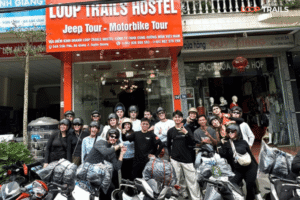


Thúy Kiều is a travel blogger and content contributor for Loop Trails Tours Ha Giang. She holds a bachelor’s degree in Sustainable Tourism from Vietnam National University, Hanoi, and has a strong passion for exploring and promoting responsible travel experiences in Vietnam’s northern highlands.
I finished the standard Ha Giang Loop feeling exhilarated but incomplete. Everyone told me Ban Gioc Waterfall in Cao Bang was worth seeing, but after three days of mountain riding, I was ready to head back to Hanoi’s comfort.
Six months later, I did the full 5-day Ha Giang + Cao Bang route. I wish I’d done it the first time.
Here’s the thing nobody tells you: Ha Giang Loop has become famous. Ma Pi Leng Pass gets photographed thousands of times daily. Dong Van’s old quarter fills with backpackers every evening. It’s incredible, but it’s no longer undiscovered.
Cao Bang still feels like what Ha Giang was five years ago. Fewer tourists, more authentic interactions, landscapes that rival anything in Ha Giang, and Ban Gioc Waterfall – Southeast Asia’s largest waterfall shared with China – is genuinely one of Vietnam’s most spectacular natural sights.
The question isn’t whether Cao Bang is worth visiting. It’s whether extending your loop by two days makes sense for your trip. Let me help you decide.
Learn more: Ha Giang Loop Tours
Learn more: Ha Giang Loop 3 Days 2 Nights
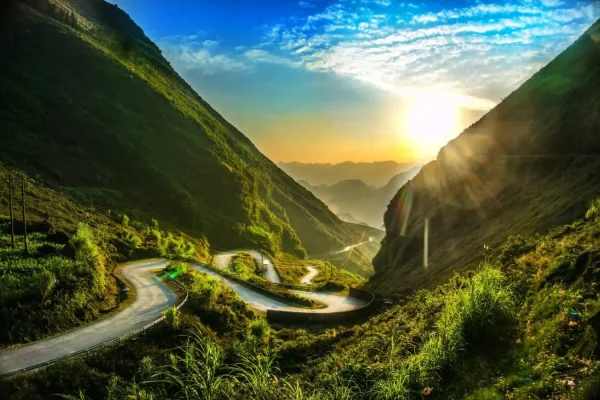
The classic Ha Giang Loop (3-4 days) follows a well-worn circuit: Ha Giang City → Dong Van → Meo Vac → back to Ha Giang City. It’s roughly 350-400 kilometers of spectacular mountain scenery, ethnic minority villages, and that famous Ma Pi Leng Pass.
Tour operators have perfected this route. Homestays are established. Road conditions are good. You see incredible landscapes, experience authentic culture, challenge yourself on mountain roads, and return to Hanoi satisfied.
So why extend?
Because the standard loop forms a circle – you finish where you started geographically. Cao Bang extends the journey eastward into entirely different terrain. You’re not retracing steps or seeing similar landscapes. You’re discovering a completely separate region that happens to connect beautifully with Ha Giang.
Most travelers stop at Ha Giang because:
That last assumption is wrong.
Ban Gioc Waterfall is Vietnam’s most impressive waterfall. Not “one of” – it genuinely is the most dramatic. Thirty meters high, 300 meters wide, straddling the Vietnam-China border, surrounded by karst mountains and rice paddies. In rainy season, the water volume is thunderous. In dry season, it’s elegantly tiered. Either way, it’s breathtaking.
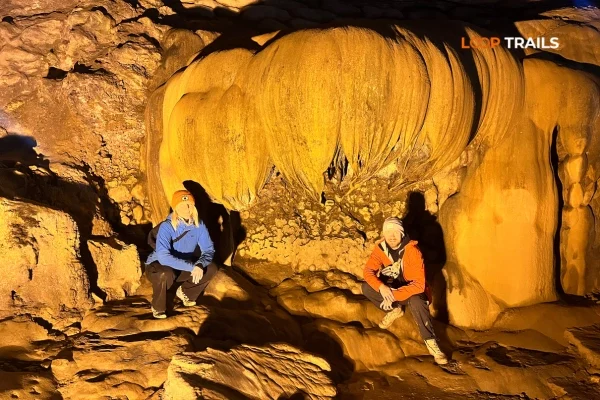
Nguom Ngao Cave is the largest and most spectacular cave system you can access without serious caving equipment in northern Vietnam. The formations are absurd – cathedral-sized chambers, crystalline stalactites, underground rivers.
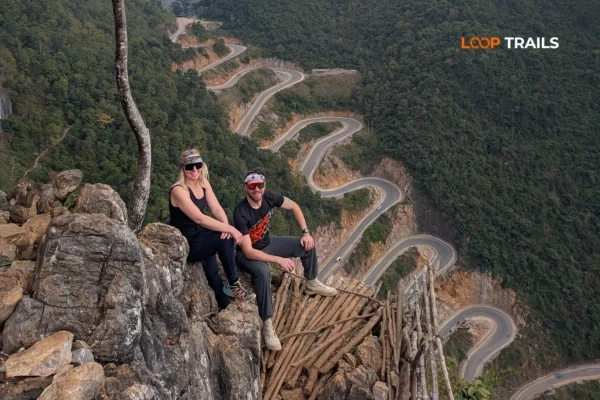
Khau Coc Cha Pass features 15 distinct hairpin turns carved into the mountainside with views over Xuan Truong valley. Locals call it “Ma Thien Lanh” (Cold Devil Pass). The engineering and views rival Ma Pi Leng, but you’ll share it with maybe five other tourists instead of fifty.
Cultural diversity shifts. Ha Giang is dominated by H’Mong and Tay people. Cao Bang adds Nung communities with distinct traditions, architecture, and crafts. Phia Thap incense village, where Nung families make traditional incense sticks, has no equivalent in Ha Giang.
Tourism density drops dramatically. Ha Giang gets 500+ tourists daily during peak season. Cao Bang gets a fraction. That means more genuine interactions, fewer tour groups stacking up at viewpoints, and locals who are surprised and delighted by foreign visitors rather than indifferent.
Learn more: Ha Giang Loop hired Motorbike
I’m not exaggerating. Ban Gioc is to northern Vietnam what Halong Bay is to the coast – it’s genuinely world-class.
The waterfall sits on the Quay Son River, which forms the border between Vietnam and China. The Vietnamese side has better views and access. You can walk right to the base, take bamboo raft rides that bring you within meters of the falls, and photograph it from multiple angles.
What makes it special:
The scale is enormous. Most waterfalls in Vietnam are pretty but modest. Ban Gioc is 30 meters tall and 300 meters wide during full flow. The sound is constant, low thunder. You feel the mist from 100 meters away.
The setting is perfect. Karst mountains rise behind the waterfall. Rice paddies stretch in front. Water buffalo graze near the base. It looks like a landscape painting, except it’s real and you’re standing in it.
The border element adds intrigue. You can see Chinese villages and watchtowers on the opposite bank. The waterfall literally splits between two countries. There’s something compelling about standing at an international border marked by a natural wonder rather than a fence.
Photography opportunities are exceptional. Early morning (7-8 AM) gets soft light and fewer crowds. Late afternoon (4-5 PM) gets golden hour on the karst peaks behind the falls. Rainy season (June-September) has maximum water volume. Dry season (October-March) shows the tiered structure more clearly.
Travelers who extend to Cao Bang consistently say Ban Gioc alone made the extra two days worthwhile. I agree.
Ha Giang’s popularity is both its strength and weakness. The infrastructure is good because tourism revenue funded improvements. Homestays are comfortable because they’ve hosted thousands of guests. Guides speak excellent English because they’ve practiced constantly.
But authentic, unprompted cultural exchange is rarer. Homestay hosts have their “tourist show” down – the corn wine drinking game, the traditional music, the photo opportunities. It’s genuine culture adapted for tourism consumption.
Cao Bang hasn’t reached that stage yet. When you stop at a Nung village, kids actually run out to stare at foreigners because they’re unusual. Elderly women invite you to try their incense-making process because they’re proud to share, not because it’s part of a tour package.
At Me Farmstay in Ha Quang (Day 3 overnight on the 5-day route), our host family had hosted maybe 50 foreign tourists total. They asked us as many questions as we asked them. We ended up playing cards with their teenage son using incomprehensible hand signals and lots of laughing.
That’s increasingly rare in Ha Giang, where homestay hosts have seen thousands of tourists and the novelty has worn off for both sides.
Ha Giang and Cao Bang are both mountainous, but the landscapes differ noticeably.
Ha Giang is all about dramatic karst peaks rising from valleys. The Dong Van Karst Plateau Geopark has UNESCO recognition for good reason. The geology is spectacular – limestone formations creating sharp, angular mountains.
Cao Bang has karst too, but mixed with different elements:
Culturally, the shift is subtle but real:
H’Mong (Ha Giang’s majority) live at higher altitudes, practice dry rice cultivation, wear distinctive indigo-dyed clothing, and have strong shamanic traditions.
Nung (Cao Bang’s majority) live in lower valleys, practice wet rice cultivation, have different architectural styles (stilt houses with distinct roof curves), and practice different crafts (incense-making, paper production).
You’re not crossing into a completely different country, but the regional variation is meaningful. It’s like comparing northern Scotland to southern England – same nation, noticeably different cultures.
If you did Ha Giang Loop (3 days) and Cao Bang separately, you’d face:
Two separate journeys from Hanoi:
Double the travel fatigue getting to/from Hanoi
Less logical routing (doing Cao Bang alone misses the beautiful Meo Vac → Bao Lac → Ha Quang road connection)
Higher total cost (two separate tour bookings, double the overhead)
The 5-day combined route flows naturally: start in Ha Giang, work your way through the highlights, cross into Cao Bang territory, finish in Cao Bang City, then bus back to Hanoi from there. It’s efficient routing that sees more for less total travel hassle.
Cost comparison:
The combined route is cheaper per day and eliminates redundant Hanoi-mountain-Hanoi travel.
Days 3 and 4 – the transition from Ha Giang to Cao Bang – feature roads and passes that rival anything on the standard loop but see far fewer travelers.
Meo Vac to Bao Lac takes you through remote valleys where villages are spread far apart. You’ll go hours seeing only local traffic. The landscape transitions from dramatic karst to gentler mountains covered in terraced fields.
Khau Coc Cha Pass between Bao Lac and Ha Quang is a engineering marvel – 15 major hairpin turns with viewpoints over Xuan Truong valley. It’s photographically stunning and technically challenging to ride. Many riders say it’s more fun than Ma Pi Leng because there’s less traffic.
Ha Quang to Ban Gioc crosses varied terrain: mountain passes, agricultural valleys, forest sections, riverside roads. The diversity keeps the riding interesting rather than repetitive.
These transition days aren’t filler between Ha Giang and Ban Gioc – they’re legitimate highlights that would be worth riding even without the destinations at either end.
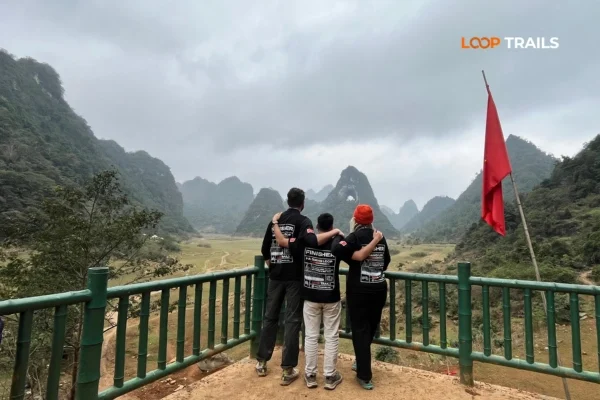
Learn more: Ha Giang Cao Bang 5 Days
Let’s get specific about how these regions compare.
Ha Giang:
Cao Bang:
Which is more beautiful? Depends on preference. Ha Giang is more dramatic and photogenic in that “impossible mountain road” way. Cao Bang is more varied and includes water features that Ha Giang largely lacks.
Ha Giang ethnic groups:
Cao Bang ethnic groups:
The cultural experiences in Cao Bang feel less “performed” because tourism is newer. You’re more likely to encounter daily life happening naturally rather than cultural demonstrations arranged for tourists.
Ha Giang:
Cao Bang:
If you want maximum comfort and ease, Ha Giang wins. If you want to feel more like an explorer and less like a tourist, Cao Bang delivers.
Learn more: Ha Giang Loop Self-Driver Guide
Here’s how Loop Trails structures the 5-day combined tour:
Distance: ~150 km
Highlights: Bac Sum Pass, Heaven Gate, Tham Ma Pass, Vuong Palace, Dong Van old quarter
This is the classic Ha Giang Loop opening. You’re easing into mountain riding, adjusting to the altitude and road conditions.
Key stops:
Overnight: Dong Van town homestay
Riding feel: Moderate difficulty, building gradually through the day
Distance: ~100 km
Highlights: Ma Pi Leng Pass, Nho Que River, Tu San Canyon, Meo Vac town
The most famous day of the entire route. This is what people picture when they imagine Ha Giang.
Key stops:
Overnight: Meo Vac town hotel
Riding feel: Technically demanding but incredibly rewarding
Distance: ~180 km
Highlights: Khau Coc Cha Pass, Xuan Truong valley, Pac Bo historical site, Me Farmstay
This is where you leave the standard Ha Giang Loop and enter less-traveled territory. The tourism density drops noticeably.
Key stops:
Overnight: Me Farmstay, Ha Quang area
Riding feel: Long day but varied terrain keeps it interesting
This is the transition day. You’re leaving Ha Giang Province and entering Cao Bang Province. The landscape subtly shifts, tourism disappears almost entirely, and you start feeling like you’re genuinely exploring rather than following a well-worn tourist trail.
Distance: ~120 km
Highlights: Pi Pha viewpoint, Ban Gioc Waterfall, Ngoc Con village
The day builds to Ban Gioc Waterfall in the afternoon.
Key stops:
Overnight: Rock village homestay (near Ban Gioc)
Riding feel: Moderate, with excitement building as you approach Ban Gioc
Pro tip: Staying overnight near Ban Gioc means you can visit in late afternoon (fewer crowds), evening, and early morning before leaving. Three different lighting conditions show the waterfall differently.
Distance: ~100 km
Highlights: Nguom Ngao Cave, Quay Son River, Phuc Sen village, Phia Thap incense village, God’s Eye Mountain
The final day packs in Cao Bang’s secondary highlights before finishing in Cao Bang City.
Key stops:
Overnight: Option to stay in Cao Bang City or take evening/night bus to Hanoi
Riding feel: Relaxed, celebratory – you’ve completed something significant
Total route: ~650-700 km over 5 days, averaging 130-140 km per day. This is very manageable pacing with plenty of stops.
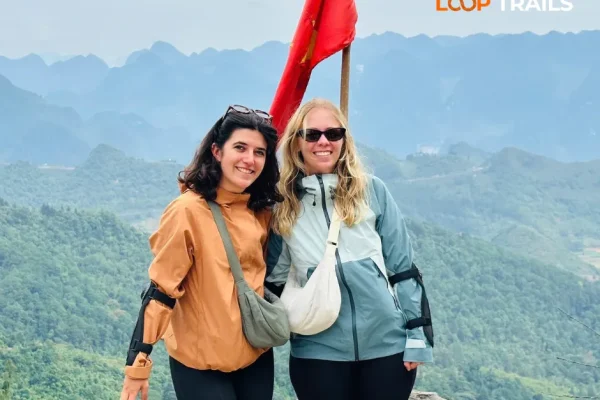
Learn more: Ma Pi Leng Pass
Let me detail what makes these Cao Bang stops special.
I’ve covered why it’s spectacular, but here are practical details:
Best time to visit:
What to do:
Time needed: 2-3 hours minimum. If you’re a photographer or just want to absorb the atmosphere, half a day isn’t excessive.
Located 5 km from Ban Gioc, this cave is dramatically different from the small caves you might visit in Ha Giang.
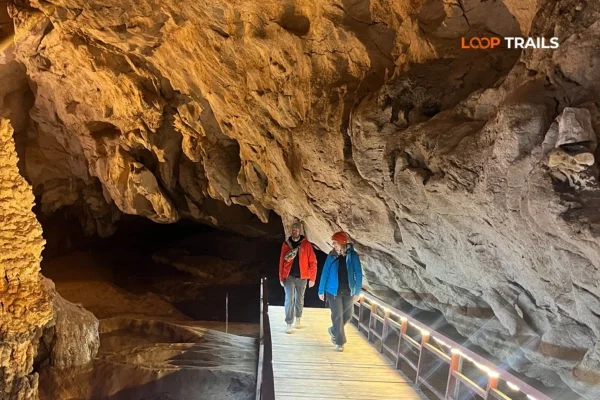
Scale: The main chamber is cathedral-sized. You can walk upright on paved pathways for over 2 kilometers through the cave system.
Formations: Stalactites, stalagmites, flowstone, and crystalline formations in colors ranging from white to orange to brown depending on mineral content.
Lighting: The cave has installed lighting (colored in some sections, which is a bit garish, but the formations are impressive regardless).
Experience: The temperature inside is cool (bring a light jacket). The acoustics are remarkable – your voice echoes dramatically. The sense of scale is genuinely awe-inspiring.
Time needed: 45-60 minutes for the main circuit. Photography adds time.
Cost: Entrance around 40,000 VND.
This pass connects Bao Lac to the Xuan Truong valley. It’s less famous than Ma Pi Leng but arguably more fun to ride.
What makes it special:
The 15 hairpin turns are clearly visible from viewpoints – you can see the entire pass snaking down the mountainside in one view. It’s a stunning piece of road engineering.
The switchbacks are tight and technical. If you’re riding (self-drive or Easy Rider), they demand focus and skill. It’s engaging in a way that straight highway isn’t.
The viewpoints over Xuan Truong valley are spectacular. The valley floor is patchwork rice paddies and Nung villages, with karst peaks rising on all sides.
Traffic is minimal. We spent 30 minutes at the top viewpoint and saw three vehicles total. That quietness lets you actually hear the landscape – wind, birds, distant farming sounds.
This is where Ho Chi Minh returned to Vietnam in 1941 after 30 years abroad, planning the revolution against French colonial rule.
Why it matters:
For Vietnamese people, Pac Bo is sacred ground – it’s where their independence movement truly began. The site includes the cave where Ho stayed, the stream where he bathed (he named it “Lenin Stream”), and a museum.
For foreign travelers, it’s interesting historical context. You’re traveling through landscapes that were central to 20th-century Vietnamese history, not just beautiful scenery.
Visit length: 30-45 minutes. It’s not elaborate, but if you’re interested in Vietnamese history, it adds meaningful context to your journey.
A Nung village where families make traditional incense sticks by hand.
The process: Bamboo sticks are dipped repeatedly in sawdust paste mixed with aromatic bark, then dried in large bundles. The village looks surreal – thousands of bright red incense sticks drying on racks, creating geometric patterns.
Cultural insight: This is Nung people’s traditional craft, passed through generations. Families work together – grandparents, parents, children all involved in different steps.
Photography: The color contrast (bright red incense against green mountains and rural homes) is striking.
Time needed: 20-30 minutes to walk through, watch the process, take photos.

Learn more: Ha Giang Loop Cost
Let’s compare the real numbers:
Standard Ha Giang Loop 3D2N (Easy Rider):
Ha Giang + Cao Bang 5D4N (Easy Rider):
Cost per day:
The combined route is actually slightly cheaper per day while delivering significantly more content.
Additional costs to consider:
Total additional spend for extending to Cao Bang: Approximately 1,500,000-2,000,000 VND per person ($60-80 USD) for two extra days of incredible experiences.
Honest assessment of the physical challenge:
Daily riding time: 4-6 hours on the bike/in vehicle
Total distance: ~650-700 km over 5 days
Elevation changes: Significant but spread over more days than 3-day loop
Who finds 5 days manageable:
Who might struggle:
Fatigue management tips:
Most travelers who extend report that Day 3-4 are actually less tiring than Day 2 (Ma Pi Leng) because the roads are less technical and traffic is lighter.
You finish in Cao Bang City, not Ha Giang City. Getting back to Hanoi or onward:
Sleeper bus to Hanoi:
Private car:
Onward to other destinations: From Cao Bang, you can also reach:
Some travelers use Cao Bang as a northern Vietnam starting point and work their way south, avoiding backtracking to Hanoi.
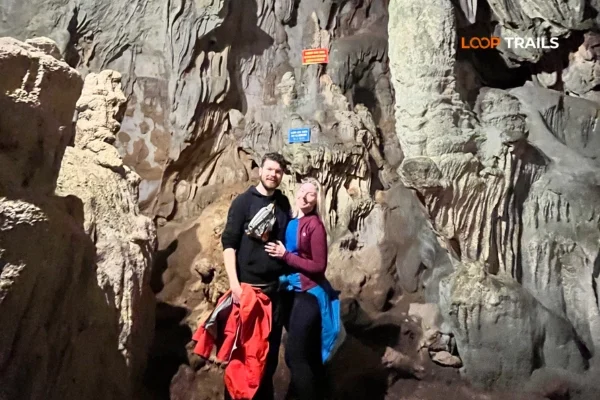
Learn more: Ha Giang Cao Bang Jeep Tours
✓ You have 7+ days total for northern Vietnam (travel days + 5-day tour)
✓ You loved the Ha Giang Loop and want more of that mountain experience
✓ You specifically want to see Ban Gioc Waterfall
✓ You prefer fewer tourists and more authentic experiences
✓ You’re comfortable with basic accommodation for an extra 2 nights
✓ You enjoy the journey as much as the destinations
✓ You want better value (more content per day) than separate trips
✓ You’re fit enough to handle 5 days of daily riding/sitting.
✗ You’re short on time (less than 6 days total for northern Vietnam)
✗ You’re already exhausted after 3 days in Ha Giang
✗ You have a strong preference for well-developed tourist infrastructure
✗ You’ve already booked a 3-day tour and don’t want to change plans
✗ You’re not interested in waterfalls or caves (Cao Bang’s main draws)
✗ You have mobility issues making 5 days challenging
✗ You want to maximize time in other parts of Vietnam.
If you can’t do the full 5-day Ha Giang + Cao Bang route but want to see Ban Gioc, consider:
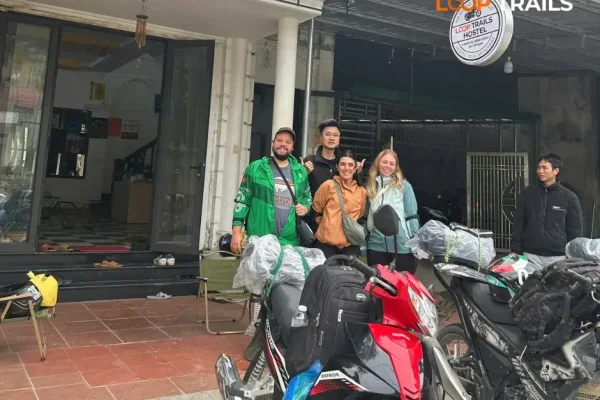
Learn more: Ha Giang Loop Easy Rider
How it works: You’re a passenger on a motorbike driven by an experienced local guide. You can be two people (one passenger per bike with their own guide) or solo.
Why it’s ideal for the 5-day route:
You see everything without physical strain of driving. The guides handle navigation, mechanical issues, and logistics.
You can take photos constantly. Your hands are free, you’re not focused on the road, you can capture moments.
The guides know the route intimately. They’ve done it dozens of times, know the best photo spots, timing, where to eat.
Energy management: Sitting as a passenger for 5 days is significantly less tiring than driving yourself.
Loop Trails Easy Rider pricing (5D4N):
Best for: Most travelers, especially those without extensive motorcycle experience or those who want to maximize enjoyment over challenge.
Self-drive means renting a motorbike and riding it yourself (solo or with a passenger).
Advantages:
Challenges specific to the 5-day route:
Day 3 (Meo Vac → Ha Quang) is long and remote. If you have mechanical issues, you’re far from help.
Navigation is trickier once you leave the main Ha Giang Loop. The roads to Cao Bang are less traveled; GPS can be unreliable; fewer travelers to ask for directions.
You’re managing all logistics yourself for 5 days – finding homestays, ordering food, negotiating prices, route planning.
Physical fatigue of riding 130 km daily for 5 consecutive days is real. Your hands, shoulders, back, and legs will feel it.
Realistic self-assessment: If you’re a confident, experienced rider who’s done multi-day motorcycle trips before, self-drive on this route is achievable and rewarding. If you learned to ride bikes recently or only ride occasionally, the 5-day extension adds enough challenges that Easy Rider becomes the smarter choice.
Costs for self-drive 5D4N:
Cheaper than Easy Rider, but you’re doing all the work.
Jeep tours put you in a comfortable 4-seater vehicle with a driver.
Why choose Jeep for 5 days:
Comfort matters more over 5 days than 3. The cumulative fatigue of riding is eliminated. You arrive each evening fresh rather than physically drained.
Weather protection. Five days means higher chance of encountering rain. In a Jeep, you’re dry and comfortable.
Age/fitness flexibility. If you’re over 60, have any mobility concerns, or traveling with mixed fitness levels, Jeep makes the 5-day route accessible.
Better for couples wanting connection. You sit together, can have conversations, share reactions to views in real-time.
Photography. The Jeep can stop anywhere safely. You’re not managing a bike while trying to photograph.
Loop Trails Jeep pricing (5D4N):
Best for: Travelers prioritizing comfort, older travelers, couples, anyone who wants the experience without physical demands.

Learn more: Ha Giang in September & October
Optimal: October-November
Good: December-February
Acceptable: September
Avoid: May-August
Special consideration for Ban Gioc: The waterfall is impressive year-round, but water color varies. October-March has clearer blue-green water. June-September has more volume but often muddier appearance due to monsoon runoff.
Learn more: Ha Giang Cao Bang by Jeep and motorbike
“Is 5 days of mountain riding too exhausting?”
For most fit travelers under 60, no. The pacing is actually more relaxed than cramming Ha Giang’s highlights into 2 days. You’re averaging 130 km per day – very manageable. If you choose Jeep or Easy Rider (vs self-drive), the physical demands are minimal.
“Will I get bored of mountain scenery after 5 days?”
Unlikely. The landscapes change noticeably between Ha Giang and Cao Bang. Day 1-2 are dramatic karst. Day 3 is transition terrain. Day 4-5 add waterfalls, caves, and forests. The variety prevents monotony.
“Is Cao Bang just less impressive Ha Giang?”
No. It’s different, not lesser. Ha Giang has more dramatic peaks and that famous Ma Pi Leng moment. Cao Bang has Ban Gioc (which has no equivalent in Ha Giang), better caves, more water features, and less tourism. They complement each other rather than one diminishing the other.
“What if I get sick or injured on Day 3-4?”
Tour guides carry first aid supplies and have evacuation protocols. The towns (Bao Lac, Tra Linh) have basic clinics. Serious emergencies would require evacuation to Cao Bang City hospital (better equipped than Ha Giang’s facilities). This is why travel insurance is essential.
“Is the accommodation in Cao Bang worse than Ha Giang?”
Slightly more basic, yes. Ha Giang’s homestays have evolved to meet tourist expectations. Cao Bang’s are simpler and hosts are less practiced at catering to foreign guests. But “simpler” doesn’t mean bad – it means more authentic and sometimes more memorable because the interactions are less scripted.
“Can I do just Cao Bang without Ha Giang?”
Logistically, yes. You could bus from Hanoi directly to Cao Bang City and do a 2-3 day Cao Bang loop. However, the route works better as an extension because the journey from Meo Vac through Bao Lac to Ha Quang is part of what makes it special. Doing Cao Bang alone means missing that beautiful transition and approaching Ban Gioc from a less scenic direction.
Learn more: Ha Giang Loop Itinerary 2026
Sarah & Tom, UK (5-day Easy Rider):
“We initially booked a 3-day Ha Giang tour. Our hostel mentioned the Cao Bang extension. We had time, so we upgraded. Best decision of our Vietnam trip. Ha Giang was incredible, but by Day 3 we were seeing lots of other tour groups. When we crossed into Cao Bang territory, tourism dropped to almost nothing. Ban Gioc blew our minds – we spent three hours there and didn’t want to leave. The extra two days cost us about $70 each. Absolute no-brainer.”
Marcus, Germany (5-day self-drive):
“I’m an experienced rider, so I self-drove the 5-day route. Day 3 was long – about 180km – and I was tired by the time I reached Ha Quang. But it was manageable. The Khau Coc Cha pass was a highlight for me, maybe even better than Ma Pi Leng because I had it to myself. I could stop wherever I wanted and really work on my riding technique through the hairpins. Solo riders with good experience will love this route.”
Linda & Robert, Australia (5-day Jeep, age 67 & 70):
“We knew 5 days on bikes would be too much at our age. The Jeep was perfect. Our driver was fantastic – he’d check in regularly, adjust the pace if we needed it, knew great photo spots. Ban Gioc was worth the entire trip. We’re fairly well-traveled (we’ve been to Iguazu Falls in South America), and Ban Gioc genuinely impressed us. The Cao Bang section felt more exploratory, less touristy. At our age, comfort matters, and the Jeep delivered that while still giving us the adventure.”
Jess, solo traveler, USA (5-day Easy Rider):
“I was traveling alone and joined a small group tour. Days 1-2 in Ha Giang, our group had 8 people. Days 3-5 in Cao Bang, it was just me and one other solo traveler (we had our own Easy Rider drivers). The intimacy of a smaller group made the Cao Bang portion more special. We stayed at Me Farmstay on Day 3 and the host family treated us like actual family – we helped cook dinner, played with their kids, sat around the fire. Those interactions don’t happen as easily in Ha Giang where tourism is so established.”
Common threads in successful 5-day trips:
Yes, if you choose Easy Rider or Jeep tours. You don’t ride the bike yourself – experienced drivers handle everything while you enjoy the scenery. Self-drive is NOT recommended for beginners on this route. The roads are technical, distances are significant, and you’re in remote areas where mechanical problems or accidents would be serious. Easy Rider gives you the full experience without requiring riding skills.
The daily riding isn’t significantly harder – you’re covering similar distances per day (130km average). Day 3 is the longest at ~180km, but the roads are generally good and traffic is light. The main difference is cumulative fatigue from 5 consecutive days versus 3. If you’re reasonably fit and choose Easy Rider/Jeep, the difficulty increase is minimal. Self-drivers will notice the extra physical demands more.
Yes, but logistics are less efficient. You could: (1) Do standard Ha Giang Loop, return to Hanoi, then do a separate 2-day Cao Bang trip, or (2) Go directly from Hanoi to Cao Bang, see Ban Gioc, return to Hanoi. Both options work but involve more total travel time and backtracking. The 5-day combined route flows naturally from Ha Giang into Cao Bang without redundant travel.
Depends on what you want. Rainy season (June-September): Maximum water volume, thunderous sound, very powerful but water can be murky brown from monsoon runoff. Dry season (October-March): Less volume but clearer blue-green water showing the tiered structure, easier access to base. Peak flow with clear water: Late September-early October when rainy season is ending – you get high volume with increasingly clear water. Most photographers prefer October-November for best combination of flow and clarity.
Slightly more basic but not “worse” – just less developed for tourism. Ha Giang homestays have hosted thousands of foreigners and refined their offerings. Cao Bang homestays are newer to tourism, so expect simpler facilities and hosts less fluent in English. However, many travelers find this more authentic and memorable. The trade-off is less polish for more genuine cultural interaction. Private rooms with Western toilets are still available in Cao Bang.
Approximately 6-7 hours by bus or private car (280 km distance). Night sleeper buses depart Cao Bang City around 8-9 PM and arrive Hanoi 5-6 AM. Day buses leave morning/afternoon, arrive late afternoon/evening. Private car takes 6-7 hours during daylight with flexibility to stop. Budget either an overnight bus (included in most Loop Trails packages) or a full travel day to return to Hanoi.
Yes, Loop Trails offers custom itineraries. You could extend to 6-7 days by adding rest days in Dong Van, Meo Vac, or near Ban Gioc. This reduces daily riding time and allows more exploration at each location. Families with children, older travelers, or anyone wanting more relaxed pacing can request custom scheduling. Contact Loop Trails directly to discuss options – they’re experienced at accommodating different needs and timeframes.
Guides monitor weather and adjust timing when possible. Rain gear is provided on tours. If conditions are genuinely dangerous (landslides, heavy storms), guides may modify routes or delay departures for safety. Ban Gioc is impressive even in rain, though photography is harder. The caves and indoor activities (incense village, paper making) work fine in any weather. Travel insurance should cover trip interruptions due to weather, though major disruptions are rare October-March.
Ban Gioc is genuinely different in scale from other Vietnamese waterfalls – it’s the country’s largest by far. Nguom Ngao Cave is similarly more impressive than most accessible caves. If you’re waterfall/cave-fatigued, the extension’s value comes more from: decreased tourism, cultural experiences, the road journey itself, and sense of completing a larger adventure. But if you’re specifically uninterested in those features, the standard Ha Giang Loop might satisfy you.
Logistically possible but less common. The route works better Ha Giang → Cao Bang because: (1) Ma Pi Leng Pass as an early highlight builds excitement, (2) Tourism infrastructure is better in Ha Giang for trip start/orientation, (3) Finishing at Ban Gioc provides a strong climax, (4) Most tour operators and guides run this direction. Reverse is possible with private arrangements but you’d miss the narrative flow most travelers appreciate.
For Easy Rider tours: 3-day costs ~4,390,000 VND per person, 5-day costs ~5,495,000 VND per person (Loop Trails pricing). The difference is ~1,105,000 VND ($45 USD) for two extra days including accommodation, meals, guide, and transport. Add ~500,000 VND for bus from Cao Bang vs Ha Giang back to Hanoi, and ~300,000 VND for Ban Gioc activities. Total additional cost: ~1,900,000 VND ($78 USD) for two extra days of content. Exceptional value.
Signal is patchy. Good in towns (Ha Giang City, Dong Van, Meo Vac, Cao Bang City), weak or absent in remote valleys and mountain passes. Download offline maps before starting. Your guide has phone contact with tour operators throughout the route. Don’t rely on constant connectivity for navigation or communication. Use the disconnection as an opportunity to be present in the experience.
Advance booking is strongly recommended, especially October-November peak season. Tour operators plan logistics, guide assignments, and homestay reservations based on group sizes. Deciding on Day 3 of Ha Giang Loop to extend creates logistical challenges (guides might not be available, homestays might be full). If you’re considering the extension, book the full 5-day route initially. Most operators allow downgrades if you decide after Day 2-3 that you can’t continue, but upgrades mid-trip are difficult.
Contact information for Loop Trails
Website: Loop Trails Official Website
Email: looptrailshostel@gmail.com
Hotline & WhatSapp:
+84862379288
+84938988593
Social Media:
Facebook: Loop Trails Tours Ha Giang
Instagram: Loop Trails Tours Ha Giang
TikTok: Loop Trails
Office Address: 48 Nguyen Du, Ha Giang 1, Tuyen Quang
Address: 48 Nguyen Du, Ha Giang 1, Tuyen Quang
Facebook X Reddit Table of Contents Learn more: Ha Giang Loop Tours This is the question that sits in almost every Ha
Facebook X Reddit Table of Contents Learn more: Ha Giang Loop Tours Most people drive past the Quan Ba area twice on