

Tipping in Ha Giang: How Much for Guides and Drivers?
Facebook X Reddit Table of Contents Learn more: Ha Giang Loop Tours You are standing in the courtyard of Loop Trails Hostel.
Thúy Kiều is a travel blogger and content contributor for Loop Trails Tours Ha Giang. She holds a bachelor’s degree in Sustainable Tourism from Vietnam National University, Hanoi, and has a strong passion for exploring and promoting responsible travel experiences in Vietnam’s northern highlands.
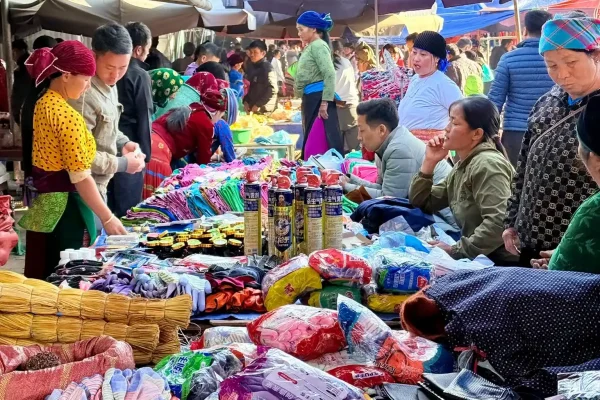
I stumbled into Dong Van’s Sunday market by accident on my first Ha Giang trip. I’d planned to sleep in after two days of mountain riding, but at 6 AM, voices and motorbike engines woke me. By 6:30 AM, the entire town square was transformed into a riot of color, sound, and commerce.
H’Mong women in indigo-dyed clothing haggled over vegetables. Tay men traded livestock in a corner. Kids ran between stalls eating steamed buns. Someone was selling live chickens from motorcycle baskets. The whole scene felt like stepping back fifty years – except everyone had smartphones.
That accidental market visit became my favorite Ha Giang memory. Not Ma Pi Leng Pass (though that’s spectacular), not the homestays (though those were special) – the market, where I saw authentic daily life happening around me rather than being performed for tourists.
Here’s everything you need to know about Ha Giang’s market system so you don’t leave it to chance like I did.
Learn more:Ha Giang Loop for Families & Couples
Learn more: Ha Giang Loop 4 Days 3 Nights Jeep Tour
Ha Giang Loop is famous for landscapes. The karst peaks, the cliff roads, the impossible green valleys – they’re Instagram gold and genuinely stunning. But they’re also somewhat passive experiences. You ride through beauty, you photograph it, you move on.
Markets are active cultural immersion. You’re surrounded by ethnic minority communities doing what they’ve done for generations: trading goods, socializing, catching up on news, finding romantic prospects (yes, really – some markets have matchmaking traditions).
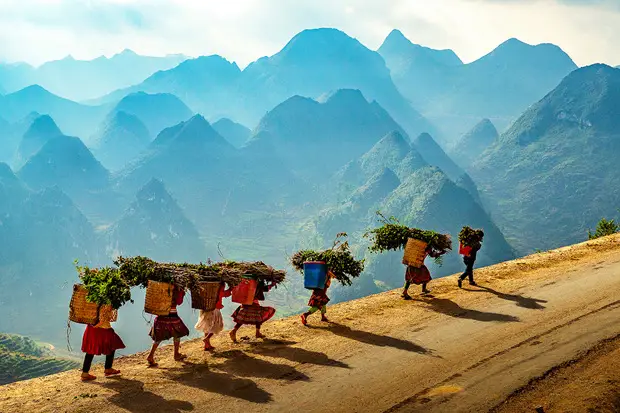
The H’Mong grandmother selling herbs didn’t wake at 4 AM and walk two hours to her town’s market day because tourists might show up. She’s there because it’s market day, and market day is when she sells her week’s harvest, buys rice and oil, and sees friends from neighboring villages.
You’re witnessing authentic culture continuing regardless of tourism, not culture adapted for tourism consumption. That’s rare and valuable.
If you’re into documentary or cultural photography, Ha Giang’s markets deliver subjects you won’t find anywhere else.
Clothing diversity is exceptional. Different ethnic groups wear distinct traditional dress. H’Mong women in indigo with elaborate silver jewelry. Tay women in colorful patterned tunics. Red Dao women in embroidered red headdresses. Lo Lo people in distinctive black and white outfits. All shopping in the same market.
Genuine moments happen constantly. A mother braiding her daughter’s hair while minding their vegetable stall. Elderly men playing cards in a market corner, sharing rice wine. Teenagers sneaking away from family stalls to flirt. These aren’t posed – they’re just life.
Visual chaos that photographs beautifully. Markets are crowded, colorful, layered with activity. Every frame has multiple stories happening simultaneously.
Light conditions are ideal. Markets happen early morning (6-10 AM typically) when natural light is soft and directional. Golden hour happens right as markets are busiest.
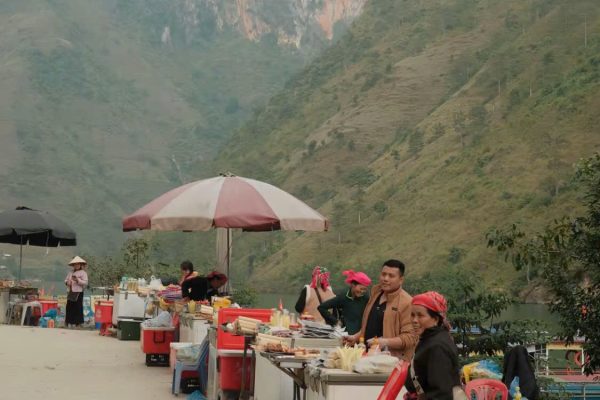
When you buy at Ha Giang markets, money goes directly to ethnic minority families with zero intermediaries.
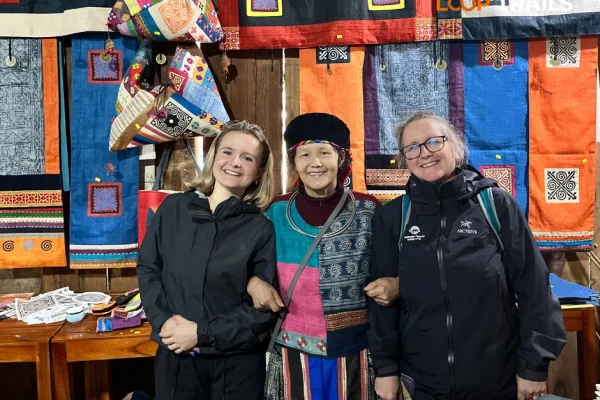
That 20,000 VND you pay for embroidered textile squares? It goes to the H’Mong woman who spent evenings sewing it. The 50,000 VND for dried herbs? Directly to the family who harvested them.
Compare this to buying from tourist shops in Hanoi where maybe 20% reaches the actual artisan. Market purchases are genuine economic support for communities maintaining traditional crafts and agriculture.
You’re also incentivizing cultural preservation. If traditional textiles, handicrafts, and herbs have commercial value, younger generations see reason to learn those crafts from elders. The skills survive.
Learn more: Ha Giang- Cao Bang 5 Days 4 Nights Jeep Tour
Ha Giang’s ethnic minority markets don’t happen daily in one location. Instead, they rotate through different towns on a 6-day cycle that’s been running for generations.
Why 6 days? It’s traditional timing that allows villages to participate in multiple markets without conflicts, gives vendors time to prepare goods between markets, and spreads commercial activity across the region rather than concentrating it in one town.
The cycle means every 6 days, each market town hosts its market on the same day of the week. For example:
This repeats weekly but tracks on a 6-day internal cycle some locals still follow.
For travelers: You need to know which day of the week corresponds to which market town. If you’re in Dong Van on a Monday, you’ve missed that week’s market. It happened Sunday morning and won’t repeat for 6 more days (next Sunday).
Practical logistics drive the rotation system.
Limited purchasing power: Ethnic minority families can’t afford to shop daily. They buy weekly supplies at market day – rice, oil, salt, soap – then return to remote villages for the week.
Travel distances: Some vendors walk 2-4 hours to reach market. They can’t do this daily. Once per week per town is sustainable.
Social function: Markets are social events. Families coordinate to attend specific markets where they’ll see relatives and friends from other villages. The rotation creates predictable meeting points.
Livestock trading: Large livestock (water buffalo, pigs, goats) is sold at markets. Animals need time between markets to be moved, raised, or processed.
Traditional ethnic minority markets (the ones you want) happen early morning:
Why so early? Ethnic minority vendors travel from remote villages. Starting early means they can walk to market in darkness, sell goods, buy supplies, and return home with daylight remaining.
All-day markets exist in larger towns (Ha Giang City, Dong Van town center) but these are modern shops and permanent stalls catering to locals and tourists. They’re convenient for buying snacks and practical items but lack the cultural richness of morning ethnic markets.
For photographers and cultural experience seekers: Arrive at markets by 6:30-7:00 AM. You’ll catch setup activity and peak trading. Sleeping until 8 AM means you’ve missed half the atmosphere.
Learn more: Ha Giang Motorbike Rental
Here’s the comprehensive schedule. Note that market days can occasionally shift due to lunar calendar considerations or local holidays – ask your guide or homestay host to confirm.
Dong Van Market
This is the most famous and accessible market for travelers since Dong Van is an overnight stop on every Ha Giang Loop tour. The old French colonial square fills with vendors. Expect crowds – both locals and tourists.
Meo Vac Market
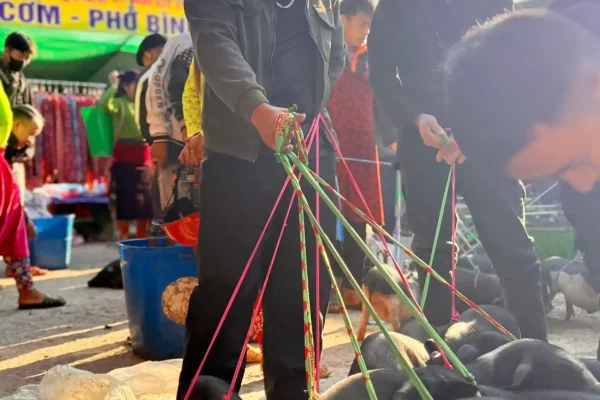
Less touristy than Dong Van despite being on the main loop route. Stronger agricultural and livestock focus. The livestock section (water buffalo, pigs, chickens) is particularly photogenic.
Lung Phin Market (near Dong Van)
Off the main tourist route. Requires special trip from Dong Van but rewards with genuine local atmosphere. Few foreigners visit.
Bac Ha Market (technically outside Ha Giang Province but nearby)
Note: Bac Ha is not technically on Ha Giang Loop but can be reached via side trip. Famous among tourists, so expect crowds.
Yen Minh Market
Yen Minh is a transit stop on most Ha Giang Loop tours (lunch stop on Day 1). If your tour passes through on a Tuesday, ask to stop at the market.
Coc Pai Market
Rarely visited by tourists. Requires guide arrangement to reach.
Pho Cao Market
Lung Vai Market
Mau Dong Market
Quan Ba Market
Quan Ba is the “Heaven Gate” town where most tours stop for the famous viewpoint. Saturday market timing works well for some tour schedules.
Can Ty Market
SPECIAL ANNUAL MARKET:
Khau Vai Love Market
This is Ha Giang’s most famous market culturally. Legend says it was where separated lovers could meet once yearly. Now it’s a festival celebrating love and courtship traditions. If your trip coincides, it’s worth adjusting your itinerary.
Learn more: Ha Giang Loop 2 Days 1 Night
If you can only visit 2-3 markets, prioritize these:
Why it’s special:
The setting alone makes it worthwhile. Dong Van’s old French colonial quarter provides a beautiful backdrop – stone buildings with tile roofs surrounding a central square that fills with vendors.
Accessibility is easy. Dong Van is an overnight stop on every standard Ha Giang Loop tour. You’re already there Saturday night, so waking early Sunday for the market requires no route deviation.
Diversity of goods is excellent. You’ll see traditional H’Mong handicrafts, silver jewelry, embroidered textiles, herbal medicines, agricultural produce, livestock, modern goods, food vendors – everything.
Ethnic variety shows well. While H’Mong dominate, you’ll spot Tay families, occasional Lo Lo people, and mixed groups interacting.
Photography opportunities are abundant. The mix of colonial architecture, colorful traditional clothing, and vibrant market activity creates strong images.
Challenges: Tourist presence is higher than other markets. You’ll share the space with other travelers doing the loop. This slightly diminishes the “undiscovered” feeling but doesn’t ruin the experience.
Tips for visiting:
Why it’s special:
Meo Vac feels more working-class and agricultural than Dong Van. The tourist presence is lower despite being on the main route.
Livestock trading is prominent. The designated livestock area sees serious trading – water buffalo, pigs, goats, chickens. Farmers negotiate prices, examine animals, conduct real commerce. This isn’t for tourists; it’s actual business.
Authenticity rates higher than Dong Van. Locals outnumber tourists significantly. The market serves genuine community needs rather than being semi-adapted for tourism.
Herbal medicine vendors are fascinating. Elderly H’Mong women sell dried herbs, roots, and traditional medicines with explanations (in H’Mong) about uses for various ailments.
Setting is more utilitarian than Dong Van’s colonial charm. It’s a practical market square near the bus station. Less picturesque architecture but more authentic atmosphere.
Tips for visiting:
Why it’s legendary:
This isn’t a regular market – it’s an annual cultural festival that happens to include market elements.
The love tradition: Legend says a H’Mong couple from different clans fell in love but couldn’t marry due to clan conflicts. They agreed to meet once yearly at this location. Over generations, this became a tradition where separated or unhappy lovers could meet annually. Now it’s evolved into a celebration of love, courtship, and H’Mong romantic customs.
Modern interpretation: Young H’Mong people attend hoping to meet potential partners. Families bring eligible sons and daughters. Some older couples who were separated decades ago still attend. There’s singing, traditional courtship rituals, and romantic symbolism.
Market elements include traditional crafts, food vendors, cultural performances, and the usual market goods – but the love customs are the attraction.
Timing: 27th day of the 3rd lunar month (usually April, specific date changes yearly). Check lunar calendar for exact 2025 date.
Planning: This requires custom tour timing. Standard Loop Trails tours can be adjusted to coincide with Khau Vai Love Market date if you book far enough in advance.

Learn more: Ha Giang Loop Easy Rider Tours
5:00-6:00 AM: Vendors arrive, set up stalls. If you’re awake, this setup period is photographically interesting – seeing the market materialize from darkness.
6:00-7:00 AM: Early buyers arrive. Serious shopping happens – locals buying weekly supplies. This is when the best produce is available and livestock trading begins.
7:00-9:00 AM: Peak activity. Markets are full, noisy, crowded, energetic. Best time for atmosphere and photography.
9:00-10:00 AM: Winding down. Vendors start packing. Livestock has mostly been sold or removed. Food vendors are still active.
10:00 AM-noon: Mostly finished. Stragglers remain, but 80% of vendors have left.
Atmosphere evolution: Markets start practical and commercial. Early morning is serious trading. As time passes, the social aspect increases – people chat, share food, play cards. By 9 AM, it’s more social gathering than market.
Agricultural produce:
Livestock & animals:
Handicrafts & textiles:
Herbal medicine & traditional goods:
Modern/practical goods:
Food vendors:
Markets are where Ha Giang’s ethnic diversity becomes visible in one place.
H’Mong people (majority at most markets):
Tay people:
Lo Lo people (rare, seen mainly at Dong Van area markets):
Red Dao (occasionally):
Nung people (in eastern areas like Cao Bang markets):

Learn more: Ha Giang Loop Jeep Tours
Standard 3-day Ha Giang Loop:
This route hits Dong Van and Meo Vac. If you time it so you’re in Dong Van Saturday night, you’ll catch Sunday morning market. Same with Meo Vac.
Market-optimized timing:
Challenge: Dong Van and Meo Vac markets both happen Sunday. They’re 2-3 hours apart. You can’t thoroughly experience both in one morning. Choose one.
Loop Trails recommendation: If Sunday markets are priority, start your tour Friday or Saturday to ensure Sunday in Dong Van. Communicate this preference when booking.
Easily accessible on standard tours:
Require custom tour arrangements:
Practically impossible on standard tours:
If markets are a primary reason for your Ha Giang visit, consider custom tour arrangements:
Market-focused 4-day itinerary example:
This hits 3-4 markets but requires starting on specific days and custom routing.
Loop Trails can arrange market-focused tours – contact them with specific market interests and they’ll build an appropriate itinerary.
Learn more: Ha Giang Jeep Tours page
Markets are public spaces, but photographing people requires respect and awareness.
Always ask permission before photographing individuals, especially portraits. Use hand gestures if you don’t speak the language – point to your camera, point to the person, raise eyebrows questioningly. Most people are fine with it if asked.
Don’t photograph without asking just because “they won’t know.” It’s disrespectful regardless of whether they notice.
Be especially careful with children. Some parents are comfortable with their kids being photographed, others aren’t. Always ask the parent/guardian first.
Elderly people in traditional dress are popular photo subjects. They’re also human beings, not exhibits. Ask permission. If they decline, respect it.
Candid photography of general market scenes (no specific individual focus) is generally acceptable. Wide shots showing activity, overhead shots of produce displays, etc.
If someone asks for money after you photograph them, decide beforehand if you’re comfortable paying. 20,000-50,000 VND is reasonable. Some photographers refuse on principle (concerns about creating expectation). Others feel it’s fair compensation for someone’s time and image. Your choice.
Don’t be the photographer who spends 2 hours shooting but never interacts. Try to engage beyond photography. Buy something small. Learn a few H’Mong phrases. Smile and nod.
Bargaining is expected for handicrafts and textiles. Not aggressively, but prices quoted to foreigners are usually 30-50% higher than local prices.
How to bargain respectfully:
Don’t bargain over food or basic necessities. A bowl of pho costs 30,000 VND. Don’t try to negotiate that down. These vendors have thin margins.
For textiles and handicrafts: The work is genuinely handmade and time-intensive. Even “tourist prices” are cheap by Western standards. Don’t haggle so aggressively that you’re basically demanding artisans work for pennies.
Pay in cash. Markets don’t take cards. Bring small bills (20,000, 50,000, 100,000 VND notes). Breaking a 500,000 VND note at a small vegetable stall creates problems.
❌ Don’t touch produce unless you’re buying it. In Vietnamese culture, touching produce you’re not purchasing is rude (you’re degrading goods other customers might buy).
❌ Don’t photograph livestock trading too aggressively. This is serious business. Don’t interfere with negotiations or spook animals for photos.
❌ Don’t block market paths. Markets are crowded. Don’t stand in walking areas for long photo sessions. Step aside.
❌ Don’t assume everyone wants their picture taken. Some H’Mong people, especially certain religious groups, don’t want to be photographed. Respect this.
❌ Don’t be loud or disruptive. You’re a guest at a community gathering. Blend in, observe, participate respectfully.
❌ Don’t only take. If you’re photographing extensively, buy something. Support the vendors whose images you’re capturing.

Learn more: Ha Giang for seniors
Best purchases for travelers:
Embroidered textile squares (20,000-100,000 VND): Small embroidered pieces make excellent gifts or souvenirs. Lightweight, meaningful, support artisans directly.
Indigo-dyed fabrics (50,000-200,000 VND per meter): Beautiful natural indigo dye. Can be used for scarves, home decoration, or sewing projects.
Silver jewelry (100,000-500,000+ VND): H’Mong silver jewelry is distinctive. Verify it’s actual silver (not aluminum). Weight indicates quality.
Honey (50,000-100,000 VND per jar): Forest honey from mountain areas. Delicious and genuine.
Woven baskets (30,000-150,000 VND): Handwoven from natural materials. Practical and beautiful.
Traditional musical instruments: Jaw harps, bamboo flutes (if you find a vendor). Unique cultural items.
Herbal teas (20,000-50,000 VND): Dried mountain herbs. Vendors can explain uses (though language barriers exist).
What not to buy:
Mass-produced “ethnic” items that aren’t actually handmade. If every stall has identical items, it’s probably factory-made and transported in.
Ivory or endangered species products (though these are rare at Ha Giang markets, be aware if traveling elsewhere in Vietnam).
Live animals unless you’re a local farmer with means to care for them.
Learn more: Ha Giang to Cao Bang
Arrive early (6:00-6:30 AM). This cannot be overstated. Markets peak 7-9 AM. Arriving at 9 AM means you’ve missed most of it.
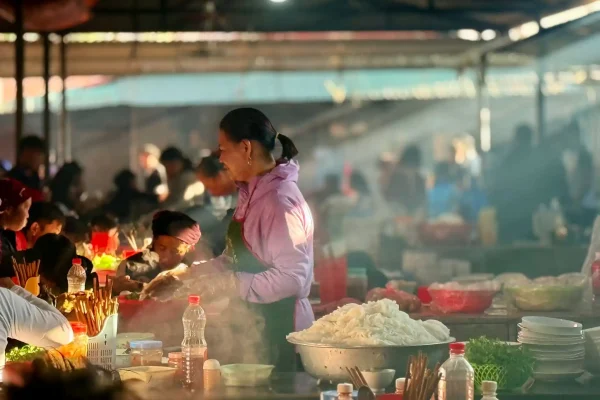
Eat breakfast at the market. Skip your homestay breakfast (or eat very light). The market food vendors serve excellent pho, banh mi, and local specialties. Eating at the market is part of the experience and supports vendors.
Bring cash in small denominations. ATMs exist in larger towns but not at market villages. Bring enough cash for purchases and food.
Wear layers. Morning markets happen when it’s cool. You’ll want a jacket at 6 AM that you’ll remove by 8 AM.
Bring a small backpack for purchases. You’ll want both hands free for photography and navigating crowds.
Learn basic phrases:
Go with a guide if possible. Guides can translate, explain what’s happening, facilitate respectful interactions, and help you find specific items.
Charge your camera/phone. You’ll take hundreds of photos. Start with full battery and bring backup power.
Protect electronics from crowds. Pickpocketing is rare but keep valuables secure in crowded markets.
Try the food. Market food is safe if freshly cooked. Pho from a steaming pot, fresh banh mi, just-steamed buns – it’s delicious and hygienic.

Learn more: Ha Giang in spring
Standard tours with market possibility:
Loop Trails’ 3-day and 4-day Ha Giang Loop tours can include market visits if timing aligns. When booking, specify that you want to experience markets. Loop Trails will:
Custom market-focused tours:
For travelers where markets are the primary interest, Loop Trails offers custom itineraries:
Pricing remains consistent with standard tours – the value is in the customized timing and routing, not additional costs.
Jeep tours for market visits:
If you’re prioritizing markets and cultural experiences over riding challenges, Jeep tours work excellently:
Easy Rider tours for markets:
Easy Riders offer good balance:
Learn more: Ha Giang weather by Month
If markets spark your interest in ethnic minority culture, Ha Giang offers other immersive experiences:
Lung Tam linen weaving village:
Homestay cultural evenings:
Vuong Palace:
Village walks:
Textile workshops:
Dong Van market happens every Sunday morning from approximately 6 AM to 10 AM. It repeats weekly, so every Sunday you’ll find the market in Dong Van town square. Arrive by 6:30-7:00 AM for peak activity. This is the most accessible market for travelers as Dong Van is an overnight stop on all standard Ha Giang Loop tours.
If your standard tour schedule doesn’t align with market days, you have two options: (1) Request custom tour timing when booking with Loop Trails – they can schedule your tour to overnight in market towns the night before market day, or (2) Accept that markets won’t be part of this trip and focus on other cultural experiences like weaving villages and homestay interactions. It’s worth timing your trip for markets if they’re important to you.
Plan to arrive at markets by 6:30 AM for the best experience. This means waking around 5:45-6:00 AM, quick wash/dress, and walking to the market (most market towns are small – markets are 5-10 minute walk from homestays). Peak market activity is 7-9 AM. Arriving at 8:30 AM means you’ve missed much of the atmosphere. Yes, it’s early, but it’s worth the effort.
Yes, markets are very safe. Petty crime is rare in Ha Giang generally, and markets are community gatherings where everyone knows everyone. Keep normal awareness of valuables in crowded areas, but you’re extremely unlikely to experience problems. The biggest “danger” is overpaying for handicrafts, which isn’t really dangerous – just mildly financially inefficient.
Wear modest, practical clothing. Long pants or skirts (not shorts – locals consider this disrespectful in rural areas). Comfortable walking shoes (markets can be muddy if it rained). Layers for temperature changes (cool early morning, warmer by 9 AM). Nothing overly revealing. Dark clothes show dirt less (markets can be dusty or muddy). Basically, dress as you would for normal Ha Giang Loop riding but plan for early morning coolness.
Yes, though some discernment helps. Items sold by elderly ethnic minority women wearing traditional dress are usually genuinely handmade. Mass-produced items imported from China or Vietnamese factories also appear – if every stall has identical items, they’re probably manufactured. Truly handmade textiles show slight irregularities, natural dye variations, and individual artistic choices. Price often indicates quality (though not always). Genuine handmade embroidered pieces cost 50,000-200,000 VND; identical factory pieces sell for 20,000-30,000 VND.
Photography is allowed but requires respectful approach. Always ask permission before photographing individuals (use hand gestures if language barrier exists). General market scene photography is acceptable. Don’t photograph people as if they’re zoo exhibits – they’re humans going about their day. If someone declines being photographed, respect their wishes immediately. Some vendors (especially those with photogenic traditional dress) may request small payment (20,000-50,000 VND) – decide beforehand if you’re comfortable with this.
Both happen Sunday mornings and are accessible on standard tours, but they differ in character. Dong Van market: More tourist presence, beautiful colonial architecture setting, strong handicraft and textile selection, slightly more “polished.” Meo Vac market: More agricultural/livestock focus, fewer tourists, more authentic working atmosphere, stronger herbal medicine presence. If you can only visit one, Dong Van offers easier cultural photography; Meo Vac offers more authentic trading atmosphere.
Bring 500,000-1,000,000 VND in small bills for a comfortable market experience. This covers: breakfast at market (30,000-50,000 VND), several textile purchases (100,000-300,000 VND total), small gifts/souvenirs (100,000-200,000 VND), honey or other food items (50,000-100,000 VND), contingency for unexpected finds. If you’re not planning significant purchases, 200,000-300,000 VND covers food and small items. Markets don’t accept cards – cash only.
Yes, though options are limited. Market food vendors serve pho (request “không thịt” = no meat), fresh rice cakes (often vegetarian), steamed buns with vegetable filling, fresh fruit, and roasted corn. The challenge is communicating dietary restrictions clearly. Bring a Vietnamese-speaking guide or translation app. Fully vegan is harder (many vegetable dishes use fish sauce). If you have strict dietary requirements, eat at your homestay before/after market and just try simple market items like fruit and corn.
Yes, different towns host markets on different days, so there’s a market somewhere in Ha Giang region every day of the week. However, the large, culturally rich ethnic minority markets (Dong Van, Meo Vac, etc.) happen on specific days only. Small daily markets exist in Ha Giang City and larger towns for basic goods, but these lack the cultural authenticity and visual interest of the rotating ethnic minority markets. Plan your trip to align with Sunday markets (Dong Van/Meo Vac) for the best experience.
This is culturally complicated and travelers have different philosophies. Some vendors (especially those who pose for multiple tourists daily) may request 20,000-50,000 VND after being photographed. You can: (1) Agree to pay before taking the photo, (2) Politely decline and don’t photograph that person, (3) Buy something small from their stall instead of direct payment. Many travelers choose option 3 – photograph vendors, then purchase a small item (textile, produce) to support them. This feels more natural than transaction-for-photo. Decide your approach beforehand to avoid awkward moments.
Contact information for Loop Trails
Website: Loop Trails Official Website
Email: looptrailshostel@gmail.com
Hotline & WhatSapp:
+84862379288
+84938988593
Social Media:
Facebook: Loop Trails Tours Ha Giang
Instagram: Loop Trails Tours Ha Giang
TikTok: Loop Trails
Office Address: 48 Nguyen Du, Ha Giang 1, Tuyen Quang
Address: 48 Nguyen Du, Ha Giang 1, Tuyen Quang
Facebook X Reddit Table of Contents Learn more: Ha Giang Loop Tours You are standing in the courtyard of Loop Trails Hostel.
Facebook X Reddit Table of Contents Learn more: Ha Giang Loop Tours The route from Ha Giang to Cao Bang by Jeep
Facebook X Reddit Table of Contents Learn more: Ha Giang Loop Tours If you are a UK traveler planning to ride a