
UK Driving Licence in Vietnam: IDP and Motorbike Rules
Facebook X Reddit Table of Contents If you are a UK traveler planning to ride a motorbike in Vietnam, the most important

Thúy Kiều is a travel blogger and content contributor for Loop Trails Tours Ha Giang. She holds a bachelor’s degree in Sustainable Tourism from Vietnam National University, Hanoi, and has a strong passion for exploring and promoting responsible travel experiences in Vietnam’s northern highlands.
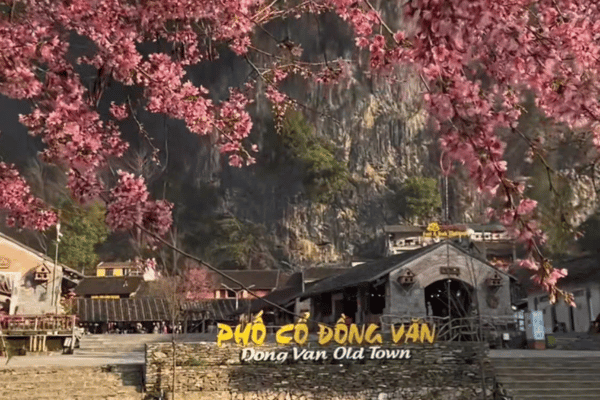
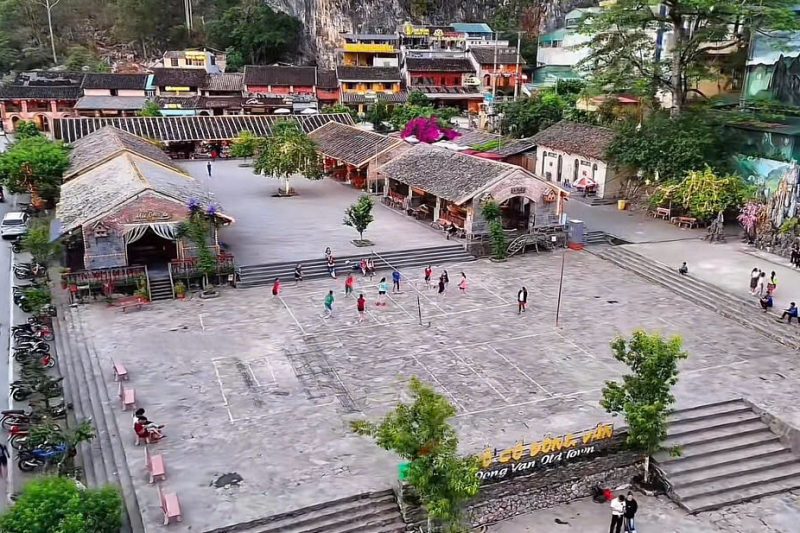
Dong Van doesn’t try to impress you. It just sits there at 1,000 meters elevation, stone buildings clustered along a main street that’s barely changed in a century, and lets you decide what to make of it. Most travelers blow through on their way to somewhere else—Ma Pi Leng Pass usually, or Lung Cu Flag Tower—and that’s their loss. Dong Van Old Quarter is one of the few places in northern Vietnam where history hasn’t been renovated into a theme park.
The town serves as the natural overnight stop on the Ha Giang Loop, positioned perfectly between Yen Minh and Meo Vac. You arrive late afternoon, park your motorbike, and suddenly you’re walking streets that look pulled from 1920s French Indochina. Stone houses with clay tile roofs, wooden shutters that actually function, shop fronts selling everything from rice wine to tractor parts. On Sundays, the market explodes into chaos—Hmong, Tay, and Lo Lo people flooding in from surrounding villages to trade, gossip, and drink.
This guide covers Dong Van Old Quarter in detail: what makes the architecture worth paying attention to, how the town fits into your Ha Giang Loop itinerary, where to sleep and eat, and why the Sunday market deserves more time than most people give it. We’re also covering the Hmong King’s Palace just outside town, day trip options to Lung Cu and Ma Pi Leng, and the practical reality of spending a night in what’s essentially a remote mountain town that happens to have historic buildings.
Dong Van isn’t flashy. It’s not trying to be. But if you want to understand northern Vietnam beyond just riding through it, this is where you slow down and look around.
Learn more: Loop Trails Tour Ha Giang
Learn more: Ha Giang Motorbike Rental
Dong Van Old Quarter is a National Heritage Site, designated in 2010 for its concentration of early 20th-century architecture. The town sits in Dong Van district, Ha Giang province, right in the heart of the Dong Van Karst Plateau Geopark—a UNESCO-recognized area known for dramatic limestone formations and ethnic minority cultures.
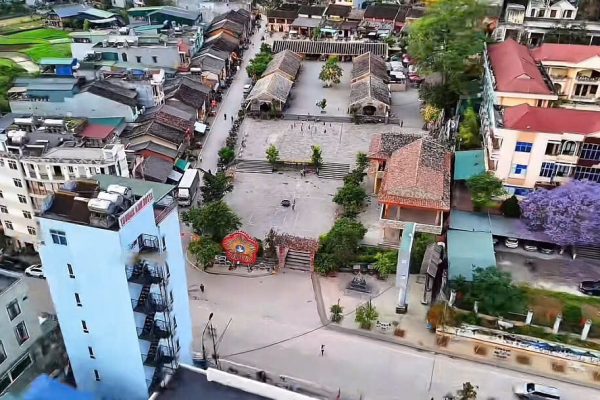
The old quarter itself is small. We’re talking maybe four main streets forming a compact grid, easily walked in 15 minutes if you don’t stop. But that concentration is the point. Nearly every building dates from the French colonial period (1920s-1940s) or earlier, built from local stone with techniques that blend European and traditional Vietnamese styles. Unlike Hanoi’s Old Quarter or Hoi An, which have been heavily restored and tourist-optimized, Dong Van remains a functioning town where people actually live and work in these historic structures.
The architecture tells a specific story: French administrative presence meeting Hmong, Tay, and Han Chinese influences in a remote border region where everyone adapted to survive. You see it in the stone masonry (Chinese technique), the shuttered windows (French design), and the layout (Vietnamese shophouse tradition). It’s not pristine—roofs leak, paint peels, some buildings are falling apart—but that’s part of the authenticity.
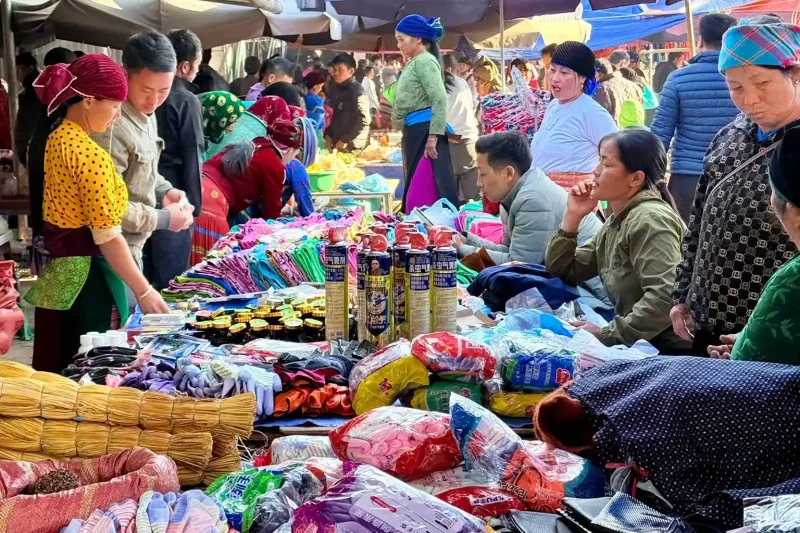
Dong Van also serves as a cultural hub for the region’s ethnic minorities. On market days, particularly Sundays, the town transforms. Hmong women in indigo-dyed clothing, Tay traders with woven baskets, Lo Lo families from remote villages—everyone converges on Dong Van to buy, sell, and socialize. The market isn’t performed for tourists; it’s the real economic and social engine for dozens of surrounding villages.
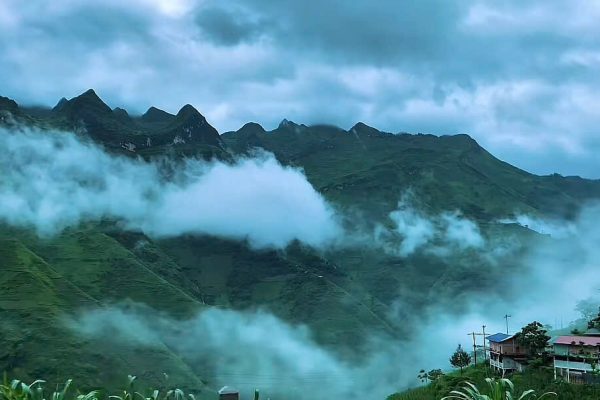
Geographically, Dong Van sits in one of the most dramatic landscapes in Vietnam. The town is surrounded by towering karst peaks, narrow valleys, and terraced fields that climb impossibly steep hillsides. This isolation preserved the town—there was no economic reason to bulldoze old buildings and modernize. Tourism is relatively recent, and even now, it’s measured in hundreds of travelers per week during peak season, not thousands per day like you’d see in more developed destinations.
Learn more: Ha Giang Loop Solo Travel
Dong Van’s old quarter emerged during the 1920s and 1930s when the French established an administrative presence in the region. The town served as a district capital, which meant government buildings, a market hall, and residences for officials and merchants. The French brought architectural ideas—shuttered windows for ventilation, tile roofs, covered arcades for shops—that got adapted with local materials and building methods.
What you see today are buildings constructed primarily from local limestone and clay, with wooden beams supporting tile roofs. The stone gives the town its distinctive gray-brown color palette. Most buildings are two stories, with the ground floor open to the street for commerce and the upper floor used as living space. This shophouse model was common throughout French Indochina, but in Dong Van, it’s built with materials sourced from within a few kilometers.
The French influence is clearest in details: the symmetry of window placement, the use of shutters that open outward, decorative molding around doorways, and the occasional balcony with wrought iron railings. But unlike French colonial architecture in Hanoi or Saigon, Dong Van’s buildings are austere. No grand colonnades, no pastel colors, no ornate facades. This was a frontier outpost, not a showcase capital.
Just outside Dong Van Old Quarter sits the Hmong King’s Palace, a mansion built in the early 1900s by Vuong Chinh Duc, a powerful Hmong leader who controlled opium trade and wielded significant political influence in the region. The palace is a bizarre architectural hybrid—Chinese courtyard layout, French windows and doors, Vietnamese roof tiles, all constructed from carved stone and dark wood.
The palace connects to Dong Van’s history because Vuong’s wealth and power shaped the town’s development. He funded construction, controlled trade routes, and his family’s influence extended well into the French period. The palace itself is now a museum and sits about 1 kilometer from the old quarter’s center, easily reachable on foot or by motorbike.
Understanding this context helps explain Dong Van’s unusual preservation. The town was built by a mix of French administrators, Chinese merchants, and Hmong traders—each group bringing their own architectural traditions. That layering created something unique that didn’t exist anywhere else in the region.
Beyond the French-influenced buildings on the main street, Dong Van’s side streets and outskirts contain traditional stone houses that predate colonial influence. These are single-story structures with thick stone walls (for insulation against cold winters), small windows (to retain heat), and roofs made from clay tiles or, in older examples, slate.
The construction technique is straightforward: local limestone is cut into blocks, stacked without mortar (or with minimal lime mortar in later buildings), and the weight of the roof holds everything together. Interiors are simple—usually one or two rooms with a central hearth for cooking and heating. Many of these houses are still occupied by Hmong and Tay families who’ve lived in them for generations.
Walking through Dong Van’s quieter streets, you’ll see both architectural traditions side by side: French-style shophouses on main thoroughfares, traditional stone houses on back lanes. The contrast isn’t jarring; it feels like natural evolution, one layer of history stacked on another.

Learn more: Ha Giang Cao Bang 5 Days
Dong Van sits approximately 150 kilometers north of Ha Giang City. The ride takes 5-6 hours on a motorbike, passing through Quan Ba (Heaven’s Gate) and Yen Minh. This is typically Day 2 of the standard Ha Giang Loop itinerary.
The route follows QL4C highway, which is paved but winding. You’ll climb from Ha Giang City (around 600 meters elevation) through Quan Ba Pass (Heaven’s Gate, around 1,200 meters), drop down into the Yen Minh valley, then climb again toward Dong Van. The roads are good by northern Vietnam standards—mostly two-lane asphalt with some rough patches—but the constant curves and elevation changes mean you can’t rush it.
Nobody does this as a day trip from Ha Giang City. The distances and road conditions make that impractical. Instead, Dong Van serves as an overnight stop. You ride from Ha Giang City (or Yen Minh if you split Day 2) to Dong Van in the afternoon, stay the night, then continue to Ma Pi Leng Pass and Meo Vac the next day.
Public buses run from Ha Giang City to Dong Van, but they’re slow and infrequent. Most independent travelers either rent a motorbike or join a tour. Buses make sense if you’re on an extreme budget and have unlimited time, but they’re not how most people approach the Ha Giang Loop.
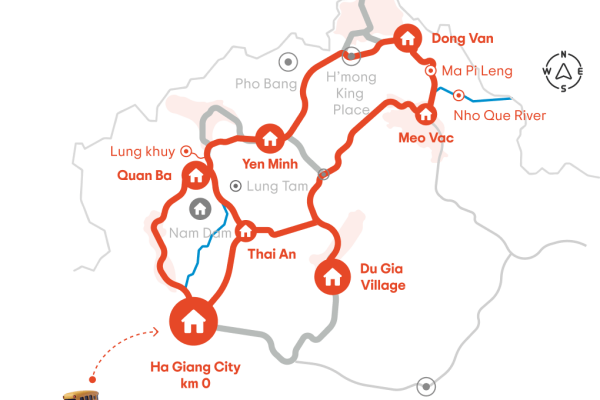
The standard 3-4 day Ha Giang Loop places Dong Van at the end of Day 2 or beginning of Day 3, depending on pacing. Here’s the typical structure:
Day 1: Ha Giang City → Quan Ba → Yen Minh (sleep in Yen Minh or push to Dong Van)
Day 2: Yen Minh → Dong Van → explore old quarter and market if it’s Sunday (sleep in Dong Van)
Day 3: Dong Van → optional Lung Cu Flag Tower → Ma Pi Leng Pass → Meo Vac (sleep in Meo Vac)
Day 4: Meo Vac → Du Gia → return to Ha Giang City
Some tours extend Dong Van into a two-night stay, which allows more time to explore the old quarter, visit the Hmong King’s Palace properly, and potentially do day trips to Lung Cu or other nearby villages. This pacing is less common but more relaxed.
Dong Van sits at a natural crossroads. It’s the last significant town before you head east to Ma Pi Leng or north to Lung Cu. Everything converges here, which is why every Ha Giang Loop itinerary includes at least one night in Dong Van.
Learn more: Ha Giang Loop 4 Days 3 Nights
The heart of Dong Van Old Quarter runs along Pho Co Street (literally “Old Street”), a pedestrian-friendly lane lined with two-story stone buildings. Most ground floors house small shops, cafes, or homestays. Upper floors are residential or converted into guesthouse rooms.
Start at the northern end near the Dong Van Market and walk south. You’ll pass:
The street is narrow enough that you notice details: carved wooden lintels, handmade locks on old doors, flower pots sitting on second-floor balconies. It’s not a museum—people live here, hang laundry, park motorbikes against 100-year-old walls. That’s the appeal.
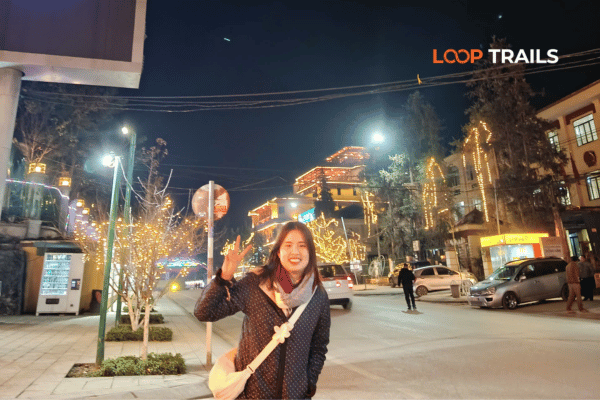
In the evening, a few cafes and restaurants set up tables on the street. The lighting is dim (Dong Van doesn’t waste electricity), and the atmosphere shifts from daytime market bustle to quiet conversations and the occasional motorbike passing through.
Learn more: Ha Giang Loop 3 Days 2 Nights
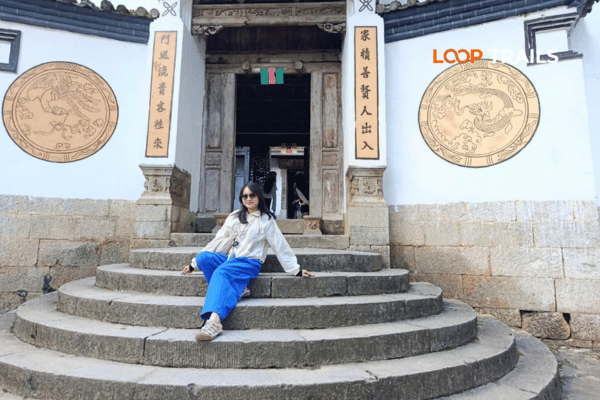
The Vuong Family Mansion (Hmong King’s Palace) sits about 1 kilometer south of Dong Van’s center on a hillside overlooking the valley. It’s a 5-minute motorbike ride or 15-minute walk from the old quarter.
Entry costs 10,000 VND per person (roughly $0.40). The palace complex includes multiple courtyards, living quarters, guest rooms, and a watchtower. The architecture blends Chinese influences (the courtyard layout, carved wooden screens), French elements (tile roofs, window designs), and traditional Hmong stonework. It was built between 1902-1921 using local labor and materials, with some decorative elements imported from China.
Inside, the rooms are sparsely furnished—mostly replica furniture and explanatory panels (in Vietnamese and some English). The real draw is the building itself: dark wood beams, stone walls, intricate carvings, and the overall sense of what power and wealth looked like in this region a century ago.
The palace tells a complicated story. Vuong Chinh Duc collaborated with the French, controlled the opium trade, and exploited his own people while consolidating power. The mansion is impressive but built on extraction and suffering. The museum doesn’t shy away from this entirely, but the narrative is more “look at this historical artifact” than critical examination.
Views from the palace grounds are excellent. You can see Dong Van town below and karst peaks rising on all sides. If you’re visiting Dong Van, the palace is worth 1-2 hours.
Learn more: Ha Giang Loop with Kids
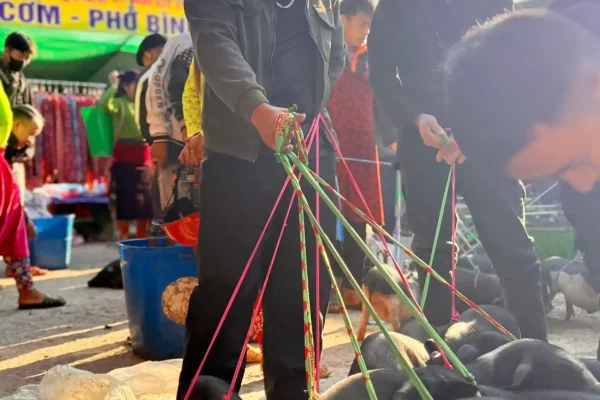
Dong Van Market operates daily but explodes on Sunday mornings. The permanent market building sits at the northern edge of the old quarter, but on Sundays, the entire surrounding area fills with stalls, traders, and shoppers from ethnic minority villages throughout the district.
What you’ll see on Sundays:
The market starts early—by 6:00 AM it’s already busy. Peak activity runs from 7:00 AM to 11:00 AM, then things wind down by early afternoon. Ethnic minority vendors often travel several hours to reach Dong Van, arriving before dawn and leaving by midday.
This isn’t a tourist market. Yes, there are a few stalls selling embroidered bags and bracelets aimed at travelers, but 95% of what’s for sale serves local needs. The market is where villages come to buy rice, sell produce, repair equipment, and catch up on news. Tourists are welcome but incidental.
Photography: People are generally tolerant of cameras, but ask before photographing individuals up close. Hmong women in traditional dress are often approached constantly by photographers, which gets tiresome. Be respectful. If someone waves you off or turns away, don’t push it.
Buying: If you’re interested in textiles, this is a good place to find hand-embroidered bags, scarves, or traditional clothing. Prices are negotiable but already low by international standards. Aggressive haggling feels inappropriate—you’re dealing with villagers selling handmade goods, not commercial vendors with markup built in.
Old Quarter Rooftop Cafes: Several buildings in the old quarter have rooftop cafes or terraces with views over the town and surrounding mountains. Ask at your accommodation or look for signs. These spots are best at sunset when the light hits the karst peaks.
Road to Hmong King’s Palace: The walk or ride up the hill offers several pull-offs where you can photograph Dong Van town from above, with the old quarter’s tile roofs clustered in the valley.
Market Area Sunday Morning: The chaos of the Sunday market creates natural photo opportunities—colorful clothing, bustling activity, stacks of vegetables and goods. Just be mindful about photographing people.
Pho Co Street at Night: The old street lit by dim streetlights and cafe lanterns has a moody, atmospheric quality. Bring a tripod or steady hand for low-light shots.
Learn more: Ha Giang Market Days
If your schedule allows, time your visit to arrive in Dong Van on Saturday evening and wake up Sunday morning for the market. The market is Dong Van’s biggest draw beyond the architecture, and missing it means missing half the experience.
How to plan this:
Most tours are structured to hit Dong Van on a weekend, but self-drive travelers have flexibility. Check your calendar and work backward from Sunday.
Best overall time: October through April
October-November: Post-monsoon, clear skies, comfortable temperatures (15-22°C / 59-72°F during the day). Rice terraces around Dong Van turn golden before harvest. This is peak season—more tourists, but roads and weather are optimal.
December-February: Cold season. Temperatures drop to 5-12°C (41-54°F), sometimes near freezing at night. You’ll need warm layers, especially for early morning market visits. Fewer tourists, which means quieter streets and cheaper accommodation. Visibility is usually excellent.
March-April: Warming up, flowers blooming, and good weather before rainy season hits. Comfortable temperatures and reliable conditions.
May-September: Rainy season. Afternoon storms are common, roads can be slippery, and fog reduces visibility. The landscape is lush and green, which some travelers prefer visually, but you’re dealing with weather unpredictability. If you visit during these months, waterproof gear is essential.
Avoid: Chinese New Year / Vietnamese Tet (late January to mid-February, dates vary). Most businesses close, and those that stay open raise prices significantly. The market still happens, but the town empties otherwise.
Learn more: Ha Giang Loop for Couples
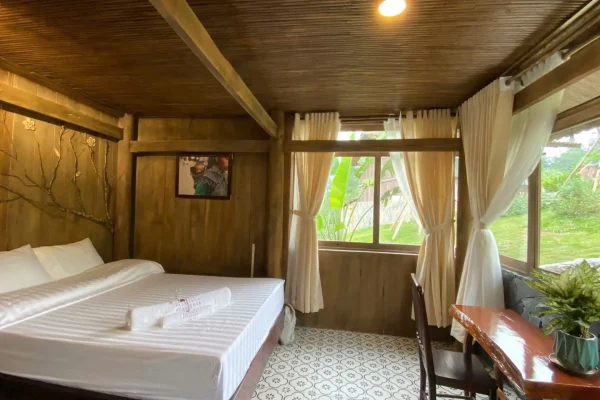
Dong Van has limited accommodation compared to larger towns, but enough options for the number of travelers passing through. Most places are small homestays, family-run guesthouses, or simple hotels. Book ahead during peak season (October-November) and on weekends when the Sunday market draws crowds.
Old Quarter Homestays: Several families in the old quarter rent rooms in their historic stone houses. These are basic—shared bathrooms, thin mattresses, minimal amenities—but you’re sleeping in 100-year-old buildings. Prices run 100,000-200,000 VND ($4-8) per night. Ask at cafes or shops in the old quarter if you’re looking for this experience.
Budget Guesthouses: Clustered around the market area and Pho Co Street. Expect clean rooms with private bathrooms, hot water (sometimes), and wifi (spotty). Prices: 150,000-300,000 VND ($6-12) per night. Examples include Pho Co Homestay and similar family-run places (names and quality shift frequently—check recent reviews).
Mid-Range Hotels: A few newer hotels sit just outside the old quarter core. These offer more comfort—better mattresses, reliable hot water, consistent wifi—for 400,000-600,000 VND ($16-24) per night. Less atmospheric than staying in the old quarter itself, but more functional.
What to expect: Dong Van is remote. Even “nice” places are basic by international standards. Hot water can be unreliable, electricity sometimes cuts out, and heating (if it exists) is minimal. Bring a sleeping bag liner or warm layers if you’re visiting in winter.
Booking: Many guesthouses don’t list online. If you’re on an organized tour, accommodation is arranged. If you’re self-driving, you can usually find a room by asking around when you arrive, except on Saturday nights before the Sunday market—then you need to book ahead or arrive early afternoon to secure a spot.
Learn more: Ha Giang Loop for Seniors
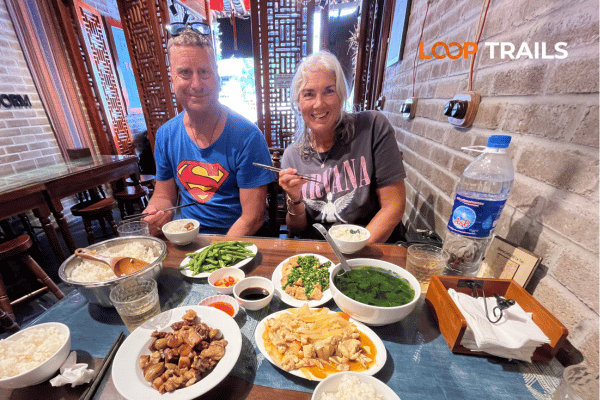
Dong Van’s food scene is straightforward: local Vietnamese staples, some Chinese-influenced dishes, and a handful of places catering to tourist tastes.
Pho Shops: Multiple small restaurants serve pho (beef noodle soup) in the morning. Look for places crowded with locals—that’s your quality indicator. Prices: 30,000-40,000 VND ($1.20-1.60) per bowl.
Com Binh Dan (Local Rice Plate Restaurants): Lunch and dinner spots where you point at dishes displayed in pots and they load up a plate of rice with meat, vegetables, and sometimes soup. Cheap (40,000-60,000 VND / $1.60-2.40 for a full meal) and filling.
Old Quarter Cafes: Several cafes along Pho Co Street serve Vietnamese coffee, tea, and light snacks. These double as evening hangout spots where travelers swap stories. Decent wifi makes them useful for trip planning.
Sunday Market Food Stalls: On market mornings, vendors sell banh mi, grilled corn, sticky rice, and other breakfast items. This is the cheapest and most atmospheric eating option—grab food and watch the market chaos unfold.
Specialty Dishes to Try:
What NOT to expect: Vegetarian-specific restaurants are rare. Western food is limited to basic pasta or fried rice at tourist cafes. If you have strict dietary needs, bring supplies from Ha Giang City.
Learn more: Lung Cu Flag Tower Guide
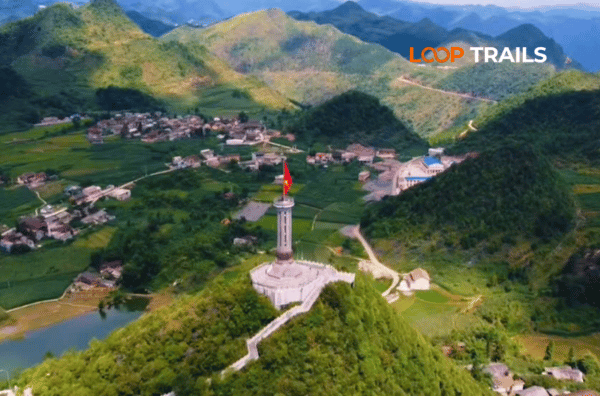
Lung Cu Flag Tower, marking Vietnam’s northernmost point, sits 25 kilometers northeast of Dong Van. The ride takes 45-60 minutes each way on a paved mountain road. Most travelers visit Lung Cu as a morning trip before continuing to Ma Pi Leng Pass.
The tower itself is straightforward—a monument with a large Vietnamese flag at the top, views into China (weather permitting), and a symbolic significance as the country’s northern edge. The journey there passes through Lo Lo Chai village and offers scenic mountain riding.
Plan for 2-3 hours total (round trip plus time at the tower). If you’re spending two nights in Dong Van, Lung Cu makes a good half-day activity. If you’re on a tight schedule, some travelers skip it in favor of Ma Pi Leng Pass.
Ma Pi Leng Pass is 30 kilometers south of Dong Van and takes 45-60 minutes to ride, but that’s misleading—the pass itself is the destination, and you’ll spend much longer stopping for views, photos, and just processing the landscape.
This is one of the most dramatic mountain passes in Vietnam. The road clings to cliff faces above the Nho Que River, with switchbacks, narrow sections, and views that make you forget you’re riding a motorbike. Most itineraries treat Ma Pi Leng as the transition from Dong Van to Meo Vac, not a separate day trip.
If you have extra time in Dong Van, riding to the beginning of Ma Pi Leng and back is possible, but most travelers save it for the main loop progression.
Learn more: Ha Giang Loop Itinerary: 2,3,4,5 days
Option 1: Standard Ha Giang Loop Inclusion (One Night)
This is the minimum viable Dong Van experience—you see the old quarter, catch the market if timing works, and move on.
Option 2: Extended Dong Van Stay (Two Nights)
This pacing lets you experience Dong Van without rushing. You have time to wander back streets, sit in cafes, and absorb the atmosphere.
Option 3: Dong Van as Part of Ha Giang-Cao Bang Combination
If you’re combining Ha Giang and Cao Bang loops, Dong Van stays in the itinerary as a night stop, but the overall journey extends eastward:
This extended routing makes sense if you have 7-10 days and want to see multiple northern Vietnam highlights without backtracking.
Learn more: Ha Giang Cao Bang Loop Jeep tour Guide
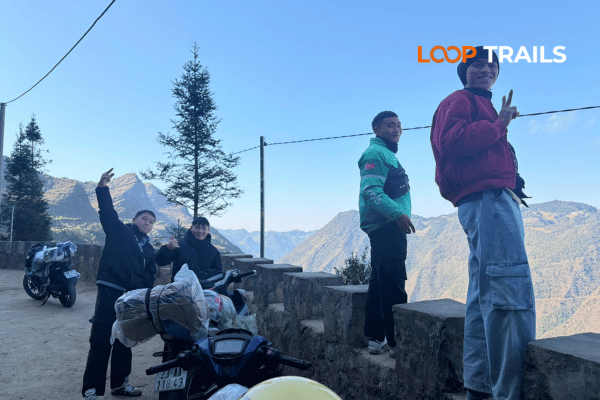
Easy Rider Tours: You ride on the back of a motorbike driven by a local guide. The guide handles navigation, knows the roads, and provides cultural context. For Dong Van specifically, having a local explain the old quarter’s history, point out architectural details you’d miss, and navigate the Sunday market is valuable. Easy Rider tours typically include accommodation, so you don’t worry about finding a guesthouse in Dong Van.
Self-Drive Motorbike Rental: You rent a bike and ride yourself. Dong Van is easy to reach—the roads are well-marked and navigation is straightforward. Once in town, everything is walkable. Self-drive gives you control over pacing and freedom to explore at your own speed. The downside is you miss local knowledge unless you hire a guide separately.
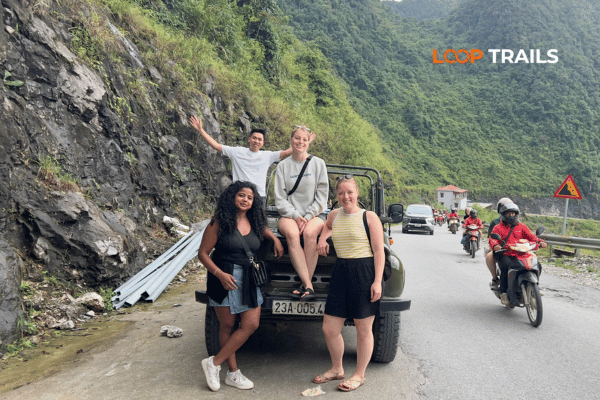
Jeep Tours: For non-riders, Jeep tours cover the Ha Giang Loop in 4×4 vehicles. You still visit Dong Van, stay overnight, and see the market if timing aligns. Less adventurous than motorbike options but comfortable and weather-proof.
Which works for Dong Van? All three options function fine. The old quarter itself doesn’t require special access or insider knowledge to appreciate—you can wander and discover on your own. Where tours add value is in explaining the Hmong King’s Palace history, understanding market dynamics, and finding the best food spots locals actually use.
If you’re doing the Ha Giang Loop solo and want to maximize your Dong Van experience, consider hiring a local guide just for the market or palace visit (ask at your guesthouse). This combines self-drive freedom with targeted local expertise.
Learn more: Ha Giang Loop Easy Rider
Arrive before dark: The roads to Dong Van involve mountain passes and curves. Riding after sunset is risky and unpleasant. Plan your Day 2 to arrive in Dong Van by 4:00-5:00 PM, giving you daylight buffer.
Cash only: Dong Van has a few ATMs (near the market), but they sometimes run out of money, especially on weekends. Withdraw cash in Ha Giang City or Yen Minh before arriving. Most guesthouses, restaurants, and shops don’t accept cards.
Warm clothing: Even if days are pleasant, nights in Dong Van can be cold (especially November-February). Bring layers. Many guesthouses lack heating.
Sunday market timing: If you want to see the market at its busiest, arrive by 7:00-8:00 AM. By 11:00 AM it’s winding down. Set an alarm—this means waking up early after a day of riding, but it’s worth it.
Motorbike parking: The old quarter’s streets are narrow. Park your bike at your guesthouse or in designated areas near the market. Don’t block doorways or narrow passages.
Language barrier: English is limited in Dong Van. Most guesthouse owners speak basic English or have translation apps. In restaurants and shops, pointing and numbers work. Download Google Translate’s Vietnamese pack offline.
Photography etiquette: The old quarter is photogenic, but it’s also people’s homes. Don’t peer into windows, block doorways for shots, or photograph residents without asking. At the market, be even more careful—many ethnic minority people are tired of being photographed constantly.
Water and snacks: Stock up before exploring. The old quarter has small shops, but selection is limited. If you have specific dietary needs or preferences, bring supplies.
Wifi and connectivity: Guesthouses usually have wifi, but it’s slow and cuts out frequently. Download maps, translation apps, and any essential information in Ha Giang City before starting the loop. Cell signal exists but is unreliable.
Learn more: Ha Giang Loop Cost & Tips
Skipping the Sunday market: Some travelers arrive in Dong Van on Sunday afternoon after the market has finished, or leave Sunday morning before it starts. If at all possible, time your visit to catch the market—it’s half of Dong Van’s appeal.
Rushing through the old quarter: Dong Van’s small size tricks people into thinking there’s not much to see. They walk the main street in 10 minutes and declare it “done.” The appeal isn’t checking off buildings; it’s slowing down and noticing details. Sit in a cafe, watch how people use the space, observe the mix of old and new.
Overpacking your Dong Van day: Trying to fit Lung Cu Flag Tower, the Hmong King’s Palace, the old quarter, and departure to Ma Pi Leng all into one morning is too much. Choose what matters most and give yourself breathing room.
Ignoring the Hmong King’s Palace: It sits just outside town, and some travelers skip it thinking it’s not worth the detour. It’s a 15-minute walk and offers important historical context for Dong Van’s development. Budget an hour for the visit.
Staying in newer hotels outside the old quarter: If atmosphere matters to you, stay in the old quarter itself, even if the guesthouses are more basic. Newer hotels are more comfortable but feel generic—you could be anywhere.
Not eating at local spots: The tourist cafes are fine, but the food is mediocre and overpriced by local standards. Eat where locals eat—pho shops in the morning, rice plate places at lunch. Better food, better prices, better experience.
Underestimating cold weather: “It’s Vietnam, it’s tropical” is a mistake in the northern mountains. Dong Van can hit near-freezing in winter. Pack warm clothes or you’ll be miserable.
Forgetting cash: This one bites people repeatedly. ATMs in Dong Van are unreliable. Bring enough cash from Ha Giang City to cover accommodation, food, and market purchases for your Dong Van stay plus a buffer.
Dong Van Old Quarter isn’t trying to be Hoi An. It’s not polished, it’s not optimized for tourism, and it doesn’t bend over backward to make visitors comfortable. That’s exactly why it works. The town exists first and foremost for the people who live there—the tourists are incidental, tolerated, sometimes welcomed, but never the point.
If you approach Dong Van as a photo opportunity or a box to check on the Ha Giang Loop, you’ll leave underwhelmed. If you approach it as a functioning mountain town that happens to have remarkably preserved early 20th-century architecture and a window into ethnic minority cultures, you’ll get it. The buildings matter, but the life happening in and around those buildings matters more.
The Sunday market especially drives this home. You’re watching economic and social systems that have operated for generations, now intersecting with Vietnamese modernity and tentative tourism. Hmong grandmothers selling vegetables next to teenagers on smartphones, traditional textiles stacked next to knock-off sneakers, rice wine measured in recycled Coca-Cola bottles. It’s messy and real and worth waking up early for.
Plan at least one full day in Dong Van if your schedule allows. Arrive Saturday, spend Sunday morning at the market, visit the Hmong King’s Palace, and leave Monday. That pacing gives you time to experience the town properly rather than just passing through. And if you’re doing the full Ha Giang Loop, Dong Van isn’t the most dramatic stop—Ma Pi Leng Pass probably is—but it’s the one that feels most like discovering something that wasn’t built for you.
Learn more: Ha Giang Loop Weather
Dong Van Old Quarter is a preserved historic district in Dong Van town, Ha Giang province, featuring early 20th-century French colonial and traditional architecture. It’s a National Heritage Site and a key stop on the Ha Giang Loop.
Dong Van is typically reached via motorbike as part of the Ha Giang Loop. It’s approximately 150 kilometers from Ha Giang City, usually covered on Day 2 of the loop. Public buses exist but are slow and infrequent.
The main attractions include the historic stone buildings along Pho Co Street, the Hmong King’s Palace (1 kilometer from town center), and the Sunday market. The architecture blends French colonial and traditional Vietnamese styles.
Dong Van market operates daily, but the large weekly market happens on Sunday mornings from approximately 6:00 AM to 11:00 AM. Sunday is when ethnic minority villagers from surrounding areas come to trade.
Stay in the old quarter itself for atmosphere, either in family-run homestays in historic buildings or small guesthouses along Pho Co Street. Budget 150,000-400,000 VND ($6-16) per night for basic to mid-range accommodation.
Most travelers spend one night in Dong Van as part of the Ha Giang Loop. If possible, time your visit to arrive Saturday and leave Monday, which allows you to experience the Sunday market. Two nights is ideal if you want to explore without rushing.
Yes, if you’re doing the Ha Giang Loop. Dong Van serves as a natural overnight stop and offers well-preserved architecture, cultural insight through the market, and access to nearby attractions like Lung Cu Flag Tower and Ma Pi Leng Pass.
The Hmong King’s Palace (Vuong Family Mansion) is a historic mansion built 1902-1921 by Vuong Chinh Duc, a powerful Hmong leader. It’s located 1 kilometer from Dong Van center and costs 10,000 VND to enter. The architecture blends Chinese, French, and Hmong styles.
Yes, but it’s difficult. Most travelers reach Dong Van via motorbike (either self-drive or Easy Rider tour) or Jeep tour. Public buses are an option but limit your flexibility. Once in Dong Van, the old quarter is small and walkable.
Hand-embroidered textiles (bags, scarves) made by Hmong artisans are the main tourist-friendly items. The market primarily serves local needs—vegetables, tools, livestock—but textile stalls offer authentic handmade goods at reasonable prices.
November through February can be genuinely cold, with temperatures dropping to 5-10°C (41-50°F) and occasionally near freezing at night. Bring warm layers, as most accommodation lacks heating.
Most guesthouses offer wifi, but it’s slow and unreliable. Cell signal exists but is spotty. Download offline maps and translation apps before arriving in Dong Van.
Facebook X Reddit Table of Contents If you are a UK traveler planning to ride a motorbike in Vietnam, the most important
Facebook Twitter LinkedIn Table of Contents Learn more: Ha Giang Loop Tours Most people planning the Ha Giang Loop focus entirely on

Facebook X Reddit Table of Contents Learn more: Ha Giang Loop Tours Most articles about the Ha Giang Loop assume everyone in