


Thúy Kiều (Grace) is a travel blogger and content contributor for Loop Trails Tours Ha Giang. She holds a bachelor’s degree in Sustainable Tourism from Vietnam National University, Hanoi, and has a strong passion for exploring and promoting responsible travel experiences in Vietnam’s northern highlands.
They’re both in the north. They both involve dramatic limestone formations. And if you search “best things to do in northern Vietnam,” both names will come up in the first ten results.
But Ha Giang and Halong Bay are about as similar as a mountain trail and a sailing holiday. Same geological ancestry, completely different planet when it comes to the actual experience of being there.
This guide is for anyone staring at a Vietnam itinerary thinking: I have limited time — which one actually deserves it? We’ll break both down honestly so you can make a decision that fits your trip, your travel style, and what you’re actually looking for — not just what’s most Instagrammed.
Learn more: Ha Giang Loop 4 Days 3 Nights
Ha Giang and Halong Bay keep getting compared because they’re both “must-see northern Vietnam” bucket list items, both are logistically accessible from Hanoi, and both involve the same photogenic limestone scenery that Vietnam is internationally famous for.
The honest difference is that Halong Bay is one of the most visited places in all of Southeast Asia — over 3 million visitors annually before the pandemic, now recovering fast. Ha Giang, while growing in popularity, is still a genuine off-the-beaten-path destination that most tourists to Vietnam skip entirely.
That alone shapes the conversation. Halong Bay is the safe, well-organised, widely-praised choice. Ha Giang is the choice that people who’ve been to Halong Bay tend to mention years later as the trip highlight they didn’t expect.
Neither of those characterisations is a knock on either destination. They’re different things. Here’s how they break down.

Learn more: Ma Pi Leng Pass
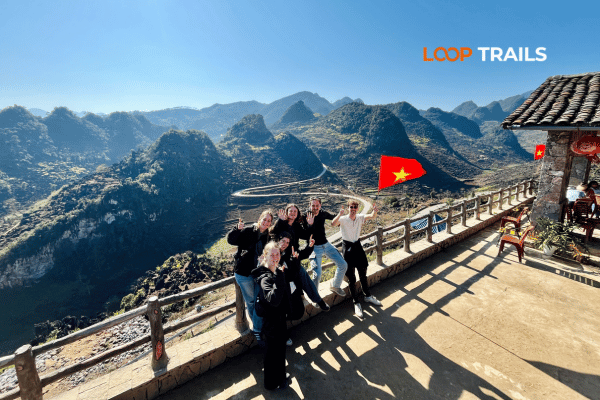
Ha Giang is a province in Vietnam’s far north, bordering China. The Ha Giang Loop is a roughly 350km motorbike circuit through some of the most dramatic mountain scenery in Southeast Asia — the Dong Van Karst Plateau, recognised as a UNESCO Global Geopark.
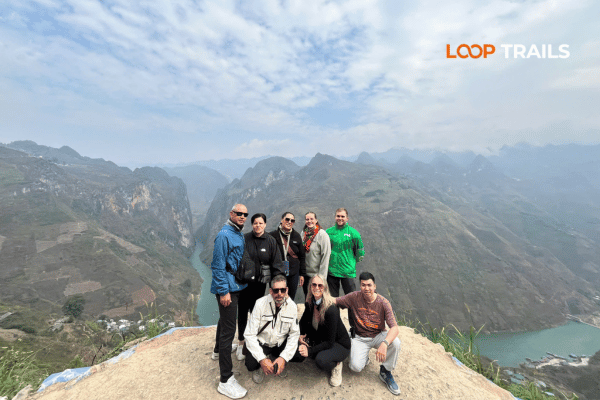
The loop runs from Ha Giang City through a series of high-altitude passes and remote valleys, passing through towns like Quan Ba, Yen Minh, Dong Van, and Meo Vac before returning. The most famous section is Ma Pi Leng Pass, a cliff-carved road above the Nho Que River canyon — the kind of place where the scale of things is so extreme it takes a moment to process.
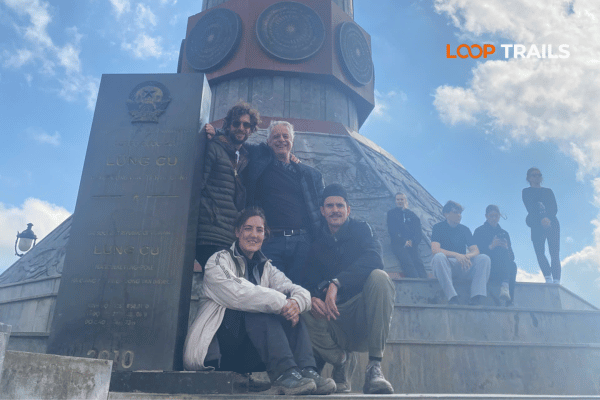
Beyond the scenery, Ha Giang is home to significant ethnic minority communities — H’Mong, Tay, Lo Lo, Giay — with distinct cultures, markets, and festivals. Dong Van Old Quarter has a charming French colonial character. Lung Cu Flag Tower marks Vietnam’s northernmost point. Meo Vac Sunday Market pulls traders from villages across the plateau.
You explore Ha Giang by motorbike (self-drive or with a local Easy Rider guide) or by jeep. It takes a minimum of 3–4 days to do justice to the loop — most people take 5–7.

Learn more: Ha Giang Loop route and itinerary
Halong Bay is a UNESCO World Heritage Site in Quang Ninh Province, about 170km from Hanoi. The bay contains thousands of limestone karst islands and islets rising dramatically from the sea — a landscape so visually distinctive it’s become one of the defining images of Vietnam internationally.
Most visitors experience Halong Bay on overnight or multi-day cruises departing from Ha Long City (or the nearby Cat Ba Island, which has its own quieter bay experience via Lan Ha Bay). Cruises range from budget junk boats to premium vessels with private cabins, kayaking, squid fishing, cooking classes, and cave visits.
Common highlights include: kayaking through floating fishing villages, exploring limestone caves (Sung Sot Cave, Thien Cung Cave), swimming in sheltered bays, watching the sunrise from the deck, and simply sitting with a drink watching the karst islands pass.
Halong Bay is infrastructure-heavy and tourism-ready. Everything is organised. Nothing requires much planning beyond booking the right cruise. It’s about as stress-free as travel in Vietnam gets.

Learn more: Ha Giang Motorbike tour
| Feature | Ha Giang Loop | Halong Bay |
|---|---|---|
| Distance from Hanoi | ~300km north | ~170km east |
| Time required | 4–7 days minimum | 2–3 days (1–2 nights cruise) |
| Experience type | Active, immersive, cultural | Relaxed, scenic, organised |
| Physical demand | Moderate–High (motorbike) | Low |
| Crowd level | Low–Moderate | Very High |
| Authenticity | High | Lower (heavily touristed) |
| Tour options | Easy Rider / Self-Drive / Jeep | Cruise (budget to luxury) |
| Scenic type | Mountain, canyon, karst plateau | Karst sea, bays, islands |
| Cost relative | Moderate | Moderate–High (cruise quality varies) |
| Permit requirements | Some restricted zones (check) | No |
| UNESCO status | Global Geopark | World Heritage Site |
Learn more: Northern Viet Nam Itinerary 2026
This is the most obvious comparison point, and the answer is genuinely: they’re both extraordinary, just in very different registers.
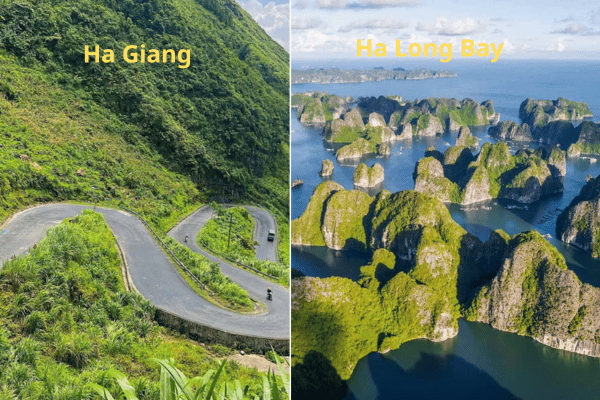
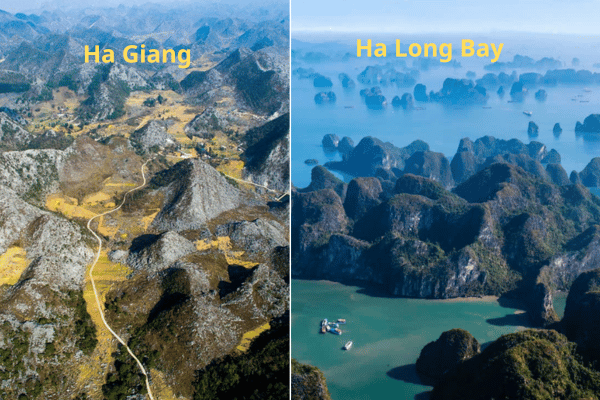
Halong Bay scenery is immediate and immersive from the moment you leave the harbour. The karst islands appear around you in every direction — some just a few metres wide, some large enough to have their own forests and beaches. In calm weather and good light, the reflections on the water create images that look like they’ve been digitally enhanced. They haven’t. The scale of the bay means that even on a busy cruise, you’ll have stretches where the only thing in view is water, mist, and limestone.
The visual drama of Halong Bay hits instantly. It’s a landscape you understand within minutes of arrival.
Ha Giang scenery requires movement. The Dong Van Karst Plateau reveals itself slowly — from the Heaven’s Gate (Quan Ba) twin mountains visible from a roadside viewpoint, to the deep valley drops at the edge of Yen Minh, to the sudden appearance of the Ma Pi Leng canyon after a long uphill stretch. The payoff builds.
What makes Ha Giang distinct is the combination of geological drama and human presence. The terraced hillsides carved by generations of farming communities, the roadside villages with wood-smoke rising in the cold morning air, the H’Mong children on the way to school — it adds a dimension that Halong Bay, however beautiful, simply doesn’t offer.
Verdict on scenery: Both are genuinely world-class. Halong Bay is more immediately photogenic. Ha Giang is more textured and emotionally resonant over multiple days.

Learn more: Ha Giang Motorbike tour
This is where the choice becomes clear for most travellers.
At Halong Bay, your itinerary is largely set by the cruise you book. On a typical 2-night cruise: you board, sail out, kayak through a cave or floating village, have dinner on the boat, watch the sunset, sleep, wake up to mist on the water, visit a cave, have lunch, sail back. Optional: swimming, squid fishing at night, cooking class, tai chi on deck.
It’s a good experience. It’s a well-managed experience. But it’s not a deeply active or immersive one. The bay is something you witness and float through, not something you engage with on a personal level. That’s not a criticism — that’s the nature of the place.
At Ha Giang, you are the activity. Riding the loop — whether on the back of a local guide’s bike, driving yourself, or in a jeep — puts you in the landscape rather than looking at it from a distance. You stop when you want, walk into villages, eat in a local family’s home, sleep in a traditional homestay, talk to people, get lost occasionally, find your way back.
Days on the Ha Giang Loop have texture — the long uphill stretch to a pass, the relief of a coffee stop in a small town, the unexpected market, the wide-angle view at 4pm when the light goes golden across the plateau. Each day feels distinct.
Verdict on experience: If you want to relax and be transported through beautiful scenery, Halong Bay delivers. If you want to feel like you’ve earned your landscape, Ha Giang is the answer.

Halong Bay is one of the most visited natural attractions in Southeast Asia. The bay itself is large enough that not all sections feel equally crowded, and better-quality cruise operators navigate away from the busiest spots. But the infrastructure — the Ha Long City harbour, the embarkation areas, the queue of cruise boats departing at the same time — is unmistakably mass tourism in operation.
The floating fishing villages that feature on almost every cruise itinerary have been shaped by decades of tourism. Interactions are cordial but transactional. You’re seeing a preserved version of a way of life, not life itself.
This doesn’t ruin the experience. Plenty of people come back from Halong Bay genuinely moved. But manage expectations: it’s a tourist experience done well, not an off-the-beaten-track encounter.
Ha Giang feels different. The region’s distance from Hanoi (6+ hours), the requirement for a motorbike or jeep, and the absence of mass-market tour packages means that the type of traveller who arrives there has self-selected for something more adventurous. The local communities haven’t been repositioned as backdrops yet. Homestays are run by families, not hospitality corporations.
That said: Ha Giang is not undiscovered. October brings buckwheat flower season crowds. Certain viewpoints on Ma Pi Leng get busy during peak periods. Dong Van and Meo Vac have grown their guesthouse and cafe scenes visibly. It’s popular — but popular on a completely different scale to Halong Bay.
Verdict on authenticity: Ha Giang, without question. Halong Bay is tourism-managed; Ha Giang still feels like you found something.

Learn more: Ha Giang Loop Cost & Tips
Halong Bay costs are primarily driven by the cruise you choose. Budget boats at the low end of the market offer very basic amenities and service; premium and boutique cruises at the high end are genuinely luxurious but priced accordingly. There’s a well-documented quality gap between price tiers — doing a lot of research before booking a budget cruise is strongly recommended, as the experience varies widely. Transportation to/from Hanoi is an additional cost (shuttle bus or private transfer).
Ha Giang costs break down differently:
Ha Giang isn’t cheap relative to other parts of Vietnam if you’re booking a quality guided tour — but the multi-day, multi-experience nature means the cost-per-memory ratio is extremely high. You’re paying for 5–7 full days of immersive experience, not a 2-night boat trip.
Verdict on value: Depends on what “value” means to you. Halong Bay can feel overpriced if you book poorly. Ha Giang feels like extraordinary value for the experience delivered, almost regardless of format.
Planning a Ha Giang Loop trip? Loop Trails runs small-group and private tours in Easy Rider, self-drive, and jeep formats — all with local guides who’ve ridden every section of this route. [See Ha Giang Loop tour options →]
Learn more: Lung Cu Flag Tower Guide
Halong Bay: A 1-night cruise is the minimum to actually experience the bay properly (arriving and leaving the same day is genuinely not worth it). Two nights is the sweet spot for most travellers — enough time to see key sites, have a relaxed dinner on the water, and wake up to the morning mist. Three nights is for those who want to get further into the bay, visit less-trafficked sections, or combine with Cat Ba Island.
Add travel time from Hanoi: approximately 3–4 hours each way by road, or slightly less with faster transfers.
Ha Giang Loop: Three days is the stated minimum; four to five days is the real minimum for doing it justice. Seven days opens up secondary routes and detours including Du Gia, a proper boat trip on the Nho Que, extended time in Dong Van, and the northern edge near Lung Cu.
Include travel time from Hanoi: around 6 hours by bus or car each way.
If you’re operating on a tight Vietnam itinerary (2–3 weeks total), this time difference is decisive for many travellers. Halong Bay costs you 3–4 days. Ha Giang costs you 7–10 days including transit.

Learn more: Ha Giang Homestay Guide
Ha Giang is the right call if:
Ha Giang is not ideal if:

Learn more: Ha Giang Cao Bang 5 Days
Halong Bay is the right call if:
Halong Bay is less ideal if:

Learn more: Ha Giang to Cao Bang
Logistically, yes — and many people do. Ha Giang and Halong Bay are both accessible from Hanoi, which means Hanoi acts as the hub for both.
A combined northern Vietnam itinerary might look like:
Days 1–2: Arrive Hanoi, explore the city Days 3–5: Halong Bay cruise (2 nights) Day 6: Return to Hanoi, rest or prepare Days 7–13: Ha Giang Loop (6–7 days including travel) Day 14: Return to Hanoi, depart or continue south
This is a 14-day itinerary that’s genuinely achievable without feeling rushed — though it does front-load the trip. Some travellers prefer to do Ha Giang first while energy is high, then decompress on a Halong Bay cruise before heading south.
If Cao Bang is on your radar, it pairs naturally with Ha Giang as a combined northern circuit — Ban Gioc Waterfall and Phia Oac National Park add significant texture to the far north, and the Ha Giang–Cao Bang combined route is one of the most rewarding extended itineraries in Vietnam. Plan for 10+ days for both provinces, which would likely mean choosing between Cao Bang and Halong Bay rather than doing all three.
Learn more: Ha Giang in September & October
October–November: Peak season. Buckwheat flowers bloom across the plateau — fields of pink and white against grey limestone peaks. Dry, cool, and visually extraordinary. Book homestays in advance.
March–May: Good conditions, terraces turning green, fewer crowds than October. Recommended for those who want the scenery without the peak-season competition for beds.
December–February: Cold — genuinely cold at altitude — but roads are dry and views on clear days are exceptional. Pack layers.
June–August: Rainy season. Landslide risk on mountain roads, reduced visibility, some route closures possible. Manageable with flexibility, but not the best introduction to the region.
October–April: Best weather for the bay. Dry season, clear visibility, calmer seas. March and April can be warm and hazy; October and November are often considered ideal.
May–September: Hot and increasingly wet. Typhoon risk exists during this period — some cruises get cancelled with little notice. The bay can be stunning in early morning monsoon light, but the risk of disruption is real.
January–February: Can be cold and misty, which is atmospheric but limits swimming and some activities. Chinese New Year period sees Vietnamese domestic travel spike — some price increases and availability tightens.

Learn more: Ha Giang Loop Private Car & bus from Hanoi
The standard route from Hanoi is by overnight sleeper bus — typically departing late evening and arriving Ha Giang City in the early morning. Journey time is around 6 hours. Alternatively, private car or minivan transfers offer more comfort and flexibility. There’s no direct train service to Ha Giang City.
From Ha Giang City, the Loop starts immediately — most guesthouses can help arrange bikes, guides, or connect you with tour operators on arrival.
Shuttle buses from Hanoi to Ha Long City (or to a cruise transfer point) are widely available and run by most major cruise operators as part of the package. Journey time by road is approximately 3–4 hours. Private transfers are an option for groups or those preferring flexibility.
Alternatively, some travellers base themselves on Cat Ba Island to explore Lan Ha Bay — a less-crowded adjacent bay with a similar landscape and a better island-life atmosphere. The ferry from the mainland makes Cat Ba an easy independent option.

Learn more: Ha Giang Loop for Beginners
Here’s a simple way to think about it:
Choose Ha Giang if: You want your trip to feel earned, you have time, and you’re drawn to mountains, culture, and the feeling of going somewhere most tourists don’t reach.
Choose Halong Bay if: You want comfort and iconic scenery with minimal planning friction, or you’re travelling with people who aren’t up for a multi-day motorbike circuit.
Choose both if: You have 14+ days in northern Vietnam, energy for back-to-back experiences, and you want the full picture of what northern Vietnam looks like.
Choose Ha Giang + Cao Bang instead of Halong Bay if: You’ve already done Halong Bay before, or you want to go deeper rather than wider — the far north is extraordinary enough to fill two full weeks without ever seeing the ocean.
Ready to explore Ha Giang? Whether you want a guided Easy Rider experience, a self-drive adventure, or a private jeep tour, Loop Trails can sort it. We’re locally based, small-group focused, and genuinely obsessed with this region. [Contact us on WhatsApp →] or [browse our Ha Giang Loop tours →].

Learn more: Ha Giang Loop for Couples
Both destinations are worth your time in Vietnam. Neither is overhyped in the absolute sense — Halong Bay really is that scenic, and Ha Giang really is that extraordinary.
But if we’re being direct: Ha Giang delivers a more lasting, more personal, and more genuinely surprising experience. Halong Bay is a spectacle. Ha Giang is a journey. And there’s a meaningful difference.
The travellers who come back from Vietnam and say they almost didn’t make it to Ha Giang — and can’t believe they almost didn’t — are a consistent enough group that it’s worth taking seriously. Halong Bay almost nobody regrets. Ha Giang almost nobody forgets.
If you can only do one, and you have the time, go north to the mountains.
Loop Trails is a locally-run tour operator based in Ha Giang. We run small-group and private Ha Giang Loop tours in three formats: Easy Rider (guided pillion), self-drive supported, and private jeep. We also offer Ha Giang–Cao Bang combined tours for those wanting to go further.
We know this region the way only locals can — which sections are rough in wet weather, which homestays are actually good, where to stop for the best views. No filler, no fuss.
[Browse Ha Giang Loop Tours →] | [Explore Ha Giang + Cao Bang →] | [Chat with us on WhatsApp →]
Learn more: Ha Giang Loop for Families & Groups
It depends on what you’re looking for. Ha Giang offers a more immersive, culturally rich, and adventurous experience — but requires more time and physical involvement. Halong Bay is a relaxed, iconic scenic cruise that suits almost any traveller. For those with time and a sense of adventure, Ha Giang tends to leave a deeper impression.
Halong Bay works well in 2–3 days (1–2 nights on a cruise). Ha Giang needs a minimum of 4 days on the loop itself, plus around 6 hours travel each way from Hanoi. Most people find 5–7 days is the right length for Ha Giang.
Yes. Both are accessible from Hanoi. A 14-day northern Vietnam trip can comfortably include 2–3 days at Halong Bay and 6–7 days in Ha Giang, with Hanoi as the base in between. It’s one of the better northern Vietnam itineraries available.
For most first-timers, yes — Halong Bay is an iconic experience that delivers on its reputation when you book the right cruise. Just research the cruise operator carefully, as quality varies enormously between budget and mid-range boats.
Generally yes. Ha Giang is considered safe by Vietnam standards. Easy Rider tours add a built-in safety net — you’re with a local guide who knows the roads and communities. Self-drive requires genuine riding experience and sensible behaviour on mountain roads. Standard travel precautions apply.
There are permit requirements for foreigners in certain restricted border zones within Ha Giang Province. Requirements can change, and enforcement varies. Check with your tour operator or guesthouse before your trip — they’ll have current information. Most reputable operators handle this as part of their service.
October and November (buckwheat flower season) are the most popular and visually spectacular. March to May offers good conditions with fewer crowds. Avoid the peak rainy season (July–August) unless you’re experienced and can handle flexibility around road conditions.
It depends on your expectations and the cruise you book. The bay itself is vast, and premium operators navigate away from the busiest areas. Budget boats cluster in the most accessible sections and can feel crowded. If genuine remoteness matters to you, Lan Ha Bay near Cat Ba Island offers a quieter alternative with similar scenery.
Yes — jeep tours of the Ha Giang Loop are a great option for non-riders, older travellers, couples, and anyone who wants the scenery without the physical demands of riding. Loop Trails runs private and small-group jeep tours that cover the same route with full flexibility.
Both can be done on a moderate budget. Halong Bay’s budget-tier cruises are cheaper in headline cost but often disappoint on quality; mid-range cruises offer much better value. Ha Giang’s costs (transport, accommodation, food, guide/rental) are spread over more days but the per-day cost isn’t necessarily higher than a decent Halong Bay cruise. Ha Giang generally feels like better value for the experience delivered.
The most popular option is the overnight sleeper bus from Hanoi to Ha Giang City — approximately 6 hours, departing in the evening. Private car or minivan transfers are more comfortable and flexible. There is no direct train service.
The Ha Giang–Cao Bang route combines the classic Ha Giang Loop with an extension into Cao Bang Province, including Ban Gioc Waterfall (one of Southeast Asia’s largest), Nguom Ngao Cave, and Phia Oac National Park. It’s a longer trip (usually 8–12 days total) but one of the most rewarding extended routes in northern Vietnam.
Contact information for Loop Trails
Website: Loop Trails Official Website
Email: looptrailshostel@gmail.com
Hotline & WhatSapp:
+84862379288
+84938988593
Social Media:
Facebook: Loop Trails Tours Ha Giang
Instagram: Loop Trails Tours Ha Giang
TikTok: Loop Trails
Office Address: 48 Nguyen Du, Ha Giang 1, Tuyen Quang
Address: 48 Nguyen Du, Ha Giang 1, Tuyen Quang

Facebook X Reddit Table of Contents Learn more: Ha Giang Loop Tours This is the question that sits in almost every Ha

Facebook X Reddit Table of Contents Learn more: Ha Giang Loop Tours Most people drive past the Quan Ba area twice on