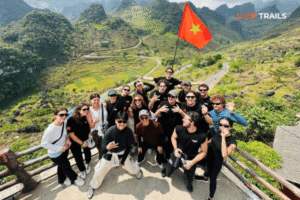


Thúy Kiều (Grace) is a travel blogger and content contributor for Loop Trails Tours Ha Giang. She holds a bachelor’s degree in Sustainable Tourism from Vietnam National University, Hanoi, and has a strong passion for exploring and promoting responsible travel experiences in Vietnam’s northern highlands.
Learn more: Ha Giang Loop Tours
Ask anyone who’s ridden the Ha Giang Loop which stretch of road stayed with them longest. The answer is almost always the same: the crossing from Dong Van to Meo Vac, over the Ma Pi Leng Pass.
And at the bottom of that crossing — on the far side of one of Vietnam’s most dramatic mountain roads — sits Meo Vac town.
It’s not a big place. There are no luxury resorts, no Instagram-famous rooftop bars, no curated night markets designed for tourists. What Meo Vac has is the real thing: a Sunday market that draws ethnic minority communities from across the surrounding mountains, a turquoise river that runs through a canyon so steep it barely sees the sun, and a position at the heart of a landscape so raw it’s been declared a UNESCO Global Geopark.
Meo Vac is also — practically speaking — one of the key overnight stops on the Ha Giang Loop. If you’re planning your route and trying to figure out how long to spend here, what to do, and how to get the most out of this part of the trip, this guide covers all of it.
Learn more: Ha Giang Loop 3 Days 2 Nights
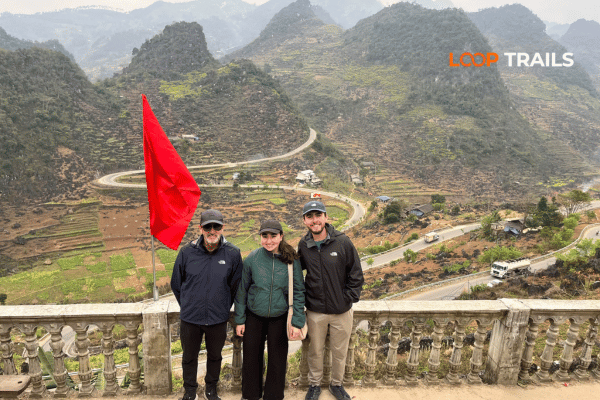
Meo Vac is a district town in the far north of Ha Giang province, sitting at approximately 1,000 metres above sea level in a narrow valley carved by the Nho Que River. To the northwest is Dong Van town, connected by the Ma Pi Leng Pass road — around 20 kilometres of mountain road that is, on a clear day, genuinely one of the most spectacular drives in Southeast Asia.
To the south and east, the roads descend through Du Gia district back toward Ha Giang City — completing the loop. Meo Vac is, in other words, the hinge point of the whole circuit.
Its importance in Ha Giang Loop logistics is partly practical: it’s the natural endpoint of the Dong Van–Ma Pi Leng section, and a reasonable base for exploring the river valley and surrounding villages. But it also matters culturally. Meo Vac is home to the largest Sunday market in the region, drawing Hmong, Giay, Lo Lo, and other ethnic minority communities from villages spread across an extremely rugged hinterland. Coming here on a Sunday isn’t just a tourist activity — it’s a window into how the communities of this entire mountain region actually connect and trade.

Learn more: Ma Pi Leng Pass
The road between Dong Van and Meo Vac crosses the Ma Pi Leng Pass, a section of Route 4C that was hand-carved into the cliff face by local labourers — largely Hmong workers — over several years in the late 1950s and early 1960s. The route is sometimes called the “Happiness Road” (Con Đường Hạnh Phúc), a name that reflects both the enormous human cost of building it and the connection it brought to an extraordinarily isolated region.
The terrain it crosses is hard to describe without sounding like you’re exaggerating. The Dong Van Karst Plateau — of which this area is the southern edge — is a mass of ancient, folded limestone that has been eroded into a landscape of knife-ridge peaks, sheer-walled canyons, and deep river valleys. The Nho Que River has cut one of the deepest gorges in the region, and the Ma Pi Leng road runs along the canyon wall at a height that makes even confident riders pause.
At its most dramatic point, the road is essentially a ledge — narrow, winding, with the rock face on one side and a vertical drop of several hundred metres to the river on the other. The river visible far below is an extraordinary colour: a pale, almost unreal turquoise-green, caused by the limestone sediment it carries. Photos do not fully convey the scale.
On the Vietnamese road classification scale, Ma Pi Leng is genuinely considered one of the four great mountain passes (tứ đại đỉnh đèo) of the north — alongside O Quy Ho, Khau Pha, and Pha Din. Whether it’s the “best” is a matter of personal taste. But in terms of sheer canyon drama, nothing else in the north matches it.
Learn more: Ha Giang Loop Solo Travel
A few years ago a cantilevered glass-and-steel skywalk was installed at one of the most photogenic points on the Ma Pi Leng cliff face, extending out over the gorge with the Nho Que River visible directly below. It charges a small entrance fee (check current rates locally — these change). The views are undeniably dramatic, and it’s worth the stop for the vertigo experience alone.
That said, the fixed viewpoints are not the only way to see Ma Pi Leng. The road itself has several natural pullout points where riders stop and look across the gorge. If you’re on a guided tour, your guide will know the best spots and when to pull over safely. If you’re self-driving, go slowly on this section and don’t try to take photos while actually riding. There are enough places to stop.
One practical note: the skywalk and some viewpoints on the Dong Van side get significantly more crowded on weekends, especially during October–November peak season. If you can ride Ma Pi Leng on a weekday morning, you’ll have most of the pullout points to yourself.
The actual road surface of Ma Pi Leng varies seasonally and after heavy rain. During dry season it’s generally rideable in reasonable condition. Wet season brings higher risk: not just surface slipperiness but occasional rock falls and temporary closures after heavy rainfall. Always ask locally in Dong Van before heading out — guesthouse staff and guides know the current condition.
The riding itself is demanding in places. There are tight hairpin corners on the approach from both directions, steep gradients, and sections where visibility around corners is limited. The speed here isn’t the issue — you won’t want to go fast. The issue is reading the road properly and giving oncoming vehicles (trucks use this road too) enough space. Riding defensively and keeping your eyes on the road rather than the view is the basic discipline required.
For first-time Ha Giang riders or anyone not confident on technical mountain roads, this is the single strongest argument for taking a guided tour rather than self-driving. Ma Pi Leng isn’t where you want to be learning mountain road technique.
Not sure whether to ride solo or go with a guide? [Check out the Loop Trails Ha Giang Loop tour options] — we break down Easy Rider, Jeep, and Self-Drive clearly so you can choose based on your experience level.
Learn more: Ha Giang Market Days
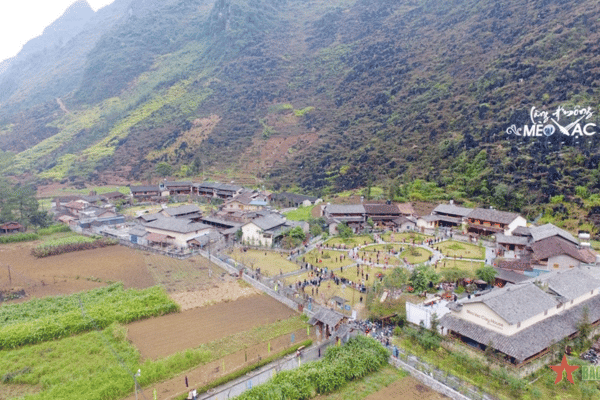
After the adrenaline of Ma Pi Leng, Meo Vac town comes as a welcome exhale. It’s a small but functional district town with a main street, a cluster of guesthouses, restaurants catering to both locals and travellers, a market area, and the general low-key hum of a remote Vietnamese provincial centre.
Don’t expect a lot of tourist polish. Meo Vac is a working town, and that’s partly the point. The travellers who end up loving this place are usually the ones who slow down, walk around without an agenda, and let the town show itself on its own terms.
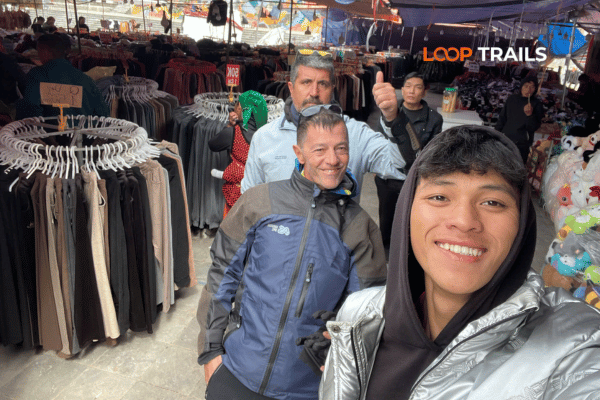
Meo Vac’s Sunday market is one of the most important ethnic minority markets in the whole Ha Giang region — and arguably one of the most authentic in northern Vietnam that’s still relatively accessible.
It runs every Sunday morning, typically from early in the day until early afternoon. Ethnic minority communities — predominantly Hmong (both Flower and Black), Giay, Lo Lo, Pu Peo, and others from surrounding mountain villages — come down to trade livestock, agricultural produce, textiles, tools, and food. It’s not a craft market for tourists. It’s where people from isolated mountain communities come to do actual commerce, meet people from other villages, and socialise.
What you’ll see: livestock corrals in the lower section (horses, cattle, pigs — this is a serious livestock market), stalls selling medicinal herbs, cloth, agricultural tools, clothing both traditional and modern, and food stalls doing a brisk trade in hot dishes from the early morning. The energy is dense, loud in a purposeful way, and completely unlike anything in the southern part of Vietnam.
The textile section is worth particular attention. Flower Hmong embroidered clothing, indigo-dyed fabric, and occasionally pieces from smaller groups like the Pu Peo are available for purchase. Prices are negotiated. Nothing is priced for tourist markup — you’re buying in the same context that locals buy.
A few things to keep in mind:
Learn more: Ha Giang Food guide
Meo Vac has a functional range of budget to mid-range guesthouses along the main road and in the surrounding streets. Quality and availability change enough that naming specific places here would date quickly — ask other travellers, check current reviews, or ask your Loop Trails guide when booking. Most guesthouses are clean, simple, and completely adequate for a one or two-night stop.
For food, the main street has a handful of local pho and bun restaurants that open early (important if you’re heading to the Sunday market or want to be on the road for Ma Pi Leng at first light). There are also restaurants specifically familiar with traveller requests — egg coffee, bánh mì, fried rice — for when you’ve had enough of pointing at the menu.
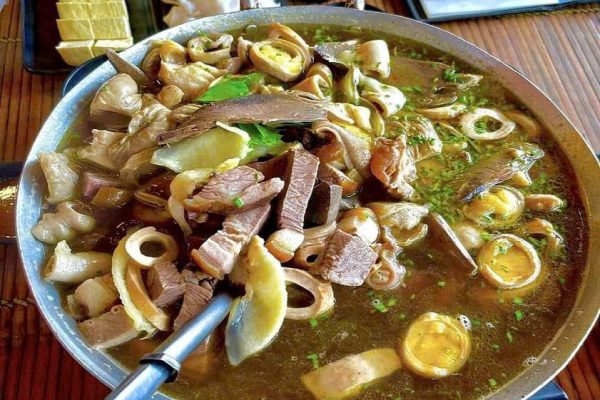
One specific dish worth seeking out in this region: thắng cố, a traditional Hmong hot pot made with horse or buffalo meat and offal, served at market events and some local restaurants. It’s an acquired taste, but trying it at least once is part of the full northern Vietnam experience.
Learn more: Tu San Canyon & Nho Que River Boat Trip
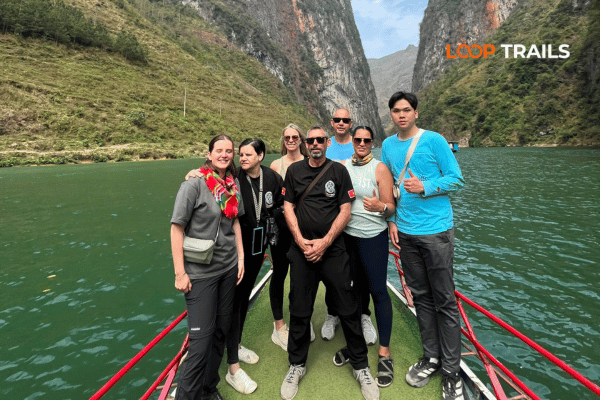
The Nho Que River runs through the canyon below Ma Pi Leng before widening into a more navigable stretch south of Meo Vac. Boat trips on this section of the river have become one of the most popular activities in the area — and for good reason.
The canyon walls on either side are sheer limestone, the water maintains that distinctive turquoise-green colour, and from the water looking up, the scale of the gorge becomes fully apparent in a way it isn’t from the road. The boat trips typically depart from a launch point accessible from Meo Vac (check current departure times and pricing locally — these change seasonally). A standard trip runs downstream for a stretch then returns; the duration and itinerary vary.
If you’ve got a full day in Meo Vac, combining a morning market visit (on Sunday) or an early ride of Ma Pi Leng with an afternoon boat trip is an excellent use of your time. The light on the river in the late afternoon is different — softer, more saturated — from the midday glare.
Learn more: Hmong Culture in Ha Giang
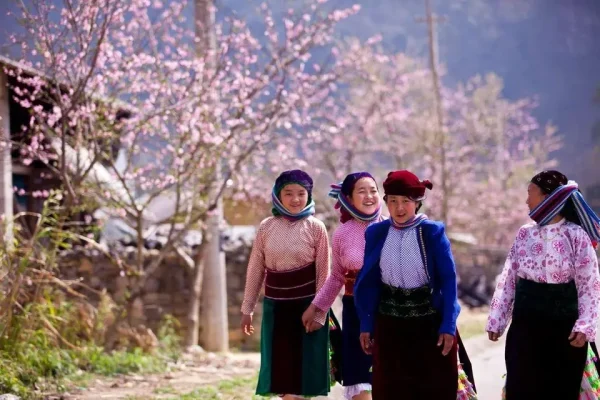
The Meo Vac district is ethnically one of the most diverse in Ha Giang province. The dominant groups you’ll encounter are:
Hmong — The largest group in the region. In the Meo Vac area you’ll primarily encounter Flower Hmong (Hmong Hoa), known for their brilliantly colourful embroidered clothing. Their villages are spread across the mountain slopes, often at high altitude, and many families descend to Meo Vac on market day.
Giay — An ethnic group with Tai linguistic roots, the Giay tend to settle in valley floors and are often involved in wet-rice agriculture where the terrain allows. You’ll find Giay villages in the river valley areas south of Meo Vac.
Lo Lo — More concentrated around the Dong Van and Lung Cu area to the northwest, but the broader Meo Vac district has Lo Lo communities as well. If you’ve visited Lo Lo Chai village, you’ll recognise the distinctive embroidery style.
Pu Peo — One of Vietnam’s smallest ethnic groups by population, the Pu Peo are found in small numbers in Ha Giang and occasionally attend the Meo Vac market. Encountering them is genuinely rare; most travellers don’t even know to look for them.
The diversity of the Meo Vac Sunday market is precisely because this town serves as a regional hub for all of these communities. Seeing Flower Hmong women in full festive dress standing next to Giay farmers selling grain next to a Lo Lo elder examining cloth — that compressed cultural density is what makes this market unlike anything else in the region.
Learn more: Ha Giang Motorbike tour
Meo Vac is not a short drive from Ha Giang City. The route most travellers take follows the Ha Giang Loop — north via Yen Minh and Dong Van, then over Ma Pi Leng to Meo Vac. In road distance that’s roughly 150–160 kilometres, but mountain road conditions mean the actual travel time is considerably longer than that distance implies.
Most Ha Giang Loop itineraries reach Meo Vac on Day 2 or Day 3, having spent a night in either Yen Minh or Dong Van the previous night. The structure looks roughly like this:
Standard 3–4 day Loop (counterclockwise):
The Dong Van to Meo Vac leg is the one everyone talks about. It’s not long in distance, but the road is slow by necessity — you don’t rush Ma Pi Leng — and most people stop multiple times for photos and viewpoints. Budget a minimum of two hours for this section even without stops, and three to four hours if you’re doing it properly.
The alternative entry from the south — coming up through Du Gia to Meo Vac first, then crossing to Dong Van in the opposite direction — is less common but equally valid. It means you ride Ma Pi Leng with Dong Van as the destination rather than Meo Vac, which some riders prefer for the way the canyon reveals itself from that direction.
Getting to Meo Vac without riding the Loop yourself: If you’re on a Loop Trails Easy Rider tour or a jeep tour, your guide and vehicle handle everything. You’ll be dropped at guesthouses, guided to the market or boat trip, and taken across Ma Pi Leng with someone who’s done it dozens of times. If you’re renting a motorbike for self-drive, you’ll need offline maps and a solid comfort level with mountain roads before you get to the Ma Pi Leng section.
Learn more: Ha Giang Loop by jeep for Families & Groups
Meo Vac specifically — and the Ma Pi Leng section in general — is the part of the Ha Giang Loop where the choice of how you travel matters most. Here’s a clear breakdown:
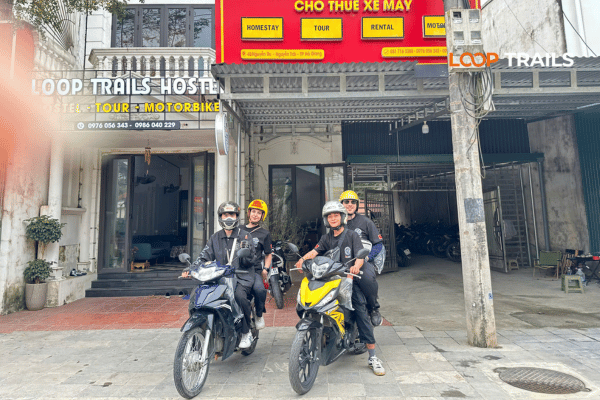
Easy Rider guided tour (you ride pillion, guide drives): Best for first-timers, solo travellers, couples who want to share the experience without navigation anxiety, and anyone for whom deep local context matters. Your Easy Rider guide has usually ridden Ma Pi Leng hundreds of times. They know the safe pullout points, can read the road conditions, and can take you into the Meo Vac Sunday market with introductions rather than just observation. You get to look at the view instead of the road. For Ma Pi Leng specifically, this matters.
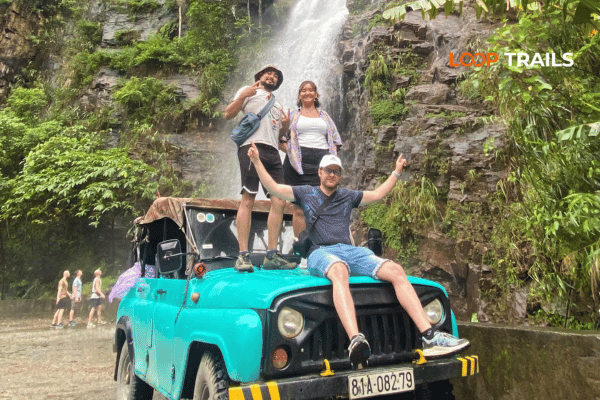
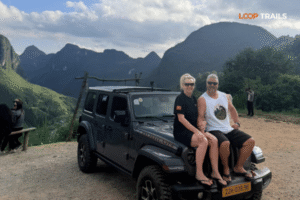
Jeep tour (small group, 4WD vehicle): Best for couples or groups of 3–4, families, anyone who isn’t comfortable on a motorbike at all, or travellers doing the Loop in wet-season conditions when motorbike roads are significantly more challenging. The jeep gives you a comfortable seat, protection from weather, and the flexibility to stop anywhere. The Nho Que River views and Ma Pi Leng are entirely accessible — the jeep road is the same road. You won’t miss anything scenic. If you’re primarily motivated by the views and cultural stops rather than the riding experience itself, a jeep makes the whole trip more comfortable without sacrificing the destination highlights.
Self-drive motorbike rental: Best for experienced riders with prior Vietnam mountain road experience who want maximum independence. If this is you, Meo Vac rewards it — you can arrive the night before Sunday market, stay as long as you want, and set your own pace over Ma Pi Leng. But be honest with yourself about your riding level. Ma Pi Leng is not the place to discover that mountain roads are harder than you expected.
Ready to plan your route? [Explore Loop Trails Ha Giang Loop tours] or [browse our motorbike rental options] — or drop us a message on WhatsApp and we’ll help you figure out the best fit for your travel dates and group.
Learn more: Ha Giang Buckwheat Flowers Season
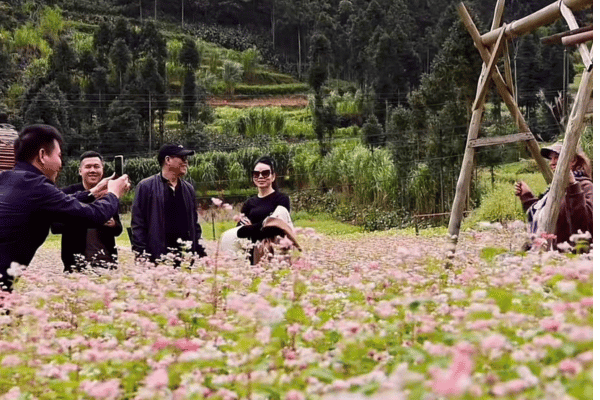
October to March (Dry / Cool season): This is peak Ha Giang Loop season. Roads are drier, skies tend to be clearer (especially important for Ma Pi Leng views), and the landscape transitions through the buckwheat flower bloom (roughly October–November across the Dong Van plateau — timing shifts year to year, check local updates) to the dramatic winter light of December–February.
Note that Meo Vac at altitude gets genuinely cold in December–February. Temperatures can drop significantly overnight and in the early morning riding hours. If you’re crossing Ma Pi Leng in winter, layer properly.
April to September (Wet / Green season): Monsoon rains make the roads more demanding and increase landslide risk. Ma Pi Leng and the approach roads can close temporarily after heavy rainfall — check conditions every morning before setting out from Dong Van. The upside: green-season landscapes are extraordinary, the Nho Que River runs higher and often a deeper colour, tourist numbers are much lower, and accommodation is easier to find without advance booking.
The Sunday market — every week: The market runs year-round, every Sunday. There’s no off-season for it. The energy is slightly different in rainy season — fewer vendors from very remote communities who can’t make the mountain descent in heavy rain — but it still runs. If the Sunday market is a priority, align your itinerary accordingly. It’s worth planning around.
Festival season: Hmong New Year (approximately November–December, based on lunar calendar, varies year to year) is the most significant festival in this region. Meo Vac and the surrounding communities celebrate with particular intensity — traditional games, music, full traditional dress, inter-village gatherings. Being here during this period is special. Accommodation books out quickly; plan well ahead if this is your target window.
Learn more: Ha Giang Safety Tips
Book accommodation in advance for Saturday night. The Sunday market draws other travellers specifically, and guesthouses fill up on Saturday nights during peak season. If you’re arriving Saturday evening, don’t assume you’ll find something easily.
Bring cash. ATMs exist in Meo Vac town but are not always reliable. Have enough cash from Ha Giang City to cover at least two nights of accommodation, meals, the boat trip, and any market purchases. Card payments are not common here.
Nho Que boat trips — check departure times locally. The boat operation has variable schedules depending on season, water levels, and demand. Don’t plan your whole day around it without confirming the day before. Your guesthouse staff will know the current status.
Ma Pi Leng in the morning. If you’re crossing the pass from Dong Van to Meo Vac, aim to start early — 7–8am. The light from the east hits the canyon walls beautifully in the morning, visibility is typically best before midday haze builds, and you’ll share the viewpoints with fewer other riders. Afternoon crossings are fine but often hazier.
Dress modestly at the market. The Meo Vac Sunday market is a community event, not a tourist attraction. Shorts and sleeveless tops are fine for the road but not ideal here. A light layer over your shoulders shows basic respect in this context.
Fuel up before leaving Meo Vac in either direction. Whether you’re heading back south toward Du Gia or northwest back to Dong Van, fuel availability between towns is not guaranteed. Fill up before you leave.
Connectivity is variable. Mobile data in Meo Vac town is usually workable, but it drops out on the Ma Pi Leng road section. Download offline maps before leaving Dong Van. If you need to contact anyone back home before a section with no signal, do it in town.
Learn more: M Pass & Lung Ho
Meo Vac is a district-level town in Ha Giang province, in the far north of Vietnam. It sits at the southern end of the Ma Pi Leng Pass road, about 20 kilometres from Dong Van town and roughly 150 kilometres by road from Ha Giang City.
Meo Vac is the gateway to Ma Pi Leng Pass — one of Vietnam’s most dramatic mountain roads and canyon viewpoints. It’s also home to one of the largest and most authentic ethnic minority Sunday markets in the Ha Giang region, drawing Hmong, Giay, Lo Lo, and other communities.
Ma Pi Leng is technically demanding by Vietnamese mountain road standards — narrow in sections, with tight corners and significant drops on one side. It’s not the longest mountain pass in the north, but it’s the most exposed. Experienced riders handle it without issue. First-timers are strongly advised to take a guided tour rather than self-driving.
Every Sunday, year-round. The best time to arrive is early morning — 6 to 10am — when energy is highest and the full range of vendors is present. By midday, most people are heading home.
At minimum, one night. Two nights is better — it lets you do Ma Pi Leng arrival, a rest, the Nho Que boat trip, and ideally align with the Sunday market. Three nights if you want to explore the surrounding villages or use Meo Vac as a base for day rides.
It’s a guided boat ride through the limestone canyon below Ma Pi Leng, on one of the most visually dramatic river sections in northern Vietnam. The water is a distinctive turquoise-green from limestone sediment. Duration and pricing vary seasonally — confirm locally when you arrive.
Yes. The town itself is completely safe for travellers. The practical safety considerations are on the road — particularly Ma Pi Leng in wet season or after rain. Standard mountain road caution applies.
The Meo Vac area is home to Hmong (primarily Flower Hmong), Giay, Lo Lo, and smaller groups including the Pu Peo — one of Vietnam’s smallest ethnic groups. The Sunday market is the best single context for encountering this diversity.
Technically possible but not recommended. The road distance and mountain conditions make it a very long day with minimal time in Meo Vac itself. Staying at least one night in Dong Van before crossing to Meo Vac makes the whole experience much better.
October to March for clearer skies and drier roads. October–November is peak for the Dong Van plateau buckwheat bloom. December–February is colder but dramatically lit. Wet season (April–September) offers lush landscapes and fewer crowds but more road risk.
Parts of the northern Ha Giang region fall within a border zone requiring a travel permit. This is standard for the Ha Giang Loop area. Tour operators handle permits automatically for guided tours. Self-drivers should confirm current permit requirements with their motorbike rental provider before setting out — rules can change, so check the latest updates.
On the standard counterclockwise loop (Ha Giang → Yen Minh → Dong Van → Meo Vac → Du Gia → Ha Giang), Meo Vac is typically reached on Day 3 after spending time in the Dong Van area. It’s the turning point of the loop, after which the route descends back south through Du Gia toward the city.
Contact information for Loop Trails
Website: Loop Trails Official Website
Email: looptrailshostel@gmail.com
Hotline & WhatSapp:
+84862379288
+84938988593
Social Media:
Facebook: Loop Trails Tours Ha Giang
Instagram: Loop Trails Tours Ha Giang
TikTok: Loop Trails
Office Address: 48 Nguyen Du, Ha Giang 1, Tuyen Quang
Address: 48 Nguyen Du, Ha Giang 1, Tuyen Quang
Facebook X Reddit Table of Contents Learn more: Ha Giang Loop Tours Most people drive past the Quan Ba area twice on
Facebook X Reddit Table of Contents Learn more: Ha Giang Loop Tours The Ha Giang Loop has a reputation problem with older