


Thúy Kiều (Grace) is a travel blogger and content contributor for Loop Trails Tours Ha Giang. She holds a bachelor’s degree in Sustainable Tourism from Vietnam National University, Hanoi, and has a strong passion for exploring and promoting responsible travel experiences in Vietnam’s northern highlands.

Learn more: Ha Giang Loop Tours
Here’s a question that comes up in every Ha Giang Loop planning conversation, usually framed with some anxiety: “Will I have signal out there?”
The short answer is: sometimes yes, sometimes no, and more often than you’d expect — but rarely when you’re on the road between towns.
The longer answer is what this guide is for. Signal on the Ha Giang Loop is patchy by lowland Vietnam standards but better than most travellers fear before they go. The district towns have workable coverage. The road sections between them — particularly the dramatic mountain stretches like Ma Pi Leng Pass — are largely dead zones. Understanding which is which, and preparing accordingly, is the difference between the signal situation being a minor inconvenience and being a genuine problem.
This guide covers everything: coverage town by town, which SIM card performs best in the remote north, what to download before you leave, and how to stay in touch with people back home without depending on mobile data that may or may not be there.

Let’s start with the thing that surprises most travellers: the Ha Giang Loop is not a communications blackout for four days. It’s a patchwork.
The major towns — Ha Giang City, Yen Minh, Dong Van, Meo Vac — all have mobile coverage, and in most cases reasonably functional 4G on the right network. Guesthouses in these towns typically have WiFi, variable in quality but usually good enough for messaging and light browsing. You can check in with family, upload a photo or two, and confirm onward bookings.
What doesn’t have signal: the roads. The mountain routes between towns — and the Ha Giang Loop is almost entirely mountain roads — pass through terrain where coverage is non-existent. Sheer karst walls block signal. Deep valleys have no towers. The road over Ma Pi Leng Pass, arguably the most dramatic section of the whole Loop, is a dead zone from start to finish. If you’re riding self-drive and you need to navigate by phone, you need offline maps. If you’re on a guided tour and you want to message your mum during the Ma Pi Leng crossing, it’s not happening.
This is not a problem. It’s part of what makes the Ha Giang Loop feel like a proper adventure. But it requires specific preparation, which is what the rest of this guide addresses.
One important caveat upfront: mobile coverage in remote mountain areas of Vietnam is improving year on year. The specifics in this guide reflect conditions as of the time of writing, but tower expansion happens — check recent traveller reports in Ha Giang travel forums as your trip approaches, because the situation may have improved in specific spots.

Learn more: Ha Giang Safety Tips
Full coverage. Ha Giang City is a provincial capital with normal urban mobile infrastructure. All major Vietnamese networks work here — 4G is reliable, WiFi is available in hotels and most cafes. This is where you want to download everything you need before heading north.
Do all your offline prep in Ha Giang City: maps, bookings, communication with family about your rough itinerary and when to expect gaps in contact. Don’t assume you’ll have time or signal to do this later.
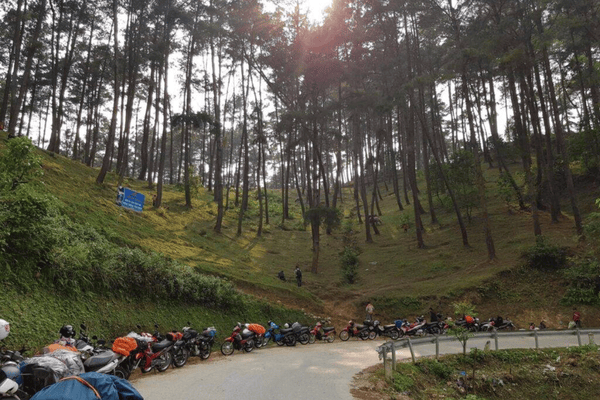
Learn more: Yen Minh Pine Forest
Good coverage in and around town. Yen Minh is a functional district town and the first significant overnight stop on the Loop, so guesthouses here have WiFi (quality varies — ask when you arrive) and mobile data on the main networks works adequately for messaging and basic browsing.
The road approaching Yen Minh from Ha Giang City has mixed coverage — some sections work, some don’t. The pine forest stretch in particular drops signal frequently. If you’re self-driving and relying on navigation, have your offline map loaded before you leave Ha Giang City

Learn more: Dong Van Old Quater at Night
Good coverage in town, patchy on the approaches. Dong Van town itself, including the Old Quarter area, has workable 4G on Viettel and reasonable signal on Vinaphone. The guesthouse WiFi scene in Dong Van is decent by rural Ha Giang standards — several guesthouses specifically mention good WiFi because they know travellers ask.
The road sections between Yen Minh and Dong Van include some long dead zones — particularly in the more remote valley stretches and on the higher ridge roads. Navigation offline is important on this section if you’re riding self-drive.
Lung Cu, Lo Lo Chai, and the area north of Dong Van toward the Chinese border is more variable. See below.

Learn more: Lo Lo Chai Village
Coverage exists but is inconsistent and border-zone-adjacent. Lung Cu commune — the northernmost point of Vietnam — has some mobile coverage because it’s a visited site with tourist infrastructure, but it’s not reliable. Expect 2G to weak 4G depending on your position, your network, and the day. Lo Lo Chai village, a short distance from the Lung Cu tower, follows the same pattern.
A specific practical note: you’re very close to the Chinese border in this area. Roaming onto Chinese networks is possible if your phone’s network selection is set to automatic — and Chinese data roaming charges can be significant. Set your phone to manual network selection and choose only Vietnamese networks while in the Lung Cu area. This is not something most travel guides mention and it catches people out.

Learn more: Tu San Canyon & Nho Que River Boat Trip
No reliable signal. The road between Dong Van and Meo Vac — crossing Ma Pi Leng Pass along the Nho Que River canyon — is the longest consistent dead zone on the standard Ha Giang Loop. The sheer limestone walls block signal almost entirely. Individual pockets of weak signal exist at specific points (particularly if there’s a tower on a ridge above you), but these are brief and unpredictable.
Do not depend on mobile navigation for the Ma Pi Leng section. If you’re self-driving, your offline map needs to be loaded, your route needs to be set, and your phone’s screen-on battery usage needs to be managed. If you’re on a guided tour, none of this is your problem — your guide knows the road.
The Ma Pi Leng skywalk viewpoint area sometimes catches a fragment of signal — riders occasionally manage to send a message or upload a photo from that specific spot — but don’t count on it.
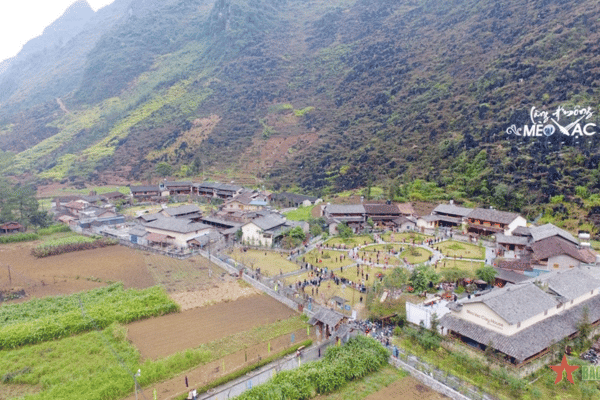
Learn more: Meo Vac Town
Good coverage in town. Meo Vac is the other major district hub on the Loop and has solid coverage — Viettel performs well here, 4G is available in the town centre, and guesthouse WiFi is common. This is your recovery point after the signal desert of Ma Pi Leng. Most travellers’s phones light up with a small backlog of messages as they descend into Meo Vac valley.
The surrounding rural areas and the deeper Nho Que River valley (if you take the boat trip) have variable to no coverage. The boat trip itself passes through a canyon that blocks signal for most of its length.

Learn more: Du Gia Waterfall
Moderate coverage in and around the main village area. Du Gia is smaller than Dong Van and Meo Vac but it’s a popular final overnight stop on the Loop, and coverage has improved as tourism infrastructure has developed. Expect workable signal in the main accommodation area; the road between Du Gia and Ha Giang City — the final section of the Loop return — has several dead zones.

Learn more: Ha Giang Loop 4 Days 3 Nights
This is probably the most practically important question in this guide, and the answer is clear: Viettel.
Viettel is Vietnam’s largest mobile network and has by far the most extensive infrastructure in rural and remote areas. In Ha Giang province specifically — which is border territory with significant military and government presence — Viettel’s coverage is notably stronger than the alternatives. Wherever there is signal in Ha Giang, Viettel is almost always the network that has it. Competing networks may work fine in Ha Giang City but drop out in district towns where Viettel still functions.
Vinaphone (operated by VNPT) is the second-best option. It performs reasonably in the district towns and has some rural coverage, though consistently trailing Viettel in the more remote sections. If you’re already on Vinaphone for a longer Vietnam trip and Viettel SIMs are unavailable, it’s an acceptable fallback.
Vietnamobile and Gmobile are budget networks that work fine in cities but are not recommended for the Ha Giang Loop. Coverage in remote mountain areas is minimal.
International roaming is technically an option but the combination of high costs, limited rural coverage on foreign-partner networks, and the border-zone Chinese roaming risk makes it a poor choice for a multi-day Loop trip. Buy a local SIM.
eSIM options have become more popular with travellers carrying compatible phones. Several eSIM providers offer Vietnam plans that use Viettel or Vinaphone infrastructure. This is a convenient option if your phone supports it — you can set up the eSIM before departure and activate it on arrival. Coverage will mirror whichever local network the eSIM provider uses; confirm it’s Viettel-based before buying.
Ha Giang City is the right place to buy. Viettel stores and resellers are easy to find in the city centre. Buying here — rather than at the airport or in Hanoi — gives you the chance to test the SIM before you head into more remote territory. Staff at Ha Giang City Viettel shops are generally familiar with tourist needs and can help set up data packages.
What you’ll need: your passport. SIM registration in Vietnam requires ID. Tourist SIM packages with data are available; ask specifically for a data-included package rather than a voice-only SIM.
Topping up on the road: Viettel top-up cards (thẻ nạp tiền) are sold at small shops in most district towns including Yen Minh, Dong Van, and Meo Vac. Scratch-card top-ups still work; alternatively, ask guesthouse staff to help you top up via their phone if you’re running low. Don’t let your balance run to zero before Dong Van — recharging becomes harder the more remote you get.
Data package activation: Vietnamese Viettel data packages are activated via SMS code. The codes change periodically — ask the shop when you buy what the current activation code is for a data bundle, or check Viettel’s official channels. Your guesthouse in Ha Giang City can also often help with this if the shop explanation isn’t clear.
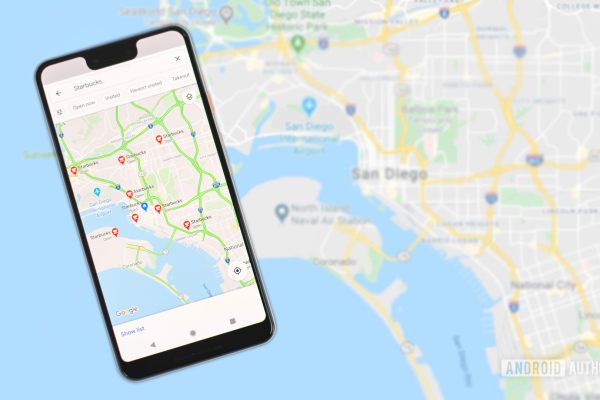
Learn more: Ha Giang Loop Map
This section is non-negotiable if you’re self-driving. Even if you’re on a guided tour, offline maps are a useful backup and a good way to follow along with where you are.
The apps worth downloading:
Maps.me — The traditional recommendation for Ha Giang offline navigation, and still valid. The offline maps for Ha Giang province are detailed enough to show the main Loop roads, district towns, and many village-level roads. Download the Vietnam North map area before leaving Ha Giang City. The turn-by-turn navigation works offline.
Google Maps offline — Download the Ha Giang province area for offline use (Settings → Offline Maps → Select an area). Google Maps offline navigation is functional for the main routes. The coverage of smaller village roads is sometimes less detailed than Maps.me, but for the main Loop route it works well.
OsmAnd — A more technically detailed option based on OpenStreetMap data, used by travellers who want granular road information. The data quality for Ha Giang varies by area but is generally good for the main Loop roads.
Which to use? Download at least two. Maps.me and Google Maps offline together cover most scenarios — if one has a gap in road data for a specific section, the other usually fills it. Having a backup is sensible when you’re in a dead zone with no ability to download anything.
What to download specifically:
A note on battery management: Running GPS navigation continuously drains your phone battery. On a full riding day — six to eight hours — you can kill a full battery through navigation alone. Solutions: a handlebar mount with a USB power bank feed, a 12V USB adapter from the bike’s electrical system (not available on all rental bikes — ask when renting), or a conservative approach where you check your position at intervals rather than running continuous navigation. On a guided tour, this isn’t your concern — but self-drivers should plan it specifically.

Learn more: Ha Giang Packing List
It’s worth being honest about this, because the anxiety around signal on the Ha Giang Loop is often disproportionate to the actual dependency.
Things you genuinely need internet for on the Loop:
Things you think you need internet for but don’t:
The most common signal anxiety comes from travellers who are used to being constantly connected and who haven’t separated “what I need the internet for” from “what I habitually use the internet for.” The Ha Giang Loop is genuinely one of the better places in the world to discover that the second list is much longer than the first.
If you’re on a Loop Trails guided Easy Rider or jeep tour, your guide handles navigation, accommodation, and local logistics entirely — the signal question becomes almost irrelevant from a practical standpoint. [Check out our Ha Giang Loop tour options] to see how each format works.
Learn more: Ha Giang Loop for Beginners
If you have people at home who want to know you’re safe during a multi-day mountain trip, managing their expectations before you leave is the most useful thing you can do. Here’s a practical framework:
Before you go:
Tell them the honest picture: you’ll have signal in the main towns (Ha Giang City, Yen Minh, Dong Van, Meo Vac, Du Gia), you’ll be unreachable on the road sections between them (sometimes several hours at a stretch), and you’ll check in each evening from your guesthouse. Establish a rough check-in rhythm — “I’ll message you by 7pm each day when I’m settled at a guesthouse” — so a gap in messages means “I’m on the road” rather than “something has gone wrong.”
Share your rough itinerary in writing. Something simple: Day 1 – Yen Minh, Day 2 – Dong Van, Day 3 – Meo Vac, Day 4 – Du Gia / Ha Giang City. If your family knows where you should be on each day, a communications gap at noon makes sense in context.
Messaging apps and signal:
WhatsApp, iMessage, and Telegram all work fine in the areas that have signal. No special apps are needed. If you have a Viettel SIM with data, these apps will work whenever you have 3G or 4G coverage.
What about satellite messengers?
Devices like Garmin inReach or SPOT communicators work via satellite and function anywhere with a clear view of the sky — including on Ma Pi Leng Pass in the middle of a signal dead zone. They’re overkill for most Ha Giang Loop travellers, but if you have family members who will worry significantly during signal gaps, a satellite messenger lets you send brief “I’m fine” messages regardless of mobile coverage. The rental cost for a week is not prohibitive if it solves a real anxiety problem.
Emergency contacts:
Your tour operator should give you a local contact number for emergencies. Save it to your phone before you leave Ha Giang City. Loop Trails guides carry phones — often on multiple networks — and have established local contacts throughout the Loop route. On a guided tour, the guide is your primary emergency resource, not your mobile signal.

Learn more: Ha Giang Cao Bang Loop Jeep tour Guide
Yes — and this is worth understanding before you book.
Easy Rider guided tour: Signal is essentially irrelevant to your practical experience. Your guide navigates, communicates locally, handles bookings, and knows the route. You are a passenger in the fullest sense — free to look at the landscape, look at your phone when you have signal, and not worry about either when you don’t. If you want to message home or post to social media, you’ll do it in the evenings from guesthouses. The days are for the road.
Jeep tour: Same navigation and logistics advantages as Easy Rider — your driver and guide manage everything. The jeep additionally gives you a vehicle-mounted USB charging option for your devices, which self-drivers don’t always have. You arrive at each guesthouse with a charged phone rather than a depleted one.
Self-drive motorbike rental: Signal matters most here. You’re navigating yourself, which means offline maps are not optional. You’re managing your own accommodation bookings, which means you need signal in the evenings to confirm the next day’s stop if you haven’t pre-booked. And you’re responsible for your own emergency communication, which means knowing where the signal dead zones are matters more.
The practical preparation for self-drive connectivity:
If you’re leaning toward self-drive, [check out the Loop Trails motorbike rental page] for available bikes and rental logistics — or [message us on WhatsApp] if you have questions about how other self-drivers typically manage the connectivity side.

Learn more: Ha Giang Road Conditions 2026
Use this before you leave Ha Giang City. Everything on this list takes less than two hours total and saves a significant amount of stress on the road.
SIM and Data:
Offline Maps:
Power and Battery:
Communication Setup:
Apps to have on your phone before leaving Ha Giang City:

Learn more: Ha Giang Loop route and itinerary
Yes — in the main towns (Ha Giang City, Yen Minh, Dong Van, Meo Vac, Du Gia) you’ll typically have workable signal, especially on the Viettel network. The road sections between towns, particularly Ma Pi Leng Pass, are dead zones. Think of it as reliable signal each evening, no signal while riding.
Viettel, without question. It has the strongest rural and mountain coverage in Ha Giang province by a significant margin. Buy a Viettel SIM in Ha Giang City before heading north. Competing networks like Vietnamobile are not recommended for the Loop.
Most guesthouses in the main towns (Yen Minh, Dong Van, Meo Vac, Du Gia) have WiFi. Quality varies widely — some are fast enough for video calls, others are barely functional. Don’t rely on guesthouse WiFi for anything time-critical. It’s fine for messaging and light browsing in the evenings.
Yes, but only if you download the offline area before losing signal. Google Maps navigation works offline once the area is saved. Download the full Ha Giang province area in Ha Giang City before departing. Also download Maps.me as a backup — having two offline map apps is sensible when you’re in dead zones with no ability to fix a problem remotely.
It can, if your phone is set to automatic network selection. The Lung Cu and Dong Van border area is close enough to China that Chinese towers occasionally grab phones searching for signal. Set your phone to manual network selection and choose Viettel only before reaching this area. Chinese roaming charges can be very high.
In the towns with 4G signal, yes — WhatsApp audio and video calls work. On the road sections, no. Plan your calls for evenings from guesthouses or cafes in town, not for mid-ride connectivity.
Offline maps. Download Maps.me and Google Maps offline before leaving Ha Giang City. Both apps navigate without internet once the offline area is downloaded. Test them in airplane mode before you go — this takes five minutes and eliminates any uncertainty. For the main Loop route, the roads are relatively well-defined; you’re not navigating a complex urban grid, you’re following mountain roads with limited junctions.
On a guided tour, your guide has local contacts and knowledge — they’re your primary resource in an emergency, not your phone signal. On self-drive, tell another rider or stop at the nearest inhabited area (there are usually villages or houses along most sections of the Loop). The Ha Giang Loop is not a wilderness — there are people along the route who can help or communicate locally. A satellite messenger (Garmin inReach, SPOT) is an option for travellers with specific safety concerns.
Either works if the eSIM uses Viettel infrastructure — confirm this before buying. A physical Viettel SIM purchased in Ha Giang City is slightly more reliable and easier to troubleshoot on the spot if something goes wrong. eSIMs are more convenient for travellers who’ve already set up their Vietnam connection before arrival. Both are better than international roaming.
On a standard 3–4 day Ha Giang Loop, you’ll have workable signal each evening in your overnight town, and no reliable signal during the riding hours each day — roughly 4–8 hours of road time per day. Total signal-free time is probably 12–20 hours across the trip, spread across the riding days. You’ll never go more than an evening without checking in.
Yes — Loop Trails uses WhatsApp for bookings, itinerary questions, and pre-trip logistics. It’s the most practical communication channel for travellers in Vietnam or planning from overseas. [Message us on WhatsApp] to ask about availability, tour formats, or anything about the Loop you want to clarify before booking.
Contact information for Loop Trails
Website: Loop Trails Official Website
Email: looptrailshostel@gmail.com
Hotline & WhatSapp:
+84862379288
+84938988593
Social Media:
Facebook: Loop Trails Tours Ha Giang
Instagram: Loop Trails Tours Ha Giang
TikTok: Loop Trails
Office Address: 48 Nguyen Du, Ha Giang 1, Tuyen Quang
Address: 48 Nguyen Du, Ha Giang 1, Tuyen Quang

Facebook X Reddit Table of Contents Learn more: Ha Giang Loop Tours Most people drive past the Quan Ba area twice on

Facebook X Reddit Table of Contents Learn more: Ha Giang Loop Tours The Ha Giang Loop has a reputation problem with older