

Thúy Kiều (Grace) is a travel blogger and content contributor for Loop Trails Tours Ha Giang. She holds a bachelor’s degree in Sustainable Tourism from Vietnam National University, Hanoi, and has a strong passion for exploring and promoting responsible travel experiences in Vietnam’s northern highlands.
Learn more: Ha Giang Loop Tours
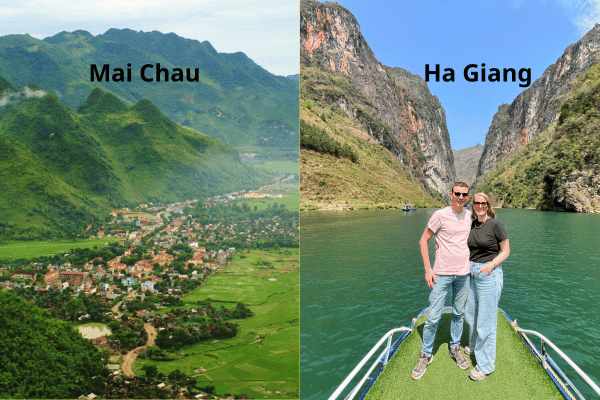
Both come up in every northern Vietnam itinerary conversation. Both involve rice terraces, minority villages, mountain scenery, and an escape from Hanoi’s chaos. Both are genuinely worth visiting. And yet Ha Giang and Mai Chau are so fundamentally different in character, scale, and experience that comparing them directly — as if you’re choosing between two versions of the same thing — misses the point entirely.
This guide doesn’t pretend they’re interchangeable. It breaks down what each destination actually delivers, who each one suits, and how to make a clear decision rather than agonising over it for another week.
If you’re leaning toward Ha Giang and wondering about the practicalities of getting there and exploring it properly, we’ll cover that too.
Learn more: Ha Giang Loop 4 Days 3 Nights
Mai Chau is about 135km southwest of Hanoi — a comfortable day trip or easy overnight. Ha Giang is roughly 320km north — a committed journey that demands at minimum three days, usually four or more, and involves one of the most dramatic mountain circuits in Southeast Asia.
That distance difference isn’t just logistical. It reflects a genuine difference in what each place delivers.
Mai Chau is a valley. It’s peaceful, photogenic, accessible, and easy. The White Thai villages are welcoming, the rice paddies are lush, and the cycling is relaxed. It’s an excellent introduction to northern Vietnam’s hill country — and it genuinely doesn’t overpromise.
Ha Giang is a province. It’s a four-day loop through a UNESCO Geopark, past ethnic minority villages on the Dong Van Karst Plateau, along the cliff edge of Ma Pi Leng Pass above the turquoise Nho Que River, through Meo Vac and Dong Van and Lung Cu — all the way to the Chinese border. It’s not just rice terraces. It’s one of the most visually overwhelming, culturally layered experiences in the entire country.
Choosing between them isn’t really a comparison of rice terrace destinations. It’s a question of what kind of trip you’re on.
Learn more: Northern Viet Nam Itinerary 2026
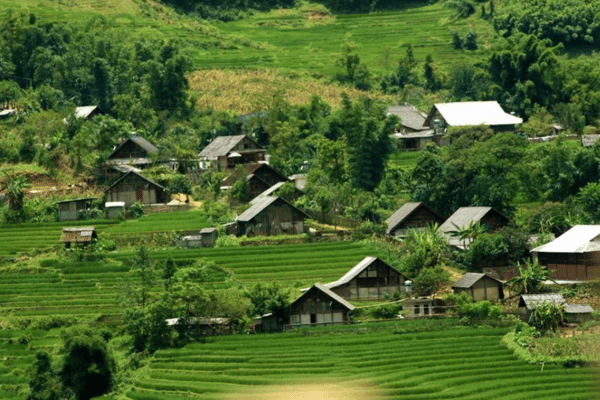
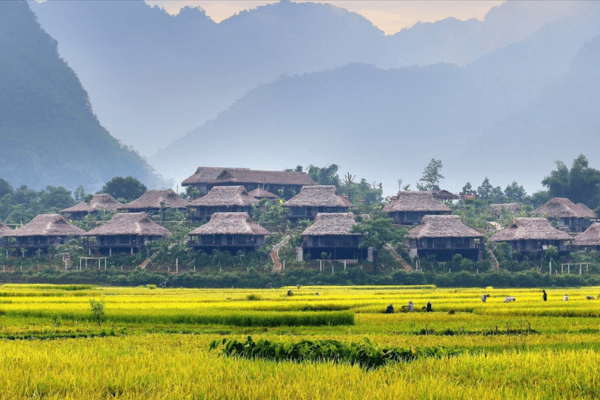
Mai Chau sits in a wide, flat valley in Hoa Binh Province. The landscape is gentle — green rice fields, low limestone hills on the edges, wooden stilt houses in the White Thai villages of Lac and Pom Coong. It’s beautiful in a quiet, uncomplicated way.
Visitors typically base themselves in one of the valley villages, often staying in a stilt-house homestay. Days are spent cycling through the paddy fields on flat paths, walking between villages, watching traditional weaving, and eating White Thai home cooking. Optional day trips go into the surrounding hills to visit H’mong or Dao minority villages in harder-to-reach areas.
The overall atmosphere is calm, rural, and genuinely relaxing. It works well as a two-night trip from Hanoi — you can leave Friday evening, have a full day Saturday, and be back in Hanoi Sunday afternoon. The roads from Hanoi are mostly good, and the final stretch into the valley is scenic.
The most common complaint from experienced travelers about Mai Chau is that it can feel too easy, almost in a detached way. The most popular villages — particularly Lac — receive a significant number of tourists, especially on weekends. The cultural experience can start to feel a little staged: weaving demonstrations, souvenir shops, set-menu dinners for tour groups.
That’s not a condemnation. It’s just context. If you go midweek, explore beyond the main villages, and choose a smaller homestay over a resort, you’ll have a more genuine experience. But the ceiling for discovery in Mai Chau is relatively low compared to a place like Ha Giang.
The rice terraces themselves — beautiful as they are — are modest in scale. They’re valley paddies rather than dramatic hillside step terraces. Very green, very photogenic at the right time of year, but not the jaw-dropping contoured ridgelines of Mu Cang Chai or the rugged plateau landscapes of Ha Giang.
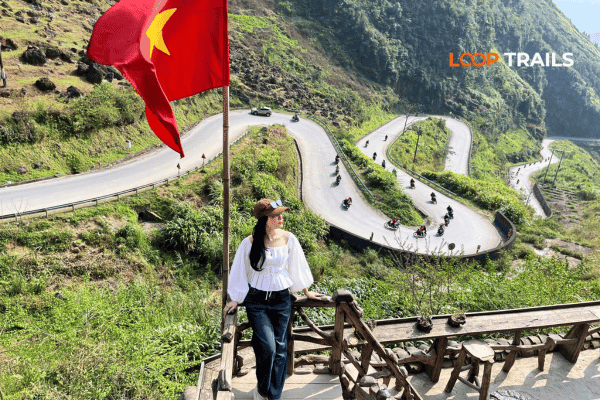
Ha Giang Province in the far north is a different world entirely. The landscape shifts from river valleys into high limestone karst mountains, and the Ha Giang Loop — a roughly 350km circuit from Ha Giang City through Quan Ba, Yen Minh, Dong Van, Meo Vac, and back — takes you through some of the most dramatic terrain in all of Vietnam.
The Ha Giang Loop is the main draw, and it’s done by motorbike (self-drive or Easy Rider guided), by jeep, or increasingly by a combination. The road climbs to the Dong Van Karst Plateau, which sits at high altitude and is home to H’mong, Lo Lo, Tay, Dao, and other ethnic minority communities who’ve lived here for generations.
Key landmarks along the route include:
Beyond the scenery, the Ha Giang Loop is culturally layered. The villages aren’t preserved for tourism — people here live their daily lives, tend their corn and buckwheat fields, maintain traditional dress, and gather at weekly markets. The encounters feel real because they are.
Learn more: Ha Giang Loop for Beginners
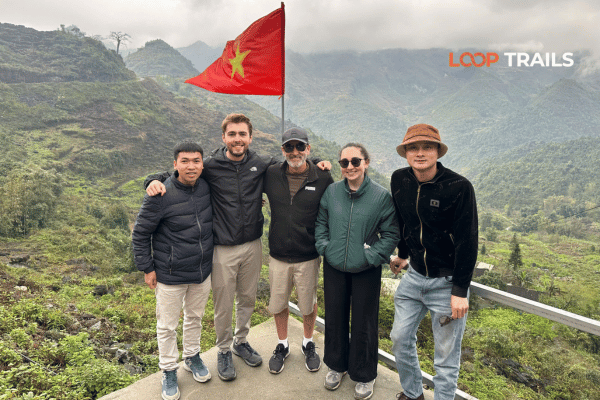
Ha Giang takes effort. The roads are real mountain roads — not dangerous in the extreme sense, but narrow, sometimes gravelly, and demanding of concentration. If you’re self-driving, you need genuine motorbike experience. If you’re riding pillion on an Easy Rider tour, you’ll be sitting on the back of a motorbike for 5–8 hours some days.
The logistics are more involved than Mai Chau. Ha Giang City is a 5–6 hour bus or car ride from Hanoi. The loop is 3–4 days minimum. Accommodation ranges from solid guesthouses to basic homestays — comfortable enough, but not resort-standard.
And Ha Giang is growing in popularity fast. The loop that was genuinely off the beaten track five or six years ago now sees real tourist traffic, particularly in September–November. It’s not Sapa-level crowded, but you’ll share the road and the viewpoints with other travelers.
Learn more: Ha Giang in September & October
Since the comparison often centres on rice terraces specifically, let’s address it directly.
Mai Chau’s rice fields are valley paddies — wide, flat, brilliantly green during growing season, golden during harvest. They’re the kind of scenery you can cycle through on a rented bicycle on a flat path. Beautiful and approachable.
Ha Giang’s agricultural landscapes are broader and more dramatic. The terraced fields around Du Gia are genuinely impressive — hillside step terraces carved into the valley slopes. But Ha Giang also has the buckwheat flower fields of the Dong Van plateau (typically blooming October–November), the corn fields of the karst mountain slopes, and the wide rice paddy valleys of the return leg past Yen Minh. It’s not one type of agricultural scenery — it’s several, shifting as you ride.
If pure rice terrace photography is your primary goal, Mu Cang Chai is actually the undisputed answer for both destinations discussed here. Its terraces are larger, more contoured, and more dramatically lit than either Mai Chau or Ha Giang’s paddy fields. Worth knowing before you make your decision.
But if rice terraces are one component of a broader mountain experience — culture, roads, villages, altitude, adventure — Ha Giang is in a different league.

Learn more: Ha Giang Sleeper Bus
| Mai Chau | Ha Giang | |
|---|---|---|
| Distance from Hanoi | ~135km | ~320km |
| Travel time | 3–4 hours by road | 5–6 hours by bus or car |
| Road quality | Mostly good | Good to Hanoi-Ha Giang, mountain roads on the loop |
| Transport options | Bus, private car, motorbike | Bus (overnight or day), private car, motorbike |
Mai Chau works as a 1-night trip (tight) or 2-night trip (comfortable). Ha Giang needs 3 nights minimum; 4 nights is the recommended sweet spot for the full loop experience.
Mai Chau is low-effort. Flat cycling, short walks, easy hikes if you want them.
Ha Giang is moderate-to-high effort depending on how you travel. Easy Rider guests spend long hours on the back of a motorbike. Self-drive riders need real road experience. Even jeep passengers have full days in a vehicle on winding mountain roads. It’s not a passive destination.
Mai Chau gets busy on Vietnamese public holidays and weekends, particularly in the main villages. Weekday visits are noticeably quieter.
Ha Giang’s loop is busiest September–November (buckwheat season). Even then, many parts of the route feel relatively uncrowded compared to Sapa or the Mekong Delta tourist trail. Outside peak season, some sections of the loop feel genuinely remote.

Learn more: Hmong Culture in Ha Giang
This is where the gap widens significantly.
Mai Chau’s White Thai villages are welcoming and accessible, but the cultural experience is filtered through the tourism infrastructure that’s built up around them — organised homestays, set dinners, weaving shops aimed at visitors.
Ha Giang’s minority communities — H’mong, Lo Lo, Tay, Dao — are spread across the plateau and valleys in ways that haven’t been packaged for tourism in the same way. Weekly markets in Meo Vac and Dong Van are genuine community events. Village life visible from the road is everyday life. The difference is real.
Both destinations are affordable by any standard. Mai Chau is slightly cheaper overall given the shorter distance from Hanoi and fewer days required. Ha Giang costs more simply because you’re travelling further and staying longer — but the cost-per-day is not dramatically different.
A guided Easy Rider loop or jeep tour in Ha Giang is a meaningful expense relative to a Mai Chau weekend, but it’s also a meaningfully different experience.

Learn more: Ha Giang Loop 4 Days 3 Nights
Yes, and it’s a reasonable northern Vietnam itinerary — especially if you have 8–10 days in the region.
A logical sequence:
Some travelers do it in reverse. Either works. What doesn’t work well is trying to do Ha Giang in 2 days to “save time” for Mai Chau, or vice versa — you end up doing neither properly.
If you’re short on time and have to choose, that’s when the comparison in this guide matters most.
Learn more: Cao Bang Loop Tours Vietnam best kept secret
Let’s make this straightforward.
Go to Mai Chau if:
Go to Ha Giang if:
The honest answer for most travelers: Ha Chau is the “safe” choice and the right one for certain trip profiles. But Ha Giang is the one people talk about for years afterward. If it’s within reach of your itinerary, it’s worth prioritising.
If you’re leaning toward Ha Giang and want to understand your options — guided Easy Rider tour, jeep, or self-drive motorbike — the Loop Trails team can give you a straight recommendation based on your dates and experience. Drop a message via WhatsApp and get a response the same day. No obligation, just practical guidance. [Contact Loop Trails on WhatsApp here.]
Learn more: Ha Giang Loop by Jeep for Families & Groups
Assuming Ha Giang wins — here’s the short version of what to know.
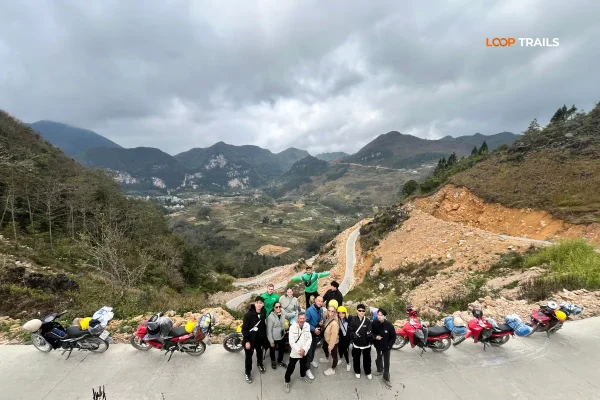
Easy Rider guided tour is the most popular format for a reason. You ride pillion behind a local guide who knows the roads, the villages, the weather, and the best places to stop that don’t appear on any map. No riding experience required. Ideal for first-timers or anyone who wants to focus on experience rather than navigation.
Self-drive motorbike gives you freedom and pace control, but requires genuine riding experience on mountain roads. If you’ve ridden in challenging conditions before, it’s a deeply rewarding way to do the loop. If you haven’t, it’s genuinely not the place to learn.
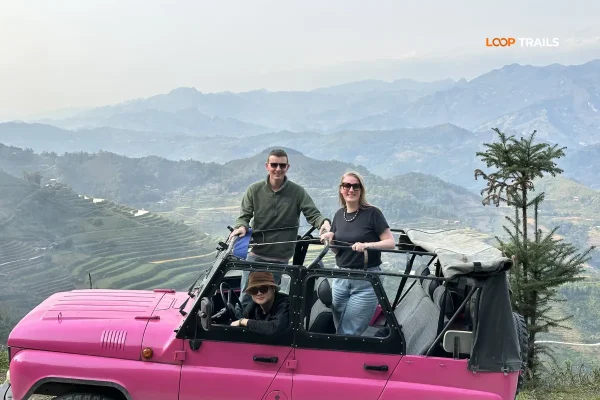
Jeep tour suits travelers who want the scenery and cultural stops without the motorbike element — great for couples, families, or anyone who’d rather watch the pass from a vehicle than ride along the edge of it.
Loop Trails runs all three formats, in small groups or private. [See all Ha Giang Loop tour options here.]
Three days covers the loop. Four days does it properly. The extra day gets you unhurried time at Ma Pi Leng, a proper evening in Dong Van, and buffer for weather. For most travelers — especially first-timers — four days is the recommendation.
The essentials for Ha Giang that Mai Chau doesn’t require:
[If you’re renting a motorbike in Ha Giang, check what’s included in the rental package — Loop Trails provides a pre-departure route briefing and road condition updates. See motorbike rental details here.]
Learn more: Ha Giang Motorbike tour
For rice terraces specifically, Mai Chau has beautiful valley paddies and Ha Giang has a mix of terraced hillsides (especially around Du Gia) and dramatic plateau agricultural landscapes. If pure terrace scenery is the goal, Mu Cang Chai is actually the stronger destination for both. Ha Giang’s appeal extends well beyond terraces into mountains, passes, and cultural depth.
Mai Chau, without question. It’s 3–4 hours from Hanoi and works as a 2-night trip. Ha Giang requires 5–6 hours travel each way plus 3–4 days on the loop — a weekend doesn’t give it enough room.
Yes, generally. Solo travelers typically join small-group Easy Rider tours or rent motorbikes independently. The roads are challenging but not extreme, and having a local guide means you’re not navigating conditions alone. Solo motorbike riders should check in regularly and ideally travel with others on the road.
Yes. Jeep tours cover the full loop comfortably without any motorbike involvement. You see the same scenery, visit the same stops, and travel with a local driver who knows the route. It’s a genuinely different experience — more comfortable, slightly less immersive in the wind-in-your-face sense — but absolutely valid.
Both are affordable. Mai Chau tends to be cheaper overall because it requires fewer days and less travel from Hanoi. Ha Giang’s total cost is higher mainly due to duration — more nights of accommodation, more meals, guiding fees if on a tour. The daily cost isn’t dramatically different.
September to November is peak season for a reason — buckwheat flowers, golden rice, and clear skies make it visually spectacular. March to May is excellent and quieter. Avoid rainy season (June–August) for self-drive; it’s manageable with a guide but roads can be unpredictable.
Not necessarily, but it helps — especially off the main tourist circuit. Most guesthouses in Ha Giang City and key loop towns have some English capability. In villages and at markets, communication is largely through smiles, gestures, and pointing. A guided tour removes the language barrier entirely and adds genuine cultural context.
Yes, but with adjusted expectations. Mai Chau is gentler, smaller, and less dramatic than Sapa’s terrace landscapes. If Sapa felt crowded or overdeveloped to you, Mai Chau’s smaller scale may feel refreshing. If Sapa felt not quite adventurous enough, Ha Giang is the logical step up.
Absolutely — and it’s a rewarding combination. A combined Ha Giang Loop and Cao Bang extension typically runs 7–10 days and adds Ban Gioc Waterfall (one of the most impressive in Southeast Asia), Nguom Ngao Cave, and Phia Oac National Park to the itinerary. Loop Trails runs combined itineraries connecting both provinces. [See Ha Giang and Cao Bang combined tour options here.]
Both offer excellent local food. Mai Chau’s White Thai cuisine — sticky rice, grilled meat, local vegetables — is genuinely good and usually served family-style in homestays. Ha Giang has similar highland ingredients plus the cultural variety of H’mong and Lo Lo cooking in village homestays. Food is a highlight of both, in different ways.
Contact information for Loop Trails
Website: Loop Trails Official Website
Email: looptrailshostel@gmail.com
Hotline & WhatSapp:
+84862379288
+84938988593
Social Media:
Facebook: Loop Trails Tours Ha Giang
Instagram: Loop Trails Tours Ha Giang
TikTok: Loop Trails
Office Address: 48 Nguyen Du, Ha Giang 1, Tuyen Quang
Address: 48 Nguyen Du, Ha Giang 1, Tuyen Quang
Facebook X Reddit Table of Contents Learn more: Ha Giang Loop Tours This is the question that sits in almost every Ha
Facebook X Reddit Table of Contents Learn more: Ha Giang Loop Tours Most people drive past the Quan Ba area twice on