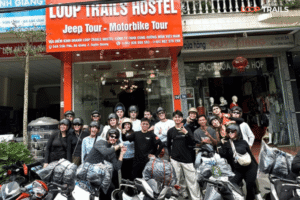


Thúy Kiều (Grace) is a travel blogger and content contributor for Loop Trails Tours Ha Giang. She holds a bachelor’s degree in Sustainable Tourism from Vietnam National University, Hanoi, and has a strong passion for exploring and promoting responsible travel experiences in Vietnam’s northern highlands.
Learn more: Ha Giang Loop Tours
There’s a moment somewhere between Dong Van and Meo Vac — usually around the third or fourth hour of winding mountain road — when the scale of this place finally hits you. The gorges drop hundreds of meters. The rice terraces are carved into slopes that shouldn’t be farmable. And somewhere in the folds of all that limestone, there’s a family waiting to feed you dinner and hand you a blanket.
That’s the Ha Giang Loop homestay experience in a sentence. It’s not glamorous. It’s not always comfortable. But for most people who do it, sleeping in local homes is the part they talk about for years afterward.
This guide covers everything you need to know before you go: what these stays are actually like (the honest version), where to sleep each night, what they cost, how to book, and how to be a decent guest when you get there.

Learn more: Ha Giang Loop 2 Days 1 Night
Ha Giang province sits in Vietnam’s far north, bordering China, and it’s home to over 20 ethnic minority groups — Hmong, Tay, Dao, Lo Lo, Nung, and others. The Loop itself is a roughly 300–350km circuit through some of the most dramatic mountain scenery in Southeast Asia, passing through places like the Dong Van Karst Plateau Geopark, Ma Pi Leng Pass, Nho Que River, and Lung Cu Flag Tower near the Chinese border.
Most travelers take 3 to 4 days to complete the loop. And unlike other Vietnamese tourist routes where you’d naturally stay in guesthouses or hotels, Ha Giang’s remote geography means homestays are often the primary option — especially outside of Dong Van and Yen Minh towns.
But here’s the thing: even when there are guesthouses, most experienced travelers choose the homestay anyway. Because the loop is about more than scenery. Eating dinner with a Hmong family, waking up to mist rolling over karst peaks, watching a grandmother weave by the fire — these experiences don’t happen at a guesthouse.
Homestays here aren’t a backup option. They’re the point.
Learn more: Ha Giang Loop 3 Days 2 Nights
Let’s be real with this, because vague expectations lead to disappointed travelers. Here’s what the experience is genuinely like across most homestays on the loop.
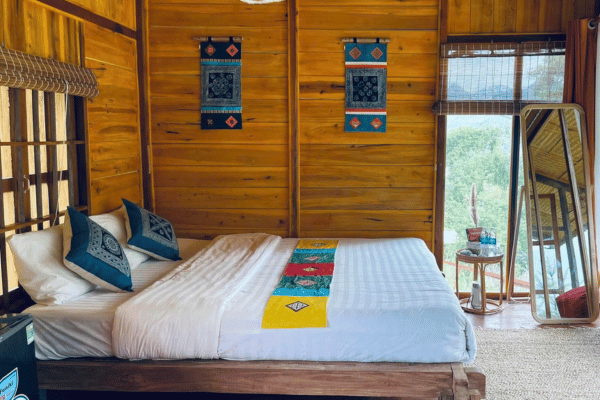
Most rooms are simple and clean. You’ll typically sleep on a firm mattress (sometimes a thin one laid on wood slats) with blankets provided. In peak season spring and autumn, this is perfectly comfortable. In winter (November through February), Ha Giang nights can drop significantly, and the blankets aren’t always up to the task. Pack layers or a sleeping bag liner.
Rooms are usually separated by thin walls or curtains rather than solid doors, which means you’ll hear your neighbors. Private rooms do exist, especially at more established homestays, but a lot of places still use shared dormitory-style sleeping areas particularly the really local family stays where the family sleeps in the same structure.
Don’t expect a lock on the door at budget spots. Valuables should be kept in your bag and with you.
This is where homestays genuinely shine. Most places include dinner and breakfast in the room rate, and the food is home-cooked, fresh, and genuinely good. Expect rice, local vegetables, eggs, sometimes pork or chicken, and occasionally wild greens from the hills that you won’t find anywhere else.
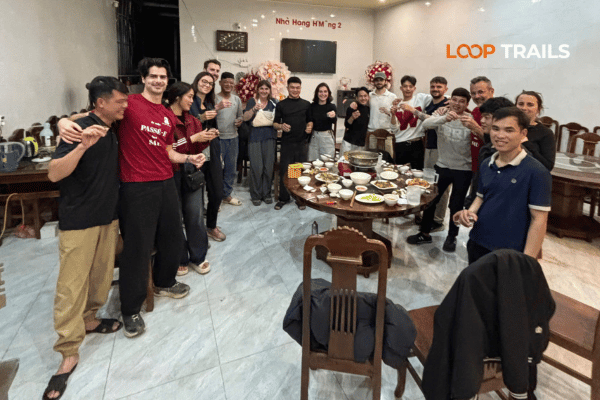
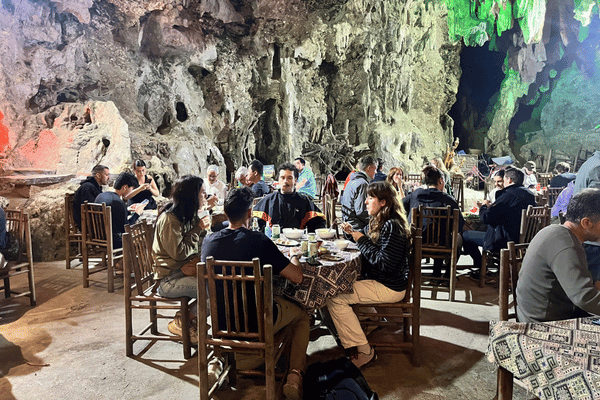
Meals are usually served family-style — shared dishes in the middle, everyone helps themselves. It’s communal by nature and one of the best chances to interact with your hosts, even with limited shared language.
Vegetarians: it’s possible to eat well, but communication is key. Have the Vietnamese phrase “tôi ăn chay” (“I eat vegetarian”) ready, or ask your guide to communicate dietary needs in advance.
Facilities vary more than anything else on the loop. Some homestays have clean, fully tiled bathrooms with reliable hot showers. Others have cold water only. Many fall somewhere in the middle — hot water available but inconsistent, or shared between several guests.
The further you get from town centers (Dong Van, Yen Minh), the more basic the facilities tend to be. Stays in Du Gia, Lo Lo Chai, and very rural areas near Meo Vac can be quite rustic. This isn’t a complaint — it’s just worth knowing before you arrive expecting a hot shower after a full day on Ma Pi Leng Pass.
Wet wipes, dry shampoo, and a microfiber towel are worth their weight up here.
Phone signal is patchy along most of the loop, especially between towns. Don’t expect to be scrolling social media on the road. In Dong Van town and Yen Minh you’ll typically get a usable signal. On the road between — including the Ma Pi Leng stretch — signal often disappears entirely.
Most homestays have Wi-Fi, but it ranges from slow-but-functional to the kind that makes you remember dial-up. If you need reliable internet for work, be realistic about expectations. This isn’t the loop’s fault — it’s remote mountain terrain. Viettel SIM cards tend to work better than others in this region.
Power outlets are available but may not be near your bed. A short extension cord or multi-plug adapter is a surprisingly useful thing to have.
Learn more: Ha Giang Loop 4 Days 3 Nights
The Ha Giang Loop doesn’t follow a fixed route for everyone, but most itineraries follow a similar progression. Here’s a night-by-night breakdown based on the classic 3–4 day circuit.
→ If you’re still planning your full itinerary and need help with distances and daily routes, check out our complete [Ha Giang Loop itinerary guide] — it covers km breakdowns and timing for each leg.
Most loops start from Ha Giang City and push north. On a 4-day loop, the first night stop is often Quan Ba (roughly 50km from Ha Giang City) or — more commonly on a 3-day pace — Yen Minh (about 100km out).
Quan Ba is a small market town with a handful of guesthouses and homestays. The Twin Mountains (Fairy Bosom Mountains) viewpoint is here and worth the sunset if you arrive early enough. Accommodation is simple but the vibe is good — you’re still close enough to civilization to feel settled before the loop gets wilder.
Yen Minh is bigger, has a proper town center with a market, a few restaurants, and more accommodation options including some proper guesthouses if you want your own bathroom with reliable hot water. It’s a solid choice for people who want comfort on at least one night of the trip. The Yen Minh pine forest stretch just south of town is one of the most underrated scenic sections of the whole loop.
This is the one most travelers are excited about, and it delivers. Dong Van is the cultural and historical heart of the northern loop — an old quarter with French colonial architecture, a busy Sunday market (worth planning around), and the dramatic karst plateau stretching out beyond town.
Accommodation here runs the gamut more than anywhere else on the loop. You’ll find everything from basic family guesthouses at a few dollars a night to more polished boutique-style stays that are genuinely comfortable. The old quarter has some atmospheric options built into or next to the historic architecture.
It’s also the best town for a solo meal out or a beer — there are a few small restaurants and bars catering to travelers.
Nearby, the village of Lo Lo Chai (about 3km from Dong Van) is home to the Lo Lo ethnic minority and has some excellent community-run homestays that offer a more authentic, immersive stay away from the town center. These tend to fill up on weekends — book ahead if you can.
After Dong Van, the loop descends to Meo Vac via Ma Pi Leng Pass — arguably the most dramatic road in Vietnam. The Nho Que River glints turquoise far below. The cliff drop is staggering. It takes time to sink in.
Meo Vac itself is a busy market town with a strong Hmong presence and a Sunday market that’s genuinely one of the best in the north. Accommodation is a mix of budget guesthouses and a few decent homestays. If you’re doing 3 days, many people push beyond Meo Vac toward Du Gia — a longer driving day but gives you the waterfall and valley experience on the final morning.
Du Gia is the sleeper hit of the loop. It’s quieter than Dong Van, the valley scenery is lush and green (very different from the rocky karst plateau), and Du Gia Waterfall is a short walk from most accommodations. Homestays here tend to be set among rice paddies and bamboo groves — the aesthetic is completely different from the north. More rustic, more green, and genuinely peaceful.
This is the spot where people extend their stay unexpectedly because they don’t want to leave.
On a 4-day loop, many travelers spend two nights in the Du Gia area or do a slower return toward Ha Giang City. Some loop operators offer extension routes toward Cao Bang Province from here — adding Ban Gioc Waterfall, Pac Bo Cave, the Ngoc Con Valley viewpoint near Bao Lac, and the God’s Eye Mountain near Trung Khanh to the journey. If you have the time, this combined route is exceptional.
→ Curious about the extended route? Our [Ha Giang–Cao Bang combine tour page] has everything you need.
Learn more: Ha Giang Cao Bang 5 Days 4 Nights
Not all homestays are the same, and understanding the range helps you choose what suits you.
Basic Community Homestays These are family homes that have added a few extra mattresses and maybe a separate bathroom for guests. The family lives there. Kids run around. Grandma is probably cooking. This is the real deal — genuinely immersive, usually the cheapest option, and the kind of experience that makes the Ha Giang Loop different from anywhere else in Vietnam. Facilities are basic. The human experience is rich.
Mid-Range / Semi-Guesthouse Homestays These have been built or expanded with travelers in mind. Private or semi-private rooms, more reliable hot water, sometimes Western-style toilets, and slightly more polished food presentation. Still family-run, but with more infrastructure. This is the sweet spot for most travelers — you get the authentic feel without the cold shower lottery.
Boutique / Eco-Lodge Style A small but growing number of stays on the loop now target the mid-to-premium market. Think wooden bungalows with mountain views, filtered coffee in the morning, and beds with actual pillows. These exist mainly around Dong Van, Quan Ba, and the Du Gia area. They cost more — sometimes significantly — but are worth considering for couples, travelers who need a good night’s sleep, or anyone spending 4+ days on the loop.
Learn more: Ha Giang Cao Bang Ba Be Lake 6 Days 5 Nights
Prices change, and this is Ha Giang — not Ha Noi or Hoi An — so the market moves. That said, here’s a realistic ballpark as of recent seasons:
| Type | Per Person Per Night | Typically Includes |
|---|---|---|
| Basic community homestay | ~100,000–150,000 VND | Bed, dinner, breakfast |
| Mid-range homestay | ~150,000–300,000 VND | Private/semi-private room, hot water, meals |
| Boutique / eco-lodge | ~400,000–800,000+ VND | Private room, en-suite, curated experience |
Always confirm what’s included when you book. “Bed only” versus “bed + two meals” can look the same in price and mean very different things.
Food outside of what’s included is cheap — a bowl of pho or a plate of rice with meat at a local spot is rarely more than 30,000–50,000 VND in these towns.
Budget travel tip: If you’re doing a guided Easy Rider tour or jeep tour with Loop Trails, your guide handles all accommodation logistics. You won’t be negotiating price or availability at the end of a long day on the road — it’s all sorted before you leave Ha Giang City.
Learn more: Ha Giang Motorbike Rental
For most of the year, the Ha Giang Loop doesn’t require you to book far in advance — especially if you’re self-driving or traveling outside of peak periods. Homestay owners are generally happy to accommodate walk-ins.
When you should book ahead:
How to book: Your options are walk-in (works most of the time), through your tour operator (easiest), or through booking platforms. Note that a lot of the best community homestays aren’t on Booking.com — they’re found through word of mouth, local guides, or simply turning up. This is partly why doing the loop with a knowledgeable guide changes the experience — they know which family’s cooking is worth the slightly longer detour.
→ If you want the logistics taken off your plate entirely, our [Easy Rider tours] and [Jeep tours] include pre-arranged accommodation at vetted homestays throughout the loop. [Get in touch on WhatsApp] to ask about options.
Learn more: Ha Giang Packing list
The loop covers everything from warm valley floors to cold mountain passes above 1,500m. What you pack for the road applies to overnight stays too — but a few things specifically matter for homestay comfort:
Essentials:
Nice to have:
Learn more: Corn wine “Happy Water” in Ha Giang
The families hosting you on the Ha Giang Loop are sharing their actual homes. A few low-effort habits go a long way.
Remove your shoes before entering. This is standard across Vietnamese and ethnic minority homes. Watch for a shoe pile at the entrance and follow suit.
Ask before photographing people. The markets, villages, and faces of the Ha Giang region are genuinely photogenic — but the people aren’t props. A smile and a gesture asking permission costs nothing. Your guide can help facilitate introductions if you’re on a guided tour.
Don’t enter areas of the home you haven’t been invited into. Family shrines, sleeping areas for the family, and private spaces are usually clearly separated from guest areas. Respect those boundaries instinctively.
Drink the tea. If your host offers tea — and they almost always will — accept it. It’s the beginning of hospitality, and refusing it is a bit like refusing a handshake.
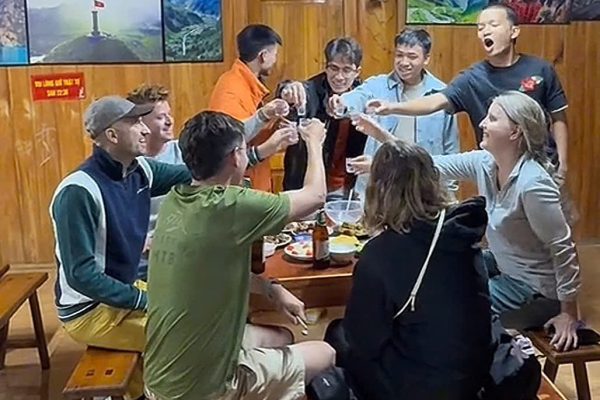
About corn wine (“Happy Water”): It’s going to come out. Especially if there are men at dinner. The local ruou ngo (corn rice wine) is strong, it’s home-distilled, and it will be offered. You don’t have to drink it, but a polite decline with a smile is better than making a face. If you do drink it, go slowly — it’s deceptively strong and altitude makes it hit harder.
Tipping: Not expected, but genuinely appreciated at community homestays where margins are thin. A small tip to the family — separate from any tour operator payment — is a kind gesture.
Learn more: Ha Giang Loop by Jeep for Families & Groups
The type of accommodation that makes sense depends on how you’re traveling the loop.
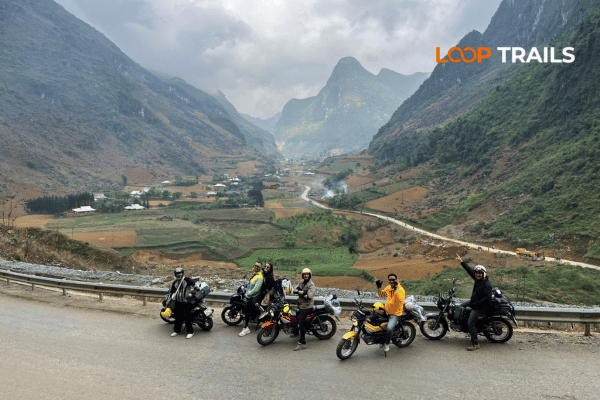
Doing it self-drive or with a rented motorbike? You’ll be largely responsible for your own accommodation logistics. Booking ahead for the first and last nights in peak season is smart. For the middle nights, you can often be flexible. The freedom is part of the appeal — but do have a backup plan for nights when you arrive somewhere and the first place is full.
→ If you need a reliable bike to start the journey, check out our [motorbike rental in Ha Giang] page — we’ve got XR150s and semi-automatics available.
Joining an Easy Rider guided tour? Your guide handles everything. They know which families they trust, they communicate dietary needs, they make sure you’re not walking into a cold-shower-only-night after a 6-hour ride. The stays are often the same community homestays you’d find on your own, but curated.
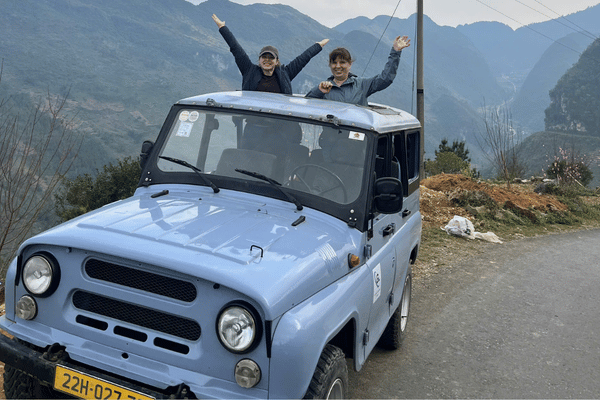
Booking a Jeep tour? Jeep tours often pair with slightly more comfortable accommodation options — boutique guesthouses and eco-lodges where the vehicle (rather than a motorbike) sets the pace. Good for couples, older travelers, or anyone who wants the scenery without the exposure.
Whatever your style, the loop rewards travelers who embrace its rhythm. Some nights will be better than others. The best ones tend to be the ones you didn’t plan.
→ Not sure which tour type fits you? [Drop us a message on WhatsApp] and we’ll sort it out together — no sales pressure, just honest advice.
Learn more: Ha Giang to Cao Bang
Most do, especially outside of town centers. Dinner and breakfast are typically bundled into the nightly rate. Always confirm when booking — “bed only” and “bed + 2 meals” can look similar in price. Lunch is usually eaten at roadside spots along the route.
Yes, generally. Crime against tourists is rare in this region. The main consideration is keeping valuables with you, as many rooms don’t have locks. Homestay owners have a strong community reputation to protect — mistreating guests would be unusual.
Often yes, but it’s worth asking specifically. Some community homestays are dorm-style by default. Mid-range and boutique stays almost always offer private rooms. If privacy matters to you, clarify when booking.
Most have Wi-Fi, but speeds are limited and reliability varies. Phone signal is patchy on the road — Viettel is the best network in this area. Don’t rely on internet access for anything time-sensitive during the loop.
It depends heavily on season and elevation. November through February nights can be genuinely cold — below 10°C in Dong Van and on the high passes. Homestay blankets are provided but aren’t always sufficient. Pack a fleece or sleeping bag liner if traveling in the cool months.
Vegetarians can eat reasonably well with advance communication. Vegans will find it more challenging — eggs, fish sauce, and pork fat appear in many dishes by default. Having a guide who can communicate your needs clearly to the host family in advance makes a significant difference.
Not always — walk-in works for most of the year. However, during peak autumn season (September–October), during Vietnamese holidays, and for community homestays in small villages like Lo Lo Chai, booking ahead is strongly recommended.
At a homestay, you’re staying in or adjacent to a family’s actual home — meals are home-cooked, interaction with the family is natural, and the experience is more immersive. Guesthouses are run more commercially, with private rooms and no real home dynamic. Both exist on the loop; which you prefer depends on what you’re looking for.
No, a polite smile and a gentle refusal is completely fine. Your host isn’t offended. If you’re with a guide, they can help communicate preferences naturally. No one is forcing you to drink, and good hosts understand that not every guest partakes.
Absolutely. Some of the most memorable stays on the loop are the most basic ones. A 150,000 VND bed with home-cooked dinner in a Lo Lo or Hmong family home beats a lot of more expensive experiences in Vietnam. Budget travel and quality experience are very compatible here.
Not in the international 5-star sense. But boutique eco-lodges with private bungalows, good beds, en-suite bathrooms, and thoughtful design do exist — particularly near Quan Ba and in the Du Gia valley. If you want comfort, it’s available; just manage expectations relative to the remote location.
Yes, on guided Easy Rider tours and Jeep tours, accommodation at vetted homestays is included and pre-arranged. You don’t have to think about it. If you’re renting a motorbike self-drive, you handle your own accommodation, though we’re happy to recommend places.
Contact information for Loop Trails
Website: Loop Trails Official Website
Email: looptrailshostel@gmail.com
Hotline & WhatSapp:
+84862379288
+84938988593
Social Media:
Facebook: Loop Trails Tours Ha Giang
Instagram: Loop Trails Tours Ha Giang
TikTok: Loop Trails
Office Address: 48 Nguyen Du, Ha Giang 1, Tuyen Quang
Address: 48 Nguyen Du, Ha Giang 1, Tuyen Quang
Facebook X Reddit Table of Contents Learn more: Ha Giang Loop Tours This is the question that sits in almost every Ha
Facebook X Reddit Table of Contents Learn more: Ha Giang Loop Tours Most people drive past the Quan Ba area twice on