
Ha Giang Loop: 3 Days or 4 Days? An Honest Comparison
Facebook X Reddit Table of Contents Learn more: Ha Giang Loop Tours This is the question that sits in almost every Ha

Thúy Kiều (Grace) is a travel blogger and content contributor for Loop Trails Tours Ha Giang. She holds a bachelor’s degree in Sustainable Tourism from Vietnam National University, Hanoi, and has a strong passion for exploring and promoting responsible travel experiences in Vietnam’s northern highlands.
Learn more: Ha Giang Loop Tours
Most articles about the Ha Giang Loop reach for the same handful of words: stunning, breathtaking, life changing. After running this route for years and watching thousands of first time riders come through Ha Giang City, I’ll tell you what those words look like on the ground.
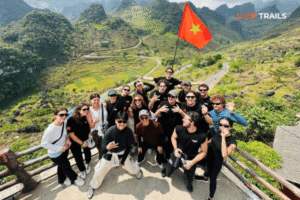
Yes, the views are real. The Ma Pi Leng Pass deserves every photo it gets. The cliffs drop hard into the Nho Que River, and on a clear afternoon the canyon turns a deep, surprising green. The Hmong villages around Sung La and the limestone fingers of Quan Ba are not staged for tourists. People still farm these hillsides by hand, and the corn drying on the wooden balconies in October is for the family, not for Instagram.
But the loop is also long, cold in places, sometimes wet, and full of small decisions that shape the whole trip. Choose the wrong bike and you’ll fight your wrists every uphill. Pack the wrong jacket in November and the Tham Ma Pass becomes a problem. Skip the helmet straps and you become the cautionary tale every guide tells the next group.
This is the practical guide. Routes, the three main ways to ride them, what each one is honestly like, and the smaller details that don’t make the highlight reels: where to find proper coffee, when to leave Dong Van to beat the fog, why most guests underbook by a day.
If you came here to decide whether the Ha Giang Loop is worth your time, the short answer is yes. If you came here to plan it properly, keep reading.
Learn more: Ha Giang Loop 2 Days 1 Night
The Ha Giang Loop sits inside a UNESCO recognised geopark for a reason. The Dong Van Karst Plateau is geologically rare, with limestone towers, hidden valleys, and rivers that have carved canyons hundreds of metres deep. You don’t need to know the geology to feel it. The road climbs, the air thins, and the scenery genuinely does change every ten kilometres.
What you should not expect: empty roads. The loop has been on the international travel radar for years now, and during peak season the headline stops can get busy. The Skywalk viewpoint above the Nho Que River is rarely quiet at midday. The buckwheat fields at Sung La draw domestic tourists in late autumn.
The trick is timing and pacing. Get up an hour earlier than the group. Leave the obvious viewpoints to the tour buses and ride the side roads. The loop’s best moments tend to happen between the headline stops: a Hmong woman walking her cow on a back road, a corner that opens onto a valley you didn’t know was there, a roadside coffee stop where the owner remembers your face from yesterday.

Learn more: Ha Giang Loop 3 Days 2 Nights
Ha Giang is the northernmost province of Vietnam, sharing a long, mountainous border with China. The loop is a roughly circular route that starts and ends in Ha Giang City and pushes north through some of the highest, wildest karst terrain in the country.
From Hanoi, most travellers take a sleeper bus or a private transfer to Ha Giang City. The road has improved a lot, but it’s still around 6 to 7 hours depending on traffic. From there, the loop heads through Quan Ba, Yen Minh, Dong Van, and Meo Vac before swinging back south through Du Gia or directly back to Ha Giang City.
The full loop covers somewhere in the region of 350 km, but the kilometre count is misleading. These are mountain roads with constant climbs, switchbacks, and weather that can change in twenty minutes. Plan in days, not in distance.
If you want to combine Ha Giang with another major loop, Cao Bang sits just to the east, with its own waterfalls, lakes, and quieter riding. Ha Giang to Cao Bang combine tours have become more popular for travellers with longer time windows.
Learn more: Ha Giang Loop 4 Days 3 Nights
The honest answer is four. Three days is the most common booking, but most guests who do three days tell me they wish they had one more.
Here’s how the math actually works.
3 days, 3 nights (the classic): Standard short loop. You leave Ha Giang City in the morning, sleep in Yen Minh or Dong Van the first night, push to Meo Vac on day two via the Ma Pi Leng Pass, and ride back to Ha Giang City on day three. It works, but the days are full. You’ll see the headline stops, take a Nho Que boat trip if the weather plays along, and barely have time to slow down.
4 days, 3 nights (the sweet spot): Same general route but with a stop in Du Gia on the last night. Du Gia is a small valley village with a waterfall and a slower pace. Adding this night turns the trip from a checklist into a holiday. You also get a less rushed Ma Pi Leng day.
5 days (for the curious): With five days you can add side roads most groups skip: the road from Meo Vac toward Bao Lac, the Lung Cu flag tower at the northernmost point of Vietnam, or a longer wander around the Sung La and Pho Cao valleys. If you have the time, take it. The crowds drop fast once you leave the headline stops.
2 days: Some operators sell two day “loops”. I’d avoid them. You won’t reach Ma Pi Leng or you’ll do it in such a hurry that you’ll spend more time on the bike than off it. Two days is fine for a taste of mountain riding, but it’s not really the loop.
A practical tip: factor in your travel days from Hanoi. A three day loop is really five days door to door from Hanoi. A four day loop becomes six. Don’t squeeze this into a tight Vietnam itinerary if you can help it.
Not sure which length is right? Have a look at our 3 days and 4 days Ha Giang Loop tour options to see what each one actually includes.
Learn more: Ha Giang Cao Bang 5 Days 4 Nights
There is no single best month, but there are clearly better and worse ones.
September to November. The most reliable season. Skies clear up after the summer storms, the rice terraces in the lower valleys turn gold, and the buckwheat flowers bloom in late October and November around Sung La and Lung Cu. Days are warm, evenings are cool, and the roads are mostly dry. If you can ride during this window, you’ll see Ha Giang at its best.
December to February. Cold. Sometimes very cold. Dong Van and Meo Vac sit at altitude and night temperatures can drop close to freezing, with occasional frost and rare snow on the highest passes. The light is beautiful, the air is crisp, and the crowds thin out. But you need proper layers, and morning starts are slow because of fog. If you’re a confident rider and you pack right, winter has real charm. If not, it’s a hard introduction.
March to May. Mixed. Spring brings flowers (peach and plum blossom in early spring, then the green of new rice), but it also brings unpredictable rain. Some of the best photographic days I’ve ever had on the loop were in April. So were some of the soggiest. Watch the forecast and be ready to wait out a morning if needed.
June to August. Wet season. Heavy rain, dense fog, and the real risk of landslides on smaller roads. Some days are perfect: rice terraces vibrant green, waterfalls running hard, the mountains alive. Other days you don’t ride at all. Tours still run during these months, but the rhythm is different and you trade reliability for low season prices and quiet roads.
A few specific notes:
If you can only ride for one weekend, aim for late October. If you have flexibility, watch the ten day forecast and move when it looks clean.
Learn more: Ha Giang Motorbike Rental
There are three ways to do the Ha Giang Loop. Each has a clear case, and the right choice depends mostly on your riding experience and how you like to travel.
You sit on the back, a local rider drives, and you focus on the views. This is the most popular option for international travellers, especially those who don’t ride motorbikes regularly at home.
The case for it is simple. The Ha Giang roads are narrow, busy with local traffic, and full of unexpected hazards: buffalo, school kids, gravel patches, sudden fog. A good Easy Rider has done the route hundreds of times and knows where the surprises live. You get to look around. You get to take photos without pulling over. You can have a beer at lunch.
It’s also the safest option for first time riders by a wide margin. If your motorbike experience starts and ends with renting a scooter on holiday in Bali, this is the responsible choice.
What it isn’t: a quiet, solo, find yourself ride. You’re in a group. There’s a schedule. The riders set the pace.
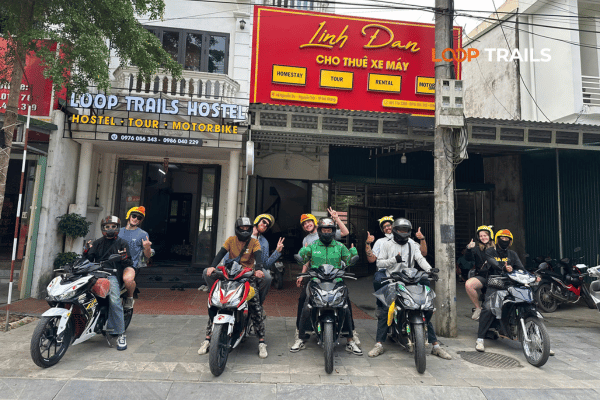
You rent a bike, you ride it. You can join a self drive tour with a lead guide and a support vehicle, or you can do it fully independently with a route map and a packing list.
The case for self drive is the freedom. You can stop where you want, leave when you want, take the side road that catches your eye. The riding itself, especially on the Ma Pi Leng and the climb to Lung Cu, is genuinely some of the best in Asia. If you ride at home, you’ll love it.
The honest case against: this is not the right place to learn to ride. The combination of mountain switchbacks, mixed traffic, weather, and unfamiliar bike controls catches a lot of people out. If you’ve never ridden a manual or semi automatic bike with gears, please don’t make Ha Giang your first.
A self drive tour with a lead guide is a strong middle ground. You ride your own bike, you set your pace within reason, but there’s someone in front who knows the roads and someone behind with tools and a spare bike if anything goes wrong.
Want freedom but not the planning? Check our motorbike rental in Ha Giang for fresh, well maintained bikes, or our self drive guided loop if you’d rather have a lead rider with you.
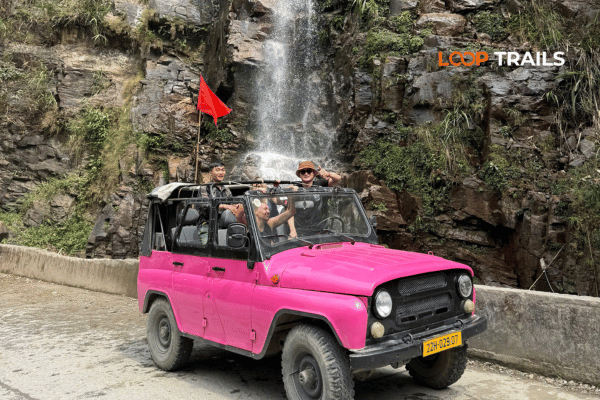
You sit in a 4×4 with a driver. You stop where the riders stop, but you don’t ride. This is the right call for travellers who want the views without the bike, for couples where one person doesn’t want to ride, for older guests, for families with kids, or for anyone who’s nervous about the road conditions.
Jeep tours are also a good choice in heavier weather. When the rain comes in hard, even good riders end up cold and tired. In a jeep, you watch the rain on the windscreen and stay on schedule.
What you trade: some of the immediacy. You see the same places, but the smell of woodsmoke from the homestays, the temperature drop on the Tham Ma Pass, the conversations with riders at coffee stops, those land differently from inside a vehicle.
Learn more: Ha Giang Cao Bang Ba Be Lake 6 Days 5 Nights
A quick decision guide:
If you’re not sure, message us. We don’t push. The loop is long, and matching the trip to the right rider matters more than upselling.
Learn more: Tu San Canyon & Nho Que River Boat Trip
Here’s the standard 4 days clockwise loop, stop by stop. Most operators run something close to this. Distances are approximate.
You leave Ha Giang City after a briefing and head north. The road climbs almost immediately. The first big stop is Quan Ba Heaven’s Gate, where you look down on the “fairy bosom” twin hills, two perfectly round mounds rising out of a green valley. It’s been photographed a thousand times and still works.
After Quan Ba, the road tilts up again and the karst landscape gets more dramatic. Lunch usually happens around Tam Son or further along. The afternoon includes the Tham Ma Pass, a series of steep switchbacks that gives you your first real “this is it” moment. Hmong kids sometimes wait at the top with flowers. A small tip or a piece of fruit is appreciated, but no obligation.
Yen Minh is a quiet town with basic homestays. The night is cool. You eat with the family or at a local kitchen. Sleep is easy after a full day on the bike.
Shorter on paper, big on scenery. You ride through the Sung La Valley with its stone walled houses and small Hmong settlements. The Hmong King’s Palace, a royal residence from the early 20th century, is worth the entry fee for the architecture and the courtyard.
Lunch in Dong Van old quarter. The afternoon is for Lung Cu, the northernmost flag tower of Vietnam. The road up is one of the loop’s better climbs, and the view from the top, looking into China across a patchwork of small fields, is properly memorable. Some itineraries skip Lung Cu in favour of more time in Dong Van. If you have the option, do Lung Cu. It’s worth the extra hour.
Sleep in Dong Van. The old quarter has a small night market on weekends and a few cafés that stay open later than you’d expect.
The headline day. After breakfast, you ride the Ma Pi Leng Pass, generally agreed to be the most dramatic single road in northern Vietnam. The road runs along a cliff with the Nho Que River canyon dropping below. There are several pull offs. The Skywalk viewpoint and the boat dock for Tu San Canyon are the main two.
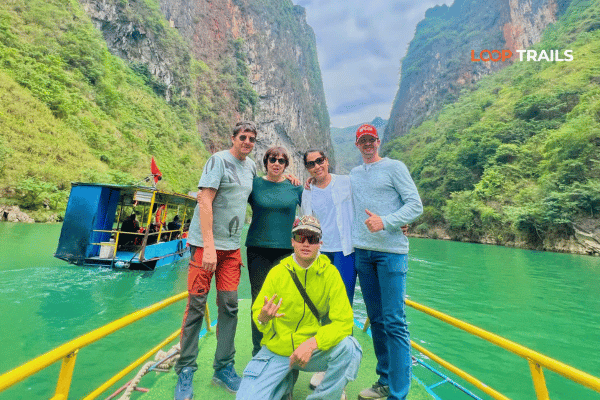
If the weather is right, take the Nho Que boat trip. About an hour, gentle, and the canyon walls feel even bigger from the water. If the weather isn’t right (high wind or heavy rain), don’t push it. The boat doesn’t run in unsafe conditions and that’s a good thing.
Lunch in Meo Vac. After lunch, the route turns south and inland toward Du Gia. The roads get smaller, the villages quieter, and the scenery shifts from limestone walls to green forested valleys.
Du Gia village has a waterfall a short walk from the homestays. People swim in the dry season. Dinner is communal, family style, and usually includes whatever the homestay made that morning.
The shortest day. A relaxed morning, a final ride through small valleys and rice terraces, and you’re back in Ha Giang City by lunch. Time for a real shower, the bus back to Hanoi, or a beer with the group.
That’s the standard. Within this frame there are dozens of variations: side trips to Lung Khuy Cave near Quan Ba, the back road from Meo Vac to Bao Lac if you’re combining with Cao Bang, or extra time in Sung La if you want to slow down properly.
Ready to lock in dates? Browse our Ha Giang Loop tour itineraries by length and format and we’ll match you to the right one.

Learn more: Ha Giang Loop Cost & Tips
Prices change with season, group size, and operator quality. For exact current pricing, check our tours page or message us directly. Honest ranges below.
Easy Rider tours. Usually the most expensive option per person because you’re paying for a dedicated rider’s time, accommodation, and meals. A 3 days tour sits in the mid range, a 4 days tour scales up accordingly. What’s included matters: bike, fuel, helmets, gloves, knee pads, a guide for the group, all homestays, breakfasts and lunches, often dinners.
Self drive with lead guide. Generally cheaper than Easy Rider because you’re not paying for a personal rider. You still get the route knowledge and the safety net. Bike rental is included.
Jeep tours. Cost depends on group size. Per person, smaller groups are more expensive than larger ones. A private jeep is the priciest format but worth it for couples or families.
Independent self drive (no tour). Cheapest. You pay for the bike rental, fuel, your own homestays, and food. Budget travellers can do this for a fraction of a guided tour, but you take on all the planning and risk.
What’s usually NOT included in any package: alcohol, tips for guides, optional activities like the Nho Que boat, and the bus or transfer between Hanoi and Ha Giang City.
A practical note: be wary of tours priced significantly below the market average. Quality of bikes, guides, and homestays usually correlates with price. The cheapest option often becomes the most expensive lesson.

Learn more: Ha Giang Packing list
You don’t need a big bag. Most homestays have what you need, and you’ll be on a bike or in a jeep with limited storage.
Clothing
Riding gear
If you’re booking with a tour, helmets and basic protection (gloves, knee pads) are usually provided. Confirm before you go. If you want a higher quality helmet or your own gloves, bring them.
Other
Don’t bring
If you forget something, Ha Giang City has shops with basic gear before you leave. Don’t panic, but don’t show up in shorts and flip flops either.
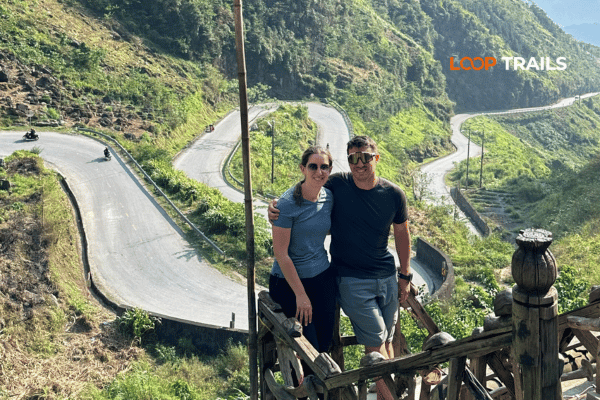
Learn more: Ha Giang Road Conditions 2026
The Ha Giang Loop is safe enough that hundreds of thousands of travellers ride it every year. It’s also a real mountain road, and accidents happen, almost always for the same reasons: inexperienced riders, alcohol, fatigue, or pushing through bad weather.
Road quality. Generally good. The main loop is paved and reasonably well maintained. There are sections under repair at any given time, and rainy season can bring landslides on smaller branches. Expect occasional gravel, potholes, and water crossings on side roads.
Traffic. Light by Vietnamese standards but not empty. You’ll share the road with local motorbikes, the occasional truck, school kids on bicycles, dogs, chickens, and buffalo. Keep your speed conservative on blind corners.
Helmets and gear. Always wear the helmet, always strap it. This is non negotiable for our tours and should be for any responsible operator.
Driving licence. Vietnamese law requires a valid licence to ride any motorbike over 50cc, and bikes used on the loop are generally over that. The accepted format is a Vietnamese licence or a foreign licence supported by an International Driving Permit issued under the 1968 Vienna Convention. Rules and enforcement can change. Check the latest updates before you travel and bring whatever paperwork your home country issues.
If you don’t have a valid licence, booking an Easy Rider or jeep tour is the clean answer. You’re a passenger, not a driver. No licence issue.
Insurance. Travel insurance that explicitly covers motorbike riding is strongly recommended. Many policies exclude motorbike accidents by default. Read your policy. If you’re riding without a valid licence, most insurers won’t pay out.
Police checkpoints. They exist on the loop, mostly for safety checks. If you have your paperwork in order and you’re wearing a helmet, they’re rarely an issue. Be polite, hand over what’s asked, and go.
Weather decisions. A good guide will adjust the day for weather. Heavy fog on the Ma Pi Leng, pushing into the rain just to “stay on schedule”, or riding tired in the dark are how avoidable accidents happen. If your guide suggests waiting out a storm or rerouting, listen.
A frank note: the loop has had its share of serious accidents over the years. Most involved inexperienced solo riders on rented bikes who underestimated the terrain or the weather. Choose the right format for your skill level.
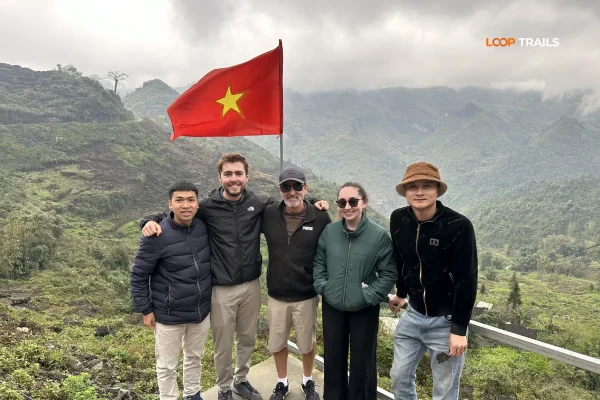
Learn more: Ha Giang Loop Mistake to Avoid
I see the same handful of mistakes from new groups every week. Avoiding them costs nothing.
Booking too few days. Three days works on paper. Four days is genuinely better. If you have the time, take it.
Renting a bike you can’t handle. Manual bikes look cool. They also stall on uphill switchbacks if you don’t know what you’re doing. If you’re not confident with gears, take a semi automatic. If you’ve never ridden, don’t rent at all.
Skipping the briefing. A good operator will run you through the bike, the route, and the basics before you leave. Pay attention. The five minutes you spend on the brake feel of your bike will pay back the whole trip.
Drinking and riding. Happy water (corn rice wine) is part of the homestay experience. It’s also strong, and the next morning ride is not the time to find out how strong. One small drink with dinner is fine. Five rounds with the host is a problem.
Underdressing. Even in October, the early morning out of Dong Van can be cold enough to numb your hands. Layer up at the start of the day. You can always shed.
Over scheduling photos. The first hour, every viewpoint feels like a must stop. By the afternoon, you’re tired and behind. Pick your shots. The light is better in the morning anyway.
Believing every “best price” pitch. Touts in Ha Giang City pitch tours hard. Some are fine, some are not. Bikes that look identical can have very different mechanical histories. Read recent reviews. Stick to operators with a verifiable track record.
Trying to do Sapa, Ha Giang, and Cao Bang in five days. It’s geographically possible. It’s not enjoyable. Pick one and do it well, or stretch your trip and combine two.
Not factoring in travel days. Hanoi to Ha Giang is a full day, each way. A three days loop is a five days commitment from Hanoi. Plan accordingly.
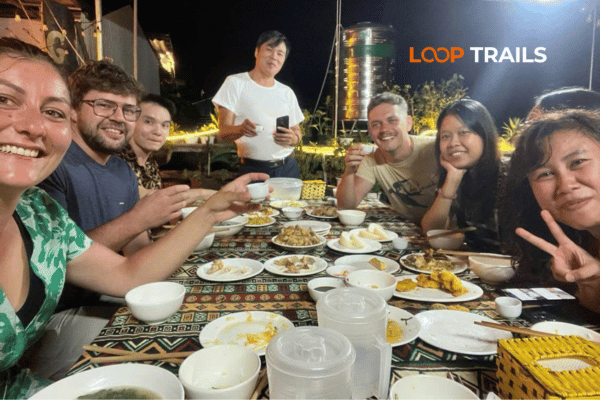
Learn more: Corn wine “Happy Water” in Ha Giang
The food on the loop is honest mountain cooking. Pork, rice, fresh greens, eggs, sometimes fish from local rivers, broths, and the occasional grilled meat skewer. Hmong and Tay cuisine here is less spicy than the south and leans on fresh herbs and pickled vegetables.
A few things worth trying:
Homestays. Most are wooden stilt houses with shared sleeping platforms (mattresses, individual mosquito nets, blankets) and shared bathrooms. Hot water is generally available. Wifi is patchy but exists. The vibe is family kitchen, not boutique hotel.
If you want private rooms, ask in advance. Several operators (us included) work with homestays that offer a mix of dorm style and private rooms. Du Gia has some of the better private options.
Etiquette. Take shoes off before entering homes. Ask before photographing people, especially children. A small gift like coffee, fruit, or notebooks for the kids is welcomed but never expected. Be patient with the wifi and the schedule. The pace of the mountains is slower. Lean into it.
The Sunday markets. Meo Vac, Dong Van, and a few smaller villages have rotating markets where Hmong, Tay, Dao, and other ethnic groups gather to trade. If your itinerary lands on a Sunday, build in time. These markets are the loop’s least staged experience.
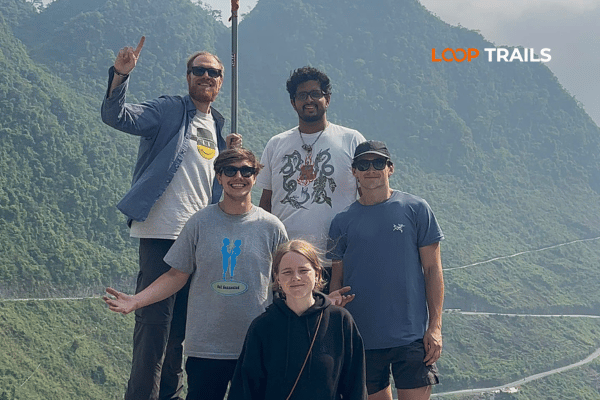
Learn more: Ha Giang Loop for Beginners
Booking from abroad is straightforward if you stick to operators with real reviews and clear communication.
What to look for
What to be wary of
Deposit and payment. A small deposit to confirm the booking is normal. Full upfront payment to a private bank account is not. Most reputable operators take payment in person on day one, after the bike check, or split the payment with a small online deposit.
Communication. WhatsApp is the standard for Vietnam tour bookings. A good operator answers within a reasonable time, in clear English, and is happy to switch you between formats (Easy Rider vs jeep, 3 vs 4 days) before you commit.
If you’d like a no pressure quote and a real conversation about which format fits your group, send us a WhatsApp message. We’ll give you straight answers, including telling you when another option suits you better.
Learn more: Cao Bang Loop 3 Days best kept secret
The Ha Giang Loop earns its reputation. It also rewards travellers who plan it properly. Pick the right number of days, the right format, and the right season, and the loop becomes the kind of trip you talk about for years. Get any of those wrong and it can feel rushed, cold, or sketchy.
The good news is that none of this is hard. Three days, four days, Easy Rider, self drive, jeep, October, late spring: there’s a version of this trip that fits almost any traveller. The mountains aren’t going anywhere, the villages still feel like villages, and the road still does what it’s done for years. It gets quieter the further north you ride, and quieter still when you turn off the main loop.
Whatever you choose, ride safe, eat well, and leave room in your schedule for the unplanned stops. Those usually end up being the ones you remember.
Ready when you are. Have a look at our Ha Giang Loop tours, our motorbike rental options, or message us on WhatsApp. We’ll match you to a trip that fits your group and your dates.
The loop is safe for travellers who match the format to their experience. Most accidents involve inexperienced riders on rented bikes in bad weather. Easy Rider and jeep tours have very strong safety records. If you’re new to motorbikes, choose one of those formats and you’ll be fine.
Vietnamese law requires a valid licence to ride bikes over 50cc, which includes most loop bikes. A Vietnamese licence or a foreign licence backed by an International Driving Permit (1968 Vienna Convention) is the standard. Rules can change, so check the latest updates before you travel. If you don’t have a valid licence, book an Easy Rider or jeep tour.
Costs vary by format, season, group size, and operator. Easy Rider tours sit in the mid to high range, jeep tours scale by group size, and self drive is the most affordable guided option. Independent travel without a tour is the cheapest but comes with more planning and risk. Message us for current rates.
Yes, experienced riders do the loop independently every season. You’ll need a reliable rental bike, a route plan, basic offline maps, and the confidence to deal with mountain riding in changing weather. For first time visitors to Vietnam, a guided format is generally easier and safer.
Four days is the sweet spot. Three days is doable but rushed. Five days lets you explore side roads and slow down properly. Two days is not really the loop.
September to November is the most reliable window: clear skies, dry roads, and rice terraces turning gold. Winter (December to February) is cold but beautiful. Wet season (June to August) is unpredictable, with stronger waterfalls but real landslide and rain risk.
Cooler than the Vietnamese lowlands, especially at altitude in Dong Van and Meo Vac. Mornings can be cold even in summer, and winter nights occasionally drop near freezing. Rain can come in any season, so always pack a waterproof.
Yes. Easy Rider works well for couples (each person gets their own bike and rider) and jeep tours are a strong choice for families with kids or older travellers. Du Gia village in particular is a relaxed homestay stop that suits a slower pace.
Vegetarian travellers can be accommodated, but it takes some planning. Tell your operator in advance. Most homestays will prepare egg, tofu, and vegetable dishes if asked, but the default menu is meat heavy.
If you have to choose, Ha Giang has the more dramatic karst scenery and stronger riding. Cao Bang is quieter, with bigger waterfalls (Ban Gioc) and lakes. If you have a longer trip, combine the two. We run Ha Giang to Cao Bang combine tours that link them in one ride.
Yes. Solo travellers join group tours regularly, and most groups have a mix of solo riders, couples, and pairs. If you’d rather not be alone, an Easy Rider tour with a small group is a sociable choice.
A good operator adjusts the schedule. Light rain, you ride. Heavy rain, you wait or reroute. Boat trips on the Nho Que River and a few side roads close in serious weather. Trips rarely cancel completely, but the day can shift.
Contact information for Loop Trails
Website: Loop Trails Official Website
Email: looptrailshostel@gmail.com
Hotline & WhatSapp:
+84862379288
+84938988593
Social Media:
Facebook: Loop Trails Tours Ha Giang
Instagram: Loop Trails Tours Ha Giang
TikTok: Loop Trails
Office Address: 48 Nguyen Du, Ha Giang 1, Tuyen Quang
Address: 48 Nguyen Du, Ha Giang 1, Tuyen Quang
Facebook X Reddit Table of Contents Learn more: Ha Giang Loop Tours This is the question that sits in almost every Ha
Facebook X Reddit Table of Contents Learn more: Ha Giang Loop Tours Most people drive past the Quan Ba area twice on

Facebook X Reddit Table of Contents Learn more: Ha Giang Loop Tours The Ha Giang Loop has a reputation problem with older