


Thúy Kiều (Grace) is a travel blogger and content contributor for Loop Trails Tours Ha Giang. She holds a bachelor’s degree in Sustainable Tourism from Vietnam National University, Hanoi, and has a strong passion for exploring and promoting responsible travel experiences in Vietnam’s northern highlands.

Learn more: Ha Giang Loop Tours
Up in the far north, your phone stops being a toy and becomes real kit. It is your map when the road forks with no sign, your translator at a homestay dinner, your Grab in town, and your one link to the outside world when a pass swallows the daylight. So the question of which SIM or eSIM to carry is not a nerdy afterthought. Get it wrong and you are staring at a blank screen halfway up a mountain. Get it right and the whole trip runs smoother.
This guide cuts through it: which network actually works in the mountains, whether to go eSIM or physical SIM, what it costs in 2026, how to set it up, and what to do when the bars vanish, which they will. We spend our lives on these roads, so this is the practical version, not the sales pitch.

Learn more: Ha Giang Loop 2 Days 1 Night
If you take one thing from this article, take this. For northern Vietnam, you want to be on Viettel, or on an eSIM that runs on the Viettel network.
Vietnam has three main mobile networks: Viettel, Vinaphone and Mobifone. In Hanoi or any big city, all three work fine and you will barely notice the difference. The moment you leave the cities and climb into the mountains, the gap opens up fast, and Viettel pulls ahead by a distance.
Viettel is the largest network in the country, carrying roughly half of all subscribers, and it has built by far the widest reach into rural and mountain areas. Where the roads get remote, up on the Ha Giang Loop, out toward the Cao Bang border, high above Sapa, Viettel is the one that still finds a signal when the others have given up. Vinaphone and Mobifone are perfectly good in towns and cities, and Vinaphone in particular is quick on 5G in the big centres, but neither matches Viettel once you are off the main tourist track.
So the rule is simple. City only trip, any network is fine. Anything that heads into the north, choose Viettel or a plan that uses it. Everything below builds on that one decision.

Learn more: Ha Giang Loop 3 Days 2 Nights
Here is the honest part that the network ads will not tell you: even on Viettel, the far north is not blanketed in bars. You will have solid data in the towns and long stretches of nothing in between. Plan for that reality and you will be fine.
Roughly speaking, this is what to expect on and around the Ha Giang Loop:
It is not just the Loop. Sapa has solid coverage in town but treks and hillside homestay villages often go dark. Around Phong Nha in the centre, Viettel holds up near the national park while the others fade once you leave town. The pattern repeats across rural Vietnam: the towns are fine, and the spaces between them are where you lose service.
Here is the same picture at a glance:
| Where you are | What to expect on Viettel |
|---|---|
| Northern towns (Ha Giang, Dong Van, Meo Vac) | Basic 4G, fine for maps and messaging |
| Mountain roads between towns | Frequent dead zones, plan for none |
| High passes like Ma Pi Leng | Intermittent at best |
| Cao Bang and Ban Gioc border | Best available, still gappy |
| Sapa town versus high treks | Good in town, often dead up high |
One more thing worth knowing: Vietnam has moved on from the old 2G network, so a very old handset that only does 2G may struggle to connect at all. Any reasonably modern 4G phone is fine.
A quick word on 5G, since people ask. Vietnam’s 5G is still early and lives mostly in the centres of the biggest cities. Out in the north you are on 4G, and honestly 4G is plenty for everything a traveller needs. Choose your plan for coverage, not for a 5G logo you will rarely see up here.
The takeaway is not to panic. It is to prepare. No network gives you full signal on every pass, so you build the gaps into your plan rather than hoping they will not happen. This is one of the quiet reasons a lot of people ride the Loop with an easy rider or on a guided trip: when someone who knows the roads is leading, being out of signal for an hour stops being a worry and just becomes part of the ride. If that sounds like your speed, take a look at our [Ha Giang Loop tours] and the different ways to travel it.
Learn more: Ha Giang Loop 4 Days 3 Nights
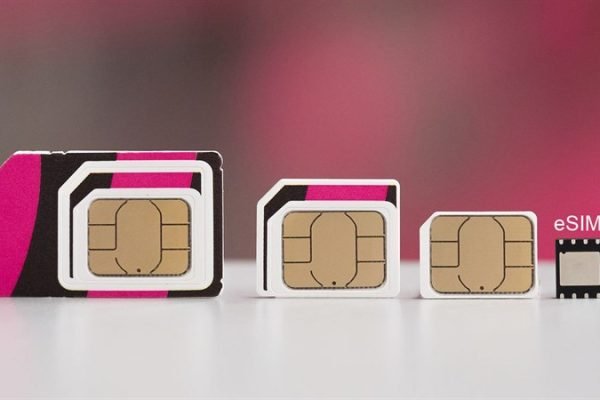
Both work well. The right choice comes down to your phone, your trip length, and how much you value convenience over saving a few dollars.
An eSIM is a digital SIM built into many newer phones. You buy it online, scan a QR code, and you are ready, no plastic card to swap. For a lot of travellers it is the easy button.
The classic plastic SIM you slot into your phone. Cheaper, more data for your money, and it gives you a real Vietnamese phone number.

Learn more: Ha Giang Cao Bang 5 Days 4 Nights
Whichever format you pick, the network underneath is what counts. An eSIM on the wrong network will let you down in the mountains no matter how slick the app is.
So before you buy any eSIM, check which Vietnamese network it actually uses, and pick one that lists Viettel. Providers do switch their partner network from time to time, so verify the current one at the moment you buy rather than trusting an old review. The surest way to guarantee Viettel is to buy a Viettel tourist eSIM directly, since the Vietnamese carriers now sell their own eSIMs online with the QR delivered to your inbox. Same network, same coverage, none of the guesswork.
Two other options come up, and for the north neither is usually the best pick. Pocket wifi, a small portable hotspot device, can connect several phones at once, which suits groups or families, but it is one more thing to charge and carry, it runs on the same networks so it still dies in the dead zones, and you have to rent it and hand it back. Roaming on your home plan is the most expensive route by far, and it often lands on whichever local network your carrier partners with, which may not be Viettel. If you go that way, switch roaming on only as a backup and check the daily rate first. For most riders, a Viettel eSIM or SIM beats both on cost and coverage.

Learn more: Ha Giang Loop Price
Staying connected in Vietnam is cheap either way. All figures below are rough 2026 estimates to help you plan, and prices move, so confirm the current rates when you buy.
Do not overbuy. Maps, messaging and the odd photo upload sip data. Video and heavy social use gulp it.
| Traveller type | Rough data for 1 to 2 weeks |
|---|---|
| Light: maps, chat, a few photos | 3 to 5 GB |
| Typical: the above plus social media and browsing | 10 to 20 GB |
| Heavy: lots of video, streaming, hotspotting a laptop | unlimited style plan |
For most people riding the north for a week or two, something in the 10 to 20 GB band is the sweet spot.
A tip on running out: you can top up mid trip in a couple of minutes, so there is no need to panic buy a giant plan up front. Start with a sensible amount, keep half an eye on your usage, and add more if you burn through it. Hotspotting a laptop or tablet is the fastest way to eat data, so factor that in if you plan to work on the road.
None of this is hard, and doing it in the right order saves headaches.

Learn more: Ha Giang Cao Bang Ba Be Lake 6 Days 5 Nights
Most modern phones happily run two lines at once, your home SIM and a Vietnam eSIM side by side. The usual setup is to leave your home SIM in as the line for calls and texts on your normal number, with the Vietnam eSIM carrying all your data. Turn data roaming off on the home line so it never quietly runs up a bill, and set the eSIM as your default for mobile data. If you went with a physical Vietnamese SIM instead, you swap your home SIM out, so keep it in its little holder somewhere safe and remember your home number will not ring until you put it back.
This is the step that actually keeps you out of trouble, and it matters more than which SIM you chose:
Do those four things and a dead zone becomes a non event instead of a crisis.

Learn more: Cao Bang Loop 3 Days best kept secret
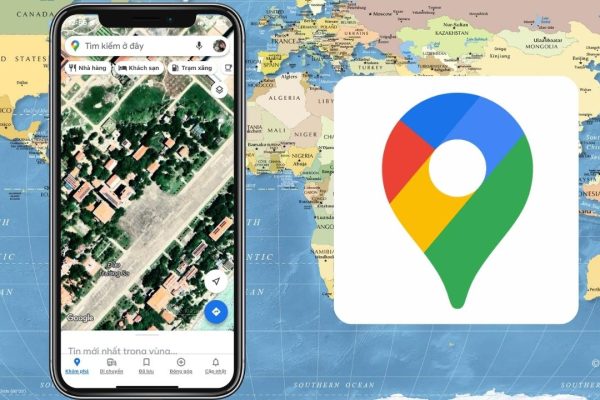
A short list of what earns its place on your phone before you arrive.
One practical note. A handful of apps can be blocked or throttled in Vietnam from time to time. A VPN is legal here, so if you depend on a specific service, it is worth having one installed before you arrive, just in case. Nothing to stress about, just good to know.
Learn more: Ha Giang Loop Mistake to Avoid
The small stuff that trips people up, framed as friendly warnings.
None of this is meant to worry you. A little setup up front and you are sorted for the whole trip.
Learn more: Ha Giang Motorbike Rental
How much any of this matters depends a lot on how you choose to travel the north.
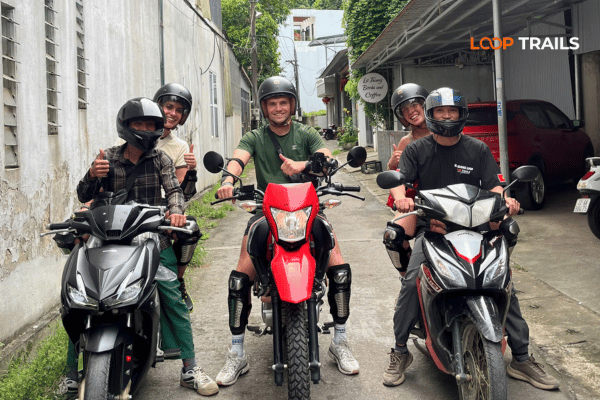
If you are self driving a motorbike, connectivity is entirely on you. You are the navigator, so a Viettel plan plus proper offline maps is essential, not optional. Sort a bike and get local advice on the route by checking [motorbike rental in Ha Giang] before you go.
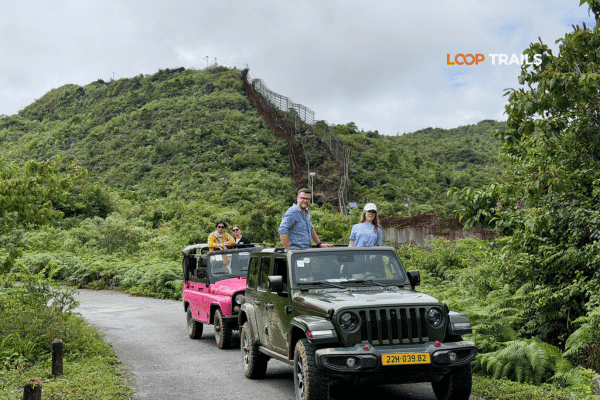
If you ride with an easy rider or travel by jeep on a guided tour, the pressure comes off. Your driver knows every turn of these roads, carries local connectivity, and does not need a map app to find the next homestay. You get to put the phone in your pocket and actually look at the scenery. That peace of mind is a big part of why people book guided, and you can compare the options on our [Ha Giang Loop tours] page. Heading further east into the geopark country too? Our [Ha Giang and Cao Bang combined tours] cover the connectivity gaps on that route the same way.
Either way, the simplest move is to message us before you arrive. Tell us your dates and your plan and we will help you sort the bike or tour, and point you the right way on staying connected. [Message us on WhatsApp] and we will give you a straight answer, every time.
Learn more: Ha Giang Loop by Wrangler Rubicon Jeep
Viettel, without much debate. It is the largest network in the country and has by far the widest coverage in rural and mountain areas, which is exactly where the north takes you. Choose Viettel, or an eSIM that runs on the Viettel network, and you give yourself the best chance of a signal.
In the towns, yes, basic 4G on Viettel. Between the towns and on the high passes like Ma Pi Leng, expect frequent dead zones and intermittent signal at best. This is why downloading offline maps for the whole route before you ride is essential, not optional.
Both work. An eSIM is more convenient: buy it before you fly, activate on wifi, skip the airport queue and the registration, keep your home number. A physical SIM is cheaper per gigabyte and gives you a local number. For the north, the network matters more than the format, so pick Viettel either way.
Yes, and it is the smoothest option. Buy online, install the QR code at home on wifi, and switch it on when you land so you are connected the moment you step off the plane. Just make sure the plan uses Viettel if you are heading into the mountains.
Physical SIM cards require real name registration with your passport and a photo, which is why you buy them from a proper shop or airport counter. International eSIMs skip this entirely, activating without any Vietnamese registration process.
Light users on maps and messaging can manage on 3 to 5 GB. Most travellers doing a one or two week trip are comfortable with 10 to 20 GB. If you stream a lot or hotspot a laptop, look at an unlimited style plan instead.
Barely. Vietnam’s 5G is mostly limited to the centres of the biggest cities, so in the north you are on 4G, which is more than enough for everything a traveller needs. Choose your plan for coverage, not for 5G.
Yes, WhatsApp works over your data, and many tour operators including us use it. Locals often prefer Zalo, Vietnam’s own messaging app, so it is worth installing too. A few apps can be restricted at times, and a VPN is legal here if you rely on a specific service.
Cheap either way. Local tourist data plans often run very roughly 2.50 to 15 dollars for 7 to 30 days, and travel eSIMs range from a few dollars for a small pack up to around 40 dollars for a month of heavy data. Prices change, so check current rates when you buy.
Viettel is your best bet around Cao Bang and the Ban Gioc border area, though there are still gaps out toward the frontier. Download offline maps here too, and carry your passport since it is a border zone.
This is normal, not an emergency, if you prepared. Rely on your downloaded offline map, keep riding to the next town where signal returns, and make sure someone knows your rough plan. On a guided tour or with an easy rider, your driver handles all of this, so it never becomes your problem.
Some do and some do not, since providers connect to different Vietnamese networks and occasionally switch. Always check which network a plan uses before buying, and favour one that lists Viettel. Buying a Viettel tourist eSIM directly removes the guesswork.
Contact information for Loop Trails
Website: Loop Trails Official Website
Email: looptrailshostel@gmail.com
Hotline & WhatSapp:
+84862379288
+84938988593
Social Media:
Facebook: Loop Trails Tours Ha Giang
Instagram: Loop Trails Tours Ha Giang
TikTok: Loop Trails
Office Address: 54A Tran Phu, Ha Giang 2, Tuyen Quang
Address: 54A Tran Phu, Ha Giang 2, Tuyen Quang

Facebook X Reddit Table of Contents Learn more: Ha Giang Loop Tours The Ha Giang Loop has a reputation problem with older

Facebook X Reddit Table of Contents The passes get the photos. The homestay nights get the stories. Ask anyone who’s done the