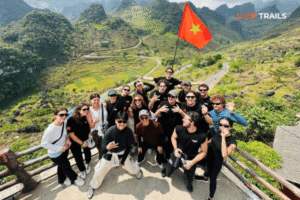


Thúy Kiều (Grace) is a travel blogger and content contributor for Loop Trails Tours Ha Giang. She holds a bachelor’s degree in Sustainable Tourism from Vietnam National University, Hanoi, and has a strong passion for exploring and promoting responsible travel experiences in Vietnam’s northern highlands.

Learn more: Ha Giang Loop Tours
Two weeks in Vietnam is the sweet spot. You could spend it all in the south, or chase the beaches on the coast, but if you’re serious about adventure, the kind where you remember the people as much as the landscape, northern Vietnam is where the magic lives.
I’m not exaggerating. I’ve sat on a motorbike winding through the Tram Tau Mountains at sunrise, watched an Easy Rider guide negotiate a river crossing like it was nothing, and spent evenings in small villages where the only internet is the friend group laughing on the hostel porch. This is the north.
Northern Vietnam isn’t Instagram-easy. The roads are dramatic. The villages are genuine. The food tastes like someone’s grandmother cooked it this morning, because she probably did. And the people, travelers and locals alike, have a kind of openness that comes from being slightly off the usual trail.
If you’ve got two weeks and you’re asking yourself “should I do north or south,” here’s the real answer: the north transforms you faster. The landscape does that. The riding does that. The stories you collect do that.

Learn more: Ha Giang Loop 2 Days 1 Night
You’re landing in Hanoi, most likely. Give yourself three days here, even if the city overwhelms you. This isn’t wasted time; it’s acclimatization.
Day 1: Arrival and Old Quarter settling-in
Get to your hotel by late afternoon. Walk the Old Quarter for dinner. The streets are narrow, chaotic, smell like charcoal and pho broth. Grab a plastic stool at a street vendor and eat something that costs less than three dollars. This is Vietnam. You won’t find this in a tour guide, but you’ll remember it forever.
Stay somewhere in the Old Quarter or near Hoan Kiem Lake. Avoid the first night exhaustion trap: eat well, sleep early, don’t commit to plans.
Day 2: Hanoi temples and Ho Tay loop
Visit the Temple of Literature (Van Mieu) in the morning before crowds arrive. Afternoon, rent a motorbike or take a taxi to Ho Tay (West Lake) and cycle around the perimeter. Stop for egg coffee at a proper café, not the touristy ones. Talk to people. This is where you get comfortable with the rhythm of northern Vietnam.
Evening, if you’ve booked with a tour operator that starts from Hanoi, attend a meet-and-greet. If you’re renting a motorbike, use today to confirm details: fuel tank condition, helmet fit, phone charger availability, exact departure time tomorrow.
Day 3: Hanoi to Cao Bang prep
If you’re on an organized tour, your guide picks you up from your hotel. If you’re renting, leave early morning around 6 or 7 AM to avoid the worst Hanoi traffic. It’s about 5-6 hours of driving/riding depending on stops.
The route: Hanoi to Bac Can to Cao Bang. You’ll pass limestone hills appearing on the horizon. Lunch in a town along the way, Bac Can has decent pho shops. By late afternoon, you’re checking into your Cao Bang accommodation. Relax, eat well, prepare mentally for the riding ahead.
Learn more: Cao Bang Loop 3 Days best kept secret
Cao Bang is less famous than Ha Giang, which means fewer tourists and more raw landscape.
Day 4: Ban Gioc to Nho Quan to Phia Oac
Ban Gioc waterfall is the main attraction here, it’s the second-largest waterfall in Southeast Asia, spanning the China-Vietnam border. The road to Ban Gioc is genuinely beautiful: winding through rice paddies and small Zhuang villages. You’ll meet vendors on the road selling fresh lime or homemade snacks. Stop for photos, chat with locals, take your time.
At Ban Gioc, you can swim in the plunge pool, bring dry clothes. The water is cold and the setting is dramatic, especially if you arrive late afternoon when the light hits the cliffs right.
After Ban Gioc, your guide or route takes you to smaller waterfalls and viewpoints: Nho Quan and Phia Oac. These are less crowded than Ban Gioc and just as stunning. If you’re self-driving or on a rental, stay on main roads and ask locals for directions, signage isn’t always clear.
Day 5: Nguom Ngao Cave and back to Cao Bang town
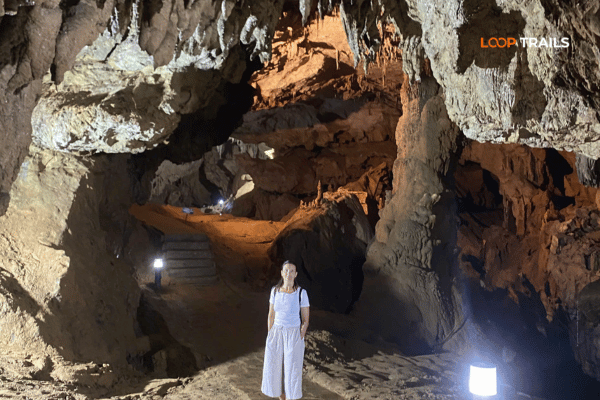
Nguom Ngao Cave (Fairy Cave) is a limestone cavern with stalactites and stalagmites, and a river running through it. It’s touristy but genuinely impressive. If you’re on a tour, this is usually included. If you’re self-driving, enter via Cao Bang town, local guides wait at the entrance with a small fee for entry.
Return to Cao Bang town for the evening. Walk to the Cao Bang waterfall in town (different from Ban Gioc), it’s smaller but beautiful at sunset. Eat at a local restaurant. By now, you’re starting to notice the pattern: Vietnam moves slower in these towns.
Day 6: Cao Bang to Thac Ba Lake (optional) or early Ha Giang start
Depending on your itinerary, you can visit Thac Ba Lake, about 2 hours from Cao Bang, for limestone karst scenery and water activities, or push on toward Ha Giang early. Thac Ba is worth seeing but adds a detour. If time is tight, skip it and head to Ha Giang to maximize loop time.
Day 7: Transition day or light loop start
If you haven’t reached Ha Giang yet, today is your travel day. It’s about 3-4 hours from Cao Bang to Ha Giang town (Dong Van area). You’ll see the mountains getting steeper, the roads getting windier. This is the preamble to the loop itself.
If you’ve already reached Ha Giang, use today to rest, explore Dong Van town, visit the ancient stone plateau (a UNESCO site), and prepare for the intensive days ahead.
The Ha Giang Loop is the heartland of northern mountain adventure. It’s famous, maybe too famous, but it deserves the reputation.
Loop Overview:
The classic loop from Ha Giang town goes: Dong Van to Meo Vac to Du Gia to Phia Oac (wait, we’ve been here before in Cao Bang, different location, similar name) to Yen Minh back to Dong Van. The loop is roughly 240-260 km depending on your exact path. It’s usually done over 2-3 days, though 4-5 days is more relaxed.
Day 8: Dong Van to Meo Vac (Ma Pi Leng Pass)
Early start. This is the money shot. Ma Pi Leng Pass is a 1,500-meter high mountain pass with hairpin turns and panoramic views of the Nho Que River snaking below. On clear days, the landscape punches you in the gut, it’s that stunning.
The ride here is about 3 hours from Dong Van. You’ll climb steadily. If you’re on a motorbike, the engine will labor a bit, this is where XR150s earn their name, they keep climbing. Easy Rider guides will stop for photos at a few viewpoints. Self-drive jeeps navigate it smoothly.
Stop at Ma Pi Leng Pass viewpoint. Have lunch in Meo Vac town, tourist-level Vietnamese, nothing fancy. Afternoon, explore Meo Vac market or rest at your guesthouse. If you have energy, hike to a local village, your guide can arrange this, or ask at your accommodation.
Day 9: Meo Vac loop via Du Gia and back
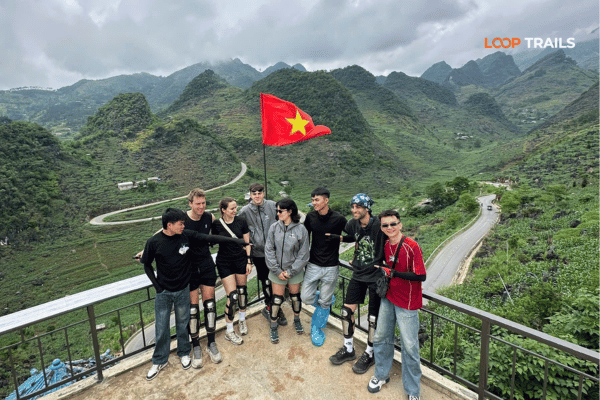
A shorter riding day today. Explore Du Gia area and Lung Cu Flagpole, northernmost point of Vietnam. The drive from Meo Vac is scenic: winding through ethnic H’Mong and Tay villages. You’ll see traditional stilt houses, rice terraces, and probably a few tour groups like yourself.
Lung Cu Flagpole is a small attraction, it’s literally a flagpole on a hilltop marking Vietnam’s northernmost border. The views are great. The visit is quick, 30 minutes. Don’t expect a major monument; it’s humble.
Return to Meo Vac for the evening. If you have time, visit a local H’Mong village with a guide. Homestays are available here if you want a deeper experience, though it’s not for everyone, basic facilities, but authentic.
Day 10: Meo Vac to Yen Minh
Ride via Yen Minh. This leg is less famous but equally beautiful, pine forests, minority villages, and quieter roads. You’re descending gradually back toward Ha Giang valley.
Yen Minh is a small town. The main attraction here is Can Ty village, if interested in homestays or village walks, or simply moving through on your way back. The town itself isn’t a destination; it’s a waypoint. Accommodation is basic but clean.
Day 11: Yen Minh back to Dong Van or Ha Giang town
A half-day or easy full-day ride. Return to Dong Van or Ha Giang town. Use the afternoon to rest, shower properly for the first time in days, eat a restaurant meal that isn’t pho, and mentally transition out of the loop.
If you finish early, visit Dong Van’s old town (French colonial architecture, ethnic market, local feel). Or simply sit at a café and watch the town wake up.
Day 12: Ha Giang to Hanoi (or intermediate stop)
The return ride to Hanoi is about 5-6 hours. If you’re exhausted, break it in Bac Can. If you’re still energized, push straight back.
You’ll notice the shift: the mountains flatten, traffic increases, urban signs return. It’s disorienting after days in the mountains. Grab lunch in a roadside town. Listen to music. Process the ride.
Arrive in Hanoi by late afternoon. Find your hotel. Shower. Eat something you crave. Walk slowly through the Old Quarter. Your legs might ache. Your mind is still in the mountains.
Day 13: Hanoi recovery and reflection
Sleep in. Have a proper breakfast. Visit a place you missed on Day 2, maybe the Museum of Ethnology, or just sit in a café. Buy souvenirs if you want them. Watch the city without the first-day overwhelm.
If you’re leaving Day 14 morning, this is your last full day in Vietnam. Don’t overpack it. Have a good dinner, maybe with other travelers you met on the loop. Share stories.
Day 14: Depart
Depending on your flight time, you’ll head to the airport. The loop is over. You’re different now, not just because of the adventure, but because of the people, the landscape, and the small moments you didn’t plan for.
Learn more: Ha Giang Loop 3 Days 2 Nights
Choosing how to ride the north is the biggest decision. Here’s how to think about it.
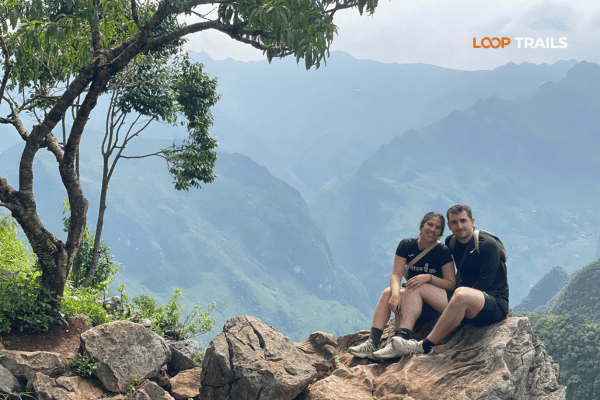
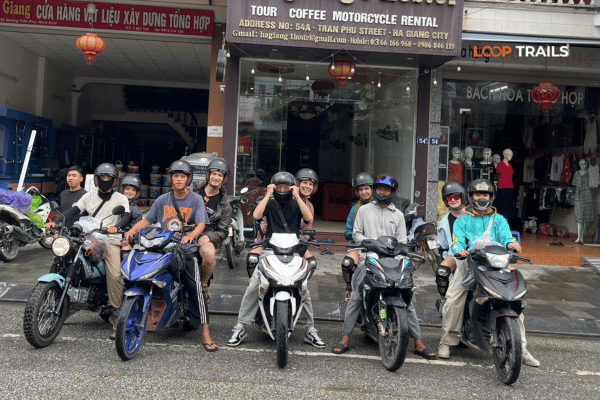
What it is: A guide picks you up on a motorbike, you’re the passenger, they’re the driver. Groups are typically 4-8 riders plus support vehicles. Itineraries are pre-planned. Think of it as adventure tourism with training wheels.
Pros:
Cons:
Best for: First-time Vietnam travelers, older travelers, people with anxiety about Asian roads, solo travelers who want social connection, travelers who don’t ride motorcycles.
What it is: You rent a Jeep with a driver, or drive yourself if you have an international license and experience, or you go with a small tour group where everyone shares one vehicle. Groups are usually 3-5 people maximum.
Pros:
Cons:
Best for: Small groups, families, travelers who want comfort, people who want maximum schedule control, older travelers
Learn more: Ha Giang Motorbike Rental
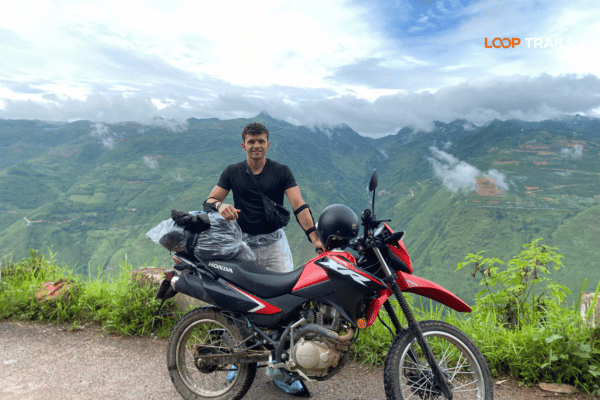
What it is: You rent a motorcycle, typically XR150, semi-automatic, or 125cc, and navigate yourself. Some rental companies offer very light advice; most just hand you a bike and a map.
Pros:
Cons:
Best for: Experienced riders, budget travelers, solo adventurers, people who want complete control, riders comfortable with risk and improvisation.
Which Option Is Best for You?
Ask yourself:
All three are legitimate. None is “the real way” to experience it.
Learn more: Ha Giang Loop 4 Days 3 Nights
Here’s what 14 days in northern Vietnam actually costs for different scenarios. I’m being honest, not marketing:
Easy Rider Tour (all-in with accommodations and meals):
Self-Drive Jeep (shared with 3 others, cheaper per person):
Motorbike Rental (budget traveler):
Actual costs depend on your choices: whether you fly premium airlines, eat at tourist restaurants, buy expensive tours in Hanoi, etc. If you eat well and stay in mid-range places, add 30% to these numbers.
Real talk: Budget doesn’t guarantee better experience. A $300 motorbike trip can be more memorable than a $800 Easy Rider tour if you’re present for it.
Learn more: Ha Giang Cao Bang 5 Days 4 Nights
Northern Vietnam’s reputation for dangerous roads is partially deserved and partially overblown. Let me give you the actual picture.
Road Conditions (honest version):
Motorbike accident risk (be real about this):
Scams and real dangers:
What actually protects you:
This sounds scary. It’s really not. Millions of people ride these roads. You’ll be fine if you’re careful.

Learn more: Ha Giang Packing list
Clothing (prioritize layers):
Motorbike essentials:
Other:
Don’t pack:
Pack light. A 40-liter backpack is plenty. If you’re renting a motorbike, luggage space is limited. If you’re on a tour with a support vehicle, you have more flexibility, but traveling light still makes logistics easier.

Learn more: Tu San Canyon & Nho Que River Boat Trip
Dry Season (September to April): Best
Wet Season (May to August): Possible but challenging
Shoulder Seasons (late April-May, mid-August-September): Mixed
My recommendation: October, November, March, or April. If you must travel in other months, June and September are still reasonable.
Learn more: Ha Giang to Cao Bang
How do you actually get a tour or rental lined up?
If you want an Easy Rider tour:
If you want a Jeep tour:
If you want motorbike rental:
Red flags:

Learn more: Ha Giang Loop by Wrangler Rubicon Jeep
Not ideal. Consider renting for a day or two around Hanoi first to get comfortable, or book an Easy Rider tour instead. Learning on a busy northern mountain road is possible but stressful
Technically yes, though enforcement varies. Get an International Driving Permit (from your home country’s auto club before traveling). Rental shops sometimes check; police rarely do. Driving legally protects you if there’s an accident.
Motorbike rental plus budget accommodations plus street food equals roughly $400-600 for 14 days. If you add Easy Rider tours, expect $800-1,100.
Either works. Booking from abroad gives you confirmation and security. Booking in Hanoi is often cheaper, no booking site markup. For safety and peace of mind, book established operators with online reviews.
Pull over, grab coffee, wait it out. Rain passes quickly in northern Vietnam. Don’t ride in heavy rain if you’re inexperienced. If you’re on a tour, your guide will decide.
Easy Rider tours have fixed schedules, extensions are usually not possible. Motorbike rental and jeep rentals offer total flexibility. Change your route anytime.
Absolutely. Verify that your policy covers motorcycle accidents if you’re renting a bike. Many standard policies don’t.
No. Fast riding, slow hiking, social tours, solo exploration, all are valid. The loop rewards being present, not rushing.
Hanoi hospitals are good; mountain clinics are basic. Minor illness: rest and rehydration at your guesthouse. Serious illness: return to Hanoi. Travel insurance covers evacuation.
Yes, but 14 days is tight if you’re splitting regions. Ha Giang plus Cao Bang alone is a full 14 days. Adding northern Thailand means cutting one area short.
Hanoi first is standard, acclimatization, easier logistics. Hanoi last feels anticlimactic, traffic shock after mountains. Your choice, but I’d do Hanoi first.
Contact information for Loop Trails
Website: Loop Trails Official Website
Email: looptrailshostel@gmail.com
Hotline & WhatSapp:
+84862379288
+84938988593
Social Media:
Facebook: Loop Trails Tours Ha Giang
Instagram: Loop Trails Tours Ha Giang
TikTok: Loop Trails
Office Address: 54A Tran Phu, Ha Giang 2, Tuyen Quang
Address: 54A Tran Phu, Ha Giang 2, Tuyen Quang
Facebook X Reddit Table of Contents Learn more: Ha Giang Loop Tours Most people drive past the Quan Ba area twice on

Facebook X Reddit Table of Contents Learn more: Ha Giang Loop Tours The Ha Giang Loop has a reputation problem with older