
Thúy Kiều (Grace) is a travel blogger and content contributor for Loop Trails Tours Ha Giang. She holds a bachelor’s degree in Sustainable Tourism from Vietnam National University, Hanoi, and has a strong passion for exploring and promoting responsible travel experiences in Vietnam’s northern highlands.
Learn more: Ha Giang Loop Tours
Cao Bang isn’t Sapa. You won’t find boutique resorts or international hotel chains here. What you will find is something better for many travelers: authentic accommodation that puts you directly into the landscape and communities you came to experience.
Most visitors to Cao Bang stay in homestays. These range from basic wooden houses with shared facilities to surprisingly comfortable rooms with private bathrooms and hot water. The common thread is genuine hospitality and a window into daily life in northern Vietnam.
This guide covers your accommodation options in Cao Bang, what to expect from each, and how to find the right place for your trip.
Learn more: Ha Giang Loop 2 Days 1 Night
Cao Bang province is still developing its tourism infrastructure. This means fewer options than established destinations, but it also means the options that exist are generally authentic rather than manufactured for tourists.
The landscape:
Cao Bang City: Provincial capital with hotels and basic services Ban Gioc area: Concentrated accommodation near the waterfall Rural villages: Scattered homestays along touring routes Emerging farmstays: Growing category combining comfort with authenticity
What you’ll find: Family-run homestays (most common) Mid-range hotels (mainly in Cao Bang City) Guesthouses near attractions A few emerging boutique/farmstay options
What you won’t find: International chain hotels Luxury resorts Extensive English signage Many options bookable on major Western platforms
Price range: Generally 200,000 to 600,000 VND per night (~$8 to $25) for homestays and mid-range hotels. Some newer options higher.
Learn more: Ha Giang Loop 3 Days 2 Nights
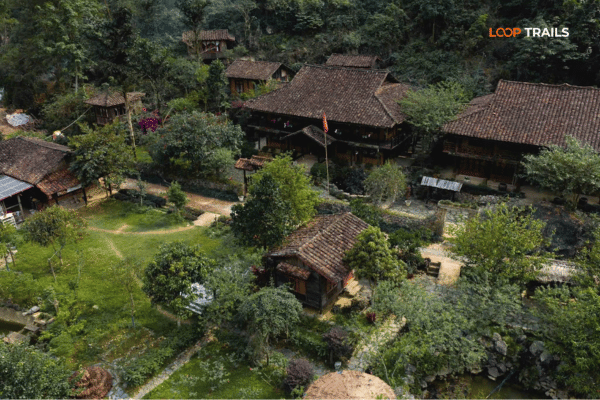
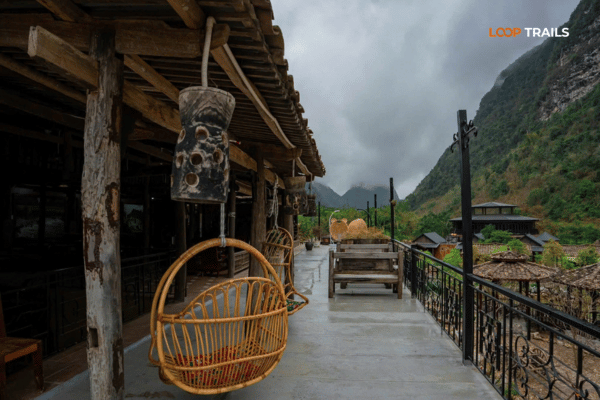
Homestays are the backbone of Cao Bang accommodation. You stay in a family’s home, often in a traditional stilt house or village dwelling.
Traditional stilt house homestays:
The classic experience. Tay and Nung ethnic minority families open their homes to travelers.
What this means: Wooden houses raised on stilts Sleeping on mattresses on wooden floors (often communal areas) Shared bathroom facilities (sometimes outside) Meals prepared by the family Direct cultural experience
Upgraded homestays:
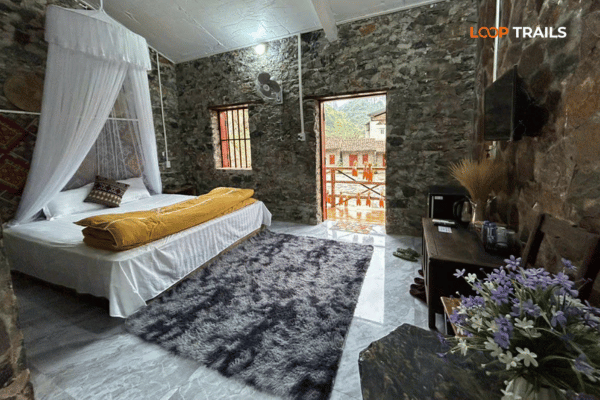
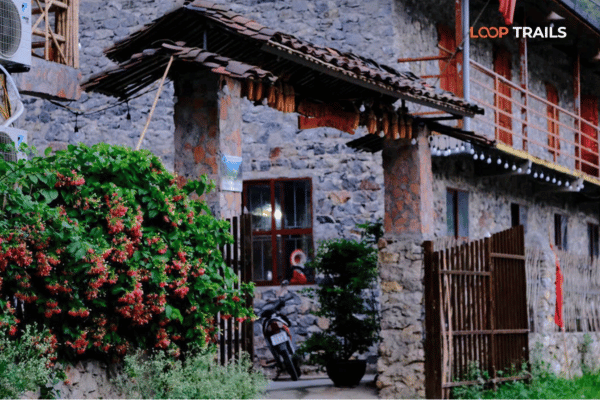
Many families have built or converted separate rooms for tourists with more privacy and comfort.
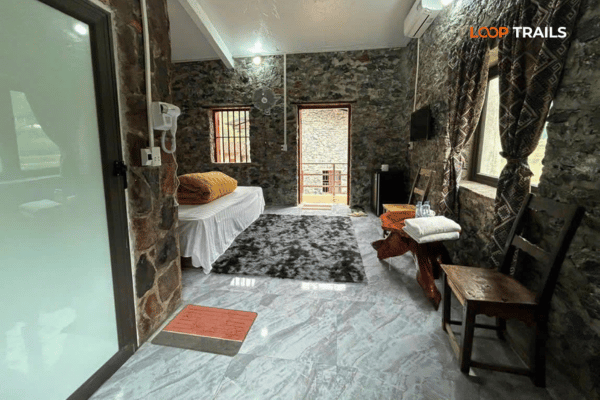
What this means: Private or semi-private rooms Western-style beds Private or shared bathrooms with hot water Still family-hosted with meals available
The experience:
Homestays offer something hotels can’t: actual connection with local life. You eat what the family eats. You see how they live. Children run around. Dogs bark. It’s not isolated tourism; it’s embedded tourism.
Trade-offs:
Less privacy than hotels Variable comfort levels Limited English (though hospitality transcends language) Thin walls, roosters at dawn, authentic sounds of village life
Cao Bang City has proper hotels ranging from budget to mid-range.
Budget hotels:
Basic rooms, often Vietnamese-style (hard beds, minimal amenities). Functional for a night but not places you’d want to linger.
Price range: 150,000 to 300,000 VND (~$6 to $12)
Mid-range hotels:
More comfortable rooms with air conditioning, hot water, private bathrooms, and sometimes breakfast included.
Price range: 400,000 to 800,000 VND (~$16 to $32)
What you get: Private rooms with en-suite bathroom Air conditioning and/or heating Wi-Fi Some English at reception Central location for city services
What you don’t get: Cultural immersion Scenic locations Boutique character
Best for: Those prioritizing comfort over experience, travelers with early departures or late arrivals, anyone needing reliable amenities.
A growing category in Cao Bang: properties that combine homestay authenticity with higher comfort standards.
What farmstays offer:
Working agricultural properties (rice, vegetables, livestock) Purpose-built guest rooms with modern amenities Family hospitality but more privacy Activities like farming, cooking classes, cultural programs Usually scenic rural locations
Price range: 500,000 to 1,200,000 VND (~$20 to $48)
The appeal:
Farmstays bridge the gap between wanting authentic experience and wanting a comfortable bed and private bathroom. They’re relatively new in Cao Bang but growing as the region develops tourism sustainably.
Finding them:
Farmstays are less established in Cao Bang than in places like Ninh Binh or Sapa. Your tour operator or local contacts may know options not visible on booking platforms.
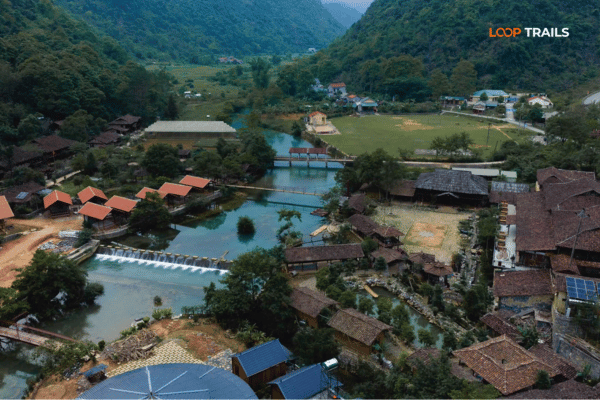
The area around Ban Gioc Waterfall has developed basic tourist accommodation.
What’s available:
Simple guesthouses and mini-hotels Basic but functional rooms Proximity to the waterfall (walking distance or short drive) Restaurant facilities for tour groups
Price range: 300,000 to 600,000 VND (~$12 to $24)
Considerations:
Convenience for waterfall visits Less character than rural homestays Can feel tourist-oriented rather than authentic Limited options, book ahead in peak season
Learn more: Ha Giang Cao Bang 5 Days 4 Nights
Your location choice depends on your itinerary and what matters most to you.
Best for: Last night before returning to Hanoi, access to services, comfortable hotels.
What’s here: Provincial capital with banks, ATMs, restaurants Range of hotel options Bus station for onward travel Less scenic but more practical
Considerations: Not the reason you came to Cao Bang Fine for logistics but not memorable Most travelers spend one night maximum
Best for: Maximizing waterfall time, sunrise/sunset visits without driving.
What’s here: Guesthouses within walking distance of entrance A few homestays in surrounding villages Restaurants serving tour groups
Considerations: Convenient for waterfall visits Can be tourist-heavy Fewer authentic homestay options than deeper rural areas Good if you want early morning waterfall access
Best for: Immersive experience, cultural connection, breaking up the journey.
If you’re doing the Ha Giang to Cao Bang combine tour, accommodation along the route offers the most authentic experience.
Villages along the way: Various Tay and Nung communities host travelers Locations vary by tour operator and itinerary Often places tourists rarely see independently
What you get: True immersion in ethnic minority communities Scenic locations in valleys or on hillsides The heart of what makes this region special Meals prepared with local ingredients
→ [Ha Giang Cao Bang tours include authentic homestay accommodation] (link to combo tours page)
Best for: Nature lovers, those seeking cooler climate, off-beaten-path experience.
The Phia Oac National Park area has limited but growing accommodation.
What’s here: Mountain scenery and forest Cooler temperatures than lowlands Fewer tourists Emerging homestay options
Considerations: Less developed infrastructure Harder to reach independently Best accessed as part of a guided tour
Learn more: Ha Giang Loop 4 Days 3 Nights
If you’ve never stayed in a Vietnamese rural homestay, here’s what the experience actually involves:
Traditional setup: Sleeping on the floor of the main living area Mattresses, blankets, and mosquito nets provided Shared space with other travelers (if any) Privacy via mosquito net curtains
Upgraded setup: Separate rooms with beds Sometimes private, sometimes semi-private Variable mattress quality (generally decent)
Either way: Don’t expect hotel-quality bedding Bring a sleeping bag liner if you’re particular Earplugs are your friend (roosters, dogs, village sounds)
Traditional homestays: Shared bathroom, possibly detached from main house Squat toilets (sometimes Western-style now) Bucket showers or basic showerheads Hot water not guaranteed
Upgraded homestays: Private or semi-private bathrooms Western toilets increasingly common Hot water usually available Basic but functional
Either way: Bring your own toiletries Quick showers are courteous Toilet paper not always provided (bring some)
Homestay meals are often the highlight.
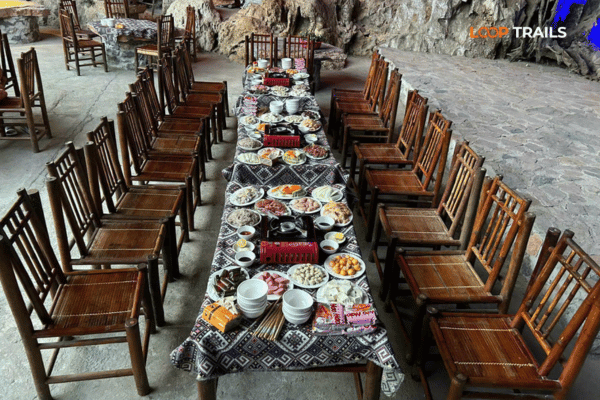
What to expect: Family-style meals eaten together Local dishes: rice, vegetables, meat/fish, soup Fresh ingredients, often from their own garden More food than you can eat (Vietnamese hospitality) Limited menu choice (you eat what’s prepared)
Dietary considerations: Vegetarian possible with advance notice Vegan more challenging Allergies may be difficult to communicate Let your tour guide or host know in advance
Language reality: Limited English in most homestays Your tour guide translates (if you’re on a tour) Smiles and gestures work surprisingly well Translation apps help for independent travelers
Cultural exchange: Hospitality is genuine even without shared language Trying local customs is appreciated Families enjoy sharing their culture
A homestay in Cao Bang is not a hotel. It’s staying in someone’s home in a rural community. The reward is authenticity: seeing real life, eating real food, connecting with real people.
The trade-off is comfort and privacy. If those matter more than experience, consider hotels instead.
Learn more: Cao Bang Loop 3 Days best kept secret
Most travelers visiting Cao Bang come as part of guided tours (Ha Giang Loop, Ha Giang to Cao Bang combine, Cao Bang Loop).
If on a tour: Accommodation is typically included Your operator selects and books homestays You don’t need to arrange anything Quality varies by operator (ask about their accommodation standards)
→ [See what’s included in Ha Giang Cao Bang tours] (link to combo tours page)
What works: Booking.com has some Cao Bang City hotels Agoda similar coverage Hostelworld limited options
What doesn’t work: Rural homestays rarely on Western platforms Ban Gioc area has limited online presence Many best options are not bookable online
Options: Traveloka (Southeast Asian platform) Local Vietnamese booking sites Facebook pages (many homestays have them)
Challenge: Most require Vietnamese language or local phone number Interface may not be intuitive for foreigners
How it works: Contact homestays directly via Facebook or phone Have a Vietnamese speaker help if needed Your guesthouse in Ha Giang or Hanoi may assist
Best for: Independent travelers with flexibility Those who speak some Vietnamese Travelers with local contacts
Reality: This works in Cao Bang City (hotels visible on main streets) Riskier near Ban Gioc in peak season (limited options may fill) Not recommended for rural homestays (hard to find independently)
If trying this: Have backup options researched Arrive early in the day Peak season (October/November) requires booking ahead
Learn more: Ha Giang Cao Bang 6 Days 5 Nights
Most travelers experience Cao Bang accommodation through organized tours. Here’s how that typically works:
Quality tour operators include all accommodation in their packages:
Ha Giang to Cao Bang combine tour (5 to 6 days): Usually 2 nights in Ha Giang province (homestays along the Loop) 1 to 2 nights in Cao Bang province (homestay or hotel near Ban Gioc) All pre-arranged and reserved
Cao Bang Loop tour: 2 to 3 nights in Cao Bang area Mix of homestays and guesthouses
Quality varies by operator. Good operators: Vet their accommodation partners Choose locations that enhance the experience Ensure basic comfort standards (clean bedding, hot water) Communicate special needs to hosts
Ask your operator: Where specifically will we stay? What type of accommodation (homestay, hotel)? Private room or shared? What’s the bathroom situation?
It’s handled: No research required No booking hassles Locations selected for convenience and experience Guide handles any issues
It’s authentic: Tour operators have relationships with local families You stay in places independent travelers can’t easily find Accommodation becomes part of the cultural experience
→ [Loop Trails tours include carefully selected homestays] (link to tours page)
Learn more: Ha Giang Cao Bang Packing List
Essential: Headlamp or flashlight (power cuts happen; paths unlit at night) Earplugs (village sounds start early) Sleeping bag liner (optional but nice for hygiene) Toilet paper (not always provided) Small towel (homestays may not have extras) Flip-flops (for bathroom trips) Power adapter (Vietnam uses types A, C, and F)
Useful: Insect repellent Translation app on phone Small gifts for host families (not required but appreciated)
Do: Remove shoes before entering homes Accept food and drink offered (refusal is impolite) Show appreciation for hospitality Ask before photographing people Dress modestly in villages
Don’t: Point feet at people or altars Touch people’s heads Enter without being invited Complain about basic conditions Expect Western hotel standards
Remember: This is rural Vietnam, not a resort Comfort is basic but genuine Hospitality compensates for amenities The experience is the point
If comfort is essential: Consider staying in Cao Bang City hotels Book upgraded homestays where available Choose jeep tours (often include better accommodation)
Peak season (October/November): Book ahead Popular spots fill up Higher prices at some locations
Rainy season (June to August): Fewer tourists, more availability Some homestays may have damp issues Power cuts more common
Winter (December to February): Cold at night, especially at elevation Heating not standard in homestays Bring warm layers for sleeping

Learn more: Ha Giang Loop by Wrangler Rubicon Jeep
Comfort varies. Basic homestays offer mattresses on floors with shared facilities. Upgraded options have beds and private bathrooms. Neither matches hotel comfort, but both offer authentic experiences. Set expectations accordingly.
For peak season (October/November), yes. For other times, Cao Bang City hotels are usually available, but rural homestays should be arranged in advance, especially through tour operators who have relationships with families.
Upgraded homestays usually do. Traditional homestays may not. Even when available, hot water may be limited (bucket heaters). If hot showers are essential, confirm before booking or choose hotel accommodation.
Inconsistently. Cao Bang City hotels usually have Wi-Fi. Rural homestays may have weak or no signal. Don’t expect reliable internet in remote areas. Download offline maps and content before arriving.
Usually yes with advance notice. Homestay meals are prepared fresh, so hosts can accommodate vegetarian requests if told beforehand. Your tour guide can communicate this. Pure vegan is more challenging.
Typically 200,000 to 400,000 VND per night (~$8 to $16) including meals. Hotels in Cao Bang City range from 200,000 to 800,000 VND (~$8 to $32). Farmstays and upgraded options may be higher.
A sleeping bag isn’t necessary (blankets provided) but a sleeping bag liner is nice for hygiene and peace of mind. Conditions are clean but basic in traditional homestays.
Yes. Several guesthouses and homestays are within walking distance or a short drive of the waterfall entrance. Book ahead in peak season as options are limited.
Most do. Homestay prices typically include dinner and breakfast. Meals are family-style with local dishes. This is often the highlight: authentic food cooked by your hosts.
Less than established tourist destinations. Cao Bang City has reasonable hotel options. Rural areas have scattered homestays. The region is developing but not yet well-served by tourism infrastructure.
Communicate through your tour operator if possible. Independent travelers should research carefully and contact places directly. Accessibility is limited; most homestays involve stairs or uneven surfaces.
Yes. Crime against tourists is rare in rural Cao Bang. Homestays are family homes in tight-knit communities. Normal precautions apply: lock valuables, be aware of surroundings.
Contact information for Loop Trails
Website: Loop Trails Official Website
Email: looptrailshostel@gmail.com
Hotline & WhatSapp:
+84862379288
+84938988593
Social Media:
Facebook: Loop Trails Tours Ha Giang
Instagram: Loop Trails Tours Ha Giang
TikTok: Loop Trails
Office Address: 54A Tran Phu, Ha Giang 2, Tuyen Quang
Address: 54A Tran Phu, Ha Giang 2, Tuyen Quang
Facebook X Reddit Table of Contents Learn more: Ha Giang Loop Tours The Ha Giang Loop has a reputation problem with older
Facebook X Reddit Table of Contents The passes get the photos. The homestay nights get the stories. Ask anyone who’s done the