
Thúy Kiều (Grace) is a travel blogger and content contributor for Loop Trails Tours Ha Giang. She holds a bachelor’s degree in Sustainable Tourism from Vietnam National University, Hanoi, and has a strong passion for exploring and promoting responsible travel experiences in Vietnam’s northern highlands.
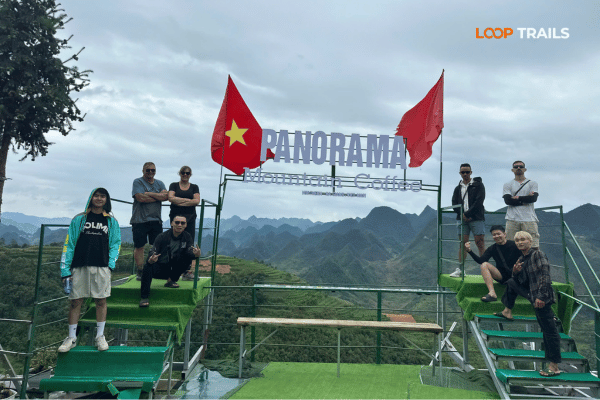
Learn more: Ha Giang Loop Tours
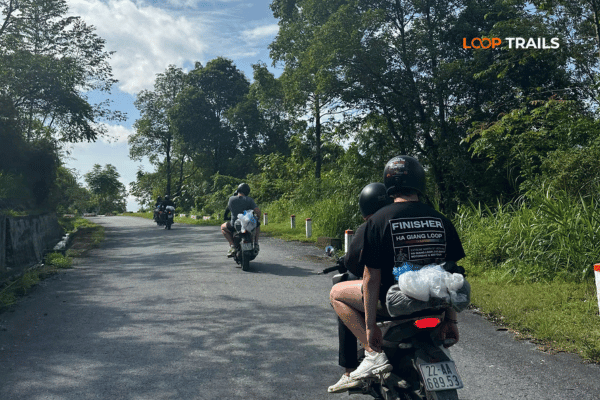
Most Ha Giang photography you see online was shot from a motorcycle. Rider stops, pulls out phone, snaps a quick shot, moves on. The images are fine. But they’re limited by what you can do when you’re also responsible for navigating mountain roads.
Shooting from a jeep is different. You’re not driving. Your hands are free. You can shoot while moving. You can stop anywhere, for as long as you need. And with an open-top vehicle, you have unobstructed views in every direction.
This guide is for photographers who want to maximize their Ha Giang imagery. We’ll cover the best spots, the gear that works, the techniques that produce results, and how to work with your driver to get the shots you’re after.
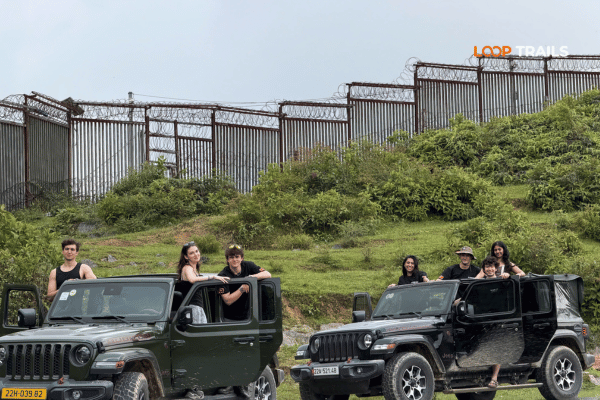
Learn more: Ha Giang Loop 2 Days 1 Night
Let’s be direct about why a jeep beats a motorcycle for serious photography.
On a motorcycle, your hands are on the handlebars. You can’t shoot while riding. Every photo requires stopping, dismounting, unstrapping your camera, composing, shooting, repacking, and getting back on the bike.
In a jeep, your camera sits on your lap or slung around your neck. You shoot when you see something. The barrier between seeing and capturing disappears.
Mountain roads offer constantly shifting compositions. Light plays across valleys. Clouds move through passes. From a jeep, you capture these moments in real time. From a motorcycle, you miss them.
What you can capture from a moving jeep: Sweeping panoramas through open roof Passing landscapes through windows The road itself curving ahead Local life along the roadside Weather moving through mountains
After 6 hours of motorcycle riding on mountain roads, your creative energy is depleted. Tired photographers make worse decisions. They skip stops. They rush compositions. They miss moments.
Jeep passengers arrive at golden hour locations fresh and ready to shoot.
Motorcycles in groups keep moving. Solo motorcycle riders worry about safety in isolated spots. Jeep travelers stop wherever the light demands.
“That cloud is about to clear the peak. Let’s wait five minutes.”
That sentence changes photographs. It requires flexibility that jeeps provide.
An open-top jeep (roof panels removed) offers 360-degree shooting without glass, without reflections, without obstacles. Stand up through the roof for elevated angles. Shoot forward, backward, sideways. The vehicle becomes a mobile shooting platform.
→ [Book open-top jeep tour for photography] (link to Jeep Tours page)
The Loop has unlimited photo opportunities. These are the essential spots.
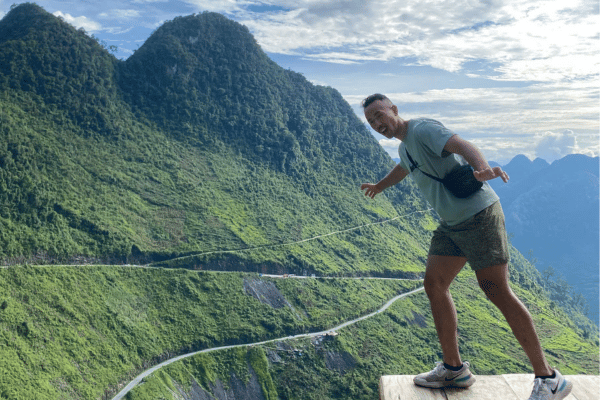
The crown jewel. Vietnam’s most dramatic mountain road, with Tu San Canyon dropping nearly 1,000 meters below.
What to shoot: The road carved into cliff faces Tu San Canyon and Nho Que River below Hairpin turns with exposure Morning mist filling valleys Afternoon light on karst peaks
Best positions: Multiple viewpoints along the pass Road-level shots looking down Elevated viewpoints looking across
Timing: Morning for soft light and mist Late afternoon for golden light on canyon walls Midday is harsh but creates dramatic shadows
Jeep advantage: Stop at every viewpoint. Spend extended time at the best ones. No rush.
Vietnam’s best-preserved traditional town in Ha Giang.
What to shoot: Traditional architecture Local life and market activity Narrow streets and stone buildings Details: doors, textures, faces (with respect) Night shots if staying overnight
Best approach: Early morning before tourist activity Golden hour light on stone facades Blue hour for atmospheric shots
Jeep advantage: Arrive early, leave late. No motorcycle logistics to manage.
Vietnam’s northernmost point with panoramic views.
What to shoot: The flag and tower against sky Panoramic landscapes in every direction Border geography (China visible) Sunrise or sunset if timing works
Challenges: Crowded during peak hours Stairs required for tower views Best light is early or late (requires overnight planning)
Tip: For serious photography, consider staying near Lung Cu to catch sunrise light.
Unique geological formation: two rounded peaks rising from valley floor.
What to shoot: The twin peaks themselves Valley farmland below Terraced fields (seasonal) Atmospheric shots when mist settles
Best timing: Early morning with mist Golden hour for warm light
Jeep advantage: Easy roadside access with space to set up tripod.
Don’t forget that the journey is the subject.
What to shoot: Winding road disappearing into mountains Your jeep on epic road (driver positions vehicle) Other travelers on the road Road workers, local transport, daily life
Technique: Shoot through windshield for road-forward compositions Stand through open roof for elevated angles Ask driver to position vehicle for “hero shots”
Learn more: Ha Giang Loop 3 Days 2 Nights
What to bring and what to leave behind.
Primary recommendation: Whatever camera you shoot well with Mirrorless or DSLR both work Full-frame offers advantage in low light APS-C is lighter and often sufficient
Considerations: Weather resistance matters (dust, potential rain) Battery life important (limited charging on Loop) Two bodies reduce lens changes in dusty conditions
Essential range:
Wide angle (16 to 35mm equivalent): Landscape essentials Captures road and environment together Interior of villages and markets
Standard zoom (24 to 70mm or 24 to 105mm): Most versatile Good for landscapes and details Reduces lens changes
Telephoto (70 to 200mm or longer): Compresses distant mountains Isolates details in landscape Portrait work (with respect and permission)
What most photographers carry: One wide zoom One telephoto zoom Total: 2 lenses covering 16 to 200mm equivalent
The reality: Most Ha Giang shooting is handheld Jeep stops are often brief Setting up tripod takes time
When you need tripod: Dedicated sunrise/sunset sessions Long exposure work Blue hour and night photography If staying overnight at key locations
Recommendation: Travel tripod if serious about low-light work Skip if shooting primarily during day
Useful: Circular polarizer (reduces haze, enhances sky) Variable ND for long exposures (if desired)
Not essential: Graduated ND (can recover in post) Color filters (digital processing easier)
Essential: Lens cleaning kit (dust is constant) Rain cover or plastic bags Padded camera bag that fits in jeep Extra batteries (charge overnight) Memory cards with backup
Useful: UV filter for lens protection Camera strap that works for shooting from vehicles
Skip: Heavy studio equipment Flash gear (natural light is the point) More than 3 lenses (weight and dust) Laptop (edit after the trip)
Learn more: Ha Giang Loop 4 Days 3 Nights
Practical approaches for Ha Giang conditions.
Shooting while the jeep is moving requires technique.
Camera settings: Fast shutter speed (1/500 or faster) Higher ISO to enable fast shutter Aperture priority or manual Continuous autofocus on distant subjects
Positioning: Brace against vehicle structure Shoot through open roof when possible Avoid shooting through glass (reflections) Anticipate bumps and adjust timing
Composition: Include road or vehicle elements for context Let motion blur on close elements; keep distance sharp Wide angle captures more, telephoto isolates
Reality check: Moving vehicle shots have lower hit rate Shoot more, select later Accept some softness in challenging conditions
When the jeep stops, you have full control.
Standard approach: Scout the location first (walk before shooting) Identify best compositions Set up properly rather than rushing Work the scene from multiple angles
Time management: Communicate with driver about how long you need Don’t rush the first stop (you’ll regret it later) Better to spend 30 minutes at one location than 5 minutes at six
Technical: Tripod for maximum sharpness if time allows Bracket exposures for challenging light Shoot RAW for post-processing flexibility
The best light happens early and late. Here’s how to position for it.
Morning golden hour: Requires early departure from accommodation Best for east-facing viewpoints Ma Pi Leng catches morning light beautifully Mist often present (can be advantage or challenge)
Evening golden hour: Plan route to reach key viewpoints by late afternoon West-facing viewpoints ideal Light on Ma Pi Leng canyon walls is spectacular Stay until blue hour if possible
Working with your tour: Discuss photography priorities with your driver/guide Adjust itinerary timing to prioritize light Accept that some stops may be shortened to reach others at optimal time
→ [Ask about photography-focused jeep tour itineraries] (link to contact page)
Learn more: Ha Giang Cao Bang 5 Days 4 Nights
Ha Giang light changes dramatically through the day.
Character: Soft, warm light Mist in valleys common Dramatic atmosphere Quiet roads (fewer other travelers)
Best for: Landscape atmosphere Misty valley shots Sunrise at elevation
Challenges: May require overnight positioning Cold in higher elevations Mist can obscure subjects
Character: Good working light Reasonable contrast Clear visibility
Best for: General landscape work Road and journey shots Documentary style
Challenges: Light becoming harsh by 11:00 Shadows shortening
Character: Harsh overhead light High contrast Deep shadows
Best for: Taking breaks Scouting locations Processing previous shots
Challenges: Generally worst light for landscape Flat, unflattering for most subjects
What works midday: High-contrast B&W conversions Detail and texture shots Interior shots (markets, buildings)
Character: Light improving as sun lowers Good for west-facing subjects Shadows becoming interesting
Best for: Working toward golden hour positions Road photography General shooting
Character: Warm, directional light Long shadows Dramatic mountains
Best for: Hero landscape shots Road with light Canyon walls catching sun
Priority: Be at your best location Don’t waste this light traveling Have compositions ready
Character: Cool, atmospheric Requires tripod Limited shooting window
Best for: Atmospheric landscapes Stars over mountains (if staying overnight) Town scenes with lights
Learn more: Cao Bang Loop 3 Days best kept secret
Each season offers different imagery.
Photography advantages: Golden rice terraces (September to early October) Buckwheat flowers (late October to November) Clear skies more common Comfortable shooting conditions
Challenges: More tourists in popular shots Accommodation books up Less dramatic weather (fewer clouds)
Best for: Rice harvest imagery Classic Ha Giang landscapes Reliable conditions
Photography advantages: Dramatic misty conditions Fewer tourists (cleaner compositions) Moody atmosphere Possible frost on high passes
Challenges: Cold for extended shooting Gray skies some days Lower light levels
Best for: Atmospheric, moody work B&W conversion potential Unique conditions
Photography advantages: Spring green emerging Flowering trees in places Variable weather creates drama
Challenges: Unpredictable conditions Some haze possible
Best for: Fresh green landscapes Transition imagery
Photography advantages: Maximum green Dramatic clouds and weather Waterfalls at peak Fewer tourists
Challenges: Rain interrupts shooting Moisture on equipment Unpredictable light
Best for: Dramatic weather photography Lush green imagery Waterfalls and water features
Learn more: Ha Giang Motorbike Rental
Your driver is your photography partner. Here’s how to work together effectively.
Discuss: That photography is a priority Willingness to wake early for light Flexibility on stops and timing Specific locations you want to prioritize
Set expectations: Photography takes time You may want unusual stops Schedule flexibility is valuable
Clear requests: “Can we stop here for 10 minutes?” “I need the vehicle positioned with mountains behind it.” “Can we wait for that cloud to clear?”
Be respectful: Drivers work long days Your requests add to their effort Show appreciation
For “hero shots” with vehicle: Ask driver to position jeep in scenic location Specify: forward/backward facing, angle, etc. Give clear direction then shoot quickly
For shooting from vehicle: Request slower speeds on scenic sections Ask to pause briefly for critical moments Communicate when you’re done shooting
Good photographers: Share photos with driver at end of trip Tip appropriately Are pleasant to work with
The result: Driver becomes invested in your success They suggest spots you’d miss They time stops for better light
Learn more: Ha Giang Cao Bang 6 Days 5 Nights
Learn from others’ errors.
The mistake: Spending 3 minutes at each viewpoint to “see everything.”
The result: Thousands of mediocre images instead of dozens of excellent ones.
The fix: Choose fewer locations. Spend real time at each. Work the scene.
The mistake: Stopping only where other tourists stop.
The result: Same compositions as everyone else.
The fix: Ask your driver to stop at unmarked spots. Some of the best shots come from random roadside locations.
The mistake: Treating transit as non-photography time.
The result: Missing the journey imagery that defines Ha Giang.
The fix: Shoot from the moving vehicle. The road is a subject.
The mistake: Underestimating dust and potential rain.
The result: Dirty sensors, fungus in lenses, equipment damage.
The fix: Clean equipment daily. Use UV filters. Have rain protection ready.
The mistake: Letting tour schedule dictate all timing.
The result: Missing the best light of the day.
The fix: Communicate photography priorities. Adjust timing for light.
The mistake: Heavy HDR, over-saturation, excessive clarity.
The result: Ha Giang doesn’t need help. It’s already dramatic.
The fix: Let the landscape speak. Process to enhance, not transform.
Learn more: Ha Giang Loop Mistake to Avoid
For serious photography, yes. Jeeps offer hands-free shooting while moving, flexible stop times, protection for gear, and no physical exhaustion competing with creative energy.
Yes. When booking, specify that you want the roof panels removed for photography. Weather permitting, operators can accommodate this request.
A versatile zoom covering wide to moderate telephoto (24 to 105mm equivalent). If forced to choose one prime, a 35mm covers most situations.
Keep camera in bag when not shooting. Use UV filters on lenses. Clean sensor before trip. Bring lens cleaning supplies. Minimize lens changes outdoors.
Be at your target location 1 to 2 hours before sunset. This gives time to scout, compose, and be ready when light peaks. Discuss early starts with your driver for morning light.
Yes, but reflections on glass are problematic. Open-top or windows-down shooting is much better. If closed is necessary, use a lens hood against the glass.
Enough for 500+ RAW files per day, times your trip length, plus buffer. 3 to 4 high-capacity cards is typical. Don’t rely on one card: spread risk.
Check current regulations first. If permitted, drones offer unique perspectives. However, they add complexity, battery management, and risk of loss in remote areas. Many photographers find the views from ground level sufficient.
September to November offers the most reliable conditions with rice harvests and buckwheat flowers. Winter offers atmospheric moody conditions. Each season has unique imagery possibilities.
September to November offers the most reliable conditions with rice harvests and buckwheat flowers. Winter offers atmospheric moody conditions. Each season has unique imagery possibilities.
Respectfully. Ask permission (a smile and gesture works). Don’t photograph people who decline. Don’t treat people as subjects to be captured. Markets are good locations where photography is expected.
Final Thoughts
Ha Giang will give you images regardless of how you travel. But a jeep, especially open-top, transforms you from a traveler who takes photos into a photographer who happens to be traveling.
The freedom to shoot when you see. The time to wait for light. The energy to stay creative. The flexibility to chase moments.
Bring your camera. Book the jeep. The mountains are ready for their portrait.
Ready to photograph Ha Giang?
→ [Ha Giang Jeep Tours (photography-friendly)] (link to Jeep Tours page)
→ [Ha Giang Cao Bang Combine (more photo opportunities)] (link to Combo Tours page)
→ [Discuss photography tour options: WhatsApp +84 862 379 288] (link to contact)
Contact information for Loop Trails
Website: Loop Trails Official Website
Email: looptrailshostel@gmail.com
Hotline & WhatSapp:
+84862379288
+84938988593
Social Media:
Facebook: Loop Trails Tours Ha Giang
Instagram: Loop Trails Tours Ha Giang
TikTok: Loop Trails
Office Address: 54A Tran Phu, Ha Giang 2, Tuyen Quang
Address: 54A Tran Phu, Ha Giang 2, Tuyen Quang
Facebook X Reddit Table of Contents Learn more: Ha Giang Loop Tours Most people drive past the Quan Ba area twice on
Facebook X Reddit Table of Contents Learn more: Ha Giang Loop Tours The Ha Giang Loop has a reputation problem with older