

Tipping in Ha Giang: How Much for Guides and Drivers?
Facebook X Reddit Table of Contents Learn more: Ha Giang Loop Tours You are standing in the courtyard of Loop Trails Hostel.

Thúy Kiều (Grace) is a travel blogger and content contributor for Loop Trails Tours Ha Giang. She holds a bachelor’s degree in Sustainable Tourism from Vietnam National University, Hanoi, and has a strong passion for exploring and promoting responsible travel experiences in Vietnam’s northern highlands.
Learn more: Ha Giang Loop Tours
Cao Bang is one of the best provinces in Vietnam to ride: a waterfall on an international border, a river the colour of jade, craft villages that are still working, and a mountain with a hole punched through the ridge. What it does not have is Ha Giang’s rental infrastructure.
If you have done the Ha Giang Loop you will remember what that looks like. Twenty shops on one street, a fleet of identical bikes, staff who deal with foreign riders every single day. Cao Bang motorbike rental is a quieter, more informal business. There are fewer shops, more arrangements made through hotels and homestays, and a lot more variation in what you actually get handed.
That is not a warning to avoid it. It is a reason to know what to check before you agree to anything. This is the guide we give our own guests when they ask about riding Cao Bang independently, including the parts that are less convenient for us to say.
Learn more: Ha Giang Loop 2 Days 1 Night
Three things are true and worth knowing before you start searching.
Rental exists, but it is scattered. Cao Bang City has shops and there are bikes available through hotels, guesthouses and homestays, including around Ban Gioc and Trung Khanh. Availability changes seasonally. On a weekend in October you may find nothing left. On a Tuesday in February you can walk in.
Standards vary more than in Ha Giang. Some operators keep genuinely well maintained fleets. Others hand you whatever is parked outside. In a market with fewer foreign customers, there is less pressure to keep everything to a common standard, which means your own inspection matters more.
We do not rent bikes in Cao Bang. Our motorbike rental operation is based in Ha Giang. We could pretend otherwise and take the booking, but you would find out at the wrong moment. What we do run in Cao Bang are guided trips: easy rider, jeep and self drive tours where the bike comes as part of the package. More on that near the end, once you have the information you need to decide either way.
Most travellers land on one of these.
1. Rent locally in Cao Bang City. Simplest if Cao Bang is a standalone trip and you are arriving by bus from Hanoi. Ask your accommodation first, since many places either rent directly or have a shop they trust. Book ahead in autumn.
2. Rent in Ha Giang and ride east. The road through Bao Lac and over the Khau Coc Cha pass connects the two provinces and it is one of the finest rides in the north. This is the option we set up most often, because you get a properly prepared bike, a phone number that answers, and one of the best connecting roads in Vietnam instead of a bus.
3. Join a self drive tour. The bike is included, the route is planned, luggage moves for you and a guide rides with the group. You still do all the riding. You just stop making the logistical decisions.
| Local rental | Rent in Ha Giang | Self drive tour | |
|---|---|---|---|
| Best for | Short standalone Cao Bang trips | Riders combining both provinces | Riders who want support |
| Bike condition | Varies, inspect carefully | Prepared for the route | Prepared for the route |
| If it breaks | Your problem to solve | Support you can call | Handled |
| Route planning | You | You | Done for you |
| Paperwork needed | Licence and IDP | Licence and IDP | Licence and IDP |
Learn more: Motorbike License IDP Guide 2026
This is the section people skim and later wish they had not.
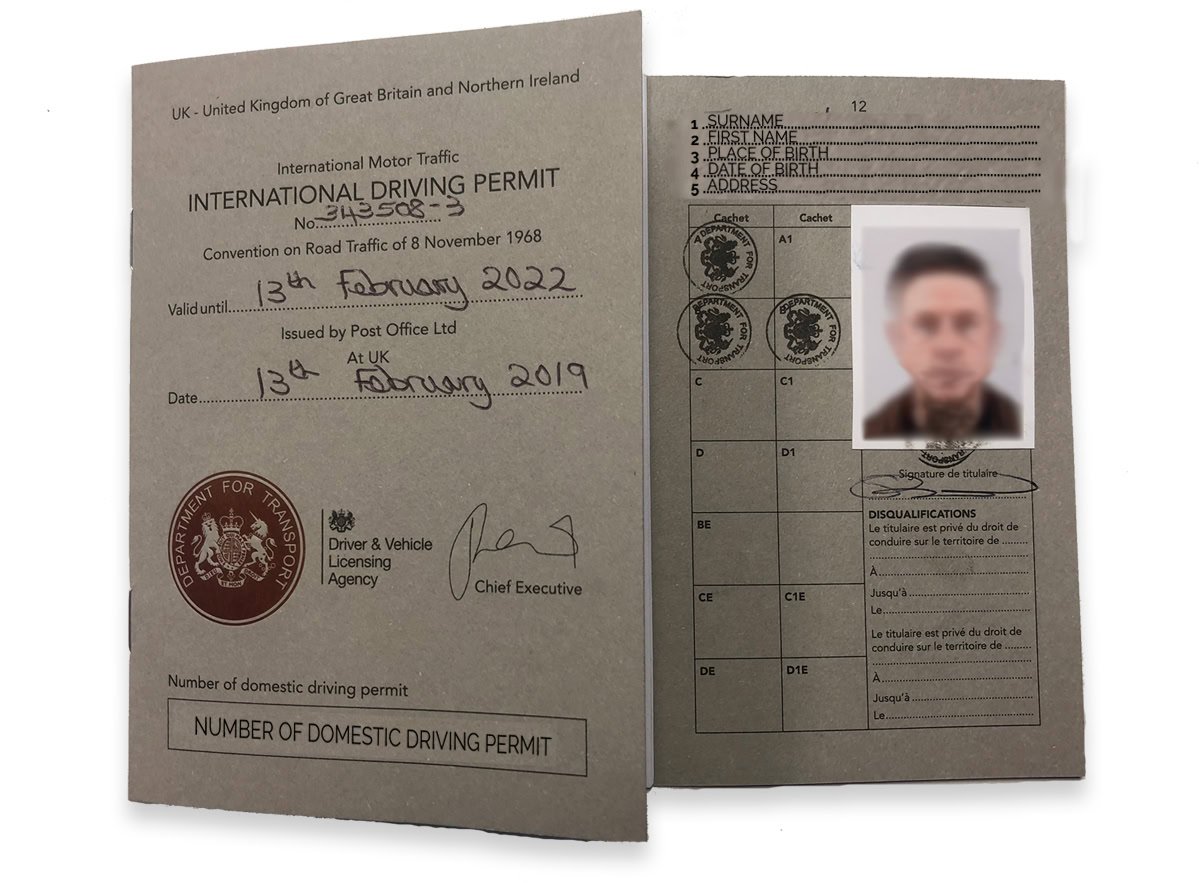
To ride legally in Vietnam as a foreign visitor you generally need three things:
The 1949 style International Driving Permit is not recognised in Vietnam. This is the single most common paperwork mistake we see, because several countries issue both kinds and travellers reasonably assume any IDP works. It does not. Check which convention yours was issued under before you leave home, because you cannot fix it once you are here.
Riding without the correct documents can result in a fine, and the range usually quoted for this sits between 2,000,000 and 6,000,000 VND. Regulations and enforcement change, so treat that as guidance and verify the current position rather than relying on any article, this one included.
A few practical notes on top of that:
Not sure your paperwork stacks up? Send us a message with your licence type and country and we will tell you straight whether it works here. If it does not, the easy rider and jeep options need no licence at all and see exactly the same places.
We are not going to publish a day rate for a business we do not run, and you should be sceptical of any article that quotes one for a whole province. Rates move with season, bike type, rental length and who you are talking to. What is more useful is understanding how the pricing is structured, so you can tell a fair quote from a strange one.
Charged by the day, usually cheaper for longer. Three or four days almost always costs less per day than one. Ask for the multi day rate rather than assuming.
Fuel is not included. You get the bike with whatever is in the tank, and how you return it should be agreed out loud before you leave.
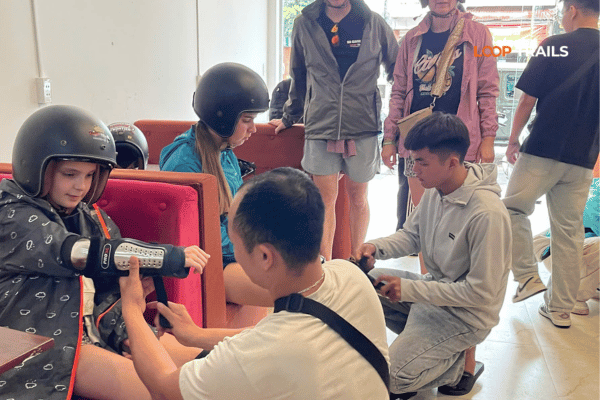
Helmets are usually included, often a basic one. If you want a full face helmet, ask, and consider bringing your own if you ride at home.
One way drop offs cost extra, when they are possible at all. Picking up in Cao Bang City and leaving the bike in Ban Gioc or another province is not standard. Agree the fee in writing before you plan a route around it.
A deposit is standard. What form it takes is the important part, and it gets its own section below.
Ask for the full number before you hand anything over: day rate, number of days, fuel policy, drop off arrangement, deposit, and what happens if you are late back. Get it written down, even in a phone note both of you look at. Almost every rental dispute anywhere in the world starts with two people remembering a conversation differently.
Learn more: Ha Giang Loop 4 Days 3 Nights
Cao Bang is not technical riding. The main roads are sealed and the corners are wide by northern Vietnam standards. What it does have is long climbs, long descents, gravel on bends after rain, and at least one access track that is dirt and stone.
Automatic scooter. Easiest to ride and the most common thing offered. It will do the main roads to Ban Gioc and Trung Khanh without drama. The weaknesses show up on steep descents, where you have no engine braking and end up riding the brakes, and on loose surfaces where the small wheels move around. Fine for a confident rider on main roads. Not what we would put a nervous rider on for a mountain descent.
Semi automatic. The Honda Wave style bike that most of Vietnam actually rides. Four gears, no clutch lever. Engine braking on descents, better on rough surfaces, and easy to learn in an afternoon. For most travellers riding Cao Bang, this is the sweet spot.
Manual with a clutch. Bikes in the Honda XR150 category and similar. More power for climbs, better suspension for broken surfaces, more comfortable over a long day. Only worth taking if you already ride a manual bike at home. A mountain pass is a bad classroom.
| Automatic | Semi automatic | Manual | |
|---|---|---|---|
| Learning curve | None | Short | You need prior experience |
| Engine braking | Poor | Good | Best |
| Rough tracks | Weakest | Fine | Best |
| Luggage | Space under the seat | Limited | Limited |
| Who it suits | Confident riders, main roads | Most travellers | Experienced riders |
Whatever you take, do not overload it. A big backpack strapped high changes how a bike behaves, especially in crosswinds on a pass. Keep weight low and centred, and use straps rather than hoping.
Learn more: Ha Giang Cao Bang 5 Days 4 Nights
Do this every time, on any bike, anywhere. It is the highest value ten minutes of your trip.
| Check | What you are looking for |
|---|---|
| Tyres | Tread across the whole width, no cracking in the sidewall, no bald strip in the middle. This is the one that matters most on wet roads. |
| Brakes | Both of them, standing still and again at walking pace. Front brake should bite, not travel to the bar. |
| Lights | Headlight on both settings, brake light when you use each brake separately, indicators, horn. The horn is used constantly here. |
| Chain | Not loose enough to slap, not dry and rusty. Ask when it was last oiled. |
| Mirrors | Both present and adjustable. Plenty of rental bikes are missing one. |
| Oil and fuel | Ask when the oil was last changed. Check what is in the tank. |
| Suspension | Push down on the front hard. It should come back up controlled, not bounce or clunk. |
| Kickstand and locks | Kickstand spring intact, key works the steering lock, seat opens. |
| Paperwork | Registration document or a copy you can carry. |
Then ride it around the block before you commit. Listen for anything rhythmic, feel whether it pulls to one side, check the gears change cleanly.
Photograph everything before you leave. Walk around the bike filming a slow video, then take stills of every existing scratch, dent and crack, plus the odometer. Do it with the shop owner standing there so it is clearly not a secret. This takes two minutes and removes the most common source of argument at return.
If something is wrong, ask for a different bike. A good operator will swap it without any fuss. The reaction you get to that request tells you most of what you need to know about who you are dealing with.
Some rental operators ask to hold your passport as security. It is a common practice in Vietnam and it is not automatically a scam. It is still not what you want in Cao Bang, for reasons that have nothing to do with trust.
You need your passport to check into accommodation. You want it with you in a border province. And if something goes wrong, whether that is an accident, a hospital visit or a change of plan, your passport being locked in a drawer in another town is a genuine problem.
Reasonable alternatives to offer:
If an operator will only take the original passport and will not discuss it, that is a decision point, not a disaster. Some travellers accept it. We would look elsewhere. Whatever you agree, get the deposit amount and the return conditions written down.
Learn more: Cao Bang Loop 3 Days best kept secret
The bike’s insurance. Vietnamese motorbikes are supposed to carry compulsory civil liability insurance, which covers damage to other people rather than to you or the bike. Ask to see the paperwork. It is not a substitute for your own cover in any meaningful sense.
Your travel insurance. This is the one that matters and the one people get wrong.
A very large number of travel policies exclude motorbike accidents unless you held a valid licence for that class of vehicle, in the country you were riding in, at the time of the accident. Some also exclude engine sizes above a threshold, or riding without a helmet, or riding as a passenger on someone else’s bike.
Read your policy wording before you travel. Not the marketing page, the actual wording, and specifically the exclusions section. A medical evacuation out of a mountain province is a serious bill, and finding out about an exclusion afterwards is the single most expensive mistake available on this trip.
If your policy does not cover you and you cannot fix that, this is a good reason to ride pillion with a guide or take a jeep instead. That is not us selling you something. It is arithmetic.
Punctures are the most common problem by a distance. The good news is that Vietnam has the best puncture repair network on earth. Look for a roadside sign reading “vá xe” or a small workshop with tyres outside. They are in every town and most villages, the repair takes fifteen minutes and costs very little. Learn those two words.
Chains come loose on long trips. Any repair shop will adjust one.
Electrical faults usually show up as a light that stops working. Annoying, and genuinely dangerous if it is the brake light. Get it fixed rather than riding on.
Flat batteries happen on older bikes. Semi automatic and manual bikes can usually be bump started, which is worth knowing.
Anything serious, in a province with fewer options than Ha Giang, means you want a working phone number. Before you ride away, save the rental contact and ask directly: what happens if this stops working two hours from here, and who pays for the recovery? If the answer is vague, that is your answer.
Carry a little cash for exactly this. Roadside repairs are cash only and the amounts are small.
Learn more: Ha Giang Cao Bang 6 Days 5 Nights
Fuel. Stations are in the cities and district towns: Cao Bang City, Quang Uyen, Trung Khanh and along the main roads. In the valleys and on the smaller routes they thin out fast. Fill up whenever you are near half a tank rather than waiting for the light, especially before any detour off the main road. Roadside sellers with bottles exist as a backup, not as a plan.
Cash. ATMs are in the towns, not the villages. Entrance tickets, small local access fees, homestays, roadside repairs and lunch are all easier with cash in small notes.
Signal. Fine on the main roads, patchy in the valleys and around the more remote grassland. Download offline maps for the whole province before you set off, and tell somebody your rough plan for the day if you are riding alone.
Broadly: better than people expect, with specific exceptions.
For a stop by stop picture of what the riding is actually like, the three day guides cover it in detail: Day 1 from Cao Bang City to Ban Gioc, Day 2 through Nguom Ngao and Phong Nam, and Day 3 to the craft villages and God’s Eye Mountain.
Not on the dramatic sections. Almost never on the famous passes, where everyone is concentrating.
The pattern is boringly consistent: late in the day, tired, running behind schedule, on an easy stretch of road, going slightly too fast for a corner with gravel on it. Or at night, on a bike with a weak headlight, on a road with unlit trucks and unfenced livestock.
Which gives you a short list that is worth more than any amount of gear:
None of that is dramatic advice. It is just where the incidents actually come from.
Learn more: Ha Giang Border Area Permit 2026
Speaking generally rather than about any particular operator, these are the situations that produce disputes anywhere bikes are rented to travellers.
Damage claimed at return that was there at pickup. Solved almost entirely by the walkaround video described above.
A verbal quote that grows. Agree the total before you leave, in writing, including fuel policy and any drop off fee.
A bike with worn tyres. The most common genuine safety issue in any rental market. Check them yourself, every time.
No paperwork with the bike. Ask before you pay, not after.
Deposit conditions that were never discussed. Write down the amount and what would cause a deduction.
A one way drop off that was agreed casually. If it is not in writing, assume it is not agreed.
Being handed a bike that is bigger than your experience. A shop that will rent anyone a large manual bike without asking a single question is not looking after you. Choose the bike you can actually ride.
None of this means Cao Bang rental is risky. It means the ordinary consumer care you would apply at home applies here too, and that ten minutes of checking prevents nearly all of it
This is the option most riders do not consider, and for anyone doing both provinces it is the best one available.
The road east from Ha Giang through Bao Lac and over the Khau Coc Cha pass is genuinely one of the great rides in northern Vietnam: switchbacks stacked up a mountainside, almost no traffic, and villages that see very few foreign faces. It connects the Ha Giang Loop directly to Cao Bang, which means you can ride both without going back through Hanoi.
That is where our own product actually sits. We rent bikes in Ha Giang, where the fleet is prepared for this exact route, and we run the Ha Giang and Cao Bang combined tour for people who want the whole thing organised.
The five day combined route is priced like this:
| Ha Giang and Cao Bang, 5 days 4 nights | Price |
|---|---|
| Easy rider, per person | 10,990,000 VND |
| Self drive, per person | 10,590,000 VND |
| Jeep, 2 guests, whole vehicle | 31,990,000 VND |
| Jeep, 3 guests, whole vehicle | 36,490,000 VND |
| Jeep, 4 guests, whole vehicle | 40,990,000 VND |
Rates include dormitory style accommodation and everything on the tour itself. They do not include private room upgrades or the bus tickets to and from the start and end points. These figures were current at publication, so check the tour page for today’s rate before budgeting.
Book once your dates are set. Most guests book one to three months ahead, and jeep availability is more limited than motorbikes.
Learn more: Ha Giang Loop by Wrangler Rubicon Jeep
Rent a bike and ride independently if you ride regularly at home, you have the correct licence and IDP, your insurance covers you, and the freedom to change plans mid morning is the whole reason you came. Cao Bang rewards this. Just do the checks.
Take a self drive tour if you want to do all the riding but none of the logistics. The bike is prepared, the route is planned, the accommodation is booked and there is a guide riding with you who knows which lane leads where. Same licence requirements apply, because you are still the one riding.
Take an easy rider trip if you want to be on a bike without being responsible for one. You ride pillion with an experienced local rider, your bag is strapped down properly, and you spend the day looking at the province instead of the road surface. No licence needed. This is what most of our guests choose and it has the highest satisfaction of anything we run.
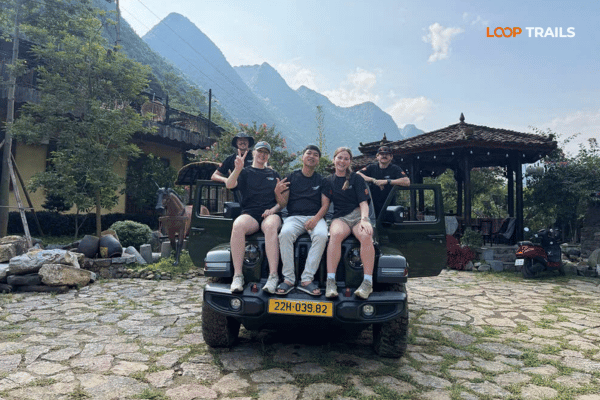
Take a jeep if you are a couple or a family, if someone in your group does not ride, if you are travelling with children or older parents, or if it is the wet season and you would rather not spend four days damp. Nothing on the Cao Bang route requires two wheels. The waterfall, the cave, the valley, the craft villages and the walk in to God’s Eye Mountain are all identical from a vehicle, and the jeep is priced for the whole vehicle rather than per seat.
If you are torn between the last two, the deciding question is usually whether anyone in the group is uncomfortable on a bike. If the answer is yes, take the jeep and stop negotiating with each other about it.
Learn more: Ha Giang Motorbike Rental
Learn more: Ha Giang Cao Bang Packing List
Three days covers the province properly.
Day 1 takes you from Cao Bang City to Ban Gioc, over Ma Phuc Pass and through the craft village cluster, with the waterfall at the end of it.
Day 2 is the slow one: Nguom Ngao Cave in the morning, then the Quay Son river upstream into Phong Nam valley, with swim stops if the weather is right.
Day 3 closes the loop back to Cao Bang City through Phuc Sen, Phia Thap, the lakes at Thang Hen and God’s Eye Mountain.
Add a fourth day and you can go north to Ha Quang and Pac Bo, or west towards Bao Lac and the road into Ha Giang.
Still deciding how to do it? Message us on WhatsApp with your dates, group size, riding experience and licence situation. We will tell you honestly which option fits, including when the honest answer is to rent locally in Cao Bang rather than book anything with us.
Yes. There are shops in Cao Bang City and many hotels, guesthouses and homestays arrange bikes, including around Trung Khanh and Ban Gioc. Availability is more limited than in Ha Giang and can run out on autumn weekends, so ask your accommodation ahead of time.
To ride legally you need your passport, a valid motorbike licence from home and an International Driving Permit issued under the 1968 Vienna Convention. The 1949 style permit is not recognised in Vietnam. Some shops will rent without checking, but that does not make it legal, and it affects your insurance.
For riding legally in Vietnam, yes, and it has to be the 1968 Vienna Convention version. Several countries issue both types, so check which one you hold before you travel. Riding without correct documents can result in a fine, and rules change, so verify the current position.
Rates vary by bike type, season, rental length and operator, so ask for a full quote rather than trusting a published figure. Get the day rate, number of days, fuel policy, deposit and any drop off fee agreed in writing before you pay anything
We would not. You need your passport for accommodation and for a border province, and you want it with you if anything goes wrong. Offer a cash deposit or a photocopy instead, and if an operator refuses to discuss it, consider looking elsewhere.
A semi automatic in the Honda Wave category suits most travellers: easy to learn, with engine braking for the descents. Automatic scooters are fine for confident riders on main roads but weaker on steep downhills and loose surfaces. Take a manual bike only if you already ride one at home.
The main roads are easier than most people expect and the risks are ordinary ones: trucks, livestock, gravel on corners after rain, fog on the passes and riding after dark. Finish every day before dark, do not ride to a schedule and do not drink before riding.
Often not, unless you hold a valid licence for that class of bike in the country you are riding in. Many policies also exclude larger engine sizes or riding without a helmet. Read the exclusions section of your actual policy wording before you travel.
Punctures are the most common issue and roadside repair shops signed “vá xe” are everywhere and cheap. For anything serious you need a working contact number, so ask before you ride away who to call and who pays for recovery. Carry small notes in cash for roadside repairs.
Sometimes, usually for an extra fee, and it is not standard. Agree it in writing before you build a route around it. Do not assume a one way drop off is possible just because it was mentioned in conversation.
Yes, and it is one of the best rides in northern Vietnam, running east through Bao Lac and over the Khau Coc Cha pass. It also means you can do both provinces without returning to Hanoi. We rent in Ha Giang and run combined tours over exactly this route.
Take an easy rider trip and ride pillion with a local guide, or take a jeep. Neither requires a licence, and both cover the same waterfall, cave, river valley, craft villages and mountain that riders see.
Contact information for Loop Trails
Website: Loop Trails Official Website
Email: looptrailshostel@gmail.com
Hotline & WhatSapp:
+84862379288
+84938988593
Social Media:
Facebook: Loop Trails Tours Ha Giang
Instagram: Loop Trails Tours Ha Giang
TikTok: Loop Trails
Office Address: 54A Tran Phu, Ha Giang 2, Tuyen Quang
Address: 54A Tran Phu, Ha Giang 2, Tuyen Quang
Facebook X Reddit Table of Contents Learn more: Ha Giang Loop Tours You are standing in the courtyard of Loop Trails Hostel.

Facebook X Reddit Table of Contents Learn more: Ha Giang Loop Tours The route from Ha Giang to Cao Bang by Jeep
Facebook X Reddit Table of Contents Learn more: Ha Giang Loop Tours If you are a UK traveler planning to ride a