
Ha Giang Airport: Is There One? How to Get There
Facebook X Reddit Table of Contents If you’ve been researching a trip to Ha Giang and typed “Ha Giang airport” into a

Thúy Kiều (Grace) is a travel blogger and content contributor for Loop Trails Tours Ha Giang. She holds a bachelor’s degree in Sustainable Tourism from Vietnam National University, Hanoi, and has a strong passion for exploring and promoting responsible travel experiences in Vietnam’s northern highlands.
Learn more: Ha Giang Loop for Seniors
There’s a moment every Ha Giang traveler eventually hits — usually somewhere between Dong Van and Meo Vac, often with a near-empty wallet — where they realize they should have thought more carefully about cash before leaving the city.
Don’t be that person.
Ha Giang is genuinely remote. The loop route threads through limestone karst mountains, ethnic minority villages, and high passes where phone signal is a luxury and card machines are basically mythology. If you run out of cash out here, your options are limited in ways that are genuinely stressful.
This guide covers everything: which ATMs exist and where, how much to withdraw, what the fees look like, how far your dong will actually go, and what to do if things go sideways. It’s the practical money briefing you wish someone had handed you in Hanoi.

Learn more: Ha Giang Cao Bang 5 Days
Vietnam as a whole still leans heavily on cash, but Ha Giang takes that to another level. Outside of Ha Giang city itself, the Loop passes through small market towns, roadside homestays, and villages where the local economy runs entirely on Vietnamese dong — physical, in your hand, right now.
Here’s what almost never accepts cards along the route:
Even in Dong Van — the most “touristy” point on the northern loop — card acceptance is patchy at best. QR pay and bank transfer work more reliably among younger Vietnamese business owners, but you cannot count on it as a backup strategy.
The golden rule: withdraw everything you need in Ha Giang city before you leave. Treat it like you’re heading somewhere genuinely off-grid — because you are.
Learn more: Internet & phone Signal in Ha Giang
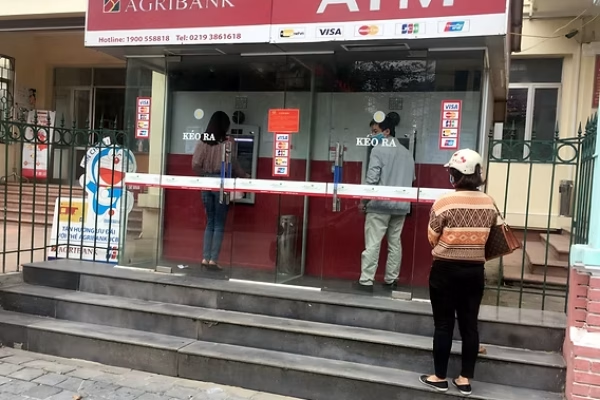
Ha Giang city (the provincial capital, where your loop journey begins) has a small but functional cluster of ATMs. This is comfortably your best and most reliable point to stock up before hitting the road.
As of recent reports from travelers, you’ll find ATMs from the following banks in Ha Giang city:
Note: ATM locations and branch status change over time. Do a quick walk of the main street near the town center when you arrive — the concentration of banks is small enough that you’ll spot them quickly.
A few practical realities to set expectations:
Per-transaction withdrawal limits vary by machine and by your home bank’s settings, but Vietnamese ATMs typically cap individual transactions somewhere in the range of 2,000,000–5,000,000 VND. Some Agribank machines allow higher limits; some don’t. If you need a large amount, you may need to do multiple transactions.
ATM fees come from two directions:
Pro tip: If you have a Wise card, Revolut, or a similar low-fee travel card, you’ll save meaningfully on fees — especially if you’re doing multiple withdrawals. Charles Schwab (for US travelers) reimburses foreign ATM fees globally and is popular with long-term Southeast Asia travelers.
Always decline the ATM’s offer to convert currency for you. When the machine asks if you want to complete the transaction “with conversion” or “without conversion,” always choose without conversion (or “in local currency”). Dynamic Currency Conversion is a well-known trap that gives you a terrible exchange rate — your home bank’s rate is almost always better.
Learn more: Dong Van Old Town
Yes, there are ATMs beyond Ha Giang city. No, you should not plan your budget around them.
Here’s the honest breakdown.
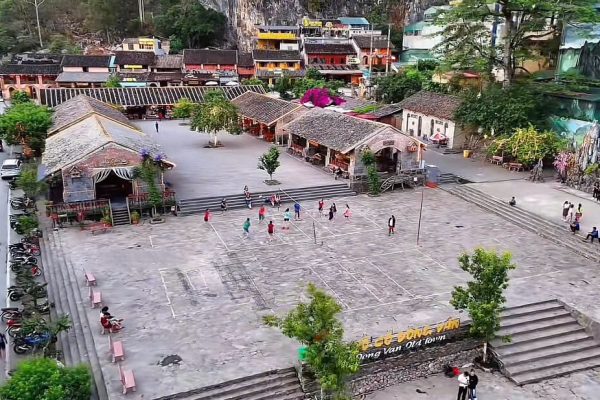
Dong Van is the main stop on the northern section of the loop, sitting near the Chinese border and surrounded by the Dong Van Karst Plateau — a UNESCO Global Geopark. It’s a real town with a functioning market, some guesthouses, and a handful of services aimed at travelers.
There are reported ATMs in Dong Van town, with Agribank again being the most commonly cited. However:
Use Dong Van ATMs as a top-up option if you’re running lower than expected — not as your primary plan.
Meo Vac is a smaller market town further along the route, famous for its Sunday market (one of the best ethnic minority markets in northern Vietnam) and its position near the dramatic Nho Que River canyon. There are ATMs reported here, again typically Agribank.
The same caveats apply: machines can be out of service, out of cash, or just uncooperative with foreign cards on a given day. Meo Vac is also the kind of place where a failed ATM means you’re asking your guesthouse owner for a cash advance — which sometimes works, but shouldn’t be the plan.
Yen Minh is a small district town and a common overnight stop on longer loop routes. There are basic banking services here, but ATM reliability for foreign cards is reported as inconsistent. Withdraw in Ha Giang city if you’re routing through Yen Minh.
Du Gia — home to the beautiful Du Gia Waterfall and a popular homestay area — is more rural and has very limited banking infrastructure. Do not count on accessing cash here.
Between the towns, you’re on mountain passes with no banking infrastructure at all. Ma Pi Leng Pass, the road toward Lung Cu Flag Tower, the stretch toward Meo Vac from Dong Van — these are places of extraordinary beauty where your financial lifeline is whatever’s in your pocket.
This is not a criticism of Ha Giang — it’s part of what makes it raw and real. But it does mean the “I’ll find an ATM along the way” approach is genuinely risky.
Learn more: Responsible Tourism in Ha Giang
This is the question that matters most, and the honest answer is: it depends on your tour format, accommodation choices, and spending habits — but here’s a realistic framework.
These are general estimates based on typical traveler spending patterns. Prices change, so use these as a planning ballpark, not a fixed contract:
Budget Traveler (self-drive, homestays, local food)
| Category | Estimated Daily Cost |
|---|---|
| Accommodation (homestay) | 150,000–250,000 VND |
| Meals (3x local food) | 100,000–150,000 VND |
| Petrol (self-drive) | 50,000–100,000 VND |
| Entrance fees / tips | 50,000–100,000 VND |
| Snacks / drinks / misc | 50,000–100,000 VND |
| Rough daily total | ~400,000–700,000 VND/day |
Mid-Range Traveler (guided tour or jeep, private room, drinks)
| Category | Estimated Daily Cost |
|---|---|
| Accommodation (included in tour, or private guesthouse) | — or 300,000–600,000 VND |
| Meals (mix of included / eating out) | 100,000–200,000 VND |
| Personal spending (souvenirs, drinks, tips) | 100,000–200,000 VND |
| Rough daily personal spend | ~200,000–400,000 VND/day above tour cost |
For a 3–4 day loop, budget travelers typically need somewhere in the range of 2,000,000–3,500,000 VND in personal cash beyond any pre-paid tour costs. Mid-range travelers on guided or jeep tours may need less day-to-day cash, but should still carry a meaningful buffer

Learn more: Ha Giang Adventure
If you’re booking a guided tour (Easy Rider, jeep, or a guided self-drive), clarify upfront what’s covered and what isn’t:
Tips for guides: Not mandatory, but genuinely appreciated and very normal on the Ha Giang Loop. A good guide works hard — long days, often rough conditions. If you’ve had a good experience, a tip of 100,000–200,000 VND per day per guide is a kind gesture.
Learn more: Ha Giang Loop for Beginners
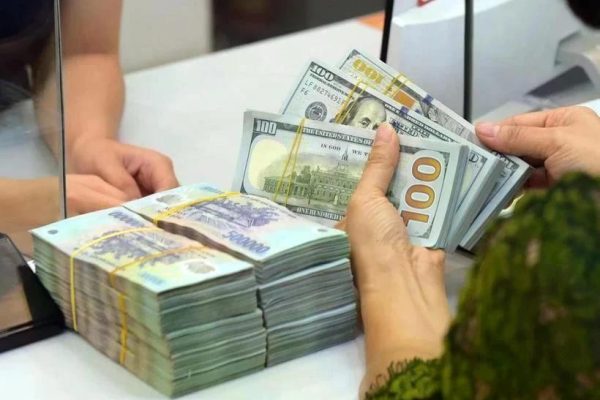
If you’re arriving with USD, EUR, or another major currency and want to exchange it in Ha Giang, your options are more limited than in Hanoi or Ho Chi Minh City.
Where to exchange:
What to watch for:
The cleanest approach for most travelers: exchange money in Hanoi before traveling to Ha Giang, or use ATMs in Ha Giang city with a low-fee card. Trying to organize currency exchange in Ha Giang adds a variable you don’t need.

Learn more: Ha Giang Loop 4 Days 3 Nights
Vietnam’s digital payment landscape has expanded rapidly — QR code payments (via apps like VietQR, MoMo, ZaloPay) are increasingly common, and many Vietnamese people use bank transfer for even small purchases. But in Ha Giang, this runs unevenly.
What sometimes works:
What doesn’t reliably work:
If you’re a digital nomad or someone who travels cashless by default, Ha Giang will require a mindset adjustment. Carry cash. Carry more than you think you’ll need.
One exception worth noting: Some tour operators (including online bookings) accept card payments or bank transfer for the initial booking/deposit. Day-to-day spending on the ground is still a cash operation.

Learn more: Ha Giang Safety Tips
These come up again and again. Worth knowing before you go.
1. Assuming ATMs on the route will work The machines in Dong Van and Meo Vac exist, but they’re not guaranteed. Treat Ha Giang city as your final cash stop.
2. Not accounting for tips Tips aren’t mandatory, but they’re a normal part of the experience — for guides, drivers, and homestay families who work hard to host you. Factor it in.
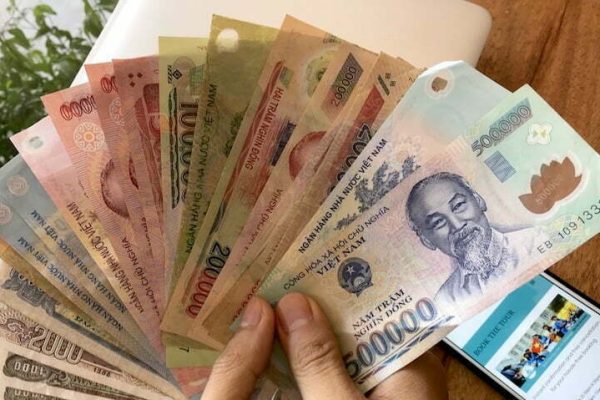
3. Bringing only large bills A 500,000 VND note is the largest denomination you’ll commonly use, and getting change for it in small villages can be genuinely awkward. Ask your bank or the ATM for a mix including 100,000 and 50,000 VND notes where possible.
4. Accepting Dynamic Currency Conversion at ATMs As mentioned: always choose local currency. Always.
5. Underestimating drink costs You’re in the mountains. You’ll be thirsty. Cold drinks, beer in the evening, coffee at a highland viewpoint — it adds up more than you’d think, especially if you’re with a group.
6. Not separating your cash Keep some money in your bag and some on your person. Losing a wallet or having it damaged (it happens — rain, river crossings) shouldn’t mean losing everything.
7. Forgetting to budget for motorbike repairs If you’re self-driving, minor mechanical issues happen. A puncture, a chain adjustment, a brake pad — these are cheap fixes by any measure, but you need cash in hand when a roadside mechanic appears from nowhere and gets you moving again. Always have a small repair buffer.

Learn more: Ha Giang Loop by Jeep for Families & Groups
If you’re still figuring out how you want to do the loop, this affects your cash planning too.
Self-Drive Motorbike You control the pace and itinerary. Costs are lower day-to-day, but you’re responsible for fuel, repairs, and navigating on your own. You’ll need more cash for day-to-day expenses since meals and accommodation aren’t bundled. [→ Check our motorbike rental options for Ha Giang]
Easy Rider (Guided Motorbike) You ride pillion with an experienced local guide. Most meals and accommodation are included, so your daily cash needs drop significantly. You get the stories, the local knowledge, and someone who knows which roadside spot has the best thắng cố. [→ Browse our Easy Rider tours]
Jeep Tour The most comfortable option — especially for couples, small groups, or anyone who prefers not to be on a motorbike for 6–7 hours a day. Jeep tours include guides, transport, accommodation, and most meals. Your personal cash spend is the lightest of the three formats. [→ See our Ha Giang Jeep Tours]
Not sure which fits you? Drop us a message on WhatsApp — we’ll help you figure it out based on your timeline, fitness, and travel style.
Learn more: Ha Giang Packing List
Use this before you head out on Day 1:
The loop is a genuinely extraordinary experience. A little cash preparation means nothing interrupts it.

Learn more: Ha Giang Loop Tours
Yes — Ha Giang city has several ATMs from banks including Agribank, Vietcombank, and BIDV. These are your most reliable options for withdrawing cash before starting the loop.
Most major international Visa and Mastercard cards work at Agribank and Vietcombank ATMs in Ha Giang city. Success rates are lower at ATMs further along the route. Always have a backup plan.
There are reported ATMs in Dong Van town, typically Agribank. However, they can be out of cash or temporarily out of service. Use them as a top-up option, not your primary withdrawal point.
Meo Vac has limited banking infrastructure and some ATMs, but reliability for foreign cards is inconsistent. Withdraw what you need in Ha Giang city before departing.
Budget travelers on a 3–4 day self-drive loop typically need 2,000,000–3,500,000 VND in personal cash beyond pre-paid tour costs. Guided tour travelers need less day-to-day but should carry a buffer of at least 1,000,000–1,500,000 VND for tips, drinks, and extras.
Some guesthouses and tour operators accept USD informally, but day-to-day spending along the loop is in Vietnamese dong. Exchange to VND before or in Ha Giang city.
Almost never. Homestays on the Ha Giang Loop operate on cash only. The same applies to most local restaurants and roadside food stops along the route.
Cards with no foreign transaction fees and ATM fee reimbursement (such as Wise, Revolut, or Charles Schwab for US travelers) work well. Standard bank debit cards work but may carry higher fees.
Having some USD as a backup emergency reserve is sensible. It’s not necessary for day-to-day spending, but clean, new-ish USD bills are relatively easy to exchange if needed.
Your best options are: top-up at ATMs in Dong Van or Meo Vac (not guaranteed to work), ask your tour guide or guesthouse about a cash advance (sometimes possible informally), or arrange a bank transfer to a local contact. It’s a stressful situation that’s entirely avoidable with upfront planning.
Urban Vietnam has embraced QR payments and digital banking, but rural areas — including most of the Ha Giang Loop — still operate on cash. Don’t assume what works in Hanoi works in Meo Vac.
Bank branches (Vietcombank, Agribank) in Ha Giang city offer currency exchange. Some guesthouses and tour operators exchange USD informally. Rates vary — compare before committing.
Contact information for Loop Trails
Website: Loop Trails Official Website
Email: looptrailshostel@gmail.com
Hotline & WhatSapp:
+84862379288
+84938988593
Social Media:
Facebook: Loop Trails Tours Ha Giang
Instagram: Loop Trails Tours Ha Giang
TikTok: Loop Trails
Office Address: 48 Nguyen Du, Ha Giang 1, Tuyen Quang
Address: 48 Nguyen Du, Ha Giang 1, Tuyen Quang
Facebook X Reddit Table of Contents If you’ve been researching a trip to Ha Giang and typed “Ha Giang airport” into a
Facebook X Reddit Table of Contents Learn more: Ha Giang Loop Tours Most travelers discover Ha Giang through the photos — buckwheat

Facebook X Reddit Table of Contents Learn more: Ha Giang Loop Tours Running out of fuel on a mountain road in northern