
Ha Giang Easy Rider: The Complete Guide (2026)
Facebook X Reddit Table of Contents Learn more: Ha Giang Loop Tours There’s a moment, usually somewhere on Ma Pi Leng Pass,

Thúy Kiều is a travel blogger and content contributor for Loop Trails Tours Ha Giang. She holds a bachelor’s degree in Sustainable Tourism from Vietnam National University, Hanoi, and has a strong passion for exploring and promoting responsible travel experiences in Vietnam’s northern highlands.
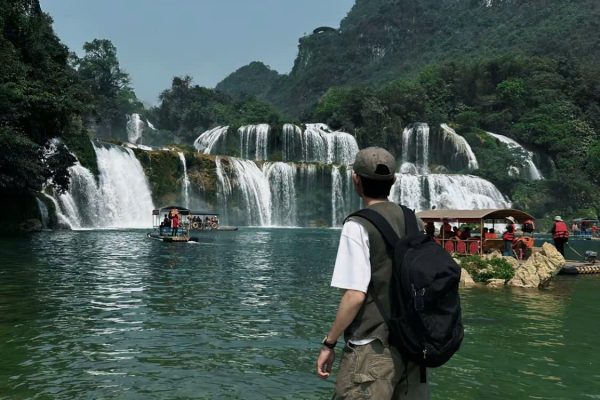
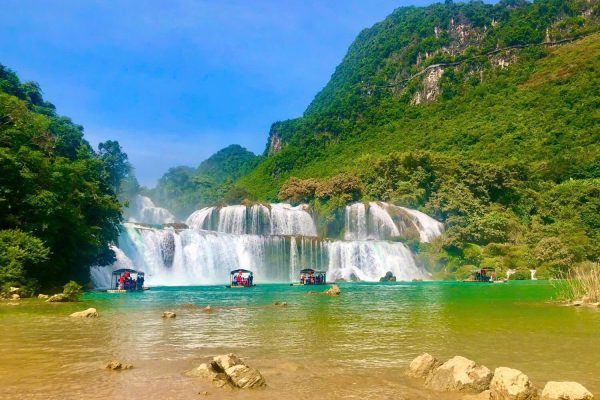
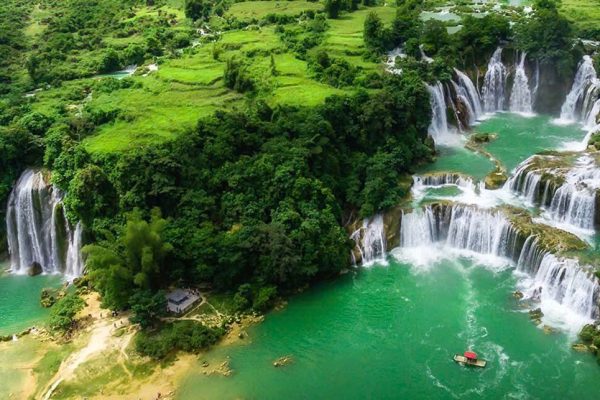
Stand at the edge of Ban Gioc Waterfall and you’re looking at something rare in Vietnam—a natural wonder that actually lives up to the hype. This isn’t another oversold tourist trap with a trickle of water and crowds of disappointed visitors. Ban Gioc is massive: 300 meters wide, cascading over multiple tiers, with enough force during rainy season to feel the mist from 50 meters away.
Located in Cao Bang province near the Chinese border, Ban Gioc remains relatively unknown compared to Ha Long Bay or Ha Giang Loop. Most travelers in northern Vietnam stick to the established Ha Giang route and miss this entirely. That’s changing slowly, but for now, Ban Gioc offers something increasingly difficult to find in Vietnam: genuine natural beauty without overwhelming tourist infrastructure.
This guide covers everything you need to know about visiting Ban Gioc Waterfall—best times to go, how to get there, what to see, where to stay, and how to combine it with the Ha Giang Loop for one of Vietnam’s best multi-day adventures.

Learn more: Cao Bang Loop Tours Vietnam best kept secret
Learn more: Ha Giang Cao Bang Loop Jeep Tour Guide
Ban Gioc holds the title of Vietnam’s largest waterfall measured by water volume. During peak rainy season (July-August), an estimated 1,000 cubic meters of water per second crashes over the falls. That’s significantly more than most other Vietnamese waterfalls, which often reduce to disappointing trickles during dry months.
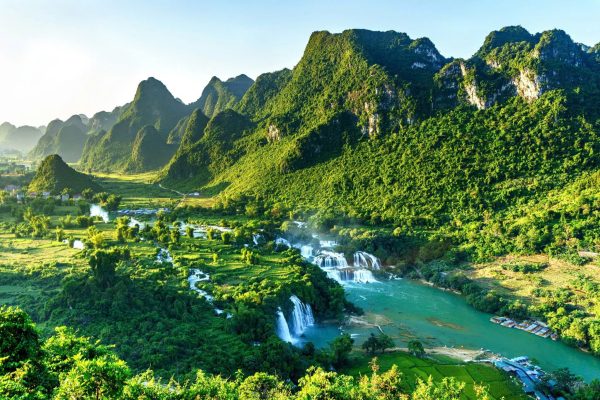
The waterfall spans roughly 300 meters across and drops about 30 meters over three main tiers. The top tier is the smallest, splitting into two or three streams. The middle tier spreads wider, and the bottom tier—the most impressive—creates a massive curtain of water that produces constant mist and a roar you hear before you see the falls.
For comparison, Da Lat’s famous Pongour Waterfall measures about 40 meters high but only 100 meters wide. Ban Gioc’s width and three-tiered structure create a more dramatic visual impact, especially when framed by the surrounding limestone karsts and green rice paddies.
Ban Gioc sits directly on the Vietnam-China border, with the Quay Son River marking the boundary. Half the waterfall belongs to Vietnam, half to China. Standing at the viewing areas on the Vietnamese side, you’re looking at Chinese territory across the water.
This border location creates an unusual situation: you can see Chinese tourists on the other side doing exactly what you’re doing—taking photos, riding bamboo rafts, enjoying the scenery. The two countries share this natural wonder, though access from each side is completely separate.
The border proximity means security is present but not oppressive. Military checkpoints exist on the road to Ban Gioc, though they typically wave tourists through with minimal stops. Don’t attempt to cross the river or walk toward the Chinese side—the border is legally enforced even if it doesn’t look heavily guarded.
Unlike Ha Long Bay, Sapa, or even Ha Giang, Ban Gioc doesn’t see massive tourist crowds yet. Visit on a weekday outside Vietnamese holiday periods and you might share the site with 20-30 other visitors rather than hundreds.
The surrounding area maintains a genuine rural character. Rice paddies extend from the waterfall base, small villages dot the landscape, and water buffalo still work the fields. Tourism infrastructure exists—parking lots, ticket booths, restaurants—but it hasn’t overwhelmed the natural setting.
This won’t last forever. Chinese tourism in particular is increasing, and tour buses from Hanoi now run regularly during peak season. Visit sooner rather than later if you want to experience Ban Gioc before it becomes another overrun tourist site.
Learn more: Cao Bang by Jeep and Motorbike
Peak water volume occurs during rainy season, particularly July and August. This is when Ban Gioc is most impressive—massive water flow, constant mist, thunderous sound, and the feeling of standing before a truly powerful natural force.
The tradeoff: unpredictable weather. Rainy season means exactly that—rain. You might arrive on a perfectly clear day, or you might get caught in a downpour. The waterfall itself looks spectacular in rain, but the ride to get there becomes less enjoyable, and photography suffers in flat gray light.
Roads to Ban Gioc are paved and generally well-maintained, but heavy rain can create challenging conditions for motorcycles. If you’re self-driving during rainy season, factor in slower travel times and bring proper rain gear.
Dry season offers more predictable weather—clear skies, comfortable temperatures (though December-February can get quite cold in northern mountains), and better photography conditions with strong sunlight.
Water volume decreases significantly compared to rainy season. Ban Gioc never completely dries up like some waterfalls, but expect perhaps 30-40% of peak rainy season flow. The falls remain impressive, just less dramatic than their maximum power.
Many travelers actually prefer dry season Ban Gioc. The reduced water volume makes individual tiers more visible, creates interesting rock formations that flood during rainy season covers, and produces more varied photography opportunities with different angles and perspectives.
Late September through October offers a unique combination: rainy season is ending (so water flow remains strong), dry season is beginning (so weather becomes more reliable), and local rice harvests create golden yellow fields surrounding the waterfall.
The contrast of green limestone karsts, white cascading water, and bright yellow rice terraces creates Ban Gioc’s most photogenic season. If you can only visit once, target late September for the best balance of water flow, weather, and scenery.
This timing also works perfectly for the Ha Giang Loop, which sees some of its best weather in September-October with clear skies, comfortable temperatures, and fewer rainy days affecting mountain roads.
Learn more: Ha Giang to Cao Bang
The direct Hanoi-Ban Gioc route covers approximately 340 kilometers and takes 7-8 hours by car or bus. Most of the route follows Highway 3, then branches onto smaller roads for the final stretch to the waterfall.
Several tour operators run day trips or overnight trips from Hanoi to Ban Gioc. These typically cost 1,500,000-2,500,000 VND per person including transportation, guide, and basic meals. You’ll spend most of your time on the bus, but it’s the quickest option if Ban Gioc is your sole destination.
Self-driving from Hanoi to Ban Gioc works but feels long on a motorcycle—7-8 hours is manageable but not particularly enjoyable when most of it is highway rather than scenic mountain roads. Consider breaking the journey with an overnight stop in Cao Bang city or combining Ban Gioc with a longer loop itinerary.
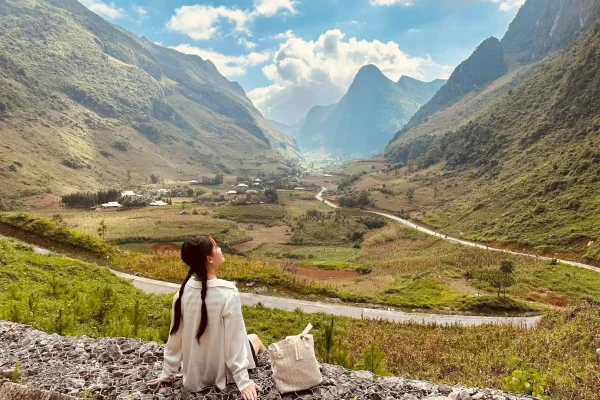
The Ha Giang-Ban Gioc route is longer (approximately 200 kilometers from Ha Giang city to Ban Gioc) but dramatically more scenic than the direct Hanoi approach. You’ll ride through Ha Giang’s limestone karsts, ethnic minority villages, mountain passes, and riverside valleys before reaching Cao Bang province.
This route isn’t commonly done as a standalone day trip—it works best as part of a multi-day itinerary that combines the Ha Giang Loop with Cao Bang attractions. The scenery rivals anything on the main Ha Giang Loop itself, with the added benefit of far fewer other tourists on the road.
Road conditions vary. Some sections are excellent newly paved roads, others are older pavement with potholes and rough patches. Nothing technically difficult for experienced riders, but factor in slower speeds than you’d maintain on Highway 3 from Hanoi.
Cao Bang city sits about 85 kilometers from Ban Gioc, roughly 2-2.5 hours by motorcycle depending on how many photo stops you make. The road passes through Trung Khanh, several small villages, and increasingly dramatic karst scenery as you approach the waterfall.
Many travelers use Cao Bang city as a base for exploring the region. Hotels are more comfortable than options near the waterfall, restaurants offer more variety, and the city provides services (ATMs, shops, medical facilities) that rural areas lack.
The downside: you spend 4-5 hours roundtrip on the road for each day trip to Ban Gioc. If you’re only visiting the waterfall, this works fine. If you’re exploring multiple Cao Bang attractions (Nguom Ngao Cave, Pac Bo, etc.), staying closer to the attractions makes more sense.
The 5-day Ha Giang-Cao Bang loop combines Vietnam’s most famous northern motorcycle route with Cao Bang’s lesser-known attractions into a single itinerary. You typically ride the traditional Ha Giang Loop for 3 days (Heaven’s Gate, Dong Van, Ma Pi Leng Pass, Meo Vac), then continue east through Bao Lac into Cao Bang province, visiting Ban Gioc, Nguom Ngao Cave, and other sites before returning to Hanoi or continuing to other destinations.
This itinerary solves several problems: it justifies the long journey to remote Cao Bang by combining it with Ha Giang (which most travelers already plan to visit), it creates a proper loop rather than retracing your route, and it showcases northern Vietnam’s two best mountain regions in one journey.
Loop Trails runs this 5-day route with Easy Rider guides (10,990,000 VND/person) or as a self-drive option (10,290,000 VND/person). The route includes Ban Gioc as a major highlight on day 4 or 5 depending on pacing, along with other Cao Bang attractions that day-trippers from Hanoi typically miss.
Learn more: Ha Giang Motorbike Rental
Three main viewing points offer different perspectives on Ban Gioc:
Lower viewing area: This is where most visitors spend their time. A paved walkway leads from the parking area to viewing platforms right at the base of the falls. You’re close enough to feel the mist, the sound is loudest here, and the scale of the waterfall is most impressive. This area also provides access to bamboo raft rides.
Mid-level viewpoint: A path (with some steps) leads up the hillside to an elevated viewpoint that shows the full width of the falls in one frame. This is the classic postcard angle—the three-tiered cascade with rice paddies in the foreground and limestone karsts behind. Best photography happens here, especially in morning or late afternoon light.
Upper area near parking: The road leading to the parking lot offers high vantage points where you can see the waterfall from a distance. Less dramatic than close-up views, but these spots help you understand the geography—how the river approaches, where the border runs, and how the surrounding landscape frames the falls.
Plan to spend 1-2 hours exploring different viewpoints, taking photos, and simply watching the water. Ban Gioc is one of those places where sitting quietly and observing beats rushing through with a camera.
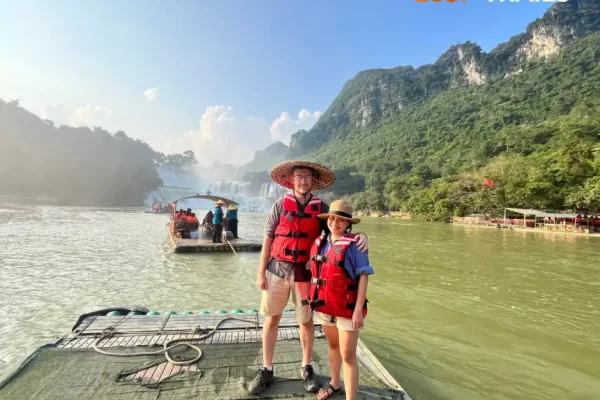
Local operators at the lower viewing area offer bamboo raft rides that take you onto the water at the base of the falls. The rafts hold 4-6 passengers plus a guide who poles the raft out toward the cascade and back. Total time: about 15-20 minutes.
Cost typically runs 100,000-150,000 VND per raft (split among passengers, not per person). Negotiate before boarding—prices fluctuate based on demand, group size, and your bargaining skills. The ride is worth doing once for the unique perspective and the experience of being on the water at a border waterfall.
The rafts don’t go under the falls themselves (too dangerous), but they get close enough that you’ll definitely feel the mist and might get splashed. Bring a waterproof bag for phones and cameras, though most guides are careful about keeping passengers’ belongings dry.
Learn more: Cao Bang Loop Tours by Jeep
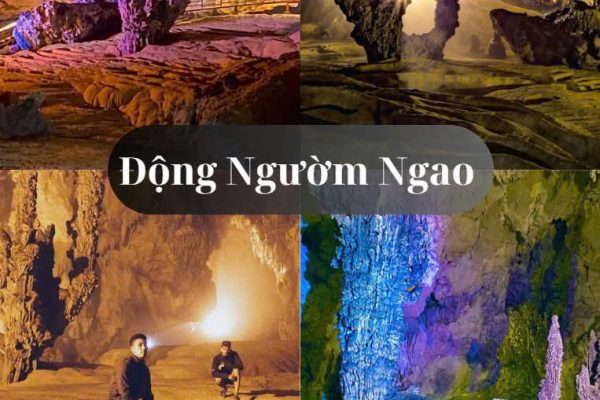
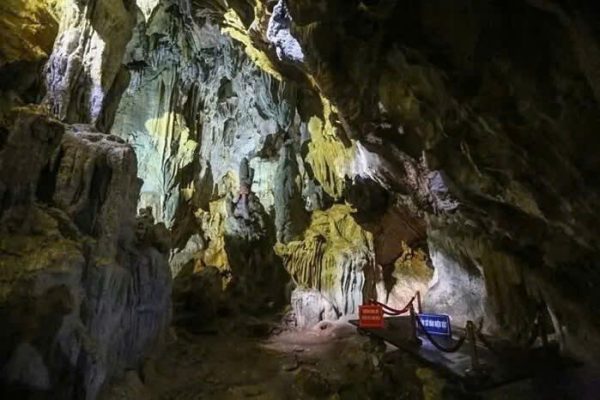
About 7 kilometers from Ban Gioc (15-20 minutes by motorcycle), Nguom Ngao Cave is one of Vietnam’s most impressive cave systems. The main tourist route covers roughly 2 kilometers through multiple chambers filled with stalactites, stalagmites, and dramatic rock formations.
The cave stays naturally cool (welcome relief on hot days) and features lighting that highlights key formations without being overly artificial. Walking the cave takes 45 minutes to 1 hour depending on your pace. Signs explain some formations in Vietnamese and English, though many of the English translations are amusingly creative.
Entrance fee is separate from Ban Gioc (around 40,000-60,000 VND, check current pricing). Most visitors combine the cave and waterfall in one trip since they’re so close together. The cave offers a complete contrast to Ban Gioc’s outdoor scenery—where the waterfall is all about power and motion, the cave is about stillness and geological time.
Best photography happens at the mid-level viewpoint in the morning (8-10am) or late afternoon (3-5pm) when side lighting creates depth and texture. Midday overhead sun flattens the scene and creates harsh shadows.
For postcard shots showing the full waterfall with rice paddies and karsts, use the mid-level viewpoint with a wide-angle lens (16-35mm equivalent). For detail shots of individual tiers or water texture, get closer at the lower viewing area with a longer lens (70-200mm).
During rainy season, bring a microfiber cloth to constantly wipe lens mist. During dry season, polarizing filters help cut glare from the water and deepen the blue sky. A tripod isn’t essential but helps with longer exposures that blur the water into smooth silk.
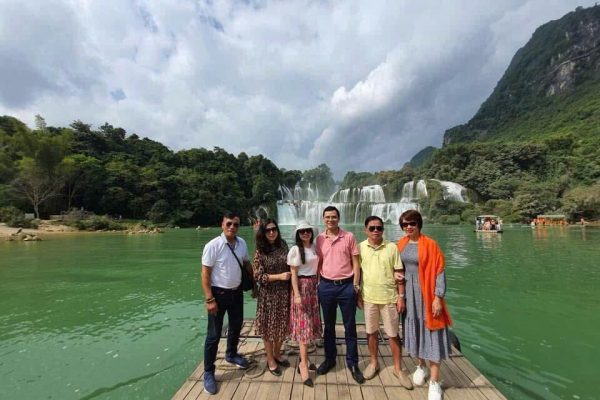
The best photos often include people for scale—the waterfall is so large that without a person in frame, viewers can’t appreciate the size. Ask fellow travelers to pose at viewpoints, or set up your camera with a self-timer.
Learn more: Best time to do Ha Giang Cao Bang Loop
Ban Gioc entrance fee runs approximately 80,000-100,000 VND per person (check current pricing as fees occasionally increase). This covers access to all viewing areas and walking paths around the waterfall.
Parking costs an additional 5,000-10,000 VND for motorcycles. Cars pay more.
Bamboo raft rides: 100,000-150,000 VND per raft (split among passengers) Food at restaurants near entrance: 50,000-120,000 VND per meal Drinks and snacks: 15,000-30,000 VND
Budget roughly 150,000-250,000 VND per person for entrance, raft ride, and basic lunch. Add Nguom Ngao Cave entrance (40,000-60,000 VND) if visiting both attractions.
Most visitors spend 2-3 hours at Ban Gioc including time at different viewpoints, a bamboo raft ride, lunch, and general exploration. This feels about right—enough time to appreciate the waterfall without getting bored.
Add 1-1.5 hours if you’re visiting Nguom Ngao Cave on the same trip, bringing total time for both attractions to 3.5-4.5 hours. This makes Ban Gioc a half-day activity rather than a quick stop.
Photographers might want longer, especially if waiting for specific light conditions or weather changes. Families with young children might finish faster, as there’s only so much time kids want to spend looking at a waterfall before they’re ready to move on.
Basic facilities exist at Ban Gioc but don’t expect luxury:
Restrooms: Available near the parking area. Condition varies from adequate to “typical rural Vietnam tourist site” (bring hand sanitizer).
Restaurants: Several basic restaurants near the entrance serve Vietnamese staples—pho, com (rice with sides), fried rice, spring rolls. Quality is average, prices are inflated compared to local rates but not outrageously so.
Shops: Small shops sell drinks, snacks, basic souvenirs, and rain ponchos (useful during rainy season). Prices are higher than in towns but reasonable given the remote location.
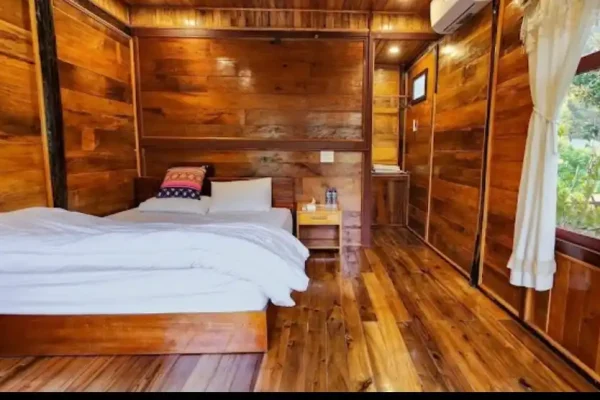
Accommodation: A few guesthouses exist very close to the waterfall, though most travelers stay in Cao Bang city or continue to their next destination. The guesthouses are basic—clean rooms, beds, shared or private bathrooms, not much else.
ATMs: None at the waterfall itself. The nearest ATMs are in Trung Khanh (about 20km away) or Cao Bang city. Bring cash.
Essential:
Useful:
Optional:
Learn more: Ha Giang Cao Bang Tours 2026
Near the waterfall (within 5km): Basic guesthouses charge 200,000-400,000 VND per night for simple rooms. Amenities are minimal—bed, fan or basic AC, bathroom. The advantage is you’re right there for sunrise/sunset photography or getting to the falls before tour groups arrive.
These guesthouses work best for budget travelers who prioritize location over comfort, or photographers who want to be on-site during best light. English is limited, hot water can be unreliable, and there’s not much to do besides visit the waterfall.
Trung Khanh (20km away): A slightly larger town with more accommodation choices. Hotels range from 300,000-800,000 VND per night with better amenities than the guesthouses at Ban Gioc. Still relatively rural, but you’ll find more restaurant options and the rooms tend to be cleaner and more comfortable.
Cao Bang City (85km away): The most comfortable option with the best hotels, restaurants, and services. Rooms range from budget guesthouses (250,000-400,000 VND) to decent mid-range hotels (600,000-1,200,000 VND). The downside is the 2-hour ride each way to Ban Gioc, making this better for travelers spending multiple days exploring the region rather than just visiting the waterfall.
Choose Cao Bang City if:
Stay near Ban Gioc if:
Most travelers choose: Cao Bang city for comfort, or skip overnight stays entirely by incorporating Ban Gioc into a multi-day Ha Giang-Cao Bang loop where you’re moving to a new location each night anyway.
Learn more: Ha Giang Cao Bang 5 Days 4 Nights
The standard 5-day itinerary combines the classic Ha Giang Loop with Cao Bang’s highlights:
Days 1-3: Traditional Ha Giang Loop (Heaven’s Gate, Quan Ba, Yen Minh, Dong Van, Ma Pi Leng Pass, Meo Vac, Du Gia, return to Ha Giang)
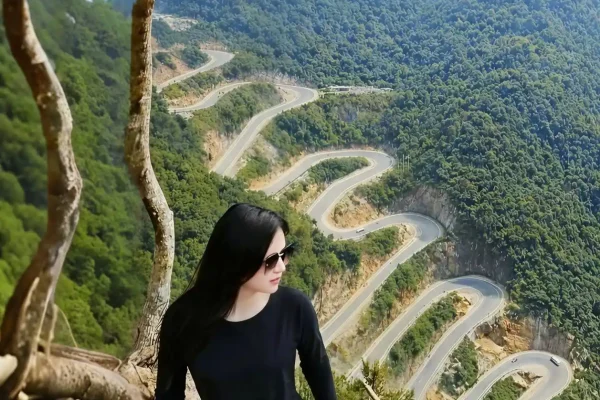
Day 4: Ha Giang to Cao Bang via Bao Lac, including Khau Coc Cha Pass with its 15 hairpin turns, Xuan Truong valley, and arriving in the Cao Bang region
Day 5: Ban Gioc Waterfall, Nguom Ngao Cave, optional stops at Pac Bo Cave or traditional villages, then continue to Cao Bang city or return toward Hanoi
Some itineraries swap the order—doing Cao Bang first, then Ha Giang—but the Ha Giang-to-Cao Bang direction feels more natural, building up to Ban Gioc as a climactic finale after several days of mountain riding.
Logistical efficiency: You’re already making the long journey to northern Vietnam for Ha Giang. Adding 2 extra days to include Cao Bang makes sense rather than requiring a separate trip later.
Variety: Ha Giang offers dramatic limestone karsts and famous passes. Cao Bang adds impressive waterfalls, massive caves, and different ethnic minority cultures. The combination prevents mountain scenery fatigue.
Natural loop route: Riding Ha Giang-Bao Lac-Cao Bang-back to Hanoi creates a proper loop without retracing your route. Self-drivers appreciate not riding the same roads twice.
Relative solitude: Ha Giang sees hundreds of tourists daily during peak season. Cao Bang remains far quieter, giving you both the famous sights and the less-crowded experience in one trip.
Loop Trails offers three ways to experience the 5-day Ha Giang-Cao Bang route:
Easy Rider (10,990,000 VND/person): Your guide rides the motorcycle, you sit behind as a passenger. This eliminates license requirements, reduces riding fatigue, and provides local expertise. Guides know the roads, speak Vietnamese, handle accommodation/meal arrangements, and can access places self-drivers miss. Best for first-time Vietnam visitors or anyone wanting a more relaxed experience.
Self-Drive (10,290,000 VND/person): You ride the motorcycle yourself with route support. This works for experienced riders with proper licensing who want maximum independence. You get the same accommodations and basic route guidance but handle your own navigation and pacing. Best for confident riders who’ve done multi-day motorcycle trips before.
Jeep Tours (pricing for 2+ people): Private 4×4 vehicle with driver. No motorcycle riding required. Perfect for families, non-riders, or travelers who want the scenery without the physical demands of motorcycling. You see the same highlights—Ma Pi Leng Pass, Ban Gioc Waterfall, Nguom Ngao Cave—from the comfort of a vehicle. Pricing varies by group size (starts at 29,890,000 VND for 2 people).
All three options include accommodations (homestays/guesthouses), meals, entrance fees, and experienced guides or drivers. Bus transportation from Hanoi to Ha Giang and return can be arranged separately (VIP sleeper buses, cabin buses, or limousine buses depending on preference and budget).
Learn more: Ha Giang Loop Weather
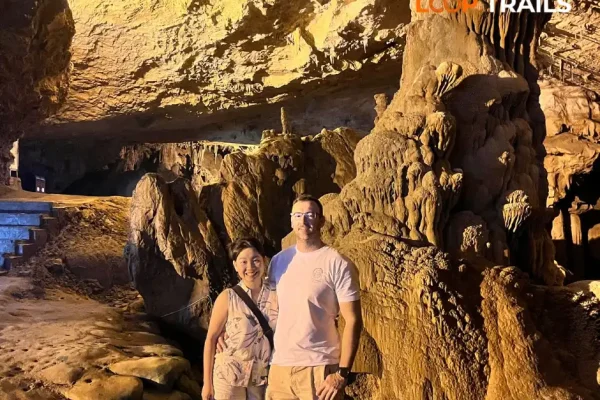
Already mentioned above, but worth emphasizing: don’t skip this cave. It’s one of Vietnam’s best cave systems, far more impressive than the overcrowded caves near Ha Long Bay or Ninh Binh. The 2-kilometer tourist route through massive chambers filled with spectacular formations takes about 45 minutes to 1 hour.
The cave stays cool year-round (bring a light jacket if you get cold easily) and features lighting that highlights natural beauty without being overly artificial. Even travelers who normally find caves boring tend to enjoy Nguom Ngao due to its size and variety of formations.
Learn more: Ha Giang Loop 3 days 2 nights
The highest peak in northeast Vietnam (1,931 meters), Phia Oac is about 50 kilometers from Cao Bang city. The mountain remains relatively undeveloped for tourism—no cable cars, limited infrastructure—which appeals to travelers seeking genuine wilderness rather than tourist attractions.
Trekking routes exist, though they’re not always well-marked. Local guides can be arranged through Cao Bang tour operators. The mountain area is home to ethnic minority villages and offers excellent birdwatching opportunities, though reaching Phia Oac requires commitment and preparation beyond a simple day trip.
Learn more: Loop Trails Tours Ha Giang
About 50 kilometers north of Cao Bang city, Pac Bo Cave is where Ho Chi Minh lived for several weeks in 1941 after returning to Vietnam from China. The site includes the cave itself, a small museum, and the surrounding area where Ho Chi Minh reportedly composed poems and made plans for Vietnam’s independence movement.
History enthusiasts find Pac Bo interesting, though the site holds more meaning for Vietnamese visitors than most international tourists. The journey to Pac Bo passes through beautiful countryside, making the ride itself more interesting than the destination for many travelers.
Learn more: Ha Giang Jeep Tours comlete guide
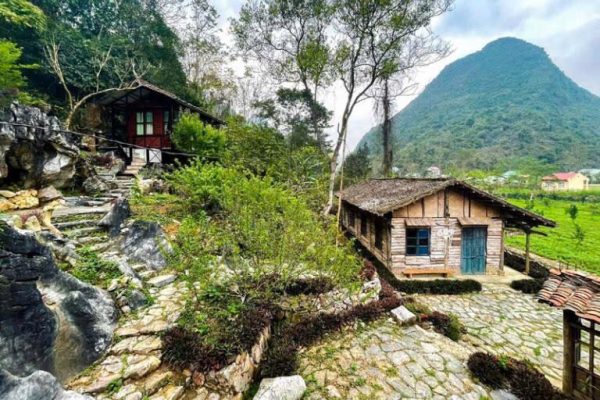
The area around Ban Gioc and throughout Cao Bang province is home to Tay, Nung, and other ethnic minority groups. Traditional stilt houses, farming techniques, and village life continue largely unchanged despite increasing tourism.
Easy Rider tours often stop at villages where guides have personal connections, facilitating authentic interactions that self-drivers can’t easily access. These villages don’t have official “tourist attractions” but offer glimpses of rural Vietnamese life away from cities and tourist centers.
Learn more: Do You Need a license to ride in Ha Giang
Don’t visit only Ban Gioc: Making the long journey just for the waterfall means 7-8 hours on the road for 2-3 hours at the falls. Combine Ban Gioc with Nguom Ngao Cave at minimum, or better yet, incorporate it into a multi-day Ha Giang-Cao Bang loop.
Bring cash: The nearest ATMs are in Trung Khanh or Cao Bang city. Card payment isn’t available at the waterfall, and you’ll need cash for entrance fees, food, raft rides, and any shopping.
Time your visit for light: The waterfall looks completely different in harsh midday sun versus soft morning or afternoon light. Photographers should arrive early (8-9am) or late (3-5pm) for best results.
Check weather beforehand: Rainy season offers maximum water flow but unpredictable conditions. If you’re riding a motorcycle and heavy rain is forecast, consider delaying your visit or arranging car transportation.
Don’t skip Nguom Ngao Cave: Many day-trippers visit only the waterfall due to time constraints. The cave is remarkable and only 15-20 minutes away—make time for both.
Respect the border: Don’t attempt to cross the river or walk toward Chinese territory. The border is legally enforced even if it doesn’t look heavily guarded. Taking photos is fine; attempting to cross is not.
Bring appropriate clothing: Comfortable walking shoes (paths have steps and uneven sections), sun protection or rain gear depending on season, and layers (caves are cool even on hot days).
Negotiate raft prices before boarding: Raft operators may quote inflated prices to tourists. Ask the price clearly before getting on the raft, and don’t feel pressured to take a ride if the cost seems unreasonable.
Three main options: join a tour (easiest but expensive and rushed), self-drive by motorcycle (7-8 hours direct, better as part of longer loop), or hire a private car (fastest but least scenic). Most travelers combine Ban Gioc with the Ha Giang Loop on a 5-day itinerary.
Late September to early October offers the best combination of strong water flow (rainy season just ending), reliable weather (dry season beginning), and golden rice fields. July-August has maximum water flow but unpredictable rain. December-February sees minimal flow but clear skies.
Plan 2-3 hours for the waterfall itself, plus 1-1.5 hours if visiting Nguom Ngao Cave. Total half-day activity. Photographers may want longer to capture different light conditions.
Technically yes, but it’s exhausting—7-8 hours driving each way for 2-3 hours at the falls. Tour companies offer overnight trips with one night in Cao Bang, which makes more sense.
Yes. Ban Gioc is Vietnam’s most impressive waterfall by volume and visual impact. Unlike many Vietnamese waterfalls that reduce to trickles during dry season, Ban Gioc remains substantial year-round.
You need a valid Vietnam visa to enter the country, but no special border permit is required for visiting Ban Gioc from the Vietnamese side. Just don’t attempt to cross into China without proper documentation.
Yes, local operators offer bamboo raft rides at the base of the falls for 100,000-150,000 VND per raft (split among passengers). Rides last about 15-20 minutes and get you close to the cascade.
Approximately 200 kilometers, about 5-6 hours by motorcycle through scenic mountain roads. This distance makes Ban Gioc impractical as a day trip from Ha Giang but perfect as part of a 5-day loop itinerary.
Some people swim in pools below the falls, though it’s not officially encouraged. Water is cold year-round and currents can be strong. If you do swim, stay in calm shallow areas away from the main cascade.
Nguom Ngao Cave (7km away, must-see), Pac Bo Cave (50km, Ho Chi Minh historical site), Phia Oac Mountain (50km, highest peak in northeast Vietnam), and various ethnic minority villages.
If you have time for 5 days instead of 3-4, yes. The combined route adds Ban Gioc Waterfall, Nguom Ngao Cave, and dramatic Khau Coc Cha Pass while avoiding retracing your route. You see Vietnam’s two best northern regions in one trip.
No special permits beyond normal Vietnamese traffic requirements (valid motorcycle license and International Driving Permit). Border proximity doesn’t require additional documentation, though military checkpoints may check your passport.

Learn more: Ha Giang Loop Self-Driver Guide
Here’s the honest assessment: Ban Gioc Waterfall alone doesn’t justify a trip from Hanoi. The waterfall is spectacular, legitimately one of Vietnam’s most impressive natural sights, but spending 7-8 hours on the road each way for 2-3 hours at the falls doesn’t make sense.
However, Ban Gioc absolutely justifies its inclusion in a longer itinerary. The 5-day Ha Giang-Cao Bang loop creates a natural route where Ban Gioc works perfectly as a highlight along the way. You’re already in the region, already committed to several days of riding, and the waterfall adds a dramatic contrast to the mountain passes and karst scenery you’ve seen on previous days.
Think of Ban Gioc as the finale of a great northern Vietnam adventure rather than a standalone destination. Ha Giang gives you the famous passes, the ethnic minority villages, the challenging roads, and the Instagram-famous viewpoints. Cao Bang gives you the massive waterfall, the enormous cave, and the sense of being somewhere truly remote that hasn’t been completely overtaken by tourism yet.
Loop Trails designed the 5-day Ha Giang-Cao Bang route specifically for travelers who want the complete northern Vietnam experience. Whether you choose Easy Rider (10,990,000 VND), self-drive (10,290,000 VND), or Jeep tour (pricing for groups), you’ll see Ma Pi Leng Pass, Ban Gioc Waterfall, Nguom Ngao Cave, and countless lesser-known spots in between—basically the greatest hits of northern Vietnam in one efficient loop.
Contact us via WhatsApp to discuss which tour style fits your timeline, riding experience, and travel preferences. We run this route regularly with experienced guides who know every road, every viewpoint, and every worthwhile stop along the way.
Ban Gioc Waterfall is waiting. The question isn’t whether to visit—it’s whether you’ll see it as a rushed day trip or as the spectacular centerpiece of a properly planned northern Vietnam adventure. Choose the latter.
Contact information for Loop Trails
Website: Loop Trails Official Website
Email: looptrailshostel@gmail.com
Hotline & WhatSapp:
+84862379288
+84938988593
Social Media:
Facebook: Loop Trails Tours Ha Giang
Instagram: Loop Trails Tours Ha Giang
TikTok: Loop Trails
Office Address: 48 Nguyen Du, Ha Giang 1, Tuyen Quang
Address: 48 Nguyen Du, Ha Giang 1, Tuyen Quang
Facebook X Reddit Table of Contents Learn more: Ha Giang Loop Tours There’s a moment, usually somewhere on Ma Pi Leng Pass,

Facebook X Reddit Table of Contents Learn more: Ha Giang Loop Tours There’s a version of the Ha Giang Loop that people
Facebook X Reddit Table of Contents Learn more: Ha Giang Loop Tours There’s a moment on the Ma Pi Leng Pass —