

Thúy Kiều (Grace) is a travel blogger and content contributor for Loop Trails Tours Ha Giang. She holds a bachelor’s degree in Sustainable Tourism from Vietnam National University, Hanoi, and has a strong passion for exploring and promoting responsible travel experiences in Vietnam’s northern highlands.
Most travelers go to Cao Bang for Ban Gioc. The ones who leave talking about it usually found a market.
A Cao Bang market morning is not designed for visitors. It’s the social and commercial centre of a district, compressed into a few hours once every five days, and the people who come down from the hills to be there are there for each other. If you happen to be there too, and you go quietly and early, it’s one of the most honest travel experiences in northern Vietnam.
This guide covers how the market calendar works, what specific schedule each market follows, how to work out the dates before you go, and how to build a market morning into a trip without building the whole trip around one.
Learn more: Ha Giang Loop Tours
Cao Bang’s rural markets don’t run on a weekly cycle. They run on a five day rotating cycle tied to the lunar calendar, which means the day of the week shifts every time, and a market that fell on a Monday last week will fall on a Saturday next week.
The key markets for travelers are Bao Lac in the west, and Trung Khanh and Quang Uyen on the Ban Gioc side. There are others along the road.
To know whether a market falls on a specific date, you need to convert that western date to a lunar date, find its last digit, and match it against the market’s cycle. The guide below walks through that.
Learn more: Ha Giang Loop 2 Days 1 Night
In much of highland northern Vietnam, rural markets rotate on a five day lunar calendar cycle rather than a fixed weekly day. In practice this means each market town is assigned a specific set of lunar dates: for example, days ending in 5 and 0 (the 5th, 10th, 15th, 20th, 25th and 30th of each lunar month), or days ending in 1 and 6 (the 1st, 6th, 11th, 16th, 21st and 26th).
Each set of five cycle numbers is assigned to a different nearby town, so that within any district the markets in neighbouring settlements fall on different days, letting people travel between them rather than competing for the same day.
This system has two consequences for travelers: first, the day of the week is never the same twice in a row, which makes it impossible to just say “Bao Lac is a Saturday market.” Second, because the lunar calendar has either 29 or 30 days per month, the rhythm of western dates shifts slightly from month to month.
The method is simple:
That’s the whole calculation. Do it for every market on your route, note which ones fall on which western dates, and build around the best match.
Bac Ha market on a Sunday has tour buses in the car park. Bao Lac market on a lunar market day has people from the hills who haven’t seen each other in five days. The difference isn’t a matter of degree, it’s a different category of experience.
Bao Lac is unlike the weekly markets of Bac Ha or Meo Vac, operating on a 5-day cycle according to the lunar calendar. That irregular rhythm maintains an authenticity that tourist markets have largely lost.
The same is true of Trung Khanh, Quang Uyen and Pac Miau. These markets serve a working population. They don’t have signage in English and there are no tour groups on a schedule. That’s both the appeal and the practical difference: you can’t just assume you’ll land on a market day.
Planning a Cao Bang trip and want to catch a market? Message us on WhatsApp with your travel dates and we’ll check the lunar cycle for the markets on your route. We’d rather tell you up front whether the timing works than have you arrive expecting a market that ran two days ago.
Learn more: Ha Giang Loop 3 Days 2 Nights
Bao Lac is the market most travelers on the Ha Giang to Cao Bang route pass through, and the one most often described as the most authentic in the province.
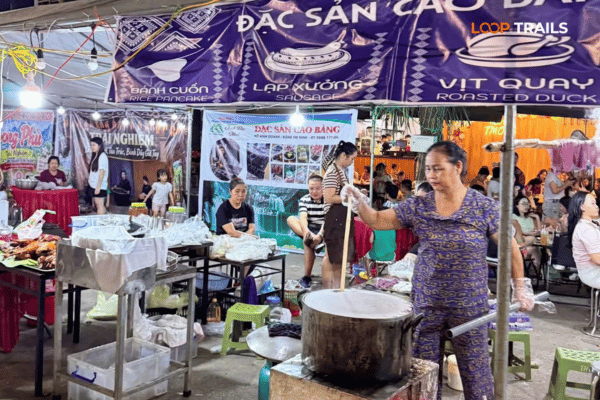
There is a daily market though the real big market is held every 5 days according to the lunar calendar. On the big days, people come down from the surrounding hills: Black Lo Lo from Khuoi Khon, H’Mong from the uplands, Tay and Nung from the valleys, Dao and San Chi from the mid slopes. The combination of ethnic groups in one market is genuinely rare.
Market cycle: [OPERATOR TO CONFIRM AND REPLACE. Current sources conflict: one source records the cycle as lunar dates ending in 0 and 5, another records dates ending in 1 and 6. Your guides’ current knowledge supersedes either source. Confirm before publishing and replace this paragraph with: “Bao Lac market runs on the [X and Y] days of each lunar month: the [list of dates] each month. To find the matching western dates, use a Vietnamese lunar calendar converter and look for those numbers.”]
What you’ll find: produce, livestock, hand tools, clothing and textiles, household goods, food stalls, and people eating and drinking in no particular hurry. The clothing worn on market days is the most concentrated display of traditional dress you’ll see in Cao Bang outside of a festival.
Practical notes: the market is in the centre of town near the river. Start before 8am if you want the busiest hour. By midday it’s winding down. Bao Lac is a road town with guesthouses and fuel stations, and it’s the last reliably stocked fuel stop before heading south to Pac Miau or west toward Ha Giang.
Learn more: Ha Giang Loop 4 Days 3 Nights
Pac Miau is a quieter market in Bao Lam district, south of Bao Lac toward the Ba Be direction. Fewer travelers come through here, and the market atmosphere is entirely unperformed.
Pac Miau market, situated in Pac Miau townlet, Bao Lam district, Cao Bang province, opens on the 5th, 10th, 15th, 20th, 25th, and 30th days of every lunar month. On market days, people from various ethnic groups such as the H’Mong, Dao, San Chi, Lo Lo, and others gather here. The goods exchanged include produce like honey, vegetables, fruits, rice, as well as livestock such as buffaloes, cows, and pigs.</cite>
Market cycle: lunar days 5, 10, 15, 20, 25 and 30.
Practical notes: not on the main Cao Bang tourist circuit, so you’re unlikely to see anyone selling things to tourists. The road south from Bao Lac through Bao Lam can be slow; check current conditions before adding this to a tight schedule.
Trung Khanh is the main town in the district that includes Ban Gioc Waterfall, and its market is the natural counterpart to a Ban Gioc visit. If the waterfall is the scenic purpose of the day, the market is the cultural one.
Market cycle: [OPERATOR TO CONFIRM AND REPLACE. No reliable schedule found in current research. Your local guides know this, and it’s the most important date to add before publishing this post. Without it, this section is incomplete.]
What you’ll find: Tay and Nung communities dominate the valley around Trung Khanh. The market mixes produce from the rice lands with goods coming down from the higher communities. The craft work from the area, particularly textiles, is worth looking for.
Practical notes: Trung Khanh town is about 35 to 40 kilometres from Ban Gioc by road. If you’re planning to do both in one day, the market morning followed by the afternoon waterfall is the right order, since the market is at its best early and the waterfall light is better in afternoon. Fuel and basic supplies are available in town.
Quang Uyen is the town closest to the Phuc Sen blacksmith village and the Phia Thap incense village. On a market morning, the craft villages and the market reinforce each other: you can see knives being made at Phuc Sen in the morning, then find those same knives for sale at the market.
Market cycle: [OPERATOR TO CONFIRM AND REPLACE. No confirmed cycle found in current research. Your guides are the reliable source for this one.]
What you’ll find: Nung communities are strongly represented here. The market has a more commercial character than Bao Lac or Trung Khanh, partly because the craft trade brings product goods as well as agricultural ones. This is one of the better markets for buying genuine craft work directly from people who made it.
Nguyen Binh is the main town heading toward the Phia Oac forest and the Dao Tien communities. The market is notably less visited than the others in this article.
Nguyen Binh market is held regularly on the 3rd, 8th, 13th, 18th, 23rd, and 28th day of a lunar month. Many people from all ethnic groups, mostly the Nung, the Tay, the H’Mong, and the Kinh, in the district gather at the market to barter their goods.
Market cycle: lunar days 3, 8, 13, 18, 23 and 28.
Practical notes: Nguyen Binh sits to the west of Cao Bang City, off the main Ban Gioc route. It’s most relevant if you’re building a longer or private itinerary that takes in the Phia Oac area. The market is one of the few in the province where you might find Dao Tien textile work, since the community lives in the surrounding hills.
Learn more: Ha Giang Cao Bang 5 Days 4 Nights
Quang Hoa is in the Trung Khanh district, covering the area around Ban Gioc. The market serves communities in one of the more agricultural corners of Cao Bang.
Market cycle: Quang Hoa market meets once every 5 days, but the specific lunar dates in the cycle are not confirmed in current research. [OPERATOR TO CONFIRM AND REPLACE: your guides will know the cycle for this market. Add the specific days before publishing.]
Cao Bang City has a permanent covered market that operates daily. It’s not the same kind of experience as the rural markets above: it’s a functioning urban market selling produce, household goods, clothes and fast food to city residents.
Worth a quick walk through if you’re in the city and have time, but it’s not a reason to plan your schedule around it. The cultural draw of the rural markets is entirely different from a town market.
Learn more: Ha Giang Cao Bang 6 Days 5 Nights
If you’re travelling between Hanoi and Cao Bang by road, two markets are worth knowing about.
Na Phac is on the main road between Ba Be and Cao Bang City, making it an easy stop on the way in or out of the province.
Market cycle: Na Phac market falls on the 1st, 6th, 11th, 16th, 21st, and 26th days of the lunar calendar.
Practical notes: less ethnically diverse than the western markets since the communities here are more mixed with Kinh (ethnic Vietnamese) population, but it’s a genuine working market and worth the stop if the timing lines up.
Ha Hieu sits further south, on the Bac Kan to Cao Bang road through the Ba Be area.
Market cycle: Ha Hieu market sessions fall on the 4th, 9th, 14th, 19th, 24th, and 29th days of each lunar month.
Practical notes: if you’re combining Cao Bang with a Ba Be Lake stop, this market could theoretically line up. It’s not a destination market on its own but a worthwhile stop if the timing happens to work.
Learn more: Cao Bang Loop 3 Days best kept secret
| Market | District or area | Lunar cycle days | Notes |
|---|---|---|---|
| Bao Lac | Bao Lac district | CONFIRM WITH OPERATOR | High authenticity, Lo Lo, H’Mong, Tay, Nung, Dao |
| Pac Miau | Bao Lam district | 5, 10, 15, 20, 25, 30 | Quiet, diverse communities, south of Bao Lac |
| Trung Khanh | Trung Khanh district | CONFIRM WITH OPERATOR | Near Ban Gioc; Tay and Nung dominated |
| Quang Uyen | Quang Uyen district | CONFIRM WITH OPERATOR | Near craft villages; Nung community |
| Nguyen Binh | Nguyen Binh district | 3, 8, 13, 18, 23, 28 | Gateway to Phia Oac; Nung, Tay, H’Mong |
| Quang Hoa | Trung Khanh district | CONFIRM WITH OPERATOR | Ban Gioc area, 5-day cycle confirmed |
| Na Phac | Bac Kan, on route | 1, 6, 11, 16, 21, 26 | On the Hanoi to Cao Bang road |
| Ha Hieu | Bac Kan, on route | 4, 9, 14, 19, 24, 29 | Ba Be to Cao Bang route |
| Cao Bang City | Cao Bang City | Daily | Urban market, lower cultural draw |
Once you have the cycle for each market, use a Vietnamese lunar calendar converter to find the corresponding western dates for your travel period. Search “Vietnamese lunar calendar 2026” or the relevant year.

Learn more: Ha Giang Cao Bang Packing List
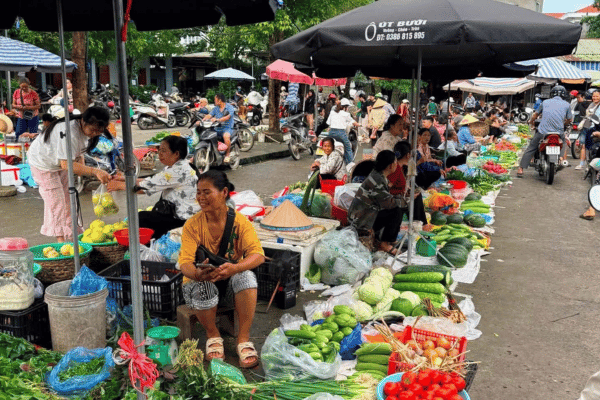
Mountain market mornings start early. People from the hills often walk or ride for hours to arrive at dawn. By 7am in a place like Bao Lac, the market is already busy; by 9am it’s at full pitch; by noon it’s emptying out.
Arrive by 8am at the latest. If you’re staying overnight in town, set an alarm.
The layout is usually informal: produce laid on the ground or low tables along the roadside and in a covered area, food stalls running along one edge, livestock somewhere at the back or in a separate pen, clothes and fabric sellers in a row. There’s no map and no signage, which is part of the point.
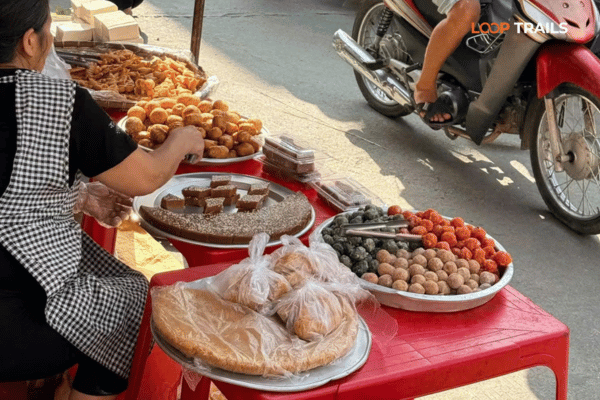
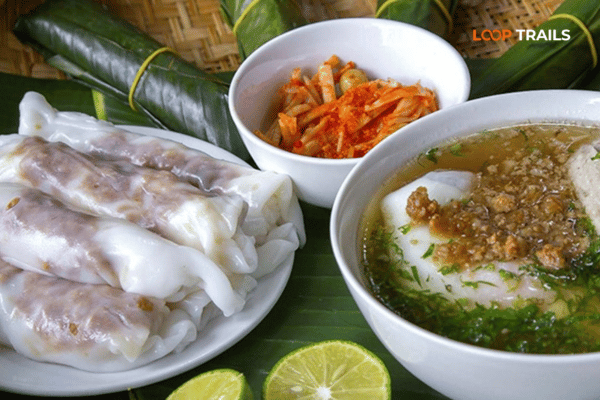
Market food is the underrated reason to go. Pho, sticky rice wrapped in leaves, grilled pork skewers, a bowl of something being ladled from a pot you can’t identify but should definitely try, coffee poured thick over ice.
Eating at the market is not a culinary adventure, it’s just breakfast, and that’s why it works. Sit at a small table at a food stall, order by pointing, pay the small amount asked, and watch everything happening around you.
Older men drinking rice wine at 8am are also doing the same thing they’ve done every market day for decades. It’s not a performance.
The trading is almost entirely practical: rice, corn, vegetables, fruit, eggs, live chickens, ducks and occasionally pigs and buffalo, farm tools and hardware, cooking pots, plastic household goods, secondhand clothing mixed with new, traditional indigo and embroidered pieces from the minority communities.
Souvenirs are not the main trade. That’s fine. Buy what people are actually selling: a woven basket, a bag of local tea, a bottle of honey. The fact that these things weren’t packaged for tourists makes them better souvenirs than anything that was.
A market in the northeast is one of the few places where you’ll see several ethnic communities in one space at once, each in their own clothing, speaking their own language, going about entirely ordinary business.
The Lo Lo women at Bao Lac with their distinctive embroidery. The H’Mong families who’ve ridden down from the ridge. The Nung traders who know everyone. The Dao grandmother arguing a price for vegetables.
Your camera is very welcome on product shots. It is not automatically welcome on people. Ask first, every time.
Learn more: Hmong Culture in Ha Giang
Learn more: Phia Thap Insense Village
Bring cash only. No card readers, no ATMs. Bring enough small denomination Vietnamese dong for food, drinks and anything you might buy.
Know what handmade looks like versus printed. Embroidered and handwoven textiles have slight variations in the pattern because they’re made by hand; machine printed versions have perfect repetition. Both are for sale, and neither is dishonest, but know which you’re buying and pay accordingly.
Knives from the Phuc Sen area often appear at Quang Uyen market. Check your airline’s rules before buying one, since blades go in checked baggage only.
Honey and tea are light and easy to carry. Good local honey is one of the better things you can take out of Cao Bang.
Haggling has a floor. There’s a difference between a fair negotiation and grinding a village seller down to the lowest possible price. Know which one you’re doing.
Carry a small bag. The market doesn’t have shopping bags and everything goes back with whoever bought it.
Learn more: Explore just the Cao Bang Loop
Group tours run on set itineraries. Unless the market day happens to line up with the scheduled routing, there’s no mechanism to shift for it on a fixed departure.
Our set tours pass through Bao Lac and the Quang Uyen area on specific days that are determined by the tour’s start date. Whether a market falls on those days depends entirely on the lunar calendar that week.
When you message us to book, ask which market days, if any, fall on your dates. We can tell you, and if a market is just barely possible with a small timing adjustment, we’ll say so. That’s the honest version of “we try to catch a market when we can.”
Private tours have the most flexibility. If you give us dates and a priority list that includes a specific market, we’ll build the route to arrive the evening before and spend the morning at the market. We can do that for Bao Lac, Trung Khanh, Quang Uyen or whichever market lines up best with your travel window.
Calculate the dates before you leave. Look up the lunar calendar, identify market days in each town you’re passing through, and adjust your departure date or your pace to land at the right time.
One practical note: most of these market towns have simple guesthouses. Arriving the evening before a market and leaving after the market closes is a sensible overnight strategy, and much better than trying to time an arrival for 7am after a long morning’s riding.
Learn more: Ha Giang Loop Easy Rider
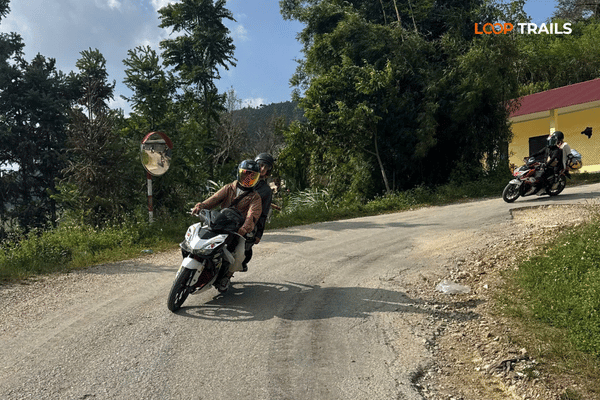
Your driver is your guide, your translator and your local market expert. On Easy Rider tours, catching a market isn’t just luck: your driver can steer you toward the right stall, tell you what’s what, and handle the market communication that would otherwise involve a lot of pointing.
You ride your own bike, following a guide. The market experience is available to you on the same terms, and your guide has the same local knowledge as an Easy Rider driver.
You need your passport, your home motorcycle licence and an International Driving Permit under the 1968 convention. IDPs issued under the 1949 convention are not valid in Vietnam. Riding without the correct documents can mean fines, reported in the range of 2,000,000 to 6,000,000 VND, and can affect your travel insurance. Riders from some ASEAN countries, including Singapore and Malaysia, have their national licences recognised here under a regional agreement. Rules change, so check your own situation before travelling. We don’t run self drive on the 2 day Loop.

Learn more: Ha Giang Loop by Wrangler Rubicon Jeep
You travel in a Jeep Wrangler Rubicon with a driver. For a market visit, the jeep makes it easier: you can buy things without worrying about how they’ll stay on a motorbike, and arriving by jeep at a small market makes you distinctly less conspicuous than a convoy of motorbikes.
Jeep prices are the total for your group in one vehicle. Motorbike prices are per person. All tours include dorm accommodation and everything in the itinerary. Private room upgrades and bus tickets to and from the start or end point are extra.
| Tour | Jeep, 1 guest | Jeep, 2 guests | Jeep, 3 guests | Jeep, 4 guests | Easy Rider (per person) | Self Drive (per person) |
|---|---|---|---|---|---|---|
| Cao Bang Loop 3D2N | 14,990,000 VND | 19,990,000 VND | 24,990,000 VND | 31,990,000 VND | 6,490,000 VND | 5,990,000 VND |
| Ha Giang and Cao Bang 5D4N | 27,990,000 VND | 36,990,000 VND | 41,990,000 VND | 46,990,000 VND | 10,990,000 VND | 10,590,000 VND |
| Ha Giang and Cao Bang 6D5N | 36,990,000 VND | 44,990,000 VND | 49,990,000 VND | 54,990,000 VND | 13,990,000 VND | 13,490,000 VND |
| Ha Giang Loop 3D2N | 15,990,000 VND | 19,990,000 VND | 23,990,000 VND | 25,990,000 VND | 4,490,000 VND | 3,790,000 VND |
| Ha Giang Loop 4D3N | 19,990,000 VND | 25,990,000 VND | 30,990,000 VND | 34,990,000 VND | 5,890,000 VND | 4,990,000 VND |
Prices are in Vietnamese dong. Jeep tours use a Jeep Wrangler Rubicon, except the Cao Bang Loop, which runs in an army style jeep.
Want a market morning in your Cao Bang trip? Send us your dates on WhatsApp and we’ll tell you which market falls on which days during your window, and whether we can build it into the route.

Learn more: Ban Gioc Waterfall Guide
We try to plan around market days when the timing allows, and we tell guests in advance when it does. We don’t promise a market on every trip, because the lunar cycle doesn’t bend for tour start dates.
On the Cao Bang route, the most likely market to align with is Bao Lac, which we pass through on the third day of the 5 day tour. Whether that day is a market day depends on when you start. When it is, we build in extra time. When it isn’t, we still stop in Bao Lac, because it’s a good town and the small daily trade is still worth seeing, just at a lower intensity.
Our drivers and guides know which markets run on which cycle and will check before the trip if you ask. The local knowledge is there; what we can’t do is promise luck.
Learn more: Ha Giang Motorbike Rental
Cao Bang markets are the best cultural experience in the province, and they’re almost entirely luck for anyone running a fixed schedule.
The way to change that from luck to planning is simple: learn the lunar cycle, convert to western dates, check before you book. Ten minutes with a lunar calendar converter and this article is all you need. If a market day lands on your route, you have the experience that most Cao Bang visitors miss. If it doesn’t, you still have everything else.
Bao Lac market runs on a 5-day lunar cycle. Sources on the specific cycle conflict, so verify with us or locally before planning around it. Use a Vietnamese lunar calendar converter to find the western dates once you have the cycle.
[OPERATOR TO CONFIRM AND REPLACE. This is the most important missing schedule for this article.]
Pac Miau market in Bao Lam district falls on the 5th, 10th, 15th, 20th, 25th and 30th days of each lunar month.
Nguyen Binh market falls on the 3rd, 8th, 13th, 18th, 23rd and 28th days of each lunar month.
They’re tied to the lunar calendar rather than a fixed western day. A market on “days ending in 1 and 6” of the lunar month will fall on a different day of the western week each month. Use a Vietnamese lunar calendar converter to find what those dates correspond to in any given month.
Search for a “Vietnamese lunar calendar converter” online, enter the western date you’re travelling, and the converter shows the corresponding lunar date and its number. Match that number against the market’s cycle to find your market days.
It runs daily and is a working urban market, not a traditional ethnic market. Worth a walk through if you’re in the city, but not a reason to plan around.
No. These are practical local markets, not tourist markets. Pointing and small cash in Vietnamese dong is how everything works.
Bao Lac has the widest mix of ethnic communities and therefore the widest range of traditional dress. Trung Khanh is primarily Tay and Nung. Quang Uyen is strong for Nung craft work.
On set group tours, market timing depends on the lunar cycle and your start date, and we can’t change the itinerary structure. On private tours, we have more flexibility. Message us with your dates and we’ll plan around the best alignment
Cash in Vietnamese dong (small denominations), a small bag for purchases, and a camera. No ATMs at the market and no card readers. Bring what you want to spend, plus something for food and drink.
Ask first, every time. A questioning gesture with the camera is understood across language barriers. Accept a no without pushing. Product shots and general market scenes are usually fine without specific consent; portraits of individuals need a yes.
Contact information for Loop Trails
Website: Loop Trails Official Website
Email: looptrailshostel@gmail.com
Hotline & WhatSapp:
+84862379288
+84938988593
Social Media:
Facebook: Loop Trails Tours Ha Giang
Instagram: Loop Trails Tours Ha Giang
TikTok: Loop Trails
Office Address: 54A Tran Phu, Ha Giang 2, Tuyen Quang
Address: 54A Tran Phu, Ha Giang 2, Tuyen Quang

Facebook X Reddit Table of Contents Learn more: Ha Giang Loop Tours The Ha Giang Loop has a reputation problem with older
Facebook X Reddit Table of Contents The passes get the photos. The homestay nights get the stories. Ask anyone who’s done the