

Ha Giang Easy Rider: The Complete Guide (2026)
Facebook X Reddit Table of Contents Learn more: Ha Giang Loop Tours There’s a moment, usually somewhere on Ma Pi Leng Pass,

Thúy Kiều (Grace) is a travel blogger and content contributor for Loop Trails Tours Ha Giang. She holds a bachelor’s degree in Sustainable Tourism from Vietnam National University, Hanoi, and has a strong passion for exploring and promoting responsible travel experiences in Vietnam’s northern highlands.

Learn more: Northern Viet Nam Itinerary 2026
Cat Ba Island to Ha Giang Province. From turquoise bays and limestone karsts rising out of the sea to mountain passes so high the clouds sit below you. It’s one of the most satisfying journeys you can make in northern Vietnam — and also one that requires a bit of logistics to pull off.
There’s no direct bus or train between Cat Ba and Ha Giang. No ferry that magically deposits you in the mountains. The route involves multiple legs, and the most sensible path for most travelers routes through Hanoi. That’s not a bad thing — Hanoi is a genuinely useful hub — but it means this isn’t a journey you want to figure out the morning you’re leaving.
This guide lays out every realistic option, what each involves, and how to build an itinerary that makes the most of both destinations.

Learn more: Ha Giang Adventure
There’s a version of northern Vietnam that most travelers see: Hanoi, maybe a Halong Bay cruise, maybe Sapa or Ninh Binh. Cat Ba and Ha Giang are the next layer — places that reward people who dig a little deeper.
Cat Ba is the largest island in the Halong Bay archipelago and increasingly popular as an alternative base to the standard overnight bay cruise. It has its own national park, a proper town, good seafood, and access to some of the most photogenic water and karst scenery in Southeast Asia. Most people arrive via Haiphong or on direct tourist boats from Hanoi.
Ha Giang sits in the far north of Vietnam, right up against the Chinese border. It’s home to the Ha Giang Loop — a multi-day mountain circuit through the Dong Van Karst Plateau, Hmong and Tay ethnic minority villages, and roads that appear on every “best motorbike routes in Asia” list. The scenery is genuinely different from anywhere else in Southeast Asia: vast, austere, and beautiful in a way that’s hard to describe until you’re standing on top of Ma Pi Leng Pass looking down at the Nho Que River far below.
Doing both in one trip isn’t just possible — it’s a great idea. The contrast makes each place feel more vivid.

Learn more: Ha Giang Loop route and itinerary
Cat Ba to Ha Giang City by road (via Haiphong and Hanoi) is roughly 450–500 km. As a straight line it’s less, but between the ferry crossing, city traffic, and mountain roads, straight lines don’t mean much here.
In terms of travel time: you’re looking at a minimum of 10–14 hours of total transit, spread across multiple legs. Most travelers break it into two days — either with a night in Hanoi or by timing the overnight bus to Ha Giang to leave the same evening they arrive in Hanoi from Cat Ba.
The key constraint is the ferry. Cat Ba is an island, so every route off it involves either a ferry to Haiphong or a direct speedboat/catamaran service. That leg comes first, and it shapes your whole day.

Learn more: Ha Giang Sleeper Bus
You can wing a lot of things in Vietnam. This one rewards some advance planning.
Here’s why:
None of this is complicated. It just means spending 30 minutes with this guide and a few browser tabs before you pack your bag.

Learn more: Ha Giang Jeep Tours
Leg 1: Cat Ba to Haiphong Take the ferry or speedboat from Cat Ba Town to Haiphong. Multiple operators run this crossing — journey time is roughly 30–45 minutes by speedboat or longer on the car ferry. Check current departure times when you’re on the island, as schedules can change seasonally.
Leg 2: Haiphong to Hanoi From Haiphong, you have options: bus (comfortable, reasonable journey time — roughly 2–2.5 hours depending on traffic), train (slightly longer but scenic), or minivan. Haiphong’s bus station and train station are both manageable for independent travelers.
Leg 3: Hanoi to Ha Giang From Hanoi, catch the overnight sleeper bus to Ha Giang City. Buses typically depart in the early-to-mid evening and arrive in Ha Giang City early the following morning — roughly 6–7 hours. You wake up in Ha Giang ready to start the Loop.
Timing this well: If you leave Cat Ba on an early morning ferry — say, 7:00–9:00am — you can realistically be in Hanoi by early afternoon, giving yourself time to grab food, sort any last errands, and catch an evening bus to Ha Giang. That’s the ideal version of this route: one transition day, zero wasted nights.
What can go wrong: A delayed ferry or unexpected Haiphong traffic can push your Hanoi arrival later than expected. Build in buffer — don’t book a bus that departs 30 minutes after you expect to arrive.
Best for: Budget travelers, backpackers, anyone who enjoys figuring out the journey as part of the adventure.
Several tourist bus operators run direct services from Cat Ba to Hanoi as a combined ticket — typically including the ferry crossing and a bus from Haiphong (or a boat directly to a Hanoi-area pier). Journey time is roughly 3.5–5 hours total.
This is a cleaner option than piecing together Option 1 yourself, since someone else handles the ferry-to-bus transfer. The trade-off is less flexibility — you’re on their schedule, and if something runs late, it’s their problem to sort (in theory).
From Hanoi, the path to Ha Giang is the same as Option 1: evening sleeper bus, arrive early morning.
Best for: First-time Vietnam travelers who prefer not to navigate multiple independent connections, or anyone who wants the Cat Ba → Hanoi leg handled as one ticket.

Learn more: Ha Giang Loop Private Car from Hanoi
If you’re traveling as a couple or small group and want comfort without stress, a private car + driver can cover the full Cat Ba to Ha Giang route. This typically means:
It’s a long day — expect 10–12+ hours depending on stops and conditions. Some groups choose to split it with a night in Hanoi, especially if they want to see the city rather than treat it as a transit point.
Private transfers cost more than public transport, but split among 3–4 people the difference narrows considerably. The main advantage: door-to-door, no waiting at bus stations, and you can stop wherever you want along the way.
Best for: Couples, families, small groups, travelers with substantial luggage, anyone who values time over budget.
This one’s for the committed riders.
Some travelers arrive in Vietnam with a plan to do the whole northern loop by motorbike: Hanoi → Halong/Cat Ba area → Ha Giang Loop → return to Hanoi. It’s a classic extended route, and the motorbike leg from the Cat Ba/Haiphong area toward Ha Giang is doable.
In practice, the smartest version of this isn’t riding straight from Cat Ba to Ha Giang in a single day (it’s a long, busy stretch of highway for much of the route). Most motorbike travelers take the ferry from Cat Ba to Haiphong with their bike, ride toward Hanoi or spend a night there, and then continue north toward Ha Giang the following day.
If you’re planning to ride the Ha Giang Loop specifically, keep in mind that the roads require experience with mountain riding. Semi-automatic and automatic bikes are fine for the Loop in dry conditions, but some sections — especially toward Dong Van and around Meo Vac — are steep and technical enough that experience matters.
If you’re picking up a rental bike in Ha Giang City rather than riding from Cat Ba, that’s also completely viable — and often the more practical choice.
[→ See our Ha Giang motorbike rental options — XR150, semi-auto, and other bikes suited for the Loop.]
Best for: Experienced riders on extended northern Vietnam itineraries. Not recommended for first-time Vietnam riders as a non-stop Cat Ba to Ha Giang leg.

Learn more: Ma Pi Leng Pass
Lorem ipsum dolor sit amet, consectetur adipiscing elit. Ut elit tellus, luctus nec ullamcorper mattis, pulvinar dapibus leo.
Worth saying plainly: Hanoi is the logical midpoint for this journey, and it doesn’t have to be just a transit stop.
From Hanoi you have:
Most sleeper bus operators running to Ha Giang offer hotel pickup in Hanoi’s Old Quarter, which means you don’t even need to figure out which bus station to go to. You get picked up at your guesthouse, loaded onto the bus, and wake up in Ha Giang City.
For anyone booking a Ha Giang Loop tour, most tours depart from Ha Giang City — but if you contact us in advance, we can help coordinate your arrival logistics from Hanoi so the whole thing flows.
[→ Questions about the journey? Message us on WhatsApp and we can help plan your route.]

Learn more: Ha Giang Loop 4 Days 3 Nights
Here’s a practical flow for combining all three destinations without feeling rushed:
Days 1–3: Cat Ba Arrive on the island, spend at least two full days — one for kayaking or a boat tour in the Halong Bay area, one for Cat Ba National Park hiking or exploring the island by motorbike. Three nights if you want to go slower.
Day 4: Cat Ba → Hanoi Early morning ferry to Haiphong, bus or minivan to Hanoi. Arrive Hanoi early-to-mid afternoon. Spend a few hours in the Old Quarter. Catch the evening sleeper bus to Ha Giang City.
Days 5–8 (or 5–9): Ha Giang Loop Arrive Ha Giang City early morning. Spend Day 5 organizing — pick up motorbike or meet guide, check in somewhere near the start of the Loop. Days 6–8 on the Loop itself (Quan Ba, Yen Minh, Dong Van, Ma Pi Leng Pass, Meo Vac, Du Gia). Three nights at minimum; four is better if you want time to explore properly.
Optional Extension: Cao Bang From Ha Giang, experienced travelers with extra time can continue toward Cao Bang for Ban Gioc Waterfall, Nguom Ngao Cave, and the karst landscapes of Phia Oac National Park. This adds 2–3 days and turns the trip into one of the most complete northern Vietnam itineraries you can do.
[→ See our Ha Giang + Cao Bang combine tours — a guided route covering both provinces in one go.]

Learn more: Ha Giang Cao Bang 5 Days
Hanoi: 0–2 nights (transit or proper visit)
If Hanoi is pure transit, one evening is enough. If you want to actually see the city — the Old Quarter, Hoan Kiem Lake, the food — add a night or two as a standalone stop on your itinerary. Many travelers bookend their northern Vietnam trip with Hanoi at start and finish.
Ha Giang: 4–6 nights minimum
This is the one you can’t rush. The Loop takes 3–4 days at a reasonable pace, and that’s without lingering anywhere. Add a day on either side (one to arrive and organize, one buffer at the end) and you’re already at 5 nights. If you want to do the Loop properly — stop at viewpoints, visit local markets, spend a real evening in Dong Van or Meo Vac — give it 6 days.
Ha Giang + Cao Bang: 7–10 nights
If you’re combining both provinces, budget accordingly. It’s worth it.
Cat Ba: 2–3 nights
One night is technically enough to see the highlights, but you’ll feel rushed. Two nights lets you do a proper boat tour and explore the island itself. Three nights is for people who want to kayak, hike, swim, and generally decompress. The island rewards slow travel.

Learn more: Ha Giang Loop Easy Rider
| Your situation | Best option |
|---|---|
| Budget traveler, happy to piece it together | Option 1 (ferry → Haiphong → Hanoi → overnight bus) |
| Want Cat Ba → Hanoi handled as one ticket | Option 2 (direct tourist bus/ferry combo) |
| Small group, want comfort + flexibility | Option 3 (private transfer) |
| Experienced rider on a longer Vietnam trip | Option 4 (motorbike) |
| Short on time, want to maximize destinations | Fly into Hanoi, day trip or 1 night at Cat Ba, then Ha Giang |
If this is your first time in northern Vietnam: Option 1 or Option 2 is the right call. The route is manageable, the connections are well-traveled, and you’ll be fine figuring it out as you go — especially if you leave Cat Ba early and give yourself a buffer in Hanoi before the evening bus.
If you’re organizing a group of 3+ people: Run the numbers on Option 3. A private transfer from Cat Ba to Ha Giang split across 4 people might not cost that much more per person than public transport, and the door-to-door convenience is hard to argue with.
If you’re joining a Ha Giang Loop tour: Contact the operator before you leave Cat Ba. Good operators will help you time your arrival in Ha Giang City to coincide with the tour departure, which takes all the guesswork out of the logistics.

Learn more: Ha Giang Homestay Guide
Ha Giang City is a small provincial capital — friendly, unpretentious, and set up for travelers in a practical way. Most of the guesthouses and tour operators are clustered around the town center, and the morning you arrive (if you took the overnight bus), you’ll have the whole day to get organized.
Before you head out on the Loop, take care of:
The scenery starts almost immediately as you leave Ha Giang City. By the time you reach Quan Ba and the Twin Mountains viewpoint (Heaven’s Gate), you’ll already be reaching for your camera.
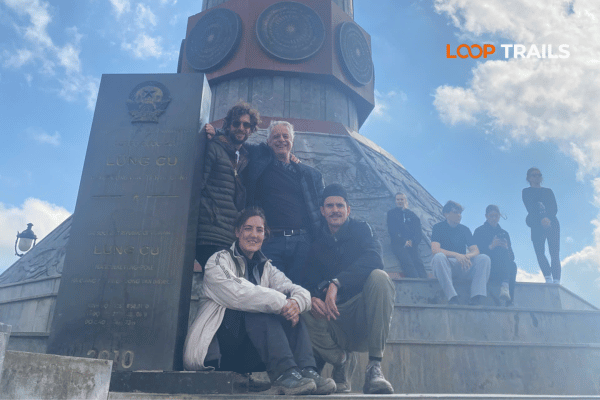
Learn more: Lung Cu Flag Tower Guide
You didn’t come this far just for the bus journey.
The Ha Giang Loop is a roughly 300–350 km circular route that most riders complete over 3–4 days. It runs through the Dong Van Karst Plateau Geopark — one of UNESCO’s recognized global geoparks — and passes through communities of Hmong, Tay, Dao, and Lo Lo ethnic minorities.
The highlights are genuinely impressive:
The Loop can be done three ways. Self-drive gives you maximum freedom but requires genuine comfort on mountain roads. Easy Rider (riding pillion with a local guide) is one of the best ways to do the Loop if you want local context without the stress of navigating solo. Jeep tour is ideal for groups, couples who want comfort, or anyone who’d rather not be on a motorbike for three days.
Not sure which format fits you? We’ve broken it down on our tour pages — or reach out directly and we can help you figure out what makes sense for your experience level and group.
[→ See our Ha Giang Loop tour options — Easy Rider, Jeep, and Self-Drive available.]

Learn more: Ha Giang Safety Tips
Book the overnight bus early in peak season
October–November (buckwheat flower season) is Ha Giang’s busiest period. Sleeper buses from Hanoi to Ha Giang sell out — sometimes days in advance. Don’t leave this to the last minute.
Weather affects both Cat Ba and Ha Giang differently
Cat Ba’s best season is roughly May–September for beach weather, though typhoon season (July–September) can bring rain and rough seas. Ha Giang’s best time for the Loop is October–April — drier, clearer, and more stable on the mountain roads. This means October is genuinely the sweet spot where both destinations are at or near their best simultaneously.
The ferry schedule is your starting gun
Your whole day’s connections from Cat Ba depend on catching the right ferry. Check the current timetable when you arrive on the island and plan backward from your Hanoi bus departure time. Missing the early ferry typically means missing the evening bus to Ha Giang.
Ha Giang Loop road conditions change
Some sections of the Loop involve mountain roads that can be affected by rain, landslides, and seasonal maintenance. Rules, road conditions, and access to certain viewpoints can all change — verify locally before heading out. A local guide is particularly valuable for this reason.
Driving licenses and motorbike regulations
Vietnam’s rules on operating motorbikes — including which license class is valid for which bike — are subject to change and are worth researching before you rent. Don’t rely on secondhand information; check current regulations directly. Guided tours (Easy Rider or jeep) remove this variable entirely.
Haiphong is not just a transit city
If you find yourself with extra time in Haiphong — either waiting for a connection or arriving later than planned — the city has decent food, a walkable old quarter, and a genuinely less-touristed feel than Hanoi. It’s not a reason to extend your whole itinerary, but it’s a pleasant surprise if you get a few hours there.

Learn more: Ban Gioc Waterfall Guide
No direct service exists. The journey requires at least two legs: getting off Cat Ba (ferry to Haiphong), then making your way to Hanoi for the overnight bus to Ha Giang. Some tourist bus combos handle the Cat Ba → Hanoi leg as a single ticket, which simplifies things.
Expect 10–14 hours of total travel time, spread across multiple legs. If you time it well — early morning ferry, connections to Hanoi by afternoon, evening bus to Ha Giang — you can do it in a single transit day and arrive in Ha Giang the following morning.
Not necessarily. If you leave Cat Ba early enough, it’s possible to arrive in Hanoi in the afternoon and catch the same evening’s bus to Ha Giang. However, if your Cat Ba departure is delayed or you want to spend time in Hanoi properly, an overnight there is perfectly reasonable.
Generally yes — car ferries from Cat Ba to Haiphong carry motorbikes. Check with ferry operators for current pricing and any restrictions. Speedboat services do not carry motorbikes.
October is arguably the ideal month — Cat Ba is past the worst of typhoon season and still warm, while Ha Giang enters its famous buckwheat flower bloom. March–April is another excellent window: dry and clear in Ha Giang, and comfortable on Cat Ba before the summer heat.
Most travelers do Cat Ba first — it’s more accessible from Hanoi as a first stop, and the journey “builds” toward the more adventurous Ha Giang later in the trip. That said, either order works logistically.
Ha Giang is generally very safe, and solo travelers do the Loop regularly. The main considerations are road safety (mountain roads require concentration), accommodation booking ahead in peak season, and having someone know your daily itinerary if you’re going self-drive. Solo travelers often find that the Easy Rider format — riding pillion with a local guide — solves most of these concerns while adding genuine value through local knowledge.
Yes — you can book online from anywhere. Contact tour operators directly via WhatsApp or email and arrange everything in advance. Most tours depart from Ha Giang City, so you just need to get yourself there.
Self-drive means you ride your own motorbike — maximum freedom, requires experience with mountain roads. Easy Rider means you ride pillion behind a local guide — great for people who want local context, language support, and guidance without doing the riding. Jeep is ideal for groups or couples who want comfort and don’t want to be on a motorbike for multiple days. Each suits a different traveler.
Regular buses and minivans run between Haiphong and Hanoi throughout the day — journey time is roughly 2–2.5 hours depending on traffic. Trains are also an option. Services are frequent enough that you don’t need to pre-book, though checking current timetables before you go is wise.
Absolutely. Ban Gioc Waterfall alone is worth the detour, and the karst scenery of Cao Bang Province rivals anything on the Ha Giang Loop. If you have 7–10 days in northern Vietnam’s mountainous north, the Ha Giang + Cao Bang combined route is one of the best itineraries in the region.
For the transit legs: layers (sleeper buses and mountain mornings are cold), snacks, a portable charger, and a small day bag you can access without unpacking everything. For Ha Giang specifically: windproof and waterproof layers, sunscreen (altitude UV is intense), and riding gloves if you’re on a motorbike.
Contact information for Loop Trails
Website: Loop Trails Official Website
Email: looptrailshostel@gmail.com
Hotline & WhatSapp:
+84862379288
+84938988593
Social Media:
Facebook: Loop Trails Tours Ha Giang
Instagram: Loop Trails Tours Ha Giang
TikTok: Loop Trails
Office Address: 48 Nguyen Du, Ha Giang 1, Tuyen Quang
Address: 48 Nguyen Du, Ha Giang 1, Tuyen Quang
Facebook X Reddit Table of Contents Learn more: Ha Giang Loop Tours There’s a moment, usually somewhere on Ma Pi Leng Pass,

Facebook X Reddit Table of Contents Learn more: Ha Giang Loop Tours There’s a version of the Ha Giang Loop that people

Facebook X Reddit Table of Contents Learn more: Ha Giang Loop Tours There’s a moment on the Ma Pi Leng Pass —