


Thúy Kiều is a travel blogger and content contributor for Loop Trails Tours Ha Giang. She holds a bachelor’s degree in Sustainable Tourism from Vietnam National University, Hanoi, and has a strong passion for exploring and promoting responsible travel experiences in Vietnam’s northern highlands.
Ha Giang keeps showing up on every “must-visit Vietnam” list, and for good reason. The northern mountains deliver exactly what travelers are chasing: dramatic landscapes, genuine cultural encounters, and roads that make your heart race for all the right reasons. But if you’re planning a trip for 2026, you’re probably wondering what’s changed, what’s stayed the same, and what you actually need to know before you go.
I’ve been running tours through Ha Giang for years, and 2026 brings some real shifts worth paying attention to. Not the “everything has changed” kind of hype you see on some travel blogs, but practical updates that affect how you plan, what you pack, and what you can expect when you’re actually on the road.
Let’s cut through the noise and talk about what matters.

Learn more: Ha Giang Loop Tours
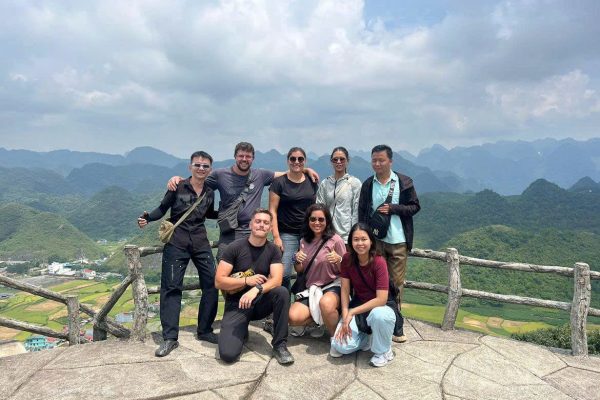
Learn more: Ha Giang Loop 4 Days 3 Nights
Ha Giang doesn’t reinvent itself every year. The mountains don’t move, Ma Pi Leng Pass is still spectacular, and the basic loop route remains what it’s always been. But there are shifts happening—some you’ll notice immediately, others that work in the background to make your trip smoother or occasionally more complicated.
The road network through Ha Giang sees constant work. Some sections that were rough in 2024 have been smoothed out. Others are under active construction, which means temporary detours or slower going during certain months.
The main Quan Ba to Yen Minh stretch has seen upgrades, particularly around Bac Sum Pass. Heaven Gate, always a photo stop favorite, now has improved parking areas and better viewing platforms. This sounds minor until you’re trying to get that perfect shot with 15 other people crowding the same spot.
Ma Pi Leng Pass remains the crown jewel, but sections undergo maintenance work periodically. During monsoon season, rockfalls are more common, and road crews work faster to clear them than they did a few years back. Still expect occasional delays.
The Dong Van to Meo Vac route—which includes Ma Pi Leng—sees the most traffic and the most maintenance. If you’re traveling between March and October 2026, conditions should be excellent. November through February can bring wet conditions that slow things down.
Construction zones pop up with less warning than you’d hope. Your guide or tour operator should have current intel, but self-drivers need to stay flexible. Add buffer time to your daily schedule.
Here’s where things get real: permit requirements and enforcement levels shift. As of early 2026, foreign visitors technically need travel permits for certain areas within Dong Van Karst Plateau Geopark, but enforcement varies wildly.
Most organized tours handle permits automatically. You won’t even think about it. If you’re going fully independent or self-driving, you need to understand the landscape.
The practical reality? Many travelers complete the loop without encountering serious permit checks. But that doesn’t mean you should skip proper documentation. When checks do happen, they happen at specific points: approaching Lung Cu Flag Tower, entering certain villages near the Chinese border, and occasionally at accommodation check-ins in Dong Van or Meo Vac.
Carry your passport everywhere. Not a copy—the actual passport. Hotels and homestays need it for registration, and traffic police will ask for it if you’re driving. This isn’t negotiable.
Homestay quality has improved across the board. Three years ago, you’d find basic accommodations with squat toilets and cold water showers as standard. Now, most homestays along popular routes offer Western toilets, hot water, and WiFi that actually works (most of the time).
Dong Van has seen the biggest changes. New guesthouses, better restaurants, and an expanded old quarter market area. The town still keeps its character, but facilities are noticeably better for travelers who want comfort alongside their adventure.
Yen Minh and Meo Vac have added more accommodation options, which helps during peak season when everything used to book out weeks in advance. You still want to reserve ahead, but last-minute options exist now.
Restaurant quality has leveled up too. Five years back, you ate what the homestay served or found basic com pho joints. Now you’ll find decent Vietnamese fare, some Western menu items, and better coffee. Don’t expect Bangkok-level food diversity, but you won’t go hungry or bored.
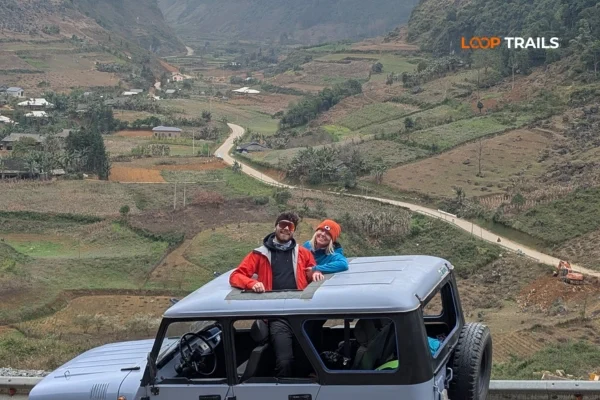
Learn more: Cao Bang Loop Tours Vietnam best kept secret
Weather makes or breaks Ha Giang trips. Get it right, and you’ll have clear mountain views and perfect riding conditions. Get it wrong, and you’re fighting fog, rain, and roads slicker than you want them to be.
January-February 2026: Cold. Properly cold. Temperatures in Dong Van and Meo Vac drop to 5-10°C, sometimes lower at night. You’ll need serious layers. The upside? Fewer tourists, cheaper prices, and crystal-clear days when the weather cooperates. Expect occasional fog and drizzle. Pack thermal layers, a good rain jacket, and gloves if you’re riding.
March-April: Spring brings warmer days but unpredictable weather. Some years you get gorgeous sunny weeks. Other years it’s misty and cool. Flowers start blooming, especially buckwheat in certain areas. Traffic picks up as the season shifts. This is shoulder season—good value, decent weather, fewer crowds than peak months.
May: The transition month. Weather warms significantly. Early May can still be pleasant, but by late May, you’re feeling summer heat. Rain starts becoming more frequent. Roads are generally dry, but afternoon showers begin appearing.
June-August: Hot and wet. Monsoon season means rain, often heavy and sudden. Roads can be dangerous, with landslides occurring after prolonged downpours. Visibility drops in fog. Honestly? Unless you have no other option, skip these months. The landscapes are lush and green, which is beautiful, but the safety and comfort trade-offs aren’t worth it for most travelers.
September-October: Peak season, and it’s peak for good reason. Post-monsoon weather brings clear skies, comfortable temperatures, and spectacular visibility. September still has occasional rain, but October is near-perfect. You’ll share the road with more tourists, but conditions are ideal. Book everything early—tours, homestays, bus tickets.
November: The rice terraces turn golden yellow, creating some of the year’s most stunning landscapes. Weather remains good early in the month but can turn cold and foggy by late November. This is prime time if you want rice harvest scenery without peak-season crowds.
December: Similar to January—cold, sometimes foggy, but with great potential for clear days. End-of-year travelers find good deals and quiet roads. Just prepare for winter temperatures.
Weather patterns aren’t as predictable as they used to be. Old-timers will tell you they could set their calendar by when the rains started. Not anymore.
Rainy season seems to start slightly earlier some years and last longer. The dry season window is shorter, which is why September-October books up fast—everyone’s trying to catch the same narrow weather window.
Sudden temperature swings happen more often. You might start the day in sunshine and end it in cold rain. Layer your clothing and keep rain gear accessible, regardless of the forecast.
This isn’t meant to scare you. Ha Giang is still rideable and enjoyable year-round for travelers who come prepared. But the “just show up and see what happens” approach carries more risk than it did a decade ago.

Learn more: Ha Giang Sleeper Bus
Ha Giang City is your gateway to the loop. Getting there from Hanoi or other Vietnamese cities involves some planning, but the options are solid.
The overnight sleeper bus from Hanoi remains the most popular choice. Multiple companies run this route, with varying quality levels. The ride takes 6-7 hours, departing Hanoi around 9-11pm and arriving in Ha Giang between 4-6am.
Bus types available:
Prices range from 250,000 VND to 500,000 VND depending on bus type and operator. Most tour packages include bus tickets, which simplifies things and often gets better rates through bulk booking.
You can also catch buses from other northern cities: Sapa, Ninh Binh, Cat Ba Island, Ha Long. These routes are less frequent but exist for travelers building multi-destination itineraries. Check schedules in advance—some routes only run certain days.
Pro tip: Book bus tickets at least 3-4 days ahead during peak months (September-November). Last-minute booking might leave you with less comfortable options or no seats at all.
Private cars and vans offer flexibility and comfort for groups or families. A private vehicle from Hanoi to Ha Giang costs around 2,500,000-4,000,000 VND depending on vehicle size and operator. Split among 4-5 people, the per-person cost rivals premium bus tickets but adds convenience.
The drive takes 5-6 hours in daylight with stops. You control timing, photo stops, and comfort breaks. For families with kids or travelers who want to explore en route, private transfer makes sense.
Some tour operators bundle private transfers with tour packages. Ask about this when booking—it can streamline your arrival experience significantly.
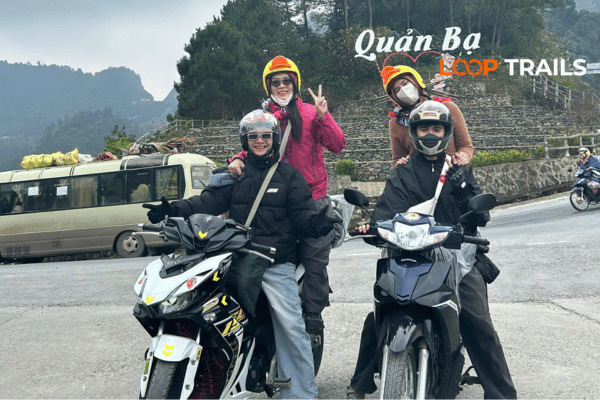
Learn more: Ha Giang Loop Easy Rider
This is the big decision. Do you ride with a guide, drive yourself, or skip the motorbike entirely and go by jeep?
Each option works for different travelers. Understanding the real advantages and trade-offs helps you choose what fits your skill level, risk tolerance, and travel style.
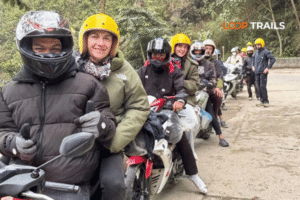
Easy rider means you sit on the back of a motorbike while an experienced local guide drives. This is the most popular option for first-time visitors, and it’s what I recommend to most travelers.
What you get:
Your guide handles all the riding. You watch the scenery, take photos, and absorb the experience without worrying about navigating hairpin turns or dodging oncoming trucks.
Guides know the roads intimately. They understand which sections get slippery when, where the best photo spots are, and how to pace the day so you’re not exhausted by lunch.
Cultural access opens up with a local guide. They’ll take you into villages you’d miss on your own, translate conversations with homestay families, and explain traditions and history that make the trip more than just pretty views.
All logistics are handled: accommodation bookings, meal arrangements, border permit coordination. You don’t spend mental energy figuring out where to eat or whether the homestay has space.
Safety improves dramatically. Your guide has emergency contacts, knows where clinics are, and can handle mechanical issues or accidents faster than you could alone.
The experience:
You’ll ride in a small group (typically 2-8 riders) or sometimes paired one-on-one with your guide. Days start around 8-9am after breakfast, with regular stops for photos, coffee, and lunch. You arrive at homestays by late afternoon, giving you time to relax before dinner.
Evenings often include group activities: traditional music, local games, and “happy water” (homemade rice wine—go easy). It’s social without being forced, and you’ll meet other travelers doing the same route.
Current pricing for easy rider tours:
These prices include guide, bike, fuel, accommodation (dorm bed), all meals, and activities listed in the itinerary. Not included: bus tickets to/from Ha Giang, private room upgrades (if you want your own room instead of dorm), drinks, and personal expenses.
Self-driving appeals to independent travelers who want freedom and control. You rent a motorbike and follow GPS or maps, either solo or in a self-organized group.
Legal requirements:
This is non-negotiable: you need proper documentation. That means:
The IDP 1949 does NOT work in Vietnam. Neither does showing up with just your home license. Traffic police in Ha Giang check documents, especially on popular routes during peak season.
If caught without proper papers, fines range from 2,000,000-6,000,000 VND. They’re not always enforced, but when they are, it’s expensive and stressful. Some travelers risk it. I don’t recommend it.
Riding skill requirements:
Be honest with yourself about your abilities. Ha Giang roads include:
If you’ve never ridden a motorbike or your experience is limited to flat city streets, Ha Giang is not the place to learn. Multiple accidents happen every season involving inexperienced riders.
Recommended minimum experience: 1-2 years of regular riding on varied terrain, including hills. Automatic scooters exist, but manual transmission bikes handle mountain roads better.
Current self-drive pricing:
Prices include bike rental, accommodation (dorm bed), meals, and a route plan. You ride independently but check in with the tour operator at each homestay. It’s a middle ground between full easy rider and completely independent.
Bike rental only (no accommodation/meals) is available but you’ll coordinate everything yourself. Only choose this if you’re experienced with Vietnamese travel logistics.
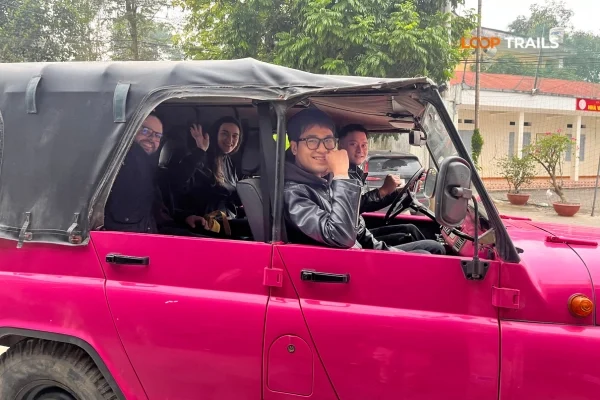
Learn more: Ha Giang Cao Bang by Jeep and motorbike
Jeep tours entered the scene a few years back and they’re gaining popularity fast. You travel by 4WD vehicle with a driver/guide, hitting all the same highlights without riding a motorbike.
Who this works for:
The experience:
Jeeps fit 1-4 passengers plus driver. You’re in an enclosed vehicle with air conditioning, comfortable seats, and space for luggage. The route follows the same loop as motorbike tours, stopping at identical viewpoints and attractions.
You lose some of the “wind in your hair” feeling, but you gain the ability to chat with your group, relax when tired, and have protection from weather. Photo stops happen whenever you want—you’re not tied to a group pace.
Jeep tours work particularly well for photography enthusiasts who want to carry more camera gear, or for families where parents want to talk with kids and point things out during the drive.
Current jeep tour pricing (per group, not per person):
3-day/2-night Ha Giang Loop:
4-day/3-night Ha Giang Loop:
5-day/4-night Ha Giang-Cao Bang:
Prices include jeep, driver/guide, accommodation (dorm beds), all meals, and activities. Not included: bus transport to Ha Giang, private room upgrades, and personal expenses.
For couples, jeep tours cost more than easy rider but deliver comfort and intimacy. For groups of 3-4, the per-person cost becomes competitive with guided motorbike tours while offering more comfort.
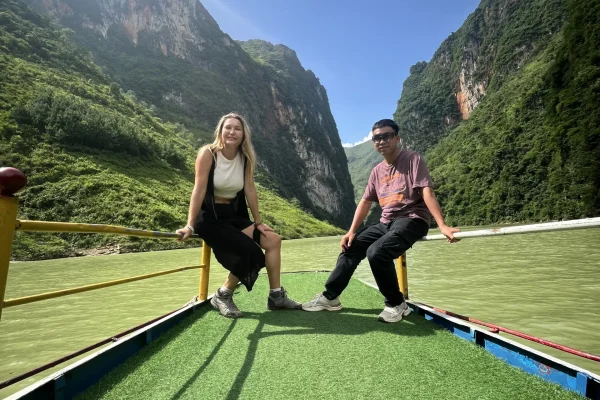
Learn more: Ha Giang Loop 3 Days 2 Nights
The loop isn’t a single fixed route. Different tour lengths hit different highlights. Understanding what each option covers helps you choose based on time and interests.
The quickest option covering core highlights. This works for travelers with limited time who want a taste of Ha Giang without committing to a longer trip.
Day 1: Ha Giang City → Quan Ba (Heaven Gate) → Yen Minh → Dong Van
You’ll start with Bac Sum Pass, hit Heaven Gate for that Instagram shot looking down on the twin mountains, and push through to Dong Van. Stops include Tham Ma Pass and Chin Khoanh Pass. You’ll see H’Mong villages around Lao Sa near the Chinese border.
Total riding: 5-6 hours. Homestay night in Dong Van.
Day 2: Dong Van → Ma Pi Leng Pass → Meo Vac → Return to Ha Giang
This is the big day. Ma Pi Leng Pass is why people come to Ha Giang—a narrow road carved into cliff faces with hundred-meter drops to the Nho Que River below. You’ll ride through Meo Vac town and pass through M Pass before looping back via Quan Ba.
Total riding: 6-7 hours. Arrive back in Ha Giang City by late afternoon.
What you miss: Lung Cu Flag Tower, Tu San Canyon boat trip, Du Gia waterfall, and deeper village exploration. The 2-day tour moves fast and skips secondary sites.
Who it’s for: Travelers short on time, people testing Ha Giang before committing to a longer northern adventure, or those combining Ha Giang with other Vietnamese destinations on a tight schedule.
The most popular option. Three days provides enough time to see major sites without rushing, while keeping the trip compact enough for most schedules.
Day 1: Ha Giang City → Quan Ba → Yen Minh → Dong Van
Similar start to the 2-day, but with more breathing room. You’ll have time for Lung Khuy Cave near Quan Ba—a beautiful limestone cave that’s often skipped on faster tours. Proper stops at viewpoints instead of quick photo-and-go.
Homestay in Dong Van. Evening group activities.
Day 2: Dong Van → Lung Cu → Ma Pi Leng → Nho Que River → Du Gia
This is the showcase day. Morning visit to Lung Cu Flag Tower, Vietnam’s northernmost point, with views across the border into China. Then the famous Ma Pi Leng Pass ride.
You’ll stop at Ma Pi Leng Skywalk (glass platform extending over the cliff—not for the faint-hearted). Tu San Canyon views, then an option for the Nho Que River boat trip, which gives you perspective from below on the cliffs you just rode above.
Continue through M Pass and Lung Ho viewpoint before arriving in Du Gia village. This is my favorite homestay night—peaceful, authentic, rice terraces surrounding the village.
Day 3: Du Gia → Quan Ba → Ha Giang City
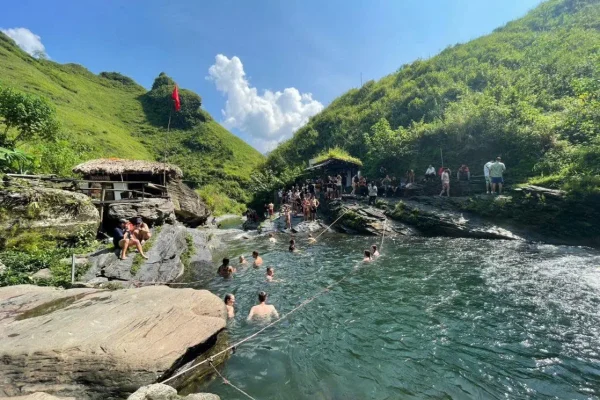
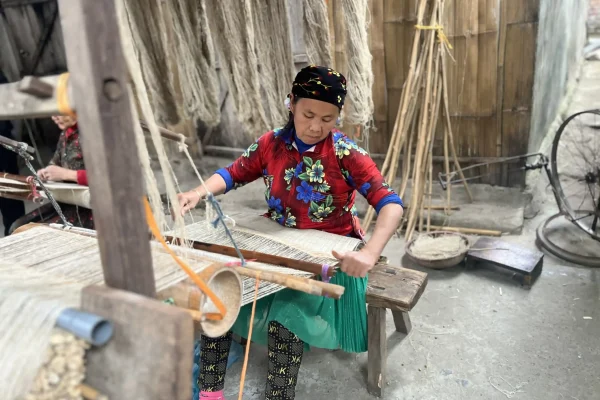
Start with Du Gia waterfall. Swimming opportunity if weather’s warm. Visit Lung Tam linen village where Tay women still weave traditional textiles. You can watch the process and buy directly from makers.
Ride back through Quan Ba and return to Ha Giang City by mid-afternoon.
What this covers: All the essential sites. Ma Pi Leng, Lung Cu, good cultural encounters, variety in landscapes and experiences. You won’t feel rushed but won’t have huge amounts of downtime either.
Who it’s for: First-time Ha Giang visitors, travelers wanting the full experience without extending to 4+ days, anyone balancing adventure with a reasonable time commitment.
The extended loop adds depth without adding dramatically more ground coverage. Instead of rushing, you spend more time at each location, explore additional villages, and build in activities that 3-day tours skip.
Day 1: Ha Giang City → Quan Ba → Yen Minh
Slower start with emphasis on cultural stops. Heaven Gate, proper time at Lung Khuy Cave including the walk through the cave system. Stop in Tam Son for lunch. The focus is Yen Minh area—staying in a local homestay in Yen Minh rather than pushing to Dong Van.
You’ll have late afternoon free to walk around, visit local markets if timing works out, and relax before dinner. Evenings at homestays are social—traditional music, games, “happy water.”
Day 2: Yen Minh → Lung Cu → Dong Van
Morning ride through Dong Van Karst Plateau Geopark. Extended stops at Tham Ma Pass, Lao Sa village near the Chinese border (where you can see traditional H’Mong earthen houses), and Sung La village.
Major stop at Vuong Palace, the former residence of the H’Mong king—fascinating blend of Chinese and Vietnamese architecture with genuine historical significance.
Lunch at Lung Cu at Vietnam’s northernmost point. Afternoon visit to Lo Lo Chai village, home to the Lo Lo ethnic minority. Their traditional homes and cultural practices differ significantly from H’Mong villages you’ll see elsewhere.
Homestay in Dong Van. The town has a nice night market and old quarter to explore before dinner.
Day 3: Dong Van → Ma Pi Leng → Nho Que River → Du Gia
The epic riding day, but with better pacing than shorter tours. Ma Pi Leng Pass in morning light. Time for Ma Pi Leng Skywalk without fighting crowds.
Tu San Canyon viewing, Nho Que River boat trip (highly recommended—the canyon perspective from water level is spectacular). Lunch in Sung Trai, then afternoon ride through M Pass and Lung Ho viewpoint.
Arrive Du Gia with time to explore the village before sunset. This homestay is remote and peaceful—no traffic noise, just village sounds and mountain views.
Day 4: Du Gia → Duong Thuong → Lung Tam → Ha Giang City
Morning swim at Du Gia waterfall. Ride through Duong Thuong valley—a hidden gem that sees less tourist traffic. Lunch in Thai An.
Extended stop at Lung Tam linen village with demonstration of traditional weaving. You’ll see the full process from cotton to finished fabric.
Scenic ride back to Ha Giang City via forest roads along the Mien River. Arrive mid-afternoon with time to relax, explore Ha Giang City if interested, or catch evening bus back to Hanoi.
What the extra day adds: Better pacing, additional villages and cultural encounters, Du Gia waterfall, Duong Thuong valley, more photography time, less rushed feel overall.
Who it’s for: Travelers who want the complete experience without time pressure, photography enthusiasts wanting better light and less rushing, anyone who values cultural depth over covering maximum ground.
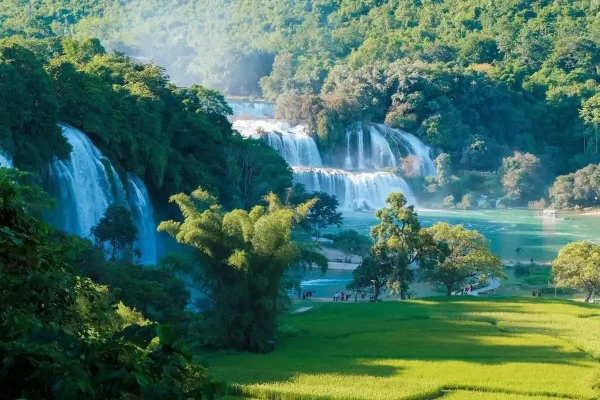
Learn more: Ban Gioc Waterfall Guide
If Ha Giang is spectacular, adding Cao Bang creates an epic northern Vietnam adventure that most travelers never experience. The combined 5-day tour links two incredible regions into one journey.
Cao Bang Province sits northeast of Ha Giang. While Ha Giang gets the Instagram fame, Cao Bang offers equally stunning landscapes with far fewer tourists. Ban Gioc Waterfall—Vietnam’s largest and most beautiful waterfall—sits on the Vietnam-China border in Cao Bang.
The route from Ha Giang to Cao Bang passes through even more remote areas: high mountain passes, ethnic minority villages barely touched by tourism, and landscapes that make Ha Giang look like the warm-up act.
If you have the time and want to see northern Vietnam beyond the standard Ha Giang Loop, this extended tour delivers adventure that puts you ahead of the curve. Most travelers don’t do this route yet, which means better village interactions, fewer crowds, and bragging rights.
Day 1: Standard Ha Giang start—Quan Ba to Yen Minh, ending in Lao Xa (near Dong Van).
Day 2: Lao Xa → Lung Cu Flag Tower → Dong Van → Ma Pi Leng Pass → Meo Vac
The showcase Ha Giang day. Vuong Palace visit, ride to Lung Cu, experience Ma Pi Leng Pass and Skywalk, Nho Que River boat trip. Overnight in Meo Vac hotel.
Day 3: Meo Vac → Bao Lac → Thong Nong → Ha Quang
This is where you leave Ha Giang Province and enter Cao Bang territory. The riding gets even more dramatic.
Khau Coc Cha Pass features 15 switchbacks climbing through spectacular mountain scenery. Stop for hiking at the pass to see the full valley view. Xuan Truong valley offers peaceful rural landscapes—rice terraces, water buffalo, village life at a slower pace.
Na Tenh Pass provides more mountain drama. Visit Pac Bo historical site where Ho Chi Minh returned to Vietnam in 1941—interesting for history buffs, easy to skip if not your thing.
Overnight at Me Farmstay in Ha Quang. This is genuinely remote.
Day 4: Ha Quang → Tra Linh → Trung Khanh → Ban Gioc Waterfall
Morning visit to Tra Linh. Ride through stunning countryside road to Trung Khanh. Lunch, then afternoon hiking to Pi Pha viewpoint at Ngoc Con—elevated viewpoint overlooking unique karst formations.
Late afternoon arrival at Ban Gioc Waterfall. This is one of Southeast Asia’s most spectacular waterfalls—multi-tiered, spanning the Vietnam-China border, massive volume of water. You can swim in pools near the falls if conditions allow.
Overnight near Ban Gioc at Rock Village or similar accommodation.
Day 5: Ban Gioc → Nguom Ngao Cave → Quang Uyen → Cao Bang City
Morning exploring Nguom Ngao Cave—the largest and most beautiful cave system in Cao Bang. The cave features impressive stalactites, stalagmites, and underground streams.
Con Nuoc Song (Quay Son) is a scenic river area good for photos. Visit Phuc Sen paper factory village to see traditional paper making. Stop at Phia Thap incense village where Nung ethnic people make incense sticks using traditional methods.
Final stop: God’s Eye Mountain—a unique limestone formation with a circular opening. Arrive Cao Bang City by mid-afternoon. Option for bus to Hanoi or other destinations.
Total distance covered: Approximately 600+ kilometers across five days. This is serious riding through some of Vietnam’s most remote and beautiful regions.
Who it’s for: Experienced travelers, adventure seekers, people who want to go deeper than standard tourist routes, anyone with extra time wanting to maximize their northern Vietnam experience.
Beyond the scenic highlights, practical realities determine whether your Ha Giang trip is smooth or stressful. Here’s what you actually need to navigate.
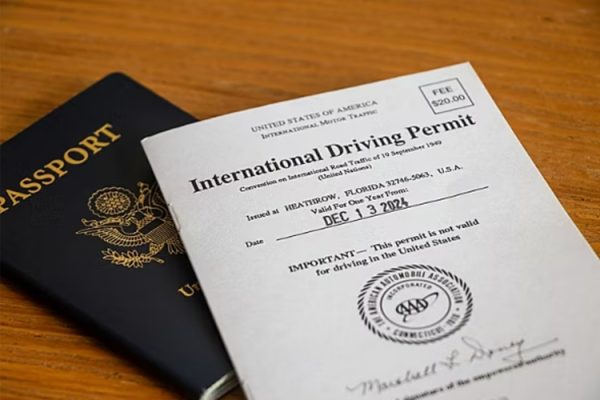
Learn more: Ha Giang Loop License
Already mentioned this earlier, but it’s important enough to repeat with more detail.
For easy rider tours: You don’t need any license. Your guide drives. Bring your passport, but that’s it.
For self-drive and rentals: You absolutely need:
Get your IDP before leaving your home country. You apply through your nation’s automobile association. It takes 1-2 weeks. Cost is usually $20-50 USD equivalent. The permit is valid for one year.
The IDP must be the 1968 convention version. The 1949 version does NOT work in Vietnam. Check carefully when applying.
Vietnamese traffic police conduct random stops and checkpoints, especially on popular tourist routes. Ha Giang sees regular enforcement.
Fines for riding without proper documentation range from 2,000,000 to 6,000,000 VND ($80-240 USD). Sometimes they’ll confiscate the bike until you pay. Sometimes they’ll escort you to an ATM if you don’t have cash.
If you’re on an organized tour with a guide, the guide can sometimes negotiate lower fines or talk you through the situation. If you’re solo, you’re more vulnerable to the full penalty.
Some travelers risk it and complete the loop without issues. Others get stopped multiple times. It’s gambling with your budget and your trip quality. Not worth it when getting proper documents is straightforward.
Ha Giang roads can be dangerous. That’s not meant to scare you away—millions of travelers complete the loop safely every year—but you need to respect the terrain and conditions.
Common hazards:
What makes it safe enough:
Most sections are well-maintained paved roads. Traffic is relatively light compared to lowland Vietnam. You ride at your own pace without pressure from cars behind you.
Experienced guides know dangerous sections and slow down appropriately. They understand local traffic patterns and anticipate hazards.
Modern bikes (especially XR150 and similar models used by tour operators) handle mountain roads well. Adequate suspension, good brakes, proper tires.
Medical facilities exist in Ha Giang City, Dong Van, and Meo Vac. Remote areas are more challenging, but guides carry first-aid supplies and have emergency contacts.
Accident rates: Minor spills happen—usually low-speed drops on gravel or taking a corner too fast. Serious accidents occur but are relatively rare considering traffic volume. Most involve inexperienced riders or alcohol/night riding.
Safety advice: Wear helmets (provided by tour operators). Don’t ride after drinking. Slow down in villages and on unfamiliar roads. If you’re tired, take breaks—fatigue causes more accidents than difficult roads.
Phone signal in Ha Giang has improved but remains spotty in remote areas.
Where you’ll have coverage: Ha Giang City, Dong Van, Meo Vac, Yen Minh, and major towns along the route. 4G works in these areas with decent speeds.
Where signal drops: Mountain passes, deep valleys, remote villages. Ma Pi Leng Pass has patchy coverage. Du Gia village has limited or no signal. Many stretches between towns lose signal entirely.
Which carriers work best: Viettel has the strongest coverage in northern mountains. Mobifone second. Vinaphone third. If you’re buying a Vietnamese SIM, get Viettel for Ha Giang.
WiFi: Most homestays and hotels now offer WiFi, though speed and reliability vary. Dong Van and Meo Vac accommodations usually have decent WiFi. Remote village homestays might have slow connections or none at all.
Practical tips: Download offline maps before starting the loop. Maps.me works well, or Google Maps offline. Tell friends/family you’ll be unreachable for periods. Don’t rely on constant connectivity for navigation or communication.
If you need to stay connected for work or emergencies, plan for limited access. The disconnection is part of Ha Giang’s appeal for most travelers, but know what you’re signing up for.

Learn more: Ha Giang Loop Cost & Tips
Budget transparency helps you plan realistically. Here’s the breakdown of what you’ll actually spend.
Already covered tour prices earlier, but here’s the consolidated view:
Easy Rider (motorbike, guide drives):
Self-Drive (you ride, route provided):
Jeep Tours (per vehicle, not per person):
What’s included: Bike/jeep and fuel, guide/driver, accommodation in dorms, all meals (breakfast, lunch, dinner), entrance fees to caves and attractions, activities like boat trips and homestay entertainment.
What’s NOT included: Bus transport to/from Ha Giang, private room upgrades, drinks (water, beer, soft drinks), snacks between meals, tips for guides.
Transportation to Ha Giang:
Accommodation upgrades:
Drinks and extras:
Optional activities:
Tips for guides:
Snacks and shopping:
Total realistic budget:
For a 3-day easy rider tour including transport and moderate spending:
Private room upgrade adds another 600,000-1,000,000 VND to total.
Jeep tours cost more upfront but offer better per-person value for groups of 3-4 people.
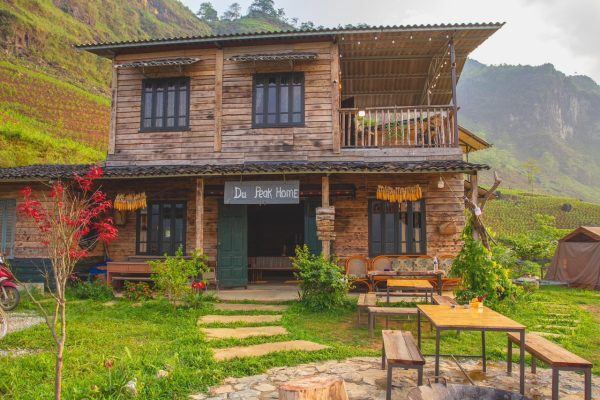
Learn more: Ha Giang Loop with Kids
Booking process affects your entire experience. Do it right and everything flows smoothly. Rush it or choose poorly and you’re dealing with stress.
Peak season (September-October): Book 3-4 weeks minimum in advance. Popular dates (weekends, holidays) can fill up 6-8 weeks ahead. Last-minute availability exists but you’ll have limited options for tour type, accommodation quality, and preferred dates.
Shoulder season (March-April, November): 2-3 weeks advance booking is usually sufficient. You’ll have good availability and can be more flexible with dates.
Low season (December-February, May-August): 1-2 weeks ahead works fine. Sometimes you can book just days in advance. Operators appreciate advance notice for logistics, but availability isn’t an issue.
Why book early matters: It’s not just about availability. Early booking allows tour operators to:
Last-minute bookings often mean joining larger groups, less ideal accommodations, and rushed logistics.
Not all Ha Giang tour companies operate at the same standard. Red flags and green flags to watch for:
Green flags (good signs):
Red flags (warning signs):
Questions to ask before booking:
Reputable operators answer these clearly without hesitation.
Payment and deposits: Most operators require 20-30% deposit to confirm booking, with remainder due before tour start or on arrival. PayPal, bank transfer, or cash on arrival are standard payment methods.
Be cautious of operators demanding full payment significantly in advance unless they’re well-established with strong review history.
Learn more: Ha Giang Loop Itinerary: 2,3,4,5 days
So what actually makes Ha Giang in 2026 different from previous years?
Honestly? Not as much as some travel blogs would have you believe. The mountains haven’t moved. Ma Pi Leng Pass is still the same dramatic cliff-edge road. H’Mong villages still follow traditional ways of life. The core experience remains intact.
But subtle shifts are happening:
Infrastructure improvements continue. Better roads, improved homestays, more reliable services. This makes trips more comfortable and accessible without significantly changing the adventure character.
Tourism volume keeps growing but hasn’t reached critical mass. You’ll share the road with more travelers than five years ago, but Ha Giang isn’t Bali or Chiang Mai. It still feels relatively undiscovered.
Local communities are adapting to tourism in mostly positive ways. Better income opportunities, improved facilities, maintained cultural practices. The balance seems sustainable for now.
Route options have expanded. The Ha Giang-Cao Bang combination barely existed a few years back. Now it’s established. More itinerary flexibility exists than before.
Safety and support systems are better. More operators, better trained guides, improved emergency response capabilities. The adventure is still real, but support structures are stronger.
Enforcement of regulations varies but generally trends toward more consistent application of rules. Expect continued attention to driving licenses, permits, and safety requirements.
The essential Ha Giang experience—dramatic landscapes, cultural encounters, challenging roads, genuine adventure—remains available and relatively intact. The polish around the edges makes it more accessible without fundamentally changing what makes it special.
That’s the real 2026 update: Ha Giang is still Ha Giang, just slightly easier to access and marginally more comfortable than before.
If you’ve been waiting for the “right time” to visit, 2026 is as good as any. The window when Ha Giang offers both accessibility and authenticity is open, but it won’t stay open forever. Tourism pressure will increase. More development will come. The experience will slowly shift.
Go now while the balance still leans toward authentic adventure with modern convenience rather than the reverse.
Learn more: Ha Giang in September & October
Yes. Solo travelers complete the loop regularly without issues. Joining a tour means you’re part of a group even if you booked individually. Self-drive solo is possible for experienced riders with proper licenses. The main safety consideration is riding ability, not personal security. Villages are welcoming, crime is rare, and tour operators provide support structure.
Technically yes, but it’s not recommended unless you’re very experienced and flexible. Rain makes roads slippery and dangerous. Visibility drops in fog. Landslides occur after heavy rain. If you must go in June-August, book with reputable operators who monitor conditions and adjust routes for safety. Expect possible delays or route changes.
Strongly recommended. Standard travel insurance should cover motorbike accidents if you have proper licenses. Verify your policy includes:
Essential items: Sturdy shoes (not flip-flops), long pants for riding, light jacket or hoodie for cool mornings/evenings, rain jacket, sunscreen, insect repellent, small first-aid kit, headlamp or flashlight, basic toiletries. Optional: Camera with extra batteries, motion sickness medication if prone, snacks you like, earplugs for homestay nights.
Yes, but only via jeep tour. Children cannot ride on motorbikes for safety and legal reasons. Jeep tours work well for families. Consider whether your kids can handle 4-6 hours of travel daily and basic homestay accommodations. Kids who enjoy outdoor adventure and don’t need constant entertainment do fine.
For easy rider passengers: Not difficult at all. You’re just sitting and watching scenery. For self-drivers: Moderate to challenging depending on experience. Steep grades, sharp curves, narrow roads, and variable surfaces require confident riding skills. Not suitable for beginners or nervous riders. If you’re comfortable on mountain roads elsewhere, you’ll manage Ha Giang.
Ranges from basic to quite comfortable. Most homestays on popular routes now offer hot water, Western toilets, clean bedding, and WiFi. Very remote villages may be more basic. Dorm rooms are simple but clean—shared sleeping areas with multiple beds. Private rooms available for extra cost offer more comfort and privacy.
September-November for harvest season when terraces turn golden yellow. May-June for bright green growing rice. Each period offers different beauty. October combines great weather with golden terraces—the perfect combination but also most crowded.
Sometimes. Depends on operator flexibility and availability. Easier during low season when accommodations have space. Harder during peak season when everything’s pre-booked. Discuss options with your guide or operator. Extension costs typically include additional days at per-day rate plus accommodation and meal changes.
Yes. ATMs exist in Ha Giang City, Dong Van, and Meo Vac, but remote villages operate cash-only. Bring sufficient Vietnamese Dong for:
Personal preference. The glass platform extends over the cliff edge offering dramatic views and photos. If you’re comfortable with heights, it’s a memorable experience. If you’re afraid of heights, you can skip it—views from the road are equally spectacular without standing on glass over a 500-meter drop.
On guided tours, your guide handles it. They carry basic tools and spare parts, know local mechanics, and can arrange replacement bikes if needed. For self-drive tours, the operator provides emergency contact number and can send assistance. Mechanical issues are uncommon with well-maintained bikes but do happen occasionally.
Contact information for Loop Trails
Website: Loop Trails Official Website
Email: looptrailshostel@gmail.com
Hotline & WhatSapp:
+84862379288
+84938988593
Social Media:
Facebook: Loop Trails Tours Ha Giang
Instagram: Loop Trails Tours Ha Giang
TikTok: Loop Trails
Office Address: 48 Nguyen Du, Ha Giang 1, Tuyen Quang
Address: 48 Nguyen Du, Ha Giang 1, Tuyen Quang
Facebook X Reddit Table of Contents Learn more: Ha Giang Loop Tours There’s a moment, usually somewhere on Ma Pi Leng Pass,

Facebook X Reddit Table of Contents Learn more: Ha Giang Loop Tours There’s a version of the Ha Giang Loop that people