


Thúy Kiều is a travel blogger and content contributor for Loop Trails Tours Ha Giang. She holds a bachelor’s degree in Sustainable Tourism from Vietnam National University, Hanoi, and has a strong passion for exploring and promoting responsible travel experiences in Vietnam’s northern highlands.
Choosing between an automatic and manual motorbike for the Ha Giang Loop isn’t just about comfort—it’s about safety, confidence, and whether you’ll actually enjoy one of Vietnam’s most spectacular rides. I’ve watched countless travelers make this decision at our hostel in Ha Giang City, and the wrong choice has cut trips short, while the right one has turned nervous beginners into mountain road enthusiasts.
Let me be direct: there’s no universal answer. The steep climbs to Dong Van, the hairpin turns on Ma Pi Leng Pass, and the occasional gravel sections around Du Gia all demand different things from you and your bike. What works for a confident rider from Thailand might terrify someone who learned to ride last week in Hanoi.
This guide breaks down exactly what you’ll face on each type of motorbike, which roads expose the weaknesses of automatic scooters, and when a manual bike’s power becomes essential rather than just nice to have. You’ll also discover alternatives if neither option feels right after reading this.
Learn more: Ha Giang Loop Tours
Learn more: Ha Giang Loop 3 Days 2 Nights
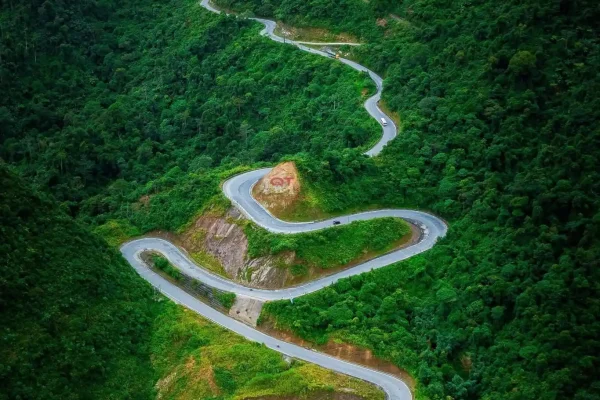
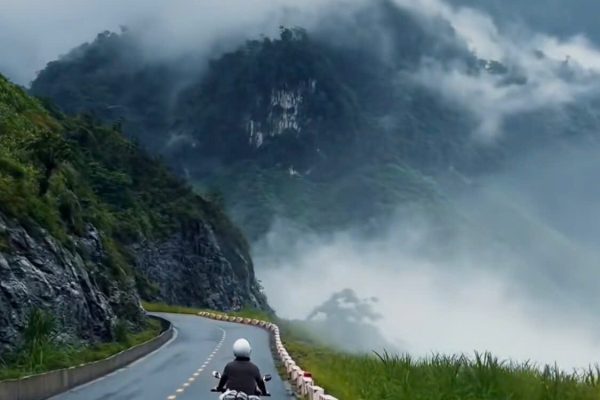
The Ha Giang Loop isn’t Hanoi’s flat streets. You’re looking at mountain passes that climb over 1,500 meters, roads where one side drops straight down without guardrails, and sections where the pavement gives way to loose gravel after heavy rain.
I’ve seen automatic scooters struggle on the 20% gradient climbs near Lung Cu Flag Tower, their engines screaming while barely moving forward. I’ve also watched inexperienced riders stall manual bikes repeatedly on steep inclines, creating dangerous situations when trucks approach from behind.
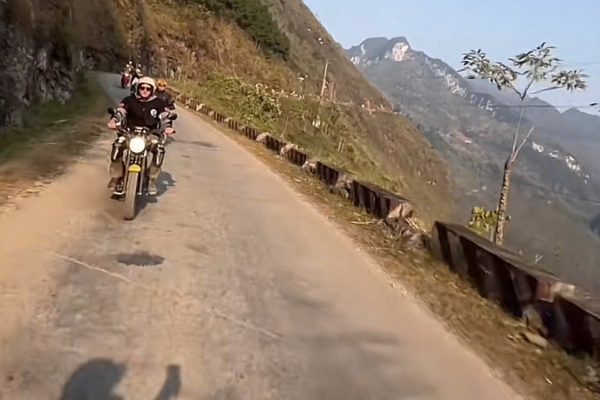
The roads themselves are mostly paved now, a massive improvement from five years ago. But “paved” doesn’t mean smooth. Expect potholes, sudden gravel patches, and construction zones where you’ll navigate around machinery on narrow mountain ledges.
You can tour Thailand’s mountains on an automatic scooter without major issues. Bali works fine with a small bike. But Ha Giang combines steep sustained climbs, high-altitude passes, and weather that changes in minutes. Your bike needs enough power to handle a fully loaded climb, enough control for technical descents, and enough reliability to get you back if conditions deteriorate.
The Ha Giang Loop typically covers 300-450 kilometers depending on your route. That’s 3-4 days of serious mountain riding, not a casual day trip. Your choice affects every single one of those kilometers.

Learn more: Ha Giang Loop hired Motorbike
Semi-automatic motorbikes—like the Honda Wave or Yamaha Sirius—dominate Vietnamese roads for good reason. You shift gears with your foot but there’s no hand clutch to manage. For Ha Giang, this means you get gear control for steep climbs without the complexity of clutch coordination.
These bikes typically have 110cc-125cc engines. Enough power for the passes if you know how to shift properly, but you’ll work the gears hard on the steepest sections.
When people say “automatic,” they usually mean scooters like the Honda Vision, SH, or similar CVT transmission bikes. Twist the throttle, go forward. No shifting, no clutch, no gear decisions.
The catch? Most automatic scooters available for rent in Ha Giang have 110cc-125cc engines, same as semi-automatics. But the CVT transmission is less efficient on sustained climbs, meaning you get less usable power from the same engine size.
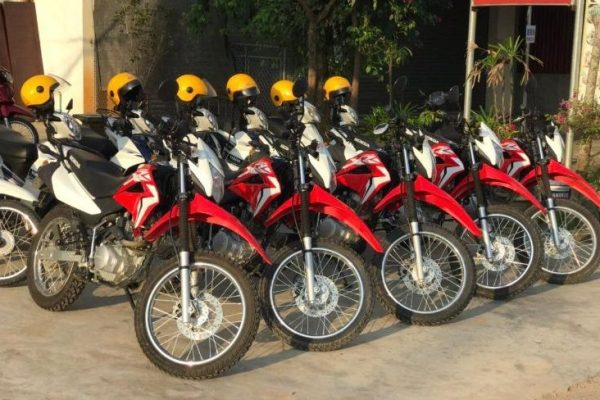
True manual motorcycles—with both hand clutch and foot shifting—give you complete control over power delivery. In Ha Giang, you’ll mostly find Honda XR150s or similar 150cc manual bikes at rental shops.
That extra 25-50cc makes a genuine difference when you’re grinding up to Lung Cu or need quick acceleration to pass a slow truck on a brief straight section.
Most rental shops in Ha Giang City offer:
Don’t expect a huge fleet of brand-new bikes. You’re choosing from what’s available and well-maintained, not from a showroom catalog.

Learn more: Ha Giang Loop 4 Days 3 Nights
Automatic scooters shine in specific situations on the Ha Giang Loop. If you’ve never ridden a motorbike before but feel confident about basic throttle control and braking, an automatic removes the intimidation factor of gears.
You’ll find automatic bikes easier in Ha Giang City’s traffic and simpler to park at viewpoints. When you stop for photos on Ma Pi Leng Pass, you just hit the brake and stand—no need to remember what gear you’re in or worry about stalling on the restart.
The mental energy you save by not managing gears goes into watching the road, spotting potholes, and enjoying the scenery. For nervous riders, this matters more than power specs.
Automatic scooters also tend to have better fuel efficiency in flat or gently rolling terrain, though this advantage disappears in the mountains.
The Heaven Gate climb out of Tam Son is where you’ll first feel an automatic’s limitations. The road kicks up steeply, and your scooter’s CVT transmission starts hunting for the right ratio. The engine revs high but speed drops. If you’re carrying luggage or riding two-up, the bike might slow to a crawl.
Ma Pi Leng Pass presents the opposite problem. The long, technical descent requires constant speed control. Automatic scooters don’t engine-brake as effectively as geared bikes, so you’re using your actual brakes more. On a 10-kilometer descent, that means more brake wear and potentially overheating.
In rain, automatic scooters offer less granular control. You can’t downshift to slow down; you’re fully dependent on brakes that might be wet and less effective.
The Tham Ma Pass section between Yen Minh and Dong Van includes some sharp uphill hairpins. Automatics sometimes struggle to maintain momentum through the turn, and regaining speed on the exit feels sluggish.
If you’re committed to an automatic, consider the 2-day, 1-night Ha Giang Loop option. This shorter route still covers Ma Pi Leng Pass and the main highlights but cuts out some of the more challenging sections like the roads around Du Gia.
Alternatively, an automatic works reasonably well if you’re joining a tour where the pace is controlled and support vehicles are available. Going solo on an automatic for the full 4-day loop is possible but demands conservative riding and acceptance that some climbs will be slow.

Learn more: Ha Giang Loop Self-Driver Guide
A manual motorbike with a proper clutch and 150cc engine gives you control that matters in the mountains. When you approach a steep section, you can downshift to second or first gear, building RPMs before the climb. The bike pulls steadily rather than struggling.
On descents, engine braking becomes a safety feature. Drop into second gear on Ma Pi Leng’s downhill sections, and the engine helps control your speed without cooking your brake pads.
The XR150s you’ll commonly find in Ha Giang have enough torque to handle gravel sections without drama. When you hit a patch of loose stones, you can modulate power through the clutch rather than relying on binary throttle control.
Manual bikes also handle two-up riding better. If you’re riding with a passenger, that 150cc engine with geared control makes steep sections manageable rather than painful.
Here’s the truth: if you’ve never ridden a manual motorbike, Ha Giang is not the place to learn. The combination of traffic in Ha Giang City, steep mountain grades, and technical roads creates too many challenges at once.
I’ve seen riders stall repeatedly on the climb to Dong Van, creating dangerous situations on narrow roads with blind corners. I’ve watched people loop out trying to start uphill on gravel because they dumped the clutch.
If you learned manual riding recently—say within the last month—you’ll probably manage, but expect stress. Your clutch control needs to be automatic (ironic, I know) so you can focus on road conditions and navigation.
Practice before you go. Spend a day in Hanoi or wherever you’re coming from, riding a manual bike in various conditions. If you’re still thinking about which hand does what, you’re not ready.
New manual riders make predictable mistakes on the Ha Giang Loop. They ride in too high a gear on climbs, lugging the engine instead of downshifting. Or they ride in too low a gear on flats, running the engine unnecessarily high.
Hill starts cause problems. You stop for a photo on an incline, then struggle to restart without rolling backward into the bike behind you. This gets worse with a passenger or heavy luggage.
Clutch control in slow-speed technical sections trips people up. The roads around Du Gia include tight turns at low speeds where you need to slip the clutch smoothly. Jerky control here leads to dropped bikes.
Fatigue is real. Operating a clutch for six hours of mountain riding tires your left hand. By day three, riders with marginal technique start making errors because they’re physically worn out.
Learn more: Ma Pi Leng Pass
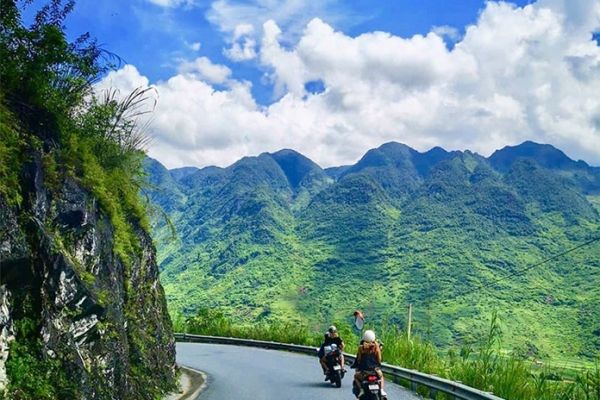
Ma Pi Leng Pass is 20 kilometers of spectacular riding that exposes every bike’s character. The climb from the Meo Vac side is steady and steep. Automatic scooters manage it but you’ll be in the lowest effective “gear” ratio the whole way up, engine screaming, speed around 20-30 kph.
Manual bikes handle this confidently. Second or third gear, steady throttle, you’re climbing at 40-50 kph without drama.
The descent toward Nho Que River is where automatics get sketchy. The road drops sharply with tight corners. You need constant speed control, and relying entirely on brakes means frequent stops to let them cool. Manual riders downshift to second gear and let engine braking do most of the work.
The section along the cliff face—the famous photo spot—is actually fine on either bike. The road flattens out, and it’s more about nerves than machine capability.
The climb to Heaven Gate (Cổng Trời) from Ha Giang City is a good early test of your bike choice. It’s steep but the road is excellent quality. Automatics handle it, though slowly with heavy loads. Manual bikes cruise up without effort.
The viewpoint itself has steep access roads where you’ll do uphill starts from a stop. This is where clutch control matters or where you appreciate not having a clutch to worry about.
Descending into Quan Ba Valley is smooth on both bike types. The road is wide enough and the grade manageable.
The roads around Dong Van and up to Lung Cu Flag Tower are where smaller automatics really struggle. These are sustained climbs at high altitude—over 1,400 meters—where thinner air means less power.
I’ve watched 110cc automatics barely make the Lung Cu climb, and that’s with solo riders. Two-up or with heavy bags, you might not make it at all.
Manual bikes with 150cc engines handle this confidently. You’ll be in lower gears but the power is there.
This section includes the M Pass and some beautiful but technical roads. After rain, portions can be muddy or have gravel runoff. This is where automatic scooters’ smaller wheels (usually 12-14 inch) and lighter weight become disadvantages.
Manual bikes with 17-inch wheels and more ground clearance handle rough patches better. You also have more precise control through slippery sections via clutch modulation.
The roads here aren’t terrible, but they’re not tourist-perfect either. If you hit this section after heavy rain, bike choice matters.
Learn more: Ha Giang in Winter
Rate yourself honestly:
Never ridden a motorbike: Automatic only, or seriously consider an Easy Rider tour. Don’t learn to ride in the mountains.
Ridden automatic scooters in cities: You can handle an automatic for Ha Giang, but prepare for steeper and more technical than you’re used to.
Ridden semi-automatic bikes casually: You’re fine on a Honda Wave for the loop. These are the workhorses that locals use, and they’ll get you through everything.
Comfortable on manual motorcycles: XR150 or similar gives you the best experience, but only if you actually know manual riding, not just “tried it once.”
Experienced rider: Choose based on preference and road conditions. You’ll handle either, so pick whatever feels right.
Dry season (October through April) makes any bike choice more forgiving. Roads are in better condition, grip is predictable, and you won’t deal with mud or unexpected rain.
Wet season (May through September) tilts the equation toward manual bikes with better control. Automatic scooters on wet downhill sections require constant brake use, which is less safe.
November through February brings cold temperatures at altitude. Your hands will get cold operating a clutch all day. Not a dealbreaker, but bring good gloves.
Vietnam technically requires a Vietnamese license or International Driving Permit with motorcycle category for any bike over 50cc. In reality, enforcement is inconsistent, but if you have an accident, insurance becomes complicated without proper licensing.
Automatic vs manual doesn’t change the legal requirements. You need appropriate licensing for either. Most rental shops won’t ask, but this is your safety and liability, not just a formality.
Check your travel insurance policy. Some insurers won’t cover motorbike accidents without proper licensing, regardless of fault.

Learn more: Ha Giang Loop Cost & Tips
Expect to pay:
These are approximate rates in Ha Giang City. Prices vary by bike condition, season, and how well you negotiate.
Rental shops typically require:
The deposit covers damage you cause. Most shops don’t offer real insurance, just the deposit system. Read the rental agreement carefully and document existing damage with photos before you leave.
Some shops offer “insurance” for an extra fee (50,000-100,000 VND/day) that reduces your liability. This is really just reduced deposit risk, not true insurance.
On flat roads, automatic scooters edge out manual bikes slightly. In the mountains, the difference nearly disappears.
Expect:
Fuel efficiency shouldn’t drive your decision. The difference is minimal and you’ll spend more on lunch than the fuel cost variation.

Learn more: Ha Giang Loop Easy Rider
If the automatic vs manual debate makes you anxious, an Easy Rider tour removes the problem entirely. You ride passenger with an experienced local driver who knows every corner of these roads.
Loop Trails offers Easy Rider options ranging from 2-day to 5-day tours. The drivers handle the technical riding while you enjoy scenery and photography without stress.
Current rates start around 3,490,000 VND per person for a 2-day, 1-night Easy Rider tour, going up to 10,990,000 VND for the full 5-day Ha Giang-Cao Bang combination.
This isn’t a budget option, but it’s the safest choice if you’re honest about limited riding experience. You’ll actually see more because you’re not white-knuckling the handlebars.
Jeep tours offer a middle ground between riding and full guided group tours. You travel in a 4×4 vehicle with a driver, getting the same routes and stops as motorbike tours but with weather protection and no riding stress.
Loop Trails’ jeep tours accommodate 1-4 passengers per vehicle, making them good for families, couples who don’t ride, or anyone prioritizing comfort.
Pricing starts at 8,990,000 VND for one person on a 3-day, 2-night jeep tour, with per-person rates dropping if you have 2-4 people sharing the vehicle.
The downside? You lose the authentic feeling of riding these mountain roads yourself. But if weather turns bad or you realize mid-trip that riding isn’t working, having this option available matters.
Some riders start with an Easy Rider for the first day to learn the routes, then rent a bike for self-riding on later days. This reduces anxiety about navigation and road conditions.
Another approach: rent an automatic for days 1-2 to build confidence, then upgrade to a manual if you feel ready. Most Ha Giang rental shops are flexible about swapping bikes mid-trip, especially if you’re booking through a hostel they work with.

Learn more: Ha Giang Motorbike Rental
You should go automatic if:
Automatic works. It’s not ideal for every situation, but thousands of travelers complete the Ha Giang Loop each year on 110cc scooters. You’ll manage if you set realistic expectations.
Pick a manual motorbike if:
The manual option gives you the best experience on the Ha Giang Loop—if you actually know how to ride manual. Don’t let “more power and control” tempt you into a bike you can’t handle confidently.
Skip the automatic vs manual debate entirely and book an Easy Rider tour if:
There’s zero shame in Easy Rider tours. The roads are serious, the drops are real, and having a local expert handle the riding makes sense for many travelers.
Learn more: Ha Giang Cao Bang by Jeep and motorbike
Before leaving the rental shop or starting each day’s ride:
Don’t trust the rental shop’s word that “everything’s perfect.” Check yourself. Five minutes now prevents problems on Ma Pi Leng Pass later.
Essential items regardless of bike choice:
Optional but recommended:
Save these numbers before you start:
If you break down:
Most mechanical issues on the Ha Giang Loop are minor: flat tires, loose chains, or fuel problems. Local mechanics exist in every town and usually fix issues quickly and cheaply.

Learn more: Ha Giang Loop Itinerary 2026
Overestimating your riding ability: The most dangerous mistake. Be honest about your skill level and choose accordingly.
Underestimating the cold: November through February mornings at 1,500 meters altitude are genuinely cold. Bring warm layers.
Riding too fast on unfamiliar roads: You don’t know what’s around the next corner. Local riders know; you don’t. Ride defensively.
Skipping the bike check: Five minutes of inspection prevents hours of roadside waiting.
Running low on fuel: Petrol stations aren’t on every corner. Fill up when you see one, especially before Dong Van and before the Ma Pi Leng section.
Riding after dark: Mountain roads without street lights and unpredictable traffic make night riding dangerous. Plan to arrive before sunset.
Choosing a bike based on price alone: The cheapest rental might be cheap because the bike is barely functional. Pay a bit more for reliable equipment.
Not breaking in new boots or riding gear: Wear your gear for a few hours before the trip. Blisters from new boots make day two miserable.

Learn more: Ha Giang Cao Bang Loop Guide
After watching thousands of travelers navigate this decision, here’s what actually works:
If you’re genuinely new to riding, book an Easy Rider tour for at least the first day or two. You can always switch to self-riding after you’ve seen the roads and feel confident. Our 2-day Easy Rider option gives you Ma Pi Leng Pass and the main highlights without the multi-day commitment.
If you’ve got basic riding skills but want to challenge yourself, start with a semi-automatic Honda Wave. These bikes are the default choice for a reason. They’re simple, reliable, and capable enough for everything the loop throws at you. You’ll look less cool than the XR150 riders, but you’ll complete the route safely.
If you’re an experienced rider, go manual. The XR150 or similar 150cc bike transforms the experience from “I survived it” to “I loved every minute.” The extra power and control make technical sections fun rather than stressful.
Weather matters. Check forecasts before committing. If heavy rain is predicted, automatic bikes become significantly less appealing. Consider postponing or switching to a jeep tour rather than white-knuckling wet descents on a scooter with marginal brakes.
Your ego isn’t worth it. I’ve seen too many riders choose bikes beyond their skill level because they didn’t want to look like a beginner. Some crashed. Some turned back after day one. Some completed the loop but were too stressed to enjoy it. Choose the bike that matches your actual ability, not the rider you imagine yourself to be.
The Ha Giang Loop is spectacular. The roads are challenging but manageable. Your bike choice matters, but it’s not the only thing that matters. Proper preparation, honest self-assessment, and appropriate safety gear make bigger differences than automatic versus manual.
Whatever you choose, ride within your limits, stop for photos, talk to local people in the villages, and remember that reaching the destination stressed and exhausted defeats the purpose. The point is the journey, the scenery, and the experience—not proving you can wrestle a manual bike through terrain that makes you uncomfortable.
Book your Ha Giang Loop tour or motorbike rental with Loop Trails, and we’ll help you make the right choice based on your actual experience and goals, not what looks cool on Instagram.
No. The mountain roads, steep grades, and technical sections make Ha Giang a terrible place to learn basic riding skills. Learn in a flat city environment first, then come to Ha Giang once you’re comfortable with throttle control, braking, and (if manual) gear shifting.
Thailand’s mountain roads are generally less steep and technical than Ha Giang’s. If you’re comfortable on Thai mountain scooters, you’ll probably manage Ha Giang on an automatic, but expect slower progress and more strenuous riding.
Technically yes, with a motorcycle category. In practice, rental shops don’t always ask. The real issue is insurance—without proper licensing, you may not be covered in an accident. Get the IDP before you travel.
Yes, but it significantly impacts your bike choice. Two-up riding on an automatic 110cc scooter makes steep climbs extremely difficult. If riding two-up, choose a manual 150cc bike or seriously consider an Easy Rider or jeep tour instead.
You’re liable up to your deposit amount. Document all existing damage before you leave the shop. Get a written rental agreement. Take photos. If you crash, contact the rental shop immediately—they’ll guide you through their process.
Ma Pi Leng is spectacular, not inherently dangerous if you ride sensibly. The danger comes from overconfidence, excessive speed, or riding beyond your ability. Thousands complete it safely every week. Respect the road and you’ll be fine.
Extremely unlikely. Deposits are standard practice. Some shops might accept lower deposits if you book through a hostel they trust, but expect to put down 2-6 million VND depending on the bike.
Most shops require 18+ with ID. Some may rent to younger riders but this creates insurance and legal complications. If you’re under 18, book a jeep or Easy Rider tour instead.
Rarely in Ha Giang. Most “automatics” are scooters with CVT transmissions. A few shops might have Honda NC750X or similar automatic motorcycles, but don’t count on availability. Book well in advance if this is critical.
Expect 4-7 hours of actual riding time per day, covering 80-150 kilometers depending on your route and stops. The shorter 2-day loop is more compressed; the 4-day route spreads this out comfortably.
Yes. Loop Trails Hostel and most accommodations offer luggage storage. Riding with just a small backpack makes the experience significantly easier, especially on an automatic scooter.
Contact your rental shop. Some allow bike swaps, possibly with a fee. Alternatively, you can return the bike and join an Easy Rider or jeep tour for the remaining days. Your hostel can usually arrange this quickly.
Contact information for Loop Trails
Website: Loop Trails Official Website
Email: looptrailshostel@gmail.com
Hotline & WhatSapp:
+84862379288
+84938988593
Social Media:
Facebook: Loop Trails Tours Ha Giang
Instagram: Loop Trails Tours Ha Giang
TikTok: Loop Trails
Office Address: 48 Nguyen Du, Ha Giang 1, Tuyen Quang
Address: 48 Nguyen Du, Ha Giang 1, Tuyen Quang
Facebook X Reddit Table of Contents Learn more: Ha Giang Loop Tours There’s a moment, usually somewhere on Ma Pi Leng Pass,

Facebook X Reddit Table of Contents Learn more: Ha Giang Loop Tours There’s a version of the Ha Giang Loop that people