
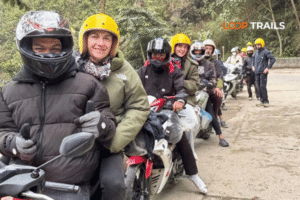
Ha Giang Easy Rider: The Complete Guide (2026)
Facebook X Reddit Table of Contents Learn more: Ha Giang Loop Tours There’s a moment, usually somewhere on Ma Pi Leng Pass,

Thúy Kiều (Grace) is a travel blogger and content contributor for Loop Trails Tours Ha Giang. She holds a bachelor’s degree in Sustainable Tourism from Vietnam National University, Hanoi, and has a strong passion for exploring and promoting responsible travel experiences in Vietnam’s northern highlands.
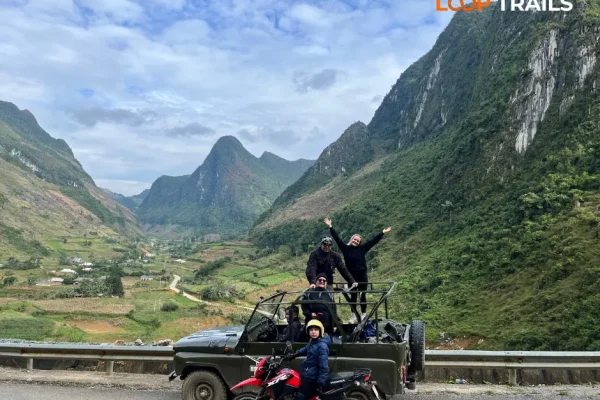
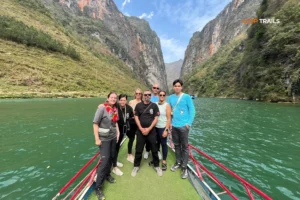
The roads twist like ribbons along impossibly steep cliffs. Below, the Nho Que River cuts through limestone canyons so deep you can barely see the water. Your driver navigates another hairpin turn, and suddenly you’re staring straight into China across a valley that looks like it was carved by giants.
This is what the Ha Giang Cao Bang jeep tour delivers every single day for five days straight.
Most travelers know about the Ha Giang Loop, but here’s what they don’t tell you: extending the journey south into Cao Bang opens up an entirely different chapter. You’ll trade crowded tourist stops for hidden ethnic villages where kids still stare wide-eyed at foreigners. The waterfalls get bigger, the passes get wilder, and the cultural encounters become more authentic.
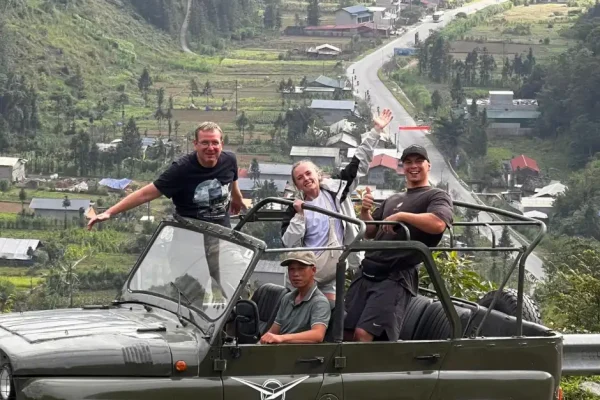
But doing this route by jeep instead of motorbike changes everything about the experience. You’re not fighting to stay upright on gravel roads or arriving at dinner soaked from afternoon rain. You’re comfortable, safe, and fully present to absorb what’s unfolding outside the window.
Over the next few thousand words, I’ll walk you through exactly what this five-day adventure looks like, what you’ll pay, and how to decide if a jeep tour matches your travel style.
Learn more: Ha Giang Cao Bang Jeep Tours
Let’s address this head-on because plenty of travelers assume motorbikes are the only “real” way to experience northern Vietnam’s mountain roads. That’s romantic thinking, but it ignores some practical realities.
Mountain roads in Ha Giang and Cao Bang aren’t forgiving. Ma Pi Leng Pass alone sees regular accidents during peak season, mostly from inexperienced riders who underestimate the combination of steep grades, loose gravel, and tour bus traffic.
Jeeps put a professional driver behind the wheel who knows every curve, every blind spot, and every section where trucks kick up dust clouds that reduce visibility to near zero. Your job is to enjoy the view and take photos, not white-knuckle your way through technical sections.
The comfort difference becomes obvious after day one. While motorbike riders are dealing with sore backs and numb hands, jeep passengers are fresh enough to actually enjoy hiking to viewpoints and exploring villages when you stop.
Northern Vietnam’s weather swings wildly. Morning sunshine can turn into afternoon downpours within an hour. October brings stunning rice terraces but also muddy roads. January offers incredible visibility but temperatures that drop near freezing in the mountains.
Jeeps handle all of it. Rain doesn’t cancel your plans or force you into cheap ponchos that don’t actually keep you dry. Cold mornings mean cranking the heat instead of layering every piece of clothing you packed. And when mist rolls into the valleys, you’re watching it from behind glass instead of riding blind through it.
Not everyone rides motorcycles, and that’s fine. Jeep tours open this route to couples where one person doesn’t ride, families with teenagers, or anyone who simply prefers four wheels to two.
Groups of three or four can share a vehicle, which often works out more economical per person than hiring separate easy riders. You travel together, share the experience in real time, and don’t need hand signals to communicate when something amazing appears around the next bend.
The jeep also carries everyone’s luggage without the tetris game of strapping bags to motorbike racks. Your camera gear, extra layers, and that bottle of wine you picked up in Dong Van all have proper storage space.
This five-day route connects the best of both provinces without rushing. You’ll cover roughly 500 kilometers, but the distances don’t tell the real story. The story is in the elevation changes, the ecosystems you pass through, and the ethnic groups whose territories you cross.
Most tours technically start the night before. You board a sleeper bus from Hanoi around 10:30 PM and wake up in Ha Giang city six hours later.
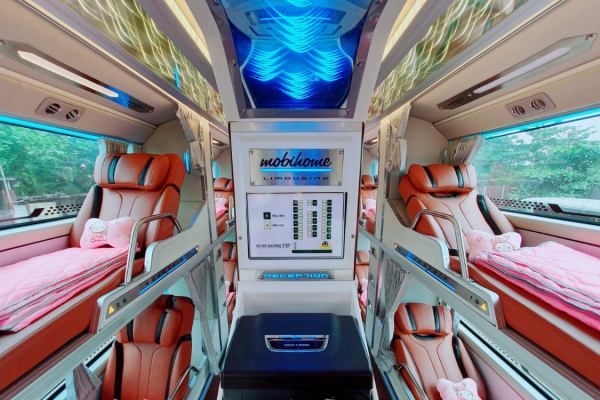
The buses range from basic sleepers to VIP cabin buses depending on what you book. Either way, you arrive early morning, check into Loop Trails Hostel for a shower and breakfast, then rest until your jeep tour briefing at 8:00 AM.
This overnight travel saves a full day and gets you to the mountains fresh enough to enjoy day one properly.
08:00 – Breakfast and tour briefing at Loop Trails Hostel
09:00 – Departure toward Quan Ba
The first morning eases you into mountain driving. Your jeep climbs through terraced valleys where corn and rice grow in patches that seem to defy gravity. Hmong women in indigo-dyed clothing work the fields using methods unchanged for generations.
Bac Sum Pass comes first, a gentler introduction to what’s ahead. Then Heaven Gate appears, the spot where every tour stops for that iconic photo with the twin mountains of Quan Ba valley spreading below. On clear days, the view extends for kilometers across layer after layer of karst peaks.
12:30 – Lunch in Tam Son Town
The food at mountain towns won’t win Michelin stars, but it’s honest and filling. Expect rice, stir-fried vegetables, grilled pork or chicken, and soup. Vegetarians can always find options since Vietnamese cuisine relies heavily on vegetables regardless.
14:00 – Trek to Lung Khuy Cave
Most jeep tours skip this cave, which is exactly why it’s worth the stop. The 30-minute hike leads to a cavern system decorated with stalactites and illuminated by natural light filtering through holes in the ceiling. The cave stays cool even in summer, a refreshing break from midday heat.
17:00 – Arrive in Yen Minh
Your first night’s homestay in Yen Minh sets the pattern for the rest of the tour. These are family-run guesthouses where you’ll sleep in simple rooms, eat dinner family-style with other travelers, and probably end up sampling “happy water” (the local rice wine) while someone plays a traditional instrument badly but enthusiastically.
The evenings at homestays often become trip highlights. There’s something about sharing a meal with strangers who started as your jeep-mates that morning, swapping stories while Hmong kids peek through doorways to watch the foreigners.
08:00 – Breakfast and departure from Yen Minh
Day two covers the most dramatic geography of the entire route. You’re heading to Vietnam’s northernmost point, then crossing the pass that most travelers cite as their single most memorable moment in the country.
The Dong Van Karst Plateau Geopark dominates this region, a UNESCO-recognized landscape of ancient limestone formed 400 million years ago. Your jeep winds through valleys where Hmong villages cling to hillsides and cornstalks dry on rooftops.
Stops include:
12:00 – Lunch in Lung Cu
You’re now at Vietnam’s northernmost point, marked by a massive flag tower visible from China across the valley. The area feels end-of-the-earth remote. When wind whips across the plateau, you understand why ethnic minorities chose these harsh mountains over easier lowland living—the borders and isolation provided protection.
14:00 – Lo Lo Chai village
This tiny village hosts Vietnam’s most intact Lo Lo minority culture. Their traditional adobe houses with distinctive round shapes are architectural marvels built without modern materials. The Lo Lo people number only a few thousand globally, making this one of the rarest cultural encounters in Southeast Asia.
17:00 – Arrive in Dong Van
Dong Van town serves as the overnight stop, housed in a well-preserved French colonial quarter. The town feels like it exists outside time, with stone buildings and narrow lanes that see more water buffalo than cars.
Evening brings the sunset party at your homestay—dinner, music, and that rice wine again. By now your group has bonded over shared experiences, and these evenings become celebrations of the day’s adventures.
08:00 – Departure from Dong Van toward Ma Pi Leng Pass
If you’ve researched northern Vietnam at all, you’ve seen photos of Ma Pi Leng Pass. The road carved into a vertical cliff face above the Nho Que River is simultaneously terrifying and spectacular. Your driver navigates it with practiced ease while you take photos through the window.
10:00 – Ma Pi Leng Skywalk
The glass-bottomed viewing platform extends out over the canyon. Looking down makes your stomach flip even though you know the glass is safe. The river runs turquoise green far below, flanked by mountains that rise straight up on both sides.
11:30 – Tu San Canyon viewing point
Tu San holds the title of Vietnam’s deepest canyon, though “deepest” is a technicality given how dramatic all these river gorges are. The viewpoint offers a different angle on the Nho Que River snaking through impossible geography.
After Meo Vac, you leave Ha Giang province and enter Cao Bang. The landscape shifts subtly—fewer tourists, more working farms, villages that see travelers maybe once a week instead of daily.
12:00 – Lunch in Bao Lac
Bao Lac marks your entry into Cao Bang’s border region. The town serves as a trading post where Vietnamese, Chinese, and minority groups have mixed for centuries. Lunch here often includes dishes you won’t find elsewhere, influenced by proximity to China.
13:00 – Khau Coc Cha Pass
This fifteen-bend pass doesn’t have Ma Pi Leng’s fame but delivers equal drama. Hiking to the viewpoint rewards you with a panorama of the entire pass zigzagging down the mountain face. On clear days, you can see all fifteen switchbacks simultaneously.
14:00 – Xuan Truong Valley
The valley feels like stepping into a painting. Rice paddies spread between limestone peaks, water buffalo graze near traditional stilt houses, and the pace of life slows to something pre-industrial. Hmong farmers still plow using buffaloes, and kids play in irrigation channels instead of staring at phones.
15:00 – Na Tenh Pass
Another pass, another viewpoint, but you’re not getting pass fatigue yet because each one frames the landscape differently. Na Tenh looks back across Xuan Truong Valley, letting you see where you came from rather than where you’re going.
16:00 – Pac Po historical site
Pac Po marks where Ho Chi Minh returned to Vietnam in 1941 after thirty years abroad. The site includes his cave residence and a small museum. The historical significance matters more to Vietnamese visitors, but the setting in a peaceful valley surrounded by bamboo has its own appeal.
17:00 – Check into Me Farmstay
Me Farmstay in Ha Quang provides your night three accommodation. This is more developed than previous homestays, with better facilities but still maintaining the family-run character that makes these stays memorable.
09:00 – Departure from Ha Quang
Day four focuses on Ban Gioc Waterfall, Southeast Asia’s largest waterfall and the main reason most people extend into Cao Bang. But getting there involves another day of spectacular roads and cultural stops.
10:00 – Tra Linh
This border market town near China offers a glimpse of cross-border commerce. If you visit on the right days, you’ll see Vietnamese and Chinese traders exchanging goods using a mixture of languages and hand signals. The markets sell everything from electronics to medicinal plants to livestock.
11:00 – Lunch in Trung Khanh
Trung Khanh serves as the gateway to Ban Gioc. The town has grown to accommodate increasing tourism to the waterfall, though it remains relatively low-key compared to tourist towns in more famous regions.
13:00 – Pi Pha viewpoint at Ngoc Con
This viewpoint requires a short hike but delivers one of Cao Bang’s best photo opportunities. You’re looking down at a river valley where the water curves through rice paddies, backed by karst mountains that rise like ancient towers.
14:00 – Shortcut countryside road to Ban Gioc
Your driver takes back roads that tourists in larger buses can’t access. These routes wind through villages where you might be the only foreigners people see all week. Farmers pause in their work to watch you pass, and kids race alongside the jeep waving enthusiastically.
15:00 – Ban Gioc Waterfall
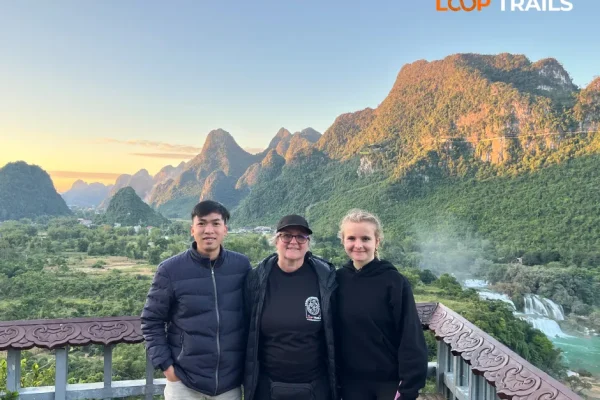
Ban Gioc announces itself with a roar long before you see it. Then you round a corner and there it is: a three-tiered cascade 300 meters wide, split between Vietnam and China by an invisible border running down its center.
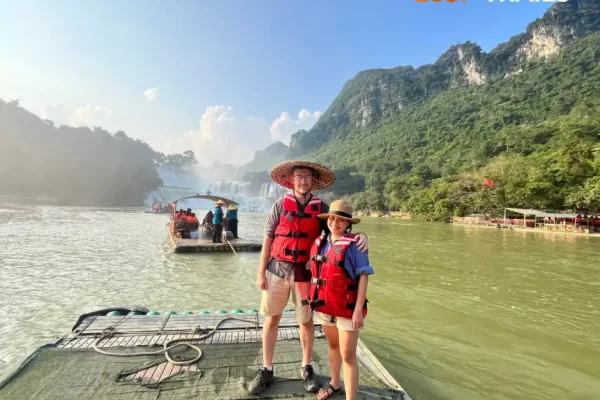
Bamboo rafts ferry visitors to the waterfall’s base, where mist soaks everything and the sound drowns out conversation. In the wet season (May through September), Ban Gioc reaches peak power, sending massive volumes of brown water thundering over the cliff. Dry season (December through April) provides better visibility and clearer blue-green water, though reduced flow.
The waterfall shares the border with China, which creates an odd situation where you can wave at Chinese tourists on the other side but can’t cross to join them. Border guards watch from both banks to make sure nobody gets creative.
16:00 – Optional swim at Rock Village
If weather permits and you’re feeling adventurous, Rock Village near Ban Gioc offers swimming in clear pools with limestone formations. The water stays cold year-round, refreshing after a hot day but shocking if you jump in unprepared.
17:00 – Stay near Ban Gioc
Your final night’s accommodation sits near the waterfall, letting you return at sunrise if you want to see Ban Gioc without crowds. Some travelers do exactly that, walking to the waterfall at 6 AM when morning mist still clings to the valley and you might be the only person there.
09:00 – Departure from Ban Gioc
The final day wraps up with cave exploration and cultural stops before the drive back to Cao Bang city, where the tour concludes and you catch your bus back to Hanoi or your next destination.
09:00 – Nguom Ngao Cave
Nguom Ngao ranks as Cao Bang’s most impressive cave system. The main chamber stretches over 2,000 meters, decorated with formations that guide books describe with words like “cathedral” and “palace.” Lighting installed throughout the cave highlights the most dramatic stalactites and stalagmites, creating an otherworldly atmosphere.
The cave stays at a constant cool temperature, relief if you’ve been traveling during hot season. The path through winds past underground pools, narrow passages, and chambers big enough to fit a building.
10:30 – Con Nuoc Song Quay Son
This lesser-known waterfall doesn’t match Ban Gioc’s scale but offers a different character—a series of small cascades through a forested area where you can hike behind the water. The area sees fewer tourists, making it a peaceful stop.
13:00 – Dia Tren Phuc Sen paper factory village
Phuc Sen village maintains traditional paper-making techniques using bark from the Do tree. Watching artisans transform bark into paper sheets using hand methods passed down through generations provides insight into crafts that modern factories can’t replicate.
You can buy handmade paper products here directly from the makers. The notebooks and art paper make better souvenirs than mass-produced items from city shops, and your money goes directly to the families keeping these traditions alive.
14:00 – Phia Thap incense village
The Nung ethnic minority in Phia Thap specializes in making incense sticks. The village smells perpetually of sandalwood and other aromatics. Bundles of incense dry in the sun outside every house, and you’re welcome to watch the process from soaking the bamboo sticks to adding the fragrant powder coating.
15:00 – God’s Eye Mountain
This natural formation—a hole eroded through a limestone peak—creates what locals call the “eye of god.” The formation is rare enough that geologists consider it significant, and photographers love the way you can frame shots through the opening.
16:30 – Arrive in Cao Bang City
The tour officially ends when you reach Cao Bang city. From here, you have options: take a night bus back to Hanoi (most common), continue to other northern provinces like Ha Long or Sapa, or extend your trip with additional Cao Bang exploration.
Loop Trails arranges onward transportation, whether you’re heading to coastal areas like Cat Ba or mountain regions like Sapa. The buses connect to most major northern Vietnam destinations.
Learn more: Ha Giang Cao Bang Jeep Tours
Understanding exactly what you’re paying for prevents surprise costs later. The Ha Giang Cao Bang jeep tour includes more than you might expect, but some items require additional payment.
Transportation:
Accommodation:
Meals:
Activities and Entrance Fees:
Guide Services:
Day 0 Transportation:
Accommodation Upgrades:
Optional Activities:
Personal Items:
The base tour price includes dorm accommodation, which means shared rooms with other travelers. These typically house 4-8 people in bunk beds with shared bathrooms.
Don’t let “dorm” scare you off. The homestays are clean, the groups self-select for similar travel styles (you’re all on the same tour), and the communal atmosphere often enhances the experience rather than detracting from it.
That said, private room upgrades are available for couples or anyone preferring more privacy. Availability varies by location—some villages have limited private rooms, so book early if this matters to you.
Private rooms in mountain homestays are simple: a double bed, basic furniture, and usually a private bathroom. Don’t expect boutique hotel standards. You’re in remote villages where hot water comes from solar panels that may not work after cloudy days.
Meals on this tour lean heavily toward Vietnamese home cooking rather than tourist-friendly international food. Breakfast typically includes pho or rice porridge, baguettes with eggs, fruit, and coffee or tea.
Lunch and dinner follow a similar pattern: rice as the base, with multiple shared dishes including stir-fried vegetables, grilled or braised meat (pork, chicken, or occasionally beef), soup, and fresh vegetables for wrapping.
Vegetarians can eat well in Vietnam since many traditional dishes are naturally vegetarian or easily adapted. Inform your tour operator when booking, and your guide will communicate with homestay families to ensure appropriate meals.
The food won’t be the most exciting part of your trip, but it’s authentic and substantial. You’re eating what local families eat daily, which some travelers consider more valuable than restaurant meals designed for foreign palates.
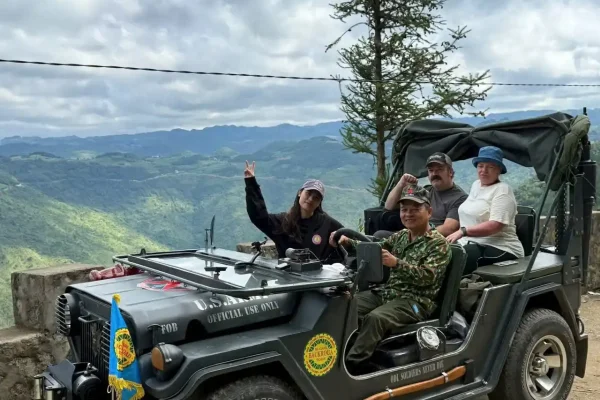
Loop Trails uses 4×4 jeeps suitable for mountain roads, not luxury SUVs. The vehicles are maintained for reliability over comfort, though most models have air conditioning and decent suspension.
Typical group sizes range from 2-4 passengers per vehicle. Solo travelers join existing groups, which most people find enhances the experience through shared discoveries and evening conversations.
Your driver navigates while a separate guide handles cultural interpretation, restaurant stops, and general logistics. The driver focuses entirely on safe travel, which matters when you’re traversing passes where one mistake means rolling down a mountain.
Learn more: Ha Giang Cao Bang Jeep Tours
Let’s talk numbers. Jeep tours cost more than self-drive motorbike options but less than hiring a private easy rider. Whether the price represents good value depends on your priorities.
Note: Prices include dorm accommodation and all activities/meals as detailed above. Private room upgrades and bus transportation to/from Ha Giang are additional costs.
For context, here’s how the Ha Giang Cao Bang jeep tour compares to shorter Ha Giang Loop options:
The five-day tour costs about 40% more than the four-day loop but adds Ban Gioc Waterfall (Southeast Asia’s largest), the entire Cao Bang region, and significantly more cultural encounters. For most travelers, the extra days justify the extra cost.
Getting to Ha Giang requires separate booking. Bus options include:
Return buses from Cao Bang connect to all major northern Vietnam destinations at similar prices.
Learn more: Ha Giang Cao Bang Jeep Tours
Northern Vietnam’s mountain weather creates distinct seasons that dramatically affect your experience. The “best” time depends on what you prioritize: scenery, weather conditions, or avoiding crowds.
September brings the famous golden rice terraces. The mountains glow yellow and amber as ripening rice covers every possible growing space. This is the image you’ve seen in photos—the landscape that made Ha Giang famous on Instagram.
October continues the rice harvest beauty while adding more comfortable temperatures. Daytime highs reach 20-25°C (68-77°F), perfect for outdoor activities. Nights get cool but not cold.
November marks the transition to winter. Most rice has been harvested, leaving brown terraced fields, but visibility improves dramatically as dry season begins. You can see further across valleys, making it ideal for photography.
Downsides: Peak season means more tourists, busier homestays, and roads that can feel crowded with tour groups. Book well in advance.
Winter transforms these mountains into something entirely different. Morning mist fills valleys, temperatures drop to 5-10°C (41-50°F), and occasional light frost dusts the highest peaks.
The landscape turns brown and dormant, which sounds less appealing but creates dramatic atmospheric photography. Gray skies and mist give the region a mysterious character unlike the cheerful summer greens.
Ban Gioc Waterfall runs at reduced volume, but the clearer water creates that spectacular blue-green color. Chinese tourists flood the area during their national holidays (late January through early February), so avoid those specific dates if possible.
Jeeps handle winter conditions far better than motorbikes. When temperatures drop below 10°C, motorbike riders struggle with cold that cuts through layers. Jeep passengers stay warm with vehicle heating.
Downsides: Cold nights at homestays (heating is limited), shorter daylight hours, and brown landscapes that lack the lushness of other seasons.
Spring brings wildflowers and fresh green growth. Plum and peach blossoms bloom in March, creating pink and white colors across the mountains. Minority groups celebrate Lunar New Year (Tet) during this period, offering cultural experiences if you time it right.
April and May see temperatures climbing toward summer heat, but rain remains infrequent. The landscape transitions from brown to green as planting season begins.
Downsides: Increasing heat in May, and dust from dry roads during April.
Summer brings intense green everywhere and the highest rainfall. Mountains disappear into clouds, roads turn muddy, and afternoon thunderstorms arrive with reliable punctuality.
The upside: Fewer tourists, lower prices, and waterfalls at maximum power. Ban Gioc becomes a true monster during peak monsoon, though the water runs brown with sediment.
Jeeps prove essential during summer. Daily rain makes motorbike travel miserable, but jeep passengers stay dry and comfortable. Roads that become dangerous for two wheels remain passable for four.
Downsides: Reduced visibility, higher risk of road closures from landslides, and wet conditions that limit certain activities.
My recommendation: October balances everything well—good weather, beautiful scenery, manageable crowds. But if you want Ban Gioc at its most powerful, July or August during monsoon season delivers the most dramatic waterfall experience.
Learn more: Ha Giang Cao Bang Jeep Tours
Packing for mountain travel requires balance between preparing for varied conditions and keeping your bag manageable. Homestays lack space for large luggage, and you’ll be moving daily.
Use a backpack (40-50L) or small duffel rather than a hard-shell suitcase. You’ll be carrying your bag up homestay stairs and fitting it in the jeep with other passengers’ luggage.
Pack with the “three-two-one” approach: three bottoms (pants/shorts), two tops per day, one jacket. Roll clothes instead of folding to save space and reduce wrinkles.
Keep essential documents, medications, and one change of clothes in your day bag. If main luggage gets separated from you (rare but possible), you can survive overnight without it.
Ha Giang sits 300 kilometers north of Hanoi in Vietnam’s remote northwest. No flights or trains service the area, leaving buses as the primary access method. But “bus” covers a wide range of comfort levels and price points.
Hanoi serves as the main departure point for Ha Giang travelers. Multiple bus companies operate the route with departures throughout the day and night.

Lear more: Ha Giang Motorbike hire
These represent the top tier of Vietnamese bus travel. Each passenger gets a fully reclining sleeper berth in a two-tier arrangement. The berths are wider than standard sleepers, offering more shoulder room and leg space.
Departures at 10:30 PM and 9 PM arrive in Ha Giang between 5 AM and 6 AM. The midnight departure means you sleep through most of the journey, arriving relatively fresh.
VIP buses include blankets, pillows, and sometimes a small snack. Air conditioning runs cold, so bring a light jacket even in summer.
Lear more: Ha Giang Cao Bang Jeep Tour
Cabin sleepers add curtains around each berth for privacy. You get a small enclosed space instead of an open sleeper, reducing noise and light from other passengers.
The 9 AM daytime departure suits travelers who want to see the journey. The route passes through scenic areas, though you won’t see the best landscapes until after Ha Giang city.
Standard sleepers cram more berths into the same space, making them narrower and less comfortable for larger passengers. Adequate for overnight travel if you’re budget-focused, but the 100,000 VND savings might not justify the discomfort gap.
Multiple evening departures (6 PM, 9 PM, 10 PM) provide schedule flexibility
Limousine buses feature larger leather seats in a 2-1 configuration instead of sleeper berths. Better for daytime travel (7 AM and 4 PM departures) when you want to sit upright and see the scenery.
The seats recline further than standard bus seats but don’t lie flat like sleepers.
Travelers exploring northern Vietnam’s highlights often connect directly between destinations without returning to Hanoi. Loop Trails arranges buses from multiple starting points.
The Ninh Binh connection suits travelers coming from Tam Coc or Trang An. Journey time runs about 8 hours overnight.
Cat Ba’s island location adds a ferry crossing, explaining the higher price. This represents the most expensive direct connection but saves a full day compared to returning to Hanoi first.
Ha Long Bay visitors can head straight to the mountains after their cruise. The connection works particularly well for travelers doing bay cruise → Ha Giang → Sapa or similar northern loops.
The Sapa-Ha Giang connection has become popular as travelers combine both northern mountain regions in one trip. Journey time runs 6-7 hours.
Loop Trails handles bus booking as part of tour packages. When you confirm your jeep tour, you simultaneously book:
This coordinated booking ensures schedules align—you arrive in time for tour briefings and depart after the tour concludes. Individual bus tickets can be purchased separately if you prefer flexible scheduling, but package bookings simplify logistics.
Payment timing: Bus tickets are typically paid with your tour balance, not separately. Confirm this with Loop Trails when booking.
Pickup locations: Most buses offer hotel pickup in major cities if you’re staying in tourist areas. Otherwise, you’ll go to the bus company’s main terminal.
Luggage: Standard allowance is one main bag (20-25kg) plus one carry-on. Larger bags or excess luggage might incur surcharges on some bus companies.
Learn more: Ha Giang Cao Bang Jeep Tours
Vietnam’s northern mountains can be explored three ways: jeep tours, easy rider motorbikes (with a driver), or self-drive motorbikes. Each suits different traveler profiles, and the “best” option depends on your priorities.
Best for: Families, couples where one person doesn’t ride, small groups (3-4 people), travelers seeking comfort and safety over adventure, anyone uncomfortable on motorbikes, winter travel, rainy season visits.
Best for: Solo travelers, photography enthusiasts, people wanting motorbike experience without riding responsibilities, those seeking deeper cultural connections with local guides.
Best for: Experienced riders, adventure seekers, couples or friends who ride regularly, travelers wanting maximum independence, budget-conscious visitors.
Ask yourself these questions:
For the five-day Ha Giang to Cao Bang route specifically, jeeps make particular sense. The extended distance, border-region logistics, and variety of terrain make the journey more demanding than standard Ha Giang loops. The comfort difference becomes noticeable by day three when motorbike riders start showing fatigue.
Learm more: Ha Giang Cao Bang Jeep Tours
Ready to commit? Here’s what the booking process looks like and what you should know before you pay.
1. Initial Contact Reach out via WhatsApp (+84 86 237 9288) or through the Loop Trails website. You’ll provide:
2. Tour Confirmation Loop Trails will confirm availability and send detailed information including:
3. Deposit Payment Most tours require a 30% deposit to hold your reservation. Balance is typically due 7 days before departure or can be paid upon arrival in Ha Giang.
Payment methods accepted:
4. Pre-Departure Information About one week before departure, you’ll receive:
Standard cancellation terms (confirm these when booking as policies may change):
Travel insurance that covers cancellation is strongly recommended. Medical issues, family emergencies, or travel disruptions can happen, and insurance protects your investment.
Mountain weather occasionally creates unsafe conditions. Heavy rain can trigger landslides that close roads for hours or days. While rare, it happens.
Loop Trails’ policy: If roads become impassable due to weather, they’ll either:
Safety always takes priority over sticking to schedule. Trust your guide and driver’s judgment about road conditions.
Jeep tours mix solo travelers, couples, and small groups. You might share your jeep with strangers who become friends by day three. This social aspect is a feature, not a bug—many travelers cite meeting their jeep-mates as a trip highlight.
If you strongly prefer not to share with others, private jeep tours can be arranged at higher cost. Contact Loop Trails for private tour pricing.
No specific age limits apply, but consider:
The tour’s moderate difficulty suits most fitness levels. You’re not trekking, just walking short distances at stops.
Ha Giang and Cao Bang are generally safe for women traveling alone. Homestays provide secure accommodation, you’re always with a group during the day, and Vietnamese rural areas have low crime rates.
Standard safety advice applies:
Loop Trails has extensive experience with solo female travelers and can address specific concerns.
Standard tours follow set itineraries, but modifications are possible with advance notice:
Discuss modifications during booking. Last-minute changes are harder to accommodate once the tour is underway.
Learn more: Ha Giang Cao Bang Jeep Tours
The route is generally safe with professional drivers and well-maintained roads. Accidents are rare on organized tours. The main risks come from weather conditions and independent travelers who underestimate the roads’ difficulty. Jeep tours with experienced drivers minimize these risks significantly.
No. You’re a passenger, not driving. Only self-drive motorbike tours require proper licensing. Vietnamese law requires either a Vietnamese license or an International Driving Permit (IDP) based on your home country’s license to ride motorbikes legally.
Ha Giang and Cao Bang’s highest passes reach about 1,500 meters elevation, well below altitudes that cause serious altitude sickness (typically 2,500+ meters). Some travelers notice mild shortness of breath or slight headaches at highest points, but serious symptoms are extremely rare. Stay hydrated and mention any discomfort to your guide.
Yes, though with some limitations. Vietnamese cuisine includes many vegetable-based dishes, and homestay families can prepare vegetarian meals with advance notice. Inform Loop Trails of dietary requirements when booking. Strict vegans might find options more limited in remote villages—consider bringing supplementary snacks.
Phone signal varies. Vietnam’s major carriers (Viettel, Vinaphone, Mobifone) provide coverage in towns but spotty or no signal in mountain valleys. Don’t count on connectivity between major stops. Homestays occasionally have wifi, but it’s unreliable and slow when available. Download maps, music, and entertainment before starting the tour.
Yes, but consider your children’s ages and temperaments. Kids who handle long car rides well and don’t need constant entertainment will do fine. The homestay experience and cultural encounters often fascinate children. Very young kids (under 5) might struggle with the long days and basic accommodation. Many families successfully complete this tour with children aged 8 and up.
Guides carry basic first aid kits and can arrange medical evacuation if necessary. Towns along the route have clinics for minor issues. Serious medical problems require transport to larger hospitals in Ha Giang or Cao Bang cities. This is another reason travel insurance with medical coverage is essential—evacuation costs can be substantial.
No. Stick to bottled water, which is provided during travel days. Homestays sometimes offer boiled water for drinking, but bottled is safer. Bring a reusable water bottle and refill from provided sources rather than buying plastic bottles constantly.
Homestays have basic bathrooms with squat or western-style toilets and showers. Water pressure is low, hot water is limited (solar-heated, so sometimes cold in mornings or after cloudy days), and toilet paper might not be provided. Bring your own toilet paper and consider bringing biodegradable wet wipes. Many homestays are now upgrading facilities, so standards are improving.
Winter temperatures (December-February) can drop to 5-10°C at night. Even in warmer months, mountain nights cool to 15-18°C. Homestays provide blankets, but bring a warm base layer for sleeping if you visit in winter. Jeeps have heating, so daytime travel stays comfortable.
Peak season (September-November) fills up quickly, sometimes weeks in advance. Winter and summer offer more availability, sometimes even last-minute bookings. However, booking ahead ensures you get your preferred dates and allows time for the operator to arrange bus connections and confirm all logistics. Two to four weeks advance booking is recommended, more during peak season.
Tour operators maintain backup vehicles and have mechanical support. In the unlikely event of a breakdown, either a replacement vehicle arrives or repairs are made quickly. You’re not stranded. This is built into professional tour operations and covered by your tour payment.
Largely yes, within reason. Drivers are accustomed to photo stops and will pause at major viewpoints. For spontaneous stops, just ask your driver. However, some road sections don’t allow stopping safely due to traffic or narrow passages. Your guide and driver balance your photo desires with safety and schedule requirements.
Learn more: Ha Giang Cao Bang Jeep Tours
The Ha Giang Cao Bang jeep tour delivers something increasingly rare in Southeast Asian travel: authentic encounters with landscapes and cultures not yet overwhelmed by tourism.
Yes, Ha Giang’s popularity has grown explosively in recent years. Instagram’s discovery of the rice terraces changed the region forever. But extending south into Cao Bang still takes you beyond the crowds into areas where your jeep might be the only tourist vehicle that day.
The five days give you time to transition from tourist mode into traveler mode. By day three, you stop taking photos of every mountain and start noticing subtler details—how minority groups’ traditional clothing varies between villages, why terraces are built with specific orientations, which passes were carved by hand versus modern machinery.
The jeep format means you arrive at each evening’s homestay fresh enough to actually engage with families and other travelers rather than collapsing from exhaustion. Those evening conversations, sharing meals with people from different countries and backgrounds, often become as memorable as the daytime scenery.
This route will change. Roads are improving, infrastructure is developing, and more people discover the region every season. The window for experiencing northern Vietnam’s mountains in their current state won’t stay open forever.
If you’ve read this far, you’re already the kind of person who would appreciate this journey. The question isn’t whether you should go, but when you’ll book.
Loop Trails’ guides and drivers know these roads the way only locals can. They know which morning light hits Quan Ba valley best, which homestay mother makes the best sticky rice, which waterfall pool is safe for swimming, and which mountain pass offers the clearest view of China.
You could piece together this route independently, hiring vehicles and finding accommodation as you go. But you’d miss the cultural interpretation, the seamless logistics, the safety that comes from experienced drivers, and the social dynamics of traveling with others on the same journey.
The investment—whether 30 million VND for a group or 15 million per person as a couple—buys more than transportation and accommodation. It buys access to one of Southeast Asia’s last genuine adventures before modernization smooths away the rough edges that make it special.
Your move.
CONTACT INFORMATION FOR LOOP TRAILS TOURS
Email: looptrailshostel@gmail.com
Hotline & WhatSapp:
+84862379288
+84938988593
Social Media:
Facebook: Loop Trails Tours Ha Giang
Instagram: Loop Trails Tours Ha Giang
TikTok: Loop Trails
Office Address: 48 Nguyen Du, Ha Giang 1, Tuyen Quang
Address: 48 Nguyen Du, Ha Giang 1, Tuyen Quang
Facebook X Reddit Table of Contents Learn more: Ha Giang Loop Tours There’s a moment, usually somewhere on Ma Pi Leng Pass,
Facebook X Reddit Table of Contents Learn more: Ha Giang Loop Tours There’s a version of the Ha Giang Loop that people
Facebook X Reddit Table of Contents Learn more: Ha Giang Loop Tours There’s a moment on the Ma Pi Leng Pass —