

Ha Giang Loop Mistakes to Avoid: What Nobody Warns You About
Facebook X Reddit Table of Contents Learn more: Ha Giang Loop Tours There’s a version of the Ha Giang Loop that people

Thúy Kiều (Grace) is a travel blogger and content contributor for Loop Trails Tours Ha Giang. She holds a bachelor’s degree in Sustainable Tourism from Vietnam National University, Hanoi, and has a strong passion for exploring and promoting responsible travel experiences in Vietnam’s northern highlands.
Learn more: Ha Giang Loop Tours
There’s a moment, usually somewhere on Ma Pi Leng Pass, with the Nho Que River cutting a turquoise line through limestone cliffs 1,000 metres below you — when you stop thinking about anything else. No phone. No plans. Just the road, the wind, and a landscape so dramatic it almost feels fake.
That moment is why people do the Ha Giang Easy Rider tour.
If you’ve been researching the Ha Giang Loop, you’ve probably seen the term “Easy Rider” thrown around. But what does it actually mean? Is it worth the cost? How do you find a good guide, and what should you realistically expect from a few days on the road in northern Vietnam’s most remote province?
This guide covers everything, the route, the costs, the road conditions, how to choose your guide, and the honest pros and cons that most blogs skip over.
Learn more: Ha Giang Loop 2 Days 1 Night
The term “Easy Rider” in Vietnam refers to riding pillion (as a passenger) on the back of a motorbike driven by a local guide. Your guide does all the driving. You sit back, hold on when needed, and actually get to look at the scenery instead of staring at the road.
It’s a concept borrowed from the original Easy Rider culture of Dalat in central Vietnam, where local guides with decades of road knowledge started offering personalized motorbike tours to backpackers in the 1990s. Ha Giang took that idea and applied it to one of the most spectacular mountain loops in all of Southeast Asia.
The Ha Giang Loop — a roughly 350km circuit through Dong Van Karst Plateau Geopark — is the backbone of any Easy Rider tour. Your guide knows the roads, speaks enough English to explain what you’re seeing, and often has personal connections to minority villages along the route. That local knowledge is what separates a good Easy Rider experience from simply riding a motorbike through beautiful scenery.
Learn more: Ha Giang Loop 3 Days 2 Nights
Before you book anything, it’s worth understanding what your options actually are. The Ha Giang Loop can be done three ways, and they suit very different types of travelers.
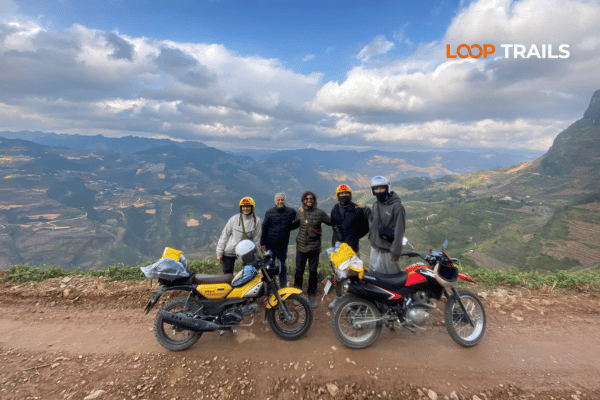
You ride pillion on your guide’s motorbike. No driving license required (though regulations can change — always verify current local requirements before your trip). Your guide handles navigation, road hazards, breakdowns, and translation. You get flexibility to stop wherever you want, and many guides will take you to places that aren’t on any map.
Best for: First-time Vietnam travelers, people who aren’t confident on motorbikes, solo travelers who want company and local insight, anyone who just wants to focus on the experience rather than the mechanics of riding.
Learn more: Ha Giang Loop 4 Days 3 Nights
You rent your own bike — typically a semi-automatic or manual — and ride the Loop independently or with a small group. Full control over pace and route, but you’re responsible for navigation, breakdowns, and handling mountain roads that can surprise even experienced riders.
Best for: Experienced riders who’ve ridden in Vietnam before, travelers who prefer solitude, those who want to go completely off-schedule.
Not sure if you should self-drive or go with a guide? Check out our Ha Giang Loop tour options to compare packages side by side, or rent a motorbike from us if you’re going independent.
Learn more: Ha Giang Cao Bang 5 Days 4 Nights
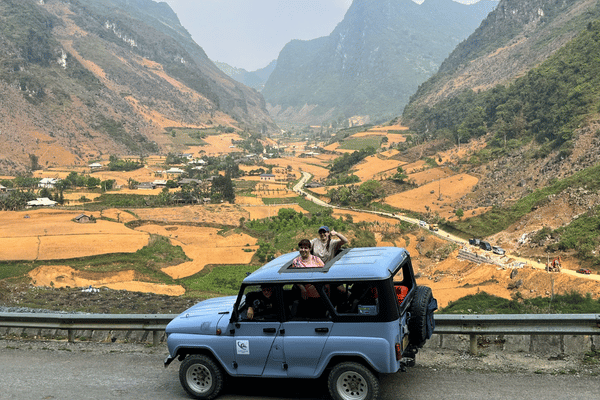
A 4WD jeep with a driver takes you around the Loop. More comfortable, great for bad weather, and ideal for groups or travelers who prefer a vehicle. Less “authentic” in the motorbike sense, but the scenery is identical and the flexibility is similar.
Best for: Couples, small groups, older travelers, anyone visiting during the rainy season when road conditions are unpredictable.
| Easy Rider | Self-Drive | Jeep | |
|---|---|---|---|
| Riding experience needed? | No | Yes | No |
| Local guide included? | ✅ Yes | ❌ No | ✅ Yes |
| Flexibility to stop? | High | Very High | Moderate |
| Physical effort | Low | High | Low |
| Best for | Solo/first-timers | Experienced riders | Groups/comfort |
| Typical duration | 3–4 days | 3–5 days | 3–4 days |
Learn more: Ha Giang Cao Bang Ba Be Lake 6 Days 5 Nights
People often imagine an Easy Rider tour as one continuous ride — just point north and go. In reality, it’s more like a moving base camp. You ride for 2–4 hours in the morning, stop somewhere interesting (a viewpoint, a market, a village), eat lunch, ride again in the afternoon, and land in a small guesthouse by early evening.
The best Easy Rider guides turn the stops into the highlight — not just “here’s a pretty viewpoint, take a photo.” They’ll slow down when they spot a Hmong funeral procession on the road. They’ll pull into a roadside stall they know from twenty years of riding and order you something you’d never have found on your own. They’ll explain why the houses in this village have courtyards facing a specific direction, or point out the opium poppy fields that were cleared a decade ago.
That’s the Easy Rider difference. It’s not just transport. It’s a running commentary on a part of Vietnam that most travelers never see.
Days vary depending on the route segment and how often you stop. Some days are shorter. Ma Pi Leng Pass day is usually an early start because everyone wants the light.
Learn more: Ha Giang Loop route and itinerary
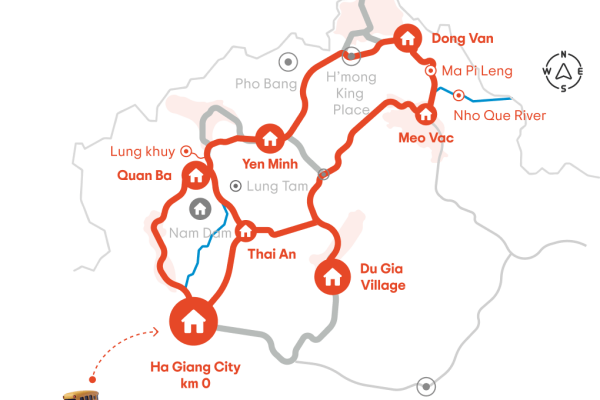
The classic Ha Giang Easy Rider tour follows the standard Loop route, which can be ridden clockwise or counter-clockwise. Most guides take the counter-clockwise route (heading north to Quan Ba first) to hit Ma Pi Leng Pass on Day 2 with ideal lighting. Here’s what a typical 3-night/4-day tour looks like:
You leave Ha Giang city in the morning and climb steadily into the karst highlands. The first major stop is Heaven’s Gate (Dong Van Karst Plateau) — a pass that gives you your first real look at the terrain ahead. From there you drop into Quan Ba Valley, famous for the Twin Mountains (two rounded limestone peaks rising from rice terraces). Lunch somewhere around here.
The afternoon takes you through increasingly dramatic scenery toward Yen Minh, a small district town where most groups spend the first night. The food here is basic but decent. The night markets are worth a walk.
Distance: Approximately 100–120km. Riding time: 4–5 hours including stops.
This is the day. Early start, because you want to reach Ma Pi Leng Pass before the afternoon haze sets in.
The road from Yen Minh to Dong Van winds through the karst plateau — boulder fields, corn crops growing in rock crevices, Hmong and Lo Lo villages perched on hillsides. Dong Van itself is a historic town with a well-preserved old quarter and a Sunday market that draws ethnic minority groups from the surrounding mountains.
After Dong Van, the road climbs to Ma Pi Leng Pass — the highest point on the Loop and arguably the most stunning stretch of road in Vietnam. The view down to the Nho Que River is genuinely jaw-dropping. Your guide will stop at the main viewpoint, but ask them to also pull over at a few of the lesser-known spots along the descent.
You finish the day in Meo Vac, a small town balanced on a hillside above the gorge. Quieter than Dong Van, better for actually sleeping.
Distance: Approximately 60–80km. Don’t let that fool you — this day feels long because you won’t want to stop stopping.
The southern section of the Loop gets less written about, but it has its own character. The road from Meo Vac winds back west and south through progressively greener terrain — rice terraces replace the bare karst, rivers appear, and the villages feel less visited.
Du Gia is a hidden gem — a valley with emerald-green rice paddies, a river for swimming, and a pace of life that feels genuinely remote. If your tour allows it, a night in Du Gia is worth it. Some itineraries skip it; ask your operator specifically about including this stop.
The final stretch back to Ha Giang city is scenic but relatively straightforward. Most tours end mid-afternoon on Day 3, though a 4-day version adds more time in Du Gia or a detour toward Lung Cu Flag Tower — the northernmost point in Vietnam.
Distance: Approximately 130–150km. The longest riding day, but the roads are generally better.
Learn more: Ha Giang Loop for Beginners
The minimum is 3 days / 2 nights. You’ll cover the main highlights — Ma Pi Leng, Dong Van, Quan Ba — but the pace is fast and you won’t have time to linger.
4 days / 3 nights is what most travelers settle on. You get Ma Pi Leng at a reasonable pace, time in Dong Van, and the southern route through Du Gia. This is the sweet spot.
5+ days is ideal if you want to go north to Lung Cu, spend a morning at the Dong Van or Meo Vac market, or combine the Loop with a detour toward Hoang Su Phi for rice terrace season. Some operators also offer combined Ha Giang + Cao Bang tours that extend to 7–10 days, taking in Ban Gioc Waterfall and the landscapes of Cao Bang province.
Our honest take: if you’ve come this far to do the Loop, don’t rush it. An extra day costs relatively little but makes a real difference to the experience.

Learn more: Ha Giang Loop Cost & Tips
Pricing for Easy Rider tours varies depending on the operator, the season, the duration, and what’s included. We won’t quote specific prices here because they change — always check current rates directly with your operator. That said, here’s what a well-structured package should typically include:
Usually included:
Usually not included:
Before you book: Always ask your operator for a written breakdown of what’s included. The gap between a cheap tour and a good tour is often in the details — meal quality, guesthouse standards, guide experience, and what happens if something goes wrong.
Want to compare our current Easy Rider packages? → View Ha Giang Loop Tours
Learn more: Ha Giang Motorbike Rental
This is where a Ha Giang Easy Rider tour can go brilliantly or badly. The guide makes or breaks it. Here’s what actually matters:
Road experience, not just years riding A guide who’s ridden the Loop 300 times in the last 5 years is more valuable than one who’s been doing it for 20 years but no longer pays attention. Ask how frequently they currently ride the route.
English fluency (to your comfort level) You don’t need a tour guide-level interpreter, but you want someone who can explain what you’re looking at, warn you when something unexpected happens, and have a real conversation over dinner. Ask to speak with the guide (or see a video review) before confirming.
Bike condition The motorbike matters. Mountain roads punish poorly maintained bikes. Ask what model is used and when it was last serviced. Any reputable operator maintains their fleet regularly — if they can’t answer this, that’s a red flag.
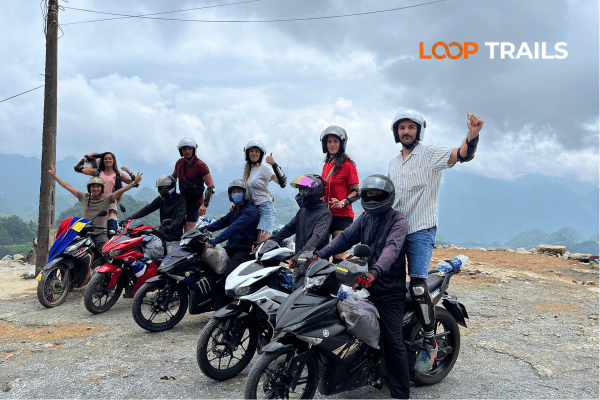
Small groups vs. large convoys Some Easy Rider tours run in large packs of 10–20 bikes. That can feel chaotic and impersonal. Better operators keep groups small (2–6 riders) so the guide can actually pay attention to you.
Reviews that mention specific guides by name Generic “great tour!” reviews tell you less than a review that says “our guide Minh stopped to explain the corn wine distillation process and took us to a family-run guesthouse we never would have found.” Specificity is a good sign.
At Loop Trails, our Easy Rider guides are selected for both road safety and genuine knowledge of the region’s culture, ethnic groups, and history. Small groups, well-maintained bikes, and guides who’ve grown up in the area. Get in touch to ask about guide availability before you book.
Learn more: Ha Giang Road Conditions 2026
Let’s be straight about this part.
The Ha Giang Loop is not a dangerous road if you approach it sensibly. Millions of people — locals and travelers — ride it every year without incident. But it is a mountain road in a remote province of northern Vietnam, and it asks for your respect.
The roads themselves: The main Loop route (QL4C and connecting roads) has been largely paved and is in reasonable condition for most of the year. Some sections — particularly the older stretches near Du Gia and on smaller side roads — can be rough, narrow, and pot-holed. After heavy rain, landslides can temporarily block certain passes. Road conditions change seasonally — always check current conditions with your operator before departing.
Weather as a road condition factor: Wet roads on hairpin bends are not forgiving. If your guide says the conditions aren’t good to ride, trust them. A good guide will know when to push on and when to wait an hour.
Traffic: Ha Giang doesn’t have heavy traffic by Vietnamese standards, but trucks and agricultural vehicles share the same mountain roads. On narrow passes, patience matters more than speed.
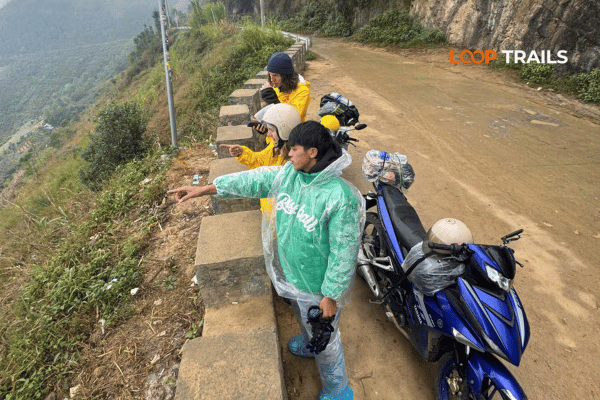
For Easy Rider passengers: You’re on the back of a bike with someone else in control — which means you need to trust your guide’s judgment. Don’t ask them to speed up on blind corners. Don’t lean against their steering instincts. And wear the helmet they give you (a properly fitted one).
Travel insurance: Non-negotiable. Get it before you leave home, make sure it covers motorbike travel in Vietnam, and read the fine print on what counts as “off-road” or “unlicensed vehicle.” Policies vary significantly.
Regulations and permits: Foreign visitors currently need to register at the Ha Giang Tourist Information Center before entering the Loop (as of the time of writing — rules can change, so check local updates before your trip). Your operator should handle this as part of the booking process. Always confirm this is included.
Learn more: Ha Giang in September & October
Ha Giang has two distinct seasons, and the best time to visit depends on what you’re there for.
September–November (best overall) The rice harvest season. The terraces around Du Gia and Hoang Su Phi turn gold and amber. The weather is dry but not hot. Crowds start picking up in October — still manageable, but book ahead.
March–May (buckwheat flower season) The Dong Van Plateau blooms with pink and white buckwheat flowers in late October/early November as well, but the spring season (March–April) brings mustard flowers across the valley floors. Temperatures are mild, roads are dry, and it’s the most photogenic time of year.
December–February (off-season) Cold — sometimes genuinely cold, with fog on the passes and frost at altitude. The Loop is passable but you’ll need proper layers. Fewer crowds, cheaper accommodation. Some guides take a break during Tet (Vietnamese New Year, usually late January/early February).
June–August (monsoon/avoid) Heavy rainfall can make mountain roads treacherous and cause landslides. This is also the busiest domestic tourism season, which means crowded guesthouses and higher prices. Not recommended for first-timers

Learn more: Ha Giang Safety Tips
You’re on a motorbike for 4–6 hours a day. Pack light, pack practical.
Clothing:
Gear:
Documents:
What to leave behind:
Learn more: Ha Giang Loop Mistake to Avoid
Booking the cheapest tour without checking what’s included The price gap between tour operators in Ha Giang is real, and it usually reflects something: guide quality, bike condition, guesthouse standard, or group size. A slightly higher price for a better guide is the best investment you can make on this trip.
Not confirming the permit process If your operator doesn’t mention the tourist registration requirement (currently required for the Loop — verify before your trip), that’s a problem. Ask explicitly before you pay.
Rushing Day 2 Ma Pi Leng Pass is not a quick stop-and-go. Budget real time there. Some travelers feel pressured to keep moving because the group is large. Small-group tours are better for this reason.
Skipping Du Gia Most budget itineraries cut the southern section short. The Dong Van area gets most of the attention, and rightly so — but Du Gia’s valley and the slower pace of the southern Loop are worth including if you have the time.
Not tipping the guide Easy Rider guides work hard — long days, physical effort, and the responsibility of keeping you safe on mountain roads. Tipping isn’t mandatory but it’s standard and appreciated. Ask other travelers what’s customary if you’re unsure.
Assuming weather will cooperate It won’t always. Build flex into your return travel — don’t book a flight out of Hanoi the day after your tour ends. One extra buffer day has saved many travelers from a stressful dash.
Ready to ride? Our Ha Giang Easy Rider tours run year-round with small groups and experienced local guides. Browse available tour dates and packages, or send us a WhatsApp message if you have questions about the route, difficulty level, or what to expect.
Learn more: Ha Giang Loop Insurance
As a passenger on an Easy Rider tour, your guide does all the driving — so a license isn’t required for you. However, regulations can change. If you’re planning to self-drive any portion, check the current requirements for foreign nationals in Vietnam before your trip.
Yes — many solo women do the Loop on Easy Rider tours every year. A reputable operator with vetted guides is the key. Read recent reviews specifically from solo female travelers, and don’t hesitate to ask operators about their safety protocols before booking.
Less demanding than self-driving, but you’re still on a motorbike for several hours a day. Some roads are rough and bumpy. Most reasonably fit travelers find it very manageable. If you have back or joint issues, mention this to your operator — jeep tours are an alternative.
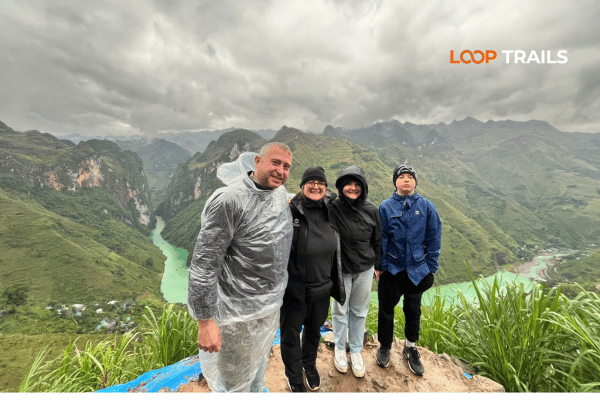
A good guide will have ponchos on hand, and most mountain showers pass quickly. If conditions become genuinely unsafe on a specific stretch (think: fog on a narrow pass), your guide will make the call to wait or take an alternate route. Build buffer time into your overall trip.
With most operators, you can request a specific guide if you’ve seen positive reviews about them. With Loop Trails, we match travelers with guides based on experience, language, and interests. You’re welcome to ask about specific guides when you inquire.
Easy Rider tour is motorbike-based — you’re riding pillion with a local guide on two wheels. A jeep or car tour uses a 4WD vehicle with a driver. The scenery is the same; the experience is very different. Motorbike puts you much closer to the environment; a jeep offers more comfort and weather protection.
For peak season (September–November, March–May), booking 1–2 weeks ahead is recommended. Off-season has more flexibility. Last-minute bookings are sometimes possible but guide availability isn’t guaranteed.
Yes — this is one of our favourite extended routes. A Ha Giang + Cao Bang combined tour typically runs 7–9 days and adds Ban Gioc Waterfall, Nguom Ngao Cave, and the limestone karst landscapes of Cao Bang province. See our Ha Giang–Cao Bang tour options.
Cash (Vietnamese Dong) is king on the Loop. ATMs exist in Ha Giang city and Dong Van, but they’re not always reliable in smaller towns. Withdraw cash before you leave Ha Giang city. Some operators accept card or bank transfer for the deposit.
Flexible operators (including Loop Trails) can usually accommodate reasonable changes — adding a day in Du Gia, for example, or cutting a day if you need to get back early. Communicate this with your guide/operator as early as possible.
Standard Easy Rider tours use locally-run guesthouses (nhà nghỉ) along the route — clean and basic, usually with private rooms. Some operators offer upgraded options in Dong Van and Meo Vac. Hot water and WiFi availability varies. Expect charm over comfort.
Technically possible but genuinely not recommended. Ha Giang city is 5–6 hours from Hanoi by bus, and the Loop itself needs at least 3 days to do properly. Budget 5–7 days minimum for a Ha Giang trip including travel time.
Contact information for Loop Trails
Website: Loop Trails Official Website
Email: looptrailshostel@gmail.com
Hotline & WhatSapp:
+84862379288
+84938988593
Social Media:
Facebook: Loop Trails Tours Ha Giang
Instagram: Loop Trails Tours Ha Giang
TikTok: Loop Trails
Office Address: 48 Nguyen Du, Ha Giang 1, Tuyen Quang
Address: 48 Nguyen Du, Ha Giang 1, Tuyen Quang
Facebook X Reddit Table of Contents Learn more: Ha Giang Loop Tours There’s a version of the Ha Giang Loop that people
Facebook X Reddit Table of Contents Learn more: Ha Giang Loop Tours There’s a moment on the Ma Pi Leng Pass —

Facebook X Reddit Table of Contents Learn more: Ha Giang Loop Tours Most people land on this question after staring at a