
Thúy Kiều( Grace) is a travel blogger and content contributor for Loop Trails Tours Ha Giang. She holds a bachelor’s degree in Sustainable Tourism from Vietnam National University, Hanoi, and has a strong passion for exploring and promoting responsible travel experiences in Vietnam’s northern highlands.
Learn more: Ha Giang Loop Tours
Most people come to Ha Giang for the roads. The passes. The karst peaks. The Nho Que River doing its impossible turquoise thing at the bottom of a canyon.
They don’t come for the food.
And then they eat something at a market in Meo Vac, or a homestay outside Dong Van, and they start asking questions — what is this, where does it come from, can I get more of it?
Ha Giang’s cuisine doesn’t get the attention that Hanoi’s pho or Hoi An’s white rose dumplings get. It’s mountain food: hearty, unfussy, built for cold mornings and long days of physical work. Some of it is challenging (horse stew is genuinely an acquired taste). Some of it is simple and deeply satisfying. All of it is shaped by the ethnic minority communities — H’Mong, Tay, Lo Lo, Dao, Giay — who’ve been living and farming these highlands for generations.
This guide will tell you what to eat, where to find it, how to navigate dietary restrictions, and how to make sure food is actually part of your Ha Giang Loop experience rather than an afterthought.
Ha Giang sits in Vietnam’s far northeast, sharing a border with China and characterized by a landscape of limestone karst, high altitude plateaus, and steep river valleys. The geography shapes everything — including what people grow, raise, and eat.
Corn is the dominant crop on the plateau, not rice. You’ll see it drying on rooftops, stacked in fields, strung across doorways. It becomes porridge, wine, and animal feed. The H’Mong community in particular has a cuisine deeply built around corn in ways that feel completely distinct from lowland Vietnamese food.
Livestock grazes on mountain grass: water buffalo, cattle, pigs, horses, goats. Meat is smoked, dried, or slow-cooked — techniques that evolved for practical preservation in remote areas without reliable refrigeration.
The altitude and cold mean warming dishes dominate: stews, porridges, soups. The short growing season produces vegetables that are intensely flavored. And the relative isolation of many communities means culinary traditions have stayed intact in ways they haven’t in more accessible parts of Vietnam.
Eating well in Ha Giang requires a little adventurousness and a willingness to eat where the locals eat — which often means plastic stools, no English menu, and pointing at whatever’s in the pot. The reward is a food experience that feels genuinely unfiltered.
Learn more: Ha Giang Market Days
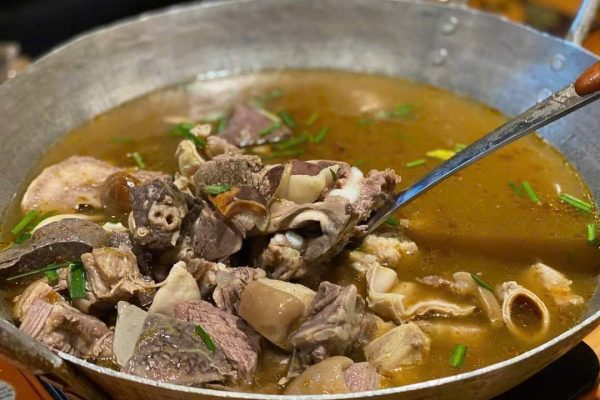
This is the dish Ha Giang is most known for, and the one that generates the most discussion. Thắng Cố is a slow-cooked stew traditionally made with horse meat and offal — heart, liver, intestines, lung — simmered in a large communal pot with spices including star anise, cinnamon, and cardamom. It’s eaten with fresh herbs and sometimes rice or corn alcohol on the side.
The flavor is deep and funky, with a rich broth that rewards slow eating. The offal components are genuinely challenging for people unfamiliar with organ meat — the texture and intensity are unlike anything in a typical Western food repertoire. But for adventurous eaters, it’s a one-of-a-kind dish with serious cultural weight.
Thắng Cố originated with the H’Mong community and was traditionally eaten at markets. The Sunday market at Meo Vac and the Dong Van market are two of the best places to find it in its most authentic form — simmering in massive pots, served to locals and travelers alike.
A word of honesty: if organ meat isn’t your thing, this one isn’t for you. Nobody will judge you for skipping it. But if you’re open to it, try at least the broth.
Learn more: Ha Giang Loop 4 Days 3 Nights
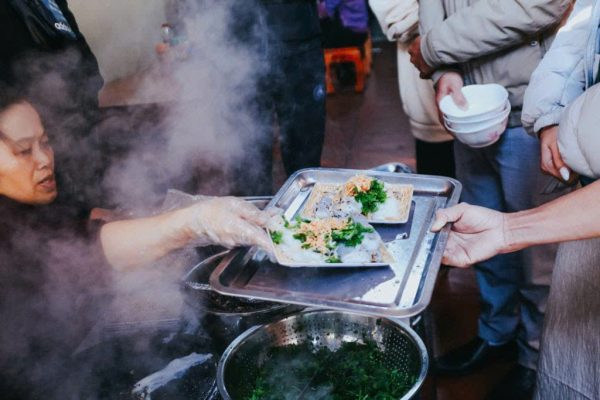
Bánh cuốn — steamed rice rolls — exists across Vietnam, but the Ha Giang version has regional character. Here it’s often served with a simpler filling, sometimes just minced pork and wood ear mushroom, and the sauce leans toward a lighter, slightly sweetened fish sauce dip. Eaten for breakfast at small roadside spots, it’s one of the most comforting and accessible dishes on the loop.
Look for it in the morning at market towns — a woman with a steamer setup and a small table out front is a reliable sign. Point, sit, eat.
Learn more: Ha Giang Loop 2 Days 1 Night
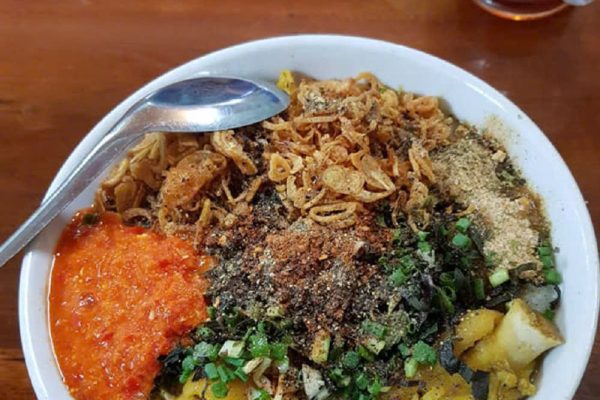
This one is genuinely unique to Ha Giang and the surrounding mountain regions. Ấu Tẩu porridge is made with the root of the monkshood plant — which is, technically, toxic in large or improperly prepared quantities. Properly cooked (and it is, by people who’ve been preparing it for generations), it becomes a warming, slightly numbing congee eaten in cold weather.
The numbing sensation is real and mild — similar to Sichuan pepper but gentler. It’s considered a warming and medicinal dish. You’ll find it most reliably in Dong Van and Meo Vac, typically from October through March when temperatures at altitude drop significantly.
If you’re visiting in cooler months, this is a must-try. The combination of flavor, history, and the mild tingle is an experience you genuinely can’t replicate anywhere else.
Learn more: Ha Giang Loop for Seniors
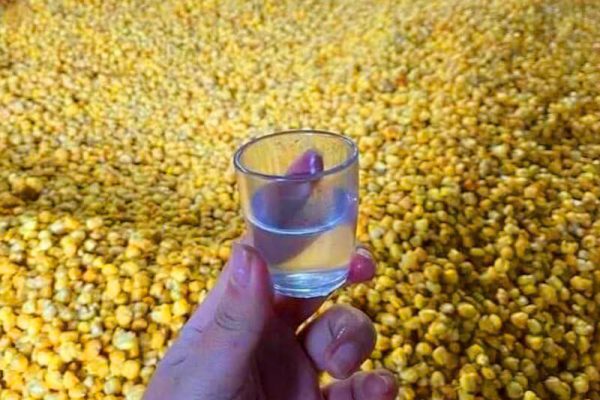
Not a dish, but impossible to leave out. Rượu ngô — corn liquor — is produced all across the Ha Giang plateau and is the drink of the region. It ranges from rough and rocket-fuel intense (some of the home-brewed stuff) to genuinely smooth and aromatic (the better-known producers from Dong Van and Meo Vac).
The flavor is distinct from rice wine: slightly sweeter, with a roasted corn character and a warming finish. It’s drunk from small ceramic cups, often shared communally.
At homestays, you’ll almost certainly be offered some. Accepting is a genuine gesture of connection with your hosts. You don’t need to drink a lot — a small cup with dinner is a perfectly natural cultural participation.
Learn more: Ha Giang Loop Cost & Tips
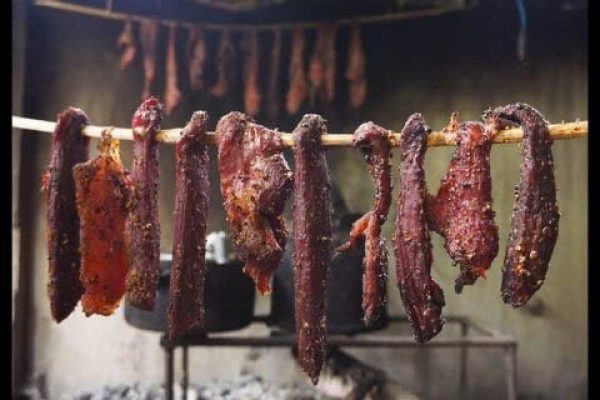
Smoked meat is everywhere in Ha Giang, and it’s excellent. The technique involves hanging meat over a slow-burning fire for days — sometimes weeks — producing something with intense, deep smokiness and a dry, almost jerky-like texture. Buffalo is leaner and gamier; pork is richer.
You’ll see it hanging in kitchens at homestays and for sale at markets. It’s eaten as a standalone snack, sliced thin, or incorporated into stir-fries with garlic and chili. The smoked pork with bamboo shoots is particularly good — a combination of earthy, smoky, and slightly acidic that works extremely well.
Learn more: Ha Giang Cao Bang 5 Days
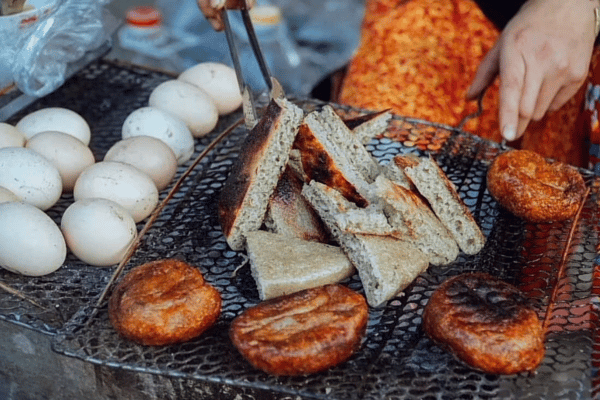
If you’re visiting in buckwheat flower season (roughly October to November, though timing varies — check current conditions), the plateau becomes pink-and-white with blossoms. Buckwheat grain is harvested and used in cakes — dense, slightly nutty rounds that are eaten as a snack, often with local honey.
They’re not sweet in the way a western cake is. More of a wholesome grain cake, with a slightly earthy flavor. Sold at roadside stalls and markets during the season. Even outside flower season, some stalls carry them year-round.
Learn more: Ha Giang Loop Solo Travel
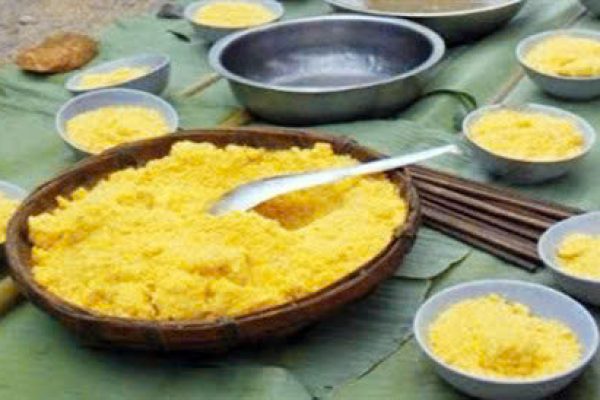
Men men is the everyday food of the H’Mong people of the plateau — a simple porridge or crumble made from coarsely ground corn. It’s sometimes compared to polenta, though the texture and preparation are distinct. Eaten as a staple accompaniment to meat dishes or vegetables, it fills you up and keeps you going through a cold day on the road.
This isn’t a dish you seek out so much as one you encounter — at homestays, at local eateries with no tourist menu, as part of a multi-dish meal. Eating it is a small but genuine connection to how people on the plateau actually eat, day to day.
Learn more: Ha Giang Loop Photography
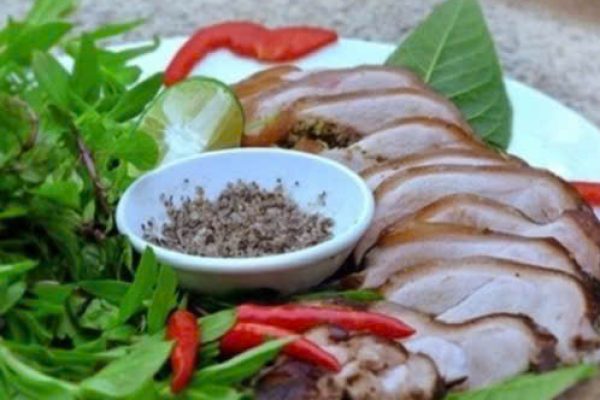
Literally “armpit pig” — named for the small, free-ranging pigs traditionally raised by ethnic minority families, sometimes carried under the arm at markets. These pigs graze on mountain grasses and forage naturally, producing pork with notably better flavor and texture than intensively farmed equivalents.
You’ll find it grilled, stir-fried, or as part of a multi-dish set meal at guesthouses. Often just salt, local herbs, and fire. If you have one meal where you eat pork and think “this tastes better than usual,” this is probably why.
Want to make sure food is part of your Ha Giang Loop experience? Our guided tours include homestay meals that put you at the table with locals — not at a restaurant producing tourist versions of mountain cuisine. See our Ha Giang Loop tour options and ask us about meal inclusions.
Learn more: Ha Giang Packing List
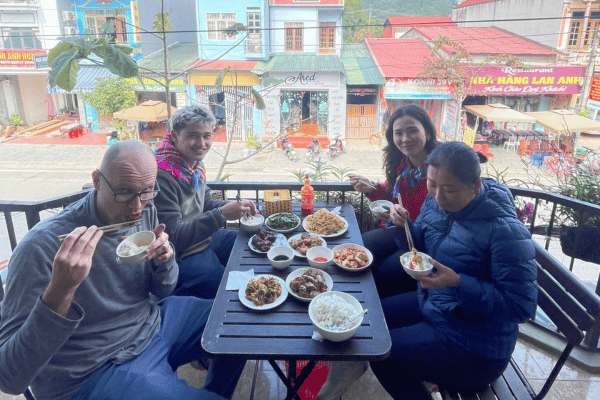
Ha Giang City is the starting point for most loop travelers, and the most accessible place for food on the entire route. There are proper restaurants, some English menus, and the most reliable options for travelers with dietary restrictions.
Good things to eat here before heading out:
Ha Giang City is also where you stock up on snacks for the road. Pack dried fruit, biscuits, or whatever you want for long stretches between villages.
Quan Ba and Yen Minh are the first main stops after Ha Giang City, and the food scene is modest — small guesthouses, local eateries, limited choice. This isn’t where you come for a memorable food experience; it’s where you fuel up and rest.
Standard Vietnamese rice and noodle dishes are reliable here. The food is simple and fine — think family-run kitchens producing whatever’s in season. No big surprises, no disappointments.
Dong Van is one of the loop’s most interesting food stops. As a historic market town with ethnic minority communities all around, it has a density of local food culture that rewards a slow walk around the old quarter in the evening.
Look for:
The Dong Van Sunday market (check current schedule — markets sometimes shift dates) is a legitimate food event: local produce, live animals, market snacks, and thắng cố in communal pots.
Meo Vac might be the best food stop on the entire loop. It’s a working town, not a tourist stop, and the Sunday market draws vendors and shoppers from villages across the surrounding mountains.
The thắng cố at Meo Vac market is considered among the best in the region. Alongside it you’ll find:
Even outside market day, Meo Vac has some good local restaurants and guesthouses where dinner is a proper multi-dish affair — communal, hearty, and worth lingering over.
Du Gia is the loop’s green, valley contrast to the stark plateau sections. The food here skews more toward mainstream Vietnamese — fresher vegetables, fish from the local rivers, lighter cooking styles.
If you’ve been eating heavy smoked meat and thick stews for several days, Du Gia is a welcome gear change: fresh vegetable stir-fries, river fish, lighter broths. The area around Du Gia Waterfall has several guesthouses that serve solid family-style meals included in accommodation.

Learn more: Ha Giang in September & October
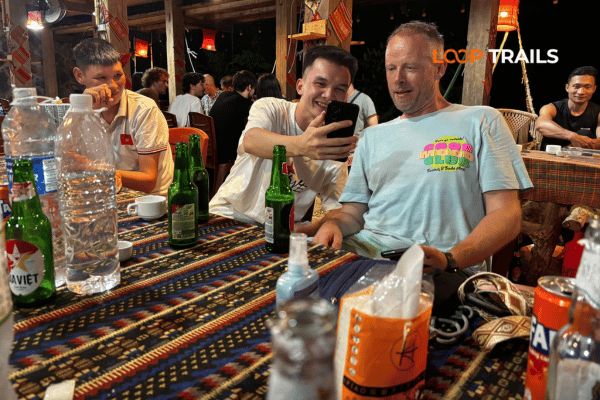
The ethnic minority markets of Ha Giang are where food, community, and culture converge most visibly. They happen weekly in different towns — Meo Vac, Dong Van, Yen Minh, Quan Ba — and rotate through the week so neighboring communities can all attend.
Markets typically start early morning and wind down by noon. Food stalls set up at dawn: corn wine sellers, thắng cố pots, grilled corn over charcoal, fresh tofu, baked goods, dried meat, pickled vegetables, herbs.
How to eat at a Ha Giang market:
Market food is cheap, authentic, and the best way to understand what people in this part of Vietnam actually eat. If your itinerary includes a market day, treat it as a food experience as much as a cultural one.
Learn more: Ha Giang Loop for Families & Groups
Let’s be straightforward: the Ha Giang Loop is not an easy destination for vegetarians, and it’s genuinely difficult for vegans.
Mountain food culture here is built around meat — smoked, stewed, grilled, dried. Vegetables are supporting players, not the main event. Many dishes that appear vegetarian are cooked in lard or seasoned with fish sauce as a matter of course, without it being flagged.
What vegetarians can reliably find:
Practical advice for vegetarians:
Vegans face significantly higher difficulty. Dairy isn’t a major ingredient in mountain cuisine so that’s less of an issue, but fish sauce and lard are pervasive. With advance notice to a good tour operator, it’s manageable — but requires communication and planning.
Learn more: Ha Giang to Cao Bang
Corn wine (rượu ngô) — already covered above. The defining drink of the region. Try it.
Green tea — served at guesthouses and homestays, often free, often excellent. The elevation and soil of the region produce some good tea. Drink it.
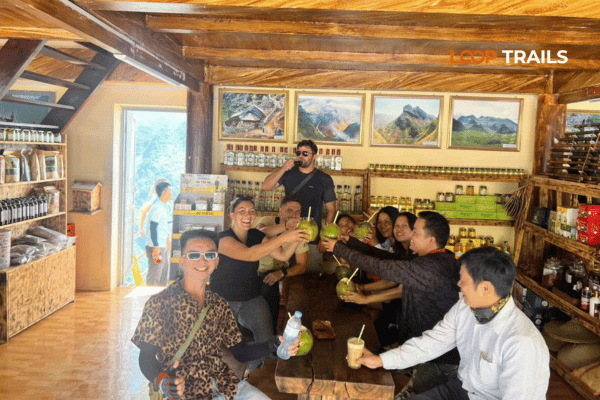
Fresh sugarcane juice — available at roadside stalls in lower altitude sections. Cold, sweet, hydrating on a warm day.
Bottled water — carry your own. Tap water is not safe to drink on the loop. Many homestays provide filtered water or large bottles to fill from; some don’t. Don’t assume.
Coffee — Vietnamese drip coffee (cà phê) is available in Ha Giang City and larger towns. On the more remote sections of the loop, coffee availability gets patchy. If you have a caffeine dependency, plan accordingly — instant coffee and a thermos of hot water is a reasonable backup strategy.
What about alcohol beyond corn wine? Beer is available in most guesthouses and some restaurants on the loop — usually Hanoi Beer or Bia Ha Giang, the local brand. Wine is not a thing here in any meaningful sense. If you’re a wine drinker, Ha Giang is a good trip to experiment with corn wine and cold beer instead.
Learn more: Ha Giang Loop route and itinerary
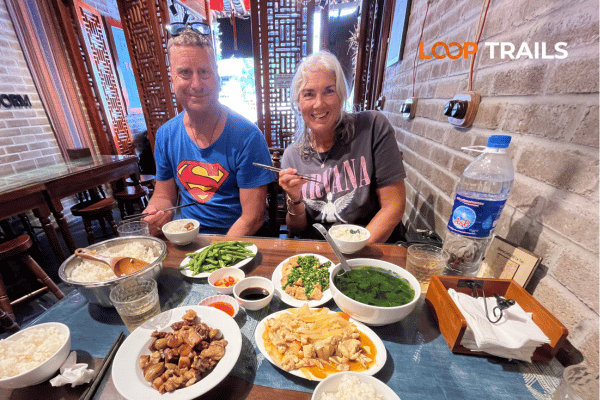
Eat where locals eat. The high-traffic local spots with plastic stools and pots simmering all day have high turnover, which means fresher food. Avoid places that look like they haven’t had a customer in a while.
Be thoughtful with raw or undercooked food. Salads and raw vegetables in remote areas can carry risk — not always, but the further from a town, the less reliable the water source used to wash produce. Cooked food is generally safe.
Thắng Cố and offal. If your stomach is sensitive to rich, fatty, or strongly flavored food, go slowly. A small portion to try is different from a full bowl. Listen to your body.
Heat and seasoning. Mountain food in Ha Giang isn’t typically very spicy — chili is used but not at the levels you’d find in southern Vietnam or Sichuan. If you want heat, ask for chili on the side (ớt xin thêm).
The corn wine situation. Home-brewed corn wine at homestays can be strong and inconsistently potent. If you’re riding the next morning, be sensible. A small cup of social drinking is different from a full night at the bottle.
Bring snacks for the road. There are genuine stretches of the loop, particularly between Yen Minh and Dong Van and between Meo Vac and Du Gia, where roadside food stops are scarce or nonexistent. Don’t rely on finding a noodle shop exactly when you’re hungry.
Learn more: Ha Giang Jeep Tours
Food on the Ha Giang Loop is heavily shaped by how you’re traveling — because it determines where you sleep, who cooks for you, and how deep into local food culture you get.
Self-Drive Motorbike Maximum freedom, but food is on you. You stop where you want, eat what you find. This can be wonderful — stumbling into a market stall, eating thắng cố at 8am with locals — but it also means you can go hours without a proper meal if you’re on a fast stretch. Self-drivers need to be more proactive about food planning.
Our motorbike rental in Ha Giang comes with route guidance that includes recommended food stops — so you’re not riding blind past the best lunch spots.
Easy Rider Tour This is arguably the best food setup. Your driver-guide knows where the good stuff is — not just the famous spots, but the specific stall at the specific market, the homestay that makes exceptional smoked pork. The relationship between guide and local community means you often eat in places you’d never find on your own. Meals are usually included; the quality varies by operator, so ask specifically.
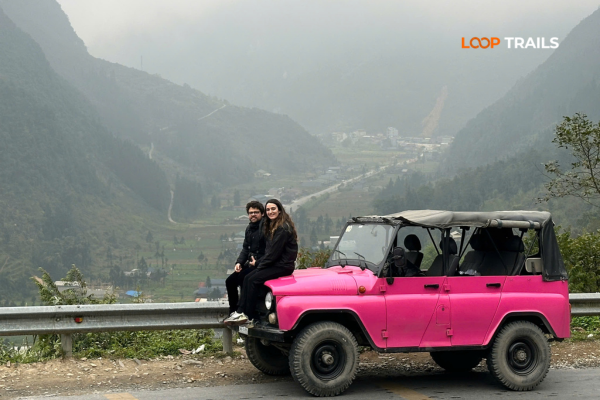
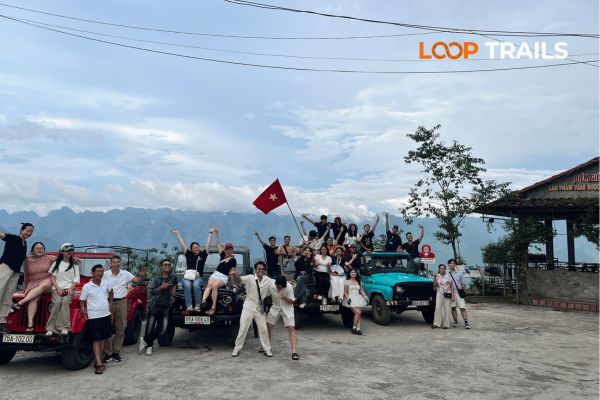
Jeep Tour Similar advantages to Easy Rider in terms of guide knowledge. The jeep format is great for groups with different dietary needs because it’s easier to communicate preferences and adjust. Homestay meals on a well-run jeep tour are usually communal, multi-dish affairs — the kind of dinner that turns into a two-hour social event.
Want the full food and landscape experience without navigating it alone? Browse our Ha Giang Loop tours and reach out on WhatsApp to ask about meal inclusions, dietary accommodations, and which itinerary works best for your group.
Learn more: Ha Giang Cao Bang by Jeep and motorbike
Thắng Cố — the slow-cooked horse meat and offal stew — is the most culturally significant dish of the Ha Giang plateau. It originates with the H’Mong community and is most authentically found at weekly markets in Meo Vac and Dong Van. It’s an acquired taste, but it’s genuinely iconic to the region.
Ha Giang’s food is genuinely worth your attention — but it’s mountain food, not fine dining. Expect hearty, honest, unfussy cooking. The best meals are often at homestays and markets, not restaurants. Go in with curiosity rather than expectations shaped by city-based Vietnamese food, and you’ll be pleasantly surprised.
It’s possible but requires planning and communication. Rice and vegetables are available everywhere; fresh tofu is at markets. The challenge is that many dishes use lard and fish sauce without flagging it. Tell your operator or host well in advance, carry backup snacks, and you’ll manage. Vegans have a harder time — advance planning is essential.
Try rượu ngô (corn wine) at least once — it’s the defining drink of the plateau. Green tea at homestays is excellent and free. Carry your own bottled water; tap water is not safe to drink. Coffee is available in larger towns but gets scarce on remote sections of the loop.
Buckwheat flower season typically peaks in October and November, when the grain is harvested and buckwheat cakes appear at markets and roadside stalls. Outside this season, some stalls carry them year-round, but selection is better in autumn. Check current season conditions before you go.
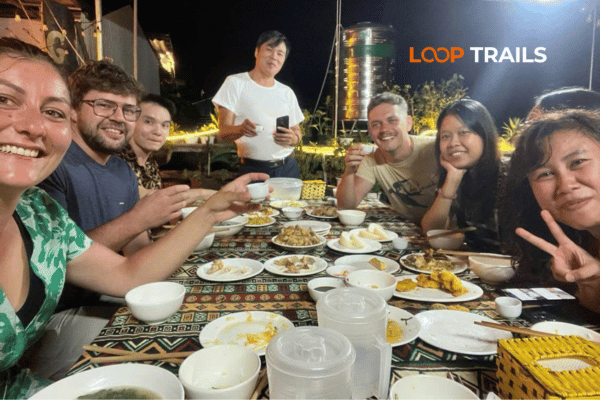
Often excellent, in an honest, homemade way. Typical homestay dinners are multi-dish communal meals — smoked meat, stir-fried vegetables, rice or corn porridge, soup. Quality varies by homestay; a well-run tour operator will use homestays known for good cooking. Some of the most memorable meals on the loop happen at a basic table in someone’s home.
Both. Ha Giang City and larger towns (Dong Van, Meo Vac, Yen Minh) have proper restaurants. Smaller villages and remote sections rely on guesthouses and homestays serving set meals. Between towns, roadside food stalls exist but are sporadic. Don’t count on finding food at a specific point on the road — carry snacks.
Yes, it’s safe — it’s a traditional dish prepared by people who’ve been making it for generations. The offal components can be challenging for sensitive stomachs, and the dish is very rich. If you’re uncertain, try a small portion first. The broth alone is worth trying even if the offal isn’t your thing.
Ấu tẩu is a porridge made from monkshood root, which contains alkaloids that are toxic when raw but neutralized by proper cooking. Prepared correctly by experienced cooks — as it has been for centuries in Ha Giang — it’s safe and produces a mild warming and slightly numbing sensation. It’s typically eaten in cooler months and found most reliably in Dong Van and Meo Vac.
Very affordable by international standards. Market snacks cost a few thousand dong; a full bowl of noodles or a set meal at a local restaurant is typically under 50,000–100,000 VND. Homestay meals included in a tour package represent good value. Carry cash in small denominations — card payment is not common outside Ha Giang City.
Not to eat — pointing, gesturing, and smiling gets you a long way. A few useful phrases: “tôi ăn chay” (I’m vegetarian), “ngon quá” (this is delicious), “thêm một cái nữa” (one more, please). Having a guide who speaks Vietnamese and knows the local food scene well is the easiest solution for getting the full experience.
Practical options: nuts, dried fruit, energy bars, Vietnamese biscuit snacks (widely available in Ha Giang City), crackers. Avoid anything that melts or becomes unpleasant in a hot bag. On longer riding days between towns, a packed lunch from your homestay host is worth requesting the night before.
Contact information for Loop Trails
Website: Loop Trails Official Website
Email: looptrailshostel@gmail.com
Hotline & WhatSapp:
+84862379288
+84938988593
Social Media:
Facebook: Loop Trails Tours Ha Giang
Instagram: Loop Trails Tours Ha Giang
TikTok: Loop Trails
Office Address: 48 Nguyen Du, Ha Giang 1, Tuyen Quang
Address: 48 Nguyen Du, Ha Giang 1, Tuyen Quang
Facebook X Reddit Table of Contents They’re both in the north. They both involve dramatic limestone formations. And if you search “best
Facebook X Reddit Learn more: Ha Giang Loop Tours Table of Contents There’s a conversation that happens in every hostel common room