
Ha Giang Easy Rider: The Complete Guide (2026)
Facebook X Reddit Table of Contents Learn more: Ha Giang Loop Tours There’s a moment, usually somewhere on Ma Pi Leng Pass,
Thúy Kiều( Grace) is a travel blogger and content contributor for Loop Trails Tours Ha Giang. She holds a bachelor’s degree in Sustainable Tourism from Vietnam National University, Hanoi, and has a strong passion for exploring and promoting responsible travel experiences in Vietnam’s northern highlands.
Every travel blogger tells you to visit Ha Giang during rice harvest season. They show you the Instagram photos—those impossibly golden terraces that look like nature painted the mountains with a honey-colored brush. But here’s what they don’t always explain: what those two months actually feel like on the ground, whether the crowds are worth dealing with, and if the weather cooperates with your photography dreams.
I’m not going to tell you September and October are perfect months to visit Ha Giang. They’re not perfect. It still rains. The roads can get slippery. Homestays fill up fast, and you’ll pay premium prices. But if you want to see the landscape at its most visually stunning—when the terraces glow like stacked gold coins against dark green mountains—this is your window.
This guide breaks down what really happens during harvest season, from the specific weeks when the terraces look best to the practical realities of riding the Loop when everyone else has the same idea.
Learn more: Complete Ha Giang Loop Guide 2025
Learn more: Ha Giang Loop Tours
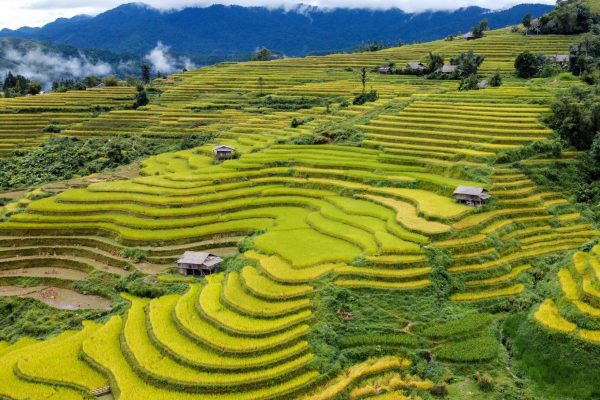
Rice terraces don’t just suddenly turn gold overnight. The transformation happens gradually as the rice plants mature, shifting from deep green to yellow-green to that signature golden hue that makes photographers lose their minds.
The ethnic minority groups in Ha Giang—primarily H’Mong, Tay, and Dao people—plant rice in the spring (typically late April to May). The plants grow through the wet summer months, then begin changing color in late August and early September as they approach harvest readiness.
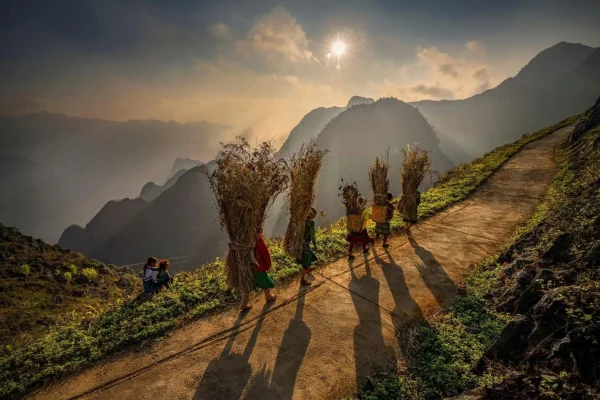
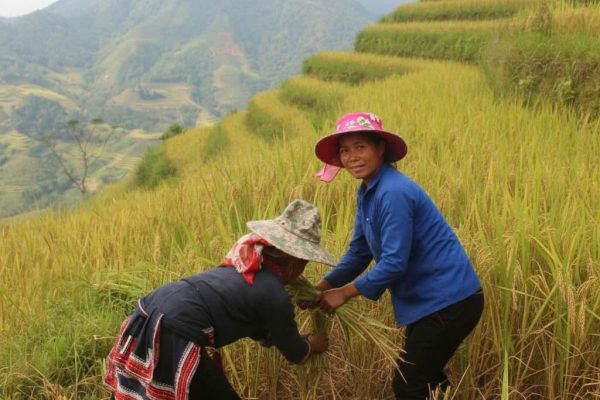
What makes September and October special is the concentrated overlap between golden terraces and harvest activity. You’re not just seeing beautiful landscapes—you’re watching a working agricultural system at its peak moment. Farmers are out cutting rice by hand, bundling stalks, and transporting their harvest. The villages pulse with activity that you don’t see in the quieter months.
This timing is fairly consistent year to year, though weather variations can shift things by a week or two. A particularly rainy summer might delay the golden period slightly. An unusually hot August might accelerate it. But the general window holds steady: mid-September to early October is your best bet.
Let’s clear up a common misconception: September and October aren’t dry season months in Ha Giang. The area still sees regular rainfall, especially in September. October tends to be drier, but you’re not guaranteed perfect blue skies.
What you do get is clearer air between rain systems. The monsoon season is winding down, so when it does rain, storms tend to pass through relatively quickly rather than settling in for days. You’ll have better visibility of the karst mountains, and the clouds create dramatic lighting conditions that actually enhance photography.
Temperature-wise, these months are comfortable for riding. Daytime highs in the valleys sit around 25-28°C (77-82°F), while the mountain passes stay cooler at 18-22°C (64-72°F). Nights can drop significantly, especially in higher elevation areas like Dong Van or Du Gia—expect 12-15°C (54-59°F) after sunset.
Beyond the obvious visual appeal, harvest season brings subtle changes to the Loop experience that matter if you’re paying attention.
Markets swell with activity. Local markets like the Dong Van Sunday market or Meo Vac market become genuine working spaces where farmers sell their harvest, buy supplies, and trade goods. You’ll see rice bundles stacked everywhere, traditional measuring techniques, and negotiations over crop quality.
The homestays serve better food. This sounds minor, but when host families have access to fresh harvest vegetables and rice, the meals improve noticeably. You’re eating ingredients that were growing in the field behind your homestay that morning.
Photography opportunities multiply. It’s not just the terraces—it’s the human element. People working in the fields, traditional harvest methods, rice laid out on roads to dry, buffalo pulling loads. The landscape becomes populated with photographic moments that don’t exist in other months.
Learn more: Ha Giang Loop 2 Days 1 Night
Here’s where we need to set realistic expectations, because the Instagram photos can be misleading.
If you arrive in the first week or two of September, you’ll catch the terraces mid-transition. Some sections will be golden, others still predominantly green. This creates a patchwork effect that’s actually quite beautiful in its own right—you get color variation and visual complexity that pure gold doesn’t offer.
The advantage of early September is fewer crowds and lower prices. The disadvantage is inconsistency. One valley might be perfect, the next valley still largely green. You’re gambling a bit on which specific locations will be at peak color.
This is the money window. From roughly September 15 to October 10, you’re likely to catch the terraces at their golden best across most of the Loop route.
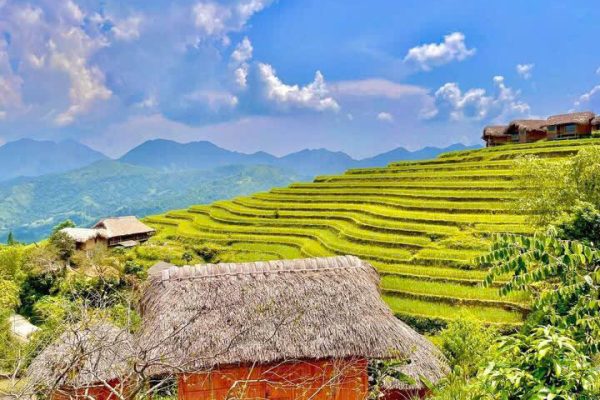
The color isn’t uniform everywhere—different villages plant and harvest on different schedules—but the majority of terraced areas will be in that honey-gold phase. The rice plants are mature but not yet cut, so the terraces remain full and lush.
Lighting matters enormously during this period. The golden color intensifies in warm light (early morning and late afternoon), while midday sun can wash it out and make the terraces look pale yellow rather than rich gold. Plan your photo stops accordingly.
By late October, much of the rice has been harvested. The terraces shift from golden to brown as the bare earth shows through. Some farmers leave rice stubble in the fields, creating a textured, straw-colored appearance.
This isn’t necessarily worse—it’s different. The landscape takes on an earthy, sculptural quality. Without the rice obscuring the terrace structure, you see the engineering of these carved mountainsides more clearly. It’s less Instagram-perfect but more visually honest.
Some areas, particularly at higher elevations or in valleys with later planting schedules, will still have golden terraces into late October. But you can’t count on it. If you’re specifically chasing the golden color, aim to visit before October 15.
Learn more: Ha Giang Loop 3 Days 2 Nights
Not all parts of the Ha Giang Loop feature rice terraces equally. Here’s where to actually find the views you’re hoping for.

Learn more: Ha Giang Loop 5 Days 4 Nights
Hoang Su Phi sits about 70 kilometers southwest of Ha Giang City, technically off the standard Loop route. But if rice terraces are your primary motivation for visiting, this detour deserves serious consideration.
Hoang Su Phi contains some of the most extensive and dramatically stacked terraces in northern Vietnam. The slopes are steeper here, creating more vertical layers and more impressive cascading effects. Villages like Nam Hong, Ho Thau, and Ban Luoc offer viewpoints that rival anything on the main Loop.
The trade-off is logistics. Hoang Su Phi requires either adding a day to your itinerary (turning a 3-day Loop into 4 days) or replacing part of the standard route. Most tour operators can arrange this modification if you request it in advance. Self-drive riders can navigate there independently, though the roads are narrower and more challenging than the main Loop highways.
Learn more: Ha Giang Loop by Jeep
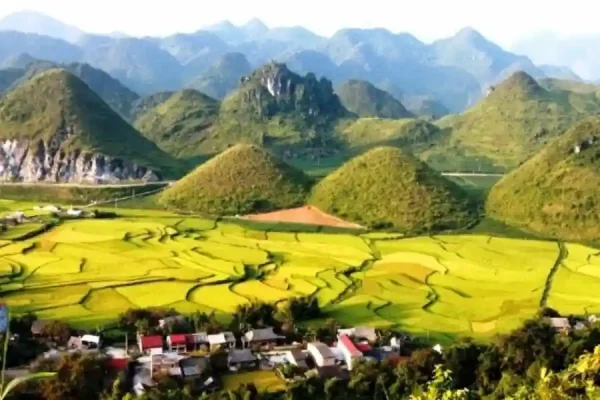
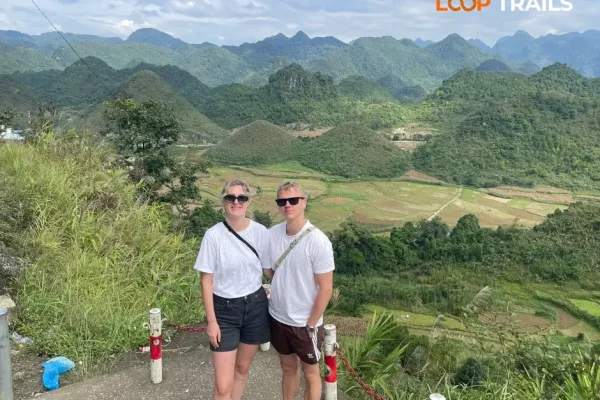
Heaven Gate (about 40 kilometers from Ha Giang City) provides your first major rice terrace views on the standard Loop route. The terraces here cascade down both sides of the valley, with the famous Twin Mountains (Fairy Mountains) visible in the distance.
The viewpoint platform at Heaven Gate gets crowded during peak season—expect tour buses and clusters of photographers competing for the same angles. Arrive early morning (before 8 AM) or late afternoon (after 4 PM) for fewer people and better light.
The terraces below Heaven Gate are visible but distant from the viewpoint. For closer encounters, continue past Heaven Gate toward Tam Son and watch for small roads branching off the main highway. Some of these lead to terrace-side villages where you can walk among the rice fields.
Duong Thuong Valley, which you’ll pass through on the return day of a 4-day Loop (or as a detour on the 3-day route), delivers intimate terrace experiences. The valley floor is relatively flat, but the surrounding slopes are terraced intensively.
What makes Duong Thuong special is accessibility. You’re riding through the valley rather than looking down from above, so the terraces rise on both sides of you. You can pull over easily, walk into the rice fields (respectfully, without damaging crops), and get ground-level perspectives.
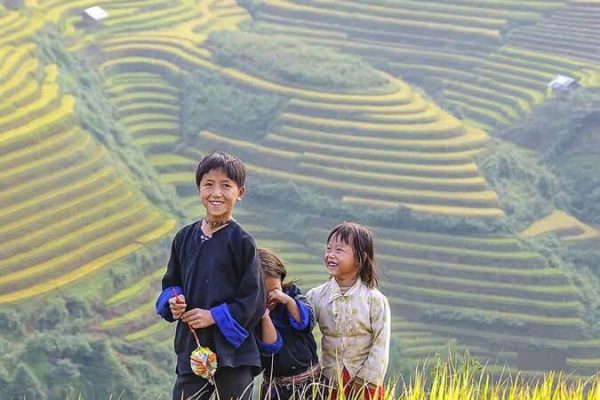
The villages along Duong Thuong valley—primarily H’Mong communities—maintain traditional farming practices. During harvest season, you’ll see families working the terraces using hand tools, exactly as their ancestors did. The authenticity factor here is high.
The stretch between Yen Minh and Dong Van includes several terrace-rich areas, particularly around Lao Sa village and the roads approaching Vuong Palace.
These terraces tend to be smaller scale than Hoang Su Phi or Duong Thuong, but they’re conveniently located along the main route with good road access. You don’t need to detour or hike—just pull over when you see golden slopes that catch your eye.
The landscape here mixes terraces with karst rock formations, creating the classic Ha Giang aesthetic: honey-gold rice against gray limestone peaks. This combination photograph particularly well.
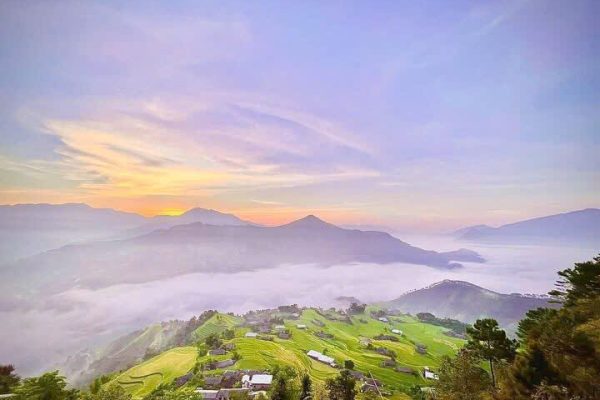
Du Gia village sits in a bowl valley surrounded by mountains, many of which are terraced. The area doesn’t have the extensive terrace systems of other locations, but what’s there integrates beautifully with the village setting.
The advantage of Du Gia is that you’re spending the night there (on most 4-day itineraries), which gives you time to explore on foot during the golden hour. Walk uphill from the main village toward the terraced slopes in late afternoon, and you’ll get warm light hitting the rice without the rushed feeling of roadside photo stops.
The homestays in Du Gia often sit adjacent to small family rice terraces. You might literally wake up to a golden terrace view from your sleeping area—though not every homestay offers this, so ask in advance if it matters to you.
Learn more: Ha Giang Motorbike Rental
Let’s talk about what the weather actually does during these months, because “harvest season” doesn’t mean “perfect weather season.”
September carries residual summer warmth. Expect daytime temperatures in the valleys (Ha Giang City, Yen Minh) around 26-28°C (79-82°F). The high mountain passes—Ma Pi Leng, Tham Ma slope—stay cooler at 20-22°C (68-72°F).
October brings a noticeable drop. Daytime highs in the valleys fall to 23-25°C (73-77°F), while the passes can get quite chilly at 16-18°C (61-64°F). The shift happens gradually—early October still feels like late September, but by mid-October, you’ll definitely want warmer layers.
Nighttime temperatures in September bottom out around 18-20°C (64-68°F) in the valleys, colder at elevation. October nights in places like Dong Van or Du Gia can drop to 12-15°C (54-59°F). Homestays typically provide blankets, but they’re often thin, and rooms aren’t heated. Pack a warm layer for sleeping.
September still sees regular rainfall. You’re looking at roughly 60-70% chance of rain on any given day, though “rain” often means brief afternoon showers rather than all-day downpours. The rain typically rolls in around 2-4 PM, lasts 30 minutes to 2 hours, then clears.
October is noticeably drier. Rain probability drops to around 40-50%, and when it does rain, it’s usually lighter. You might go several days without seeing rain, especially in the latter half of October.
The rain patterns affect riding strategy. If you’re on a motorbike (self-drive or easy rider), September riders should expect to stop and wait out at least one shower during a full riding day. Carry rain gear and don’t fight it—pull over, have coffee, let it pass.
Fog is the sneakier weather issue. September and October mornings often start foggy, particularly in the valleys. The fog usually burns off by 9-10 AM, but early morning riders on passes like Ma Pi Leng or Tham Ma might experience seriously reduced visibility. Ride cautiously until the fog lifts.
Rain during harvest season doesn’t create the muddy, treacherous conditions you might experience during peak monsoon (July-August). The roads are paved on the main Loop route, and they drain reasonably well.
However, wet pavement on mountain curves requires respect. The carved roads along Ma Pi Leng Pass or through the Dong Van Karst Plateau can get slippery. Loose gravel washes onto the road during heavy rain. Fallen leaves create slick patches you won’t see until you’re on them.
If you’re self-driving, reduce speed on wet descents. Keep more following distance. Don’t lean as aggressively into corners. If you’re on an easy rider tour, trust your guide to adjust pace for conditions—they know these roads intimately.
Construction occasionally pops up on the Loop route, and the timing is unpredictable. Road crews sometimes take advantage of the post-monsoon, pre-winter window to do repair work. This can create delays or require detours. Local guides navigate these disruptions better than independent riders following downloaded maps.

Learn more: Ha Giang Loop by Car 2025
Peak season means peak crowds. Here’s how that actually impacts your experience.
September and October see roughly double the visitor numbers compared to quieter months like May or November. You’ll notice this most obviously at the big viewpoint stops: Heaven Gate, Ma Pi Leng lookout, Lung Cu Flag Tower.
These locations can get genuinely crowded during midday hours. Think 30-50 people at Heaven Gate simultaneously, competing for photos at the same railing. Tour buses unload groups who spend 15-20 minutes, then move on. If you arrive at 11 AM or 1 PM, you’re hitting the peak congestion window.
On the roads themselves, you’ll see more motorbikes and tour vehicles than during off-season. The traffic isn’t overwhelming—Ha Giang doesn’t get Bali levels of congestion—but you’ll definitely share the road with other tourists. Expect to encounter other riders at every major photo stop, viewpoint, and popular restaurant.
Homestays fill up, especially the ones with good reputations in places like Dong Van and Du Gia. The number of homestays is limited, and tour operators block-book many of them in advance. Independent travelers arriving without reservations sometimes struggle to find accommodation, particularly if you arrive late in the day.
If you’re booking a guided tour (easy rider, self-drive group tour, or jeep tour), accommodation is arranged for you as part of the package. Your operator has relationships with homestay owners and secures beds in advance. This removes the stress entirely.
Independent self-drive riders need to plan ahead during September-October. Don’t assume you’ll find a homestay on the spot. Booking 3-5 days in advance is recommended, especially for weekends or Vietnamese holidays.
Some homestays don’t take reservations from individual travelers—they work exclusively with tour companies who bring steady business. Others accept walk-ins but fill up quickly. Having a backup list of homestay contacts in each stop location saves headaches if your first choice is full.
Tour operators see booking volume spike for September-October departures. Popular tour companies with strong reviews can fill up 2-3 weeks in advance during absolute peak periods (last two weeks of September).
This doesn’t mean last-minute booking is impossible. Operators expand capacity during high season, adding more groups and guides. You can often secure a spot with 5-7 days notice. But if you have fixed dates or want to ride with a specific highly-rated guide, earlier booking helps.
Prices don’t fluctuate as wildly as some tourist destinations—there’s no aggressive surge pricing—but some operators do add modest peak season premiums (typically 5-10% higher than low season rates). Confirm the exact price when you book rather than assuming it matches the off-season quote you saw online.
Learn more: Ha Giang Loop Weather
Packing for harvest season requires balancing potentially warm days against cool nights and occasional rain.
The key word is layers. You’ll shed and add clothing multiple times per day as you move between valley heat, mountain pass wind, and evening chill.
Base layer: Lightweight, moisture-wicking t-shirts or long-sleeve shirts. Bring 3-4 since you’re riding for multiple days. Quick-dry fabric is essential—cotton stays damp if you sweat or get rained on.
Mid layer: A fleece or light down jacket for evenings and early mornings. October especially demands this. Even if you don’t wear it while riding, you’ll want it at the homestay after sunset.
Outer layer: A windproof jacket for riding. Mountain passes generate wind that makes 20°C (68°F) feel much colder at speed. A thin windbreaker over your other layers makes a significant difference.
Bottoms: Comfortable riding pants or convertible hiking pants work well. Jeans are fine but take forever to dry if they get wet. Avoid shorts unless you’re also bringing long pants—mosquitoes and cool evenings make shorts impractical for much of the trip.
Socks: Bring more than you think you need. Damp socks are miserable, and homestays don’t always provide good drying conditions. Merino wool socks dry faster and don’t smell as bad as cotton after multiple wears.
Rain happens. Accept this and pack accordingly.
Rain jacket: A packable rain jacket that fits over your other layers. Poncho-style rain gear works but can be unwieldy on a motorbike—fitted jackets give you better control while riding.
Rain pants: Often overlooked but genuinely useful. Wet jeans against a motorcycle seat for hours is miserable. Lightweight rain pants fold small and save you from soggy discomfort.
Waterproof bag or dry bag: Protect your phone, camera, and any electronics. Even if your main backpack has a rain cover, keep valuables in an additional waterproof layer inside. Rain finds ways into backpacks during heavy downpours.
Shoe consideration: Waterproof hiking boots are ideal but add weight and bulk to your packing. Some travelers compromise by bringing water-resistant trail runners and accepting they might get wet, then drying them overnight at homestays. Sandals or flip-flops for homestay evenings let your riding shoes dry out.
If photographing the rice terraces is a priority, consider these items beyond your camera.
Polarizing filter: Makes a substantial difference for rice terrace photography. It reduces glare off the water in the paddies, deepens the blue sky, and makes the golden color pop more intensely. This is the single most valuable photo accessory for this specific landscape.
Extra batteries: Cool weather drains camera batteries faster. Bring at least one spare, ideally two. Homestays sometimes have limited outlets for charging, so battery redundancy matters.
Lens cloth: Dust and moisture accumulate on lenses quickly. The combination of road dust kicked up by other vehicles and occasional rain mist means you’ll be cleaning your lens multiple times per day.
Phone power bank: Even if you’re shooting primarily on a camera, your phone serves as GPS, backup camera, and communication device. A 10,000mAh power bank keeps it running for the full trip.
Drone considerations: If you’re bringing a drone, verify current regulations before your trip. Rules can change. Some areas within Ha Giang have flight restrictions, particularly near the Chinese border. Weight and bulk also matter—drones add significant mass to your luggage on a motorbike trip.
Learn more: Ha Giang Loop Easy Riders
Getting good photos of the golden rice terraces requires more than just showing up with a camera.
Golden hour isn’t just a photography cliché—it genuinely transforms rice terrace photos.
Early morning (6:00-8:00 AM): The light comes in low and warm, hitting the terraces at an angle that emphasizes texture and depth. Mist often sits in the valleys, creating layered atmospheric effects. The challenge is that you’re usually still at your homestay or just starting your riding day during this window. Building early morning photo stops into your itinerary requires planning.
Late afternoon (4:00-6:00 PM): Similar quality light to morning, but more practical timing since you’re actively riding during these hours. The golden color of the rice intensifies in warm afternoon light. Shadows lengthen, adding dimension to the landscape. This is your most accessible golden hour window.
Midday (11:00 AM-2:00 PM): The harsh overhead sun washes out colors and flattens the landscape. Rice terraces that look spectacular in morning light can appear disappointingly bland at noon. If you must shoot during midday, look for shaded areas or use the harsh light intentionally for high-contrast black and white photography.
Cloudy days: Don’t dismiss overcast conditions. Cloud cover acts as a giant diffuser, providing soft, even light that works beautifully for rice terraces. Colors saturate nicely without harsh shadows or blown-out highlights. Some of the most visually pleasing terrace photos come from cloudy days.
Drone photography reveals the scale and geometric patterns of rice terraces in ways ground photography can’t match. The aerial perspective shows the full terraced slopes and the relationship between different elevation levels.
However, Ha Giang sits in a sensitive border region. Specific flight restrictions apply near the Chinese border, around military installations, and in certain protected areas. These restrictions aren’t always clearly marked on the ground.
Before launching a drone anywhere in Ha Giang, check current regulations. Ask your tour guide about local restrictions. Be aware that regulations can change with little notice. Some areas that were previously unrestricted may become off-limits, and vice versa.
Even where legal, fly respectfully. Don’t buzz low over people working in the fields. Don’t hover over homestays or private property without permission. Local residents aren’t always comfortable with drones, regardless of their legal status.
You don’t need a expensive camera to capture compelling rice terrace photos. Modern smartphones handle these landscapes well if you use them correctly.
HDR mode: Helps balance the bright sky against darker foreground elements. The high dynamic range in mountain landscapes (bright sky, shadowed valleys) challenges single-exposure photography, and HDR mode addresses this.
Composition tips: Include foreground elements—a section of road, a fence, a person—to give the terraces context and scale. Pure landscape shots of rice terraces can feel generic. Adding human elements or environmental context creates more interesting images.
Portrait mode limitations: The artificial depth-of-field effect struggles with complex scenes like terraced landscapes. It works better for close-up details (a rice stalk, a farmer’s hands) than for sweeping vistas.
Editing apps: Basic adjustments in Lightroom Mobile or Snapseed significantly improve smartphone photos. Slight increases to vibrance, subtle shadow lifting, and contrast tweaks bring out the golden tones without pushing into unrealistic territory.
Learn more: Ha Giang Loop Itinerary
The rice harvest isn’t just a photographic opportunity—it’s a crucial economic and cultural moment for the ethnic minority communities living in Ha Giang.
During harvest season, you’ll see families working their rice terraces from early morning until evening. The work is intensely physical and entirely manual in the steep terraced areas where machinery can’t operate.
Farmers cut the rice stalks by hand using sickles, then bundle the cut rice into sheaves. These bundles get carried to collection points, either by hand or loaded onto buffalo-drawn carts. The rice is then threshed to separate the grain from the stalk, dried (often by spreading it on roads or large tarps), and finally stored for the year ahead.
This harvest represents a year’s worth of work culminating in the food security for the family and village. The rice grown in these terraces is primarily for household consumption, not commercial sale. What you’re seeing is subsistence agriculture still practiced much as it has been for centuries.
Understanding this context shapes how you should interact with the harvest activity. These aren’t performers putting on a show for tourists—they’re people doing essential work. Respect the labor and the significance of what’s happening.
Photographing people during harvest creates ethical questions. The farmers are working, not modeling. Capturing their work without permission feels invasive.
The approach that works best: make eye contact, smile, gesture to your camera with a questioning expression. Most people will either nod yes or gesture no. Respect a no immediately without pushing. If someone agrees, take a few photos quickly without disrupting their work flow, then move on.
Learning basic greetings in the local languages (H’Mong, Tay, Dao) helps. A simple “Nyob zoo” (Hello in H’Mong) before raising your camera demonstrates effort and respect. You’re acknowledging them as people, not just photographic subjects.
Never walk into rice fields without permission. The terraces might look sturdy, but you can damage irrigation channels or compact soil. If you want closer access, ask a farmer if it’s acceptable to step onto the terrace edge.
Some photographers offer small amounts of money (20,000-50,000 VND) to people they photograph extensively. This practice has mixed opinions—some see it as fair compensation for time, others worry it creates transactional expectations. Use your judgment based on the situation.

Learn more: Loop Trails Tour Ha Giang
The weekly markets in Dong Van, Meo Vac, and other towns take on additional significance during harvest season. Farmers bring portions of their harvest to sell, creating vibrant scenes of agricultural commerce.
Dong Van market (Sunday) is the most tourist-accessible. You’ll see rice bundles, vegetables, livestock, and traditional textiles all being traded. The market runs from early morning (6:00-7:00 AM) until around noon, with peak activity between 8:00-10:00 AM.
Meo Vac market (also Sunday) sees fewer tourists and more authentic local activity. If you’re doing a 4-day Loop, you might catch this market on your final morning before returning to Ha Giang City.
These markets aren’t tourist attractions—they’re functional economic spaces. Buy something if you want, but don’t just wander around photographing people aggressively. The respectful photography guidelines apply doubly here.
Learn more:Best Ha Giang Loop Tours 2026
If your schedule allows flexibility, choosing between September and October matters.
The week of September 20-30 often hits the sweet spot. By this point, most terraces have turned golden, but the harvest hasn’t fully begun. You get the visual impact without extensive areas of cut, brown fields.
Late September also benefits from improving weather compared to early September. Rain probability drops, though it’s not as dry as October. You’re threading the needle between rice color and weather conditions.
The first week of October extends this sweet spot. Terraces remain golden in many areas, weather continues to improve, and crowds haven’t quite reached their absolute peak. October 1-10 is probably the single best 10-day window if forced to choose.
Mid-October (10-20) sees increasing amounts of harvested terraces. The golden color becomes patchier as some areas are cut while others remain. Weather is generally excellent by this point—clearer, drier, more stable—but the landscape shifts toward post-harvest brown.
Late October (20-31) is largely post-harvest. Most terraces are cut and bare. The visual drama decreases significantly. Unless you specifically want to avoid crowds and don’t care about the golden color, this timing works against the primary reason to visit during harvest season.
Early September advantages:
Early September disadvantages:
Late September/Early October advantages:
Late September/Early October disadvantages:
Late October advantages:
Late October disadvantages:
Learn more: Ha Giang Loop Jeep Tours
The standard Loop routes work well during harvest season, but you might consider modifications to maximize rice terrace exposure.
The 3-day/2-night Loop covers the essential highlights: Heaven Gate, Dong Van, Ma Pi Leng Pass, and a quick pass through some terraced areas. You’ll see rice terraces, but you won’t have much time to stop and explore them extensively.
If rice terraces are your primary interest, the 4-day/3-night option makes more sense. The extra day typically includes more time in Duong Thuong Valley or extended stops in terrace-rich areas. You’re not rushing from point A to point B as aggressively.
The 4-day itinerary also offers better photography timing. With an extra day, you can afford to spend a morning or afternoon specifically chasing good light on the terraces rather than squeezing photo stops between major destination points.
For travelers who want the absolute best rice terrace experience, consider requesting itinerary modifications that prioritize terrace locations over some of the standard tourist stops. Not everyone needs to climb Lung Cu Flag Tower—you might prefer spending that time in the rice fields.
Hoang Su Phi deserves serious consideration if you have 5 days available and rice terraces are your main motivation.
A modified itinerary might look like: Day 0 (bus to Ha Giang) → Day 1 (Ha Giang City to Hoang Su Phi via Heaven Gate) → Day 2 (Hoang Su Phi exploring terraces) → Day 3 (Hoang Su Phi to Dong Van via Yen Minh) → Day 4 (Dong Van to Meo Vac via Ma Pi Leng) → Day 5 (Meo Vac to Ha Giang City via Du Gia and Duong Thuong).
This routing requires custom arrangement with your tour operator. It’s not a standard package, but many operators can accommodate it if you request in advance and are willing to pay for the modified itinerary.
The Hoang Su Phi addition works best with easy rider or jeep tours rather than self-drive, since the roads are more challenging and navigation is trickier. Experienced riders can self-drive it, but first-timers to Vietnam should probably rely on a guide.

Learn more: Ha Giang Loop Self Drivers
The guided vs. independent decision carries extra weight during peak season.
Easy rider tours (where you ride as a passenger behind an experienced local driver) offer specific advantages in September-October.
Accommodation is handled: Your guide has relationships with homestay owners and secures beds in advance. You don’t compete with other travelers for limited rooms during peak season.
Local knowledge pays off: Experienced guides know which specific terraces look best in any given week, based on current growing conditions. They’ll adjust routes on the fly to show you golden terraces while avoiding areas that are still green or already harvested.
Photography stops are optimized: Good guides understand timing. They’ll get you to viewpoints during favorable light, avoid midday stops at sun-washed locations, and know the hidden spots that don’t appear on standard tourist maps.
Weather navigation: When rain hits, guides know where to shelter, which routes to avoid when wet, and how to adjust the day’s plan to maximize good weather windows.
Cultural bridge: Guides facilitate interactions with local people that independent travelers struggle to achieve. They can ask permission for you to photograph farmers, explain what’s happening during harvest activities, and translate if you want to learn more about the agricultural process.
The trade-off is cost and flexibility. Easy rider tours cost more than self-drive rentals, and you’re following the guide’s schedule rather than stopping whenever you feel like it.
Self-drive motorbike rental gives you maximum flexibility to stop, explore, and photograph at your own pace. For experienced riders comfortable navigating without turn-by-turn directions, this freedom is valuable.
However, September-October self-drive comes with challenges:
Accommodation requires planning: You need to book homestays yourself or risk not finding rooms in popular stops like Dong Van or Du Gia during peak season. Some homestays don’t accept bookings from individual travelers.
Terrace knowledge is limited: Unless you’ve ridden the Loop before, you don’t know where the best terrace views are located. You’ll rely on downloaded pins or hoping you spot good locations while riding.
Weather judgment is on you: Deciding whether to ride through rain, when to wait it out, and which roads to avoid when wet becomes your responsibility. Wrong calls can make for miserable riding or unsafe conditions.
You miss local context: Riding solo means you won’t learn about the harvest process, the ethnic groups working the terraces, or the cultural significance of what you’re witnessing unless you have strong Vietnamese language skills.
Self-drive works best for riders who prioritize independence over convenience, who have previous experience in Vietnam, and who’ve done research on terrace locations before arriving.
Jeep tours offer a middle ground: the comfort and safety of a vehicle with a driver/guide, without the physical demands or weather exposure of motorbike riding.
For September-October specifically, jeep tours make sense if:
Jeep tours cost more than motorbike options but accommodate more gear, provide shelter from rain, and eliminate riding skill as a limiting factor.
The visual experience differs from a motorbike. You’re seeing the landscape through windows rather than being fully immersed in it. Some of the narrow, scenic roads aren’t accessible to jeeps. But you’re also not dealing with wet gear, sore legs from hours of riding, or the constant attention required to operate a motorbike.
Learn more: Ha Giang Loop Motorbike Tours
Let’s talk numbers. What does visiting during harvest season actually cost compared to quieter months?
Tour packages: Easy rider and self-drive tour packages typically see modest increases during September-October. Expect roughly 5-10% higher prices compared to low season months like May or November. This isn’t aggressive surge pricing—it’s a recognition that demand is higher and homestays may charge slightly more.
Some operators keep prices consistent year-round, viewing the price stability as better for business than fluctuating rates. Ask directly about seasonal pricing when you book.
Independent costs: If you’re self-driving and booking your own accommodation, you’ll notice:
The bigger financial impact of peak season isn’t higher prices—it’s limited availability forcing you to accept whatever accommodation you can find rather than choosing based on value.
Value assessment: Is visiting during harvest season worth the premium? If seeing golden rice terraces is important to you, yes. The visual difference between harvest season and other months is dramatic. You’re paying a modest premium for a significantly enhanced experience.
If you’re primarily interested in the Loop for other reasons—Ma Pi Leng Pass, Dong Van town, the riding experience itself—then visiting in November or April-May might make more financial sense. The terraces won’t be golden, but the rest of the Loop remains stunning.
Learn more:Ha Giang Sleeper Bus
September and October in Ha Giang deliver on the golden rice terrace promise, but they’re not effortless months to visit. You’ll contend with crowds at viewpoints, higher prices than off-season, and weather that’s better than summer but not yet the bone-dry perfection of November-December.
What you get in return is the landscape at its most photogenic, harvest activity that adds cultural depth to the scenery, and the satisfaction of visiting during the window everyone recommends for good reason.
The specific timing within these two months matters more than most travelers realize. Mid-to-late September hits the sweet spot for color, while early October extends the golden period with improved weather. Book early, pack layers, and build flexibility into your itinerary for weather delays.
Whether you ride with a guide or go solo depends on your priorities. If rice terraces are the main goal, an easy rider or jeep tour ensures you hit the best locations at the right times. If you value independence and have riding experience, self-drive gives you the freedom to explore at your own pace—just handle accommodation booking in advance.
The Loop is stunning year-round, but there’s something about seeing those terraces glow gold against dark mountains that justifies the September-October hype. Just go in with realistic expectations, respect the working harvest, and you’ll understand why this season draws travelers back year after year.
Ready to ride the Loop during harvest season? Check out the tour options that work for your timeline and travel style—from quick 3-day loops to extended journeys that combine Ha Giang with Cao Bang’s waterfalls.
The likelihood is high but not guaranteed. Timing matters—mid-September through early October offers the best odds. Weather variations can shift the golden period by a week or two. Early September may still have green terraces in some areas, while late October will be mostly harvested. Ask your tour operator about current terrace conditions when you book.
Expect roughly double the tourists compared to quiet months. You’ll notice crowds mainly at major viewpoints (Heaven Gate, Ma Pi Leng lookout) during midday hours. The roads themselves don’t get congested—it’s not heavy traffic. Homestays fill up faster, which is the most practical impact of increased visitors.
Independent riding is still possible, but you’ll need to book accommodation 3-5 days in advance. Some homestays work only with tour companies, limiting your options. Tours remove the booking stress and ensure you hit the best terrace locations. Solo riders should have moderate Vietnam travel experience and strong navigation skills.
Brief afternoon showers are common in September, less so in October. The rain usually passes within 1-2 hours. Pull over, wait it out at a coffee shop, and continue when it clears. The roads are paved and drain well—rain doesn’t create dangerous mud on the main routes. Carry rain gear and expect at least one rain delay during a 3-4 day trip.
Yes. October is noticeably drier and more stable. Rain probability drops from 60-70% in September to 40-50% in October. However, by late October, many terraces are harvested and brown. The trade-off is better weather versus less golden color. Mid-late September or early October balances both factors.
Yes, but the 3-day route doesn’t maximize terrace exposure. You’ll see terraces at Heaven Gate and pass through some terraced areas, but you won’t spend extended time exploring them. The 4-day route includes Duong Thuong Valley and allows more flexible stops for photography. If terraces are your primary interest, opt for 4 days or request itinerary modifications.
Rental helmets are provided but vary in quality. If you have space and care about helmet safety, bring your own. It’s more hygienic and likely offers better protection. Most travelers use the provided helmets and survive fine. For easy rider tours, you’re definitely using the guide’s spare helmet.
Not usually. Hoang Su Phi sits off the standard route and requires itinerary modification. Some tour operators offer extended 5-day versions that include Hoang Su Phi, or you can request a custom itinerary. Self-drive riders can detour there independently but should plan the routing carefully and add an extra day.
September nights in places like Dong Van or Du Gia drop to 18-20°C (64-68°F). October can hit 12-15°C (54-59°F). Homestays provide blankets, but rooms aren’t heated and the blankets are often thin. Bring a warm layer for sleeping—a fleece or light down jacket makes a significant comfort difference.
Drone regulations in Ha Giang can be restrictive, especially near the Chinese border. Always verify current rules before flying. Even where legal, ask permission from people working in the fields before flying over them. Regulations change, so check recent guidance rather than assuming what was allowed last year still applies.
Coverage is patchy. Major towns (Dong Van, Meo Vac, Yen Minh) have decent signal, but mountain passes and remote valleys often have no coverage at all. Download offline maps before starting. Don’t rely on data connection for navigation or emergency communication in remote sections.
Technically, yes, but it’s exhausting. Some riders compress the Loop into 2 days, but you’re riding 6-8 hours per day with minimal stops. If terrace photography is your goal, rushing defeats the purpose. You need time for good light, which means strategic stops rather than continuous riding. Consider the 4-day option instead of compressing the 3-day route
Contact information for Loop Trails
Website: Loop Trails Official Website
Email: looptrailshostel@gmail.com
Hotline & WhatSapp:
+84862379288
+84938988593
Social Media:
Facebook: Loop Trails Tours Ha Giang
Instagram: Loop Trails Tours Ha Giang
TikTok: Loop Trails
Office Address: 48 Nguyen Du, Ha Giang 1, Tuyen Quang
Address: 48 Nguyen Du, Ha Giang 1, Tuyen Quang
Facebook X Reddit Table of Contents Learn more: Ha Giang Loop Tours There’s a moment, usually somewhere on Ma Pi Leng Pass,

Facebook X Reddit Table of Contents Learn more: Ha Giang Loop Tours There’s a version of the Ha Giang Loop that people
Facebook X Reddit Table of Contents Learn more: Ha Giang Loop Tours There’s a moment on the Ma Pi Leng Pass —