
Thúy Kiều is a travel blogger and content contributor for Loop Trails Tours Ha Giang. She holds a bachelor’s degree in Sustainable Tourism from Vietnam National University, Hanoi, and has a strong passion for exploring and promoting responsible travel experiences in Vietnam’s northern highlands.
Everyone obsesses over October in Ha Giang—golden rice terraces, perfect weather, Instagram-worthy everything. But here’s what they’re missing: spring might actually be better.
March through May delivers something October can’t touch: the mountains waking up. Peach blossoms explode across hillsides, mustard flowers turn entire valleys yellow, and the landscape shifts from winter’s browns to spring’s impossible greens. You get excellent riding conditions, fewer crowds than peak season, and a version of Ha Giang that feels less performed, more authentic.
I’ve run tours through every season, and spring consistently surprises travelers who show up expecting… honestly, I’m not sure what they expect. Maybe they think it’s just “before the good season starts.” That’s a massive miscalculation.
This guide covers everything you need to know about visiting Ha Giang from March through May: actual weather patterns (not generic forecasts), what’s blooming where, road conditions, detailed itineraries, and how to choose between tour options. No fluff, no overselling—just practical information from someone who’s ridden these roads through dozens of spring seasons.
Learn more: Ha Giang Tours 2026
Spring sits in this perfect pocket between winter’s cold and summer’s rain. But calling it a “shoulder season” misses what actually happens during these three months.
Learn more: Ha Giang 3 Days 2 Nights
The entire northern mountain ecosystem runs on a rhythm that peaks in spring. Local ethnic minorities—Hmong, Tay, Dao—are preparing fields for planting, which means villages buzz with activity. Markets overflow with fresh produce. Livestock moves between grazing areas. It’s the mountains at their most productive, not just scenic.
Temperature-wise, you land in the goldilocks zone. March sheds the last of winter’s bite while avoiding summer’s humidity. April hits that perfect 18-25°C sweet spot where you can ride all day without freezing in morning passes or sweating through lunch. May warms up but stays comfortable, especially at elevation.
Road conditions reach their annual peak. Winter hasn’t damaged anything yet with freeze-thaw cycles, and the monsoon rains that chew up pavement haven’t arrived. Fresh asphalt from pre-season maintenance means grip and visibility are excellent.
The tourism dynamic shifts too. You’ll see other travelers, sure—Ha Giang isn’t secret anymore—but weekends don’t overwhelm homestays like they do in October. Mid-week travel in April? You might share a homestay with just two other people. That changes the entire social experience from “hostel party” to “actual cultural exchange.”
Spring operates as a transition between two distinct Ha Giangs. Winter Ha Giang is stark, cold, and dramatic—all about big mountain views and clear air. Summer Ha Giang is lush, green, and alive—rice terraces at full saturation, waterfalls roaring.
Spring gives you both. Early March still carries winter’s clarity for those long-distance mountain shots photographers crave. Late May previews summer’s greenery without the constant rain. April splits the difference beautifully.
This transition creates unique opportunities. Water features like Du Gia waterfall are starting to flow stronger as snowmelt and early rains feed them, but they’re not at monsoon-season flood levels. You get the visual impact without the “too dangerous to swim” warnings.
The transition also means you need to pack smarter. Morning temperatures in a March mountain pass can sit at 10°C while afternoon valleys hit 24°C. April narrows that range but still swings 10+ degrees. May settles into more consistent warmth, though sudden spring showers can drop temps fast.

Learn more: Ha Giang Loop Weather
Generic “spring weather” descriptions don’t help much when you’re deciding between March and May travel dates. Here’s what each month actually delivers.
Temperature range: 12°C – 24°C (valleys), 8°C – 18°C (highlands)
Rain probability: Low, occasional spring showers
Flower status: Peach and plum blossoms peak early month, mustard flowers begin late month
March represents the handoff from winter to spring. The first two weeks still carry cold morning air—you’ll want that fleece layer for early starts from Dong Van or Du Gia. By mid-month, temperatures stabilize into comfortable riding range.
This is when fruit trees bloom across the valleys. Peach blossoms (pink) and plum blossoms (white) dominate the first half of March, creating these stunning contrasts against bare hillsides and traditional Hmong houses. Local families celebrate the blooms as the official start of spring, regardless of what the calendar says.
Late March introduces mustard flowers in lower elevation areas around Quan Ba and parts of Yen Minh. Not the carpet-of-yellow madness you’ll see in April, but enough to signal what’s coming.
Weather stability is good but not perfect. You might encounter one or two days of light rain as spring storm systems move through. These aren’t the heavy afternoon thunderstorms of summer—more like misty drizzle that clears by noon. Roads dry quickly.
Wind becomes a factor on exposed passes like Ma Pi Leng. Spring winds in northern Vietnam can gust surprisingly hard, especially mid-afternoon. This matters more for self-drive riders than easy rider passengers, but everyone should brace for occasional strong crosswinds at high points.
Best for: Travelers who want flower photography without crowds, don’t mind slightly cooler mornings, and appreciate the stark beauty of mountains transitioning from winter.
Temperature range: 15°C – 25°C (valleys), 12°C – 20°C (highlands)
Rain probability: Low to moderate (brief showers possible)
Flower status: Mustard flowers peak mid-month, azaleas bloom at elevation
April is objectively Ha Giang’s most underrated month. If I were forced to pick a single four-week window for someone’s first Loop experience, April wins.
Temperatures land in that perfect range where you’re comfortable at any time of day. Early morning rides don’t require heavy jackets. Midday stops don’t involve hiding in shade. Evening at homestays means sitting outside comfortably, not huddling near fires or sweating through dinner.
Mustard flower fields hit their absolute peak from around April 5-20, varying by elevation and planting schedules. The spectacle is real—entire hillsides turn bright yellow, creating natural amphitheaters of color. Valleys near Sung La, sections around Yen Minh, and lower slopes approaching Dong Van deliver the most impressive displays.
Wild azaleas bloom at higher elevations through April, adding pink and red accents to rocky outcrops along passes. You won’t see them from the road—you need to stop and hike 50-100 meters up trails—but they’re worth the brief scramble.
Road conditions are as good as they get. Dry surfaces, good visibility, minimal hazards. This is the month I recommend for first-time self-drive riders who have basic motorbike experience but aren’t confident experts. Everything works in your favor.
Weather remains mostly stable with occasional spring showers. Unlike summer rain that builds predictably in afternoons, spring showers can pop up randomly—30 minutes of light rain, then sunshine. Pack a light rain jacket just in case, but don’t expect to need it every day.
Market days in Dong Van, Meo Vac, and other towns see higher attendance in April as ethnic minority families come to trade before serious farming begins. If your Loop timing overlaps with Sunday market in Dong Van (happens every weekend), it’s worth building in extra time.
Best for: First-time visitors, self-drive beginners, flower photographers, anyone who wants the full Ha Giang experience without weather compromises.
Temperature range: 18°C – 28°C (valleys), 15°C – 24°C (highlands)
Rain probability: Moderate, transitioning to wet season
Flower status: Flowers fading, rice terraces being planted (bright green)
May bridges spring and summer. The first two weeks carry spring characteristics—comfortable temps, mostly dry weather, good riding conditions. By late May, you’re essentially in early monsoon season, though not as intense as June-August.
This is when the landscape flips from yellow flowers to green rice. Farmers flood terraced fields and plant rice shoots, creating those mirror-like water reflections you see in photos. The visual is completely different from April’s flowers but equally striking. If you’re into landscape photography, late May’s rice planting offers compositions that October’s golden harvest can’t match.
Temperatures warm noticeably. Midday riding gets legitimately hot in valleys, though it stays pleasant at elevation. You’ll ditch the fleece layer permanently and might start riding in just a t-shirt. Bring sunscreen—UV intensity at altitude is no joke, and you’ll get more sun exposure than you realize over 3-4 days of riding.
Rain probability increases through the month. Early May sees occasional showers. Late May shifts toward that afternoon thunderstorm pattern typical of summer. Storms roll in around 2-4 PM, dump heavy rain for 30-60 minutes, then clear. Plan longer riding days for mornings when possible.
The trade-off for wetter weather is lush vegetation. Everything greens up fast. Waterfalls that were trickles in March and April start flowing properly. The Du Gia waterfall swim becomes genuinely refreshing instead of “brisk.” Jungle sections of the route feel alive in a way winter can’t deliver.
Late May also means Chinese tourists (from neighboring Guangxi province) start appearing in higher numbers as their travel season ramps up. Weekends see noticeably more tour buses at major stops like Ma Pi Leng Skywalk. Mid-week travel still avoids the worst crowds.
Best for: Travelers who want green landscapes, don’t mind occasional rain, appreciate lush vegetation, and can score lower prices as peak season officially ends.
Learn more: Ha Giang Loop 4 Days 3 Nights
Spring’s defining characteristic is the flowers. Here’s what blooms when, where to find it, and what actually makes for good photos vs. overhyped Instagram bait.
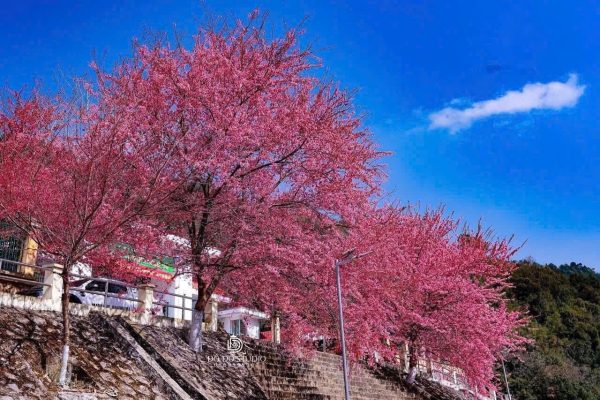
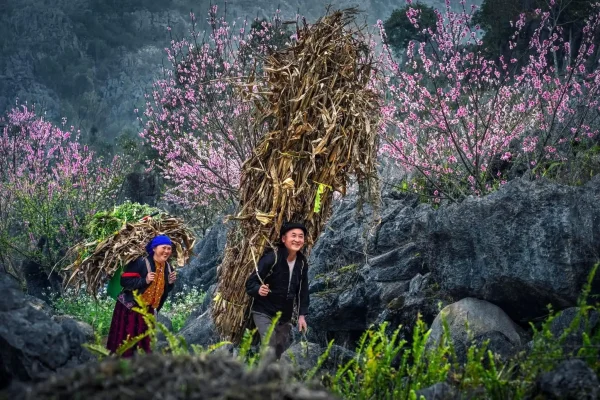
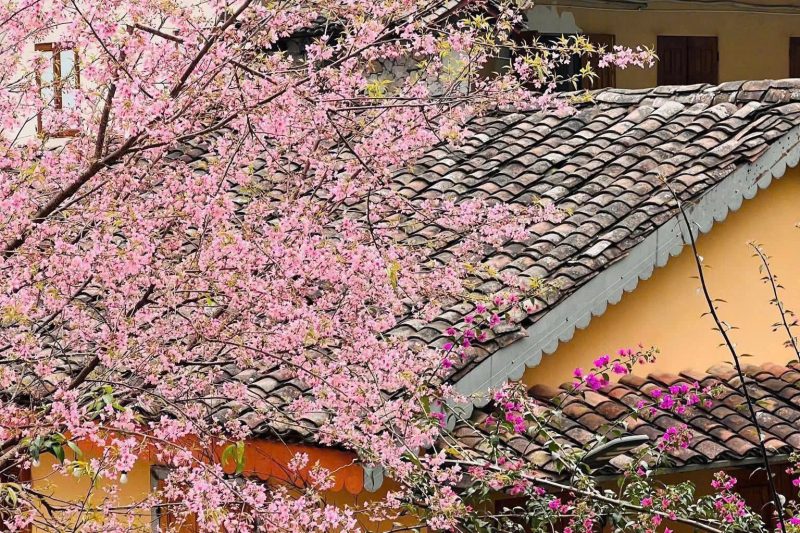
Peach trees bloom first, usually starting in the last week of February and peaking through the first two weeks of March. The pink-to-light-red blossoms appear on bare branches, creating that classic “spring has arrived” aesthetic.
You’ll find peach trees around Hmong villages throughout the Loop—especially concentrated near Quan Ba, scattered through Yen Minh, and in valleys approaching Dong Van. Local families plant peach trees near houses for both fruit and symbolism (they represent prosperity and new beginnings).
Best photo opportunities come from finding traditional stilt houses with peach trees in bloom nearby. The contrast between dark wooden structures and bright pink blossoms works visually. Early morning or late afternoon light is crucial—midday sun washes out the delicate pink tones.
Learn more: Ban Gioc Waterfall
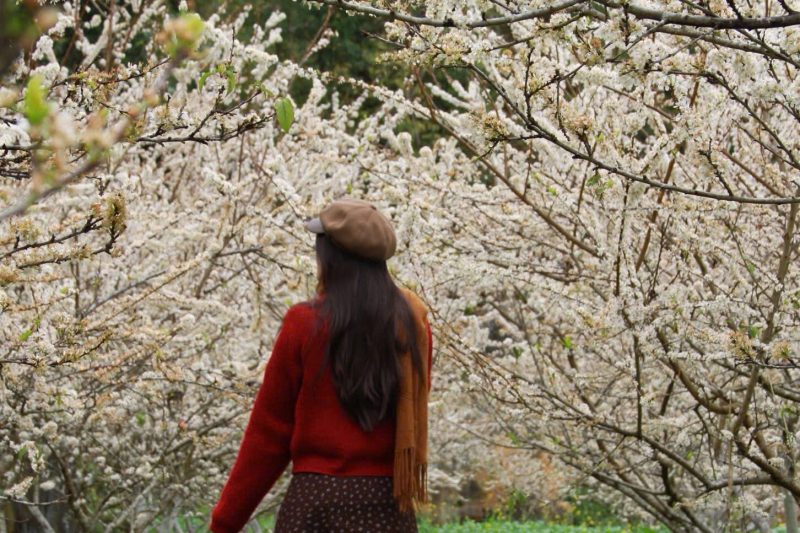
Plum blossoms overlap with peach timing but appear white instead of pink. They’re slightly less common but create beautiful scenes when you catch them. Some valleys near Sung La village and sections approaching Meo Vac have good plum concentrations.
The white blossoms photograph differently than peach—they need darker backgrounds to stand out. Look for plum trees against evergreen forests or mountain backdrops rather than sky.
Learn more: Ha Giang to Cao Bang
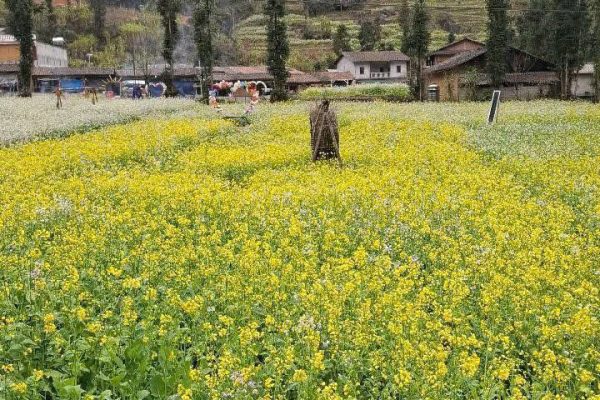
This is the main event. Mustard flowers are planted intentionally by local farmers as a rotation crop and for harvest (mustard greens). The timing creates these spectacular yellow hillsides that define spring in Ha Giang.
Peak bloom varies by elevation and when farmers planted, but generally runs from around March 25 through April 15-20. Lower valleys bloom first, higher elevations follow 1-2 weeks later.
Best locations for mustard flowers:
Photography tips: Mustard fields work best with blue sky contrast. Overcast days turn them muddy yellow-grey instead of vibrant. Include scale elements (motorbikes, people, houses) to show the field’s extent. Get high angles when possible—roadside shots looking straight in don’t capture the scope.
Avoid the temptation to walk into fields for photos without permission. These are working farms, and trampling crops is genuinely harmful to families’ income. If you want field access, ask local homeowners first.
As you climb toward higher elevations in April and early May, wild azaleas bloom on rocky slopes and cliff faces. These aren’t visible from main roads—you need to stop at pullouts along Ma Pi Leng Pass or near Lung Cu and hike upward a bit.
Colors range from deep pink to bright red, standing out dramatically against grey karst limestone. They’re not “fields” like mustard flowers, more like scattered natural accents. Worth seeking out for variety in your photo collection.
Other wildflowers bloom throughout April-May but without the density that creates Instagram moments. You’ll spot purple, white, and yellow varieties along roadsides and trails. They add to the overall spring vibe but aren’t destination features.
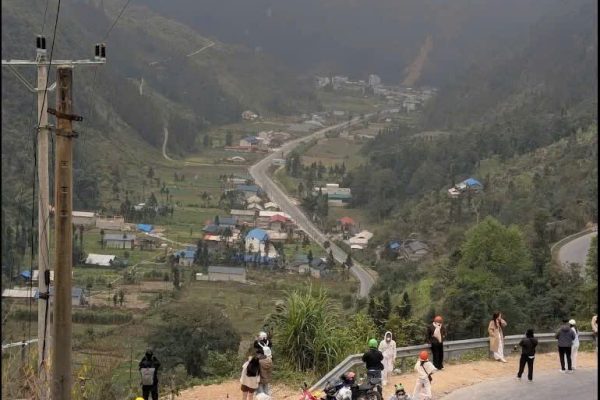
Not everywhere explodes with color. The Dong Van Karst Plateau Geopark’s more barren sections remain rocky regardless of season. Ma Pi Leng Pass is about mountain drama, not flowers. The section from Meo Vac through the Ma Pi Leng canyon stays focused on geological features rather than vegetation.
This is fine—contrast makes the flower sections more impactful. If every kilometer was yellow mustard, it would get visually exhausting.
Learn more: Ma Pi Leng Pass
One of spring’s biggest advantages is road quality. Here’s what that actually means for your riding experience.
Ha Giang’s road network takes a beating from weather year-round. Winter freeze-thaw cycles crack pavement. Summer monsoons wash out shoulders and trigger landslides. By February-March, maintenance crews resurface the worst sections before tourist season ramps up.
This means April roads are in prime condition: fresh asphalt where needed, good drainage, clear lane markings, and minimal debris. Potholes that exist in October have been patched. Gravel that accumulates in corners gets cleared.
For self-drive riders, especially beginners, this matters enormously. You can focus on cornering technique and enjoying scenery rather than constantly scanning for hazards. Traction is predictable. Surfaces are even.
The famous passes—Ma Pi Leng, Tham Ma, Bac Sum—all ride smoothly in April. Turns flow nicely without surprise gravel patches. Descents don’t require constant braking to avoid potholes. It’s as close to recreational mountain riding as Ha Giang gets.
That said, “best roads of the year” is relative. This is still remote Vietnam mountain territory. You’ll encounter:
Spring doesn’t eliminate these permanent characteristics. It just removes additional hazards like ice, heavy rain, and deteriorated pavement.
Spring’s weather variability means you need to adjust riding style throughout the day.
Temperature management: Start mornings layered up, then peel gear off as temperatures rise. I typically ride out of Ha Giang city in long sleeves and light jacket, remove the jacket by Tam Son lunch stop, and sometimes drop to t-shirt by afternoon. Keep layers accessible—stopping to dig through packed bags gets old fast.
Cold muscles and joints respond slower. Give yourself 20-30 minutes of gentle riding before attempting aggressive cornering or hard braking. This matters most on those first cold mornings from Dong Van toward Ma Pi Leng Pass.
Spring shower protocol: If rain hits while you’re riding, assess intensity. Light drizzle? Keep moving but reduce speed, increase following distance, and smooth all inputs (no sudden braking or acceleration). Heavy rain? Find a covered spot and wait 20-30 minutes—spring storms pass quickly.
Road surfaces lose grip as soon as they’re wet. Painted lane markings become ice-slick. Metal grates on bridges turn into skating rinks. The first 10 minutes of rain are most dangerous as oil and dust create a slippery film on pavement.
After rain passes, wet roads dry surprisingly fast in spring sunshine. Lower elevation sections dry within an hour. Shaded mountain passes take 2-3 hours. Adjust speed accordingly—just because the valley road is dry doesn’t mean the pass ahead is.
Wind on exposed passes: Spring winds peak in afternoon. Ma Pi Leng Pass, Tham Ma Pass, and sections near Lung Cu see genuine gusts. Crosswinds can push lighter riders (under 70kg) around noticeably.
Counter this by: maintaining steady throttle (don’t chop it when hit by gusts), gripping tank with knees for stability, and leaning slightly into prevailing wind direction. If winds feel unsafe, wait them out—they often calm in late afternoon as the sun lowers.
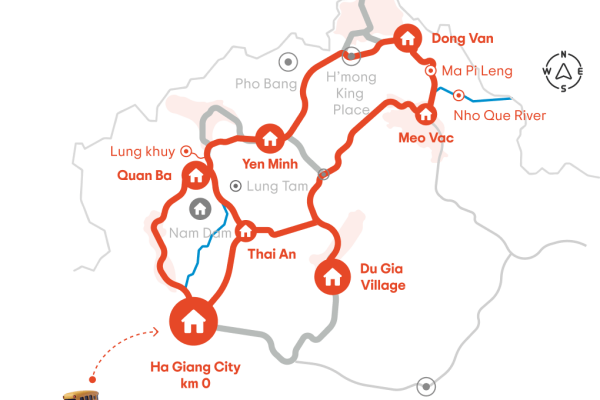
Learn more: Ha Giang Cao Bang Itinerary
Standard Loop routes work year-round, but spring lets you optimize for flowers, weather, and road conditions. Here’s how I’d structure trips based on different timeframes.
Day 1: Ha Giang → Quan Ba → Yen Minh → Dong Van (B/L/D)
Start early (8:00 AM) from Ha Giang city after breakfast. Ride through Bac Sum Pass and stop at Heaven Gate (Quan Ba) for the classic terraced valley photo. In March-April, this area showcases mustard flowers beautifully from above.
Continue through Tam Son for lunch around 12:30 PM. The afternoon push covers Yen Minh to Dong Van, passing through Tham Ma Pass and the Dong Van Karst Plateau Geopark. If timing works, detour to Sung La village (15 minutes off main route) for prime mustard flower fields in April.
Stop at Vuong Palace briefly to learn about the Hmong king’s history. Arrive in Dong Van around 5:00 PM and check into a local homestay. Spring evenings are comfortable for walking around Dong Van’s old quarter without freezing.
Day 2: Dong Van → Ma Pi Leng Pass → Meo Vac → Du Gia (B/L/D)
The marquee day. Depart 8:30 AM and ride Ma Pi Leng Pass—one of Vietnam’s four great passes—in optimal spring morning light. Stop at the Skywalk for photos (crowds are manageable mid-week, busier on weekends).
Continue to Nho Que River viewpoints and through Tu San Canyon overlook. Lunch in Meo Vac town around 1:00 PM. The afternoon section winds through smaller valleys toward Du Gia village via the M Pass and Lung Ho viewpoint.
Du Gia sits at higher elevation, so April temperatures feel perfect here. Arrive around 5:00 PM. Spring evenings allow for comfortable socializing outside rather than huddling indoors.
Day 3: Du Gia → Quan Ba → Ha Giang (B/L)
Wake early for sunrise over rice terraces if weather cooperates (March-April sunrises are earlier than October—around 6:00 AM). Take a morning swim at Du Gia waterfall—water is cold but refreshing, and flow is good by May.
Ride through Duong Thuong valley (beautiful spring greenery) and stop at Lung Tam linen village around 11:00 AM to watch traditional weaving demonstrations. Continue through the forest road along Miền River back to Ha Giang city.
Arrive by 4:00-5:00 PM, giving you time to catch an evening bus to Hanoi or your next destination.
Spring optimization: This route maximizes flower exposure (Day 1 afternoon, Day 2 sections) while hitting all classic Loop stops. The 3-day timing avoids feeling rushed but doesn’t drag.
Add an extra day to explore areas the 3-day tour skips. The 4-day format lets you slow down and appreciate spring blooms without constant riding.
Day 1: Ha Giang → Quan Ba → Yen Minh (B/L/D)
Split the first day to end in Yen Minh instead of pushing to Dong Van. This allows an afternoon detour to Lung Khuy Cave (beautiful karst cave formation, worth 1-2 hours) and more flexible flower photography stops.
Yen Minh homestays are less touristy than Dong Van, giving you a more authentic local village experience. Spring weather means you can comfortably explore the area on foot in evening.
Day 2: Yen Minh → Lung Cu → Dong Van (B/L/D)
Morning ride includes stops at Lao Sa village (traditional Hmong houses near China border) and Lung Cu Flag Tower—Vietnam’s northernmost point. Spring visibility makes the border views particularly clear.
Visit Vuong Palace and arrive in Dong Van for late afternoon. With extra time, explore Lo Lo Chai village (beautiful traditional architecture of Lo Lo minority people) in late afternoon light—April flowers bloom around the village too.
Day 3: Dong Van → Ma Pi Leng → Nho Que → Du Gia (B/L/D)
Same as 3-day Day 2, but with more leisurely pacing. Add the boat tour on Nho Que River (weather dependent—usually runs smoothly in spring). Extra time allows better photography at Ma Pi Leng without feeling rushed.
Day 4: Du Gia → Quan Ba → Ha Giang (B/L)
Same as 3-day Day 3. The 4-day route spreads riding more comfortably and adds worthwhile stops without extending to 5 days.
Spring optimization: Better for photographers who want time to wait for perfect light, families with children who need shorter daily riding, or anyone who wants to actually absorb the experience rather than just check boxes.
If you have time, the Ha Giang + Cao Bang combination delivers incredible spring diversity. Cao Bang’s highlands bloom later than Ha Giang, so you can chase spring across different elevation zones.
Days 1-2: Ha Giang Loop as described above (Ha Giang → Yen Minh → Dong Van)
Day 3: Dong Van → Meo Vac → Bao Lac → Ha Quang (B/L/D)
Instead of looping back to Du Gia, continue east from Meo Vac through spectacular passes toward Cao Bang province. Khau Coc Cha pass (15 hairpin turns) and Na Tenh pass deliver views rivaling Ma Pi Leng but with far fewer tourists.
Stay at Me Farmstay or similar in Ha Quang area—remote mountain setting with spring wildflowers starting to bloom.
Day 4: Ha Quang → Trung Khanh → Ban Gioc Waterfall (B/L/D)
Ride through countryside roads to Ban Gioc Waterfall—Vietnam’s largest waterfall and a genuine spectacle. Spring flow is strong without reaching monsoon-season flood levels. Water is clear, vegetation is lush, and weather is typically stable.
Stay near Ban Gioc (homestays or small hotels available).
Day 5: Ban Gioc → Nguom Ngao Cave → Cao Bang City (B/L)
Explore Nguom Ngao Cave (impressive limestone formations), visit traditional paper-making villages, and end in Cao Bang city for transport connections.
Spring optimization: This extended route showcases spring across different geographic zones. You’ll see how bloom timing varies with elevation and latitude. It’s a legitimate adventure for travelers with 5+ days who want comprehensive northern Vietnam mountain experience.
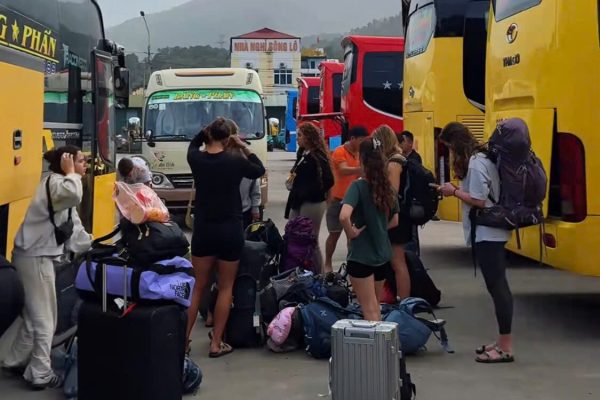
Learn more: How to get from Hanoi to Ha Giang
Spring packing requires balancing three competing needs: staying warm in cold mornings, staying cool in warm afternoons, and staying dry in unpredictable showers. Here’s what actually works.
Base layer: Start with a moisture-wicking t-shirt or long-sleeve synthetic shirt. Cotton is your enemy—it holds moisture and cold. Merino wool or synthetic fabrics dry quickly and regulate temperature better.
Mid layer: Pack a light fleece or thin down jacket that compresses small. You’ll wear this most mornings in March-April, less in May. Must be something you can easily tie around your waist or stuff in a bag when temperatures rise.
Outer layer: A light rain jacket serves double duty: rain protection and wind blocking. Spring rains are lighter than summer monsoons, so you don’t need heavy-duty waterproofs. A packable shell that fits in a small bag works fine.
Lower body: Regular jeans work adequately, but proper riding pants with knee protection are better for multi-day tours. If doing self-drive, consider pants with reinforced seat and knees—you’re in the saddle 3-5 hours daily.
Footwear: Closed-toe shoes are non-negotiable. Ankle-height boots with good grip work best. Avoid pure canvas shoes—if you get caught in spring rain, they’ll stay soaked for hours. Waterproof hiking shoes or motorcycle boots are ideal.
Accessories:
Night gear: Homestays vary in heating quality. March nights can still get cold. Pack:
If you’re coming specifically for spring flowers, pack appropriately:
Camera body: Whatever you’re comfortable with. Phone cameras have improved dramatically and handle landscape shots fine in good light. Dedicated cameras give you more control in variable spring lighting.
Lenses: Wide-angle (16-35mm equivalent) for sweeping valley shots and mustard field scenes. Standard zoom (24-70mm) covers most situations. Telephoto (70-200mm) is overkill unless you’re serious about wildlife.
Filters: Polarizing filter helps cut haze and boost color saturation in flower photos. Spring skies benefit enormously from polarizer use—it deepens blue, makes clouds pop, and reduces reflection glare.
Support: Small travel tripod if you’re doing sunrise/sunset work. Tabletop tripod works for most situations. Spring’s good light means you rarely need tripod for daytime shooting.
Protection: Camera rain cover or large plastic bag for sudden spring showers. Even if your camera is weather-sealed, lenses often aren’t. Keep a microfiber cloth for wiping spray and dust.
Batteries: Pack at least one spare. Cold March mornings drain batteries faster than you expect. Keep spare in warm pocket, not cold bag.
Memory cards: Bring more than you think you need. Spring landscapes and flowers inspire shooting sprees. Better to have excess capacity than run out on Day 2.
Learn more: Ha Giang + Cao Bang combination
Spring aligns with several traditional festivals and cultural practices in ethnic minority communities. While these aren’t tourist-focused events, they add depth to your Loop experience.
Most towns along the Loop hold weekly markets where ethnic minorities gather to trade goods, socialize, and conduct business. March and April see particularly active markets as families prepare for planting season.
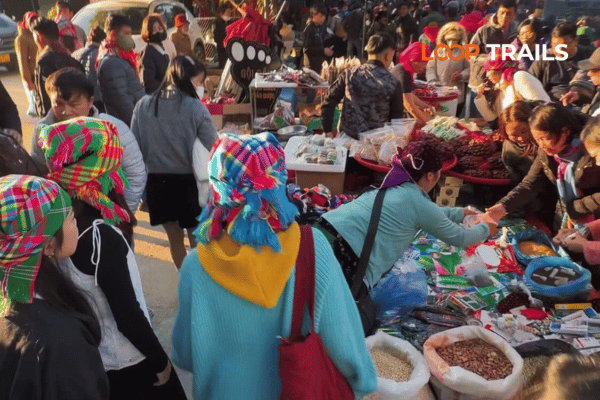
Dong Van Sunday Market: The most accessible and largest along the Loop. Every Sunday morning, Dong Van town fills with Hmong, Dao, Tay, and other groups in traditional dress. You’ll see livestock trading, vegetable sales, fabric merchants, and traditional medicine vendors.
Best time to visit: 8:00-11:00 AM. Crowds peak around 9:00-10:00 AM. Come early if you want to photograph people and activities without feeling intrusive. Markets thin out by noon as families head home.
Meo Vac Sunday Market: Smaller but equally authentic. Less touristy than Dong Van because it’s harder to time tour schedules to hit it. More livestock trading, fewer souvenir stalls.
Yen Minh Market: Varies by district but generally active on weekends. Ask your homestay host about market schedules—they’re not always Sunday, and smaller villages rotate market days.
Market etiquette: Ask permission before photographing people up close. Wandering and wide shots are generally fine, but direct portraits of individuals require respectful approach. Buy something from stalls you photograph extensively—even small purchases show good faith.
April marks serious preparation for rice planting, which involves traditional practices you might observe:
Field preparation ceremonies: Some villages conduct small blessing ceremonies before planting begins. These aren’t public events, but if you’re staying in a homestay where the family farms, you might be invited to observe. Respectfully accept if offered—it’s a genuine cultural exchange.
Community labor exchanges: Families help each other prepare fields in rotation. You’ll see groups working terraces together, usually 5-10 people. This is normal community cooperation, not tourism.
Traditional music and dance: Some villages gather in evenings during busy farming season for music and socializing. If you hear traditional instruments (flutes, gourd organs) from your homestay, don’t be shy about walking over to listen—locals generally welcome respectful observers.
Note on cultural sensitivity: These are real people living real lives, not cultural performers. Observe respectfully, don’t interrupt work, and recognize that your presence is a privilege, not a right. When in doubt, ask your guide or homestay host about appropriate behavior.
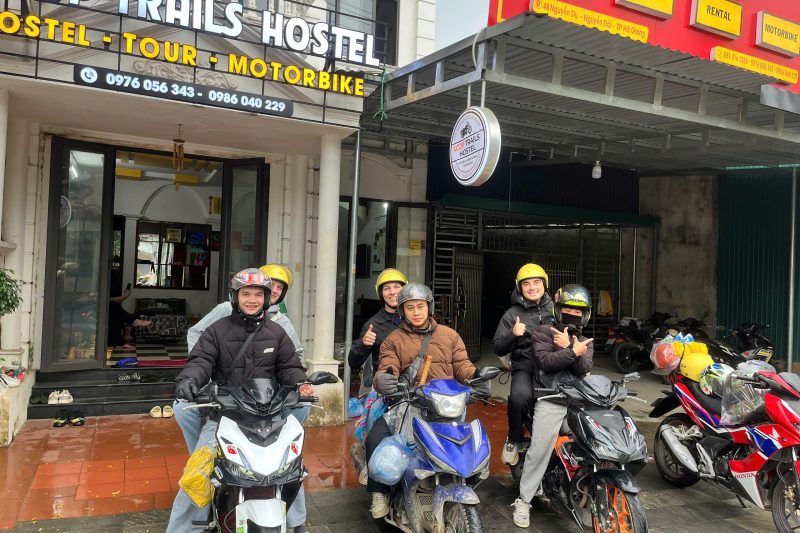
Learn more: Ha Giang Loop Easy Rider
Spring’s stable weather expands your tour options. Here’s how to choose based on riding ability, comfort preferences, and what you value most.
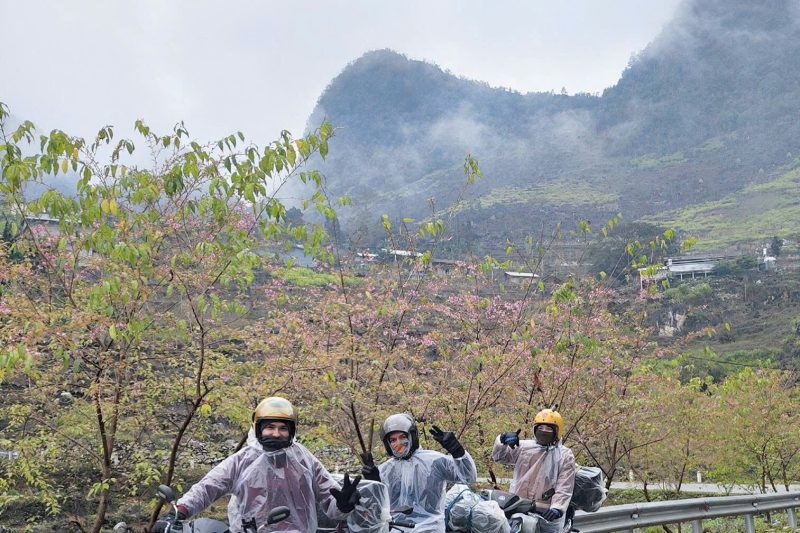
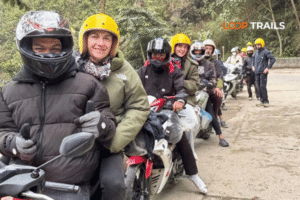
Easy rider format puts you on the back of a bike with an experienced local guide driving. Your job is to enjoy the scenery and take photos—the guide handles all riding, navigation, and decision-making.
Why this works in spring: Even though spring weather is generally stable, sudden showers can still surprise you. Easy rider guides know exactly when to push through light rain vs. wait it out, which roads get slippery fastest, and how to handle spring winds on exposed passes.
Your guide also knows where mustard flowers peak on any given week. Bloom timing varies by elevation and planting schedules—local knowledge helps you hit prime spots instead of areas where flowers have already faded.
Cultural access improves with easy riders. Guides from ethnic minority backgrounds (most are Hmong or Tay) can explain traditions you’re observing during spring planting season. They’ll know which markets happen which days, whether local families are comfortable with homestay guests, and how to navigate cultural situations respectfully.
Best for: First-time Vietnam visitors, anyone uncomfortable riding motorbikes, photographers who want to focus on shooting rather than navigation, travelers who value cultural insights over riding independence.
Spring pricing: Tours run year-round at standard rates. A 3-day/2-night easy rider tour costs 4,390,000 VND per person including guide, accommodation, and meals. The 4-day/3-night option runs 5,490,000 VND.
Learn more: Ha Giang Loop Self-Driver
Self-drive gives you a motorbike and route information, then sets you free. You control pace, stops, and schedule. This is maximum independence—also maximum responsibility.
Why spring is ideal for self-drive beginners: April specifically offers the best possible conditions for your first mountain riding experience. Roads are dry and well-maintained. Temperatures stay comfortable all day (no frozen fingers or overheating). Rain is rare enough that you probably won’t face wet road handling. Visibility is excellent for reading road conditions ahead.
If you’ve ridden motorbikes in flat areas but never mountain roads, April-early May gives you the gentlest introduction to elevation changes, hairpin turns, and sustained climbing/descending.
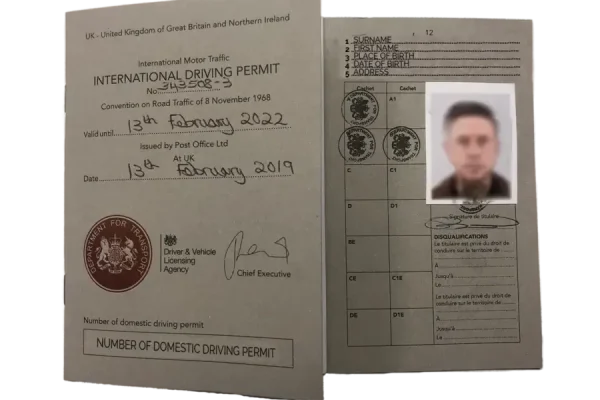
Requirements: You need an International Driving Permit (IDP) that specifically covers motorcycles. Vietnamese traffic police check documents at tourist areas. Riding without proper papers risks fines and liability issues if accidents occur.
Motorbike rental in Ha Giang typically provides semi-automatic bikes (Honda Wave, Yamaha Sirius) or manual bikes (Honda XR150, similar) depending on your experience level. For spring Loop riding, semi-automatic is adequate for most travelers. Manual transmission gives you more control on steep descents but requires clutch competency.
Best for: Travelers with prior motorbike experience who want freedom to explore at their own pace, couples who want flexibility for spontaneous stops, photographers who need full schedule control, adventure-oriented individuals comfortable with responsibility.
Spring pricing: Self-drive 3-day/2-night tours start at 3,590,000 VND per person (includes bike rental, accommodation, basic route info). The 4-day/3-night option runs 4,690,000 VND.
Learn more: Ha Giang Loop by Jeep for Families
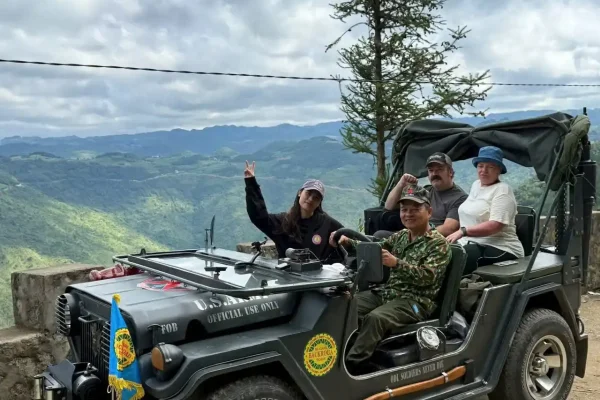
Jeep tours transport 1-4 people in a private 4×4 vehicle with driver-guide. You get vehicle comfort with tour organization—best of both worlds for certain traveler types.
Why jeeps make sense in spring: If your primary goal is flower photography, jeeps give you the mobility to chase blooms without riding fatigue. You can hit multiple valleys in a day, stop frequently for photos, and change plans if you hear about exceptional flower displays elsewhere.
Families with children or elderly members who can’t handle 3-5 hours of daily motorbike riding find jeeps perfect. Everyone experiences the same scenery and itinerary without physical demands.
Weather becomes irrelevant—spring showers that would soak motorbike riders don’t affect jeep passengers. Temperature swings don’t require constant layering adjustments.
Trade-offs: You sacrifice the full motorcycle experience. Wind, temperature changes, and that direct connection to the road disappear. Some travelers find jeeps “too comfortable”—you’re somewhat insulated from the environment.
Cost per person is higher if traveling solo but drops significantly when splitting among 3-4 people.
Best for: Families with kids, mixed-ability groups, older travelers, anyone prioritizing photography over riding experience, comfort-oriented tourists who want scenery without adventure sports elements.
Spring pricing: Jeep tours scale by group size. For a 3-day/2-night tour: 8,990,000 VND for solo traveler, 16,990,000 VND for 2 people (8,495,000 VND each), 19,990,000 VND for 3 people (6,663,000 VND each), 22,900,000 VND for 4 people (5,725,000 VND each). All prices include accommodation, meals, and private vehicle with driver-guide.
Learn more: Ha Giang Motorbike Rental
After running dozens of spring tours, certain patterns emerge. Here’s what catches people off guard and how to avoid it.
Mistake 1: Assuming “spring” means uniformly warm weather
Spring’s defining characteristic is variability, not consistency. March mornings can hit 8-10°C. May afternoons can push 28°C. Pack for the full range, not average temperatures.
Mistake 2: Missing flower peak by a week
Mustard flower timing is more precise than people realize. They peak for about 10-14 days, then fields get harvested. If you’re coming specifically for flowers, contact local operators to confirm current bloom status before booking dates. A week’s difference can mean prime blooms vs. bare fields.
Mistake 3: Wearing new boots on Day 1
Spring’s comfortable temperatures encourage long days exploring on foot. Breaking in new footwear on the Loop is miserable—you’ll get blisters by Day 2. Wear boots you’ve already broken in, or bring moleskin/blister prevention.
Mistake 4: Skipping sun protection because it doesn’t feel hot
Spring temperatures feel gentle, but UV intensity at 1,200-1,500 meters elevation is serious. You’ll burn without realizing it until evening. Wear sunscreen, reapply after swimming, and don’t trust cloud cover—UV penetrates thin clouds easily.
Mistake 5: Overpacking for worst-case scenarios
Yes, pack rain gear and warm layers. No, you don’t need enough clothing for a week-long expedition. You’re staying at homestays with laundry facilities. Pack 3-4 day’s worth of clothes maximum and wash as needed. Over-packing makes daily riding uncomfortable with heavy bags.
Mistake 6: Riding too aggressively on first day
Spring’s excellent road conditions can make you overconfident. Day 1 includes significant mountain passes where target fixation (staring at the edge instead of where you want to go) causes crashes. Start conservatively, build confidence gradually.
Mistake 7: Not carrying cash
Many villages and homestays operate cash-only. While larger towns like Dong Van have ATMs, smaller stops don’t. Carry enough VND in small denominations for three days of meals, accommodation, and emergency expenses. Credit cards rarely work outside Ha Giang city.
Mistake 8: Dismissing local weather advice
If your guide or homestay host says “wait 30 minutes, weather will improve,” trust them. They’ve watched these mountains for years and read weather patterns you can’t see. Spring conditions change fast—patience usually pays off.
Mistake 9: Rushing through flower valleys
The temptation is to ride straight through, take a quick photo, and continue. Spring flower displays deserve better. Stop, walk among fields (with permission), sit quietly for 10 minutes. The Loop isn’t a race—you’re here for the experience, not checking off waypoints.
Mistake 10: Not adjusting plans for spring planting season
Some trails and minor roads get muddy or impassable during field preparation periods. If your route includes off-the-beaten-path sections, confirm accessibility with local operators. Main Loop roads stay fine, but adventurous detours might need adjustment.
Learn more: International Driving Permit (IDP)
March mornings are cold (8-12°C in highlands) but comfortable by midday. Pack warm layers for early riding, and you’ll be fine. By late March, temperatures warm noticeably. March is actually ideal if you want to avoid crowds while getting good weather.
Peak bloom generally runs late March through mid-April, roughly March 25-April 20. Exact timing varies by elevation and planting schedules. Lower valleys bloom first, higher areas follow 1-2 weeks later. Contact local operators for current bloom status before booking.
April offers the best conditions for beginner self-drivers—dry roads, stable weather, good visibility. You still need basic motorbike skills (confident with throttle, braking, and balance) and an International Driving Permit. If you’ve never ridden before, choose easy rider instead.
Early April (April 1-15) hits peak bloom in most areas. Late March shows building blooms but not full saturation. If you have flexibility, aim for April 5-15 specifically for maximum flower coverage.
Early May (first two weeks) still carries spring characteristics with occasional showers. Late May transitions to wet season with more frequent afternoon storms. May is definitely doable but requires rain gear and flexibility. Landscapes turn beautifully green.
Not required, but recommended for first-timers. Easy rider guides help with flower spot navigation, cultural context, and handling unpredictable spring weather. Self-drive works if you’re comfortable with independent mountain riding and basic navigation.
Less crowded than October but busier than winter. Weekends see moderate traffic at major stops like Ma Pi Leng Skywalk. Mid-week travel (Wednesday-Thursday starts) offers the best balance of good weather and manageable crowds.
Layering system is key: moisture-wicking base layer, light fleece or down jacket, packable rain shell. Closed-toe boots, riding gloves, sunscreen, and sunglasses. Pack for both cold mornings (10°C) and warm afternoons (25°C).
Timing matters. Late April-early May bridges yellow mustard flowers (fading) and green rice planting (beginning). You might catch both, but it’s not guaranteed. Choose your priority—flowers peak in April, green terraces dominate May.
Prices stay relatively consistent year-round for organized tours. Individual costs (accommodation, food) might be slightly lower in spring since it’s not absolute peak season. Major savings come from easier booking and better room availability.
Spring rain is typically brief showers, not all-day downpours. Tours continue with rain gear and adjusted schedules. Jeep tours are least affected. Easy rider guides know when to wait vs. push through. Self-drivers need confidence with wet roads.
Spring offers: flowers instead of golden rice, fewer crowds, better road conditions, more cultural authenticity during planting season. October offers: golden rice terraces, most predictable weather, warmest temperatures, highest tourist infrastructure. Both excellent—choose based on what you want to see.
Contact information for Loop Trails
Website: Loop Trails Official Website
Email: looptrailshostel@gmail.com
Hotline & WhatSapp:
+84862379288
+84938988593
Social Media:
Facebook: Loop Trails Tours Ha Giang
Instagram: Loop Trails Tours Ha Giang
TikTok: Loop Trails
Office Address: 48 Nguyen Du, Ha Giang 1, Tuyen Quang
Address: 48 Nguyen Du, Ha Giang 1, Tuyen Quang
Facebook X Reddit Table of Contents Learn more: Ha Giang Loop Tours There’s a moment, usually somewhere on Ma Pi Leng Pass,
Facebook X Reddit Table of Contents Learn more: Ha Giang Loop Tours There’s a version of the Ha Giang Loop that people