
Ha Giang Easy Rider: The Complete Guide (2026)
Facebook X Reddit Table of Contents Learn more: Ha Giang Loop Tours There’s a moment, usually somewhere on Ma Pi Leng Pass,

Thúy Kiều( Grace) is a travel blogger and content contributor for Loop Trails Tours Ha Giang. She holds a bachelor’s degree in Sustainable Tourism from Vietnam National University, Hanoi, and has a strong passion for exploring and promoting responsible travel experiences in Vietnam’s northern highlands.
The Ha Giang Loop has earned its reputation as Vietnam’s ultimate road trip, but not everyone wants to tackle these mountain passes on two wheels. Private car tours offer a comfortable alternative that lets you experience Ha Giang’s spectacular landscapes without the physical demands and risks of motorcycle riding.
I’ve helped hundreds of travelers plan Ha Giang journeys over the years, and car tours consistently surprise people with how much they actually see and experience. The key is understanding what car tours do well, what they can’t match compared to motorcycles, and how to choose the right vehicle and itinerary for your specific needs.
This guide gives you the complete picture of Ha Giang Loop car tours based on real experiences, current pricing, and honest assessments of both advantages and limitations.
Learn more: Ha Giang Loop self-driving tour
Learn more: Ha Giang Loop by Car
Several situations make car tours the smarter choice over motorcycle options, and recognizing whether you fall into these categories prevents frustration and potential safety issues.
Families with children find car tours solve multiple problems simultaneously. Kids can sleep during longer driving sections, you’re not worrying about children’s safety on mountain roads, and bathroom stops happen without the complexity of parking and securing multiple motorcycles. Car tours work for children of any age, while motorcycle options typically require kids to be teenagers at minimum.
Travelers with mobility limitations access Ha Giang’s landscapes through car tours when motorcycles would be impossible. Whether you’re dealing with knee problems that make hours of motorcycle sitting painful, back issues aggravated by rough roads, or simply the reality that long days on bikes become uncomfortable as we age, cars provide climate-controlled comfort that keeps Ha Giang accessible regardless of physical constraints.
Couples where only one person rides benefit enormously from car tours. The non-rider doesn’t feel excluded, and the experienced rider doesn’t face pressure to either go solo or convince their partner onto a motorcycle for challenging mountain roads. You’re experiencing the journey together rather than the rider worrying about their passenger’s comfort or safety throughout multi-day trips.
First-time Vietnam visitors often choose car tours to reduce the culture shock and stress of their initial days in the country. Navigating Vietnamese traffic, understanding local driving conventions, and managing the physical demands of riding all become someone else’s responsibility. You can focus on absorbing the experience rather than surviving it.
Photography enthusiasts working with serious camera equipment find cars protect expensive gear from dust, rain, and the vibrations that destroy electronics on motorcycle rides. The higher seating position in many 4WD vehicles actually provides better angles for landscape photography, and you’re not choosing between safely riding and stopping frequently for shots.
Off-season travelers visiting during colder months (December-February) appreciate the climate control cars provide. Mountain temperatures can drop to 5-10°C, and riding motorcycles in genuine cold for hours is miserable regardless of layered clothing. Cars let you enjoy Ha Giang’s winter landscapes without freezing.
That said, car tours aren’t automatically the “safe” or “easy” option. They’re different options with different characteristics, and the right choice depends on your specific situation, preferences, and what you want from Ha Giang.
Learn more: Ha Giang Loop self drive
If you’ve decided against motorcycles, you still face the choice between private car tours and joining larger group buses. Private tours cost more but offer distinct advantages that often justify the premium.
Complete schedule flexibility separates private cars from group buses most dramatically. Want to spend an extra 30 minutes at a viewpoint because the light is perfect? No problem. Interested in stopping at a village market that wasn’t on the standard itinerary? Your driver can accommodate. Need a bathroom break or want to stretch your legs? You’re not asking 20 people to wait.
Group buses run fixed itineraries with predetermined photo stops. Everyone gets 10 minutes at Ma Pi Leng Pass viewpoint regardless of weather, lighting, or personal interest. The bus moves when scheduled, not when you’re ready. For travelers who value spontaneity or have specific photography goals, this rigidity is frustrating.
Personalized attention from your driver creates a different experience than group tours. Your driver becomes a resource for questions, recommendations, and cultural insights throughout the journey. They remember your preferences after the first day and adjust accordingly. Many private tour drivers have deep local knowledge that larger group operations can’t match.
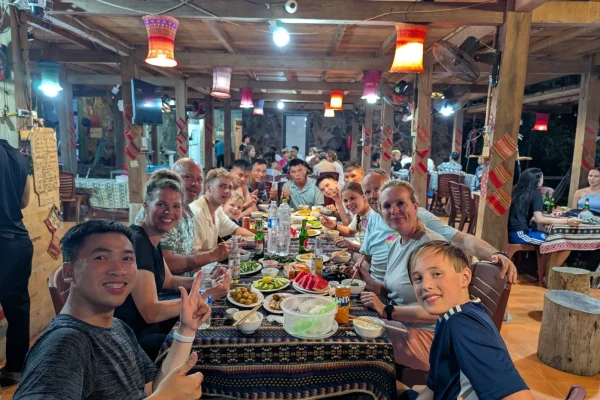
Better accommodation and meal options come with private tours because you’re not constrained by what works for large groups. Smaller, family-run homestays that can’t accommodate 20 people become accessible. Restaurants known for quality rather than capacity handle your meals. You’re eating where locals eat rather than where tour buses park.
Pacing matches your energy and interests rather than the group average. If you’re tired after a long day and want to reach accommodation early, that’s possible. If you’re energized and want to explore a town’s market before dinner, you have that option. Group buses maintain schedules designed for the slowest members and maximum efficiency rather than individual preference.
Privacy during what can be long days appeals to many travelers. You’re not making small talk with strangers when you want quiet. Your conversations stay private. The vehicle’s atmosphere reflects your mood rather than group dynamics you can’t control.
The trade-off is cost. Private car tours typically run 2-3 times the per-person price of joining group buses. For solo travelers, this difference can be substantial. For couples or families, the premium often feels worthwhile for the benefits received.
Car tours sacrifice certain experiences that make Ha Giang special for many motorcycle riders. Understanding these trade-offs prevents unrealistic expectations.
The visceral riding experience simply doesn’t translate to car travel. Motorcycle riders feel every curve, experience temperature changes as elevation shifts, smell village cooking fires and mountain air, and engage physically with the landscape. Cars create a barrier – climate control, sealed windows, and suspension systems all work to insulate you from the environment.
This insulation is exactly what some travelers want, but it changes the nature of the experience. You’re observing Ha Giang’s landscapes rather than immersing yourself in them. The difference is similar to watching a nature documentary versus hiking through that same terrain yourself.
Access to remote locations is genuinely limited for car tours. Many ethnic minority villages sit on narrow roads where 4WD vehicles physically can’t fit. Certain viewpoints require walking paths that start from motorcycle-only parking areas. Some of Ha Giang’s most photographed locations simply aren’t accessible to four-wheeled vehicles.
Tour operators create good car itineraries that hit major highlights, but you’ll miss some spots that motorcycle tours reach easily. The remote Lo Lo Chai village, certain waterfall trails, and narrow mountain paths through particularly isolated areas stay out of reach.
The social experience differs significantly. Motorcycle tours naturally create camaraderie among riders facing shared challenges, swapping stories at homestays, and helping each other through difficult sections. Car tours, especially private ones, lack this automatic social element. You’re not bonding with fellow travelers over near-misses on hairpin turns or celebrating the accomplishment of completing Ma Pi Leng Pass.
Some travelers specifically want this privacy and quiet, while others discover they miss the social aspect they didn’t know they wanted. There’s no wrong preference, but the difference is real.
The sense of adventure and accomplishment that comes from successfully riding Ha Giang’s challenging roads doesn’t really have a car tour equivalent. You’re getting spectacular scenery and cultural experiences, but the personal achievement element isn’t there. For some travelers, this matters. For others, it’s irrelevant.
Learn more: Ha Giang Loop Jeep Tours
Not all car tours are created equal, and understanding your vehicle options helps match expectations with reality.
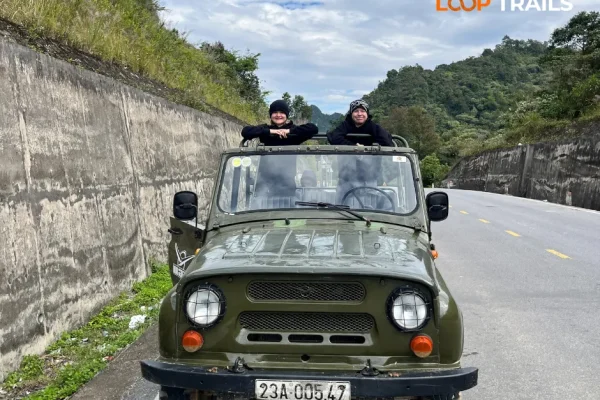
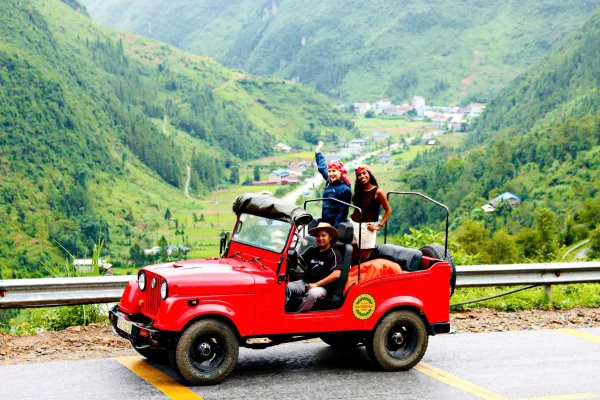
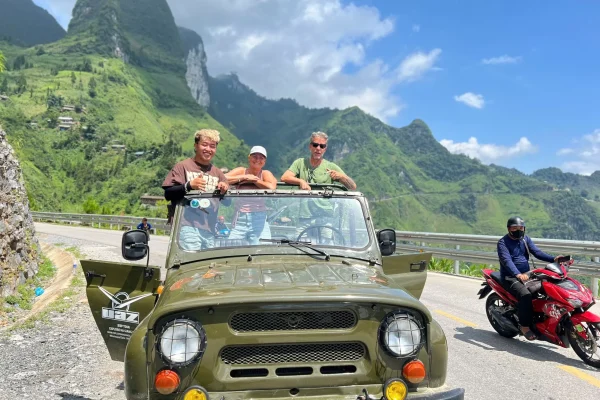
Private jeep tours using 4WD vehicles represent the most popular car option for Ha Giang Loop, and they offer specific advantages over standard cars.
The vehicles used are typically Toyota Fortuners, Ford Rangers (with extended cabs), or similar rugged 4WD models designed for rough terrain. These aren’t rental sedans adapted for mountain roads – they’re purpose-built vehicles with high ground clearance, aggressive tire tread, and suspension systems that handle Ha Giang’s occasionally rough pavement.
Seating capacity in most jeep tours accommodates 2-4 passengers comfortably. With two passengers, you have excessive space for gear and can spread out. Three passengers fit well in vehicles with proper rear bench seating. Four passengers are possible but means someone’s sharing the back seat for long driving days, which gets cramped.
Ground clearance matters more than many travelers realize. Ha Giang’s roads occasionally feature deep potholes, speed bumps that would scrape low-riding sedans, and rural sections where pavement gives way to packed dirt. Jeeps handle these obstacles without the cautious crawling that delays standard vehicles.
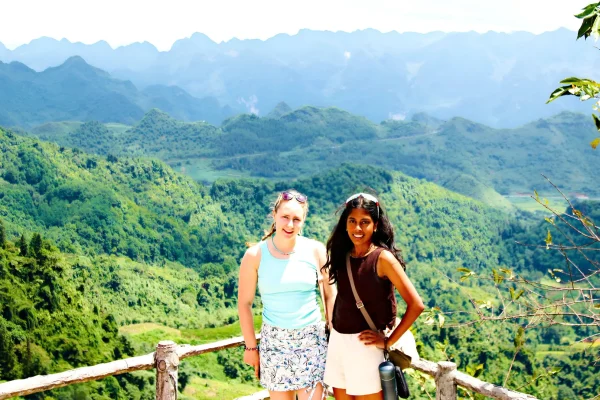
Seating position provides better views than lower sedans. You’re sitting higher with larger windows, which translates to superior landscape photography and ability to see over roadside barriers at cliff-edge viewpoints. The difference is particularly noticeable on Ma Pi Leng Pass where height directly improves your perspective.
Weather capability gives jeeps advantages during rainy season or winter conditions. Four-wheel drive provides better traction on wet mountain roads, and higher clearance prevents scraping when crossing water flowing across pavement during heavy rains.
The downside is fuel consumption. Jeeps burn more gas than sedans, and some tour operators pass this cost along through higher tour prices. However, the practical benefits on Ha Giang’s roads usually justify the additional expense.
Standard car tours use conventional vehicles – typically 4-seat sedans or small SUVs – that cost less than jeeps but have limitations on Ha Giang’s mountain roads.
Lower pricing is the primary advantage. Standard car tours may run 10-20% cheaper than jeep tours because vehicles cost less to purchase and maintain, fuel consumption is lower, and operators have larger fleets allowing better scheduling efficiency.
For travelers on tighter budgets, especially couples willing to sacrifice some comfort, standard cars access all major Ha Giang Loop highlights without the jeep premium. The roads are paved throughout the main loop, and millions of regular cars navigate these routes without incident.
Fuel efficiency means fewer fuel stops and slightly faster progress on longer driving sections. This might save 20-30 minutes over a full day of driving, which isn’t dramatic but can matter on tight itineraries.
The limitations appear in specific situations. Lower ground clearance means careful navigation over speed bumps and potholes that jeeps power through. Traction on steep grades during rain can require more cautious driving, potentially slowing progress. The lower seating position means inferior views compared to jeeps, though still far better than motorcycle passenger perspectives.
Sedans also create tighter space for luggage, particularly with 3-4 passengers. If you’re traveling with substantial photography gear, large suitcases, or simply like having extra room, sedans feel cramped where jeeps stay comfortable.
Driver skill matters more in standard cars because the vehicles have less capability margin. Excellent drivers navigate Ha Giang’s roads in sedans without issues, but you’re more dependent on driver experience than you would be in purpose-built mountain vehicles.
Van tours serve groups of 5-8 passengers, making them economical for families or friend groups traveling together.
Per-person costs drop dramatically when splitting van tour prices among 6-8 people. What looks expensive as a ₫40-50 million total package becomes reasonable when divided eight ways. For extended families or groups of couples traveling together, vans often represent the most cost-effective way to experience Ha Giang by vehicle.
Group dynamics work well when you’re traveling with people you actually know and want to spend time with. Conversation, shared meals, and experience swapping happen naturally. Unlike joining group bus tours with strangers, you control the vehicle’s social atmosphere.
The challenges come from vehicle size and maneuverability. Vans are notably larger than jeeps, which affects parking at viewpoints, navigation through narrow village roads, and driver stress on tight mountain curves. Some locations accessible to jeeps become difficult or impossible for full-size vans.
Bathroom stops require coordinating eight people’s needs rather than 2-4, which naturally extends time spent at rest areas. Photo stops can feel rushed as everyone competes for the same viewpoint angles. The logistics of moving eight people smoothly through a multi-day tour require more organization than smaller groups.
Split itineraries sometimes work where part of the group wants one experience while others prefer different activities. However, the van must go somewhere, so split activities often aren’t practical the way they are with multiple smaller vehicles.
Van tours work best for groups that already function well together, have similar energy levels and interests, and prioritize budget efficiency over maximum flexibility.
Learn more: Ha Giang Loop jeep tour guide
Car tour itineraries differ from motorcycle routes because driving speeds, stop flexibility, and accessible destinations vary. Here’s what actually works well for car tours.
The 3-day car tour covers all essential Ha Giang Loop highlights while maintaining reasonable daily driving hours and allowing proper time at major stops.
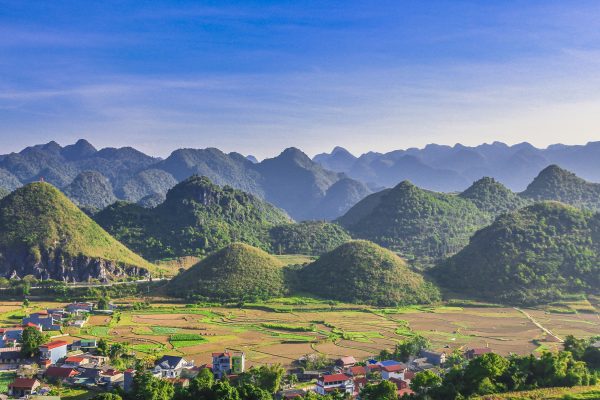
Your driver picks you up at your Ha Giang accommodation around 8:00 AM after breakfast. The route immediately begins climbing through Bac Sum Pass, offering your first taste of Ha Giang’s mountain scenery. Twenty minutes from the city, you reach Heaven Gate viewpoint at Quan Ba, where twin limestone peaks rise from the valley floor creating Ha Giang’s most iconic landscape.
Unlike motorcycle tours that might stop briefly for photos, car tours allow 20-30 minutes at Heaven Gate. You’re photographing from multiple angles, using the toilets, buying coffee from local vendors, and actually absorbing the scene rather than rushing through.
The drive continues through Tam Son town where lunch happens around noon or 12:30. Standard car tours use larger restaurants along the highway, but private tours can detour to smaller family restaurants if you request this. Lunch lasts 45-60 minutes including ordering, eating, and bathroom breaks.
Afternoon driving follows Highway QL4C through Yen Minh district. The road quality is good, and your driver maintains steady progress while you photograph from windows or request specific stops. Many car tours skip the trek to Lung Khuy Cave (which requires walking) but can stop at its entrance for photos.
Arrival in Dong Van happens around 4:00-5:00 PM. If it’s Sunday, the famous Dong Van market will have closed by afternoon, but you can explore the town’s old quarter with French colonial architecture and visit local shops. Homestay check-in provides time to shower, rest, and wander before dinner around 6:30-7:00 PM.
Evening in Dong Van is quieter for car tour guests than motorcycle riders because you haven’t built the same group camaraderie, but the stone houses, mountain views, and local atmosphere remain memorable.
Day 2 represents the Ha Giang Loop’s highlight section. After breakfast around 7:30-8:00 AM, you visit the Vuong Palace, the former residence of the H’Mong king. Car tours allow unhurried exploration of the palace compound, reading information boards, and photographing the architecture.
The drive to Lung Cu Flag Tower at Vietnam’s northernmost point takes about 90 minutes. The tower sits atop a hill requiring a 389-step climb that car tour passengers often appreciate more than motorcycle riders who’ve already been active all morning. The climb isn’t difficult, but the elevation and cardio make it meaningful.
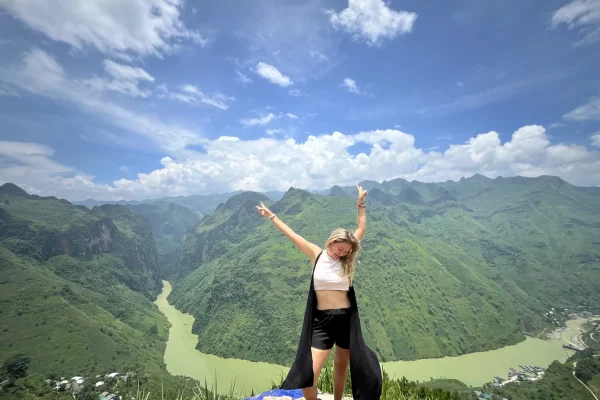
Return to Dong Van for lunch, then begin the afternoon’s main event: Ma Pi Leng Pass. The dramatic cliff-edge road is equally spectacular from a car, and actually, being a passenger rather than rider means more time looking at scenery versus concentrating on navigating tight curves.
Car tours stop at multiple Ma Pi Leng viewpoints where the road has wider shoulders. Your driver knows the best spots and times them to avoid crowding from tour buses. Photography is easier when you’re not wearing motorcycle helmets and can use proper camera equipment.
The Nho Que River boat tour at the pass base is optional. Car tours access this more easily than motorcycles because parking is straightforward and your driver waits while you take the 30-45 minute boat ride through Tu San Canyon.
Afternoon continues through Meo Vac town and onward to Du Gia village for the night. The total driving isn’t excessive, but the day feels full because of activities and time spent at major highlights.
The final day starts with Du Gia waterfall, a 10-15 minute walk from the road. Car tours have advantage here because you can leave extra belongings secured in the vehicle rather than carrying everything. Swimming in the waterfall pool is popular with travelers who planned ahead with swimwear.
The return route passes through different valleys than Day 1, preventing the journey feeling repetitive. Stops typically include Lung Tam weaving village where H’Mong women demonstrate traditional linen weaving. Car tours can spend more time here than rushed motorcycle groups because you’re not tracking sunset arrival.
Lunch happens in Thai An or another town along the route. Afternoon driving returns through Quan Ba with final photo opportunities if weather and light cooperate.
Arrival back in Ha Giang city happens around 3:00-4:00 PM, giving you time to catch evening buses to Hanoi or onward destinations. Three days provides thorough Ha Giang Loop coverage without feeling rushed, and the daily driving hours stay reasonable for car passengers.
Four days allows more relaxed pacing with extended time at key locations and includes destinations that 3-day tours often skip.
The core difference from 3-day tours is reduced daily driving hours and expanded activities at each stop. Day 1 might include the full Lung Khuy Cave trek with your driver waiting at the entrance. More time at markets, longer lunch breaks, and optional stops at places like Sung La village near the Chinese border become feasible.
Day 2 through the Ma Pi Leng area can add visits to remote ethnic minority villages accessible by car, extended time for photography at multiple pass viewpoints, and potentially a stop at a local home for tea and conversation arranged through your driver.
Day 3 focuses on the Meo Vac area and return route with visits to villages like Lo Lo Chai (if road conditions permit vehicle access), extended waterfall time, and the option to trek to viewpoints near Du Gia that 3-day tours skip.
Day 4 becomes a genuine exploration day rather than just returning to Ha Giang. You might visit paper-making villages, stop at local markets if timing aligns, or explore secondary roads that shorter tours don’t have time for.
The 4-day pace works particularly well for photographers, families with children who need more frequent breaks, or travelers who prefer absorbing experiences rather than efficiently collecting destinations.
The 5-day extension to Cao Bang province represents Ha Giang Loop on car tours’ ultimate scale, combining the classic loop with Ban Gioc Waterfall and Cao Bang’s karst landscapes.
Days 1-2 follow similar patterns to 3-day Ha Giang tours, covering Dong Van, Lung Cu, and Ma Pi Leng Pass. Day 3 diverges east from Meo Vac toward Bao Lac district and Cao Bang province.
The drive through Khau Coc Cha pass features 15 dramatic switchbacks that are actually more impressive from a car than motorcycle because you can watch the road’s engineering rather than concentrating on riding it. Your driver navigates the turns while you photograph and appreciate the views.
Day 4 reaches Ban Gioc Waterfall on the Vietnam-China border. The massive cascade is among Southeast Asia’s most spectacular waterfalls, and the car journey there passes through rural areas seeing minimal tourism. Unlike Ha Giang’s mountain passes, this section features flatter terrain and ethnic Nung villages with different architecture and customs than Ha Giang’s H’Mong communities.
Day 5 visits Nguom Ngao Cave, one of Vietnam’s largest and most impressive cave systems accessible without technical caving skills. Car tours have advantages here because walking through the cave takes 1-2 hours, and you return to an air-conditioned vehicle rather than immediately riding.
The return to Cao Bang city includes stops at traditional craft villages – paper making from tree bark, incense stick production – that provide cultural experiences different from Ha Giang’s weaving villages.
Five days requires genuine interest in northern Vietnam’s landscapes and cultures rather than just efficiently seeing Ha Giang Loop. The extension adds substantial cost and time, but it accesses regions that few international travelers ever visit.

Learn more: Ha Giang Loop Trails
Understanding daily realities of car tours helps set appropriate expectations and prepare properly.
Car tours follow rhythms similar to motorcycle tours but with subtle differences affecting the overall experience.
Morning departures typically happen between 8:00-9:00 AM after breakfast at your accommodation. This is later than some motorcycle tours that leave at 7:30, taking advantage of cars’ generally faster driving speeds and passengers not needing riding gear preparation time.
Driving sessions usually run 1.5-2.5 hours before stops for photos, bathroom breaks, or coffee. This timing prevents passenger fatigue while maintaining progress. Unlike motorcycles that stop more frequently due to rider needs, cars can cover longer distances between breaks when passengers are comfortable.
Lunch stops last 45-75 minutes including ordering, eating, bathroom breaks, and stretching. Car tours often eat at slightly nicer restaurants than budget motorcycle tours because the higher tour price creates different expectations and passenger demographics.
Afternoon driving continues with similar session lengths, though your driver will adjust based on your feedback. If you’re energized and want to push toward accommodation, that’s possible. If you need more frequent stops for photography or just breaking up sitting time, professional drivers accommodate.
Total daily driving ranges from 5-8 hours including all stops, covering 100-180 kilometers depending on route and your chosen itinerary. This sounds like a lot of time in a vehicle, but Ha Giang’s constantly changing scenery and frequent stops prevent the tedium of highway driving.
Arrival at accommodation happens around 4:00-5:30 PM, giving you time to settle in, shower, explore the local area, and rest before dinner. Unlike some motorcycle tours where riders arrive genuinely tired from hours of physical riding, car tour passengers often have energy for evening activities.
Your driver serves multiple functions beyond simply operating the vehicle, and understanding their role helps you work together effectively.
Navigation and route knowledge is fundamental. Your driver knows the roads intimately, including which viewpoints offer the best angles at different times of day, where construction or road damage requires altered routes, and when to avoid certain sections due to heavy truck traffic.
Cultural interpretation varies by driver but can be substantial. Better drivers explain what you’re seeing – why certain villages use different architecture, what crops grow in terraced fields, how ethnic minority groups’ traditional clothing indicates their specific community. This context dramatically enriches the experience beyond just seeing scenery.
Logistics coordination means your driver handles accommodation check-ins, communicates your needs to homestay families, arranges meals at restaurants, and manages the countless small interactions that traveling in rural Vietnam requires. You’re not figuring out how to ask about bathrooms or explain dietary requirements in Vietnamese.
Photography assistance from good drivers includes suggesting and stopping at locations you might not notice, timing stops when other vehicles aren’t crowding viewpoints, and occasionally offering to photograph you with your camera so you appear in your own images.
Flexibility within reason is expected. Want to stop for an unexpected photo opportunity? Professional drivers accommodate. Interested in visiting a village market not on the standard itinerary? If time permits, they’ll adjust. Need bathroom stops more frequently than planned? Never a problem.
Language skills among Ha Giang car tour drivers range dramatically. Some speak excellent English with vocabulary for discussing culture, history, and logistics. Others manage functional basics covering directions, meal preferences, and schedule questions. When booking, ask specifically about your driver’s English proficiency if detailed communication matters to you.
The boundaries of driver responsibilities should be understood. Drivers aren’t tour guides in the sense of providing detailed historical lectures. They’re not photographers responsible for getting your perfect shot. And they’re not personal assistants handling every aspect of your journey. They’re skilled professionals who drive safely, know the routes, and facilitate your experience.
Treating drivers with respect, tipping appropriately for good service (approximately ₫200,000-300,000 per day for the driver is customary), and communicating clearly about your preferences creates the best possible touring experience.
Learn more: Ha Giang Loop by Car
Car tour accommodation and meals follow similar patterns to motorcycle tours but with occasional differences worth understanding.
Accommodation selection for car tours often skews slightly more upscale than budget motorcycle options. Tour operators know car tour clients – typically older travelers, families, or those prioritizing comfort – have different expectations than 22-year-old backpackers choosing the cheapest motorcycle tour available.
This doesn’t mean luxury hotels in remote Ha Giang villages (which don’t exist), but it might mean preferential booking at the nicer homestays, guaranteed private rooms rather than dormitories, or hotel options in towns like Dong Van where hotels are available.
Upgrade flexibility is generally easier on car tours. Want a private room instead of dorm sleeping? The per-night cost (₫200,000-500,000 depending on location) represents a smaller percentage of your overall tour investment than it does on budget motorcycle tours. Tour operators are usually happy to arrange upgrades since the incremental revenue is worthwhile.
Meal quality tends toward the middle-to-upper range of what’s available locally. You’re eating at family restaurants and homestays serving home-style Vietnamese cooking, but tour operators choose establishments with proven track records of satisfying foreign palates and maintaining hygiene standards.
Dietary accommodations are handled more easily on private car tours than group arrangements. Vegetarian, allergy concerns, or specific food aversions can be communicated to drivers who explain your needs to restaurant staff. This doesn’t guarantee perfect execution in remote villages with limited ingredient selection, but it’s more workable than group tours serving identical meals to everyone.
Meal timing provides more flexibility. If you prefer eating lunch at 11:30 versus 1:00 PM, that’s easily arranged. Want to skip breakfast at accommodation and stop at a café along the route instead? Your driver can accommodate. This flexibility matters more to some travelers than others, but it’s available.
Car tours’ stop flexibility directly impacts how much photography and spontaneous exploration you can do.
Planned stops at major viewpoints (Heaven Gate, Ma Pi Leng Pass lookouts, Lung Cu Flag Tower, etc.) are standard on all car tours. These give you 15-30 minutes for photography, bathroom breaks, and purchasing snacks from local vendors.
Unplanned stops happen when something catches your attention – an interesting village market, particularly dramatic light on the mountains, ethnic minority villagers in traditional dress, or landscape compositions you want to photograph. Private car tours accommodate these stops easily. Your driver pulls over safely, you take your photos, and you continue. This spontaneity is one of private tours’ biggest advantages.
Extended photo stops at locations where you want to really work a scene – trying multiple angles, waiting for ideal light, or walking to better vantage points – are possible on private tours in ways group schedules don’t allow. If you’re willing to potentially arrive at overnight accommodation 30-60 minutes later than originally planned, you can spend that time on photography that matters to you.
Walking detours from the vehicle for better viewpoints, village exploration, or accessing locations not directly on the road are easier from cars than motorcycles. You leave non-essential gear in the locked vehicle rather than carrying everything or worrying about bike security.
The limitations come from road access. Cars can’t park as easily as motorcycles at every random viewpoint. Some locations require walking from designated parking areas, and car tours might skip these if walking distance is significant. Your driver’s judgment about where stopping is safe and legal also constrains absolute freedom.
Photography equipment travels more safely in cars than on motorcycles. Cameras, lenses, tripods, and drones stay protected from dust, vibration, and weather. The higher seating position in jeeps creates better angles for landscape photography. However, shooting from a moving vehicle is harder than pulling a motorcycle to the roadside immediately when you see a shot.
Learn more: Ha Giang Cao Bang Jeep Tour
Understanding car tour economics helps you budget accurately and recognize whether quoted prices represent fair value.
Private jeep tours represent the most common car option, and pricing follows predictable patterns based on group size and itinerary length.
3-Day Ha Giang Loop Private Jeep Tours:
4-Day Ha Giang Loop Private Jeep Tours:
5-Day Ha Giang-Cao Bang Private Jeep Tours:
These prices include the vehicle, driver services, fuel, basic accommodation (dormitory style or shared rooms at homestays), three meals daily, entrance fees to major attractions, and basic travel insurance.
The per-person calculation reveals why car tours work better economically for couples or small groups than solo travelers. A 3-day tour for two passengers costs approximately ₫7,845,000 per person ($315-335 USD), while solo travelers would pay the full 2-passenger rate alone. Compare this to Easy Rider motorcycle tours at ₫3,990,000 per person for 3 days, and the premium for car travel is clear.
However, for couples or families where motorcycle tours aren’t appropriate anyway, the car tour pricing is reasonable given vehicle costs, driver wages, fuel consumption, and included services.
Budget variations exist among operators. Some companies offer cheaper rates using older vehicles or less experienced drivers. Others charge premiums for newer vehicles, highly experienced drivers with excellent English, or higher-standard accommodation defaults. The pricing listed above represents mid-range quality from established operators.
Understanding what your tour price covers versus what costs extra prevents budget surprises.
Included in standard tour prices:
Additional costs to budget:
Accommodation upgrades deserve specific attention. If you’re booking a car tour specifically because you want more comfort than motorcycle tours offer, spending extra for private rooms makes sense. The difference between adequate sleep in a private room versus restless nights in crowded dormitories affects your entire tour experience.
The total additional budget for a couple on a 3-day car tour typically runs ₫1,500,000-2,500,000 beyond the base tour price when including room upgrades, drinks, tips, and modest souvenir purchases. This seems like a lot but averages out to roughly $30-50 USD per person per day in additional spending.
Directly comparing car and motorcycle tour economics helps clarify whether the car premium represents good value for your situation.
3-Day Tour Cost Comparison:
Easy Rider motorcycle tour: ₫3,990,000 per person
Self-drive motorcycle tour: ₫3,390,000 per person
Private jeep tour (2 passengers): ₫7,845,000 per person
Private jeep tour (4 passengers): ₫5,725,000 per person
The car premium for a couple is approximately 95% more than Easy Rider motorcycle tours. For a family of four, the per-person car tour cost is about 43% more than Easy Rider options.
What the premium buys:
When car tours represent good value:
When motorcycle tours make more sense financially:
Neither option is universally “better” – the right choice depends entirely on your specific circumstances, preferences, and what you value from the Ha Giang experience.
Learn more: Ha Giang Loop 2 Days 1 Night
Quality varies significantly among car tour operators, and selecting carefully affects safety, experience quality, and overall satisfaction.
The vehicle carrying you through Ha Giang’s mountain roads deserves careful evaluation before booking.
Vehicle age and condition matter enormously. Ask specifically how old the vehicle is and what maintenance schedule the operator follows. Vehicles more than 5-7 years old operating daily on mountain roads accumulate wear affecting safety and reliability. Operators maintaining newer vehicle fleets or retiring vehicles beyond certain age/mileage thresholds demonstrate commitment to passenger safety.
Tire condition is critical on mountain roads where traction prevents accidents. Before departing, actually look at the tires on your vehicle. You want deep tread with no visible damage, cracking, or unusual wear patterns. If tires look questionable, it’s entirely appropriate to request a different vehicle.
Safety equipment should include functional seatbelts for all passengers, working air conditioning and heating, properly functioning brakes (test this on your first ride – brakes should engage smoothly without grinding), and intact body panels and glass. These seem basic, but some budget operators cut corners.
Insurance coverage requires verification. Ask about the operator’s vehicle insurance, liability coverage, and what passenger protection exists. Quality operators carry comprehensive insurance protecting passengers in accidents. Budget operators sometimes carry minimal coverage or operate informally without proper insurance.
Cleanliness and presentation of vehicles indicates operational standards. Clean vehicles with intact interiors suggest an operator who maintains their equipment properly. Vehicles with torn seats, broken interior panels, or persistent mechanical smells (oil, exhaust fumes) indicate poor maintenance.
Backup plans for mechanical failures separate professional operators from problematic ones. What happens if the vehicle breaks down mid-tour? Quality operators have backup vehicles available, relationships with repair shops along the route, and protocols for continuing your tour with minimal disruption. Budget operators might leave you stranded waiting hours for repairs.
Your driver’s experience and communication abilities directly impact tour quality and safety.
Route familiarity is fundamental. Drivers should have extensive experience specifically on Ha Giang routes, not just general driving experience. Ask how long they’ve been driving Ha Giang tours and how frequently they run this route. Seasonal drivers working only peak months have less route knowledge than drivers working year-round.
Safety record is worth asking about. While operators won’t voluntarily disclose accidents, asking about their safety protocols, driver training programs, and whether they can provide references from recent customers reveals their commitment to safety.
Language proficiency varies enormously among drivers. Some speak excellent English allowing for detailed cultural discussions, answering questions about what you’re seeing, and handling complex logistics. Others manage basic vocabulary covering meals, schedule, and simple directions.
When booking, be specific about your English requirements. If cultural understanding and conversation matter to your experience, request an English-proficient driver and confirm this is guaranteed, not just “we’ll try.” If basic communication suffices and you prioritize budget savings, less fluent drivers cost operators less and they may pass savings along.
Cultural knowledge and respect should be evident in how drivers discuss ethnic minority communities, whether they ask permission before suggesting you photograph villagers, and how they interact with locals during stops. Drivers who treat ethnic minority people respectfully and have genuine relationships in communities create better experiences than those simply following routes.
Personality compatibility can’t be fully evaluated before meeting your driver, but asking about driver selection reveals operator thoughtfulness. Do they try to match driver personality with passenger preferences? Can you request a different driver if personality conflicts emerge? Professional operators want happy customers and work to create compatible pairings.
Certain warning signs indicate car tour operators you should avoid regardless of attractive pricing.
Significantly below-market pricing suggests corners being cut somewhere. Tour economics are straightforward: vehicle depreciation and maintenance, fuel costs, driver wages, accommodation, and meals create baseline expenses. Operators pricing tours 30-40% below competitors are either operating unsustainably, using questionable vehicles, or paying drivers so little that quality suffers.
No physical office or meeting point in Ha Giang city is concerning. Legitimate tour operators have established operations with offices where you can inspect vehicles before booking, meet drivers, and address concerns. Companies operating entirely through WhatsApp with no physical presence often lack organizational structure for reliable, safe tours.
Vague itineraries or refusal to specify details about vehicles, accommodation, or what’s included suggests the operator doesn’t have these details finalized or is being deliberately unclear. Quality operators provide specific information: “You’ll stay at [specific homestay name] in Dong Van,” “We use Toyota Fortuners less than 5 years old,” “Lunch on Day 2 is at [restaurant name].”
Pressure to pay entirely in cash with no receipt indicates tax evasion and means limited recourse if problems arise. Professional operators accept bank transfers or online payment and provide receipts. Cash payment is common in Vietnam and not automatically suspicious, but insistence on cash-only with no documentation is concerning.
No online presence beyond social media can indicate new, untested operators or those operating informally. Established operators have websites, appear in search results, have review histories on multiple platforms, and maintain consistent information across channels. Companies existing only on Instagram or Facebook may be side businesses without proper licensing or insurance.
Inconsistent vehicle information between initial quotes, website descriptions, and what appears at pickup suggests disorganized operations or deliberate bait-and-switch tactics. The vehicle you’re promised should be the vehicle you receive.
Learn more: Ha Giang Loop motorcycle rental
Seasonal considerations for car tours differ slightly from motorcycle tours because climate control and weather protection change how weather affects your experience.
September through November remains peak season for car tours just as for motorcycles. Weather is reliably dry, temperatures comfortable, and the landscape beautiful with autumn colors and rice harvest. Roads are in best condition after summer maintenance. The car tour advantage is that cooler mornings and evenings (15-18°C) that make motorcycle riding chilly are irrelevant inside climate-controlled vehicles.
December through February is actually better for car tours than motorcycle options. Mountain temperatures drop to 5-10°C, and occasional frost affects higher elevations. Riding motorcycles in these conditions is genuinely unpleasant despite layered clothing. Car tours let you enjoy winter’s crystal-clear mountain air and emptier roads without freezing.
The trade-off is reduced daylight hours (sunrise around 7:00 AM, sunset by 5:30 PM) compressing the effective touring window. Winter also brings occasional mountain fog that can reduce visibility and slow driving, though your driver’s experience navigating these conditions matters more than the weather itself.
March through May provides spring weather as temperatures warm and flowers bloom. Car tours work excellently during this shoulder season – comfortable temperatures, increasingly long daylight hours, and reduced tourist numbers compared to autumn peak. Occasional spring rains are irrelevant when you’re in a car versus exposed on motorcycles.
June through August monsoon season sees the most rainfall. For motorcycle tours, this creates significant challenges. For car tours, rain is much less problematic. You’re dry and comfortable regardless of weather, and summer storms often create dramatic lighting that makes spectacular photographs.
The real monsoon concern for car tours is potential landslides temporarily closing roads. This happens occasionally but usually gets cleared within hours to a day. Flexible itineraries can work around temporary closures, though fixed schedules sometimes require route modifications.
Car tour packing differs from motorcycle tours because you have more space and less exposure to elements.
Clothing needs:
Not needed for car tours:
Photography equipment travels safely in cars:
Practical items:
What to leave behind:
Photographing from cars requires different techniques than motorcycle touring photography.
Shooting through windows demands clean glass and proper technique. Ask your driver to clean windows at fuel stops. Shoot through open windows when possible to eliminate glass reflections and optical distortion. When shooting through closed windows, get your lens as close to glass as possible and use lens hood to minimize reflections.
Timing stops for light works better on private car tours than motorcycles. Discuss photography priorities with your driver – if you want golden hour light at specific viewpoints, they can time driving to arrive when light is optimal. This planning is harder on group tours running fixed schedules.
Using tripods for long exposures, low-light conditions, or simply sharper images works when you have a vehicle to carry the equipment. Waterfall photography, evening village scenes, and landscape compositions all benefit from tripod stability.
Drone photography is increasingly popular in Ha Giang. Cars provide secure storage for expensive drone equipment and allow you to spend time on drone flights at locations without worrying about motorcycle security. Check current drone regulations before traveling – rules change, and some areas restrict drone use.
The higher perspective in jeeps and SUVs creates better angles for landscape photography than lower sedans or motorcycles. You’re shooting over roadside barriers and getting cleaner horizon lines. This advantage is particularly noticeable at cliff-edge viewpoints along Ma Pi Leng Pass.
Quick deployment for unexpected opportunities matters. Keep one camera accessible with appropriate lens attached rather than packed in bags. Ha Giang’s best moments often appear unexpectedly – local people in traditional dress, dramatic light on mountains, or wildlife sightings.
Shooting from moving vehicles is possible but challenging. Use fast shutter speeds (1/500s or faster), enable continuous autofocus, and take many shots knowing most won’t be sharp. Modern cameras with image stabilization help but can’t completely overcome vehicle movement and road vibration.
Learn more: Ha Giang Loop Tours
Understanding what car tours can and can’t reach helps set realistic expectations and prevents disappointment.
Learn more: Ha Giang Loop by Car
Every car tour accesses Ha Giang Loop’s primary highlights without restriction:
Heaven Gate at Quan Ba The iconic twin peaks viewpoint has a large paved parking area that accommodates tour buses, so private cars have easy access. The viewing platform is a short walk from parking.
Ma Pi Leng Pass The dramatic cliff-edge road is the main highway through this region, obviously accessible to all vehicles. Multiple pullouts allow stopping for photography.
Dong Van Karst Plateau Geopark The entire geopark follows paved roads suitable for any vehicle. Dong Van town has hotels, restaurants, and parking for vehicles of all sizes.
Lung Cu Flag Tower Parking area at the tower base accommodates cars and buses. The 389-step climb to the tower top is on foot regardless of how you arrived.
Vuong Palace The H’Mong king’s former residence has visitor parking and paved access.
Nho Que River boat tours The boat tour departure point has parking areas for cars, jeeps, and tour buses. Vehicle size doesn’t restrict access.
Du Gia village and waterfall The main road passes through Du Gia village, and the waterfall is a short walk from vehicle parking.
Lung Tam weaving village Located along the main route with easy vehicle access. The weaving workshops welcome visitors arriving by car.
Meo Vac town A district center with paved roads, vehicle parking, and services catering to car tours and buses.
Car tours reach all these locations as easily as motorcycles, sometimes more easily because parking is simpler and you’re not maneuvering bikes through crowded viewing areas.

Learn more: Ha Giang Loop by Motorbike
Certain Ha Giang Loop locations are genuinely difficult or impossible for car tours to access:
Lo Lo Chai village – This remote Lo Lo ethnic minority village sits at the end of a narrow road that’s marginal even for motorcycles. Most car tours can’t access this location, missing one of Ha Giang’s most authentic village experiences.
Remote waterfall trails – While Du Gia waterfall is car-accessible, several other waterfalls in the region require hiking from motorcycle-only parking areas or sit along roads too narrow for cars.
Certain viewpoints on side roads – Motorcycles can detour onto narrow roads leading to viewpoints that cars must skip. The main routes provide excellent views, but some optimal photography locations require two-wheeled access.
Inner village roads – Many ethnic minority villages welcome visitors, but internal village roads are often too narrow for cars. Motorcycles can ride directly to family homes, while car tour passengers might walk from where vehicles park.
Flexible routing through alternative paths – Motorcycles can take shortcuts, alternative routes, or bypass traffic on rough roads that cars must avoid. This limits spontaneous routing changes on car tours.
The tightest hairpin corners – While cars navigate Ma Pi Leng Pass without issue, some secondary roads have hairpins where cars must make three-point turns while motorcycles flow through easily.
Car tours miss some motorcycle-accessible locations but offer different advantages that create unique experiences:
More time at each stop because you’re not fighting riding fatigue. Car tour passengers often spend longer at major viewpoints, actually reading information boards, and having more energy for optional treks.
Better interaction at markets and villages when you’re not rushing to make up time lost to slower motorcycle riding. Car tours can linger at Dong Van Sunday market or village interactions without schedule pressure.
Comfort exploring Dong Van’s old quarter after arriving with energy rather than exhausted from riding. The French colonial architecture and stone house district deserve wandering time that tired motorcycle riders often lack.
Extended boat tours on Nho Que River because the logistics of leaving cars parked are simpler than securing multiple motorcycles. Some car tours take longer boat rides exploring more of the canyon.
Additional cultural sites like longer visits to Vuong Palace with time to actually understand the history versus quick photo stops. Museums and cultural centers get proper attention.
Side trips to lesser-known areas accessible by paved roads that motorcycles skip in favor of more challenging routes. Car tours might visit craft villages, local schools, or community projects that aren’t on standard motorcycle itineraries.
The honest assessment: car tours access roughly 80-85% of what motorcycle tours see while providing substantially more comfort. Whether this trade-off works
Learn more: Ha Giang Loop complete guide 2026
Booking timing affects availability, pricing, and flexibility in choosing your preferred operator.
Peak season (September-November) requires booking 3-4 weeks in advance for best operators and vehicle selection. Popular tour companies fill their car tour slots earlier than motorcycle tours because car tour capacity is more limited. Weekend departures (Friday-Sunday tours) book fastest.
Last-minute peak season booking often means accepting whatever operator still has availability rather than choosing the best fit for your needs.
Shoulder season (March-May, December-early January) allows 2-3 week advance booking for good selection. Tour operators have more capacity, and you’ll have flexibility choosing departure dates and negotiating itinerary customizations.
Low season (June-August) permits shorter booking windows, sometimes just one week. However, some tour operators reduce car tour offerings during monsoon season when demand drops, so advance booking still makes sense.
Solo travelers should book as far in advance as possible because finding another solo traveler to split car tour costs requires operator coordination. Some operators offer “join car tour” options where solo travelers share vehicles, but these are less common than join motorcycle tours.
Groups of 3-4 passengers have most flexibility because you’re booking full vehicle capacity. Operators appreciate these bookings and may offer modest discounts or upgraded vehicles for confirmed group bookings.
Private car tours offer more customization than standardized motorcycle group tours.
Itinerary modifications within reason are possible. Want to spend extra time at specific locations? Interested in visiting villages not on the standard route? Most operators accommodate requests that don’t dramatically alter driving times or logistics.
Accommodation preferences can be specified. If you want hotels rather than homestays where available, prefer specific homestay operators, or have particular standards for accommodation, discuss during booking.
Activity additions like hiring local guides for village treks, arranging cooking classes with ethnic minority families, or adding specific cultural experiences can often be coordinated through your tour operator.
Pace adjustments suit different travel styles. Photographers wanting early morning and evening light can request adjusted schedules. Families with children might prefer more breaks and shorter daily driving. Communicate preferences clearly during booking.
The limits of customization come from road access, accommodation availability in specific villages, and driver schedules. Operators can’t create vehicle access where narrow roads prevent it, and homestay capacity is finite. Request customizations early in booking process to confirm feasibility.
Understanding cancellation terms and what flexibility exists protects your booking investment.
Standard cancellation policies for reputable operators typically allow:
Weather-related cancellations are handled differently. If roads are genuinely closed due to landslides or government restrictions, quality operators offer full refunds or rescheduling. If weather is just poor but roads are open, tours typically proceed unless you choose to cancel under standard policy terms.
Medical or emergency cancellations receive more sympathetic treatment from professional operators, often offering rescheduling or partial refunds even within normal cancellation windows. However, this is operator discretion, not guaranteed policy.
Tour interruption refunds if the tour cannot be completed due to vehicle breakdown, driver illness, or operator failure should result in partial refunds for missed days. Get this policy in writing during booking.
Travel insurance with trip cancellation coverage protects against forfeit when you must cancel for covered reasons (illness, family emergencies, etc.). Standard tour operator policies won’t refund for personal circumstances, making insurance worthwhile for expensive multi-day tours.
Payment schedules usually require 30-50% deposit at booking with balance due 3-7 days before departure. Some operators accept full payment upfront but offer better cancellation terms as compensation for early payment.
For car tours specifically, private jeep tours through Loop Trails provide the itineraries and pricing detailed throughout this guide with the flexibility to customize routes based on your interests. Their experienced drivers know Ha Giang’s roads intimately, vehicles are well-maintained for safety and comfort, and they work with travelers to create tours matching specific needs whether you’re photographers, families, or couples seeking comfort over motorcycle adventure.
Car tours are absolutely worthwhile for travelers who can’t or don’t want to ride motorcycles – families with children, people with mobility limitations, couples where one person doesn’t ride, or anyone prioritizing comfort over adventure intensity. You’ll see all major highlights (Heaven Gate, Ma Pi Leng Pass, Dong Van, Lung Cu), experience ethnic minority villages, and enjoy spectacular mountain scenery from climate-controlled comfort. The trade-off is missing some motorcycle-accessible remote locations and the visceral riding experience itself. For the right traveler, car tours provide excellent Ha Giang access without motorcycle demands.
Private jeep tours for 3 days range from ₫15,690,000 ($630-670) for two passengers to ₫22,900,000 ($920-970) for four passengers. Four-day tours run ₫20,690,000-28,690,000 depending on group size. Five-day Ha Giang-Cao Bang combinations cost ₫29,890,000-39,290,000. These prices include vehicle, driver, fuel, basic accommodation, meals, and entrance fees. Budget an additional ₫1,500,000-2,500,000 for room upgrades, drinks, tips, and personal expenses. Solo travelers pay full 2-passenger rates unless finding others to share costs.
Regular cars (sedans, small SUVs) can complete the Ha Giang Loop as all main roads are paved. However, jeeps provide advantages: higher ground clearance for rough pavement sections and speed bumps, better traction in rain, superior seating position for viewing scenery, and more comfortable handling of Ha Giang’s steep grades and tight curves. The price difference between standard cars and jeeps (roughly 10-15%) usually justifies choosing jeeps for mountain touring. Unless budget is extremely tight, jeeps represent better value.
September through November offers optimal conditions: dry weather, comfortable temperatures, beautiful autumn scenery, and good road conditions. December to February works better for car tours than motorcycles because climate control eliminates cold weather exposure, though shorter daylight hours and occasional fog affect touring. March to May provides good spring weather with fewer tourists. June to August monsoon season is more viable for car tours than motorcycles since you’re protected from rain, though landslides occasionally close roads temporarily.
Car tours are generally safer than motorcycle tours because you’re protected by vehicle structure, driver experience handles navigation challenges, and you’re not exposed to the physical risks of riding. However, Ha Giang’s mountain roads demand respect regardless of vehicle. Choose reputable operators maintaining vehicles properly, employing experienced drivers who know the routes, and carrying comprehensive insurance. Vehicle age, tire condition, and driver safety record matter significantly. Properly operated car tours are very safe; poorly organized tours with questionable vehicles and inexperienced drivers pose real risks.
Three days provides solid coverage of essential highlights: Heaven Gate, Dong Van, Lung Cu, Ma Pi Leng Pass, Nho Que River, and ethnic minority villages, with reasonable daily driving hours (6-7 hours including stops). Four days allows more relaxed pacing with extended photography time, additional village visits, and less rushed daily schedules. Two days is possible but feels extremely rushed with very long driving days. Five days extends into Cao Bang province adding Ban Gioc Waterfall. For first-time visitors, three days balances thoroughness with time efficiency.
The main Ha Giang Loop roads are paved throughout and suitable for all vehicle types. Road quality varies from good asphalt to sections with potholes, rough pavement, and occasional damage. Ma Pi Leng Pass and major routes through Dong Van Karst Plateau maintain decent standards. However, you’re driving mountain roads with steep grades, tight hairpin turns, narrow sections, and cliff edges. These roads demand experienced drivers and well-maintained vehicles but don’t require off-road capability. Secondary village roads may be rougher, but main tourist routes are manageable for standard vehicles.
Yes, car tours visit multiple ethnic minority villages including Lung Tam (H’Mong weaving village), villages near Dong Van and Meo Vac, and communities along the main routes. However, some remote villages accessible to motorcycles can’t accommodate cars due to narrow access roads. You’ll experience authentic cultural interactions, see traditional architecture, and visit local homes, but motorcycles access slightly more remote locations. The villages car tours reach still provide genuine cultural experiences that satisfy most travelers’ interests in ethnic minority cultures.
Pack comfortable day clothes (jeans, t-shirts, light jacket), one set of nicer clothes if desired, walking shoes, rain jacket if traveling monsoon season, and basic toiletries. You don’t need motorcycle riding gear, helmets, or extensive weather protection. Bring power bank for device charging, camera equipment (cars protect photography gear well), sunscreen, and sunglasses. Keep luggage moderate – soft bags or backpacks work better than hard suitcases. Car tours allow more luggage than motorcycles but vehicles still have limited space, especially with 3-4 passengers.
English proficiency varies significantly among drivers. Some speak excellent English allowing detailed cultural discussions and answering questions about sights. Others manage functional basics covering logistics, meals, and schedules but can’t provide detailed explanations. When booking, specifically ask about your driver’s English level if communication matters to your experience. Better tour operators employ English-speaking drivers for international tourists, while budget operators may use drivers with minimal English. Confirm language requirements during booking rather than discovering communication limits after departure.
Private car tours offer substantial customization. You can request spending extra time at specific locations, adding villages not on standard routes, adjusting daily schedules for photography, or modifying accommodation preferences. The limits come from road access (some places cars can’t reach), accommodation availability (homestay capacity is finite), and basic timing (you can’t see everything in less time). Discuss desired customizations during booking to confirm feasibility. Operators appreciate clear preferences and usually accommodate reasonable requests that don’t fundamentally alter tour logistics.
Standard prices include vehicle rental and fuel, driver services, basic accommodation (dormitory or basic private rooms), three meals daily, entrance fees to major sites, and basic travel insurance. Additional costs include private room upgrades (₫200,000-500,000 per night), drinks beyond water, snacks, driver tips (₫200,000-300,000 per day), optional activities like Nho Que River boat tour, souvenirs, and personal items. Always confirm exactly what your quoted price includes to avoid surprise expenses. Quality operators provide detailed inclusions lists during booking.
Contact information for Loop Trails
Website: Loop Trails Official Website
Email: looptrailshostel@gmail.com
Hotline & WhatSapp:
+84862379288
+84938988593
Social Media:
Facebook: Loop Trails Tours Ha Giang
Instagram: Loop Trails Tours Ha Giang
TikTok: Loop Trails
Office Address: 48 Nguyen Du, Ha Giang 1, Tuyen Quang
Address: 48 Nguyen Du, Ha Giang 1, Tuyen Quang
Facebook X Reddit Table of Contents Learn more: Ha Giang Loop Tours There’s a moment, usually somewhere on Ma Pi Leng Pass,
Facebook X Reddit Table of Contents Learn more: Ha Giang Loop Tours There’s a version of the Ha Giang Loop that people
Facebook X Reddit Table of Contents Learn more: Ha Giang Loop Tours There’s a moment on the Ma Pi Leng Pass —