
Ha Giang Easy Rider: The Complete Guide (2026)
Facebook X Reddit Table of Contents Learn more: Ha Giang Loop Tours There’s a moment, usually somewhere on Ma Pi Leng Pass,

Thúy Kiều( Grace) is a travel blogger and content contributor for Loop Trails Tours Ha Giang. She holds a bachelor’s degree in Sustainable Tourism from Vietnam National University, Hanoi, and has a strong passion for exploring and promoting responsible travel experiences in Vietnam’s northern highlands.
The Ha Giang Loop isn’t just one route. It’s a choose-your-own-adventure story written across northern Vietnam’s most dramatic landscapes, and the itinerary you pick shapes everything about your experience.
I’ve seen travelers agonize over this decision in hostels across Hanoi. Should you rush through in 2 days to squeeze it into a tight schedule? Invest 4 days to explore properly? Or go all-in with the 5-day Cao Bang extension? The truth is, there’s no universal “best” option, but there is a best option for you.
This guide breaks down every Ha Giang Loop itinerary available, from the express 2-day sprint to the comprehensive 5-day northern Vietnam circuit. You’ll get exact day-by-day routes, realistic pricing for easy rider, self-drive, and jeep options, and honest assessments of what you’ll gain or sacrifice with each choice.
Learn more: Ha Giang Loop by Car

Learn more: Ha Giang Loop by motorbike
The Ha Giang Loop follows a roughly circular route through Vietnam’s northernmost province, skirting the Chinese border and weaving through some of the most spectacular mountain scenery in Southeast Asia. But “the loop” isn’t a single fixed itinerary. Tour operators offer variations ranging from a quick 2-day taste to an extended 5-day journey that adds Cao Bang province into the mix.
The core difference isn’t just duration. Each itinerary prioritizes different experiences and makes calculated trade-offs.
The 2-day loop is essentially a greatest-hits compilation. You’ll ride Ma Pi Leng Pass and see Dong Van, but you’re moving fast and skipping depth for coverage. Think of it as a breathtaking teaser trailer.
The 3-day route adds breathing room. You still hit the main landmarks, but with time to actually experience them rather than tick boxes. This is where the loop starts feeling less like a race and more like travel.
The 4-day itinerary is where things get interesting. You’re not just seeing the famous spots anymore. You’re swimming in Du Gia waterfall on a quiet morning, trekking to Lung Khuy Cave when most tours have already passed through, and spending evenings in villages where your homestay family actually has time to chat rather than just serve dinner to the next batch of tourists.
The 5-day Cao Bang extension is a different beast entirely. You’re no longer just doing the Ha Giang Loop. You’re connecting it to Ban Gioc Waterfall, adding Nguom Ngao Cave, and riding routes that most Ha Giang tourists never see.
Before we dive into specific itineraries, you need to understand the three ways to experience the loop.
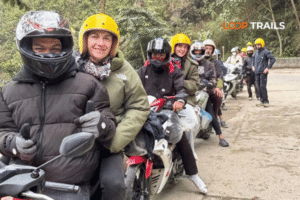
Easy Rider tours pair you with an experienced local driver. You ride on the back of a semi-automatic or XR150 motorbike. Your guide handles the riding, navigation, and mechanics. You handle the sightseeing, photography, and enjoying the landscape without worrying about the next hairpin turn. The price includes everything except bus transfers to/from Ha Giang.
Self-drive tours put you in control. You’re riding your own bike, usually a semi-automatic or XR150, with a support vehicle following the group. You need basic motorbike experience and comfort with mountain roads. The freedom is real, but so is the responsibility.
Jeep tours are the comfort option. You’re in a 4-person vehicle with a driver, hitting the same routes but without the physical demands of riding. Perfect for families, couples who don’t ride, or anyone who wants the scenery without the sweat.
Each option follows the same itineraries. The difference is how you experience them.

Learn more: Ha Giang Loop 2 Days 1 Night
The 2-day loop exists for people with a problem: they know they can’t skip Ha Giang, but they genuinely don’t have more time. Maybe you’re connecting to Sapa, or you’ve got a flight out of Hanoi, or your visa’s running out. I get it.
Day 0: Night sleeper bus from Hanoi to Ha Giang. You arrive early morning, check into Loop Trails Hostel, shower, maybe nap if you’re not running on pure adrenaline yet.
Day 1: Ha Giang – Quan Ba – Yen Minh – Dong Van
08:00 – Breakfast and briefing at the hostel. This is where you meet your group and get the safety talk.
09:00 – Hit the road. First up is Bac Sum Pass and Heaven Gate, which gives you your first taste of what “dramatic mountain scenery” actually means up here.
12:30 – Lunch stop in Yen Minh.
Afternoon brings you into the Dong Van Karst Plateau Geopark. You’ll ride Tham Ma Pass, stop at Lao Sa village near the China border where H’Mong houses cling to hillsides, and visit Vuong Palace, the former residence of the H’Mong king that’s equal parts historical site and Instagram magnet.
17:00 – Check into a local homestay in Dong Van. Evening is dinner, local games, traditional music, and “happy water” (corn wine that lives up to half of its name).
Day 2: Dong Van – Ma Pi Leng Pass – Ha Giang
08:00 – Breakfast, checkout, and straight onto what everyone actually came for: Ma Pi Leng Pass.
09:00 – The legendary Ma Pi Leng, one of Vietnam’s four great passes. The road was literally carved into the mountainside by H’Mong tribes in the 1960s. You’re riding at the edge of Tu San Canyon, and yes, it’s as dramatic as the photos suggest.
11:00 – Quick ride through Meo Vac town.
12:00 – Lunch, then continue through M Pass (named because the road literally forms an M shape).
14:00 – Back through Quan Ba and Heaven Gate.
16:00 – Arrive at Loop Trails Hostel in Ha Giang City. Option to take a night bus to Hanoi or your next destination.
You’ll see: Ma Pi Leng Pass, Dong Van town, Vuong Palace, Heaven Gate, the dramatic karst landscape that makes Ha Giang famous.
You’ll miss: Pretty much everything else. No Lung Cu Flag Tower at Vietnam’s northernmost point. No boat ride on Nho Que River. No swimming in Du Gia waterfall. No Lung Tam linen village. No Lung Khuy Cave. No time to actually explore any of the places you stop, because you’re always 30 minutes behind schedule.
The 2-day route covers maybe 60% of the landscape highlights but about 20% of the actual experience. You’re seeing the loop through a car window, essentially, just on a motorbike.
Be honest with yourself here. The 2-day loop works if:
It doesn’t work well if you want any depth, if you tire easily on long rides, or if you’re the type who likes to linger and explore rather than constant movement.
Pricing:
Note: Prices include dorm accommodation. Bus transfers from Hanoi (or other cities) and private room upgrades are additional.

Learn more: Ha Giang Loop 3 Days 2 Nights
The 3-day loop is where the experience starts to make sense. You’re covering the same essential route as the 4-day tour, just with a slightly tighter schedule. This is the sweet spot for most travelers, the version I recommend when people ask.
Day 0: Standard night bus from Hanoi, early morning arrival in Ha Giang.
Day 1: Ha Giang – Quan Ba – Yen Minh – Dong Van
Same start as the 2-day route, but the pace is different. You’re not racing.
08:00 – Breakfast and briefing.
09:00 – Bac Sum Pass and Heaven Gate.
12:30 – Lunch in Yen Minh.
Afternoon covers Tham Ma Pass, Lao Sa village, and Vuong Palace, but you actually have time to explore Vuong Palace properly rather than a 10-minute dash through the courtyard.
17:00 – Check into Dong Van homestay.
Day 2: Dong Van – Ma Pi Leng Pass – Du Gia
Here’s where it diverges meaningfully from the 2-day sprint.
08:00 – Breakfast and checkout.
09:00 – Ma Pi Leng Pass. You’re not just riding it, you’re stopping for the skywalk experience.
10:00 – Ma Pi Leng Skywalk. Yes, it’s touristy. It’s also spectacular if you’re not afraid of heights.
11:00 – Tu San Canyon viewpoint. One of Southeast Asia’s deepest canyons, and the view explains why the Nho Que River looks so tiny from up here.
13:00 – Lunch, then continue through M Pass and Lung Ho viewpoint.
17:00 – Arrive at Du Gia village. This is crucial. You’re staying in a peaceful homestay in an actual village, not a tourist town. The vibe is completely different.
Day 3: Du Gia – Quan Ba – Ha Giang
08:00 – Breakfast overlooking rice fields. The morning in Du Gia is worth the entire 3-day price difference.
09:00 – Swim in Du Gia waterfall. The water’s cold, the setting’s perfect, and you’ve earned this.
10:30 – Visit Lung Tam linen village. Watch traditional weaving, learn about H’Mong textile traditions, maybe buy something directly from the artisans.
16:00 – Back to Loop Trails Hostel. Night bus option available.
The 3-day itinerary includes everything that matters:
You’re seeing the famous landmarks plus getting genuine village experiences. The balance actually works.
The 3-day loop hits a Goldilocks zone. It’s comprehensive enough to feel complete but short enough to fit into most Vietnam itineraries. You get the adventure, the scenery, the cultural experiences, and the Instagram moments without feeling rushed or exhausted.
The overnight in Du Gia particularly makes a difference. Dong Van is a tourist town. It’s fun, there’s infrastructure, but it’s busy. Du Gia is quiet, authentic, and the kind of place where you end up sharing rice wine with your homestay family and actually having conversations.
The waterfall swim matters too. By day 3, you’re dusty, possibly sore, definitely ready for a refresh. Swimming in a mountain waterfall surrounded by forest beats any resort pool.
Pricing:

Learn more: Ha Giang Loop 4 Days 3 Nights
If you have the time, this is the one. The 4-day loop doesn’t just add an extra day; it fundamentally changes the experience. You’re not tourists anymore. You’re travelers.
Day 0: Same night bus arrival routine.
Day 1: Ha Giang – Quan Ba – Yen Minh
08:00 – Breakfast and briefing.
09:00 – Bac Sum Pass and Heaven Gate. You already know these stops.
12:30 – Lunch in Tam Son Town.
14:00 – Here’s what’s different: Trek to Lung Khuy Cave. This is the most beautiful cave in Quan Ba, and most tours skip it because of time constraints. You’re hiking in, exploring the formations, experiencing something genuinely off the beaten path while others are racing toward Dong Van.
17:00 – Check into a homestay in Yen Minh. Not Dong Van. Yen Minh. Smaller town, fewer tourists, more authentic vibe.
Evening brings traditional music, local games, and yes, happy water. But in Yen Minh, you’re often one of the only groups there. The interaction feels personal rather than performed.
Day 2: Yen Minh – Lung Cu – Dong Van
08:00 – Breakfast, checkout.
The route includes Tham Ma Pass, Lao Sa village near the China border, Sung La village, Vuong Palace, and Lung Cu Flag Tower.
Lung Cu is Vietnam’s northernmost point. The flag tower sits on Dragon Mountain, and you climb 389 steps to reach it. On a clear day, you can see into China. More importantly, you can say you’ve been to the top of Vietnam.
12:00 – Lunch in Lung Cu.
14:00 – Visit Lo Lo Chai village. This is the most beautiful Lo Lo ethnic village in Vietnam, with traditional rammed-earth houses that somehow remain cool in summer and warm in winter. The architecture is fascinating, and the village setting is pristine.
17:00 – Finally arrive in Dong Van, check into homestay.
Day 3: Dong Van – Ma Pi Leng – Nho Que – Du Gia
This is the showpiece day.
08:00 – Ma Pi Leng Pass.
10:00 – Skywalk.
11:30 – Tu San Canyon.
12:00 – Here’s what the 3-day tour skips: Boat tour on Nho Que River. You’re down at water level now, looking up at the canyon walls and Ma Pi Leng Pass from below. The perspective shift is remarkable. The river is this brilliant green color that doesn’t look real, and the canyon towers above you.
13:00 – Lunch in Sung Trai, continue through M Pass and Lung Ho viewpoint.
17:00 – Du Gia village.
Day 4: Du Gia – Quan Ba – Ha Giang
08:00 – Breakfast with rice field views.
09:00 – Waterfall swim.
10:00 – Duong Thuong valley. This is a valley in the mountains inhabited by H’Mong people, and it’s gorgeous in a pastoral, untouched way that the main loop can’t match.
12:30 – Lunch in Thai An.
14:00 – Lung Tam linen village.
15:00 – Return through Thai An via a forest road along the Miền River. This route back to Ha Giang is quieter and more scenic than the main road.
16:00 – Loop Trails Hostel.
Learn more: Ha Giang Loop Tours 2026
The 4-day itinerary’s real value is in places like:
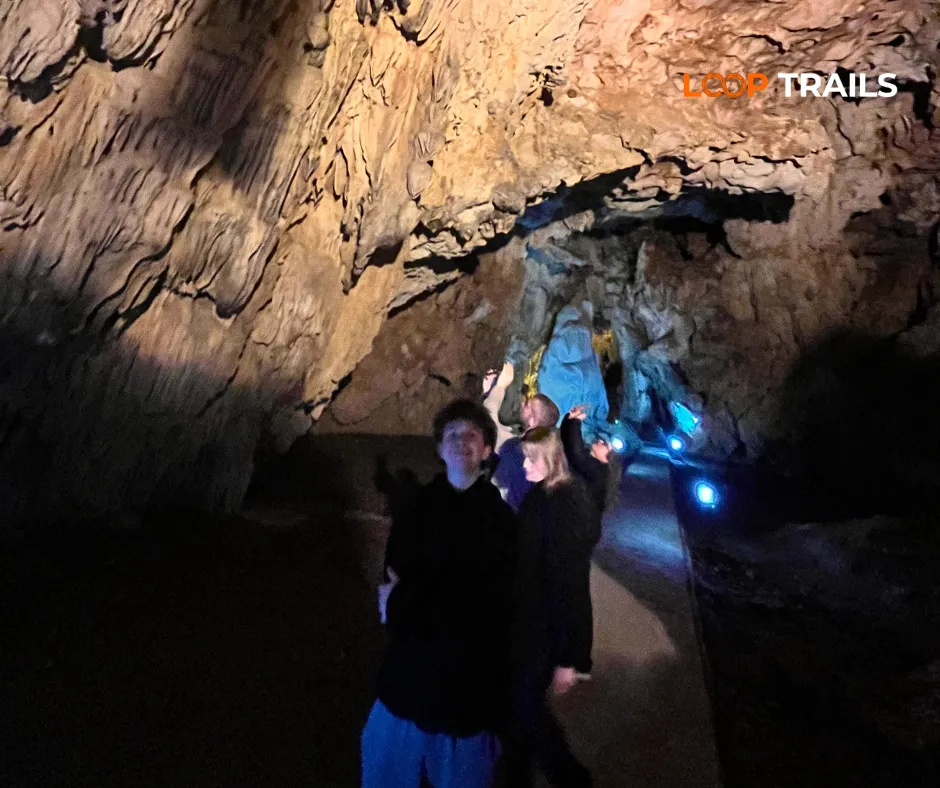
Lung Khuy Cave: Most tours don’t have time. You do. The stalactites and stalagmites create chambers that feel like natural cathedrals, and the lighting (bring a headlamp or use your phone) reveals formations that have taken millennia to form.
Lo Lo Chai village: The Lo Lo people are one of Vietnam’s smallest ethnic minorities. Their traditional homes use rammed earth construction that’s been refined over generations. Walking through Lo Lo Chai feels like stepping into a different century.
Duong Thuong valley: Not a specific stop, just a beautiful valley you ride through when you have time. Rice terraces, scattered H’Mong houses, mountains on all sides. The kind of scenery that makes you pull over just to look.
The forest road along Miền River: Day 4’s return route is less traveled and infinitely more peaceful than backtracking the main highway. You’re riding through forest with the river alongside, seeing a different side of Ha Giang.
The 4-day loop costs more, obviously, but the value proposition is different. You’re not paying for more of the same. You’re paying for depth.
You spend two different nights in two different types of towns (Yen Minh and Dong Van), giving you perspective on how tourism affects local communities differently. You trek to caves that require effort. You take a boat ride that adds a completely new dimension to the landscape. You visit villages where tourists are still unusual enough to be interesting.
The riding is also less punishing. When you spread the loop across 4 days, the daily distances drop. You have time to stop without worrying about reaching your homestay before dark. The experience becomes immersive rather than endurance-based.
Pricing:
Learn more: Ha Giang Cao Bang 5 Days 4 Nights
This isn’t really a Ha Giang Loop anymore. It’s a northern Vietnam expedition that uses the loop as a starting point before diving into territory most travelers never see.
Day 0: Night bus to Ha Giang.
Day 1: Ha Giang – Quan Ba – Yen Minh – Lao Xa (near Dong Van)
This follows the 4-day Day 1 route through Heaven Gate, lunch in Yen Minh, Tham Ma Pass, Lao Sa village, and Vuong Palace. You overnight in Lao Xa instead of Dong Van proper, setting you up geographically for Day 2.
Day 2: Lao Xa – Lung Cu – Dong Van – Meo Vac
09:00 – Start at the H’Mong King’s Palace if you didn’t fully explore it yesterday.
11:30 – Lung Cu Flag Tower. Same northernmost point of Vietnam, same dragon mountain, same views.
12:30 – Back to Dong Van for lunch.
13:30 – Ma Pi Leng Pass.
14:00 – Skywalk.
15:30 – Boat on Nho Que River through Tu San Canyon.
17:00 – Check into a hotel in Meo Vac for the night.
Day 3: Meo Vac – Bao Lac – Thong Nong – Ha Quang
Now you’re leaving Ha Giang province entirely and entering Cao Bang.
12:00 – Lunch in Bao Lac.
13:00 – Khau Coc Cha Pass, also called the “15-step pass” because of how many switchbacks it stacks. You hike up to a viewpoint that reveals the entire pass snaking below you plus Xuan Truong valley spreading out peaceful and green.
14:00 – Xuan Truong valley proper.
15:00 – Na Tenh Pass.
16:00 – Pac Bo historical site, where Ho Chi Minh returned to Vietnam in 1941 and set up his base. There’s a cave, a stream he bathed in (now named Lenin Stream), and genuine historical significance for anyone interested in modern Vietnamese history.
17:00 – Me Farmstay for the night. This is a working farm, and it’s spectacular.
Day 4: Ha Quang – Tra Linh – Trung Khanh – Ban Gioc Waterfall
10:00 – Tra Linh visit.
11:00 – Lunch in Trung Khanh.
13:00 – Hike to Pi Pha viewpoint at Ngoc Con. This is another one of those viewpoints that requires effort but delivers views that make you forget the sweat.
14:00 – Countryside back roads through Trung Khanh to Ban Gioc.
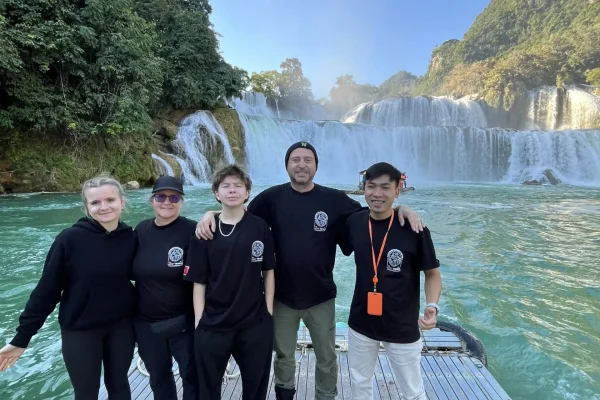
15:00 – Ban Gioc Waterfall. This is the main event. Ban Gioc is Vietnam’s largest waterfall and sits right on the Vietnam-China border. The Quay Son River splits here, creating dual cascades that span 300 meters wide. You can take a bamboo raft to the base (for a fee). You can wade in the shallows. You can just stand there watching the water.
16:00 – Optional swim at Rock Village for a refresh.
17:00 – Overnight near Ban Gioc.
Day 5: Ban Gioc – Quang Uyen – Cao Bang City
09:00 – Nguom Ngao Cave. This is the most beautiful and largest cave in Cao Bang, with three main chambers full of stalactites, stalagmites, and underground streams. The cave system extends for several kilometers, though tours cover the accessible sections.
10:30 – Quay Son River viewpoint.
13:00 – Phuc Sen paper factory village. This village produces traditional paper using centuries-old techniques. You can watch the process from pulping to drying.
14:00 – Phia Thap incense village. The Nung people here have been making incense sticks traditionally for generations. The village smells amazing, and watching the process is meditative.
15:00 – God’s Eye Mountain, one of Cao Bang’s most unique geological formations. The mountain has a natural hole through it that resembles an eye, and locals consider it sacred.
16:30 – Cao Bang City. Option for night bus to Hanoi or other destinations.

Learn more: Ha Giang Cao Bang Jeep Tour
Ban Gioc deserves its own discussion because it’s the primary reason to extend into Cao Bang.
The waterfall is massive. At 300 meters wide and 30 meters high (in the wet season), it’s Vietnam’s largest and one of Asia’s most impressive border waterfalls. The water pours over terraced limestone formations, creating multiple cascades and pools. The surrounding landscape is karst mountains and rice paddies.
You approach from the Vietnamese side, but China is right there across the water. Sometimes you can see Chinese tourists on the other side taking the same photos you are.
The best time to visit is after the rainy season (September-November) when water flow is high but not dangerously so. Dry season (December-April) sees reduced flow, and while it’s still impressive, the waterfall becomes multiple smaller streams rather than a thundering wall of water.
Beyond Ban Gioc, the 5-day tour adds:
Nguom Ngao Cave: Cave systems in this region are extensive and stunning. Nguom Ngao is particularly beautiful because of its variety of formations and the way light plays through different chambers.
Traditional craft villages: Phuc Sen and Phia Thap give you insight into artisan techniques that have survived into the modern era. These aren’t tourist performances; these are working villages where people make their living the way their grandparents did.
Pac Bo historical site: Even if you’re not particularly interested in history, Pac Bo is significant. This is where modern Vietnam’s independence movement was born, where Ho Chi Minh planned the revolution. The cave is modest, the stream is small, but the historical weight is real.
Honest answer: it depends on what you value.
The 5-day tour is worth it if:
It’s probably not worth it if:
The 5-day tour is comprehensive to the point of being exhausting. You’re moving daily, riding 4-6 hours most days, always checking into new accommodation. If you thrive on constant movement and new scenery, it’s incredible. If you need downtime to process experiences, it might be too much.
Pricing:
Note: The 5-day tour is only available from 2 passengers minimum due to the extended route and logistics.

Learn more: Ha Giang Loop by Jeep
Let’s cut through the descriptions and put everything in perspective.
2-Day Loop:
3-Day Loop:
4-Day Loop:
5-Day Cao Bang:
The daily riding hours don’t tell the full story. Mountain riding is different from flat highway cruising. A 5-hour day on the Ha Giang Loop can feel longer than an 8-hour day on straight roads because of the concentration required for hairpin turns and the altitude changes.
Here’s everything in one place:
2 Days 1 Night:
3 Days 2 Nights:
4 Days 3 Nights:
5 Days 4 Nights (Ha Giang + Cao Bang):
Currency Context: At current exchange rates, 1,000,000 VND ≈ $40-43 USD. The 3-day easy rider tour runs about $160-170 USD per person. The 5-day tour is roughly $440-475 USD.
All tours include:
All tours exclude:
The bus transfer deserves its own section because the options and pricing significantly impact your total trip cost.
Learn more: How to get from Ha Noi to Ha Giang?

Learn more: How to book your Ha Giang Loop Tours packages
Ha Giang City is your starting point, but getting there requires planning. Most travelers come from Hanoi, but connections exist from other northern Vietnam destinations.
From Hanoi:
VIP Sleeper Bus (most comfortable):
Cabin Sleeper Bus:
Regular Sleeper Bus (budget option):
Limousine Bus (comfortable daytime option):
From Ninh Binh:
VIP Sleeper Bus:
Regular Sleeper Bus:
From Cat Ba:
VIP Sleeper Bus:
Cabin Sleeper Bus:
From Ha Long:
VIP Sleeper Bus:
From Sapa:
VIP Sleeper Bus:
Cabin Sleeper Bus:
Limousine Bus:
From Cao Bang (for the 5-day tour):
Limousine Bus:
Bus Booking Notes:
Ha Giang has distinct seasons, and your timing affects everything from visibility to road conditions.
September-November (Best Overall): Pros: Rice terraces golden and ready for harvest, weather clear and dry, temperatures comfortable (15-25°C), Ban Gioc Waterfall at maximum flow, roads in good condition Cons: Peak tourist season means busier homestays and roads, higher accommodation costs in some places Best for: All itineraries, especially 4-day and 5-day tours for maximum waterfall views
December-February (Cool and Clear): Pros: Spectacular visibility, temperatures cool but not freezing (10-20°C), fewer tourists than autumn, local festivals and Tet celebrations if timing works Cons: Waterfalls reduced flow, some mornings can be foggy, occasional cold snaps require warm clothing Best for: 2-day and 3-day loops if you prioritize mountain views over waterfalls
March-May (Flower Season): Pros: Wildflowers blooming, plum and peach blossoms, comfortable temperatures warming up, excellent riding conditions Cons: Growing season means rice fields are green but not yet dramatic, occasional spring rains Best for: All itineraries, particularly beautiful for photography enthusiasts
June-August (Rainy Season): Pros: Lush green landscapes, fewer tourists, lower prices, waterfalls at full power Cons: Frequent afternoon rains, occasional landslides can close roads temporarily, humidity high, some mountain views obscured by clouds, riding conditions more challenging Best for: Experienced riders only, avoid if nervous about wet roads; 5-day tour to Cao Bang works well if you want to see Ban Gioc at peak flow
Buckwheat Flower Season (Late October-November): Special mention for buckwheat flowers. Around late October into November, Ha Giang’s buckwheat fields bloom into these stunning pink and white carpets. If you’re planning a trip specifically for photography and can time it right, this is spectacular. Check current bloom status before booking as exact timing varies by altitude and weather.
Packing for the Ha Giang Loop requires balancing minimal luggage (you’re on a bike) with mountain weather preparedness.
Essential Regardless of Season:
Clothing Strategy:
Season-Specific Additions:
Winter (Dec-Feb): Add thermal layer, warm hat, gloves, warmer sleeping bag or sleep sack if you get cold easily
Rainy Season (Jun-Aug): Quality rain gear, waterproof bag for electronics, quick-dry everything, extra socks
Photography Gear:
What to Leave Behind:
Most tours provide basic raincoats if weather turns bad, but they’re universally terrible quality. Bring your own if you have space.
Learn more: Best Ha Giang Loop Tours 2025
At this point, you’ve got all the information. Now you need to make a decision.
If you have only 2 days: Take the 2-day tour if seeing Ma Pi Leng Pass is your primary goal and you’re content with a condensed experience. Otherwise, skip Ha Giang and save it for a future trip when you have more time. A rushed loop is better than no loop, but not by much.
If you have 3 days: Take the 3-day tour without hesitation. This is the sweet spot. You see everything important, get village experiences, swim in the waterfall, and don’t feel rushed. This is what most people should book.
If you have 4 days: Take the 4-day tour if you value depth over breadth. The extra day adds Lung Khuy Cave, Lung Cu Flag Tower, Lo Lo Chai village, the Nho Que River boat ride, and substantially better pacing. Worth it if you’re the type who wants to really understand a place.
If you have 5+ days: Consider the 5-day Cao Bang extension if Ban Gioc Waterfall appeals to you or if you want the bragging rights of a truly comprehensive northern Vietnam route. Otherwise, consider splitting time between a 3-day or 4-day loop and another destination (Sapa, Ninh Binh, etc.).
For Easy Rider: Physical demands are moderate. You’re sitting on the back of a bike for hours daily, which is more tiring than it sounds. Core strength helps. If you’re generally healthy and can handle 5-6 hours of sitting/standing/light walking daily, you’ll be fine.
For Self-Drive: You need genuine motorbike experience. Not “I rented a scooter in Bali once” experience—actual experience handling bikes on mountain roads. The routes include steep climbs, hairpin turns, loose gravel, and occasional road debris. If you’re comfortable riding in challenging conditions and have ridden a semi-automatic or manual bike before, self-drive works. If you’re nervous or inexperienced, don’t do it. The scenery is amazing, but so are the drop-offs.
For Jeep: Minimal physical demands. If you can sit in a car and handle some bumpy roads, you’re qualified. This is the right choice for families with kids, older travelers, people with injuries, or anyone who wants the scenery without the athletic component.
Fitness Considerations by Itinerary:
The cheapest complete experience is the 3-day self-drive at 3,390,000 VND ($135-145 USD) plus bus transfers. Add 250,000-350,000 VND each way for buses from Hanoi, bringing total to roughly 3,890,000-4,090,000 VND ($155-175 USD) all-in.
The most expensive is the 5-day jeep for a solo traveler at 39,290,000 VND for the jeep alone ($1,570-1,700 USD), though splitting among 4 people brings per-person cost to 9,822,500 VND ($390-425 USD) plus bus transfers.
Budget Optimization Strategies:
The price differences between itineraries reflect value, not just duration. The 4-day tour costs 1,100,000 VND more than the 3-day easy rider, but adds a boat ride, cave trek, flag tower visit, additional village experiences, and superior pacing. That’s solid value.

Learn more: Ha Giang Loop Tours
Once you’ve decided on your itinerary, booking is straightforward.
Loop Trails operates all the tours described in this guide. They’re based in Ha Giang City and have been running loop tours for years. Their advantage is they own the hostel (Loop Trails Hostel), so logistics from arrival to departure are streamlined.
What you need to book:
When to book:
What happens after booking: You’ll receive confirmation with bus pickup details, what to bring, and arrival instructions. If taking a night bus, you arrive in Ha Giang early morning, check into Loop Trails Hostel, have breakfast, attend the briefing, and start riding by 9:00 AM.
If you want to explore the best Ha Giang loop tours with experienced guides and well-maintained equipment, Loop Trails offers all the itineraries discussed here. Their easy rider tours pair you with knowledgeable local guides who know the routes and the culture, while their self-drive options give you freedom with the security of a support vehicle. For those seeking comfort, the jeep tours cover the same incredible routes without the riding demands.
Questions before booking? Reach out directly through their website or WhatsApp. They’re responsive and can help you choose the right itinerary for your specific situation.
Technically possible but absolutely not recommended. You’d be riding 10+ hours with minimal stops, skipping everything that makes the loop special. If you only have 1 day, visit Quan Ba and Heaven Gate as a day trip from Ha Giang City, then come back another time for the proper loop.
You need either a Vietnamese license, an international driving permit (IDP), or your home country license translated into Vietnamese. Enforcement varies, but tour operators require proper documentation for insurance purposes. Easy rider and jeep tours don’t require you to have a license since you’re not driving.
The roads are challenging but safe if you’re experienced and cautious. Most accidents involve inexperienced riders attempting self-drive tours beyond their skill level, or people riding too fast. With proper guidance (easy rider) or adequate experience (self-drive), the routes are manageable. Jeep tours eliminate riding risk entirely.
Check closer to your travel dates, but generally: September-November is dry and clear, December-February is cool and can be foggy, March-May is warming with occasional rain, June-August is wet with afternoon storms. Current weather forecasts become reliable about 7-10 days out.
Yes, and you should. Most hostels in Hanoi offer free luggage storage. Bring only what you need for 2-5 days. You’re on a motorbike or in a small jeep—space is limited.
Moderate. You’re sitting on the back of a bike for 4-8 hours daily depending on itinerary. Your core and legs will feel it. If you can handle a full day of sightseeing walking around a city, you can handle easy rider. It’s less demanding than self-drive but more tiring than jeep.
Homestays are basic but clean. Expect simple rooms with mattresses on the floor or basic beds, shared bathrooms, and squat toilets in some locations. Hot water exists but isn’t guaranteed. This is authentic village accommodation, not hotels. It’s part of the experience.
Sometimes possible depending on availability, but complicated. If you think you might want to upgrade from 3 days to 4 days, book the 4-day tour from the start. Logistics of adding days mid-tour are difficult.
Yes. You’re traveling with a group and guide throughout. The routes are well-traveled, and homestays host tourists regularly. Standard travel safety applies: keep valuables secure, trust your instincts, don’t accept drinks from strangers.
Possible but challenging. Many businesses close, homestays may be unavailable, and bus schedules are disrupted. If you’re in Vietnam during Tet and want to do the loop, book well in advance and confirm everything twice. Better to plan around Tet if possible.
This varies by operator and season, but typically 8-15 people for easy rider groups, smaller for self-drive (4-8), and obviously just your party for private jeep tours. Loop Trails runs multiple groups if demand is high rather than creating huge groups.
Yes. Seriously. Accidents are rare but possible. Medical evacuation from remote areas is expensive. Good travel insurance costs $50-100 for most trips and covers you for the entire Vietnam journey, not just Ha Giang. Don’t skip this.
Not easily as part of a Ha Giang Loop tour. Ban Gioc is in Cao Bang province, 5-6 hours from Ha Giang City. You could visit it separately from Cao Bang City, but the 5-day tour’s advantage is it connects Ha Giang highlights with Cao Bang efficiently rather than requiring backtracking or separate trips.
Contact information for Loop Trails
Website: Loop Trails Official Website
Email: looptrailshostel@gmail.com
Hotline & WhatSapp:
+84862379288
+84938988593
Social Media:
Facebook: Loop Trails Tours Ha Giang
Instagram: Loop Trails Tours Ha Giang
TikTok: Loop Trails
Office Address: 48 Nguyen Du, Ha Giang 1, Tuyen Quang
Address: 48 Nguyen Du, Ha Giang 1, Tuyen Quang
Facebook X Reddit Table of Contents Learn more: Ha Giang Loop Tours There’s a moment, usually somewhere on Ma Pi Leng Pass,

Facebook X Reddit Table of Contents Learn more: Ha Giang Loop Tours There’s a version of the Ha Giang Loop that people
Facebook X Reddit Table of Contents Learn more: Ha Giang Loop Tours There’s a moment on the Ma Pi Leng Pass —