
Ha Giang Loop 3 Days vs 4 Days: Which Duration Is Right for You?
Facebook X Reddit Table of Contents Learn more: Ha Giang Loop Tours Most people land on this question after staring at a

Thúy Kiều (Grace) is a travel blogger and content contributor for Loop Trails Tours Ha Giang. She holds a bachelor’s degree in Sustainable Tourism from Vietnam National University, Hanoi, and has a strong passion for exploring and promoting responsible travel experiences in Vietnam’s northern highlands.
Learn more: Ha Giang Loop Tours
The Ha Giang Loop isn’t a beach trip. It isn’t a city break. It’s 300-plus kilometers of mountain road through one of the most remote corners of Southeast Asia — and what you pack will either make your days smooth or make them miserable.
I’ve seen first-timers show up with a 70-litre backpack stuffed full of things they never touched, and I’ve seen people arrive with almost nothing and spend their first afternoon panic-buying flip-flops and a phone charger in Ha Giang city. Both situations are avoidable.
This guide gives you a practical, honest breakdown of what to bring on the Ha Giang Loop — organized by category, adapted to your trip type, and stripped of the filler advice you’ll find on generic packing list posts. No unnecessary gear. No wishful thinking. Just what you actually need for the road.
Learn more: Ha Giang Loop 2 Days 1 Night
Ha Giang sits in Vietnam’s far north, bordering China. The terrain is dramatic — the Dong Van Karst Plateau, carved passes like Ma Pi Leng, the switchbacks above Meo Vac, the river valley around Du Gia. Beautiful. Also legitimately demanding.
Altitude on the loop ranges from around 300 metres in the valleys up to roughly 1,400–1,600 metres on the higher passes. That swing matters for temperature. A morning in Dong Van in November can feel genuinely cold — think single digits Celsius before wind chill. An afternoon in the lower valleys near Yen Minh can be warm and humid by comparison.
A few things to lock in before packing:
Peak season (September–November, March–May): Cooler, drier, best road conditions. Buckwheat flowers bloom in October–November. Pack for cold mornings and mild afternoons.
Hot season (June–August): Warm and humid. Also peak rain. Landslides can affect road sections. Pack for heat and serious waterproofing.
Winter (December–February): Cold, sometimes foggy, occasionally near-freezing at altitude. Pack warmly. Not the most popular season but stunning if you’re prepared.
The roads themselves: a mix of decent tarmac, patchy sections, and narrow mountain passes with steep drop-offs. If you’re self-driving or renting a motorbike, your body posture, your grip, and your confidence on the bike matter more than any single piece of gear — but the right gear helps you stay focused instead of fighting the cold or wrestling a slippery rain jacket.
The standard Ha Giang Loop takes 3–4 days. Some people do it in 3 days moving fast; others stretch it to 5 or 6 days, adding side routes to Lo Lo Chai, Lung Cu Flag Tower, or extending all the way to Cao Bang and Ban Gioc Waterfall for a full northern Vietnam circuit.
If you’re doing the loop with a guide (Easy Rider style), a private jeep, or a self-drive rental — your packing priorities shift slightly. More on that in a later section.
The baseline rule: pack for 4 riding days in variable mountain weather, with guesthouses that offer basic (but usually reliable) laundry services.
Learn more: Ha Giang Loop 3 Days 2 Nights
This is the category most people underpack, and the one that matters most.
Helmet
If you’re renting a motorbike or joining an Easy Rider tour, a helmet will be provided. But rental helmets vary. Full-face helmets offer the best protection on mountain roads and also block wind, cold, and dust — which matters a lot at altitude. If you’re a serious rider and you care about fit, bringing your own lightweight full-face is worth considering.
If you’re using a provided helmet, check the strap, visor, and fit before you leave town. Loose helmets on mountain passes are not a situation you want.
Gloves
Riding gloves are non-negotiable. Cold air at speed on a mountain pass will destroy your hands within an hour — and numb hands on a motorbike are dangerous, not just uncomfortable. Bring a pair of decent riding gloves. Leather or textile. Even lightweight summer gloves are better than nothing. If you’re visiting in cooler months, go for something wind-resistant and lined.
Rain Gear
A quality rain poncho or a proper motorcycle rain jacket + pants set. This is one of the most important items on this list.
Don’t buy a flimsy plastic poncho from a roadside stall and call it sorted. They work for five minutes of drizzle. They fail spectacularly in proper mountain rain, they billow in the wind and reduce your control on the bike, and they tear easily.
A packable rain jacket (like a Frogg Toggs or similar motorcycle-spec rain jacket) folds small, packs into a side pocket, and actually keeps you dry. Add rain pants or at least waterproof overpants if you’re traveling in the wet season.
Wind/Cold Layer
Even in summer, a lightweight windbreaker makes a huge difference on the higher passes. In autumn, winter, or early spring, a mid-layer fleece or down jacket under a windbreaker is essential. Cold air at speed at 1,500m feels significantly colder than the actual temperature.
Riding Boots or Sturdy Shoes
Your feet and ankles need protection. Proper riding boots are ideal. If you’re not going that far, at minimum wear closed-toe shoes with ankle coverage. Sandals on a motorbike in the mountains = a decision you will regret.
If you’re not sure whether to self-drive, join a guided Easy Rider tour, or book a jeep — our [Ha Giang Loop Tours] page breaks down all three options with honest pricing and what’s included. Worth a read before you commit to gear decisions.
The Ha Giang Loop is not a fashion show. Pack functional, packable, and quick-dry. Three to four days of clothes is plenty — most guesthouses along the route will wash and dry your things overnight if needed.
The layering logic:
What to pack:
What about shorts? Pack one pair if you want them for guesthouse evenings. They’re not much use on the bike in cool mountain air.
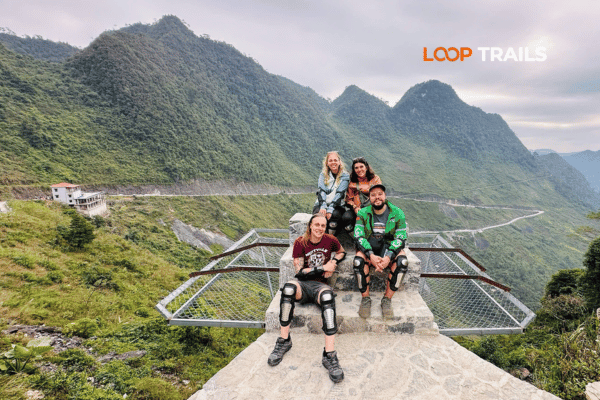
Learn more: Ha Giang Loop 4 Days 3 Nights
Two pairs maximum. Any more is dead weight.
Toiletries: Keep it minimal. Small tubes and bottles. Most guesthouses along the loop provide basic soap/shampoo, but bringing your own small travel-size versions is sensible.
Pharmacy kit:
This one matters more on the Ha Giang Loop than most places, because you are genuinely remote for stretches of the route. The nearest pharmacy or hospital is sometimes 50–100km away.
Pack these:
A small ziplock bag or a soft-sided first aid pouch keeps this organised and easy to access.
Phone — your primary navigation tool. Download Maps.me or Google Maps offline for the Ha Giang Loop area before you leave Ha Giang city. Signal is patchy in remote sections.
Power bank — essential. Charging options along the route are basic. A 10,000–20,000 mAh power bank keeps your phone alive through a full day of maps, photos, and messages.
Universal travel adapter — Vietnam uses two-pin round sockets (Type A and C). Most modern chargers are universal voltage, but double-check.
Camera — if you shoot beyond your phone. Mirrorless/DSLR, a compact, or a GoPro. The Loop produces extraordinary landscapes: Ma Pi Leng Pass, the Nho Que River from above, the karst plateau around Dong Van, the morning mist over Lo Lo Chai. You will want a camera.
Extra memory cards and batteries — charging during the day on the road is not reliable. Carry spares.
Headlamp or small torch — small villages sometimes have limited lighting. Also useful for early starts.
Dry bag or waterproof phone case — if it rains while you’re riding (and it might), your electronics need protection. A simple waterproof handlebar mount bag works well.
Earbuds — for music/podcasts during long riding sections (one ear only if you’re on a motorbike; you need to hear road hazards).
Documents:
Money:
A waterproof zip wallet or a neck pouch keeps cash, cards, and documents dry and secure while riding.
Main bag / backpack (20–35L recommended): Strapped to the back of the bike or in the jeep boot. Clothes, extra layers, larger pharmacy kit.
Day/tank bag or small riding backpack (10–15L): Things you need access to throughout the day — rain jacket, phone, power bank, snacks, water bottle, camera. If you’re on a motorbike, a tank bag or small top-case is ideal so you’re not wrestling with a backpack at every stop.
Avoid oversized bags. A 45L+ backpack on the back of a motorbike changes your centre of gravity and makes the ride harder, especially on switchbacks. Pack light. You’ll thank yourself on day two.
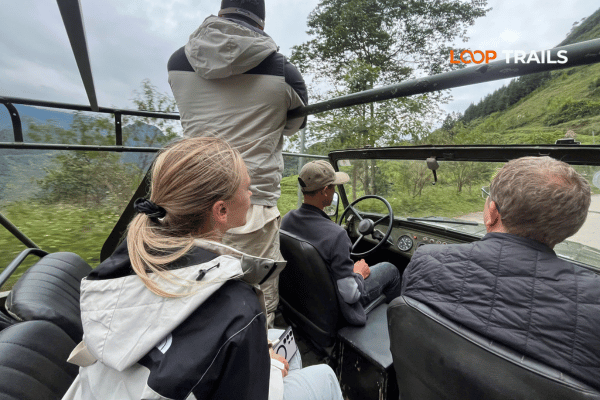
Learn more: Ha Giang Cao Bang 5 Days 4 Nights
Some honest advice on what not to bring:
Your big backpack. If you arrived in Vietnam with a 60–70L pack and you’re planning to put it on a motorbike, either leave it at your hostel in Hanoi or Ha Giang city, or re-evaluate your approach. Big bags on the Loop are awkward, uncomfortable, and a safety issue.
A laptop. Unless you genuinely need to work, leave it. It adds weight, bulk, and something to worry about. A tablet at most, if you need a screen.
Valuables you’d be devastated to lose. Expensive jewellery, camera lenses you can’t replace, items with sentimental value. The Loop involves some risk of drops, rain damage, and falls — calculate accordingly.
Six pairs of shoes. Two is enough.
A full-size towel. Microfibre all the way.
Anything you “might need.” The Ha Giang Loop is 3–4 days. If you haven’t needed it in the last week of travelling, you won’t need it here.
The best packer is a decisive one. If you’re genuinely torn about an item, leave it. You can buy basics in Ha Giang city, and you’ll find that most things you thought were essential weren’t.
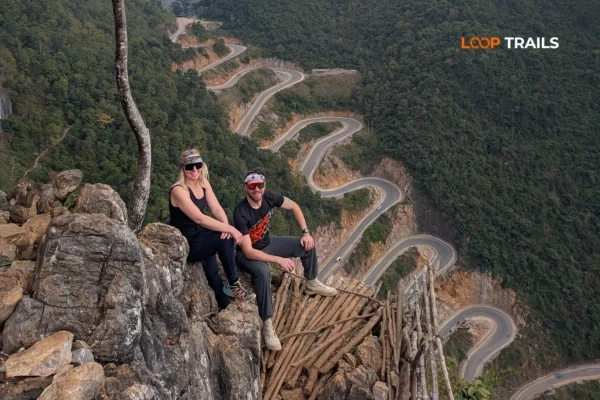
Learn more: Ha Giang Cao Bang Ba Be Lake 6 Days 5 Nights
Your packing list isn’t identical whether you’re self-driving, joining an Easy Rider tour, or riding in a jeep. Here’s how the priorities shift.
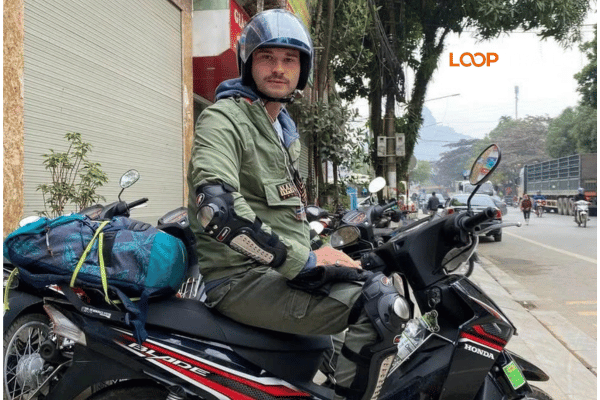
Learn more: Ha Giang Motorbike Rental
You’re managing your own bike, your own luggage, and your own navigation. Pack the most defensively:
Self-driving is the most rewarding but also the most demanding option. Check our [Motorbike Rental Ha Giang] page for what’s included with each rental and what condition our bikes are in.
Learn more: Ha Giang Loop Easy Rider
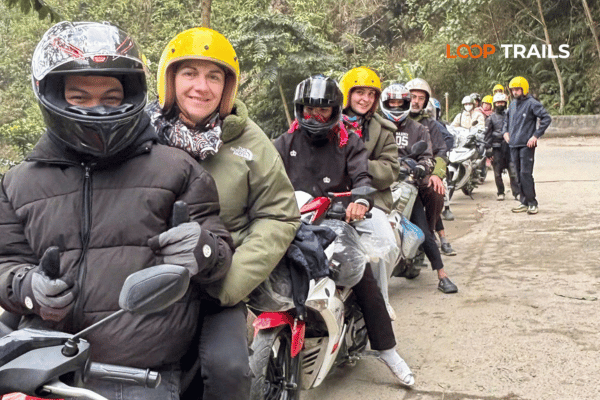
With a guide, a lot of logistical stress is removed. They know the roads, the fuel stops, the guesthouses. Your packing can be slightly lighter on the “admin survival” side:
The key difference: your guide handles the routing, the accommodation check-in, the local navigation. Your job is to show up packed, ready, and wearing your helmet.
Learn more: Ha Giang Jeep Tours
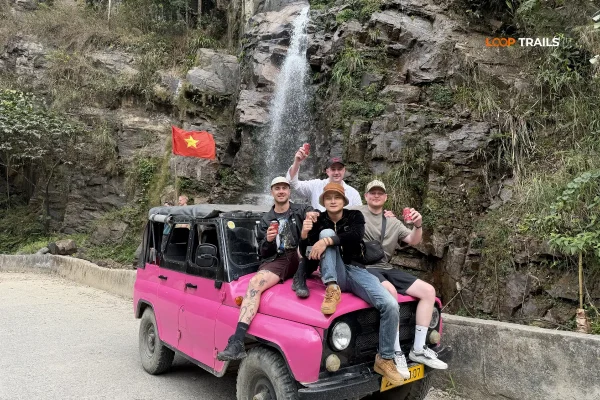
Jeep tours change the packing equation significantly. You’re not on a motorbike:
Learn more: Ha Giang Loop route and itinerary
If you’re a confident rider with some experience on manual bikes and mountain roads — self-drive is an incredible way to do it. Full freedom, full pace control, full bragging rights.
If you want the Ha Giang experience without managing a motorbike in challenging terrain — Easy Rider is the move. You’re riding pillion with an experienced local guide who knows every corner of these roads. More relaxed, still very much “on the bike,” and you get cultural context you’d miss riding solo.
If you’re travelling with family, older travellers, or a group that wants comfort without compromise on the views — the jeep option is genuinely excellent. Ma Pi Leng looks just as stunning from a jeep window, and some viewpoints are actually easier to access by vehicle.
We run all three. [Check our Ha Giang Loop Tours] to see what’s available, what’s included, and how to book. Or if you have a specific question about which suits you best, WhatsApp us directly — we’ll give you an honest answer, not a sales pitch.
Learn more: Ha Giang in September & October
The short answer: some things yes, most things no — not well.
Ha Giang city has a few shops selling basic riding gear, rain ponchos, and simple clothing. You can find cheap gloves, basic helmets, and ponchos here. Quality is variable.
Along the loop (Yen Minh, Dong Van, Meo Vac) — options are extremely limited. You can usually find basic snacks, water, and some emergency clothing, but don’t count on finding a decent rain jacket or riding gloves past Ha Giang city.
What you should buy in advance (Hanoi or before you arrive):
What you can reasonably pick up in Ha Giang city if you forgot:
Hanoi’s Old Quarter has plenty of outdoor gear shops — both genuine brand stores and local alternatives. If you’re arriving from Hanoi, stock up there.

Learn more: What to wear on Ha Giang Loop
Use this as your final check before you leave:
Riding Gear
Clothing
Footwear
Toiletries
Pharmacy
Electronics
Documents & Money
Bag Setup
One last thing: if you’re still in the planning phase and haven’t sorted your transport yet — take a look at our [Ha Giang Loop Tours] and [Motorbike Rental Ha Giang] pages. We keep group sizes small, our bikes are regularly maintained, and we’re always reachable on WhatsApp if you have questions before you book.
Lorem ipsum dolor sit amet, consectetur adipiscing elit. Ut elit tellus, luctus nec ullamcorper mattis, pulvinar dapibus leo.
Learn more: Tu San Canyon & Nho Que River Boat Trip
A quality rain jacket. Ha Giang weather can change rapidly — even in dry season, mountain rain happens. A proper packable rain jacket keeps you safe, comfortable, and focused on riding rather than fighting the elements.
Not necessarily. Most tour operators and rental shops provide helmets. However, a provided helmet varies in quality — always check the fit and condition before you ride. If you want guaranteed comfort and protection, a lightweight full-face of your own is worth it.
This depends on your spending style and whether accommodation and meals are included in your tour. As a rough guide: budget for accommodation, meals, fuel, and incidentals across 3–4 days — and bring more than you think you need, since ATMs are only reliable in Ha Giang city. Check latest estimates with your tour operator or recent traveller forums, as prices shift.
Yes, most guesthouses along the route offer basic laundry services, usually next-day or overnight. Pack 3–4 days of clothes and make use of it.
It depends heavily on the season. At altitude (Dong Van Plateau, Ma Pi Leng area), temperatures can drop significantly — especially in the early mornings and evenings in autumn, winter, and early spring. Always pack a mid-layer and wind protection regardless of when you travel.
Riding boots or sturdy ankle shoes for the bike, and flip flops for the guesthouse. If you plan to do any hiking or walking (Du Gia trek, village walks), trail runners or light hiking shoes are a useful third option.
Leave it unless you have a genuine work need. The Loop is 3–4 days, and a laptop adds weight, stress, and something valuable to worry about. Your phone handles navigation, photos, and communication just fine.
At minimum: painkillers, antihistamines, rehydration salts, antiseptic and plasters, and antidiarrheal tablets. A basic pharmacy kit matters more here than in cities because you can be genuinely remote between stops.
Patchy. Signal is generally available in town centres like Dong Van and Meo Vac, but drops out in remote sections. Download offline maps before you leave Ha Giang city.
Very limited options past Ha Giang city. Stock up in Hanoi or Ha Giang city before heading out. Don’t count on finding a rain jacket or decent gloves in Meo Vac.
If you’re self-driving a motorbike, licensing requirements are something to verify before you travel — regulations can change, and local enforcement varies. Check with your tour/rental operator and confirm current rules at the time of booking.
20–35 litres for your main bag. Anything larger becomes difficult to manage on a motorbike and uncomfortable over a multi-day ride. Pack light and use guesthouse laundry.
Contact information for Loop Trails
Website: Loop Trails Official Website
Email: looptrailshostel@gmail.com
Hotline & WhatSapp:
+84862379288
+84938988593
Social Media:
Facebook: Loop Trails Tours Ha Giang
Instagram: Loop Trails Tours Ha Giang
TikTok: Loop Trails
Office Address: 48 Nguyen Du, Ha Giang 1, Tuyen Quang
Address: 48 Nguyen Du, Ha Giang 1, Tuyen Quang
Facebook X Reddit Table of Contents Learn more: Ha Giang Loop Tours Most people land on this question after staring at a
Facebook X Reddit Table of Contents Learn more: Ha Giang Loop Tours There’s a particular kind of silence at the top of

Facebook X Reddit Table of Contents Learn more: Ha Giang Loop Tours Most people come to Hà Giang for the roads —