


Thúy Kiều is a travel blogger and content contributor for Loop Trails Tours Ha Giang. She holds a bachelor’s degree in Sustainable Tourism from Vietnam National University, Hanoi, and has a strong passion for exploring and promoting responsible travel experiences in Vietnam’s northern highlands.
Let me be straight with you: Ha Giang during rainy season isn’t the postcard-perfect experience you see plastered all over Instagram. But that doesn’t mean you should write it off.
I’ve guided travelers through the loop during every season, and June through August brings a completely different energy to northern Vietnam’s most spectacular mountains. The roads get slippery, sure. You’ll probably get soaked at least once. But you’ll also witness waterfalls at their most powerful, see landscapes so green they almost hurt your eyes, and meet locals without competing with hordes of other tourists.
The question isn’t whether Ha Giang is “good” during rainy season. The question is whether it’s right for your trip. Let’s break down exactly what you’re signing up for.
Learn more: Ha Giang Loop Tours 2026
Learn more: Ha Giang Loop 3 Days 2 Nights
Ha Giang’s rainy season runs from roughly June through August, with July typically seeing the heaviest rainfall. But “rainy season” doesn’t mean it pours non-stop for three months straight.
Here’s what actually happens: You’ll get sudden afternoon thunderstorms that roll in around 2-4pm, dump rain for 30 minutes to a few hours, then clear up. Mornings are often dry, sometimes brilliantly sunny. The pattern isn’t guaranteed, but it’s common enough that you can plan around it.
Temperature-wise, you’re looking at 20-28°C (68-82°F) during the day in the valleys, dropping to 15-20°C (59-68°F) at night in higher elevations like Dong Van. The rain brings humidity, which makes everything feel warmer when the sun’s out and chillier when it’s not.
Some days you’ll get lucky with just cloudy skies. Other days you’ll ride through multiple rain cells. The unpredictability is part of the package.
The good stuff:
The mountains explode with green. Rice terraces fill with water and become these reflective mirrors that change throughout the day. Waterfalls that are barely trickling in dry season become roaring cascades. Du Gia waterfall, which you’ll visit on most loop itineraries, is at its absolute best during this time.
Tourist numbers drop significantly. You’re not fighting for photo spots at Heaven’s Gate or queuing for restaurants in Dong Van. Local homestays have more time to actually chat with you instead of rushing between guests. The experience feels more authentic because you’re not just another face in the backpacker convoy.
Prices sometimes come down a bit. Not drastically, but some accommodations offer better rates when business is slower.
The challenging bits:
Roads get treacherous. The combination of rain, red clay, and mountain passes creates conditions that demand respect. Landslides happen, usually small ones that get cleared within hours, but occasionally routes get blocked for a day or more.
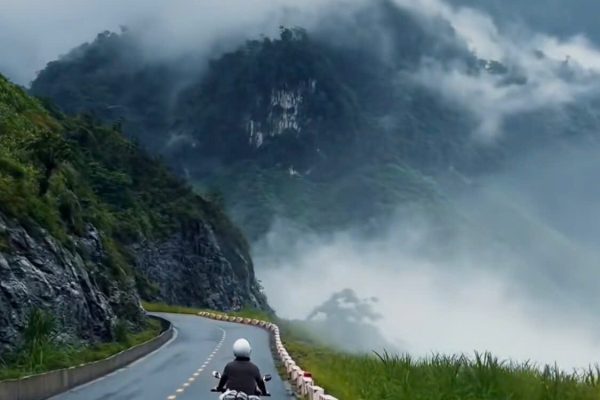
Visibility can be frustrating. Those iconic viewpoints? Sometimes you’re staring at fog instead of valleys. Ma Pi Leng Pass might be wrapped in clouds exactly when you’re riding through it.
Everything takes longer. Slower riding speeds, waiting out downpours, occasional route changes because of road conditions. That 4-day itinerary might need extra buffer time.
You’ll get wet. Even with rain gear, moisture finds a way. Your clothes might not dry overnight at homestays. It’s not the end of the world, but it’s worth knowing.
Learn more:Ha Giang Loop Weather
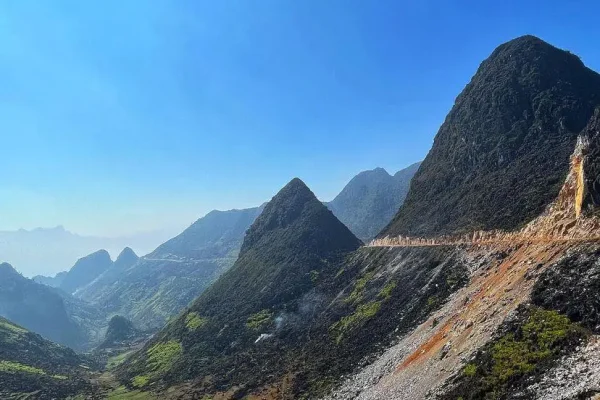
Let’s talk about the big one. Ma Pi Leng Pass is already demanding in perfect weather, with its narrow roads carved into cliffsides and dramatic drop-offs. Add rain to the equation and it requires serious attention.
The road surface becomes slick, especially on the northern side heading toward Meo Vac. Gravel washes across the pavement. Visibility drops when fog rolls in, which it does regularly during rainy season. You need to slow down, way down, and resist any urge to rush.
Here’s what matters: if you’re on an easy rider tour, your guide handles this. They’ve ridden this pass in every condition imaginable. If you’re self-driving, you need to honestly assess your skill level. Light rain and solid motorcycle experience? Probably manageable. Heavy downpour with limited riding background? That’s pushing it.
The pass doesn’t close during normal rain. It closes when there’s been a landslide or the weather gets severe enough that visibility becomes dangerous. Check with your accommodation or tour operator before heading out if there’s been heavy rain overnight.
The road from Ha Giang city to Dong Van via Quan Ba generally handles rain well. It’s wider and the surface is better maintained than some other sections. The Bac Sum Pass and Heaven’s Gate area can get foggy but the road itself stays relatively stable.
Between Dong Van and Meo Vac, besides Ma Pi Leng, you’ve got sections where water runs across the road. Not deep, just surface water, but it makes things slippery. Watch for loose gravel at corners.
The route from Meo Vac back through Du Gia to Quan Ba includes some forest roads that turn into red mud when wet. These sections are slower but scenic. If you’re on the 4-day loop that goes through Duong Thuong valley, expect the forest portions to be properly muddy.
Depends entirely on your experience and comfort level.
If you’ve got solid motorcycle skills, have ridden in rain before, and can read road conditions, self-drive during Ha Giang’s rainy season is doable. Plenty of people do it successfully. You’ll need to ride defensively, take your time, and be willing to wait out heavy rain if necessary.
If you learned to ride last month, or if wet pavement makes you nervous, or if you freeze up when road conditions change suddenly, rainy season isn’t the time to self-drive the loop. There’s no shame in choosing an easy rider tour or jeep tour instead. The point is to enjoy the experience, not white-knuckle it through dangerous situations.
Semi-automatic bikes are more forgiving than manual in slippery conditions because you’ve got both hands on the bars and can focus on balance. If you’re set on self-driving during rainy season and have a choice, go semi-auto.
Learn more: Ha Giang Motorbike Rental
A proper rain jacket is non-negotiable. Not a light windbreaker, an actual waterproof jacket with taped seams. You can buy cheap ponchos in Ha Giang city, but they’re mostly useless on a motorcycle, they blow around and don’t protect your arms properly.
Rain pants make a huge difference. Your legs will thank you, and having dry pants when you arrive at your homestay beats changing into damp clothes.
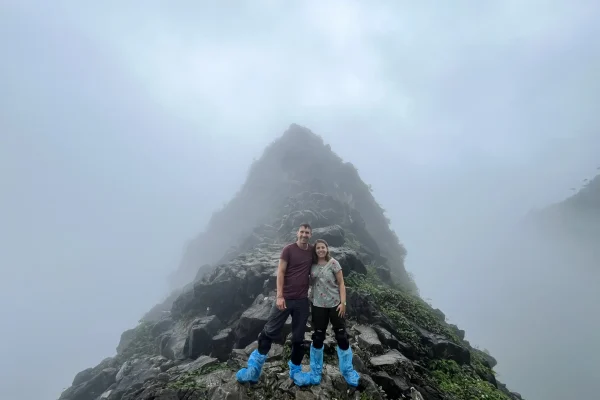
Waterproof shoe covers or boots. Your sneakers will get soaked otherwise, and wet feet for multiple days is miserable. Some travelers bring an extra pair of shoes just for riding, keeping dry ones for evenings.
A dry bag for your electronics, passport, and anything else that absolutely cannot get wet. Even if your backpack claims to be water-resistant, heavy rain will find a way in.
Temperatures fluctuate throughout the day, and rainy season adds extra variables. Pack layers you can add or remove easily.
Bring quick-dry t-shirts and pants. Cotton takes forever to dry in humid conditions. Synthetic or merino wool materials dry faster and don’t get that moldy smell.
A fleece or light down jacket for evenings, especially in higher elevations. Once the sun goes down and you’re wet from rain, you’ll get cold fast.
Extra socks. More than you think you need. Wet socks are one of those small things that make everything feel worse.
A buff or bandana. Useful for keeping rain off your neck, wiping water from your visor, and a dozen other purposes.
Phone waterproof cases are worth it. You’ll want to take photos even in light rain, and having protection means you can actually use your phone without stress.
Bring plastic bags or ziplock bags as backup protection inside your dry bag. Double-layer anything critical.
If you’re bringing a camera, make sure you’ve got a rain cover or waterproof housing. Some of the best atmospheric shots happen in misty, damp conditions, but your gear needs protection.
Power banks are helpful because you might not have consistent electricity for charging at every homestay, and keeping your phone charged matters for navigation and communication.

Learn more: Ha Giang Loop 4 Days 3 Nights
Photographers who chase dramatic light know that rainy season delivers. The constantly changing weather creates conditions you simply don’t get during dry months.
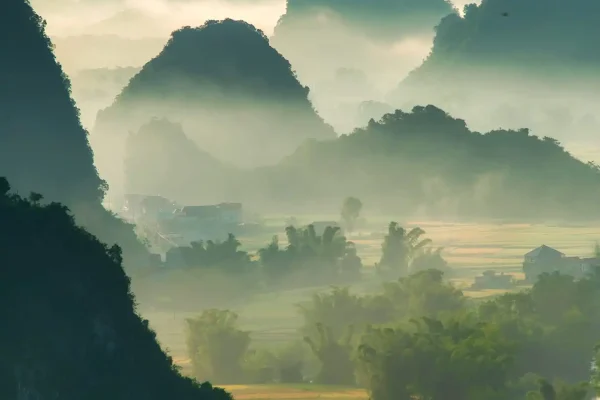
Morning fog in the valleys is ethereal. Rice terraces fade in and out of mist. Mountains appear and disappear. It’s moody in the best possible way.
After rain passes, you get these moments of incredible clarity. The air is washed clean, colors pop, and light breaks through clouds in shafts that look painted on. You’ll see rainbows fairly regularly, sometimes double rainbows spanning entire valleys.
Waterfalls photograph best during and right after rain. The volume, the mist, the power, it all translates to compelling images that dry-season trickles can’t match.
Embrace overcast light. You don’t need blue skies for great photos. Diffused light from clouds eliminates harsh shadows and brings out detail in landscapes.
Shoot when it’s drizzling, not pouring. Light rain adds atmosphere without destroying visibility or soaking your gear.
Look for mist rolling through valleys, especially early morning and late afternoon. These conditions don’t last long, so when you see them, stop and shoot.
Water droplets on leaves, wet roads reflecting light, clouds caught on mountain peaks, these are the details that tell the story of rainy season.
Protect your lens. Wipe water off frequently. A microfiber cloth in an accessible pocket becomes your best friend.
Learn more: Ha Giang Loop by Jeep & Motorbike
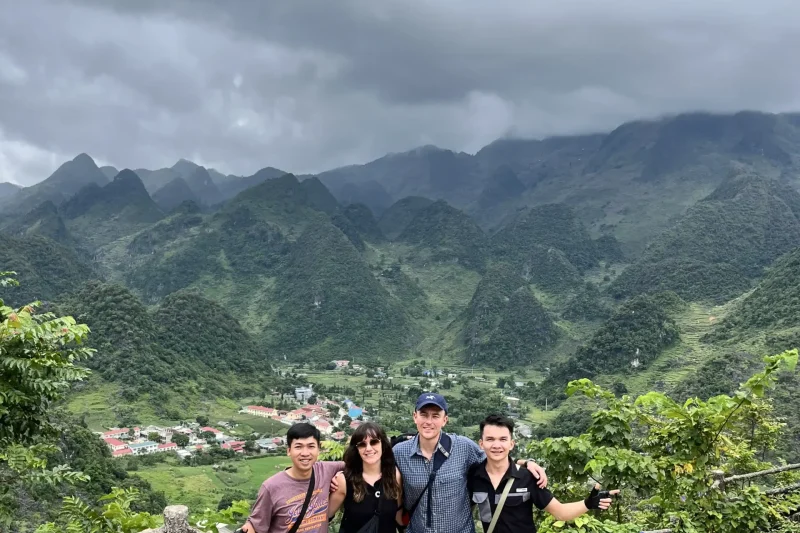
Easy rider tours mean you’re riding pillion behind an experienced guide who knows these roads in every condition. During rainy season, this advantage becomes even more significant.
Your guide handles the technical riding while you handle the scenery. When conditions get sketchy, you’re not making split-second decisions about braking and line choice. You can focus on the experience instead of survival.
Guides know which sections get particularly slippery, where landslides are most common, and when to wait versus when to push through. They make route adjustments based on current conditions without you having to stress about it.
The social aspect is different, too. You’re riding with someone who can explain what you’re seeing, introduce you to locals at homestays, and generally enhance the cultural experience. During slower tourist season, guides often have more bandwidth for these interactions.
Our easy rider tours run year-round because our guides are equipped to handle rainy season conditions. For a 3-day 2-night trip, pricing runs 4,390,000 VND per person. The 4-day 3-night itinerary is 5,490,000 VND per person. Both include accommodation, meals, and an experienced guide who’s ridden the loop hundreds of times.
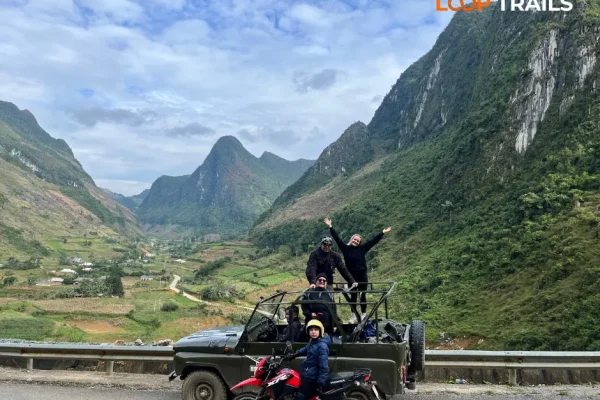
Jeep tours eliminate the rain problem almost entirely. You’re dry, warm, and can enjoy the scenery without worrying about road conditions.
This option makes particular sense during rainy season if you’re traveling with family, if motorcycle riding isn’t your thing, or if weather protection is a priority. You still see everything, you’re just seeing it from inside a vehicle instead of on two wheels.
Our jeep tours accommodate 1-4 passengers with pricing that scales per group. For the 3-day 2-night loop, it’s 8,990,000 VND for solo travelers, 16,990,000 VND for two people, 19,990,000 VND for three, and 22,900,000 VND for four. The 4-day 3-night option runs 11,990,000 VND for one person up to 30,990,000 VND for a group of four.
These prices include dorm accommodation and all tour inclusions. Private room upgrades and bus tickets to/from Ha Giang are additional.
The trade-off is you lose some of the freedom and adventure of being on a bike. You’re following a set route in a vehicle, which feels less spontaneous. But during heavy rain periods, being dry and comfortable isn’t a bad trade.
Yes, absolutely, if you’ve got the skills and confidence for it.
Self-drive gives you complete flexibility. Want to wait out rain at a coffee shop? Go for it. See something interesting down a side road? Explore it. The loop is yours to navigate at your own pace.
Our self-drive motorcycle rental for the 3-day 2-night loop is 3,590,000 VND per person, and 4,690,000 VND for the 4-day 3-night version. We don’t offer self-drive for the 2-day 1-night itinerary because it’s too rushed to be safe, especially in uncertain weather.
You’ll get a safety briefing, route guidance, and we’re available via phone if you run into issues. We rent well-maintained bikes that can handle wet conditions, but the riding is on you.
Fair warning: self-drive during rainy season requires actively managing risk. That means checking weather forecasts, asking locals about current road conditions, being willing to adjust your timeline, and knowing when to call it a day if weather turns seriously bad.
If that sounds stressful rather than exciting, choose easy rider or jeep instead.
Learn more: Ha Giang Loop Easy Rider
This might be the single best thing about visiting Ha Giang between June and August. Tourist volume drops to maybe a third of peak season numbers.
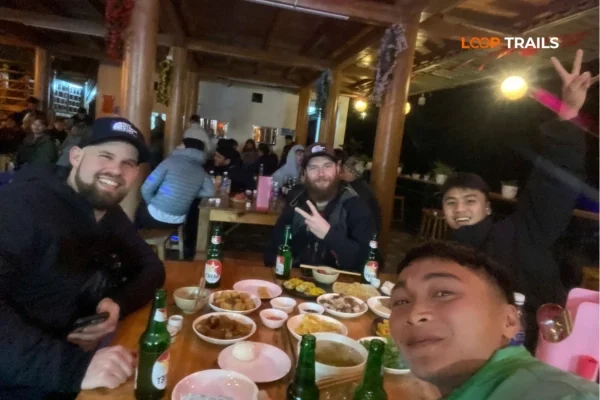
Homestays aren’t packed. You’ll often be the only group staying, which means actual conversations with your hosts instead of brief transactions. They’ve got time to show you around their village, explain traditional weaving at Lung Tam, or share a bottle of the local corn wine without rushing to cook for fifteen other guests.
Markets in places like Dong Van feel more authentic. You’re not the fiftieth tourist taking photos, you’re one of a handful. Locals are more curious, more willing to engage.
The trails and viewpoints that get crowded during high season? You might have them completely to yourself. Heaven’s Gate without tour groups fighting for the photo spot is a different experience entirely.
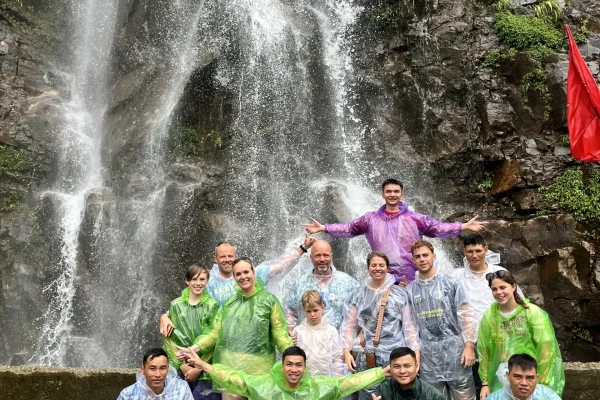
Every itinerary includes Du Gia waterfall, and during rainy season it transforms from pleasant to spectacular. The volume increases massively, the pool at the base deepens, and the whole scene gains this raw power.
You can still swim, though the water is colder and more turbulent. Some people love that energy, others find it too intense. Either way, seeing it at full flow is memorable.
Smaller waterfalls that you pass along the routes also come alive. These unnamed cascades that are barely visible in dry months suddenly command attention.
The visual difference between dry season and rainy season Ha Giang is dramatic. Everything that was brown or yellow-green in April and May explodes into deep, saturated green.
Rice terraces fill with water and become these mirror-like surfaces that reflect sky and clouds. The contrast between the geometric patterns of the terraces and the wild mountain peaks behind them gets more pronounced.
Corn fields on hillsides reach full height. Forest canopies thicken. Even the red clay roads look more vibrant when wet, creating this rich color palette that dry season doesn’t quite match.
Photography-wise, the greens can almost be too much for cameras to handle. You’ll find yourself adjusting saturation down in editing because the natural colors look artificial.
Learn more: Ma Pi Leng Pass
Landslides happen during rainy season. Usually they’re small, maybe some rocks and mud across part of the road that get cleared quickly. Occasionally they’re bigger and block routes for hours or a full day.
The most common spots are along Ma Pi Leng Pass and some of the forest sections between Meo Vac and Du Gia. If there’s been particularly heavy rain, landslide risk increases.
Your homestay hosts or tour guides will know if there’s been a recent slide. Ask in the morning before setting out. If a route is blocked, there are usually alternatives, they just take longer.
If you encounter a small slide while riding, assess carefully before attempting to cross. Fresh slides can still be unstable. When in doubt, wait for locals to go first and follow their lead.
Bigger slides are obvious, you’ll see vehicles stopped or turned back. Don’t try to be a hero. Wait for clearance crews or take an alternate route.
Reduce your speed, significantly. Whatever pace felt comfortable in dry conditions, cut it by at least a third when roads are wet.
Increase following distance. Braking takes longer on slippery surfaces, and you need time to react if the vehicle ahead stops suddenly.
Watch for running water across the road. It’s often deeper than it looks and can hide potholes or washouts. Slow to a crawl when crossing.
Avoid sudden movements. Smooth braking, smooth acceleration, gentle turns. Abrupt inputs on wet roads lead to slides.
If you start to slide, ease off the throttle but don’t brake hard. Look where you want to go, not at what you’re trying to avoid. This is basic stuff but it matters more in rain.
Test your brakes periodically when riding in rain to clear water from them and understand how they’re responding.
Heavy downpours that reduce visibility to almost nothing aren’t safe to ride through. Pull over, find shelter, wait it out. Most storms pass within 30-60 minutes.
If local authorities have closed a section due to landslides or dangerous conditions, respect that. They’re not being overly cautious, they know these roads.
Flooding is rare but possible. If you see water flowing across a road and can’t judge the depth, ask locals or wait for another vehicle to cross first. Never attempt to cross flowing water on a motorcycle if it’s more than a few inches deep.
Lightning during mountain riding is genuinely dangerous. If you see lightning strikes nearby and hear immediate thunder, get off the bike and away from it if possible. You’re the highest point on a metal object.
Use common sense. If conditions feel genuinely unsafe, they probably are. There’s no shame in adjusting plans for safety.
Learn more: Ha Giang Cao Bang 5 Days
You’re flexible with plans and can adapt to changing conditions. The idea of route adjustments or occasional delays doesn’t stress you out.
You appreciate dramatic landscapes and moody weather. Clouds, mist, and changing light excite you more than guaranteed blue skies.
You want a more authentic cultural experience without crowds. Interacting with locals matters to you as much as the scenery.
You’re comfortable with some uncertainty. Not everything will go perfectly, and you’re okay with that.
You’ve got decent motorcycle skills if you’re planning to self-drive, or you’re choosing easy rider or jeep options where the technical riding isn’t your problem.
You need guaranteed good weather for your photos or experience. If cloudy skies or wet conditions would genuinely disappoint you, come in September through November instead.
You’re a nervous rider and already anxious about mountain roads. Adding rain to existing concerns isn’t going to improve your experience.
You’re on a tight timeline with no flexibility. If you absolutely must complete the loop in exactly three days with no possibility of delays, rainy season adds risk to that schedule.
You hate being wet or cold. Some discomfort is inevitable, and if that’s going to ruin your trip, better to wait for dry season.
Your entire Vietnam itinerary is packed and Ha Giang is just one stop. If a weather delay would cascade into problems with other bookings, plan for a season with more predictable conditions.
Look, I’m not here to sell you on something that’s wrong for your trip. Rainy season Ha Giang is genuinely fantastic for the right travelers and genuinely problematic for others. The landscapes are incredible, the cultural experiences are richer, the overall vibe is more relaxed. But it requires flexibility, appropriate preparation, and realistic expectations.
If you’re still interested after reading all this, you’ll probably have a great time. If you’re having second thoughts, trust your gut and plan for September or October instead.
We run tours year-round because Ha Giang is worth visiting in every season, just for different reasons and different types of travelers. Rainy season has its own appeal, it’s just not for everyone.
Want to know which option makes sense for your specific situation? Reach out and we’ll talk through what actually fits your experience level, timeline, and what you’re hoping to get from the loop.
Learn more: How to get from Hanoi to Ha Giang
No. Rain typically comes in afternoon thunderstorms that last 30 minutes to a few hours. Mornings are often dry, and some days you might see very little rain at all. It’s unpredictable, but it’s not constant downpours for three months straight.
Absolutely. Tours and rentals operate year-round. You’ll just need appropriate rain gear, realistic expectations about conditions, and flexibility in your schedule. Thousands of travelers complete the loop successfully during rainy season each year.
It depends on your riding skills and experience. If you’re comfortable on motorcycles and have ridden in wet conditions before, it’s manageable with appropriate caution. If you’re a new rider or nervous about slippery roads, choose an easy rider or jeep tour instead.
Easy rider tours give you the experience of being on a bike without handling the technical challenges of wet roads. Jeep tours keep you completely dry and comfortable. Self-drive works if you’ve got the skills for it. There’s no single “best” option, it depends on your priorities and abilities.
Small landslides happen occasionally and usually get cleared within a few hours. Major blockages that close routes for full days are less common but possible. Your tour operator or homestay hosts will know about current conditions. Having a flexible schedule helps.
Visibility varies day to day and hour to hour. Some viewpoints will be perfectly clear, others might be socked in with clouds. The unpredictability is frustrating if you need guaranteed views, but the dramatic, moody conditions create their own kind of beauty that many photographers actually prefer.
Waterproof rain jacket and pants, dry bag for electronics, quick-dry clothing, extra socks, waterproof shoes or shoe covers, warm layers for evenings, and phone protection. Don’t rely on cheap ponchos for motorcycle riding, get actual rain gear.
Sometimes slightly, but don’t expect dramatic discounts. Some accommodations offer better rates when tourism is slower, but the difference isn’t usually massive. The main advantage is availability and less crowded experiences rather than significant cost savings.
The same as dry season in terms of official itinerary, either 2, 3, or 4 days. However, weather delays are possible, so build in a buffer day if your overall Vietnam schedule allows. Slower riding speeds in wet conditions might also extend daily travel times.
September through November offers the best combination of clear weather, comfortable temperatures, and post-rain green landscapes. December through February is dry but cold. March through May is dry but dusty with less green. If you specifically want to avoid rain, aim for September to early November.
Yes, though the water is colder and more turbulent. Some travelers love the extra power and energy, others find it too intense. The waterfall is spectacular at full flow even if you choose not to swim.
Most homestays don’t have heating systems. Some have electric blankets or fans. Drying wet clothes overnight is challenging in humid conditions. Bring clothes that dry quickly and pack extras. A quick-dry towel is useful too.
Contact information for Loop Trails
Website: Loop Trails Official Website
Email: looptrailshostel@gmail.com
Hotline & WhatSapp:
+84862379288
+84938988593
Social Media:
Facebook: Loop Trails Tours Ha Giang
Instagram: Loop Trails Tours Ha Giang
TikTok: Loop Trails
Office Address: 48 Nguyen Du, Ha Giang 1, Tuyen Quang
Address: 48 Nguyen Du, Ha Giang 1, Tuyen Quang
Facebook X Reddit Table of Contents Learn more: Ha Giang Loop Tours There’s a moment, usually somewhere on Ma Pi Leng Pass,
Facebook X Reddit Table of Contents Learn more: Ha Giang Loop Tours There’s a version of the Ha Giang Loop that people