
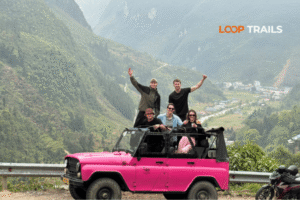
Ha Giang Loop Private vs Group Jeep Tour: Which Should You Book?
Facebook X Reddit Table of Contents Learn more: Ha Giang Loop Tours There’s a moment somewhere on the Ma Pi Leng Pass

Thúy Kiều( Grace) is a travel blogger and content contributor for Loop Trails Tours Ha Giang. She holds a bachelor’s degree in Sustainable Tourism from Vietnam National University, Hanoi, and has a strong passion for exploring and promoting responsible travel experiences in Vietnam’s northern highlands.
You’ve just finished the Ha Giang Loop, and your camera roll is bursting with photos of Ma Pi Leng Pass and the Nho Que River. Your legs might be sore from the motorbike rides, but something tells you the adventure shouldn’t end here. That feeling? It’s completely justified.
The journey from Ha Giang to Cao Bang is one of Northern Vietnam’s best-kept secrets. While most travelers head back to Hanoi after completing the loop, those who continue east discover some of Vietnam’s most spectacular landscapes—Ban Gioc Waterfall, the infamous Khau Coc Cha Pass with its 15 hairpin turns, and valleys so remote they feel like a different world.
I’m going to walk you through everything you need to know about extending your northern adventure, from practical logistics to what makes this route genuinely special.
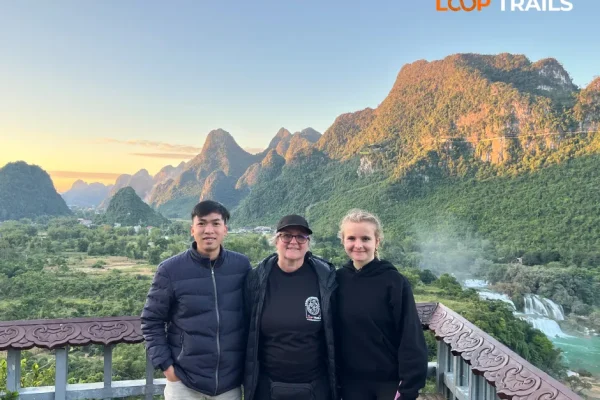
Learn more: Ha Giang Loop Trails Tours
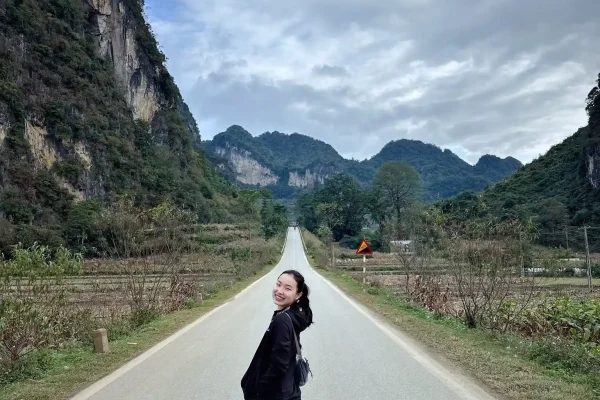
Learn more: Ha Giang Loop Tours 2026
The Ha Giang Loop gets all the Instagram love, and rightfully so. But continuing to Cao Bang means you’re committing to the full northern experience. You’re choosing depth over the highlight reel.
Here’s what sets this route apart: while Ha Giang attracts thousands of travelers monthly, the road to Cao Bang remains relatively quiet. You’ll encounter far fewer tour groups, which means more genuine interactions with local communities and the rare luxury of having epic viewpoints largely to yourself.
The landscapes shift dramatically too. Ha Giang’s rocky karst formations give way to Cao Bang’s lush valleys and cascading waterfalls. It’s the contrast that makes the journey memorable—one province shows you Vietnam’s rugged backbone, the other reveals its softer, greener side.
Ban Gioc Waterfall alone makes the trip worthwhile. Straddling the Vietnam-China border, it’s one of Southeast Asia’s largest waterfalls, and unlike the touristy spots down south, it maintains an authentic, less-commercialized atmosphere.
But the waterfall is just one piece. The real magic happens along the way: navigating Khau Coc Cha Pass as it snakes through 15 sharp turns, each bend revealing another layer of the Xuan Truong valley below; stopping at Pac Po, where Ho Chi Minh returned to Vietnam after 30 years abroad; exploring Nguom Ngao Cave’s cathedral-like chambers.
You’ll also dive deeper into ethnic minority culture. While Ha Giang introduces you to H’Mong communities, the route to Cao Bang brings you through Tay, Nung, and Dao villages. The traditional stilt houses, incense-making villages, and paper factory communities offer insights you simply can’t get on shorter trips.
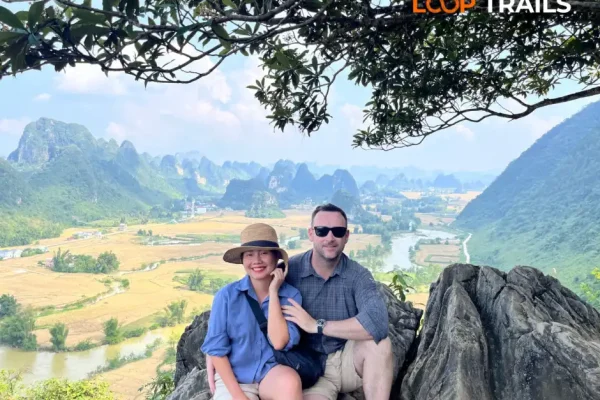
Learn more: Ha Giang Cao Bang 5 Days 4 Nights
The direct distance from Ha Giang City to Cao Bang City is roughly 150 kilometers. That sounds manageable until you factor in the mountain roads. Reality check: this isn’t a straight shot on smooth highway.
On a guided tour, you’ll cover the route over three full days of riding, with the journey terminating at Ban Gioc Waterfall area rather than Cao Bang City. If you’re self-driving and pushing hard, you could theoretically do it in two very long days, but you’d miss the entire point. The route demands time—both because of the road conditions and because rushing past places like Bao Lac or the viewpoints along Khau Coc Cha would be criminal.
Most organized tours structure it as part of a 5-day, 4-night package starting from Ha Giang and ending in Cao Bang City, with proper time allocated for hiking, cave visits, and those spontaneous photo stops that end up being trip highlights.
The roads between Ha Giang and Cao Bang aren’t technically difficult, but they demand respect. You’re dealing with continuous mountain passes, tight corners, and roads that can be slippery after rain.
The first section, from Meo Vac toward Bao Lac, features some of the route’s most dramatic passes. The pavement is generally decent, though you’ll encounter patches of rough road, especially after the rainy season. Local authorities do maintenance, but storms can cause temporary damage that takes weeks to fully repair.
Khau Coc Cha Pass deserves special mention. Those 15 hairpin turns aren’t just for show—they’re sharp, steep, and require full concentration whether you’re riding or driving. If you’re on a motorbike and not confident with your skills, this is where an easy rider (a guide who drives for you) becomes worth every dong.
From Ban Gioc back toward Cao Bang City, roads improve significantly. You’re mostly on well-maintained routes used by cross-border traders, which means better surfaces but also more truck traffic.
September through November delivers the best conditions. The air is crisp, visibility is excellent, and rice terraces surrounding the valleys glow golden before harvest. Roads are dry and stable, which matters more on mountain passes than you might think.
December through February brings cold weather—genuinely cold at altitude. Morning temperatures in highland areas can drop below 10°C (50°F). If you’re someone who doesn’t mind layers and clear skies, winter offers spectacular mountain views without the haze. Just pack accordingly.
March through May is pleasant, with flowers blooming across the mountains. However, this precedes the rainy season, and roads can occasionally become muddy in preparation.
June through August? Rainy season. Roads get slippery, visibility drops, and some mountain sections become genuinely sketchy. It’s not impossible—locals ride year-round—but it’s not recommended for travelers, especially those without significant motorbike experience.
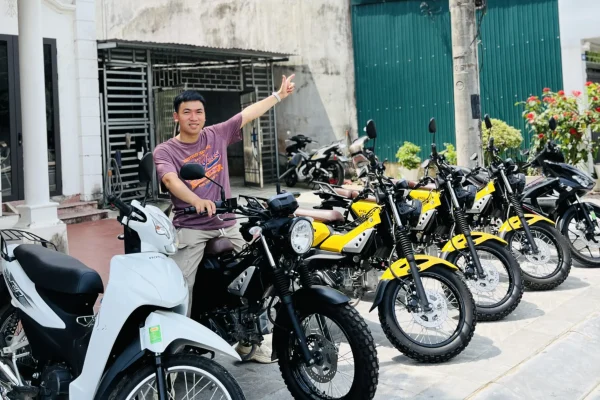
Learn more: Ha Giang Motorbike Rental
The guided tour from Ha Giang to Cao Bang eliminates the navigation stress while ensuring you hit the key spots. You’re traveling with experienced guides who know which viewpoints are worth the stop and which are tourist traps.
Tours typically accommodate 2-4 people in a jeep, or you can join a motorbike tour where you either ride with an easy rider or self-drive as part of a guided group. The jeep option works well for families, couples who want to travel together comfortably, or anyone who’d rather focus on the scenery than the road.
What you gain beyond logistics: local knowledge. Good guides don’t just get you from point A to point B—they explain the region’s ethnic diversity, point out historical sites you’d otherwise miss, and often have relationships with homestay families that create more authentic experiences.
The 5-day Ha Giang to Cao Bang tour follows a well-planned route that balances riding time with exploration. You’ll visit Ban Gioc Waterfall at the optimal time of day, hike Khau Coc Cha Pass for the full valley view, and stop at villages that aren’t on the standard tourist circuit.
Self-driving gives you complete flexibility to set your own pace and make impromptu stops. If you’ve completed the Ha Giang Loop solo and felt comfortable with the roads, you have the skills needed for this route.
The challenges: navigation isn’t always straightforward, especially around Bao Lac and Ha Quang where multiple roads branch off. Mobile signal is spotty in several sections, which can complicate GPS usage. You’ll also need to arrange your own accommodation, and finding English-speaking homestays without advance booking can be tricky in more remote areas.
If you’re choosing this option, download offline maps before leaving Ha Giang City. Maps.me or Google Maps offline download will save you considerable frustration. Budget extra time for getting lost—it will happen, and that’s often when you stumble upon the best experiences anyway.
One practical consideration: returning your rental motorbike. If you rent in Ha Giang and end in Cao Bang, you’ll either need to arrange a drop-off with your rental company (most charge extra fees) or factor in the return trip. Some travelers opt to complete the loop back to Ha Giang, which adds another 2-3 days but creates a comprehensive circuit.
Private cars with drivers can be arranged, though they’re significantly more expensive than joining a tour group. This works best for families with young children, elderly travelers, or anyone with mobility concerns that make motorbikes impractical.
The upside is total flexibility and comfort—you can request stops anywhere, adjust the itinerary based on energy levels, and travel with more luggage than a motorbike allows. The downside is cost, as you’re covering the vehicle and driver’s expenses entirely yourself.
Your decision should balance experience level, budget, and what you want from the journey.
Choose the guided tour if you want the smoothest experience, value local insights, and appreciate having logistics handled professionally. The price is reasonable considering what’s included, and you’ll likely make friends with fellow travelers.
Go self-drive if you’ve got solid motorbike skills, want maximum flexibility, and feel comfortable problem-solving independently. This option rewards adventurous spirits but demands more preparation and adaptability.
Opt for private transport if comfort and flexibility trump budget concerns, or if you’re traveling with family members who can’t ride motorbikes. You’ll pay more but get a customized experience.

Learn more: Ha Giang Cao Bang Jeep Tours
The journey kicks off at 8 AM after breakfast and a route briefing. You’ll start by retracing part of the Ha Giang Loop, riding through Bac Sum Pass and Heaven Gate. If you’ve done the loop already, these roads will feel familiar, but the eastward journey gives you different light and perspectives.
Lunch happens in Yen Minh around 12:30 PM. The route then takes you through the Dong Van Karst Plateau Geopark, with stops at Tham Ma Pass and H’Mong villages near the China border. Lao Sa village offers a glimpse of traditional H’Mong houses, and if you’re lucky, you’ll encounter villagers going about daily tasks rather than posed tourist scenarios.
The Vuong Palace, the former residence of the H’Mong king, provides historical context for the region’s complex ethnic politics. The architecture blends Chinese, H’Mong, and French colonial influences—an unexpected mix that reflects the area’s layered history.
You’ll arrive at your homestay in Lao Xa by 5 PM. Dinner includes local specialties, traditional music, and the notorious “happy water” (corn wine). The homestay experience is rustic—expect basic facilities but genuine hospitality.
Day two starts early. After breakfast at 8 AM, you’ll head to the Hmong king’s palace for a deeper look at the architecture and regional history. The guide explains how this particular H’Mong family accumulated power and why the palace sits exactly where it does.
By 11:30 AM, you’ll reach Lung Cu Flag Tower, Vietnam’s northernmost point. On clear days, you can see deep into China. The tower itself isn’t particularly impressive, but standing at the literal edge of the country creates an odd sense of accomplishment.
Lunch in Dong Van sets you up for the afternoon’s main event: Ma Pi Leng Pass. Even if you’ve ridden it before during the Ha Giang Loop, approaching from this direction offers new vantage points. The Ma Pi Leng Skywalk provides panoramic views, though it gets crowded midday. The Nho Que River boat tour takes you through Tu San Canyon, one of Southeast Asia’s deepest gorges.
Meo Vac serves as your base for the night. Unlike previous homestays, you’ll stay in a proper hotel here—a welcome upgrade for anyone craving hot showers and firmer mattresses. The town itself has decent restaurants, and wandering the local market in early evening gives you a sense of the trading hub’s cross-border commerce.
This day delivers the route’s most impressive riding. Breakfast at 8 AM, then you’re off toward Bao Lac through breathtaking mountain passes. The roads are quieter than the previous days, with less tourist traffic and more local farmers moving between villages.
Lunch in Bao Lac around noon provides a chance to refuel before tackling Khau Coc Cha Pass. This is the 15-step pass you’ve heard about. The name isn’t marketing—counting the hairpin turns as you climb becomes a game. Each switchback reveals a different angle of the Xuan Truong valley below, and reaching the top feels like a genuine achievement.
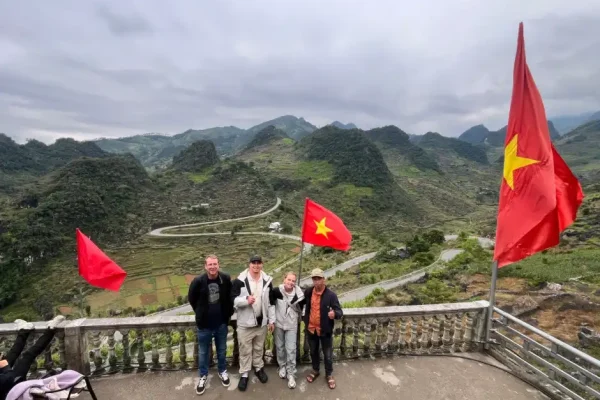
A short hike at the pass summit lets you photograph the full extent of the road’s serpentine path. This is one of those spots where photos genuinely don’t capture the scale—the valley stretches for kilometers, patchworked with rice fields and dotted with tiny villages.
After descending, you’ll visit Xuan Truong valley itself, where ethnic Tay villages maintain traditional lifestyles largely unchanged by tourism. Na Tenh Pass offers another striking viewpoint before you reach Ha Quang.
The afternoon includes a stop at Pac Po, the historical site where Ho Chi Minh returned to Vietnam after three decades abroad. For history enthusiasts, this adds meaningful context to modern Vietnam’s founding narrative.
Me Farmstay, your accommodation for the night, is exactly what it sounds like—a working farm converted into guest lodging. Accommodation is basic but clean, and dinner features vegetables grown on-site. The remoteness means no WiFi and limited electricity, but the star visibility on clear nights compensates.
Day four focuses on Ban Gioc Waterfall, the trip’s main attraction. You’ll depart Me Farmstay around 9 AM, arriving at the waterfall by 3 PM after stops in Tra Linh and a countryside ride through Trung Khanh.
Ban Gioc deserves its reputation. Water cascades over three tiers, spanning the Vietnam-China border. The best viewing happens from the Vietnamese side, where you can take bamboo raft rides to get close to the falls. Go early afternoon for the best light—morning sun backlights the falls, which creates dramatic photos but makes it harder to see details.
Before Ban Gioc, you’ll hike to Pi Pha viewpoint at Ngoc Con, which provides an elevated perspective of the waterfall and surrounding karst landscape. The hike takes about 30 minutes each way and isn’t technically difficult, though the trail gets muddy after rain.
Optional afternoon activities include swimming at Rock Village near the waterfall—the water is genuinely refreshing if you’re riding during warmer months. Your accommodation for the night is in a homestay near Ban Gioc, positioned for easy waterfall access if you want to catch sunrise views before other tourists arrive.
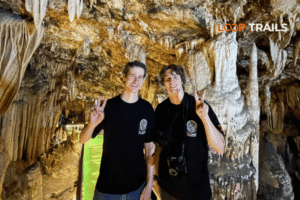
The final day starts with a 9 AM departure, heading first to Nguom Ngao Cave. This cave system is one of Cao Bang’s highlights, with stalactite formations creating natural cathedral-like spaces. The main chamber stretches over 2 kilometers, though the tourist route covers about 1 kilometer of well-lit paths.
Unlike some Vietnamese caves that feel over-developed with colored lights, Nguom Ngao maintains a relatively natural atmosphere. The formations are legitimately impressive, and the cave’s temperature stays cool—a nice break from riding in heat if you’re visiting during summer months.
After the cave, you’ll visit Quay Son River’s “Eye of God” natural formation, followed by stops at traditional paper factory villages in Phuc Sen and incense villages in Phia Thap. These villages aren’t set up primarily for tourists, which means you’re observing actual production rather than demonstrations.
The God’s Eye Mountain near Cao Bang City makes for a final photo stop—the natural rock formation genuinely resembles an eye when viewed from the right angle.
You’ll arrive back in Cao Bang City around 4:30 PM. From here, you can catch an evening bus to Hanoi, continue to other northern destinations, or spend an extra night to explore Cao Bang City itself.
Learn more: Ha Giang Loop 3 Days 2 Nights
Jeep tours accommodate 1-4 people per vehicle, with prices structured per group rather than per person. The 5-day Ha Giang to Cao Bang jeep tour starts from 29,890,000 VND for 2 passengers (approximately $1,200 USD for the group, or $600 per person). For 3 passengers, the total is 34,690,000 VND ($1,390 USD total, or about $463 per person). Four passengers pay 39,290,000 VND ($1,570 USD total, or roughly $393 per person).
These prices include dormitory-style accommodation throughout the tour, all meals during the journey (breakfast, lunch, and dinner as specified in the itinerary), guided services, entrance fees to sites like Vuong Palace, Ma Pi Leng Skywalk, Ban Gioc Waterfall, and Nguom Ngao Cave, and the jeep with driver.
What’s not included: private room upgrades, round-trip bus tickets from Hanoi or other cities to Ha Giang, personal expenses, and drinks beyond what’s provided with meals.
The 5-day Ha Giang to Cao Bang motorbike tour offers two variations: easy rider (where an experienced driver handles the bike while you ride as passenger) costs 10,990,000 VND per person (approximately $440 USD). Self-drive, where you pilot your own motorbike as part of a guided group, runs 10,290,000 VND per person (around $410 USD).
Both options include the same accommodation, meals, entrance fees, and guided services as the jeep tour. The self-drive price is slightly lower because you’re providing your own riding labor, essentially.
For travelers who’ve already completed the Ha Giang Loop and want to continue, the 3-day extension from Ha Giang to Cao Bang (without the loop portions) can sometimes be arranged through tour operators, though this isn’t as standardized as the full package.
Tour prices cover comprehensive services designed to minimize your logistical headaches. Accommodation throughout the journey includes a mix of local homestays and small hotels, primarily in shared dormitory rooms. Private room upgrades are available for an additional fee—expect to pay roughly 150,000-300,000 VND extra per night depending on the location.
All meals during the tour are included. Breakfasts are typically Vietnamese-style with rice, vegetables, and protein. Lunches happen at local restaurants along the route, serving regional specialties. Dinners, especially at homestays, often feature communal meals with traditional dishes and local alcohol.
Entrance fees to all sites mentioned in the itinerary are covered: Ban Gioc Waterfall, Nguom Ngao Cave, Ma Pi Leng Skywalk, Vuong Palace, and minor stops at viewpoints or villages that charge small admission fees.
The guide services include English-speaking guides familiar with the route, ethnic cultures, and historical sites. For jeep tours, your driver and guide are typically the same person. Motorbike tours include a lead guide plus support staff.
Safety equipment for motorbike tours includes helmets, basic rain gear, and first aid kits. Jeep tours provide passenger insurance coverage.
The most significant additional expense is transportation to Ha Giang at the start and from Cao Bang at the end. Sleeper buses from Hanoi to Ha Giang cost 250,000-450,000 VND per person depending on bus quality. Options range from regular sleeper buses (basic, around $10 USD) to VIP sleeper buses with larger beds (around $15-18 USD) to cabin sleeper buses with private compartments (around $22-27 USD).
Limousine buses are also available on certain routes, offering more comfort at 300,000-400,000 VND per person. Private car arrangements from Hanoi to Ha Giang run significantly higher, starting around 2,500,000 VND for the vehicle.
Return transportation from Cao Bang follows similar pricing. Multiple daily departures to Hanoi, Cat Ba, Ha Long, Ninh Binh, and Sapa are available, giving you flexibility for your next destination.
Private room upgrades add up if you’re staying the full 4 nights. Budget an extra 600,000-1,200,000 VND per room for the entire tour if you want privacy and better sleeping conditions.
Personal expenses cover drinks beyond water and tea (beer, soft drinks), snacks between meals, souvenirs, and any optional activities not listed in the standard itinerary. Budget roughly 300,000-500,000 VND for incidentals across 5 days.
Learn more: Ha Giang Loop Self-Driver Guide
Ma Pi Leng Pass ranks among Vietnam’s four great passes, and for good reason. The road literally hangs off cliff faces, with the Nho Que River winding through the gorge hundreds of meters below. Former soldiers carved this path through solid rock—a fact that becomes visceral when you notice drill marks still visible in the cliff walls.
The Skywalk platform offers dramatic views but gets crowded. Visit early morning or late afternoon for better photo opportunities without battling crowds. The platform extends out over the gorge, creating that Instagram-worthy shot where you’re suspended above nothing but air and river.
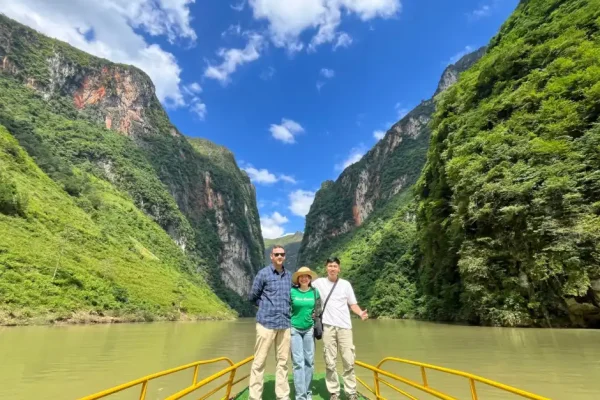
The Nho Que River boat tour takes you through Tu San Canyon, where limestone walls tower overhead and the water shifts from turquoise to jade green depending on depth and light. The boat ride lasts about 30 minutes, and while it’s a bit touristy now, the canyon’s scale remains impressive.
Ban Gioc Waterfall splits between Vietnam and China, with the majority of the cascade on the Vietnamese side. Water drops in three main tiers, creating a massive curtain of white water that’s visible from kilometers away during the wet season.
The bamboo raft rides to the waterfall base provide the best perspective. You can feel the spray, hear the thunderous roar, and appreciate the scale in a way that viewing platforms don’t capture. Raft operators charge around 50,000 VND per person for the short ride.
The surrounding area includes rice paddies and traditional Tay villages, creating pastoral scenes that contrast beautifully with the waterfall’s power. Early morning visits mean fewer crowds and softer light that doesn’t wash out photos.
Cross-border trade happens at Ban Gioc, and you’ll see Vietnamese and Chinese vendors exchanging goods at the market near the falls. It’s a reminder that borders are often more fluid in practice than on maps, especially in mountainous regions where communities have interacted for centuries.
Learn more: Ha Giang Loop Easy Rider
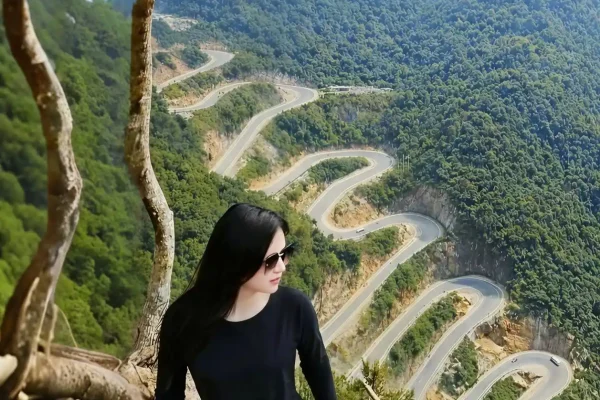
Khau Coc Cha earns its “15-step” nickname from the 15 distinct hairpin turns carved into the mountainside. Each switchback is sharp enough that you’re constantly shifting weight and recalculating speed, whether riding or driving.
From the summit, the view encompasses the entire Xuan Truong valley. You can trace the road you just climbed, counting those hairpins from above. The valley floor shows the geometric patterns of rice fields, punctuated by traditional stilt houses and irrigation channels.
A hiking trail from the summit parking area leads to an even higher viewpoint. The 15-minute climb is steep but short, and being above the road changes the perspective entirely. You see how the pass fits into the broader landscape—it’s not just one mountain but an entire range of peaks and valleys stretching toward the horizon.
Learn more: Best Ha Giang Loop Tours 2026
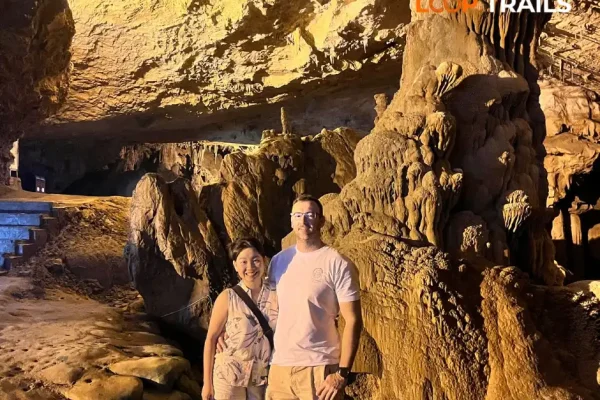
Nguom Ngao stretches over 2 kilometers deep into the mountain, with formations that genuinely rival more famous Vietnamese caves. The name translates to “Tiger Cave” in the local Tay language, referring to legends about tigers seeking shelter here.
The main chamber features stalactites and stalagmites that have grown over millions of years, creating columns, curtains, and shapes that require no imagination to appreciate. Unlike some caves that feel contrived with excessive lighting, Nguom Ngao maintains a relatively natural atmosphere.
The cave system includes underground streams, natural pools, and formations that resemble everything from Buddha statues to chandeliers. The marked tourist route is well-maintained with proper lighting and walkways, making it accessible even for those who aren’t keen cave explorers.
Temperature inside stays around 18-20°C year-round, which feels cool but not cold. After riding in heat, the cave offers a pleasant break. The entire visit takes about 45 minutes to an hour, depending on how thoroughly you want to explore.
Beyond the major highlights, the route passes through numerous small villages that rarely see foreign tourists. These aren’t “tourist villages” but working communities where daily life continues regardless of whether travelers pass through.
In H’Mong villages near Lao Sa, you’ll see traditional houses built directly into karst formations, using the rock walls as structural support. Women weave hemp cloth on foot-powered looms, a skill passed down through generations.
Tay communities in the valleys maintain distinct architectural styles with stilt houses positioned to catch breezes and stay above seasonal flooding. The space beneath houses serves as storage and workspace, while living areas sit elevated for better ventilation.
Nung villages specialize in specific crafts—one focuses on incense production, another on traditional paper making. Visiting these communities during work hours means seeing actual production rather than demonstrations staged for tourists. The incense village in Phia Thap fills the air with sandalwood and cinnamon scents, with bundles of dyed sticks drying in the sun.
Learn more: Ha Giang Loop 4 Days 3 Nights
Traveling from Ha Giang to Cao Bang requires an active passport if you’re a foreign visitor, though you won’t encounter immigration checkpoints since you’re staying within Vietnam. However, certain areas near the China border technically require permits.
The good news: organized tours handle permit arrangements. Your tour operator registers the group with local authorities, which satisfies permit requirements. The permits aren’t individual documents you carry—they’re administrative registrations that allow tour groups to access border zones.
If you’re self-driving, the situation becomes murkier. Technically, some areas near Lung Cu and Ban Gioc require special permits for independent travelers. In practice, enforcement is inconsistent. You might pass through without questions, or you might be turned back at a checkpoint. Getting permits independently as a foreigner is complicated and time-consuming, which is one reason guided tours make practical sense for this route.
For motorbike riders, you need a valid license. An International Driving Permit (IDP) is technically required for foreigners, though rental shops don’t always verify this. Police checkpoints occasionally appear on these routes, and lacking proper documentation can result in fines. The IDP must be paired with your home country’s motorcycle license.
Pack light but smart. You’re moving accommodation nightly, and neither motorbikes nor jeeps accommodate massive luggage. A 40-50 liter backpack is ideal—enough for 5 days of clothes and essentials without being unwieldy.
Clothing layers matter more than quantity. Mornings in the mountains can be cold even during warmer months, while midday sun can be intense. Pack:
Riding gear includes a neck buff or bandana to cover your face from dust and sun, sunglasses or clear glasses (mountains mean wind), and sunscreen—seriously, the reflection off mountains intensifies UV exposure.
Technical items: phone charger, portable battery bank (electricity isn’t guaranteed at remote homestays), international adapter if your charger isn’t compatible, headlamp or small flashlight for navigating homestays at night, basic toiletries (some homestays provide nothing beyond a towel), and any prescription medications you need.
Optional but valuable: a dry bag or waterproof pouches for phone and camera, hand sanitizer, toilet paper (homestay bathrooms sometimes run out), earplugs (communal sleeping areas can be noisy), and a small daypack for carrying essentials during waterfall or cave visits.
Mountain riding demands constant attention. The passes aren’t technically difficult if you ride within your skill level, but consequences for mistakes are severe—cliffs don’t forgive inattention.
For motorbike riders: Know your limits. If you’ve never ridden a motorbike before, this isn’t the place to learn. The easy rider option exists for good reason. If you are experienced, stay alert for oncoming traffic cutting corners (happens frequently on hairpin turns), loose gravel at roadside edges, and wet conditions that reduce traction significantly.
Pace yourself. The itinerary isn’t a race. Riding tired increases risk, and the roads demand you stay sharp. Take breaks every hour to rest and stretch.
For jeep passengers: seatbelts aren’t always present or functional in older vehicles. If your jeep lacks them, position yourself securely and maintain awareness of upcoming turns.
First aid preparedness: tours carry basic first aid kits, but bring personal supplies for common issues. Blister treatments, pain relievers, anti-nausea medication (winding roads affect some people), antihistamines for potential allergic reactions, and any personal prescriptions.
Emergency situations: mobile coverage is spotty but not absent. Vietnamese networks (Viettel, Vinaphone) offer the best coverage in remote areas. Download offline maps before starting. Know that emergency services response times in mountains are measured in hours, not minutes. The closest hospitals with trauma capability are in Ha Giang and Cao Bang cities.
Weather in these mountains changes quickly. Morning sunshine doesn’t guarantee afternoon clear skies, and storms can roll in with little warning during the rainy season.
September through November delivers the most stable weather patterns. Daytime temperatures range from 20-28°C (68-82°F) in valleys, cooler at altitude. Rain is possible but typically brief afternoon showers rather than all-day downpours.
December through February brings cold fronts. Highland areas can see temperatures drop to 5-10°C (41-50°F), especially at night. Homestays provide blankets but not always heat. Pack accordingly if traveling these months—thermal layers make the difference between comfortable and miserable.
March through May marks the transition period. Weather becomes increasingly variable, with warmer days but occasional cold snaps. This is also when haze from agricultural burning in the region can reduce visibility.
June through August is monsoon season. Heavy rains make roads slippery, reduce visibility, and can trigger landslides on unstable slopes. Flash flooding affects river crossings. Unless you’re an experienced rider comfortable in challenging conditions, avoid these months.
Check weather forecasts before departing, but understand they’re guidelines rather than certainties in mountains. Be prepared for conditions to change mid-ride.
Learn more:Ha Giang Buckwhet Flower Season
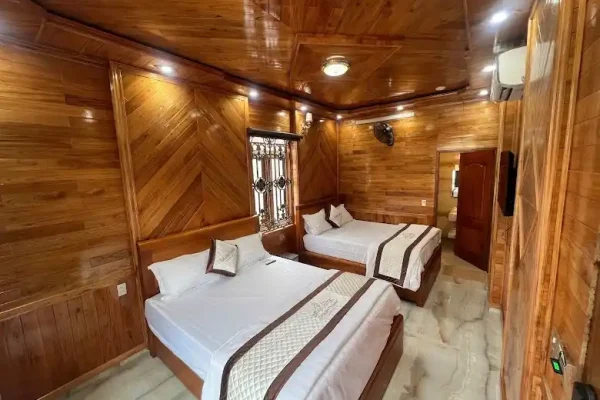
Homestays along the Ha Giang to Cao Bang route offer authentic experiences but manage expectations about comfort levels. These are working family homes that accommodate guests, not boutique hotels pretending to be rustic.
Typical setup: communal sleeping areas with mattresses on the floor or wooden platforms, shared bathrooms with squat toilets and bucket showers (hot water isn’t guaranteed), and communal dinner areas where guests and family eat together.
The value isn’t in luxury—it’s in the experience. You’re eating home-cooked meals, hearing local music, trying locally-distilled corn wine, and getting glimpses of rural life that hotel rooms simply can’t provide. The homestay families in Lao Xa, Du Gia, and near Ban Gioc have hosted travelers for years and understand basic traveler needs even with limited English.
Privacy is minimal in dormitory setups. You’re typically sleeping in rooms with 4-8 other guests, divided by gender. Bring earplugs if you’re sensitive to snoring or early risers.
Cleanliness standards vary but are generally acceptable. Bedding is provided and laundered between guests. Bathrooms are basic but functional. The rustic nature is part of the experience—if you need western-standard facilities, upgrade to private rooms where available.
Meo Vac offers several small hotels that provide a comfort upgrade from homestays. Standard rooms include proper beds, private bathrooms with hot showers, and air conditioning or heating depending on season. These aren’t luxury accommodations, but after two nights in homestays, they feel premium.
Popular choices include small family-run hotels near the town center, where rooms run 300,000-500,000 VND per night for a private double. WiFi is available, though speeds are modest. The town has restaurants, small supermarkets, and shops where you can pick up forgotten essentials.
Cao Bang City, being a larger provincial capital, offers more variety. Budget hotels near the bus station charge 200,000-350,000 VND for basic rooms. Mid-range hotels with better facilities, English-speaking staff, and included breakfast run 500,000-800,000 VND. There are also a few higher-end options approaching $50-60 USD per night if you want to end the trip with genuine comfort.
Me Farmstay stands out as a unique accommodation option on the route. It’s a working farm that converted part of the property into guest lodging, positioned in Ha Quang’s remote valleys.
The setting is genuinely peaceful. You’re surrounded by rice paddies, with mountains rising on all sides and minimal light pollution. Nights are quiet except for nature sounds, and the farm family serves dinners featuring vegetables and herbs grown on-site.
Accommodation is basic—expect simple rooms with mattresses, shared bathrooms, and limited electricity. What makes it memorable is the remoteness and the farm-to-table dinner experience. This is as far from mass tourism as you’ll get on organized tours in northern Vietnam.
The farmstay represents a government initiative to promote rural tourism while providing income for farming families. Your payment directly supports the family managing the property, making it a form of sustainable tourism that benefits local communities.

Learn more: How to get from Hanoi to Ha Giang
Cao Bang City serves as a transportation hub with regular bus connections to multiple northern destinations. The main bus station (Ben Xe Cao Bang) sits about 1 kilometer from the city center, easily reached by taxi or xe om (motorbike taxi).
Buses to Hanoi depart multiple times daily. VIP sleeper buses leave around 7-8 PM, arriving in Hanoi early morning (5-6 AM). The journey takes 7-8 hours depending on traffic. Tickets cost 350,000-450,000 VND per person. Regular sleeper buses are cheaper at 250,000-300,000 VND but with less comfortable beds and more cramped spaces.
Limousine buses to Hanoi offer an intermediate option at 300,000-400,000 VND, with reclining seats rather than beds, air conditioning, and fewer stops. These typically depart mid-morning or early afternoon, arriving Hanoi evening.
For Cat Ba Island, buses run via Hai Phong, requiring a transfer. The total journey takes 8-9 hours. Direct buses to Ha Long are available, taking about 6-7 hours. To Sapa, buses transit through Lao Cai, totaling about 8 hours. Ninh Binh connections require going through Hanoi and transferring.
Book buses at the station or through your hotel. During Vietnamese holidays (Tet, national holidays), advance booking is essential as buses fill quickly. Outside peak periods, same-day tickets are usually available.
Cao Bang’s location makes it an ideal launching point for further exploration. From here, you can head to Bac Kan to visit Ba Be National Park and Ba Be Lake—Vietnam’s largest natural lake, surrounded by limestone mountains and ethnic minority villages. The journey takes about 3-4 hours by motorbike or private car.
Alternatively, continue northeast to Lang Son, a border city with China. This route is less traveled by international tourists but offers insights into cross-border trade and includes interesting sites like the Ky Lua Market and Tam Thanh Cave. The road from Cao Bang to Lang Son takes about 4 hours.
For those with more time, a comprehensive northern loop could include: Hanoi → Ha Giang Loop → Cao Bang → Ba Be Lake → Thong Nguyen → Cao Bang → Hanoi. This circuit takes 10-14 days depending on pace and provides deep immersion in Vietnam’s northern highlands.
If you’re heading south after Cao Bang, buses to Hanoi connect to Vietnam’s entire network. From Hanoi, you can reach Ninh Binh (2 hours), Phong Nha (8 hours), Hue (12 hours), Da Nang (14 hours), and beyond.
The journey takes 3 full days of riding as part of a 5-day tour that includes Ban Gioc Waterfall and returns to Cao Bang City. If you’re self-driving the most direct route and minimizing stops, you could theoretically make it in 2 long days, but you’d miss the key highlights that make the route special. The distance is roughly 150 kilometers, but mountain roads mean actual travel time far exceeds what you’d expect on flat highways.
The route is generally safe, but joining a tour group provides significant advantages even for solo travelers. Roads are challenging enough that having experienced guides and support vehicles adds a safety margin. That said, experienced riders successfully complete this route independently each year. The main risks are road accidents due to difficult terrain rather than crime or personal safety issues—the ethnic minority communities along the route are welcoming to foreign visitors.
Ban Gioc Waterfall sits in a border zone that technically requires permits. When you join an organized tour, the tour company handles permit registration, and you won’t need to do anything personally. Independent travelers may encounter checkpoints where permits are requested, though enforcement is inconsistent. The easiest solution is joining a tour; attempting to arrange permits independently as a foreigner is time-consuming and complicated.
September through November offers the best conditions: stable weather, dry roads, good visibility, and golden rice terraces. December through February is cold but still viable if you pack warm layers. March through May marks the shoulder season with increasing temperatures and blooming flowers. Avoid June through August (monsoon season) unless you’re an experienced rider comfortable with rain and slippery roads.
The 5-day jeep tour starts at 29,890,000 VND for 2 people (approximately $600 USD per person), decreasing per person as group size increases to 3-4 people. Motorbike tours run about 10,990,000 VND per person for easy rider ($440 USD) or 10,290,000 VND for self-drive ($410 USD). These prices include accommodation, meals, guides, and entrance fees but exclude bus tickets from Hanoi to Ha Giang and from Cao Bang back to your next destination.
Most rental companies charge extra fees for one-way rentals, typically 500,000-1,000,000 VND on top of the daily rental rate. Some companies don’t offer one-way options at all, requiring you to return the bike to Ha Giang. If one-way rental is important, confirm arrangements before starting the Ha Giang Loop. Alternatively, some travelers complete the full circuit back to Ha Giang, which adds 2-3 days but creates a comprehensive northern loop.
Roads are generally passable year-round but vary in quality. The main routes are paved asphalt, though you’ll encounter rough patches, especially after rainy season. Khau Coc Cha Pass features 15 sharp hairpin turns that demand careful riding or driving. Some sections have loose gravel at edges, and roads can be slippery when wet. Overall, the route requires competent riding skills but isn’t technically extreme for experienced motorcyclists.
This depends on your riding experience and travel preferences. Motorbikes offer more flexibility, better photo stops, and the authentic feeling of riding through mountains. However, they require skill and stamina—you’re exposed to weather and need to concentrate on the road constantly. Jeeps provide comfort, protection from weather, ability to travel as a couple or family in one vehicle, and let you focus on scenery rather than navigation. Both options successfully complete the route; choose based on your experience level and desired comfort.
The pass isn’t technically difficult but demands respect. The 15 hairpin turns are tight enough that you’re constantly adjusting speed and positioning. For experienced riders or confident drivers, it’s challenging but manageable. For beginners, the combination of steep grades, sharp turns, and drop-offs can be intimidating—this is where easy rider services prove their value. The pass is busy during midday with local traffic, so extra caution is needed when trucks or buses are negotiating the curves.
Many travelers complete the Ha Giang Loop, return to Ha Giang City, then immediately join the 5-day tour to Cao Bang. This means you’ll revisit some sections (Quan Ba, Yen Minh, Dong Van, Ma Pi Leng) but from a different perspective as you’re heading toward Cao Bang rather than returning to Ha Giang. The repeated sections form only the first 1.5 days of the 5-day tour; the route to Bao Lac, Khau Coc Cha, Ban Gioc, and Cao Bang is entirely new territory.
ATMs are available in Ha Giang City, Dong Van, Meo Vac, and Cao Bang City. However, many small villages and remote areas have no ATM access. Withdraw sufficient cash in Ha Giang before starting the tour. Budget roughly 500,000-1,000,000 VND for incidentals across 5 days beyond what’s included in your tour package (drinks, snacks, souvenirs, optional activities). Having some small bills (20,000-50,000 VND notes) is useful for small purchases in villages.
Vietnam’s drone regulations are complex and often enforced inconsistently. Technically, flying drones near border areas (which includes much of the Ha Giang to Cao Bang route) requires special permissions that are difficult for tourists to obtain. In practice, enforcement varies—some travelers fly drones without issues, others have equipment confiscated at checkpoints. If you choose to bring a drone, understand the legal gray area and be prepared for possible confiscation. The spectacular landscapes photograph beautifully even without aerial shots.
Learn more: Ha Giang Loop by Car
The route from Ha Giang to Cao Bang delivers on its promise: dramatic mountain passes, Asia’s largest waterfall, cave systems that rival anything in Southeast Asia, and cultural immersion that goes beyond surface-level tourism.
You’ve seen what Ha Giang offers. Continuing to Cao Bang means committing to the full northern experience—the roads less traveled, the villages that haven’t been overrun by tourism, the passes that genuinely test your riding skills, and the sense that you’re seeing Vietnam as few travelers do.
The 5-day tour provides the framework, but the best moments will be the unplanned ones: conversations with homestay families over dinner, spontaneous stops at viewpoints that don’t appear in any guidebook, the satisfaction of navigating Khau Coc Cha’s hairpins, standing at the base of Ban Gioc as mist from the waterfall settles on your face.
This isn’t the highlight reel version of Vietnam. This is the deep dive, the commitment to understanding why northern Vietnam captivates travelers who venture beyond the standard itineraries.
If you’re ready to extend your adventure, the road east awaits. The passes won’t conquer themselves, and Ban Gioc Waterfall deserves to be seen in person rather than through someone else’s Instagram feed.
Book your Ha Giang to Cao Bang tour and discover why this route has become northern Vietnam’s best-kept secret among travelers who prioritize depth over convenience.
Contact information for Loop Trails
Website: Loop Trails Official Website
Email: looptrailshostel@gmail.com
Hotline & WhatSapp:
+84862379288
+84938988593
Social Media:
Facebook: Loop Trails Tours Ha Giang
Instagram: Loop Trails Tours Ha Giang
TikTok: Loop Trails
Office Address: 48 Nguyen Du, Ha Giang 1, Tuyen Quang
Address: 48 Nguyen Du, Ha Giang 1, Tuyen Quang
Facebook X Reddit Table of Contents Learn more: Ha Giang Loop Tours There’s a moment somewhere on the Ma Pi Leng Pass
Facebook X Reddit Table of Contents Learn more: Ha Giang Loop Tours There’s a version of the Ha Giang Loop that ends
Facebook X Reddit Table of Contents Learn more: Ha Giang Loop Tours There’s a moment, usually somewhere on Ma Pi Leng Pass,