


Thúy Kiều( Grace) is a travel blogger and content contributor for Loop Trails Tours Ha Giang. She holds a bachelor’s degree in Sustainable Tourism from Vietnam National University, Hanoi, and has a strong passion for exploring and promoting responsible travel experiences in Vietnam’s northern highlands.
Getting to Ha Giang from Hanoi is one of those travel logistics that sounds more complicated than it actually is. The journey involves about 300 kilometers of northern Vietnam’s mountainous terrain, but thousands of travelers make this trip every week without issues.
I’ve helped hundreds of people navigate this route over the years, and the reality is straightforward: most travelers take overnight sleeper buses that leave Hanoi in the evening and arrive in Ha Giang early morning, ready to start their loop adventure. This guide walks you through all your options with current prices, real timing expectations, and the practical details that actually matter.

Learn more: Ha Giang loop motorbike hire guide 2025
The journey from Hanoi to Ha Giang covers approximately 300-320 kilometers depending on the specific route taken. Buses follow Highway 2 (QL2) north from Hanoi, passing through Vinh Phuc and Tuyen Quang provinces before reaching Ha Giang province.
The route isn’t particularly scenic during darkness (which is when most buses run), but the final hour as you approach Ha Giang reveals increasingly mountainous terrain. If you’re taking a daytime bus or private car, the landscape transitions from Red River Delta flatlands to progressively dramatic karst mountains.
Key stops along the route where buses might pause briefly include:
These stops are primarily for driver changes, bathroom breaks, or picking up additional passengers rather than prolonged rest stops.
The actual travel time varies by transport type and traffic conditions:
Night sleeper buses: 6-7 hours for most services
Daytime buses: 7-8 hours due to more stops and slower daytime traffic
Private car: 5-6 hours with minimal stops, though this depends heavily on your driver’s speed and comfort with mountain roads
The time difference between bus types comes from route variations, number of passenger pickup stops in Hanoi, and driving speed. VIP buses typically make fewer stops and drive more directly.
Realistic arrival times if departing Hanoi at common evening schedules:
Yes, these are genuinely early arrivals. Most tour operators in Ha Giang are accustomed to this and arrange early check-ins or provide waiting areas for travelers arriving on overnight buses.
Learn more: Best Ha Giang Loop 2026
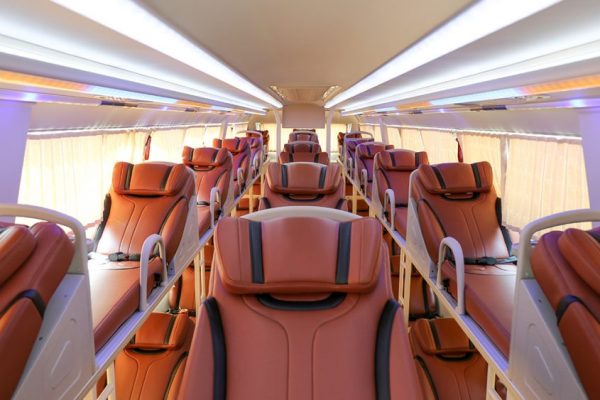
Sleeper buses dominate the Hanoi to Ha Giang route because they solve multiple problems: they’re affordable, save a hotel night in Hanoi, and arrive in Ha Giang morning when you’re ready to start your loop tour.
Understanding the different sleeper bus categories helps you choose the right balance of comfort and cost.
VIP sleeper buses represent the highest comfort tier for this route and cost ₫350,000 ($14-15 USD) per person.
What “VIP” actually means:
Common departure times from Hanoi:
Pickup locations in Hanoi vary by operator but commonly include:
The actual “VIP” quality varies between operators. Some companies maintain genuinely nice buses with comfortable pods and smooth rides. Others slap “VIP” on marginally better buses that don’t justify the premium. Reading recent reviews for specific operators matters more than trusting the VIP label alone.
Who should choose VIP buses: Travelers who want the best sleep possible on an overnight bus, people with back problems who need proper reclining space, or anyone willing to pay a modest premium for more comfort.
Cabin sleeper buses fall between VIP and regular sleepers in both price and comfort, costing ₫300,000 ($12-13 USD) per person.
Cabin configuration:
Departure times:
The trade-off with cabin sleepers is that you’re sharing space with 1-3 other passengers. If you’re traveling as a couple or small group, this works perfectly as you book the cabin together. Solo travelers get assigned cabin mates, which creates a lottery situation regarding snoring, restlessness, or personal space issues.
Who should choose cabin buses: Couples or friends traveling together who want cost savings versus VIP while maintaining privacy, or budget-conscious travelers willing to share space for a better price than VIP.
Regular (or “standard”) sleeper buses are the budget option at ₫250,000 ($10-11 USD) per person.
What you’re getting:
Multiple departure times offer flexibility:
The variety of departure times is actually an advantage of regular sleepers – you have more scheduling flexibility than VIP options.
The reality check: Regular sleepers work fine for millions of Vietnamese and foreign travelers. You won’t sleep as well as in VIP pods, the ride might be bumpier, and you’ll be more aware of other passengers. But you’re saving ₫100,000 per person, and for budget travelers, that money matters.
Who should choose regular buses: Budget backpackers, travelers who sleep easily anywhere, or anyone prioritizing cost over comfort for this short journey.
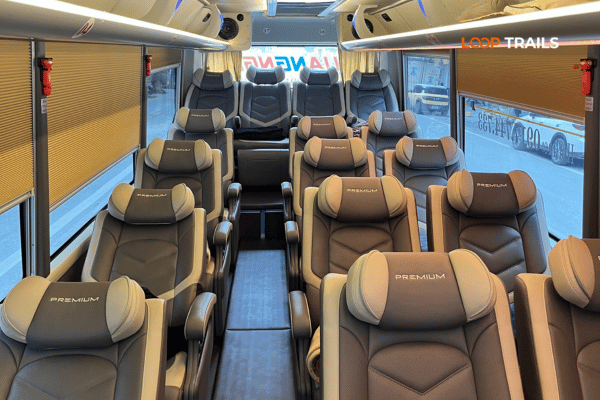
Limousine buses occupy a middle ground between sleeper comfort and premium service, priced at ₫300,000 ($12-13 USD).
Limousine characteristics:
Daytime departures from Hanoi:
Evening departures:
The daytime limousine buses let you see the scenery and arrive in Ha Giang during daylight hours, which some travelers prefer over 4:00 AM arrivals. However, you’re consuming most of a day in transit that could be spent on activities.
Who should choose limousine buses: Travelers who want to see the journey scenery, people uncomfortable with overnight bus sleep, or those willing to sacrifice a day for more comfortable daytime travel.
Booking sleeper buses to Ha Giang is straightforward with multiple reliable options.
Booking through your Ha Giang tour operator is the easiest method. Most tour companies offer bus ticket booking as an add-on service when you book your Ha Giang Loop tour. They charge the same price as booking directly (sometimes even negotiate bulk discounts) and handle all logistics.
The advantage is seamless coordination: your tour operator knows exactly when you’re arriving and can arrange pickup or early accommodation access. They also have relationships with specific bus companies and can often resolve issues if problems arise.
Direct booking with bus companies works if you prefer handling arrangements yourself:
Hostel/hotel booking services in Hanoi can arrange bus tickets, often charging ₫20,000-50,000 commission but saving you the hassle of navigating bus stations or language barriers.
Payment is typically cash for in-person bookings, though some companies accept bank transfer or online payment for advance bookings.
Timing your booking: Peak season (September-November) benefits from booking 3-5 days in advance to ensure seat availability. Off-season permits same-day or next-day booking, though advance booking still provides better schedule selection.
Learn more: How to get Ha Giang?
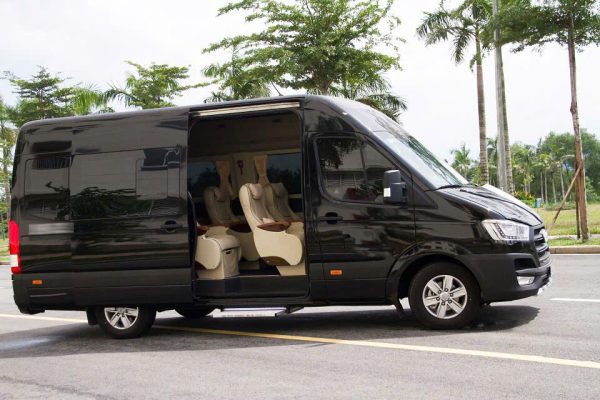
Private transfers cost significantly more than buses but offer advantages n specific situations.
Private car services work best when:
You’re traveling as a group. A private car for 4 passengers costs ₫2,500,000-3,500,000 ($100-145 USD) total. Split four ways, that’s ₫625,000-875,000 per person ($25-35 USD) – meaningfully more than buses but not drastically expensive for the added comfort and flexibility.
You have luggage concerns. Traveling with photography equipment, large backpacks, or items you don’t want stored in bus cargo holds makes private cars attractive. Everything stays with you in the vehicle.
Schedule flexibility matters. Need to depart at 2:00 PM instead of fixed bus times? Private cars accommodate your schedule. Want to stop at specific locations along the route? Easy to arrange.
You arrive in Hanoi on tight timelines. If your Hanoi arrival doesn’t align well with bus schedules, private cars eliminate waiting time.
You’re uncomfortable with overnight buses. Some travelers simply don’t sleep on moving vehicles regardless of comfort level. Daytime private car travel solves this completely.
Standard pricing for private transfers:
These prices typically include:
Not typically included:
Vehicle quality varies among providers. Established tour operators and reputable transfer companies maintain newer vehicles with working air conditioning, comfortable seating, and experienced drivers. Budget providers might use older vehicles or less experienced drivers to cut costs.
Driver English proficiency ranges from zero to conversational. If communication matters, specify this when booking and confirm English-speaking driver availability.
Some operators offer shared van services where you’re grouped with other travelers heading to Ha Giang, splitting the cost while getting private vehicle comfort.
Shared van pricing typically runs ₫500,000-800,000 ($20-32 USD) per person, depending on the number of passengers.
The logistics challenge is that shared vans require the operator to find enough passengers traveling on your specific dates. During peak season, this works smoothly. Off-season, you might wait days for a full van or face cancellation with refund.
Departure flexibility is limited – shared vans leave when full or on predetermined schedules, removing the schedule control that makes private transfers attractive.
Shared vans work best for travelers with flexible schedules during peak season who want something between bus comfort and full private car cost.

Learn more: Ha Giang Loop Tours
Many travelers ask about trains to Ha Giang because trains serve much of northern Vietnam. The reality is complicated.
There is no direct train to Ha Giang. The nearest train station is in Hanoi itself. Ha Giang province doesn’t have rail service because the mountainous terrain made railway construction economically unfeasible.
This fundamental infrastructure reality means train + bus combinations are your only rail option, and these combinations typically make less sense than direct buses.
Theoretically possible combinations:
You could take trains from Hanoi to destinations like Lao Cai (for Sapa) or other northern cities, then arrange bus connections to Ha Giang. However, this adds complexity, time, and cost compared to direct Hanoi-Ha Giang buses.
Why this doesn’t work well:
The verdict: Unless you’re already traveling to Sapa or Lao Cai for other reasons and want to add Ha Giang afterward, skip train combinations. Direct buses are simpler, faster, and more cost-effective.
Learn more: Ha Giang Cao Bang Loop Tours
Ha Giang doesn’t have a commercial airport. The question becomes whether flying to a nearby airport and continuing overland makes sense.
Closest airports to Ha Giang:
All these airports still require substantial overland travel to reach Ha Giang, meaning you’re not avoiding the 6-hour journey – you’re just changing where it starts.
When flying makes sense:
When flying doesn’t make sense:
For most Ha Giang travelers, the journey starts in Hanoi after arriving by international flight or overland travel from other Vietnamese destinations.
Learn more: Ha Giang Loop Booking
Many travelers visit Ha Giang as part of larger northern Vietnam itineraries. Here’s how to reach Ha Giang from other popular destinations.
Sapa to Ha Giang is approximately 350km, taking 8-9 hours by road.
Direct bus options:
Route reality: This journey crosses serious mountain terrain including challenging passes. The 11:00 AM departure allows seeing spectacular scenery but makes for a very long day. The evening departure means overnight travel but less scenic viewing.
Booking: Some tour operators can arrange this connection, or book directly at bus stations in Sapa.
Alternative route: Sapa → Hanoi (overnight bus) → Ha Giang (next evening bus) adds a day but uses better-serviced routes with more departure options. Whether this makes sense depends on your schedule and whether you want time in Hanoi.
Ninh Binh to Ha Giang covers approximately 350-370km requiring 8-9 hours of travel.
Bus options:
Why the higher price: Ninh Binh to Ha Giang is a less-traveled route with fewer operators and lower passenger volume, resulting in higher per-person costs than the heavily-trafficked Hanoi route.
Service quality: Expect regular sleeper buses rather than VIP options. The route isn’t popular enough to justify premium service levels.
Booking challenges: This route requires advance booking even in off-season because buses might not run daily if passenger numbers are low. Confirm departures before finalizing Ninh Binh accommodation
Ha Long Bay and Cat Ba Island to Ha Giang involve ferry connections plus overland travel.
From Cat Ba:
From Ha Long City:
Route complexity: Cat Ba requires ferry to mainland Vietnam before the bus journey can begin, adding time and connection risk. Ha Long City has more direct road access but still involves lengthy travel.
The realistic assessment: If you’re visiting both Ha Long Bay area and Ha Giang, routing through Hanoi often makes more sense. The direct connections exist but aren’t necessarily faster or more convenient than Hanoi transfers when you factor in ferry schedules and less frequent bus departures.
Cao Bang province to Ha Giang city is approximately 200km taking 5-6 hours.
Bus options:
This route makes sense when: You’re doing the Ha Giang-Cao Bang combined loop and ending in Cao Bang, or you’re visiting Ban Gioc Waterfall first before Ha Giang Loop.
Route scenery: The road between Cao Bang and Ha Giang passes through dramatic karst landscapes that rival Ha Giang Loop itself. Taking a daytime bus lets you appreciate this scenery.
Service frequency: This is a relatively minor route with limited daily departures. Book ahead and confirm schedules.

Learn more: How to book tickets
Your Ha Giang tour operator should be your first option if you’re booking a Ha Giang Loop tour. Tour companies have direct relationships with bus operators, can coordinate your arrival with tour start times, and often resolve issues more easily than if you book independently.
Many tour operators include bus booking as a free service when you book tours, charging exactly what you’d pay booking directly. This coordination is worth using even if you’re capable of independent booking.
Online booking platforms:
Online booking works well during peak season when services run reliably. Off-season, direct contact with operators sometimes reveals schedule changes or cancellations that online platforms haven’t updated.
In Hanoi:
Payment methods vary:
Peak season (September-November):
Shoulder season (March-May, December-January):
Low season (June-August):
Holiday periods (Vietnamese New Year/Tet, national holidays):
My Dinh Bus Station (Hanoi’s main northern route terminal):
Bus company offices in Old Quarter Hanoi:
Boarding process:
Departure punctuality varies. Buses might leave 5-15 minutes late while waiting for final passengers, but major delays are uncommon. Being at pickup points on time is essential.

Learn more: How to get from Cao Bang to Ha Giang
For sleeping:
For comfort:
For convenience:
Documents:
Large luggage you can’t manage easily. If you’re continuing to Ha Giang Loop tours, you should already be traveling light. Massive suitcases are awkward on buses and unnecessary for Ha Giang trips.
Excessive valuables. Leave expensive jewelry, unnecessary electronics, and items you’d be devastated to lose in more secure storage elsewhere.
Strong-smelling food. Other passengers will hate you if you bring durian or extremely pungent food onto the enclosed bus.
Expectations of quality sleep. Sleeper buses provide rest, not hotel-quality sleep. Adjust expectations accordingly and you’ll be happier.
Bathroom stops happen 1-2 times during the 6-7 hour journey, typically at roadside rest areas.
These stops are brief (10-15 minutes), so don’t wander far from the bus. Use bathrooms immediately, as lines form quickly. Facilities range from basic to very basic – squat toilets, limited soap, bring hand sanitizer.
Food at rest stops includes instant noodles, snacks, coffee, and simple meals. Quality varies. Prices are tourist-inflated compared to Hanoi or Ha Giang.
Better strategy: Eat before departure and bring snacks. Buy water before boarding (available at bus stations and convenience stores for normal prices).
Motion sickness affects some travelers on mountain roads. If prone to this, take medication before departure. Sit near the front where motion is less pronounced. Eating lightly before travel helps.
Learn more: Ha Giang loop from Ninh Binh
Most buses arrive at Ha Giang city’s main bus station, located approximately 2-3 kilometers from the city center accommodation area.
Early morning arrival reality: You’re arriving at 3:00-5:30 AM when Ha Giang is still dark and quiet. Don’t panic – this is normal and expected.
Bus station facilities at these hours are minimal. Basic bathrooms are available. Small food stalls might be open or opening for breakfast.
If you’ve booked a Ha Giang Loop tour with pickup included:
If arriving independently:
Mobile phone data helps tremendously for calling accommodations, using maps, or contacting tour operators if pickups are unclear.
Most Ha Giang Loop tours begin with morning briefings around 8:00-9:00 AM, giving you time after early arrival to:
If you arrive at 4:00 AM and your tour starts at 8:00 AM, you have a manageable 4-hour window. Use it to freshen up, eat, and prepare mentally for your Ha Giang adventure.
If you arrive the day before your tour starts, you have a full day to explore Ha Giang city (modest but pleasant), rest from travel, and prepare equipment and packing.
Many travelers combine transportation booking with their Ha Giang Loop tour reservation, allowing tour operators to coordinate arrivals, pickups, and tour start times seamlessly. If you’re booking through Loop Trails or similar operators, this coordination eliminates arrival uncertainty and ensures smooth transitions from overnight bus to starting your Ha Giang Loop adventure.

Learn more: Ha Giang Loop easy rider tour
Fake bus tickets sold at tourist-heavy areas in Hanoi occasionally appear. Avoid buying from street touts. Use established operators, official booking platforms, or your tour company.
Overpriced tickets happen when touts charge foreigners inflated prices. Know the standard pricing (₫250,000-350,000 for sleeper buses) and refuse dramatic markups.
Bait-and-switch buses where you book VIP but get downgraded to regular sleeper at boarding time. If this happens, refuse to board and demand refund or proper bus class. Established operators don’t pull this, which is why booking through reputable companies matters.
Bag switching where unscrupulous baggage handlers swap your luggage for similar bags containing less valuable items. Keep valuables with you, use distinctive luggage tags, and watch your bags during loading.
Commission-based driver diversions where drivers try taking you to specific hotels or tour operators who pay them commissions. If you have accommodation booked, insist on going there. Don’t be pressured into “my friend’s better hotel.”
Bus doesn’t arrive (rare but happens):
You miss the bus through late arrival:
Bus breaks down en route:
Prevention:
If luggage goes missing:
What you can’t prevent: Occasional baggage handler mistakes or theft. This is why keeping truly irreplaceable items (passport, money, medications, electronics) on your person is essential.
Sleeper buses range from ₫250,000 ($10-11 USD) for regular sleepers to ₫350,000 ($14-15 USD) for VIP sleeper buses. Limousine buses cost ₫300,000 ($12-13 USD). Private car transfers run ₫2,500,000-3,500,000 ($100-145 USD) total for groups of 2-4 passengers. The most popular choice is night sleeper buses which arrive in Ha Giang early morning, saving a hotel night while getting you to Ha Giang ready to start your loop tour.
Most travelers take evening departures (9:00-10:30 PM) arriving Ha Giang early morning (3:00-5:30 AM). This timing lets you start Ha Giang Loop tours the same day after freshening up. Daytime buses (7:00 AM or 4:00 PM departures) work if you want to see scenery or are uncomfortable with overnight bus sleep, but they consume a full day of travel time. Choose evening buses unless you specifically want daytime travel.
The journey takes 6-7 hours by sleeper bus, covering approximately 300-320 kilometers through northern Vietnam’s mountains. VIP sleeper buses typically complete the trip in 6-6.5 hours, while regular sleepers take 6.5-7 hours. Private cars can make the journey in 5-6 hours with minimal stops. Add time for bathroom breaks – buses typically stop 1-2 times en route.
No, there is no direct train to Ha Giang. The nearest train station to Ha Giang province is in Hanoi itself. Ha Giang’s mountainous terrain never received railway infrastructure. Your only options are buses or private car transfers. Train + bus combinations (like train to Lao Cai, then bus to Ha Giang) are possible but add unnecessary time and complexity compared to direct Hanoi-Ha Giang buses.
Most buses depart from My Dinh Bus Station in western Hanoi, though some operators offer Old Quarter pickup points. Your exact pickup location depends on which bus company you book. When booking, confirm the specific pickup address and arrive 30-45 minutes early. If booking through Ha Giang tour operators, they provide exact pickup details and often arrange pickups from your Hanoi accommodation.
Peak season (September-November) requires booking 3-5 days in advance, especially for VIP buses and weekend departures. Shoulder season allows 2-3 days advance booking. Off-season sometimes permits same-day booking, though advance booking ensures better departure times. Booking through your Ha Giang tour operator is easiest and they coordinate arrivals with tour start times. Don’t risk last-minute peak season booking – slots fill up.
Bring travel pillow, eye mask, earplugs, warm layer (air conditioning gets cold), socks (shoes come off on sleeper buses), power bank, snacks, and water. Keep valuables (passport, money, phone) on your person, not in cargo luggage. Small bag with items you’ll need during travel should stay accessible. Download entertainment as WiFi is unreliable. Bring hand sanitizer for bathroom stops. Don’t expect quality sleep – sleeper buses provide rest, not hotel comfort.
Yes, direct buses run Sapa to Ha Giang costing approximately ₫350,000 ($14-15 USD) with 8-9 hour journey time. Departures aren’t daily and service is less frequent than the Hanoi route. Alternative is Sapa to Hanoi (overnight) then Hanoi to Ha Giang (next evening), which adds a day but uses better-serviced routes. For travelers visiting both destinations, routing through Hanoi often makes more sense despite the extra time.
Early arrival (3:00-5:30 AM) is standard for overnight buses. If you’ve booked Ha Giang Loop tours, operators expect this and arrange early check-in or provide waiting areas. Taxi to city center accommodation costs ₫30,000-50,000 ($1.50-2 USD) if arriving independently. Most tour briefings start 8:00-9:00 AM, giving you time to shower, eat breakfast, and prepare. Many accommodations allow early check-in for bus arrivals. This timing actually works well – you arrive, freshen up, and start touring the same day.
Yes, established bus operators maintain good safety records. Vietnamese sleeper buses are widely used by locals and foreigners. Choose reputable operators (book through tour companies or established platforms), avoid bottom-tier budget operators with questionable vehicle maintenance. Keep valuables on your person rather than cargo hold. The mountain roads demand attention, but experienced drivers handle them daily. Standard travel precautions (watch your belongings, be aware of surroundings) apply as anywhere.
The same bus services run return routes Ha Giang to Hanoi, with similar pricing (₫250,000-350,000) and departure times. Most tour operators arrange return bus tickets when you book Ha Giang Loop tours, coordinating departure times with when your loop ends. Evening buses let you finish touring, shower, eat dinner, then travel overnight back to Hanoi. This saves time versus daytime buses and gets you to Hanoi early morning for onward travel or flights.
Private car transfers allow stops anywhere along the route – viewpoints, towns, restaurants – whatever interests you. Bus services follow fixed routes with predetermined stops (bathroom breaks only), so breaking journey isn’t practical on buses. If you want to visit destinations between Hanoi and Ha Giang, either arrange private car with stops or plan separate trips to those locations rather than trying to break bus journey.
Contact information for Loop Trails
Website: Loop Trails Official Website
Email: looptrailshostel@gmail.com
Hotline & WhatSapp:
+84862379288
+84938988593
Social Media:
Facebook: Loop Trails Tours Ha Giang
Instagram: Loop Trails Tours Ha Giang
TikTok: Loop Trails
Office Address: 48 Nguyen Du, Ha Giang 1, Tuyen Quang
Address: 48 Nguyen Du, Ha Giang 1, Tuyen Quang

Facebook X Reddit Table of Contents Learn more: Ha Giang Loop Tours There’s a moment, usually somewhere on Ma Pi Leng Pass,

Facebook X Reddit Table of Contents Learn more: Ha Giang Loop Tours There’s a version of the Ha Giang Loop that people