
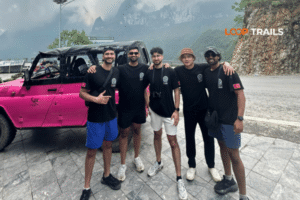
Ha Giang Loop 3 Days vs 4 Days: Which Duration Is Right for You?
Facebook X Reddit Table of Contents Learn more: Ha Giang Loop Tours Most people land on this question after staring at a

Thúy Kiều (Grace) is a travel blogger and content contributor for Loop Trails Tours Ha Giang. She holds a bachelor’s degree in Sustainable Tourism from Vietnam National University, Hanoi, and has a strong passion for exploring and promoting responsible travel experiences in Vietnam’s northern highlands.
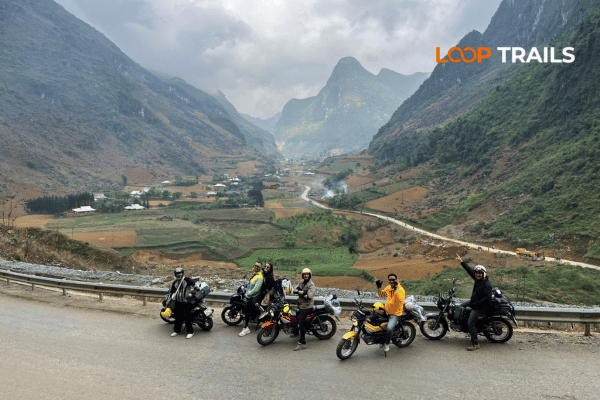
Learn more: Ha Giang Loop Tours
Most people arrive in Meo Vac from the west — from Dong Van, via Ma Pi Leng Pass. And when they do, the town doesn’t quite register at first, because your brain is still processing what just happened on that road. The gorge. The drops. That green-blue river suspended impossibly far below. By the time you pull into Meo Vac’s main street, park the bike, and sit down with something cold, there’s a specific kind of quiet that sets in — the kind that follows genuine awe.
Meo Vac is the final major town on the Ha Giang Loop’s northern arc before the route swings south toward Bao Lac and eventually back down to Ha Giang City. It’s smaller and rougher around the edges than Dong Van, and that’s exactly why some travellers end up preferring it. Less infrastructure, fewer tourist-facing businesses, more of the unfiltered highland life that people come to Ha Giang to find.
Sitting at the edge of the Dong Van Karst Plateau above the Nho Que River canyon, Meo Vac is a district town in Ha Giang Province with a population drawn primarily from H’Mong, Giay, Lo Lo, and other ethnic minority communities. It’s home to one of the most visited weekly markets in the province, access to some of the best hiking in the region, and — of course — that road. The one that brought you here.
This guide covers everything you need before, during, and after your visit to Meo Vac.
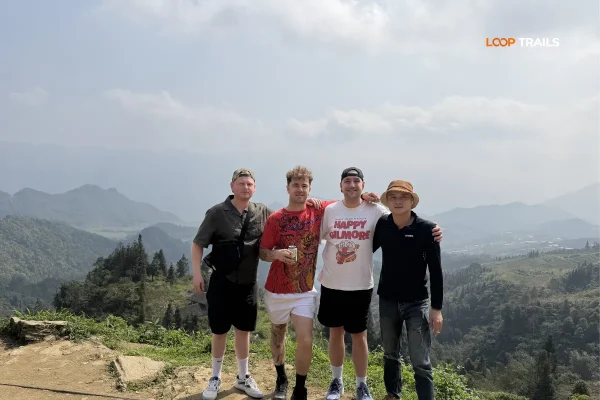
Learn more: Ha Giang Loop 2 Days 1 Night
Every town on the Ha Giang Loop has its identity. Quan Ba has the Twin Mountains. Yen Minh is the green valley where you breathe out. Dong Van has the Old Quarter and the weight of history. Meo Vac has something different: it’s the place where the landscape peaks, and where the loop stops feeling like a tour and starts feeling like an expedition.
The approach via Ma Pi Leng is part of it — you earn Meo Vac in a way you don’t quite earn other destinations. The town itself is unpretentious. There’s a central market area, a handful of guesthouses, some local restaurants, and streets that slope down toward the valley in a way that keeps reminding you where you are geographically. It doesn’t try to be charming. It just is.
What Meo Vac offers specifically:
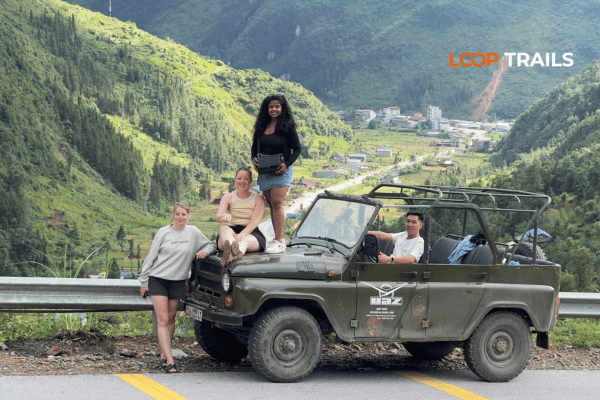
Learn more: Ha Giang Loop 3 Days 2 Nights
The standard Ha Giang Loop runs Dong Van → Ma Pi Leng Pass → Meo Vac. The distance is roughly 22–25 kilometres, but don’t mistake that for a short ride — this section demands your full attention and rewards you every metre of the way.
Ma Pi Leng Pass is one of the four great mountain passes of Vietnam, carved into cliffs above the Nho Que River gorge at elevations that will leave you questioning your life choices in the best possible way. The road is narrow, the exposure is real, and the views are extraordinary. There are guardrails in the most critical sections — improvements that have been made over the years — but the road is still fundamentally a mountain pass and should be treated as one.
Plan 1.5 to 2.5 hours for this section, including stops at the Ma Pi Leng viewpoint (a designated platform roughly midway that gives you the clearest view of the full gorge depth) and anywhere else that catches your eye. Don’t rush it. The landscape between Dong Van and Meo Vac via this pass is the emotional centrepiece of the entire loop.
Some travellers do the loop clockwise — heading south from Ha Giang City through Du Gia and Bao Lac, arriving in Meo Vac from the east before heading on to Dong Van. The approach from Bao Lac is a long day’s ride but has its own rewards: the landscape transitions from the green river valleys of the south to the increasingly stark karst plateau as you climb north.
If you’re arriving from Bao Lac, the road quality varies and some sections can be rough after rain — check conditions with locals or your guesthouse before committing to a timeline.
Meo Vac is the western gateway point for travellers combining Ha Giang with the Cao Bang Loop. The road east from Meo Vac toward Bao Lac passes through increasingly remote highland scenery, with the landscape shifting from karst plateau to river valleys and forested ridgelines as you approach Cao Bang Province.
If you’re planning this extended route — one of the most rewarding multi-day trips in northern Vietnam — Meo Vac is typically a natural overnight stop before or after the Cao Bang section.
Planning the Ha Giang–Cao Bang combined route? This is the longer, more adventurous version of the loop that keeps going east instead of doubling back. Our [Ha Giang–Cao Bang Combine Tours] cover both provinces in a single itinerary — talk to us about route options and what to expect.
Learn more: Ha Giang Loop 4 Days 3 Nights
Most people pass through Ma Pi Leng en route to or from Meo Vac, stop at the viewpoint, take photos, and move on. That’s fine. But if you have time, this section deserves more than a drive-through.
The Ma Pi Leng viewpoint is the obvious stop — a designated platform carved into the cliff with a direct sightline down to the Nho Que River gorge below. The scale is hard to process in photos: the gorge drops hundreds of metres, the river is a shade of blue-green that shifts with the sky and season, and the walls on either side are near-vertical limestone that goes up as far as you can see. Morning and late afternoon light are both excellent here, though the midday haze that builds in summer can reduce visibility.
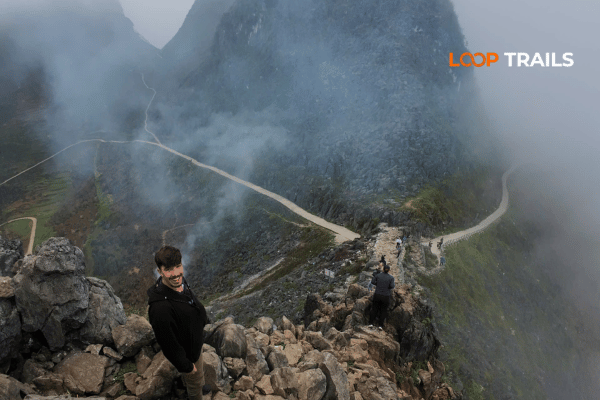
The Heaven’s Road (Con Đường Hạnh Phúc) — “Road of Happiness”: The full route across Ma Pi Leng Pass is part of the historic Highway 4C, known locally as the Road of Happiness — a road built with extraordinary human effort by young volunteers in the 1960s to connect these isolated highland communities. Understanding that context changes how you experience it.
Walking sections of the ridge: For travellers with extra time and decent shoes, it’s possible to walk sections of the ridge trail above the main road for views that go beyond what you get from the standard stops. Ask locally about current trail conditions and accessibility.
The Sunday market in Meo Vac is one of the largest and most genuine weekly markets in Ha Giang Province. That’s not tourist-brochure language — it’s a logistical fact. Thousands of people converge on the market from surrounding villages and valleys, many of them having walked for hours to get there.
What makes it different from smaller markets on the loop:
Practical notes:
About 10 kilometres west of Meo Vac on the road back toward Dong Van, Lung Phin hosts a Saturday market that’s become well known as an alternative to the larger Sunday market in town. It’s smaller and less overwhelming for first-time visitors, which some travellers prefer.
The Lung Phin market is particularly good for traditional H’Mong embroidery, woven textiles, and silver jewellery — craft goods that the H’Mong communities produce and sell within their own trading networks. Quality varies, and bargaining is expected, but the work itself is often extraordinary.
Getting there is easy — it’s on the main road between Dong Van and Meo Vac, so you can stop on the way in or make it a short morning trip from Meo Vac. Either way, combine it with a slower ride back along the Ma Pi Leng section to make the most of the road.
Learn more: Ha Giang Cao Bang 5 Days 4 Nights
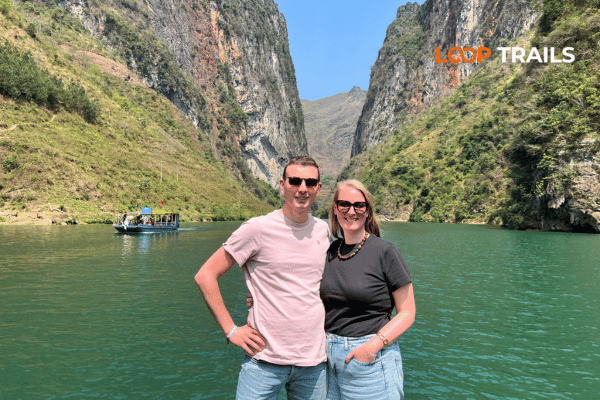
The Nho Que River is the defining geographic feature of this part of Ha Giang — it’s the river at the bottom of the Ma Pi Leng gorge, the one that colour you see in every photo taken from the viewpoint. Up close, it’s even more impressive.
From Meo Vac, it’s possible to reach the river valley and take boat trips along sections of the gorge — a completely different perspective on the landscape you’ve just driven through or above. The river’s characteristic blue-green colour is most vivid in dry season (roughly November through April), when the water is clear. During monsoon, it runs murkier and the trip is less scenic.
Kayaking options have been developing in this area — ask locally at your guesthouse or in Meo Vac town for current operators and availability, as this scene changes. Don’t book anything in advance based on old online information; verify on the ground.
The boat trip access point is a short motorbike ride from town — your guesthouse can point you to the current starting point, as the access road and setup can shift.
Pa Vi is a commune about 10–15 kilometres from Meo Vac town, sitting in a valley with a strong H’Mong community presence. It’s less visited than the villages around Dong Van and hasn’t been packaged into the standard tourist circuit, which is part of its appeal.
The landscape around Pa Vi — open fields, distant karst peaks, the sense of being very far from anywhere — is the quieter counterpart to the more dramatic gorge scenery closer to Meo Vac. If you have a full day in the area and want to get off the main road, a ride out to Pa Vi and back gives you a different dimension of what plateau life actually looks like.
There are no formal tourist attractions here — this is village life. Approach it as an observer, not a visitor to a show. Local homestay connections, if available through your guesthouse, are the most respectful way to experience community life in these areas.
Meo Vac’s geography — perched at a plateau edge — means that good viewpoints exist throughout the area. A few worth seeking out:
Learn more: Ha Giang Cao Bang Ba Be Lake 6 Days 5 Nights
Meo Vac’s food scene is small and unglamorous, which is to say it’s exactly right for this kind of town. The options are concentrated around the main market area and the central street.
What to eat:
Practical note: English menus are rare. Pointing at what other people are eating works. Prices are low by any measure — carry cash, as card payment isn’t standard in most local eateries. Confirm prices before ordering in unfamiliar spots, as the occasional price discrepancy happens.
Learn more: Ha Giang Homestay Guide
The accommodation scene in Meo Vac is more limited than Dong Van and less polished overall. That’s not a complaint — it’s the character of the place. Options range from basic guesthouses to a few more comfortable spots that have opened in recent years as the loop has grown in popularity.
Budget options: Basic private rooms with a bed, fan, and shared or private bathroom. Hot water is not guaranteed — ask before you book (or accept cold showers as part of the experience, which gets easier the longer you’re on the loop). Rates are low; expect to pay less than in Dong Van for comparable quality.
Mid-range options: A small number of guesthouses have improved their facilities in recent years — hot water, better bedding, sometimes a simple breakfast included. Book ahead during peak season (October–November buckwheat bloom, March–April spring blossoms, and any major Vietnamese holiday weekend). Availability can get tight.
Homestay options: Some local families offer homestay accommodation, which is typically the most interesting way to spend a night in Meo Vac — communal meals, local food, and the kind of conversation that doesn’t happen in a standard guesthouse. Ask at your guesthouse in Dong Van or Ha Giang City for recommendations, or enquire directly in Meo Vac town. Quality and comfort level varies significantly — go in with open expectations.
Temperature note: Meo Vac is high, and it gets genuinely cold at night from November through February. Frost is possible on the plateau. Even if your guesthouse has blankets, packing a light sleeping bag liner is worth doing — guesthouses at this elevation can run out of adequate bedding during cold snaps.
Learn more: Ha Giang in September & October
October – November (peak season): The buckwheat flowers bloom across the karst plateau — pale pink fields against grey limestone, the kind of image that dominates Ha Giang’s Instagram presence. The plateau around Meo Vac and Dong Van is particularly rich in buckwheat cultivation, and October–November is when it peaks. Expect more travellers, higher accommodation demand, and the need to book ahead. Worth it.
March – April (spring): Quieter than autumn, with pear and plum blossoms on the hillsides and pleasant temperatures. Road conditions are generally good. The Nho Que River is clear and blue-green. Arguably the best overall time to visit if you want the scenery without the crowds.
December – February (winter): Cold. Genuinely cold — temperatures near freezing at night, occasional frost, and mountain fog that can reduce visibility on passes significantly. But the landscape is striking in a completely different way, the roads are quiet, and guesthouses are easy to find. If you travel in winter, pack for it seriously: thermal layers, windproof jacket, gloves, and a warm hat you can fit under a helmet.
May – August (rainy season): Wet weather, lush green landscapes, and unpredictable road conditions. Ma Pi Leng Pass can be slippery in rain, and sections of the road toward Bao Lac may be affected by landslides after heavy rainfall. Flexibility is essential — keep your itinerary loose, check road conditions daily with locals, and don’t commit to fixed departure times.
Learn more: Ha Giang Motorbike Rental
Minimum: 1 night Most loop itineraries allocate one night in Meo Vac — arrive via Ma Pi Leng from Dong Van, explore the town in the afternoon, evening food, early start the next morning toward Bao Lac. This works, but you’ll feel the time pressure.
Recommended: 2 nights Two nights unlocks the experience properly:
If Sunday falls in your window: Adjust your itinerary to make sure you’re in Meo Vac on a Sunday. The market is that good. Even staying an extra night to catch it is a reasonable decision.
Learn more: Ha Giang Loop by Jeep for Families & Groups
Getting to Meo Vac — and experiencing Ma Pi Leng Pass — is the heart of any Ha Giang Loop itinerary. The right way to do it depends on who you are and what you want from the trip.
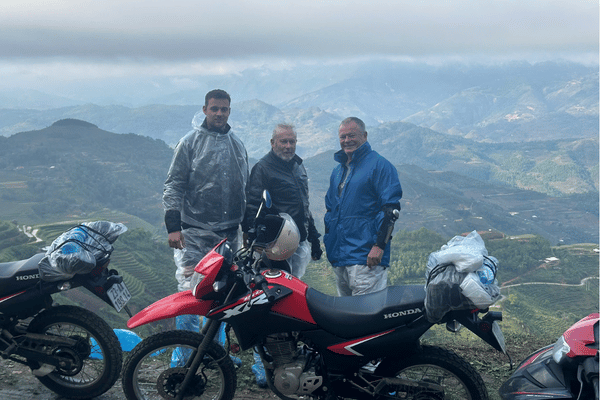
Self-Drive Motorbike The most visceral way to experience Ma Pi Leng. You’re in full control, setting your own pace, stopping wherever you want. That said, this pass is not the place to discover your limits — it’s genuinely exposed in places, and wet or foggy conditions require significant experience to manage safely.
If you’re a confident rider with mountain road experience, self-driving this section on a well-maintained bike is one of the best experiences Vietnam has to offer. If you’re newer to mountain riding, be honest with yourself.
👉 Check our [Motorbike Rental Ha Giang] page for bike options, what’s included, and current availability.
Easy Rider (Guided Motorbike Tour) A local guide rides ahead of you, knows every curve and fuel stop, and can communicate with locals in a way that transforms village stops from lookout points into real interactions. You still get the wind, the altitude, the physical presence of the road — but with a safety net.
For first-time loop riders, anyone nervous about the passes, or travellers who want local cultural depth alongside the scenery, Easy Rider is a genuinely excellent option — not a compromise.
👉 Our [Ha Giang Loop Easy Rider Tours] include Ma Pi Leng and Meo Vac as standard. See what’s covered and how to book.
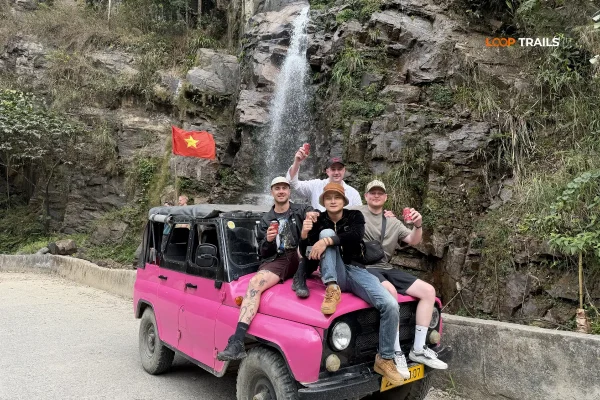
Jeep Tour The most comfortable way to experience the loop, and increasingly the preferred choice for couples, small groups, families, and travellers who don’t ride. A private jeep with an experienced driver means you can focus entirely on the scenery — and on a section like Ma Pi Leng, that’s actually a significant advantage.
Jeep tours also make the most sense if you’re combining Ha Giang with Cao Bang, covering more ground in a comfortable vehicle.
👉 Our [Ha Giang Jeep Tours] and [Ha Giang–Cao Bang Combine Tours] run private routes with flexible itineraries. Get in touch and we’ll build something that fits your schedule.
Still not sure? Message us on WhatsApp. Tell us your experience level, how many days you have, and who you’re travelling with — we’ll give you an honest recommendation, no pressure.
Learn more: Ha Giang Safety Tips
Fuel: Petrol is available in Meo Vac town. Fill up before leaving in either direction — toward Dong Van or toward Bao Lac — as fuel options thin out quickly once you’re on the mountain roads.
Phone signal: Inconsistent on the plateau and in the gorge. Viettel tends to have the best coverage in remote areas. Download offline maps before leaving Ha Giang City. Don’t count on live navigation on Ma Pi Leng.
Cash: ATMs exist in Meo Vac but may not always be stocked, particularly during busy periods. Carry cash sufficient for two days before leaving Dong Van.
The Sunday market timing: If seeing the Meo Vac Sunday market is a priority, plan your loop itinerary around it from the start. Arriving on Saturday evening and leaving Monday morning gives you the best window.
Permits: Foreign travellers in Ha Giang Province’s border areas require a travel permit. This is handled in Ha Giang City and is typically included by reputable tour operators and rental shops. Rules can and do change — confirm the current process before you leave Ha Giang City if you’re going independently.
Road conditions on Ma Pi Leng: After heavy rain, the pass can develop loose gravel, water sheeting across the road surface, and reduced visibility from cloud. If conditions are genuinely bad when you arrive at the Dong Van end, wait. The road isn’t going anywhere. An hour of patience is better than the alternative.
What to wear on the pass: Even in warm weather, the temperature on the exposed ridge sections of Ma Pi Leng drops significantly compared to the valley floors. Always bring a windproof layer when riding this section, regardless of the forecast.
Camera gear: If you’re carrying serious photography equipment, the Ma Pi Leng viewpoint and the ridgeline sections can be windy. Secure your gear before stopping. A polarising filter makes a significant difference on the Nho Que River shots.
Learn more: Ha Giang Loop for Couples
For many travellers, Meo Vac ends up being the place where the Ha Giang Loop crystallises into a single clear memory. Not because it’s the most comfortable town, or the most tourist-friendly, or the most infrastructure-rich — it isn’t any of those things. But because of what surrounds it: the gorge, the pass, the river, the market, and the sense that you’re genuinely far from the world you came from.
If you’re planning the Ha Giang Loop and wondering how much time to allocate, our honest advice is: give Meo Vac the space it deserves. Don’t rush through. The road from Dong Van will take your breath away. Let it.
When you’re ready to put a trip together, [Loop Trails] runs Ha Giang Loop tours departing regularly from Ha Giang City — Easy Rider, jeep, and self-drive options, with routes covering Meo Vac, Ma Pi Leng, and everything in between. Reach out and we’ll sort the details.
Learn more: Ha Giang Loop for Seniors
Meo Vac is a district town in Ha Giang Province, northern Vietnam, sitting at the eastern edge of the Dong Van Karst Plateau. It’s roughly 170 kilometres north of Ha Giang City and connects the Ha Giang Loop with the road east toward Cao Bang Province.
The main route is via Ma Pi Leng Pass — about 22–25 kilometres of mountain road that takes 1.5 to 2.5 hours including stops. This is one of the most spectacular roads in Vietnam and not a section to rush. The road is narrow and exposed in places; ride or travel with appropriate care.
The pass is challenging rather than dangerous if you’re appropriately prepared and take it at the right pace. Guardrails have been added to the most exposed sections in recent years. The main risks are overconfidence, speed, and wet or foggy conditions. Riding slowly, stopping to rest, and checking conditions before you go significantly reduces risk.
A large weekly market drawing thousands of people from ethnic minority communities across the plateau — H’Mong, Lo Lo, Giay, Pu Peo, and others. It’s one of the biggest and most genuine markets on the Ha Giang Loop, focused on livestock, produce, crafts, and food. Arrive before 9am for the best atmosphere.
Yes, Lung Phin Market runs on Saturdays, about 10 kilometres west of Meo Vac on the road toward Dong Van. It’s smaller and easier to navigate, with a good selection of H’Mong textiles and silver jewellery.
Yes. Boat trips on the Nho Que River gorge are available from Meo Vac and offer a completely different view of the Ma Pi Leng landscape from below. The river’s famous blue-green colour is most vivid in dry season (November–April). Check with local operators in Meo Vac town for current pricing and availability.
October–November (buckwheat bloom) and March–April (spring blossoms) are the most popular and visually rewarding seasons. Winter (December–February) is cold but quiet and starkly beautiful. The rainy season (May–August) brings green landscapes but requires flexibility due to unpredictable road conditions.
Yes. Foreign travellers in Ha Giang Province’s border areas — including Meo Vac — require a travel permit obtained in Ha Giang City. Reputable tour operators and rental shops typically handle this as part of their service. If travelling independently, confirm the current requirements before leaving Ha Giang City, as rules can change.
Generally yes — Meo Vac is a small town with low crime. The main safety considerations are road-related rather than personal. Many solo female travellers do the Ha Giang Loop each year without issues; travelling on a guided tour or with a group adds an extra layer of comfort and local knowledge.
The road east from Meo Vac runs toward Bao Lac and continues into Cao Bang Province. It’s a full day’s ride and one of the most remote sections of the extended loop. If you’re combining Ha Giang and Cao Bang into one trip, this is the connecting leg — plan accordingly and check road conditions before you leave. Our Ha Giang–Cao Bang Combine Tours cover this full route.
ATMs exist in town but can run out of cash during busy periods or market weekends. Carry sufficient cash from Dong Van or earlier on the route. Don’t rely on card payments in local restaurants and guesthouses.
Roughly 170 kilometres by road via the standard loop route through Quan Ba, Yen Minh, and Dong Van. Most people break this into two days, overnighting in Yen Minh or Dong Van before arriving in Meo Vac. Direct bus services exist but are slower and less flexible than motorbike or private vehicle.
Contact information for Loop Trails
Website: Loop Trails Official Website
Email: looptrailshostel@gmail.com
Hotline & WhatSapp:
+84862379288
+84938988593
Social Media:
Facebook: Loop Trails Tours Ha Giang
Instagram: Loop Trails Tours Ha Giang
TikTok: Loop Trails
Office Address: 48 Nguyen Du, Ha Giang 1, Tuyen Quang
Address: 48 Nguyen Du, Ha Giang 1, Tuyen Quang
Facebook X Reddit Table of Contents Learn more: Ha Giang Loop Tours Most people land on this question after staring at a
Facebook X Reddit Table of Contents Learn more: Ha Giang Loop Tours There’s a particular kind of silence at the top of
Facebook X Reddit Table of Contents Learn more: Ha Giang Loop Tours Most people come to Hà Giang for the roads —