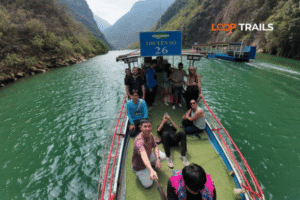


Thúy Kiều (Grace) is a travel blogger and content contributor for Loop Trails Tours Ha Giang. She holds a bachelor’s degree in Sustainable Tourism from Vietnam National University, Hanoi, and has a strong passion for exploring and promoting responsible travel experiences in Vietnam’s northern highlands.
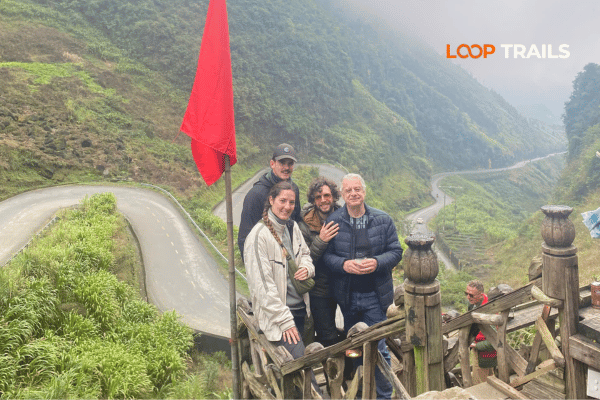
Learn more: Ha Giang Loop Tours
There’s a version of northern Vietnam that most travelers miss entirely — not because it’s hidden, but because it takes a bit more planning to connect the dots. Ninh Binh, Sapa, and Ha Giang each attract their own crowd, but few people think to string all three together into one route. Those who do almost always call it their best trip in Southeast Asia.
This guide covers everything you need to plan that route yourself: direction, timing, transport, what to do in each place, realistic costs, and how to handle Ha Giang specifically — which is a different animal entirely compared to the rest of Vietnam’s north.
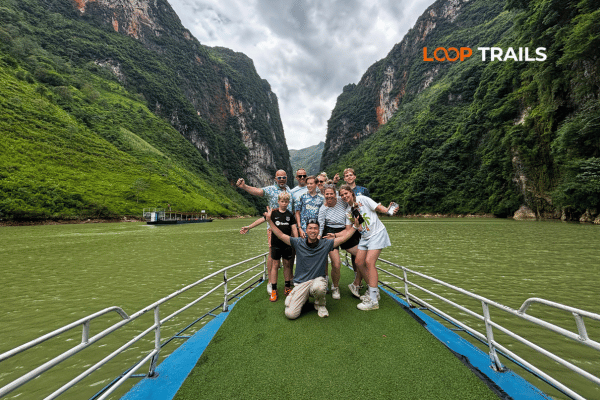
Learn more: Tu San Canyon & Nho Que River Boat Trip
These three destinations sit at opposite ends of the northern Vietnam travel spectrum — and that’s exactly why they work.
Ninh Binh gives you slow rivers, ancient temples, and dramatic karst scenery you can absorb on a bicycle or boat without breaking a sweat. It’s a gentle introduction to the north.
Sapa raises the stakes. You’re in the mountains now — trekking through rice terraces, staying in homestays with local families, and waking up to fog so thick you can’t see across the valley. It’s beautiful in a way that’s easy to access even for non-hikers.
Ha Giang is where the route gets serious. This is Vietnam’s last frontier — a rocky limestone plateau near the Chinese border with roads that wind so dramatically they feel engineered by someone who genuinely loved the land. There are no beach bars here, no tourist trains, no Instagram queues. Just you, the mountains, and a few hundred kilometers of one of the most spectacular riding routes on the planet.
Together, they cover the full range: relaxed sightseeing → mountain trekking → raw adventure. That progression is part of what makes the route so satisfying.

Learn more: Ha Giang Adventure
The honest answer: 14–18 days to do all three places properly without feeling rushed.
Here’s a rough breakdown:
| Destination | Minimum | Recommended |
|---|---|---|
| Ninh Binh | 1 day | 2 days |
| Sapa | 2 days | 3–4 days |
| Ha Giang | 3 days | 4–5 days |
| Travel days (transit) | 2–3 days | 3–4 days |
| Total | ~10 days | 14–18 days |
If you’re tight on time, you can do a compressed version in 10–12 days — but you’ll be sacrificing depth at each stop. Ha Giang especially punishes a rushed schedule; the loop itself is 300+ kilometers and deserves at least 3 full days, ideally 4.

Learn more: Ha Giang Loop 4 Days 3 Nights
There’s no single “correct” order, but here are the two most logical approaches:
Option 1: Hanoi → Ninh Binh → Sapa → Ha Giang → Hanoi This is the most popular sequence. You ease in with Ninh Binh, build up to Sapa’s trekking, then finish with Ha Giang as your climax. The return to Hanoi from Ha Giang is straightforward — buses run daily.
Option 2: Hanoi → Ha Giang → Sapa → Ninh Binh → Hanoi (or direct flight south) If Ha Giang’s weather window is the key constraint (say, you’re targeting the buckwheat flower season in October), start there first while conditions are best. Then let Sapa and Ninh Binh serve as your wind-down.
For most travelers — especially first-timers — Option 1 flows better. The escalating difficulty matches the learning curve of traveling in northern Vietnam.
Learn more: Ha Giang Loop 3 Days 2 Nights
About 90 kilometers south of Hanoi, Ninh Binh is Vietnam’s “inland Halong Bay” — a cluster of limestone karst formations rising from rice paddies and slow-moving rivers. It’s quieter than Halong, far less commercial, and genuinely beautiful in an understated way.
Trang An Scenic Landscape Complex — This is Ninh Binh’s headline act and a UNESCO World Heritage Site. You take a rowing boat through a series of limestone caves and grottoes, past ancient temples, with the karst peaks reflected in the still water around you. Allow 2–3 hours.
Tam Coc — Similar vibe to Trang An but shorter and more touristed. The boat ride through rice fields with mountains on all sides is still beautiful. Rent a bicycle afterward and ride out to the Bich Dong Pagoda carved into the rock face.
Hoa Lu Ancient Capital — Vietnam’s 10th-century capital before the court moved to Hanoi. Two well-preserved temple complexes here. Takes about an hour and pairs well with a morning in the area before heading to Trang An.
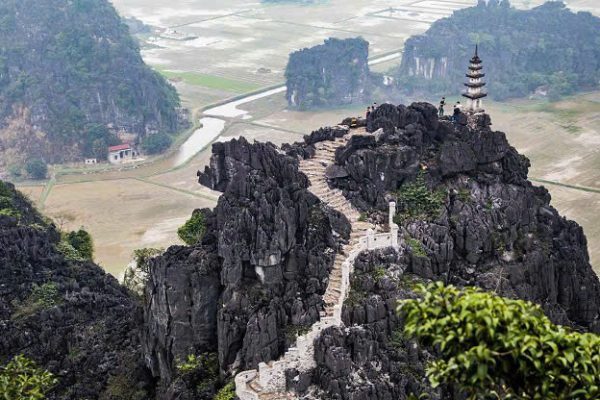
Mua Cave (Hang Mua) — The climb is steep (about 500 steps) but the view from the top is the best panorama in Ninh Binh — endless rice paddies, karst towers, river bends. Go early morning or late afternoon to avoid peak heat and crowds.
Van Long Nature Reserve — If you want something quieter and more off-the-beaten-path, Van Long delivers. It’s a wetland reserve with boat rides through pristine karst scenery. You might spot langur monkeys on the cliff faces.
One full day is enough to hit the highlights. Two days lets you go deeper — cycling the back roads, visiting smaller villages, watching the landscape change as the afternoon light hits the karst peaks. If you’re on a tight schedule, Ninh Binh works as a day trip from Hanoi, but an overnight stay is a better experience.
Where to base yourself: The town of Tam Coc (not the cave itself — the village surrounding it) has the best selection of guesthouses and is centrally located for cycling. Ninh Binh City works too but feels more urban and less atmospheric.
Learn more: Ha Giang vs Sapa 2026
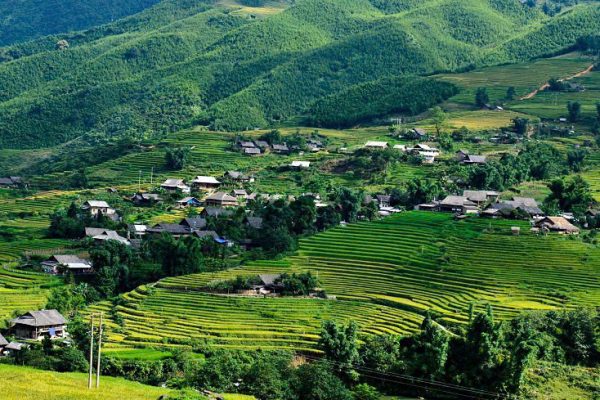
Sapa sits at around 1,500 meters elevation in the Hoang Lien Son mountains, about 350 kilometers northwest of Hanoi near the Chinese border. It’s been a tourist destination since French colonial times — the cooler climate made it a favored retreat — and today it’s one of Vietnam’s most visited mountain towns.
That comes with trade-offs. Sapa Town itself is increasingly developed, with international hotel chains and a cable car up to the Fansipan summit. But the surrounding villages and trekking routes are still where Sapa’s real soul lives.
Overnight train from Hanoi — The classic option. Trains depart Hanoi in the evening (around 9–10pm) and arrive in Lao Cai (the border town 38 kilometers below Sapa) by early morning. From Lao Cai, minibuses or taxis take you up to Sapa in about an hour. This saves on a night’s accommodation and the journey itself is comfortable with sleeper berths.
Sleeper bus from Hanoi — A cheaper but less comfortable alternative. Journey time is similar. Several operators run this route daily.
Private car or limousine van — More expensive, but door-to-door service from your Hanoi hotel. Good option for small groups.
Check current train schedules and book in advance — especially on weekends and Vietnamese holidays when trains fill up fast.
Trekking through the valleys — This is the main event. The Muong Hoa Valley is the most popular route — a 10–15km walk through rice terrace steps, past H’mong and Dao villages, with the terraces reflecting the sky when they’re flooded (usually March–May). Other routes head toward Ta Van, Giang Ta Chai, and Ban Ho. Most guesthouses and hotels can arrange guided treks or point you toward certified local guides.
Cat Cat Village — The closest village to Sapa Town, and the most touristy as a result. Still worth a morning walk — you’ll see traditional weaving, water wheels, and some cultural performances. Manage your expectations.
Fansipan Summit — At 3,147 meters, it’s the highest peak in Indochina. You can reach the summit via cable car (fast and easy, the views are extraordinary if it’s clear), or hike it in 2–3 days with a guide (serious undertaking, not for casual hikers). The cable car makes this accessible for everyone, though clouds frequently obscure the view — check the forecast.
Sa Pa Market / Bac Ha Market — If your timing aligns, the Sunday market in Bac Ha (about 60km from Sapa) is one of the most authentic hill tribe markets in the north. Flower H’mong women in their vivid traditional dress, livestock trading, local food. Worth the trip if you’re there on a weekend.
Homestay in a local village — Spending a night in a family homestay in Ta Van or Lao Chai is a highlight for many travelers. You share a meal, observe daily life, and get a completely different perspective on the area than staying in Sapa Town. Arrange this through a reputable local guide, not a random tout.
Learn more: Ma Pi Leng Pass
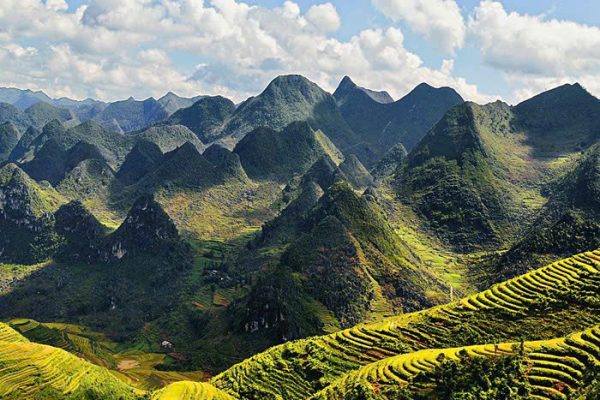
Here’s the thing about Ha Giang: photos don’t prepare you for it. You’ve probably seen the images — the switchbacks on Ma Pi Leng Pass, the green river deep in the gorge below, the stone plateau stretching out like another planet. And yet the first time you actually ride or drive through it, the scale hits differently.
Ha Giang Province is Vietnam’s northernmost province, and the Ha Giang Loop is the circuit of roads that winds through its most dramatic landscapes — through the Dong Van Karst Plateau Geopark (UNESCO-listed), past Lung Cu Flag Tower at the Chinese border, down into Meo Vac and along the Nho Que River, and back through Du Gia Waterfall country.
This is not a polished tourist attraction. Roads can be narrow. Weather can turn. Fuel stations can be sparse. That’s precisely why people love it.
Most of northern Vietnam’s “hidden gems” are no longer hidden. Ha Giang remains genuinely raw for a few reasons:
It requires effort to get there. It’s a 4–5 hour drive from Hanoi on winding roads. There’s no train, no budget airline.
The landscapes are unlike anywhere else in Vietnam — or Southeast Asia. The Dong Van Karst Plateau feels more like the Tibetan borderlands than tropical Vietnam. Dramatic, spare, and almost surreal in the right light.
The ethnic minority cultures here — H’mong, Dao, Tay, Lo Lo, Pu Peo — remain relatively intact compared to more visited areas. Markets like Dong Van Sunday Market still function for locals first and tourists second.
If you’re trying to decide whether Ha Giang is worth the extra effort from Sapa — the answer, for most travelers, is yes. These are not interchangeable mountain destinations. They feel completely different.
Ready to plan your Ha Giang section? Loop Trails runs guided Ha Giang Loop tours — Easy Rider (with a local expert driver), self-drive motorbike, and jeep — designed specifically for international travelers. [Check out the Ha Giang tour options here] to find what matches your comfort level before you read on.
1. Easy Rider (Guided Motorbike Tour) You ride on the back of a semi-automatic motorbike driven by an experienced local guide. This is the most popular option for travelers who want to experience the loop without the stress of navigating mountain roads themselves. Your guide handles the road, knows all the stops, and often speaks good English. You can focus entirely on the scenery.
Who it’s for: First-timers, those without motorbike experience, solo travelers, couples who want the story without the risk.
2. Self-Drive Motorbike You rent a motorbike (typically a Honda XR150 or similar) and do the loop at your own pace. Maximum freedom — you stop when you want, you spend extra time at the places that move you, you feel the full weight of the road.
Who it’s for: Experienced riders who are comfortable on mountain roads, people who’ve already ridden in Vietnam. Requires basic off-road/dirt road experience, not just scooter riding. Check local regulations for required licenses — rules can change, always verify with your rental provider before you go.
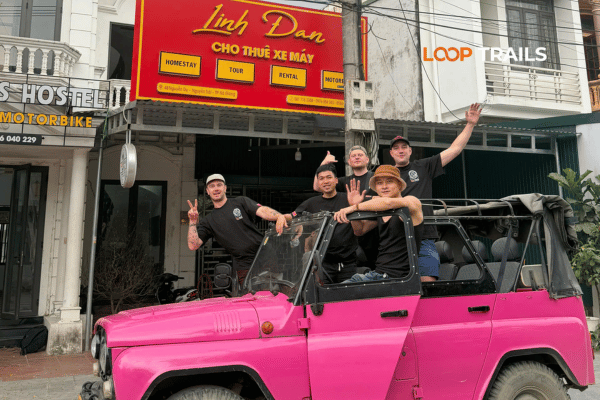
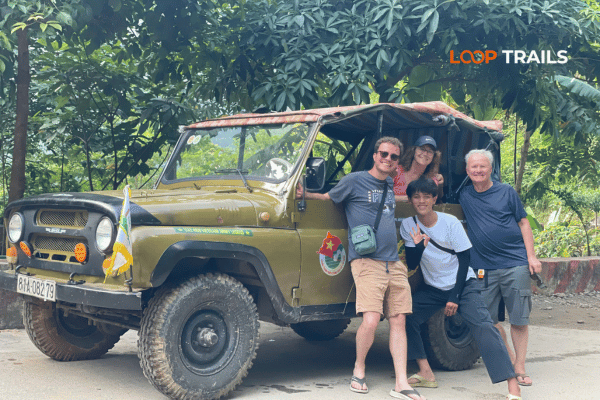
3. Jeep Tour A 4WD jeep with a driver takes you through the loop — you get the comfort of a car with the flexibility of stopping at all the major viewpoints. Great for older travelers, small groups, or anyone who wants to cover the loop but isn’t into motorbikes.
Who it’s for: Groups of 2–4, families, travelers who want views without two wheels, anyone who prefers a more comfortable ride through the mountain roads.
Learn more: Lung Cu Flag Tower Guide
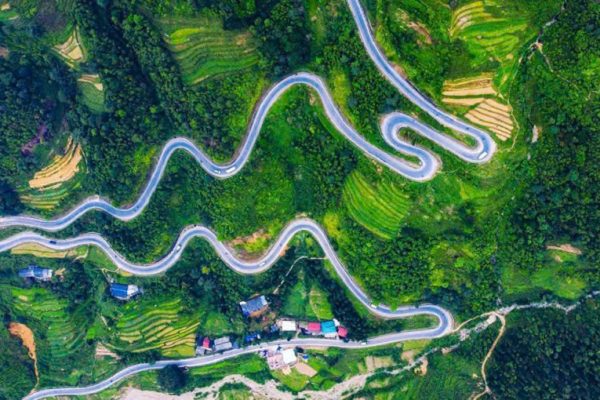
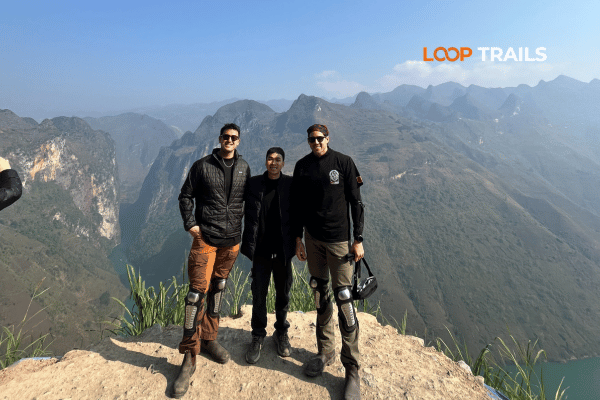
Ma Pi Leng Pass — Often listed as one of the most spectacular mountain passes in Southeast Asia. The switchbacks above the Nho Que River gorge are genuinely jaw-dropping. Build in extra time here — most people spend 30–60 minutes just taking it in from the viewpoint.
Dong Van Old Quarter — The old town feels untouched by Vietnam’s coastal tourist development. French colonial-era buildings mixed with traditional H’mong architecture, surrounded by karst peaks. The Sunday market here draws vendors from across the plateau.
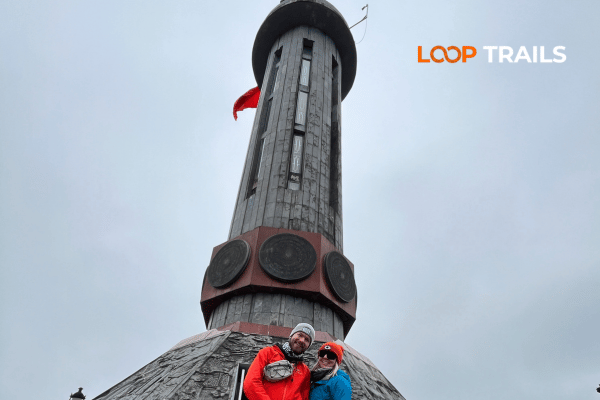
Lung Cu Flag Tower — Vietnam’s northernmost point. The hike up to the tower offers a 360-degree view over the border landscape. Standing at the edge of the country has its own kind of quiet weight.
Meo Vac — A small town in a deep valley surrounded by mountains. The Saturday market is one of the most authentic in the north. The drive down from Ma Pi Leng into Meo Vac, with the valley opening up below you, is one of the best descents on the route.
Du Gia Waterfall and Valley — On the return leg of the loop, the Du Gia area offers a completely different landscape — lush, green, tropical-feeling. The waterfall itself is beautiful for a swim if you’re there in the right season.
Nho Que River — The river’s color — an impossible turquoise-green — comes from the mineral content of the water coming off the plateau. Boat rides on the river are available and give you a completely different angle on the canyon walls above.
Pho Cao — A small village on the plateau with some of the best panoramic views of the rocky karst landscape. Often skipped by shorter itineraries.
Learn more: Ha Giang Loop route and itinerary
Ninh Binh → Sapa This is the trickiest leg — there’s no direct service. Most travelers return to Hanoi first, then take the overnight train or bus to Lao Cai/Sapa. Total journey: allow a full travel day.
Sapa → Ha Giang Again, no direct connection. The standard route: Sapa → Lao Cai by local bus or taxi, then Lao Cai → Hanoi by train, then Hanoi → Ha Giang by sleeper bus (departs Hanoi around 6–7pm, arrives Ha Giang City ~11pm–midnight). Some travelers do Lao Cai → Ha Giang directly by private car — it’s a scenic mountain road of about 5–6 hours, but check road conditions and availability before committing.
Ha Giang → Hanoi (return) Daily sleeper buses and limousine vans connect Ha Giang City to Hanoi. Journey is typically 5–6 hours. Depart in the evening to arrive in Hanoi early morning.
Ha Giang → Onward destinations (south) If you’re flying south from Hanoi (to Da Nang, Hoi An, Ho Chi Minh City), factor in a transfer day in Hanoi between Ha Giang and your flight.
Learn more: Ha Giang Jeep Tours 2026
You’ve now got the full picture. Here’s a quick breakdown to help you decide:
You want minimal planning, maximum experience → Easy Rider Tour in Ha Giang A guided tour (Easy Rider format) handles logistics, navigation, guesthouse stops, and local context. Combine this with 2 nights in Ninh Binh and 3 nights in Sapa for a structured 14-day northern Vietnam route.
You want freedom but not a full self-guided adventure → Jeep Tour in Ha Giang The jeep option hits all the major Ha Giang highlights with a driver but gives you a comfortable, group-friendly format. Pairs well with the rest of this route.
You’re an experienced rider and this is your kind of trip → Self-Drive Ha Giang This is the full immersion version. Rent a suitable bike, plan your 4-day loop, and go. Pair this with homestays instead of guesthouses for the complete experience.
[Explore Loop Trails’ Ha Giang tour options] — we run small-group tours (Easy Rider, jeep, and can assist with self-drive rental) designed for international travelers who want to do Ha Giang right.
Learn more: Ha Giang in September & October
| Destination | Best Season | What You Get | Avoid |
|---|---|---|---|
| Ninh Binh | Oct–April | Dry, clear skies, green paddies | Jul–Aug (heavy rain, flooding risk) |
| Sapa | Sep–Nov, Mar–May | Terraces golden/green, clearer skies | Dec–Feb (very cold, heavy fog) |
| Ha Giang | Sep–Nov (buckwheat flowers), Mar–May (green) | Peak photography season | Jun–Aug (heavy rains, landslide risk on mountain roads) |
This window gives you the best chance of good weather across all three destinations. Ha Giang’s buckwheat flowers bloom October–November (a signature landscape feature you’ll see everywhere in photos). Sapa’s rice terraces turn gold in September-October for harvest season. Ninh Binh is reliably good in this window.
Spring (March–May) is a strong second choice: Ha Giang turns vivid green, Sapa terraces are flooded and mirror-like, and Ninh Binh is beautiful before the humid summer arrives.
A note on weather in northern Vietnam: Mountain weather is unpredictable year-round. Fog, rain, and sudden temperature drops can happen outside the “bad” seasons too. Pack accordingly and build flexibility into your schedule, especially for Ha Giang.

Learn more: Ha Giang Food guide
This varies significantly depending on your travel style, but here’s a realistic daily budget range for this route:
Budget traveler (hostel dorm, local food, public transport, Easy Rider or group tour)
| Category | Estimated Daily Cost (USD) |
|---|---|
| Accommodation | $8–15 |
| Food | $8–12 |
| Transport (local) | $5–10/day average |
| Activities | $5–15 |
| Ha Giang Loop tour (guided, per day) | $40–65/day |
| Rough daily average (exc. tour) | $25–45 |
Expect $60–100/day outside of tour costs. Ha Giang jeep tours typically cost more than Easy Rider — check with providers for current pricing as rates vary by group size and itinerary length.
The bottom line: Budget $1,200–1,800 USD total for a well-paced 14-18 day version of this route, inclusive of tours, transport, accommodation, food, and activities. This isn’t a Cambodia-cheap route — but it delivers exceptional value for what you experience.
All prices here are estimates. Check current rates with providers — transport and tour costs shift seasonally.

Learn more: Ha Giang Packing List
You’re covering different climates: humid river lowlands (Ninh Binh), cool mountain air (Sapa), and a high limestone plateau with significant temperature swings (Ha Giang). Pack smart.
Clothing:
Gear:
Documents (check requirements before you go):
Learn more: Ha Giang Loop for Families & Groups
Rushing Ha Giang. Three days is the minimum; four is better. People who do Ha Giang in two days consistently say they wish they had more time.
Going to Sapa in peak weekend season without booking. Sapa gets genuinely crowded on weekends and Vietnamese holidays. Book accommodation in advance, especially for the Fansipan cable car.
Skipping the return-to-Hanoi buffer day. Nearly every itinerary on this route needs a day in Hanoi between stops — both for logistics and for the mental reset of moving between very different destinations.
Treating Ha Giang like a self-drive without adequate riding experience. The Ha Giang Loop is not a beginner’s motorbike route. Mountain switchbacks, gravel patches, and limited roadside assistance mean you need genuine riding confidence. If you’re unsure, Easy Rider or jeep is genuinely the better choice — not just the safer one.
Booking accommodation in Ninh Binh City instead of Tam Coc village. The city is fine but the village puts you closer to everything worth doing and is far more atmospheric.
Missing Dong Van Sunday Market. If your Ha Giang timing at all allows it, structure your loop so you’re in Dong Van on a Sunday. This market is one of the most culturally intact experiences in northern Vietnam.
Not carrying enough cash on the loop. Card machines are unreliable or nonexistent at many stops along the Ha Giang route. Stock up in Ha Giang City.
Ready to lock in the Ha Giang section of your trip? Loop Trails runs guided Ha Giang tours (Easy Rider, jeep format, and self-drive support) for international travelers. Small groups, experienced local guides, and itineraries built around making the most of every day on the loop. [Get in touch via WhatsApp] or [browse the tour options] — we’re happy to help you figure out which format fits your trip.
Learn more: Loop Trails Tour Ha Giang website
14–18 days is the sweet spot for doing all three comfortably. A compressed version covering the highlights is possible in 10–12 days, but you’ll feel the rush — especially in Ha Giang.
Yes, but with conditions. Solo travelers on Easy Rider tours or jeep tours have a guide and support structure the whole time. Solo self-drivers should have strong riding experience and ideally travel with at least one other person. Solo hiking in Sapa is not recommended — hire a local guide.
License requirements for foreigners riding motorbikes in Vietnam have been a gray area for years — and regulations can change. The safest approach: carry an International Driving Permit alongside your home country license, and check current local requirements with your rental provider before heading out. Don’t rely on outdated forum posts for this.
They’re not really comparable — they offer completely different experiences. Sapa is accessible, beautiful, and good for trekking through rice terraces. Ha Giang is rawer, more remote, more dramatic, and centered around a long riding/driving route rather than hiking. If you only have time for one, the answer depends entirely on what kind of traveler you are.
You can reach Ha Giang City by bus and do day trips from there, but you’ll miss the core experience of the loop itself. The geopark is spread across 300+ kilometers of mountain road — a jeep tour or motorbike (guided or self-drive) is really the only way to experience it properly.
Typically October to mid-November, though the bloom varies year to year depending on rainfall. Check locally as you approach the season — local guesthouses and tour operators will know current conditions.
Yes. The landscapes look superficially similar (karst limestone) but the experience is completely different. Ninh Binh is inland, quieter, accessible by bicycle, and feels far less commercial than Halong. Many travelers actually prefer it.
Most travelers return to Hanoi first (by train from Lao Cai), then take a sleeper bus from Hanoi to Ha Giang in the evening. Some travelers do a direct private transfer from Lao Cai to Ha Giang via mountain roads — check current road conditions and availability.
Yes — starting with Ha Giang and finishing with Ninh Binh works well, especially if you’re chasing a specific weather window in Ha Giang. The experience of each destination doesn’t change based on order; it’s mainly a logistics question.
Absolutely. A jeep tour is specifically designed for this — you get the full loop experience (all major viewpoints, stops, local guesthouses) without being on a motorbike. Loop Trails offers jeep format tours for exactly this reason.
There are ATMs in Ha Giang City. On the loop itself (Dong Van, Meo Vac), there are some ATMs but availability and reliability are not guaranteed. Withdraw enough cash before you leave Ha Giang City.
Easy Rider: you ride pillion behind an experienced local guide who drives, navigates, translates, and shows you spots you’d never find alone. Self-drive: you’re on your own bike, your own pace, your own navigation. One is guided exploration; the other is independent adventure. Both are legitimate ways to do the loop — the right choice depends on your experience and what you’re looking for.
Contact information for Loop Trails
Website: Loop Trails Official Website
Email: looptrailshostel@gmail.com
Hotline & WhatSapp:
+84862379288
+84938988593
Social Media:
Facebook: Loop Trails Tours Ha Giang
Instagram: Loop Trails Tours Ha Giang
TikTok: Loop Trails
Office Address: 48 Nguyen Du, Ha Giang 1, Tuyen Quang
Address: 48 Nguyen Du, Ha Giang 1, Tuyen Quang

Facebook X Reddit Table of Contents They’re both in the north. They both involve dramatic limestone formations. And if you search “best

Facebook X Reddit Learn more: Ha Giang Loop Tours Table of Contents There’s a conversation that happens in every hostel common room