
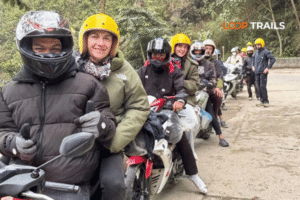
Ha Giang Easy Rider: The Complete Guide (2026)
Facebook X Reddit Table of Contents Learn more: Ha Giang Loop Tours There’s a moment, usually somewhere on Ma Pi Leng Pass,

Thúy Kiều is a travel blogger and content contributor for Loop Trails Tours Ha Giang. She holds a bachelor’s degree in Sustainable Tourism from Vietnam National University, Hanoi, and has a strong passion for exploring and promoting responsible travel experiences in Vietnam’s northern highlands.
You’ve booked your Ha Giang Loop tour. You’re excited about Ma Pi Leng Pass and rice terraces and ethnic minority villages. Then you look at the transport options and see “night sleeper bus” as the standard choice, departing at 10 PM and arriving at 4 AM.
Maybe you’re fine with that. Or maybe you’re thinking: is there a better way?
Private car transfers from Hanoi to Ha Giang exist, and they’re more accessible than many travelers realize. You won’t find them prominently advertised because sleeper buses are the default for budget tours, but private transfers offer legitimate advantages—especially if you’re traveling with others, value comfort, or want flexibility in your schedule.
This guide covers everything about private car options: what’s available, what it costs, how to book, and whether the premium over a $15 bus ticket is worth it for your situation.
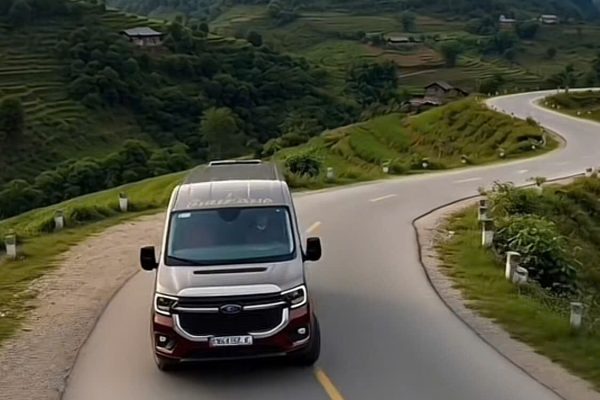
Learn more:Best Ha Giang Loop Tours
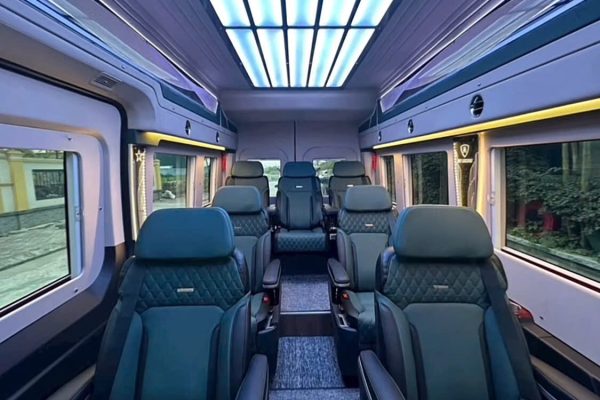
Learn more: Ha Giang for non-rider
Let’s start with the honest question: sleeper buses work. Thousands of travelers take them weekly without issues. They’re cheap, they run on schedule, and they get you to Ha Giang. So why pay more for a private car?
Sleeper buses have narrow berths designed for average Vietnamese body sizes. If you’re over 175cm (5’9″), you’ll likely have your feet pressed against the end wall. The beds are stacked two levels high with minimal headroom. Air conditioning is often too cold. Other passengers snore, use phones, or talk.
Getting actual sleep is hit-or-miss. Some travelers sleep fine; others arrive in Ha Giang exhausted and waste half their first day recovering.
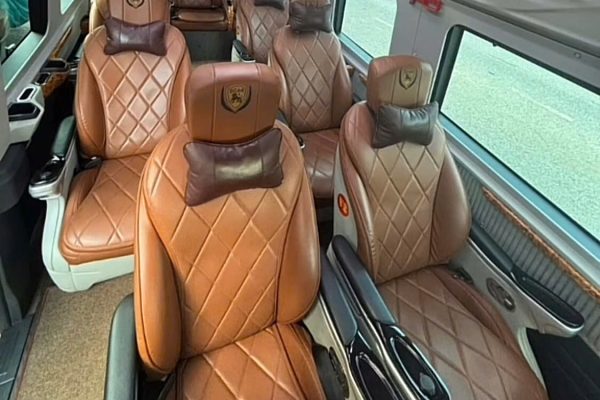
A private car lets you recline in proper seats, control the climate, and stop if you need a break. You won’t arrive refreshed like after a hotel night, but you’ll be more functional than after a difficult bus journey.
Sleeper buses depart Hanoi between 9-11 PM. That’s it. Your day revolves around that schedule.
Private cars can leave whenever you want. Morning departure means you arrive in Ha Giang during daylight, can check into your accommodation properly, and have an afternoon to explore the city. Evening departure means you don’t waste a day in Hanoi waiting for night bus time.
If you’re on a tight itinerary coordinating Halong Bay, Ninh Binh, or other destinations, this flexibility matters.
Sleeper buses collect passengers from multiple pickup points across Hanoi. You’ll likely meet at a central office, then shuttle to the bus station. Arrival in Ha Giang is at the bus station, from which you’ll need a taxi or xe om to your accommodation (often arriving at 4-5 AM when nothing is open).
Private cars pick you up at your Hanoi hotel and drop you at your Ha Giang accommodation. No shuttles, no waiting, no navigating unfamiliar bus stations at dawn.
For solo travelers, private cars are expensive. For couples or small groups, the math changes dramatically.
A sleeper bus costs 250,000-350,000 VND per person (roughly $10-14). For two people, that’s 500,000-700,000 VND. For four people, 1,000,000-1,400,000 VND.
Private cars range from 2,500,000-4,500,000 VND total depending on vehicle type. Split four ways, you’re paying about the same as the bus but getting significantly better service.
Vietnamese sleeper buses have safety records comparable to other transport modes, but nighttime driving on Highway 2 involves mountain sections, occasional poor road conditions, and varying driver quality.
Some travelers simply feel safer in a private vehicle with a dedicated driver, daylight driving options, and the ability to communicate directly about concerns.
If you’re traveling with young children, elderly family members, or have mobility concerns, private cars are dramatically easier. No climbing into upper berths, no shared bathrooms, no navigating cramped spaces with luggage.
Couples on honeymoons or celebrating special trips often prefer the privacy and comfort premium.
Don’t let me oversell this. Sleeper buses are perfectly valid for:
The choice isn’t about right or wrong—it’s about what suits your priorities and budget.
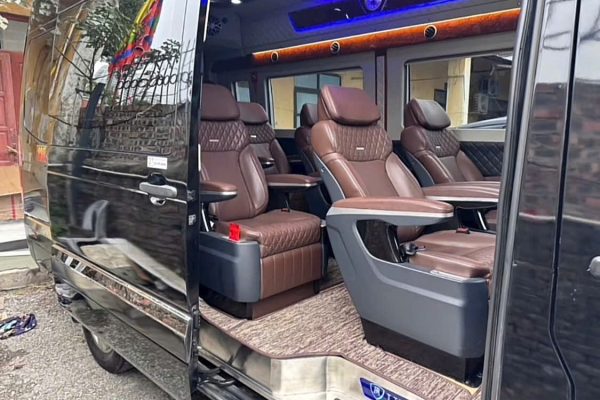
Learn more: Ha Giang Sleeper Bus
Private car services to Ha Giang come in several formats. Understanding the differences helps you choose the right option.
4-Seat Sedan (Toyota Vios, Honda City, similar)
7-Seat SUV (Toyota Fortuner, Ford Everest, similar)
16-Seat Minivan (Ford Transit, similar)
Exclusive Private Car You rent the entire vehicle. The driver takes only your group. You control the schedule, stops, and route within reason.
Shared Private Car Less common but exists—the service matches you with other travelers heading to Ha Giang on the same day. You share costs but sacrifice some flexibility. This is different from a bus; it’s still a smaller vehicle with defined co-passengers.
Transfer + Tour Package Some Ha Giang Loop operators include private car transfers as part of premium tour packages. You pay one price for transport plus the loop tour.
Full Door-to-Door Driver picks you up at your Hanoi accommodation (hotel, hostel, Airbnb) and drops you at your Ha Giang accommodation. This is the premium option most people want.
Central Hanoi Pickup You meet the driver at a central location (like Hoan Kiem area) rather than your specific hotel. Slightly cheaper, still convenient if you’re staying centrally.
Airport Pickup Option Some services pick you up directly at Noi Bai Airport if you’re arriving in Vietnam and heading straight to Ha Giang. This eliminates Hanoi entirely but requires careful timing coordination.
Ha Giang Drop-off Locations Standard is Loop Trails Hostel or your booked accommodation. Some services also offer drop-off at specific starting points if you’re renting a motorbike independently.
Most private car drivers speak limited English—enough for basic communication about stops, timing, and destinations, but not conversational. Don’t expect tour guide services.
If English communication is critical, specify this when booking. Some premium services employ drivers with better English or can arrange guides who accompany the transfer.
Some providers offer extras:
Always clarify what’s included vs what costs extra.

Learn more: Ha Giang Loop Cost & Tips
Let’s talk numbers. Prices vary by season, vehicle type, and booking method, but here are realistic ranges as of 2025.
Standard Sleeper Bus: 250,000-300,000 VND per person ($10-12 USD) VIP Sleeper Bus: 300,000-350,000 VND per person ($12-14 USD) Cabin Sleeper Bus: 350,000-400,000 VND per person ($14-16 USD)
These typically include pickup from central Hanoi points. Some charge extra for hotel pickup.
4-Seat Sedan (2-3 passengers):
7-Seat SUV (4-5 passengers):
16-Seat Minivan (8-12 passengers):
These prices include:
Not included:
Here’s where group size changes everything:
Solo Traveler:
Two Travelers:
Four Travelers:
Eight Travelers:
The per-person premium decreases dramatically with group size. For eight people, you’re paying only $18 more per person than the bus for significantly better service.
Sleeper Bus Hidden Costs:
Private Car Hidden Costs:
The sweet spot for private car value is 3-5 travelers in an SUV. You’re paying moderately more than bus costs but getting exponentially better comfort and convenience.
For couples, it’s a comfort premium—worth it if your budget allows but not essential.
For solo travelers, it’s a luxury unless you have specific needs (tight schedule, comfort requirements, safety concerns).

Learn more: Ha Giang Loop Jeep Tour
The Hanoi to Ha Giang distance is approximately 290-310km depending on your exact starting and ending points. But distance doesn’t tell the full story.
Direct driving without stops: 5.5-6.5 hours
This assumes:
Realistic journey with stops: 6.5-7.5 hours
Most drivers will stop once or twice for bathroom breaks, fuel, and to rest. You’ll probably want food stops. This extends the journey to 6.5-7.5 hours realistically.
Fast Route (Highway 3 + Highway 2): The most direct path. Hanoi → Tuyen Quang → Ha Giang. This is what most transfers use. Good road quality for about 70% of the journey, mountain sections for the final 30%.
Scenic Route (via Tam Dao): Adds 30-60 minutes but passes through more dramatic mountain scenery earlier in the journey. Some travelers prefer this for the views. Requires agreeing with driver in advance.
Morning Departure (6-8 AM):
Late Morning (9-11 AM):
Afternoon (12-2 PM):
Evening (6-8 PM):
Hanoi Traffic: Rush hours (7-9 AM, 5-7 PM) can add 30-60 minutes just getting out of the city.
Construction: Highway 2 periodically has maintenance work. Delays are usually minor (10-20 minutes) but occasionally longer.
Weather: Heavy rain in mountain sections slows driving. Fog in winter months can reduce visibility and speed. Add 30-60 minutes in bad weather.
Stops: Each stop (bathroom, food, photos) adds 15-30 minutes. Plan for 2-3 stops minimum.
Driver Rest: Professional drivers sometimes take brief rest stops for safety. This is good—don’t discourage it.
Sleeper buses technically take similar time (6-7 hours) but depart at 9-11 PM and arrive 4-6 AM. The perception is different because you’re supposed to be sleeping.
Private cars feel shorter because you’re awake, seeing scenery, and the time passes differently than lying in a cramped berth trying to sleep.

Learn more: Ha Giang Loop 4 Days 3 Nights
Let me walk you through what the actual experience is like so you know what you’re signing up for.
Your driver (or a contact number) should message you the evening before confirming pickup time and location. Expect pickup within a 15-minute window of agreed time—Vietnamese drivers are generally punctual.
The driver will likely call when arriving at your hotel. Most drivers speak enough English for basic communication: “Hello, car to Ha Giang, ready?”
Load your luggage. Drivers usually help with bags. Confirm your destination in Ha Giang to ensure clarity.
The first 30-60 minutes is urban driving—leaving Hanoi proper, navigating onto Highway 3. Traffic varies by time of day. This section isn’t scenic; you’re seeing Hanoi suburbs and industrial areas.
Use this time to:
Once on Highway 3 heading north, the driving becomes more relaxed. The highway is decent quality—paved, marked lanes, moderate traffic. This isn’t a pristine expressway, but it’s functional.
Scenery shifts from urban to rural. You’ll see:
This middle section (roughly hours 2-4) is where many travelers nap, read, or zone out. It’s pleasant but not dramatically scenic yet.
The final 1.5-2 hours becomes more interesting. You’ll notice:
The driving becomes more active—drivers need to navigate turns, occasional slow trucks, and steeper grades. If you’re prone to car sickness, this section can be challenging.
Most drivers will stop once around the halfway point (Tuyen Quang area) for bathroom/fuel. This is typically a roadside stop with basic facilities—squat toilets, small shops, maybe simple food.
You might stop again closer to Ha Giang. Some drivers ask if you want additional stops for photos; others just drive unless you request stops.
Don’t expect conversation throughout the journey. Most drivers focus on driving (which is good) and speak limited English. Basic exchanges work fine:
Some drivers are chattier and try to share information about areas you’re passing. This varies individually.
Climate Control: Most vehicles have air conditioning. Some drivers run it cold; don’t hesitate to ask for adjustment.
Music: Drivers often play Vietnamese radio or music. Politely asking to lower volume or change stations usually works. Bringing headphones is smart.
Charging: Many vehicles have USB charging ports. Bring appropriate cables. Don’t count on it; bring a power bank as backup.
Luggage Access: Your luggage is typically in the trunk/cargo area. Bring valuables and anything you need during the journey in a day bag with you.
Ha Giang city appears gradually—you’ll see the valley, the city below, and descend into town. The driver will navigate to your accommodation using GPS or directions you provide.
If you’re dropped at a hostel (like Loop Trails), the driver will ensure you’ve arrived at the right place before departing. If you booked a Ha Giang Loop tour, the hostel staff usually expects you and helps with check-in.
The journey isn’t a scenic highlight of your Vietnam trip, but it’s not boring either. It’s a functional transfer that happens to pass through some nice countryside. You’ll be comfortable, you’ll arrive at a reasonable hour, and you won’t feel destroyed like you might after a difficult bus night.
Think of it as a long taxi ride rather than an experience in itself. The value is in avoiding the bus, not in the journey being thrilling.
Learn more: Ha Giang Loop by Car
Ready to book? Here’s how to navigate the process effectively.
Determine:
Option A: Book Through Your Ha Giang Tour Operator
If you’re already booking a Ha Giang Loop tour, ask if they offer private transfer services. Many operators have partnerships with transport companies or can arrange this as an add-on. Benefits: one-stop booking, they know your accommodation details, coordinated arrival time.
Option B: Use Vietnam Travel Booking Platforms
Websites like Klook, Viator, or local Vietnamese platforms list private car services. Benefits: reviews from other travelers, secure payment, English customer service.
Option C: Book Directly With Transport Companies
Ha Giang and Hanoi-based transport companies offer direct booking via WhatsApp, email, or Facebook. Benefits: potentially lower prices (no platform commission), direct communication with provider.
Option D: Book Through Your Hanoi Hotel
Many Hanoi hotels can arrange private cars to Ha Giang. They’ll add a commission but handle all coordination. Benefits: convenience, hotel vouches for service quality.
Get quotes from 2-3 providers. Compare:
Before finalizing booking, verify:
Most services require:
Keep receipts/confirmation messages. Reputable providers issue booking confirmations via email or messaging apps.
1-2 days before travel:
Avoid services that:

If you’re paying for a private car, you might as well take advantage of the flexibility to stop at interesting points. Here are worthwhile stops that don’t add excessive time.
A mountain town with French colonial history and cool climate. Not directly on the fast route to Ha Giang, but if you’re traveling in summer heat, the elevation and forest scenery offer a pleasant break. Only worth it if you have extra time or are specifically interested.
The most practical stop—it’s roughly halfway. Options include:
Most drivers stop here anyway for fuel. Worth extending the stop by 30-45 minutes for a proper meal.
A reservoir area with beautiful lake views. If your journey is during scenic daylight hours and you want photos, this is a pretty stop. There’s a viewpoint and some local snacks available.
As you enter the mountainous section approaching Ha Giang, there are several informal viewpoints where locals stop for photos. Ask your driver to point out good spots. These add only 5-10 minutes each and offer your first taste of the karst landscape you’ll see extensively on the loop.
For most travelers, I recommend:
This keeps the journey feeling reasonable (7-7.5 hours total) while breaking up the drive.
The Hanoi-Ha Giang route doesn’t pass major tourist sites like Ninh Binh (Tam Coc), Sapa, or Halong Bay. Those require significant detours. If you want to visit them, plan separate trips rather than trying to combine with your Ha Giang transfer.

Learn more: Ha Giang Loop Map 2026
Some operators offer bundled packages combining private transfer with the loop tour. Here’s how these work and whether they’re worth considering.
Included:
Typical Pricing (4-person group example):
Some operators offer slight package discounts, so the combined price might be 5,200,000-5,300,000 VND per person.
Logistical Simplicity: One booking, one payment, one point of contact. The tour operator coordinates everything.
Arrival Coordination: Your tour operator knows exactly when you’re arriving and can prepare accordingly. No miscommunication about start times.
Potential Cost Savings: Package discounts of 5-10% are common when booking transport + tour together.
Round-Trip Discount: If you want private car both ways, packages often offer better pricing than booking separately.
Flexibility Insurance: If weather or other issues affect your loop timing, operators can more easily adjust your return transport when it’s part of a package.
Less Flexibility: If you want to explore Ha Giang city for a day before starting the loop, packages assume immediate start.
Committed Early: You’re locked into one operator for both transport and tour. Harder to compare or change.
Return Transport: Packages typically include sleeper bus return. If you want private car back, it’s an additional upgrade cost.
Choose a package if:
Book transport and tour separately if:

Learn more: Sapa vs Ha Giang
Let me address the practical questions that come up repeatedly.
Vietnamese private car services are generally safe. Drivers are licensed, vehicles are maintained to pass inspections, and operators have business reputations to protect.
The safety level is comparable to taxis or ride-hailing services in Vietnam. Accidents are rare. The bigger risk is miscommunication or booking with unlicensed operators.
Choose established services with reviews and you’ll be fine.
Yes, within reason. Most drivers will accommodate photo stops, bathroom breaks, and meal stops. Communicate clearly about what you want.
Expect brief stops (5-15 minutes) to be no problem. Longer detours (45+ minutes to a specific attraction) might incur additional fees, as the driver’s schedule extends. Discuss this upfront.
This is why providing flight details to your driver/service is important. Most services monitor flight arrivals if you’re doing airport pickup.
For hotel pickups, call your driver or service provider if delayed. Most will accommodate 1-2 hour delays without penalty. Longer delays might incur waiting fees or require rescheduling.
Sometimes, especially in low season. But vehicle availability decreases with late booking, and prices may be higher.
If you know your dates, book at least 3-5 days ahead for best selection and prices.
Tipping isn’t mandatory in Vietnam but is appreciated for good service. 200,000-500,000 VND ($8-20 USD) is reasonable for a full-day journey depending on service quality and your budget.
Factors that merit tips: safe driving, flexibility with stops, helping with luggage, good communication, friendly demeanor.
The mountain section has curves that can trigger motion sickness. If you’re prone to this:
Most people handle the journey fine, but if you know you’re sensitive, prepare accordingly.
Standard luggage allowances:
If you have unusual luggage (bikes, oversized equipment), inform the service when booking. They can confirm if it fits or arrange a larger vehicle.
Some travelers do Ha Giang day trips (just visit the city, not the full loop). A private car can do Hanoi → Ha Giang → Hanoi in one long day (12-14 hours total).
This is exhausting and expensive (you’re paying for the entire day), but it’s possible. Expect to pay 1.5-2x the one-way rate.
Most people shouldn’t do this—Ha Giang city alone doesn’t justify the journey. The loop is the main attraction.

Learn more: Cao Bang Loop Tours Vietnam best kept secret
Let’s bring this full circle to help you decide.
Groups of 3-5 People: The per-person premium becomes minimal ($25-40 per person) while comfort increases dramatically. This is the sweet spot.
Families with Children: Door-to-door convenience, daytime travel, ability to stop as needed, no shared berths with strangers.
Luxury/Comfort Travelers: If you’re staying in nice hotels and booking premium experiences elsewhere, the bus is incongruous with your travel style.
Travelers with Tight Schedules: Flexibility in departure time can save you half a day that buses don’t allow.
People Who Can’t Sleep on Buses: If you know you’ll arrive exhausted and lose your first day recovering, the private car cost offsets lost time value.
Elderly or Mobility-Challenged Travelers: Door-to-door, no stairs to climb, ability to stop and stretch frequently.
Solo Budget Travelers: The premium is $100+ for a solo traveler. Unless you have specific needs, that money is better spent elsewhere.
Backpackers Who Sleep Anywhere: If you routinely sleep on buses, trains, and airport floors without issue, save your money.
Travelers Who Like the Bus Experience: Some people genuinely enjoy night buses as part of the adventure.
Those Arriving in Hanoi Evening: If you land in Hanoi at 8 PM, taking the 10 PM bus makes sense. You’d waste time in Hanoi anyway.
Maximum Budget Optimization: Every dollar matters, and you’re fine with slight discomfort for savings.
VIP/Cabin Sleeper Bus: For 100,000 VND more per person than standard bus, you get more space, better bedding, sometimes small cabins. Still not a private car, but notably more comfortable than basic buses.
Shared Private Car: If you can find other travelers to split a private car with (some hostels facilitate this), you get private car benefits at near-bus prices.
Private Car One Direction: Do sleeper bus to Ha Giang (arrive exhausted but whatever), then private car back to Hanoi (when you want comfort after the loop). This splits the cost.
For couples and groups of 3-5, strongly consider the private car if your budget comfortably allows it. The comfort and convenience are worth the $40-50 per person premium.
For solo travelers, stick with the bus unless you have specific reasons (schedule conflicts, can’t sleep on buses, safety concerns, willing to pay for comfort).
For families, the private car is almost always worth it for the convenience and kid-friendly aspects.
The Ha Giang Loop itself is an adventure. Your transport to get there doesn’t need to be an ordeal. Choose the option that gets you there ready to enjoy the experience ahead.
If you’re booking a Ha Giang Loop tour, ask your operator about private transfer options—many can arrange this as part of your package with minimal extra effort on your part.

Learn more: Ha Giang Motorbike Rental
Private cars range from 2,500,000-4,500,000 VND ($100-180 USD) one way depending on vehicle size. Sedans (2-3 passengers) are cheapest, SUVs (4-5 passengers) are mid-range, minivans (8-12 passengers) are highest but most economical per person for large groups.
Direct driving takes 5.5-6.5 hours. With realistic stops for bathroom and meals, expect 6.5-7.5 hours total. The distance is approximately 290-310km, with the final section through mountain roads taking longer than highway kilometers.
Sometimes, especially in low season, but availability decreases and prices may be higher. For best vehicle selection and pricing, book 3-5 days in advance. During peak season (September-November), book 5-7 days ahead.
Both options are generally safe. Private cars offer daytime driving options and one-on-one driver attention, which some travelers prefer. Sleeper buses have good safety records but involve nighttime driving. Neither is dramatically safer than the other when using reputable services.
Yes, most drivers will accommodate reasonable photo stops, especially in the scenic mountain section approaching Ha Giang. Brief stops (5-15 minutes) are typically no problem. Longer detours might incur additional fees, so communicate your wishes upfront.
2-3 people: Sedan works but can be snug. 3-4 people: SUV recommended. 5-7 people: Large SUV or small minivan. 8+ people: Full minivan. Consider luggage volume—if you have lots of bags, size up.
Physically possible (12-14 hours round trip) but exhausting and expensive. Not recommended unless you’re only visiting Ha Giang city itself. The Ha Giang Loop is the main attraction and requires 2-4 days. Most travelers do one-way transfer, loop tour, then return transfer/bus.
Typically included: driver, fuel, tolls, basic insurance, door-to-door service. Not included: driver’s meals (though some services include this), your meals, tips, accommodation if overnight required, entrance fees to any attractions you visit en route.
Most private car drivers speak limited English—enough for basic communication about timing and destinations. Don’t expect tour guide services. If English communication is critical, specify this when booking; some premium services offer better English-speaking drivers.
Payment methods vary. Many services require deposits via bank transfer and final payment in Vietnamese dong cash to the driver. Some companies accept credit cards or payment platforms for full prepayment. Confirm payment methods when booking. Bring sufficient VND cash as backup.
Contact information for Loop Trails
Website: Loop Trails Official Website
Email: looptrailshostel@gmail.com
Hotline & WhatSapp:
+84862379288
+84938988593
Social Media:
Facebook: Loop Trails Tours Ha Giang
Instagram: Loop Trails Tours Ha Giang
TikTok: Loop Trails
Office Address: 48 Nguyen Du, Ha Giang 1, Tuyen Quang
Address: 48 Nguyen Du, Ha Giang 1, Tuyen Quang
Facebook X Reddit Table of Contents Learn more: Ha Giang Loop Tours There’s a moment, usually somewhere on Ma Pi Leng Pass,

Facebook X Reddit Table of Contents Learn more: Ha Giang Loop Tours There’s a version of the Ha Giang Loop that people

Facebook X Reddit Table of Contents Learn more: Ha Giang Loop Tours There’s a moment on the Ma Pi Leng Pass —