
Ha Giang Airport: Is There One? How to Get There
Facebook X Reddit Table of Contents If you’ve been researching a trip to Ha Giang and typed “Ha Giang airport” into a

Thúy Kiều (Grace) is a travel blogger and content contributor for Loop Trails Tours Ha Giang. She holds a bachelor’s degree in Sustainable Tourism from Vietnam National University, Hanoi, and has a strong passion for exploring and promoting responsible travel experiences in Vietnam’s northern highlands.
Learn more: Lo Lo Chai Village
Ha Giang attracts a specific kind of traveller — someone who wants the real thing. Not a resort experience, not a curated cultural show. The actual landscape, the actual communities, the kind of trip that produces memories rather than content.
That instinct is good. But it comes with a responsibility that a lot of travellers don’t think through until they’re already on the road.
Ha Giang province is home to 19 ethnic minority groups, some of the most intact traditional communities in Vietnam, and a landscape that’s simultaneously a UNESCO Global Geopark and a fragile mountain ecosystem. The tourism here is still relatively new and growing fast. The decisions visitors make — where they spend money, how they photograph people, how they behave in villages — have direct and measurable effects on the communities they’re visiting.
This guide is for the travellers who want to get this right. Not because you need a lecture, but because responsible travel in Ha Giang is also better travel. The more you understand and respect what you’re engaging with, the more you actually get out of it.
Learn more: Ha Giang Loop Solo Travel
In a city like Hanoi or Ho Chi Minh City, the impact of any individual tourist is diffuse. The economy is complex, the communities are large, and the cultural norms are resilient to tourist behaviour. Things work themselves out.
Ha Giang is different. The communities on the Ha Giang Loop — the Hmong villages of the Dong Van plateau, the Lo Lo families in Lo Lo Chai, the Tay communities in Du Gia and the river valleys — are small, relatively isolated, and in the early stages of contact with international tourism at scale. That means both that they’re authentic and that they’re vulnerable to the patterns tourism can create.
The patterns that have damaged other destinations in northern Vietnam are well-documented: communities that become dependent on tourist handouts rather than local economies, traditional dress worn for photos rather than for genuine occasions, sacred spaces treated as backdrops, children who learn to solicit money rather than attend school. These things don’t happen because tourists are bad people. They happen because no one paused to think about the downstream effects of their immediate actions.
Ha Giang still has time to go differently. The communities here haven’t yet been reshaped by mass tourism in the way that some Sa Pa villages or Bac Ha market areas have. But that window isn’t permanent. The choices you make now — and that the growing number of travellers coming after you will make — matter more here than in a destination that’s already absorbed twenty years of tourist behaviour.
None of this means you shouldn’t go. It means you should go thoughtfully.
Learn more: Ha Giang Loop Photography guide
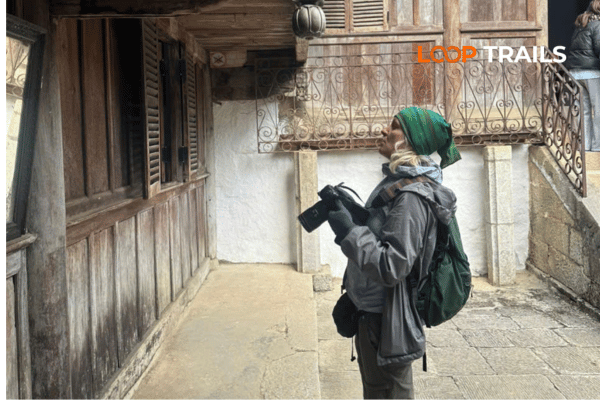
Photography is where most responsible tourism conversations start, and for good reason. The camera is the most common point of friction between travellers and communities in Ha Giang, and the most visible signal of how a visitor sees the people they’re encountering.
Photography is where most responsible tourism conversations start, and for good reason. The camera is the most common point of friction between travellers and communities in Ha Giang, and the most visible signal of how a visitor sees the people they’re encountering.
The rule is simple: ask before photographing people. In practice, this means making eye contact, holding up your camera or phone with a questioning expression, and reading the response clearly. A smile and a nod means yes. A turned head, a hand raised, or simply a person looking away and continuing with what they were doing means no. Move on.
This applies everywhere on the Loop, but particularly in village settings — markets, homestay communities, sacred or domestic spaces. The communities around Dong Van, Meo Vac, and Du Gia are increasingly familiar with cameras and with being photographed. That familiarity doesn’t mean the consent requirement has expired. It means the dynamic has shifted enough that some people are tired of it, some are performatively accommodating it, and a few are genuinely happy to engage. Your job is to read which situation you’re in.
A few specific situations that require extra thought:
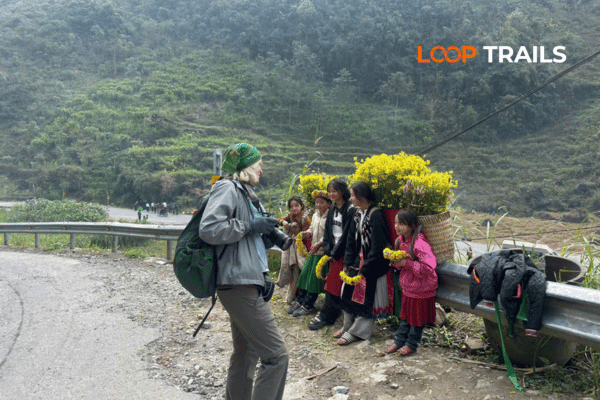
Older women in traditional dress at markets. Flower Hmong women in full traditional costume at the Meo Vac Sunday market are among the most frequently photographed subjects in northern Vietnam. Some are genuinely comfortable with it. Many have been photographed hundreds of times and are quietly exhausted by it. The fact that they don’t object doesn’t mean they’re enthusiastic. If you want a portrait that means something, put the camera down first, make actual human contact, and let a photo opportunity develop naturally from that rather than leading with the lens.
Children. Photographing children requires the same consent process as adults — and ideally involves a parent’s awareness. Don’t photograph children in situations of vulnerability (crying, in conflict, very young infants) regardless of how compelling the image might be.
Ritual and ceremony. If you happen to be present at a Hmong New Year celebration, a Lo Lo bronze drum ceremony, or any kind of ritual event, treat it like a guest at a family occasion — not a production you’ve been invited to document. Ask your guide what’s appropriate to photograph. When in doubt, don’t.
Learn more: Hmong’s King Vuong Palace
Beyond people, there are physical things in Ha Giang that aren’t appropriate photography subjects:
Military installations and border infrastructure. The Lung Cu area and parts of the Dong Van district are close to the Chinese border. Military checkpoints, border markers, watchtowers, and similar infrastructure are not for photographing. This is a legal restriction in Vietnam, not a suggestion. The consequences of ignoring it can be serious.
Household altars and sacred objects. If you’re inside a traditional home, you may see a household altar — a central feature of animist and ancestor-veneration traditions across multiple ethnic groups in Ha Giang. These are genuinely sacred objects. Don’t photograph them without explicit permission from the family, and understand that permission may not always be granted.
Items for sale without purchasing intent. Photographing handmade textiles, embroidery, or traditional crafts displayed for sale without any intention of buying — purely for content — is noticed and is a form of extractive tourism. If the work is beautiful enough to photograph, it’s beautiful enough to buy a small piece of.
Learn more: Ha Giang Safety Tips
Responsible tourism in Ha Giang has a very practical economic dimension. The question isn’t just whether you spend money — it’s where that money ends up.
This is the single highest-impact decision you make before you arrive. Not every Ha Giang tour operator is equal in how they distribute economic benefit. The questions worth asking when booking:
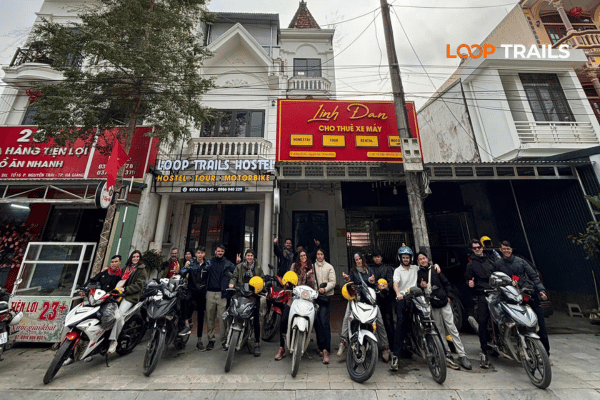
At Loop Trails, our guides are locally based, our recommended homestays are family-run, and we operate on small group sizes specifically to reduce the impact on any single community while increasing the quality of interaction for guests. That’s not marketing language — it’s the operational model we built because we work in this community and intend to keep working here.
If responsible tourism is a priority for you, [reach out on WhatsApp] before booking — we’re happy to walk you through how our tours are structured and answer any questions about where your money goes.
Learn more: Lung Tam Linen Village
Spending money in Ha Giang is genuinely beneficial when it goes to the right places. A few guidelines:
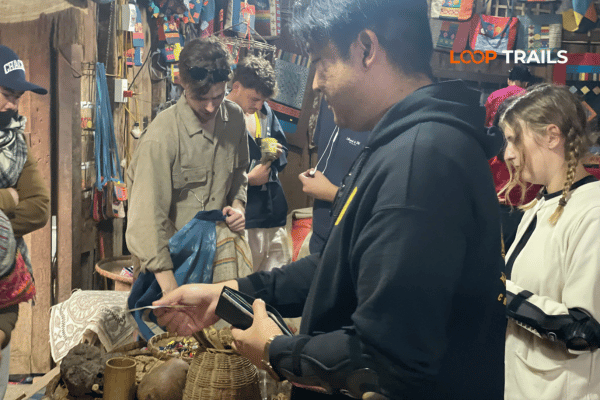
Buy directly from producers. Handmade textiles, embroidery, traditional clothing, and medicinal herbs bought directly from the maker at a village or market — this is the highest-value form of tourist spending. The money goes directly to the person who made the thing.
Eat at local restaurants, not just traveller-facing ones. The small com binh dan (rice plate) restaurants and pho stalls that locals eat at send money into the same community economy as the craftspeople and farmers. The international-menu restaurants that cater primarily to tourists send it somewhere different.
Stay in homestays when the option exists. Family-run homestays in Lo Lo Chai, Du Gia, or the Sung La valley area keep accommodation revenue in the community rather than with a larger external operator.
Be thoughtful about what you buy at larger souvenir shops in Ha Giang City. Products sold here are often produced outside the region and traded on the aesthetic of ethnic minority craftsmanship without the actual labour of ethnic minority artisans. The market basket you buy at the Dong Van Sunday market from the woman who wove it is a fundamentally different transaction from the same basket purchased at a gift shop in the city.
Learn more: Cao Bang Loop Tours Vietnam best kept secret
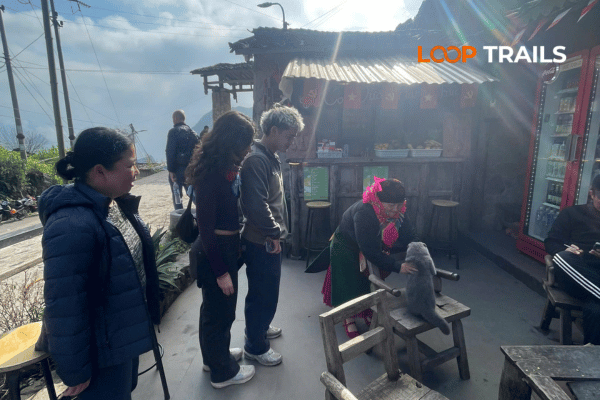
The threshold question — whether you should enter a home — is easier to answer than most travellers think. If the door is closed or the household isn’t actively engaged with you, don’t enter. If someone is displaying goods outside their home and makes eye contact, you can approach. If someone gestures you inside, you may enter.
Once inside: take your shoes off at the door unless you can see clearly that the household doesn’t follow this practice (some don’t, but most traditional Ha Giang homes do). Don’t touch objects on shelves, altars, or walls without asking. Sit where you’re invited to sit. Don’t wander into rooms you haven’t been shown.
In traditional Hmong and Lo Lo homes, the central fireplace area and the altar wall are significant domestic spaces. Move around these with the same consideration you’d give a place of worship in any cultural context.
Being present at a Ha Giang festival — Hmong New Year, Gau Tao, Khau Vai Love Market, a village-level ceremony — is one of the genuine privileges of travelling here. It also requires a specific kind of guest behaviour.
You’re not an audience. You’re a visitor at someone else’s community event. The distinction matters.
Practically, this means:

Learn more: What to wear on Ha Giang Loop?
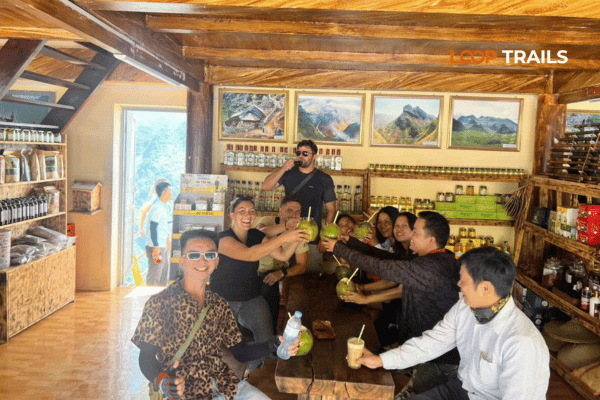
This comes up less often in Ha Giang travel content than it should. Village visits and festival attendance warrant covered shoulders and, ideally, trousers or a longer skirt rather than shorts. This isn’t a formal dress code — no one is going to turn you away — but it’s a basic signal of respect in communities where modest dress is the cultural norm.
The Ha Giang Loop is not a beach holiday. Riding gear typically covers the basics anyway. The situations where this becomes relevant are village walks, market visits, and homestay evenings — where travellers who’ve changed into casual clothes sometimes land in a context where their clothing reads as disrespectful without them realising it.
One specific note: avoid wearing imitations of traditional ethnic minority clothing unless invited to do so by the community. The “Hmong-style” clothing sold in some tourist areas is not the same as being invited by a Hmong family to try on traditional dress during a festival. Context matters.
Learn more: Ha Giang Loop Cost & Tips
Ha Giang province has a waste management infrastructure that’s limited relative to the volume of tourism it now receives. The karst landscape is visually dramatic in part because it’s relatively undeveloped — and that undeveloped character is at risk from the accumulated impact of visitor waste if nothing changes.
Practical things you can do:
Carry a reusable water bottle and a water purification method. Plastic bottle disposal is a serious issue on the Loop. Refill options are available in most guesthouses and larger towns. A UV pen, filter straw, or standard filter bottle solves the plastic issue and costs very little.
Take your non-recyclable waste with you. In remote sections of the Loop, there is no waste collection. If you generate packaging — snack wrappers, coffee cups, disposable rain ponchos — carry it until you reach a town with actual disposal infrastructure.
Don’t leave food waste in natural areas. This includes fruit peels, which take longer to decompose in cooler mountain climates than people expect, and which attract animals into road areas where they then become road safety hazards.
Use reef-safe or low-impact personal care products. The Nho Que River system drains into the broader Mekong watershed. Sunscreen, shampoo, and similar products that wash off in natural water sources have cumulative effects on the ecosystem.
The Ha Giang Loop roads pass through a fragile karst environment. A few specific things to be aware of:
Don’t ride off the road onto hillside terrain. This is occasionally attempted by riders trying to reach a better photo angle. Karst soil is thin and root systems are shallow — vehicle damage to off-road terrain in this landscape doesn’t recover quickly.
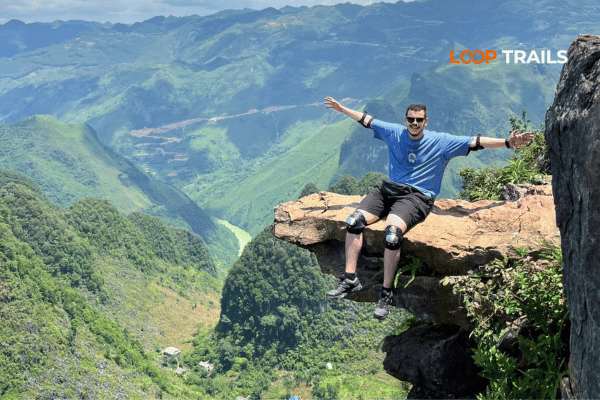
Don’t pick plants or disturb rock formations. The Dong Van Karst Plateau is a UNESCO Global Geopark partly because of the geological significance of the rock formations. These aren’t just pretty rocks.
Drive at an appropriate speed through villages. Livestock, children, and elderly residents move across village roads without warning. The road through a working village is not a section to make up time on.
Learn more: Ha Giang Loop with Kids
This section exists because it’s the responsible tourism topic that generates the most pushback — and because the pushback is usually well-intentioned but wrong.
Giving sweets, money, pens, or other small gifts directly to children in Ha Giang villages causes harm. Not in the abstract, philosophical sense — in the direct, observable sense. Here’s what actually happens:
Children who receive rewards from tourists learn that approaching tourists and soliciting attention produces rewards. This shifts their motivation from school attendance (which is already challenging in remote highland communities with long walking distances and cold winters) toward tourist-interaction as an economic strategy. In villages that receive high tourist traffic, this pattern becomes self-reinforcing over a single generation.
Parents in these communities are often aware of this dynamic and actively try to counteract it. When tourists give directly to children, they undermine the parents’ efforts.
The desire to give something — to make a connection, to respond to what looks like need — is entirely understandable. There are better ways to act on it:
If a child approaches you and you feel the pull to give something — the honest answer is to smile, make genuine human contact, and move on. The warmth of that interaction is more valuable than the sweet.
Learn more: Ha Giang Homestay Guide
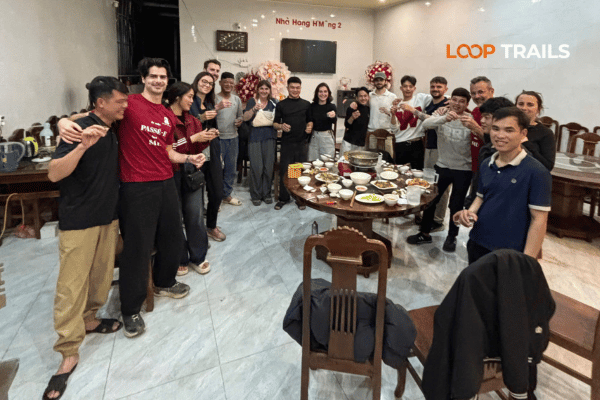
Overnight stays in family-run homestays are one of the best things you can do on the Ha Giang Loop from a responsible tourism perspective. The economic benefit goes directly to a family. The cultural exchange is genuine. The experience is unforgettable.
It also requires a specific kind of guest behaviour that isn’t always spelled out clearly.
Arrive at the agreed time or communicate if you’re running late. Homestay hosts prepare food for guests at specific times. Arriving two hours late means a cold meal and a disrupted household schedule.
Eat what’s served. Homestay meals are prepared from local ingredients, often with significant effort. If you have genuine dietary restrictions, communicate them clearly in advance through your guide or when booking. Don’t arrive and then refuse multiple dishes without explanation.
Be aware of household rhythms. Rural Ha Giang families typically wake early and work hard. Late-night noise from guests disrupts the household. If you want to stay up, be quiet about it.
Don’t use the homestay as a photography studio. You’re a guest in someone’s home, not a location scout. Ask before photographing domestic spaces, family members, or household objects.
Leave things as you found them. This sounds basic, but homestay hosts deal with guests who rearrange furniture, leave bathrooms in bad condition, and use personal items without asking. Standard guest courtesy applies.
Tip your hosts. Homestay pricing in Ha Giang is generally modest. A tip — given directly to the family, not through a tour operator’s collection — is a direct and appreciated way to supplement the economic benefit of your stay.
Learn two or three words. Xin chào (hello), cảm ơn (thank you), and ngon quá (delicious) go a long way with a homestay family who speaks limited English. The effort is noticed and appreciated far beyond its linguistic content.
Learn more: Ha Giang Loop by Jeep for Families & Groups
This is worth being direct about, because the answer affects how you book.
Easy Rider guided tour with a local guide: This is the highest-impact format from a responsible tourism perspective, for a specific reason: the guide is the connective tissue. A good local guide introduces you to communities with context and relationship. They translate — not just language but cultural meaning. They know which households are open to visitors and which are having a difficult day. They can navigate festival events, village visits, and market interactions in a way that benefits everyone. They also channel economic activity to locally-based people.
The quality of the guide matters enormously. A guide who is themselves from an ethnic minority community in Ha Giang brings something categorically different from a guide from outside the region with superficial cultural knowledge. When choosing an operator, ask specifically about guide background and training.
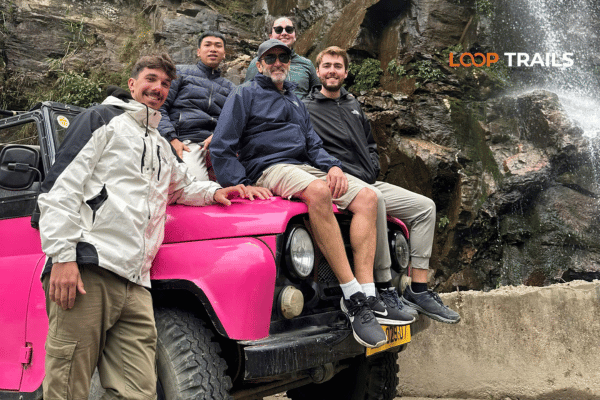
Jeep tour with a local guide: Essentially the same cultural and economic framework as Easy Rider, with the practical advantages of vehicle comfort and weather protection. The guide-led structure means the same responsible tourism benefits apply. A good choice for families, for wet-season travel, or for travellers with physical limitations.
Self-drive motorbike rental: This format puts the responsibility most directly on you. Without a guide, you navigate the cultural interactions yourself — which can work well if you’re experienced, culturally aware, and willing to do the research. The economic benefit of self-drive is more diffuse: you’re spending money in guesthouses and restaurants along the route, which is good, but you’re not creating the kind of sustained local economic relationship that guided tours provide. If you self-drive, compensate by staying in family-run homestays rather than larger guesthouses, buying directly from artisan producers, and spending time in market environments rather than rushing through them.
At Loop Trails, all of our guides are locally sourced, our itineraries are built around community-run accommodation, and we keep group sizes small specifically to reduce concentrated impact. If responsible tourism is part of your decision-making, [explore our Ha Giang Loop tour options] or [contact us on WhatsApp] — we’re happy to talk through how we operate.
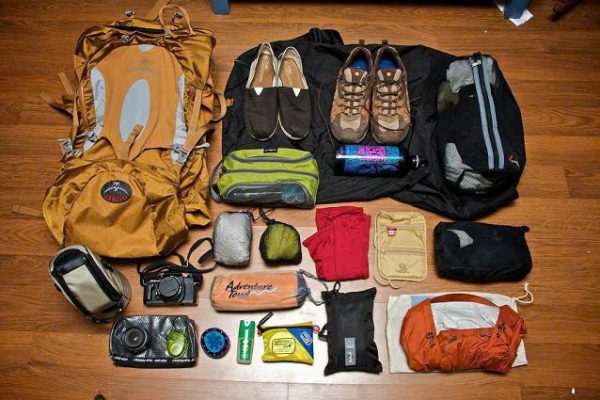
Learn more: Ha Giang Packing List
Use this before and during your trip:
Before you go:
During your trip:
After your trip:
Learn more: Ha Giang Loop Tours
Yes. The Ha Giang Loop is a well-established tourist route and the communities are generally very welcoming. The main safety considerations are road conditions (mountain roads require care, especially in wet season) and standard travel common sense. The cultural sensitivity issues in this guide are about impact, not personal safety.
With permission, yes. Without permission, no. The rule is the same as anywhere else in the world — you ask, you read the response, and you respect it. The fact that someone is in traditional dress at a market doesn’t make them a public performance.
No. Direct giving to children in tourist destinations creates dependency patterns that damage communities over time. If you want to contribute something meaningful, support community-level programs through your operator or through verified local organisations.
Handmade textiles and embroidery bought directly from producers at village markets — particularly Flower Hmong embroidery, Lo Lo woven goods, and Tay crafts in the Du Gia area — are the highest-impact purchases. Local food, guesthouse stays in family-run operations, and market meals all feed the local economy directly.
Ask specific questions: Are guides local? Are they from ethnic minority communities? Which guesthouses does the tour use, and who owns them? How are guides compensated? Does the operator contribute to any community programs? Vague answers or reluctance to discuss these points are themselves informative.
Refusing entirely can be perceived as impolite in Hmong hospitality culture where sharing food and drink is meaningful. The graceful approach is to accept the cup, take a small sip, express appreciation, and set it down. Most hosts understand that not everyone can drink deeply — the gesture of acceptance matters more than the quantity consumed.
Yes, most villages on the Ha Giang Loop are freely accessible to independent travellers. A guide adds significant value — both for cultural context and for facilitating genuine interaction — but is not mandatory. If you visit independently, apply the same behavioural principles: ask before photographing, respect thresholds, don’t enter homes uninvited
The main concerns are plastic waste (particularly disposable water bottles), vehicle emissions on the mountain roads, and the cumulative impact of increased visitor numbers on fragile karst terrain. Individual travellers can address the plastic issue through reusable water systems. The broader infrastructure questions — waste management, road development — are policy-level issues that responsible operators advocate on.
Not as a costume or for a photo opportunity. If a family or community invites you to try on traditional dress during a festival — which does happen occasionally as a gesture of welcome — that’s a different context. The distinction is between being invited into something and appropriating an aesthetic for your own content.
Sa Pa has absorbed a much longer and more intense wave of tourism than Ha Giang, and some of the patterns that accompany overtourism — commodified cultural performances, souvenir market saturation, community dependency — are more established there. Ha Giang is earlier in that trajectory, which means the responsible tourism choices you make here have more impact — both positive and negative — than the same choices in a destination already shaped by decades of mass tourism.
Yes. We use locally-based guides, prioritise community-run accommodation, keep group sizes small, and don’t operate in a way that concentrates economic benefit with external players at the expense of local communities. We’re transparent about how our tours are structured and happy to discuss this in detail before you book.
If you can only internalise one thing: treat the people you encounter as people, not as subjects or scenery. The rest — the photography ethics, the economic choices, the behavioural guidelines — all follow naturally from that baseline orientation.
Contact information for Loop Trails
Website: Loop Trails Official Website
Email: looptrailshostel@gmail.com
Hotline & WhatSapp:
+84862379288
+84938988593
Social Media:
Facebook: Loop Trails Tours Ha Giang
Instagram: Loop Trails Tours Ha Giang
TikTok: Loop Trails
Office Address: 48 Nguyen Du, Ha Giang 1, Tuyen Quang
Address: 48 Nguyen Du, Ha Giang 1, Tuyen Quang
Facebook X Reddit Table of Contents If you’ve been researching a trip to Ha Giang and typed “Ha Giang airport” into a
Facebook X Reddit Table of Contents Learn more: Ha Giang Loop Tours Most travelers discover Ha Giang through the photos — buckwheat
Facebook X Reddit Table of Contents Learn more: Ha Giang Loop Tours Running out of fuel on a mountain road in northern