

Ha Giang Loop Mistakes to Avoid: What Nobody Warns You About
Facebook X Reddit Table of Contents Learn more: Ha Giang Loop Tours There’s a version of the Ha Giang Loop that people

Thúy Kiều (Grace) is a travel blogger and content contributor for Loop Trails Tours Ha Giang. She holds a bachelor’s degree in Sustainable Tourism from Vietnam National University, Hanoi, and has a strong passion for exploring and promoting responsible travel experiences in Vietnam’s northern highlands.
Learn more: Ha Giang Loop Tours
Most people who visit northern Vietnam have Ban Gioc Waterfall on their list before they even land. A few have Phia Oac on their radar. But God’s Eye Mountain — a surreal geological formation tucked into Cao Bang Province’s limestone highlands — barely appears in Western travel content at all.
That’s changing. Slowly.
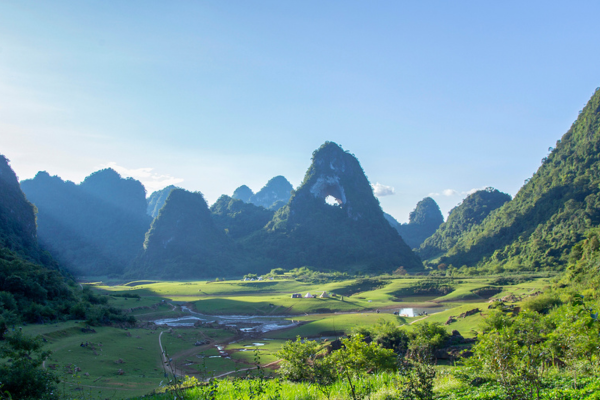
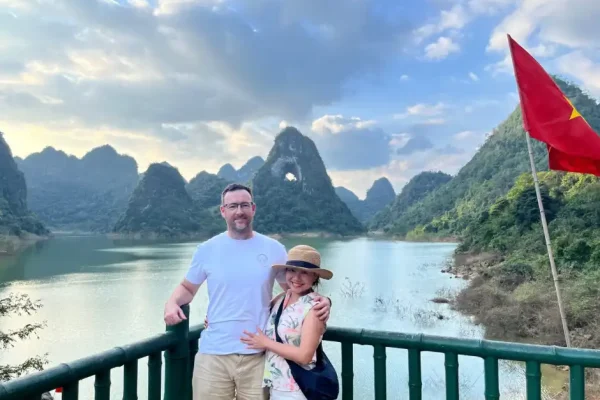
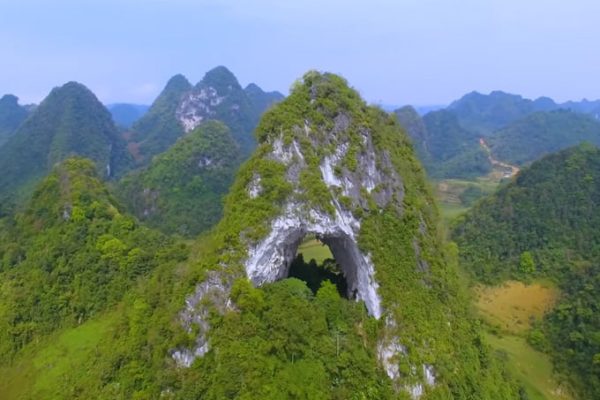
God’s Eye Mountain (locally called Mắt Thần Núi — literally “Mountain God’s Eye”) is exactly what the name suggests: a natural circular hole pierced through a limestone cliff face, creating a ring of rock that frames sky, light, and the landscape beyond like a giant eye carved into the mountain by something other than human hands. It’s the kind of place that makes you stop mid-sentence, reach for your phone, and then put it down again because no camera angle quite captures what you’re looking at.
This guide covers everything you need to know to visit — what it actually is, how to get there, what the experience is like on the ground, when to go, and how to fit it into a Cao Bang itinerary that makes the most of this still-overlooked corner of Vietnam.
Learn more: Ha Giang to Cao Bang
God’s Eye Mountain is a limestone karst formation in Cao Bang Province, in Vietnam’s far northeast. The defining feature is a naturally formed circular aperture — a hole through the rock face, large enough to see through clearly, shaped closely enough to a circle that the “eye” comparison is immediate and unmistakable.
This kind of formation is the result of millions of years of karst erosion: water finds micro-fractures in soluble limestone rock, slowly dissolves and widens them, and over geological timescales creates voids, caves, arches, and — in rare cases — near-perfect circular openings like this one. The Cao Bang region sits on one of the most geologically active karst landscapes in Southeast Asia, which is why it produces formations this dramatic.
The “eye” is not a tiny peephole. It’s genuinely large — large enough that standing beneath it gives you a clear view of the sky through a near-circular frame of rock. The scale is part of what makes it striking. This isn’t something you peer at through binoculars — it’s something that fills your field of vision when you’re close to it.
A few reasons. Cao Bang Province as a whole gets a fraction of the tourist traffic that Ha Giang does, despite being equally beautiful and geologically just as dramatic in places. God’s Eye Mountain specifically doesn’t appear on many Western travel blogs, hasn’t gone viral in any meaningful way in English-language travel media, and requires some navigation effort to reach — it’s not a pull-off spot on a main road.
For independent travellers with the right information, that’s a selling point. For travellers without a guide, it’s a friction point. This article is about solving the second problem.
Learn more: Cao Bang Loop Tours Vietnam best kept secret
God’s Eye Mountain is located in Cao Bang Province, in the northeastern highlands of Vietnam. The exact approach road and access point are worth confirming locally before you go — road conditions and signage in rural Cao Bang can change, and what’s on a map isn’t always what you find on the ground.
Cao Bang City is the natural base for exploring this area. From the city, God’s Eye Mountain is typically reached in under two hours by motorbike, though the exact time depends on road conditions and which route you take. The drive itself is part of the experience — Cao Bang’s rural highlands are consistently beautiful, and you’ll pass through rice paddies, river valleys, and small Tay and Nung minority villages along the way.
The road to the mountain is paved for most of the approach but can include rougher track sections as you get closer. This is northeastern Vietnam — road conditions vary seasonally and by weather. If you’re self-navigating, download offline maps and cross-reference with locally updated information before you leave.
If you’re building a Cao Bang itinerary around Ban Gioc Waterfall (as most visitors do), God’s Eye Mountain can be incorporated into the same general area of travel. Ban Gioc and the surrounding Trung Khanh District are roughly in the same northeastern corner of Cao Bang Province, so combining them into a multi-day itinerary is practical rather than a detour.
That said, check the logistics carefully before assuming you can do both in a single long day — distances in Cao Bang look shorter on a map than they are to ride. Mountain roads, unpaved sections, and stopping time add up fast.
Roads in Cao Bang Province range from smooth provincial highway to narrow, potholed track depending on where you are. The mountain roads in this region can be genuinely challenging after rain — loose surface, slippery clay, and fallen debris are all realistic factors in the wet season.
For first-time visitors to the area, or anyone not experienced with Vietnamese mountain road riding, going with a guide who knows the specific route to God’s Eye Mountain is the pragmatic choice. Local guides know which track sections to avoid, which alternate routes exist after a wet night, and how to read road conditions in real time.
Learn more: Ha Giang Cao Bang Loop Jeep tour Guide
The experience of visiting God’s Eye Mountain starts well before you arrive at the formation itself. The surrounding landscape — limestone peaks, forested hillsides, narrow valley roads with almost no other traffic — is the kind of scenery that reminds you why Cao Bang hasn’t been overdeveloped. You’re in genuinely remote northern Vietnam here, and it feels like it.
Depending on your approach route, you may pass through small ethnic minority villages. The Tay and Nung communities are the predominant groups in this area of Cao Bang Province. Village life happens visibly and at close range — people working fields, children on bicycles, elderly women in traditional indigo clothing sitting outside their stilt houses. It’s not a tourist performance; it’s just life, and it’s worth slowing down for.
Getting to the viewpoint of the “eye” typically requires a hike from wherever you park. The trail is not highly developed — expect natural path, some steep sections, and the kind of terrain that requires proper shoes rather than sandals. The hike is not extreme, but it’s also not a boardwalk.
Distances and difficulty ratings for this trail aren’t worth fabricating here — conditions and trail development change. What’s consistently reported is that the hike is manageable for reasonably fit travellers, that it’s steeper than it looks on the map, and that the last section approaching the formation is the most rewarding. Budget time for the approach rather than rushing it.
When you reach the level of the “eye,” the experience changes from distant appreciation to something more immediate. The rock formation frames a near-perfect circle of sky — on a clear day, blue and sharp; on an overcast day, a flat grey that makes the rock geometry even more striking by contrast.
The scale only becomes fully apparent when you’re close. The limestone walls around the opening are massive, pocked and layered in the way that millions of years of weathering creates — not smooth, but textured, with plant life finding holds in the crevices. Looking through the hole at the landscape on the other side gives a framed view that feels deliberately composed, like the mountain itself set up a shot.
Early morning visits offer the best light for this — the angle of sun through the opening changes through the day, and in the morning hours you’re more likely to get soft, directional light rather than the flat midday glare.
The walk back down takes longer than expected — uphill focus on the way up means the descent is where your knees know about it.
There’s very limited infrastructure at the site — no food stalls, no toilets, no rental gear. What you bring, you carry. What you don’t bring, you go without. This is a feature of the experience, not a deficiency — but plan for it.
Mobile signal is unreliable at the mountain and on the approach roads. Download maps and any necessary information before you leave your guesthouse.
Learn more: Ha Giang Cao Bang 5 Days
Cao Bang’s climate follows a broadly similar pattern to Ha Giang — dry winters and springs, wet summers — but with its own local variations driven by the northeastern mountain topography.
This is the optimal window for visiting God’s Eye Mountain and Cao Bang generally. The roads are at their most stable, the skies are clearest, and the landscape has the contrast and definition that makes northern Vietnam’s karst scenery so photogenic.
October and November are arguably the best months: post-harvest light, terraced fields still carrying colour from the rice harvest, manageable temperatures, and the tourist crowds — such as they are in Cao Bang — at their thinnest.
March and April bring warmer temperatures, blooming peach and plum blossoms in higher-elevation villages, and clear skies. The downside is that these months are busier across northern Vietnam generally, and accommodation in popular base towns books up faster.
December through February brings cold, fog, and the occasional frost at elevation. The mountain approach can be genuinely cold in the early morning — not impossibly so, but enough to need proper layering. Some travellers prefer the winter quiet; others find the visibility too compromised for photography.
The rainy season in Cao Bang is real and meaningful. Heavy rainfall makes unpaved mountain roads slippery and unstable, raises the risk of landslides on cliff sections, and can make the hike to the formation genuinely treacherous. Flooding is also possible in the valley sections of the approach road.
That said, rainy season Cao Bang isn’t impenetrable — it’s a question of risk tolerance, flexibility, and going with people who know the terrain. Waterfalls in the region (Ban Gioc included) are at their most spectacular during and just after the rainy season, which is one argument for going.
If you visit May–September, go with an experienced local guide, check road conditions the morning of, and hold plans loosely.
Learn more: Explore just the Cao Bang Loop
Cao Bang Province is more than one attraction, and God’s Eye Mountain sits within a broader landscape of natural and cultural sites that deserve their own time.
Here’s an honest comparison for planning purposes:
| Attraction | Type | Effort Level | Crowd Level | Best Time |
|---|---|---|---|---|
| God’s Eye Mountain | Geological / Hiking | Moderate | Very low | Oct–Apr |
| Ban Gioc Waterfall | Natural landmark | Low | Moderate–High | Sep–Nov |
| Nguom Ngao Cave | Cave system | Low | Moderate | Year-round |
| Phia Oac National Park | Hiking / Cloud forest | Moderate–High | Low | Apr–May, Oct–Nov |
| Thang Hen Lake System | Scenic drive / Lakes | Low | Very low | Oct–Apr |
God’s Eye Mountain occupies a specific niche: it’s a geological curiosity that rewards travellers who make the effort to get there, offers very little in the way of tourist infrastructure (which is either a pro or a con depending on who you are), and provides a kind of raw, unmediated experience with the landscape that Ban Gioc — for all its beauty — can’t quite replicate given the crowds and facilities that have grown up around it.
If your Cao Bang itinerary only has space for two or three highlights, God’s Eye Mountain earns its place not by competing with Ban Gioc but by providing a completely different kind of encounter with the same extraordinary landscape.
Planning a Cao Bang trip from Ha Giang? Loop Trails runs [Ha Giang–Cao Bang combine tours] that connect both provinces into one coherent route — so you’re not choosing between them. Worth looking at if you have four or more days in the region.
Learn more: Ban Gioc Waterfall Guide
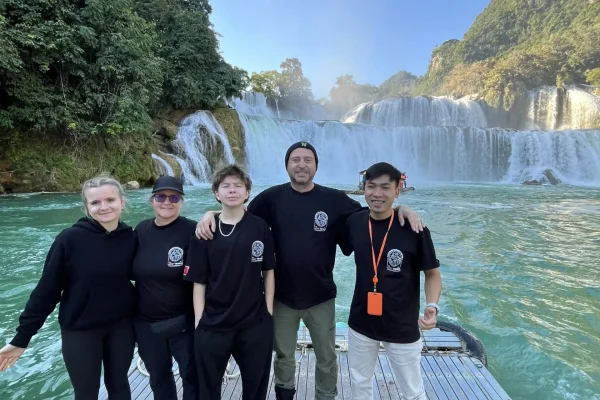
Vietnam’s largest waterfall (and one of the largest waterfalls on any international border anywhere in the world) sits on the Vietnamese–Chinese border in Trung Khanh District. The falls are genuinely spectacular at peak flow — a wide, multi-tiered cascade that you can get close to by bamboo raft or from the near bank. It’s the most visited site in Cao Bang and justifiably so.
The key planning point: Ban Gioc is popular, and the area around it has developed accordingly. For the best experience, go early morning before tour buses arrive, and plan to spend at least two hours rather than a rushed stop.
Learn more: Nguom Ngao Cave
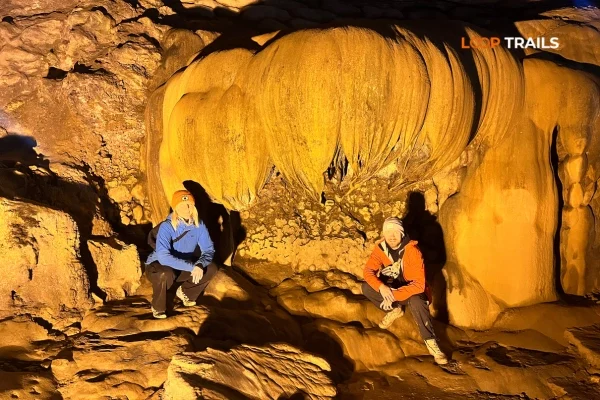
A few kilometres from Ban Gioc, Nguom Ngao (“Tiger Cave”) is one of the most impressive cave systems in northern Vietnam that’s accessible to regular visitors. The stalactite and stalagmite formations are on a scale that surprises people who’ve been to smaller caves elsewhere in Vietnam. It’s about an hour inside for the standard tour route.
Nguom Ngao and Ban Gioc are natural day-trip companions — you can cover both in a full day from a Trung Khanh base.
Learn more: Ha Giang Loop for Beginners
In the opposite direction from Ban Gioc (southwest of Cao Bang City, toward the Ha Giang border), Phia Oac National Park offers high-altitude cloud forest hiking that’s almost entirely off Western tourists’ radar. The primary peak, Phia Oac, is the highest point in Cao Bang Province. The forest here is different in character from the karst scenery elsewhere in the province — dense, mossy, with a misty atmosphere that gives it the feel of somewhere much more remote than it actually is.
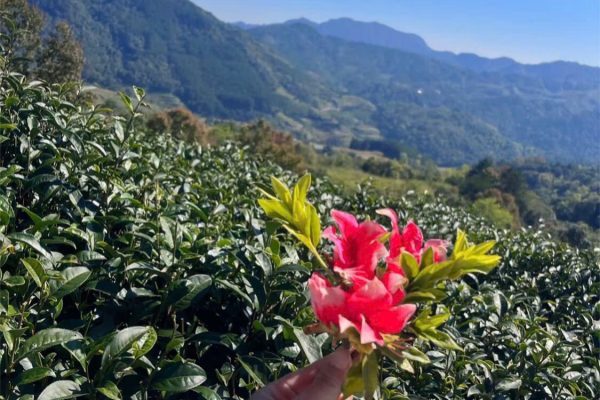
Road access to Phia Oac passes through Phia Den, a tea-producing highland area with French colonial-era remnants, including an old research station that has a quiet, time-stopped quality.
Learn more: Ha Giang Loop 4 Days 3 Nights
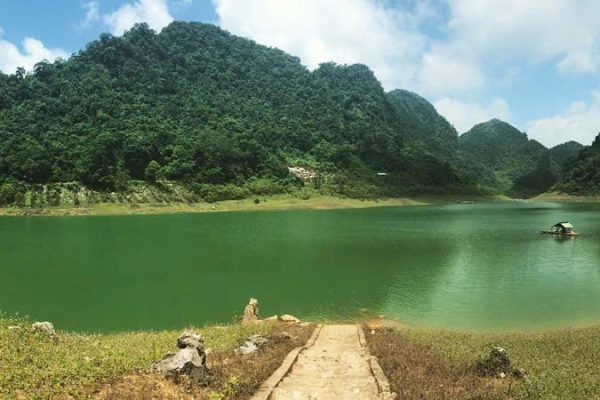
Northeast of Cao Bang City, Thang Hen is a chain of highland lakes that look genuinely otherworldly in clear weather. The lakes sit at altitude, surrounded by karst peaks, and the combination of still water, reflections, and limestone silhouettes is one of Cao Bang’s quieter highlights. There’s almost no tourist infrastructure here — just the lakes, a narrow road, and the landscape.

Learn more: Ha Giang Packing List
Lorem ipsum dolor sit amet, consectetur adipiscing elit. Ut elit tellus, luctus nec ullamcorper mattis, pulvinar dapibus leo.
The mountain itself is not a technically dangerous hike, but remote access plus limited infrastructure plus unpredictable weather creates a risk environment you want to be prepared for rather than surprised by.
Going independently is possible if you have: solid motorbike riding experience on mountain roads, offline navigation sorted, local contacts or up-to-date route information, and the flexibility to change plans if conditions aren’t right. It’s a genuinely rewarding way to visit if you have the skills and the preparation.
Going with a guide resolves most of the uncertainty at once. A good local guide knows the current road conditions, the best approach, where to park, the trail, and what to look for. They can also open up the cultural and geological context of the site in ways that self-navigating can’t.
There’s no wrong answer — but be honest with yourself about which profile matches your experience and preparation.
Learn more: Ha Giang Cao Bang by Jeep and motorbike
God’s Eye Mountain sits in Cao Bang Province, which means it’s most naturally visited as part of a Cao Bang-focused itinerary or a combined Ha Giang–Cao Bang route. Here’s how the options break down:
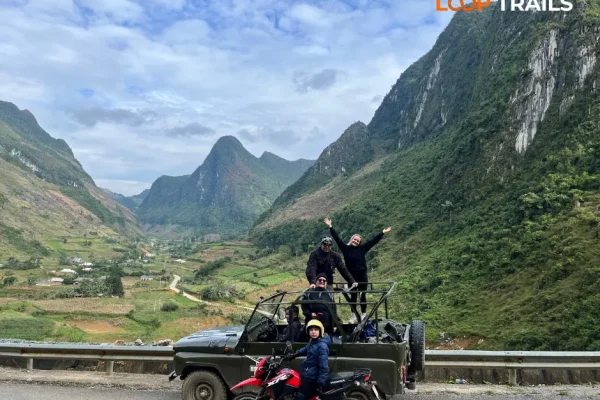
Ha Giang–Cao Bang Combine Tour This is the route that makes the most geographic sense for most Western travellers. You cover the Ha Giang Loop — including the iconic Dong Van Karst Plateau, Ma Pi Leng Pass, Meo Vac, and the landscape that most people come to northern Vietnam for — and then continue into Cao Bang Province to hit Ban Gioc, Nguom Ngao Cave, God’s Eye Mountain, and the surrounding highlights. It’s a bigger trip (typically five or more days) but it avoids the either/or choice between two equally worthwhile provinces.
Cao Bang Loop / Dedicated Cao Bang Tour If you’ve already done Ha Giang or are intentionally focusing on Cao Bang, a dedicated Cao Bang tour gives you the time to go properly — not rushing past God’s Eye Mountain as an add-on to a Ban Gioc day, but giving it the half-day it deserves as a standalone experience.
Self-Drive Motorbike Rental For experienced riders who want full independence and flexibility on the Cao Bang roads, renting a motorbike in Ha Giang and self-navigating through to Cao Bang is a real option. The road between Ha Giang Province and Cao Bang is some of the most beautiful riding in northern Vietnam. Self-drive works best here for riders who’ve already handled mountain roads in Vietnam — the roads are rewarding but not forgiving.
Easy Rider Guided Tour For first-timers, nervous riders, solo travellers who want company and local knowledge, or anyone who’d rather absorb the scenery than manage the route, Easy Rider is the call. Your guide handles navigation, knows the road to God’s Eye Mountain, can communicate with locals if needed, and provides the kind of context for what you’re seeing that transforms a pretty landscape into an actual experience.
Want to visit God’s Eye Mountain as part of a wider northern Vietnam trip? Loop Trails runs small-group [Ha Giang–Cao Bang combine tours] with experienced local guides. [Contact us on WhatsApp] to talk through itinerary options that fit your dates and travel style.
Learn more: Ha Giang Loop route and itinerary
Let’s be honest about what this place is and what it isn’t.
God’s Eye Mountain is not a walk-up, well-signed, fully developed tourist attraction. There’s no cafe at the top, no official ticket booth, no Instagram-perfect wooden walkway installed for the shot. It takes effort to reach, requires decent preparation, and gives back in proportion to how seriously you approach it.
What it offers — a genuinely unusual geological formation, remote mountain scenery, minimal crowds, and the specific satisfaction of going somewhere that most tourists never find — is exactly what a certain kind of traveller comes to northern Vietnam looking for. Cao Bang remains one of the least touristed provinces in the country despite sitting beside some of Vietnam’s most extraordinary natural landscapes. God’s Eye Mountain is one of the reasons that should change.
If your northern Vietnam itinerary has room for one stop that takes you off the well-worn circuit, this earns that slot.
Ready to plan a Cao Bang trip? Browse [Loop Trails’ Cao Bang tour options] or [send a WhatsApp message] and we’ll put together the right itinerary for your group, timeline, and experience level.
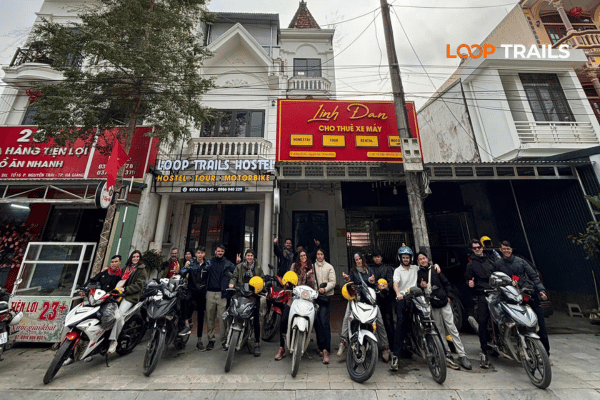
Learn more: Loop Trails Tour Ha Giang website
God’s Eye Mountain (Mắt Thần Núi) is a natural limestone karst formation in Cao Bang Province, northern Vietnam. Its defining feature is a large, naturally formed circular hole through the rock face — shaped like an eye — created over millions of years by karst erosion. It’s one of the most unusual geological formations in the region and remains largely off the mainstream tourist circuit.
It’s located in Cao Bang Province, northeastern Vietnam. The exact access point is best confirmed locally or through a tour operator who knows the route, as road conditions and signage in this area can be variable. Cao Bang City is the most practical base for visiting
The hike is moderate — manageable for reasonably fit travellers, but not a casual stroll. There are steep sections, uneven terrain, and no formal trail development. Proper hiking footwear is essential. Go with a guide if you’re unfamiliar with the route.
For travellers who value unique geological formations, remote scenery, and low-crowd experiences, yes — absolutely. It’s not for everyone (no facilities, genuine hiking required, navigation effort needed), but for the right traveller it’s one of Cao Bang’s most memorable experiences.
Typically by motorbike, taking under two hours in good conditions. The specific route is best confirmed locally — road quality and signage can change seasonally. Having a guide or someone with recent local knowledge makes the logistics straightforward.
Yes — they’re both in Cao Bang Province and can be combined in a multi-day itinerary. They’re in different areas of the province, so it’s worth building in adequate time rather than trying to rush both into a single day.
October to April (dry season) is optimal. October–November is particularly good for clear skies, comfortable temperatures, and post-harvest scenery. Avoid or plan carefully for the rainy season (May–September) when mountain tracks can become slippery and unsafe.
Hiking shoes, at least 1.5–2 litres of water per person, snacks, a windproof layer, sun protection, offline maps, and a charged phone. There’s no infrastructure at the site — bring everything you’ll need.
Going with a local guide or on a tour is the safer and more practical option, especially for first-time visitors to Cao Bang. If you’re going independently, go with someone else (not completely solo), ensure you have offline maps, and let your accommodation know your plans.
Ban Gioc Waterfall and Nguom Ngao Cave are the best-known attractions in the same general area of Cao Bang Province, and can be combined into the same trip. Thang Hen Lake is another nearby highlight worth adding.
It’s technically possible but a long day — the distance between Ha Giang City and the Cao Bang highlights is significant. A multi-day Ha Giang–Cao Bang combine tour is a far more enjoyable and practical way to cover both provinces without rushing either.
Yes — God’s Eye Mountain can be included in Loop Trails’ Cao Bang Loop tours and Ha Giang–Cao Bang combine tours. Contact us via WhatsApp to confirm current itinerary options and availability.
Contact information for Loop Trails
Website: Loop Trails Official Website
Email: looptrailshostel@gmail.com
Hotline & WhatSapp:
+84862379288
+84938988593
Social Media:
Facebook: Loop Trails Tours Ha Giang
Instagram: Loop Trails Tours Ha Giang
TikTok: Loop Trails
Office Address: 48 Nguyen Du, Ha Giang 1, Tuyen Quang
Address: 48 Nguyen Du, Ha Giang 1, Tuyen Quang
Facebook X Reddit Table of Contents Learn more: Ha Giang Loop Tours There’s a version of the Ha Giang Loop that people
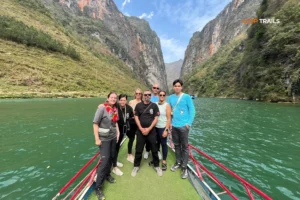
Facebook X Reddit Table of Contents Learn more: Ha Giang Loop Tours There’s a moment on the Ma Pi Leng Pass —
Facebook X Reddit Table of Contents Learn more: Ha Giang Loop Tours Most people land on this question after staring at a