
Ha Giang Easy Rider: The Complete Guide (2026)
Facebook X Reddit Table of Contents Learn more: Ha Giang Loop Tours There’s a moment, usually somewhere on Ma Pi Leng Pass,

Thúy Kiều (Grace) is a travel blogger and content contributor for Loop Trails Tours Ha Giang. She holds a bachelor’s degree in Sustainable Tourism from Vietnam National University, Hanoi, and has a strong passion for exploring and promoting responsible travel experiences in Vietnam’s northern highlands.

Learn more: Ha Giang Loop Tours
Tet — Vietnam’s Lunar New Year — is the most important holiday in the country. It’s also the most disruptive period of the year for travel logistics. Everything slows down, closes up, and shifts, sometimes in ways that are beautiful and sometimes in ways that are genuinely frustrating if you’re not prepared.
Ha Giang during Tet is a particular case. The province sits in Vietnam’s far north, home to dozens of ethnic minority communities — Hmong, Tay, Dao, Lo Lo — for whom New Year celebrations are deeply rooted and visually extraordinary. At the same time, Ha Giang is not Hanoi; it’s a remote mountain region with limited services at the best of times, and Tet adds another layer of complexity.
So: is it worth visiting Ha Giang during Tet? The honest answer is yes — but with eyes open, a solid plan, and realistic expectations. This guide is the one you need before you book anything.
Learn more: Hmong Culture in Ha Giang
Tet Nguyen Dan — commonly just “Tet” — is the Vietnamese Lunar New Year, falling between late January and late February depending on the year. It’s not a single-day holiday. Tet is effectively a two-week national event: a week of pre-Tet preparations, a few days of official public holiday (typically three days, though many businesses close for a full week or more), and a post-Tet return-to-normal that takes another week or so to fully settle.
For context on scale: Tet triggers the largest annual human migration on the planet, as tens of millions of Vietnamese travel home to their families. Transport is overwhelmed. Businesses close. Hanoi and Ho Chi Minh City empty out noticeably as people return to their home provinces. Rural areas — including Ha Giang — fill with returning family members.
For foreign travelers, this creates a split experience: on one hand, witnessing Tet in a place like Ha Giang is genuinely special. On the other, the logistics require advance planning in a way that no other time of year demands.
Tet falls on a different date each year. Before planning, check the exact Lunar New Year date for the year you’re traveling — the holiday window shifts by several weeks depending on the lunar calendar.
Learn more: Ha Giang Road Conditions 2026
The Ha Giang Loop doesn’t close during Tet. The roads are still there. The karst peaks don’t move. Ma Pi Leng Pass is still Ma Pi Leng Pass.
What changes is everything around the roads.
Many guesthouses along the Loop close during the core Tet holiday days — owners go home to their families, which for many means returning to villages elsewhere in the province or beyond. Some homestays run by local Hmong or Tay families may actually be more available, since those families stay in their villages, but you won’t necessarily know which ones in advance without local contacts.
Tour operator availability is patchier than usual. Guides take time off. Drivers return home. The well-organized tour companies plan their Tet schedules in advance and often run limited tours during the holiday — but availability is much tighter, and last-minute bookings are risky.
Motorbike rental shops in Ha Giang City may close for several days around the peak Tet days. If you arrive expecting to rent a bike on the day, this is a genuine problem.
This is the compelling side of visiting during Tet.
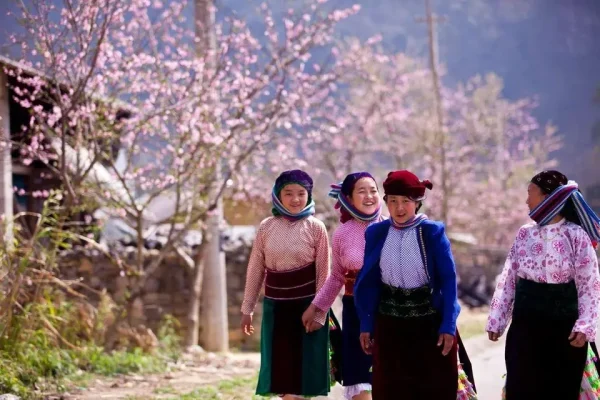
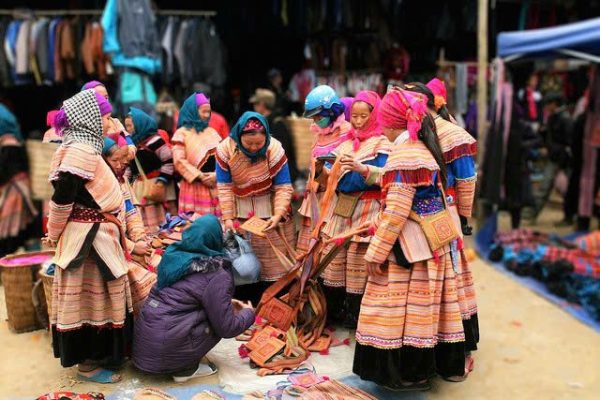
In Ha Giang’s ethnic minority communities, New Year is a visible, public, deeply felt celebration. Hmong families wear their finest traditional clothing — intricately embroidered jackets, silver jewelry, hand-woven skirts in vivid colors. Villages host traditional games: spinning tops, crossbow competitions, bamboo pole dancing. The sound of khèn (a traditional Hmong reed pipe) drifts through mountain air. Kids run around in their best outfits; grandparents watch from doorways.
This is not a performance for tourists. It’s the real thing, and if you find yourself in the right place at the right time, it’s the kind of travel moment that stays with you.
The Dong Van Old Quarter takes on a different character during Tet — quieter in some ways (many shops closed), but more intimate in others. Families gather. Smoke rises from cooking fires. The usual tourist flow thins out and you’re left with something closer to the actual texture of life in this remote town near the Chinese border.

Learn more: Ha Giang Loop Weather
Tet falls in late January or February, which in Ha Giang means winter. This is cold by northern Vietnam standards — not Arctic, but genuinely chilly at altitude, especially at night and in the mornings.
Expect:
The fog is worth mentioning specifically. It’s part of the winter atmosphere and can make the landscape look extraordinary — misty karst peaks, cold mountain air, smoke from village fires. But it also means the famous views from Ma Pi Leng Pass might not cooperate. This is honest travel: weather is weather.
Pack for cold. Then pack an extra layer.
Learn more: Hmong Culture in Ha Giang
This is something many travelers don’t know before they arrive: the ethnic minority communities of Ha Giang — particularly the Hmong — celebrate their own New Year at a different time from the national Tet holiday.
Hmong New Year (Tết H’mông) typically falls in November or December by the lunar calendar, roughly a month or two before Vietnamese Tet. It’s celebrated with traditional music, games, and community gatherings that differ significantly from lowland Vietnamese customs.
Vietnamese Tet (late January–February) is the national holiday, and it’s also observed in Ha Giang — but the ethnic minority communities blend both calendars, celebrating their own New Year in late autumn and then participating (often more quietly) in Vietnamese Tet.
What this means for your visit: if you’re specifically hoping to catch Hmong New Year celebrations — the traditional clothing, games, and music — that window is actually earlier in the winter, not at Vietnamese Tet. If you’re visiting during Vietnamese Tet, you’ll still see festive elements, but the most vivid traditional Hmong celebrations may have already passed.
That said, Vietnamese Tet brings its own atmosphere to Ha Giang that’s worth experiencing on its own terms. The combination of cold mountain air, family gatherings in villages, and the quieting of normal commercial life creates something genuinely different from the tourist peak seasons.
Learn more: Ha Giang in September & October
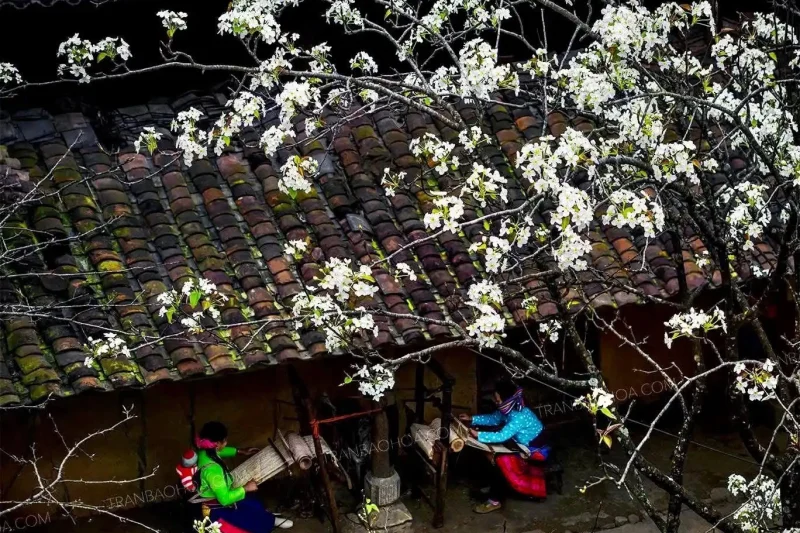
Ha Giang is famous for two flower seasons: the buckwheat bloom in October–November and the plum and peach blossoms of late January–February. Tet time coincides with the plum and peach blossom season.
Along the Loop route — particularly around Yen Minh, Dong Van, and the valley approaches — plum trees (mận) and peach trees (đào) burst into white and pink bloom against the bare winter landscape. It’s a quiet, less-photographed beauty compared to the buckwheat bloom, but it’s genuinely lovely, especially in the fog and mist of a winter morning.
The peach blossom (hoa đào) is culturally significant during Tet in northern Vietnam — families bring cut branches into their homes as a symbol of good luck and renewal. Seeing it in the wild, on mountain hillsides, while riding the Loop in cold early-morning air, is a particular kind of beautiful.
During Tet, the normal pace of commercial life slows and communal life opens up. Families sit together, food is shared, and the usual reserve between strangers relaxes.
Foreign travelers who encounter local families during Tet are often invited in to share food — sticky rice, grilled meats, homemade corn wine (traditionally called Happy Water in the travel community). This is not something you can plan or guarantee, but it happens naturally when you’re traveling respectfully in small groups through villages rather than on large tourist convoys.
A local guide is invaluable here. Someone who speaks the local languages, has relationships in the communities you’re passing through, and knows how to navigate the etiquette of Tet hospitality makes these encounters possible in a way that solo travel can’t easily replicate.
[→ Our Easy Rider guides are local to Ha Giang Province and have genuine community connections along the Loop route — see our Easy Rider tour options.]
Learn more: Ha Giang Loop Private Car from Hanoi
Let’s be straight about the difficulties, because they’re real.
Learn more: Ha Giang to Cao Bang
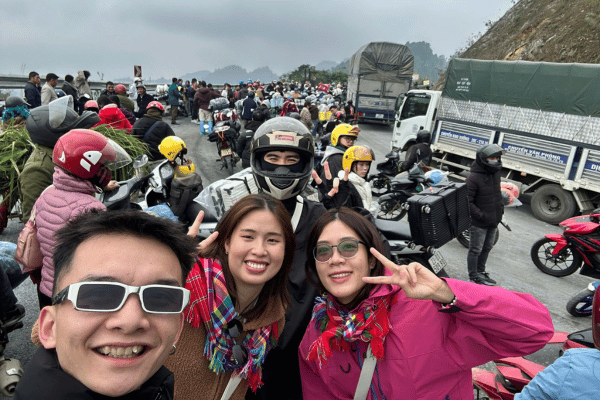
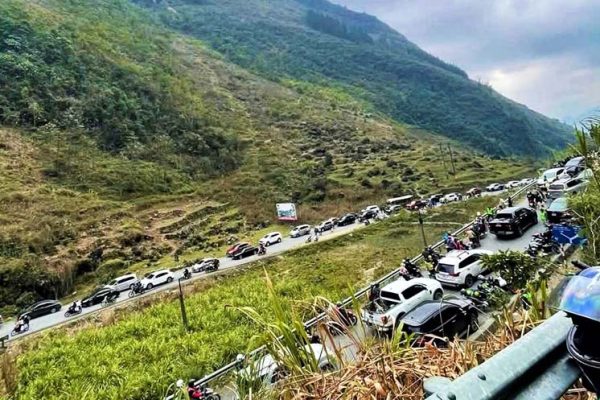
The overnight buses from Hanoi to Ha Giang fill up fast in the weeks before Tet, as Vietnamese families travel home to the north. In the days immediately before Tet, seats can be very hard to find at any price. In the days after Tet (when everyone returns to Hanoi and the cities), buses are similarly overwhelmed.
The window around the actual Tet holiday days — the three official public holidays — is a brief but significant disruption. Some operators don’t run services. Others run limited schedules. Plan for slower, more uncertain connections than usual.
If you’re relying on getting yourself from Hanoi to Ha Giang City during Tet week: book well in advance, confirm everything, and have a backup plan.
Ha Giang’s Loop guesthouses divide into roughly two camps at Tet: those that close entirely (the family-run ones whose owners go home), and those that stay open and are run by people who either live locally or have made a business decision to stay operational during the holiday.
The good news: the ones that stay open are often well-prepared for the Tet travel window. The tricky part is finding out which is which before you arrive.
Tour operators also divide at Tet. Some close down for the holiday week. Others — including operators who specialize in international travelers — plan their Tet schedules in advance and run tours specifically designed around the holiday window.
Booking ahead, ideally 3–4 weeks before Tet, is not optional. It’s necessary.
In Ha Giang City and along the Loop, expect:
None of these are insurmountable, but they require preparation — drawing cash before you leave Hanoi, having your motorbike checked thoroughly before you start, and not assuming you can solve problems on the fly the way you might at other times of year.
Learn more: Ha Giang Loop for Families & Groups
Here’s something experienced northern Vietnam travelers know: the days immediately before and after Tet can be among the best times to visit Ha Giang.
One to two weeks before Tet:
Three to seven days after Tet:
If your schedule allows you to land in Ha Giang either slightly before or slightly after the peak holiday days, rather than smack in the middle, you get the best of Tet season without most of the headaches.
Learn more: Ha Giang Loop Easy Rider
Whether you’re visiting during, before, or after Tet, here’s how to structure your planning:
Step 1: Know your dates Look up the exact Tet date for your travel year. The three core public holiday days are the ones when the most disruption occurs. Mark those on your itinerary and plan around them.
Step 2: Book transport early Hanoi to Ha Giang buses sell out weeks before Tet. Book as soon as you know your travel dates — do not wait until you’re in Vietnam.
Step 3: Confirm accommodation along the Loop Contact guesthouses in Yen Minh, Dong Van, and Meo Vac directly (or ask your tour operator to confirm for you) before you leave Hanoi. Ask specifically whether they will be open during the dates you plan to be there.
Step 4: Lock in your tour or rental If you’re doing a guided tour, book it before you leave home if possible. If you’re renting a motorbike, contact the rental shop in Ha Giang City in advance to confirm they’ll be operating when you arrive.
Step 5: Carry extra cash Draw out more cash in Hanoi than you think you’ll need. ATMs in Ha Giang City can run low before and after Tet. Along the Loop, cash is the only payment option.
Step 6: Plan for slower days The Loop during Tet is not the place for a rushed 3-day circuit. Give yourself 4–5 days, because things run slower — and because the slower pace is actually part of the appeal.
Learn more: Ha Giang Jeep Tours
This is a question worth answering directly, because the Tet context changes the calculus.
Easy Rider (guided, riding pillion with a local guide) This is the best option for visiting Ha Giang at Tet. A local guide navigates the logistical uncertainty — knows which guesthouses are open, has relationships in villages, can handle situations that arise when a petrol station is closed or a road has an unexpected issue. The community connections that make Easy Rider valuable year-round are amplified at Tet, when local knowledge is what makes the difference between a frustrating trip and an extraordinary one.
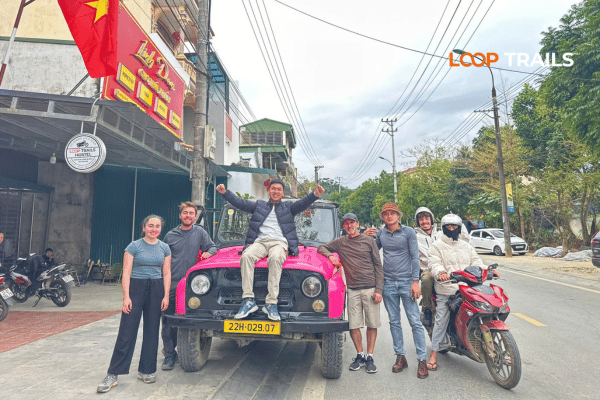
Jeep tour with driver/guide An excellent option for couples or small groups who want comfort and local guidance without being on a motorbike in cold weather. Jeep tours during Tet work well — your driver handles all logistics, you stay warm, and you still get the scenery. This is particularly good if you’re sensitive to cold or have anyone in your group who is less physically robust.
Self-drive motorbike rental Possible but requires significantly more preparation at Tet than at other times of year. You need to be confident the rental shop will be open when you arrive, carry tools and spares since repair shops may be closed, have accommodation confirmed in advance, and be comfortable navigating without local support. Experienced riders who have done Ha Giang before are fine doing it self-drive at Tet. First-timers in the province should lean toward guided.
[→ See our Ha Giang Loop tour options — Easy Rider, Jeep, and Self-Drive — and choose what fits your group.]
| Your situation | Best Tet option |
|---|---|
| First-time Ha Giang visitor | Easy Rider with local guide |
| Couple wanting comfort in cold weather | Jeep tour |
| Experienced rider, solo or with friends | Self-drive (with advance prep) |
| Small group (3–5 people) | Jeep tour or mixed Easy Rider group |
| Want deep cultural access in villages | Easy Rider (local guide is key) |
Not sure what fits your group? Message us on WhatsApp with your dates, group size, and experience level and we can advise honestly on what makes sense — and whether the specific Tet dates you’re looking at are workable for tours.
[→ Contact us on WhatsApp to check Tet availability.]
Learn more: Ha Giang Jeep Tours
Before you leave home:
Before you leave Hanoi:
On the Loop:
Etiquette reminders:

Learn more: Ha Giang Loop for Digital Nomads
Tet falls on a different date each year — it follows the lunar calendar and typically lands between late January and late February. Check the specific Lunar New Year date for the year you’re traveling. The core public holiday is three days, but disruptions extend roughly a week on either side.
Partially. Some businesses — particularly family-run guesthouses and smaller shops — close during the core holiday days. Tour operators and rental shops vary; some stay open for international travelers, others close. Book in advance and confirm directly whether your specific accommodation and services will be operating.
Yes, with preparation. The unique combination of winter blossoms, quieter roads, and genuine local celebrations makes Tet a special window. The trade-off is reduced service availability and the need to book everything well in advance. The days immediately before and after the core holiday are arguably the best window — full atmosphere without peak disruption.
No. Hmong New Year (Tết H’mông) falls earlier — typically November or December — and is celebrated by the Hmong communities of Ha Giang with traditional games, music, and clothing. Vietnamese Tet (late January–February) is the national holiday celebrated across all communities. Both have distinct character; if you want the most vivid Hmong traditional celebrations, the earlier Hmong New Year window is actually the one to target.
Cold by Southeast Asian standards. Daytime temperatures in the mountain areas typically range from around 8°C to 18°C (46–64°F). Mornings and evenings are significantly colder, especially on the high passes like Ma Pi Leng. Fog is common. Pack proper winter layers — not just a light fleece.
Yes, but with more preparation than other times of year. Confirm the rental shop will be open when you arrive, carry extra fuel and basic tools since repair shops may be closed, have accommodation confirmed in advance, and be comfortable self-navigating. First-time Ha Giang visitors are better served by a guided tour during Tet.
Likely yes, to varying degrees. Ethnic minority villages along the Loop will have family gatherings, traditional dress, and some traditional games during the holiday period. How much you access depends partly on timing, partly on where you stay, and significantly on whether you have a local guide who can facilitate genuine cultural encounters rather than just passing through.
Buses run, but demand is extremely high in the weeks around Tet. Book well in advance — ideally 3–4 weeks ahead — as seats sell out fast. The few days immediately before the holiday and the few days after (when everyone is returning to the cities) are the most congested windows.
Plum and peach blossoms typically appear along the Loop route — around Yen Minh, Dong Van, and valley areas — in January and February, coinciding with Tet season. It’s a quieter, less-photographed flower season than the October buckwheat bloom, but genuinely beautiful against the winter landscape.
For most travelers, a guided tour is the better choice at Tet. The logistical uncertainties — closed guesthouses, irregular petrol stations, limited repair services — are much easier to navigate with a local guide who knows the route and has community relationships. The Easy Rider format is particularly well-suited to the Tet period.
At least 3–4 weeks before the Tet holiday. During popular years or if you have a specific tour format in mind (limited availability jeep tours, for example), earlier is better. Don’t try to book on arrival — availability during Tet is genuinely limited.
Yes — homemade corn wine is a central part of Tet hospitality in the Hmong communities of Ha Giang. If you’re invited into a home or village gathering during the holiday, you will almost certainly be offered some. It’s strong, it’s traditional, and accepting with grace is part of the experience. Drink moderately — especially if you’re riding the next day.
Contact information for Loop Trails
Website: Loop Trails Official Website
Email: looptrailshostel@gmail.com
Hotline & WhatSapp:
+84862379288
+84938988593
Social Media:
Facebook: Loop Trails Tours Ha Giang
Instagram: Loop Trails Tours Ha Giang
TikTok: Loop Trails
Office Address: 48 Nguyen Du, Ha Giang 1, Tuyen Quang
Address: 48 Nguyen Du, Ha Giang 1, Tuyen Quang
Facebook X Reddit Table of Contents Learn more: Ha Giang Loop Tours There’s a moment, usually somewhere on Ma Pi Leng Pass,

Facebook X Reddit Table of Contents Learn more: Ha Giang Loop Tours There’s a version of the Ha Giang Loop that people
Facebook X Reddit Table of Contents Learn more: Ha Giang Loop Tours There’s a moment on the Ma Pi Leng Pass —