

Ha Giang Loop Tour Prices 2026: Jeep vs Motorbike, Honestly
Facebook X Reddit Table of Contents Learn more: Ha Giang Loop Tours Every week someone messages us with the same two questions,
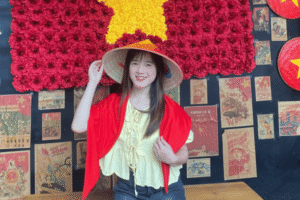
Thúy Kiều (Grace) is a travel blogger and content contributor for Loop Trails Tours Ha Giang. She holds a bachelor’s degree in Sustainable Tourism from Vietnam National University, Hanoi, and has a strong passion for exploring and promoting responsible travel experiences in Vietnam’s northern highlands.
Most of the Ha Giang Loop is about the landscape: passes, canyons, karst peaks that go on further than you can see. Then, in a quiet valley west of Dong Van, you walk through a stone gate and find something you did not expect up here at all: a two storey mansion of carved timber, curved tiled roofs and inner courtyards, built more than a century ago for the most powerful man on the plateau.
This is Vuong Palace Ha Giang, known locally as Nhà Vương or Dinh thự họ Vương, the house of the Vuong family. Travellers often call it the H’Mong King Palace. It is one of the few places on the loop where the history of the plateau stops being abstract. This guide covers who built it and why, what to look for as you walk through, how the visit fits into our tours, and how to see it on your own.
Learn more: Ha Giang Loop Tours
A lot of people arrive at Vuong Palace expecting a quick photo stop and leave having stayed twice as long as planned. There are three reasons.
It explains the plateau. The Dong Van Karst Plateau looks remote and timeless, but it has a political history: border trade, colonial power, the opium economy and the revolution. The Vuong family sat at the centre of all of it, and their house is the clearest physical record of that era anywhere on the loop.
The building itself is unusual. It mixes Chinese architecture from Yunnan, French colonial touches and H’Mong stone building traditions in a way you will not see anywhere else in northern Vietnam.
It breaks up the riding. On a day of passes and viewpoints, an hour on foot in shaded courtyards is a welcome change of pace, especially for families and anyone who has been on the back of a bike since breakfast.
Learn more: Ha Giang Loop 2 Days 1 Night
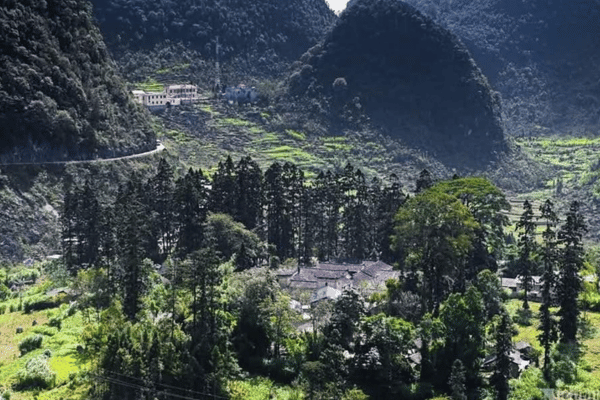
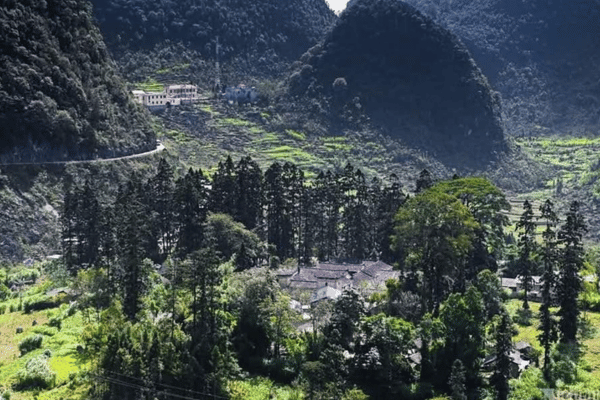
Vuong Palace stands in the Sa Phin valley, roughly 15 kilometres west of Dong Van town, on the road between Yen Minh and Dong Van. The palace sits on a low mound in the middle of the valley, with karst hills on all sides and tall old conifers around the walls. Local lore says the site was chosen because the mound resembles a turtle’s shell, a symbol of stability and long life.
The border with China is close, and the villages around Sa Phin are mostly H’Mong. Lao Sa village, with its stone walled H’Mong houses, and Sung La valley are both nearby, so the palace is usually one of several stops in the same morning or afternoon.
A small practical note: since 2025, Ha Giang has been part of Tuyen Quang province administratively. You may see Tuyen Quang on newer maps and addresses, but everyone, locals included, still calls the area Ha Giang.
Learn more: Ha Giang Loop 3 Days 2 Nights
There is no honest way to tell this story without opium. In French Indochina, opium was a legal commodity controlled and taxed by the colonial government, and the high limestone plateau was poppy country. Much of the Vuong family’s wealth came from controlling the opium trade in the area. That wealth paid for the palace, and you will find a reminder of it carved into the stone if you know where to look (more on that below).
The palace was built for Vuong Chinh Duc (1867 to 1947), a H’Mong leader who controlled much of the Dong Van plateau in the late 19th and early 20th centuries. He built his power through a mix of local authority, armed followers and trade, and he worked with the French colonial administration, which recognised his control over the area. People called him a king, and the name stuck
The story takes a turn with the next generation. Vuong Chinh Duc’s son, Vuong Chi Sinh (1886 to 1962), supported the Viet Minh during the August Revolution of 1945. He became the first chairman of Dong Van district after the revolution, served as a deputy in the National Assembly, and received a sword of honour from President Ho Chi Minh. That is why the family name is remembered on the plateau with a complicated mix of respect and history, and why the palace matters to Vietnamese visitors as much as to foreigners
You will see the palace called “Dinh Vua Mèo”, the palace of the Meo king, in some Vietnamese signs and older articles. Meo is an old name for the H’Mong that many H’Mong people now consider outdated or disrespectful. H’Mong is the name to use.
| Year | What happened |
|---|---|
| 1867 | Vuong Chinh Duc is born |
| 1886 | His son, Vuong Chi Sinh, is born |
| 1898 | Construction of the palace begins in Sa Phin |
| 1903 | The palace is completed, according to most sources |
| 1945 | Vuong Chi Sinh supports the Viet Minh during the August Revolution |
| 1947 | Vuong Chinh Duc dies |
| 1962 | Vuong Chi Sinh dies |
| 1993 | The palace is recognised as a national monument |
| Early 2000s | Restoration work is carried out |
| 2019 | The land use certificate is handed to the Vuong family |
| 2025 | Ha Giang becomes part of Tuyen Quang province administratively |
The dates are worth keeping in mind as you walk around: the house was built in the last years of the 19th century, lived in through French rule and the revolution, and has been open to visitors for decades.
Learn more: Ha Giang Loop 4 Days 3 Nights
Most sources date construction from 1898 to 1903. The Vuong family brought in skilled craftsmen from Yunnan in China to work alongside local H’Mong builders. The reported cost was around 150,000 Indochinese silver coins, an enormous sum at the time, raised from the family’s trade.
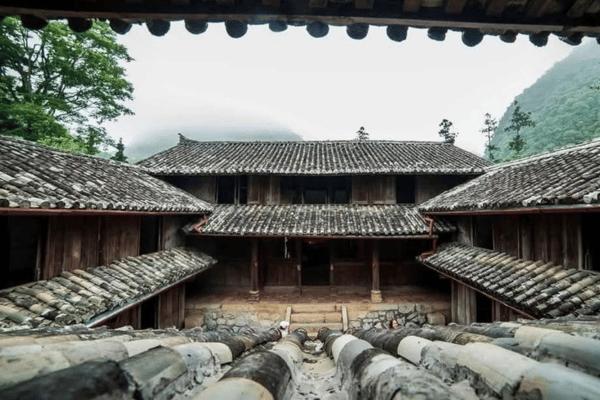
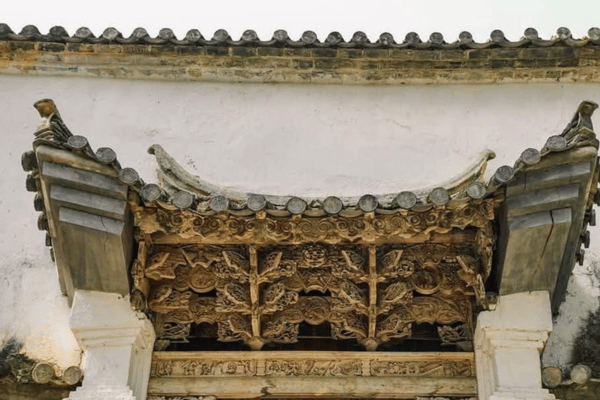
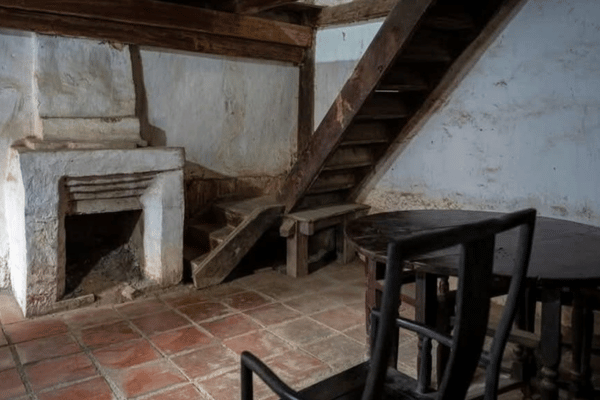
The palace is built from what the plateau and its forests could provide: grey green stone for the walls, foundations and column bases, heavy timber for the frames, columns and carved panels, and fired clay tiles for the roofs. The stone is the reason the building has lasted so well in a climate of cold winters and wet summers.
What makes Vuong Palace unusual is how freely it mixes traditions:
Learn more: Ha Giang Cao Bang 5 Days 4 Nights
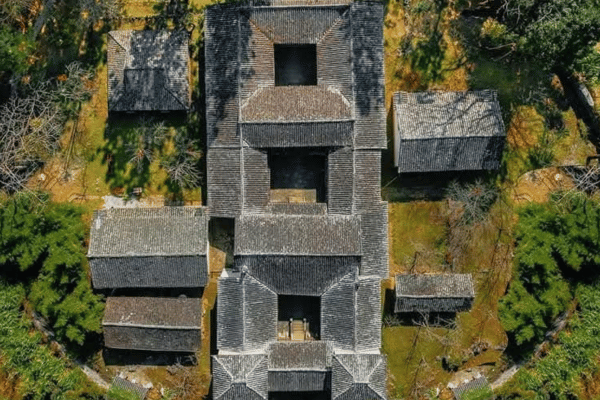
The palace covers a site of nearly 3,000 square metres, with more than 1,200 square metres of buildings. It is laid out as three sections, front, middle and rear, built around courtyards and rising gently up the slope, so the rear section sits several metres higher than the main gate. In total there are 64 rooms in two storey buildings, four running across the site and six running along it.
As you walk in, the rooms become more private. The front section was for guards, visitors and household business; the inner sections were for the family. Guides usually explain who lived where and how the household ran, and that story is a big part of what makes the walk interesting.
The whole compound is enclosed by two stone walls about three metres high, with small openings for firing through. This was a fortified house as much as a home. A powerful family on a contested border needed protection, and the defences are a reminder that life on the plateau a century ago was not peaceful.
Learn more: Ha Giang Cao Bang 6 Days 5 Nights
Vuong Palace was recognised as a national historical and architectural monument in 1993, and restoration work was carried out in the early 2000s. In 2019, the land use certificate for the site was handed to the Vuong family, and members of the family remain involved with the site today. That year, the palace was reported to be receiving more than 100,000 visitors a year.
Family graves lie close to the palace. The site is a monument and a tourist attraction, but it is also part of a family’s history, so treat it with the same respect you would give a historic family home anywhere.
Learn more: Ha Giang Border Area Permit 2026
Vuong Palace is part of the itinerary on these tours:
| Tour | When you visit | What comes before and after |
|---|---|---|
| Ha Giang Loop 3 days 2 nights | Day 1, afternoon | Tham Ma Pass and Lao Sa village before; overnight in Dong Van after |
| Ha Giang Loop 4 days 3 nights | Day 2, morning | Tham Ma Pass, Lao Sa and Sung La before; Lung Cu Flag Tower and Lo Lo Chai after |
| Ha Giang Cao Bang 5 days 4 nights | Day 2, morning | Overnight in Lao Xa, close to Sa Phin, the night before; Lung Cu Flag Tower and Ma Pi Leng Pass after |
The Ha Giang Loop 2 days 1 night tour covers the plateau on a tighter schedule and does not include the palace visit. If the palace matters to you, choose the 3 days 2 nights tour or longer.
On our tours, the entrance ticket is included in the tour price, so you do not need to sort out tickets yourself, and your guide or driver will tell you the story of the family as you walk through. That context makes a big difference: without it, the palace is a beautiful old building; with it, you understand why it is there.
Thinking about which loop to book? Message us on WhatsApp and tell us what you most want to see. If history and culture are high on your list, we will usually point you toward the 4 days 3 nights tour.
Lean more: Ha Giang in October
If you are riding the loop on your own with a rented motorbike, Vuong Palace is easy to reach. It is signposted from the main road through Sa Phin between Yen Minh and Dong Van, a short detour from the route.
Tickets: there is an entrance fee, paid at the gate. Check the current price on arrival, as fees change.
Opening hours: the palace is open during the day. Hours are not always posted reliably online, so check locally or with your accommodation, and arrive well before late afternoon.
How long to stay: allow at least 45 minutes to an hour to walk through all three sections without rushing. Longer if you want photographs in good light or to read the information panels.
Facilities: there are local stalls near the entrance selling drinks and snacks. Bring cash in small notes.
Riding there: the roads around Sa Phin are paved but winding, and they climb over Tham Ma Pass if you come from Yen Minh. Self drive and rental riders need a home motorcycle licence and an International Driving Permit under the 1968 Convention (a 1949 IDP is not valid in Vietnam). Riding without the correct documents can mean fines of 2,000,000 to 6,000,000 VND. Rules can change, so check the latest requirements before you travel.
Learn more: Ha Giang Loop Easy Rider
Go early or later in the day. Tour groups and domestic travellers tend to arrive in the middle of the day, especially at weekends in the autumn peak season. Morning light on the stone walls is also kinder for photographs.
Hire or bring a guide. The information panels give you the basics, but the story of the family is what brings the place to life. If you are travelling independently, a local guide for the day is worth it.
Be respectful around altars and graves. Some rooms still hold altars. Do not touch offerings, and keep your voice down near the family graves.
Photography: taking photos of the buildings is normal, but ask before photographing people, including stall holders and anyone in traditional dress.
Dress for the weather. The courtyards are open to the sky. In winter, the valley is cold in the shade; in summer, a sudden shower can catch you between buildings. A light layer and a rain jacket cover most situations.
Look up and down. The best details are at eye level on the column bases and above your head on the beams and roof edges. It is easy to walk past both

Learn more: Tu San Canyon & Nho Que River Boat Trip
The palace sits in one of the richest stretches of the loop, so it is never a stop on its own.
If you are visiting in late October or November, the fields around Sa Phin and Sung La may be in buckwheat flower. See our Ha Giang flower season calendar for timing.

Learn more: Ha Giang Loop by Wrangler Rubicon Jeep
All our tour types visit the same places. The difference is how you travel between them.
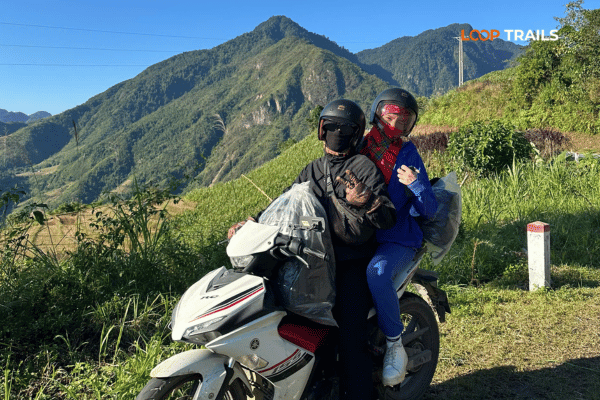
Easy Rider: you ride on the back of a motorbike with a local driver. This is the most popular choice, and the drivers know the Vuong story well, so you get the history from someone who grew up on the plateau.
Self Drive: you ride your own bike behind a guide. The roads around Sa Phin and over Tham Ma Pass are some of the best riding on the loop. You need the correct licence and a 1968 IDP, and we do not take self drive guests without them.
Jeep Wrangler Rubicon: you ride in comfort with a driver and guide. Ideal for families, couples, older travellers and anyone who would rather spend their energy walking the palace than holding on through the bends.
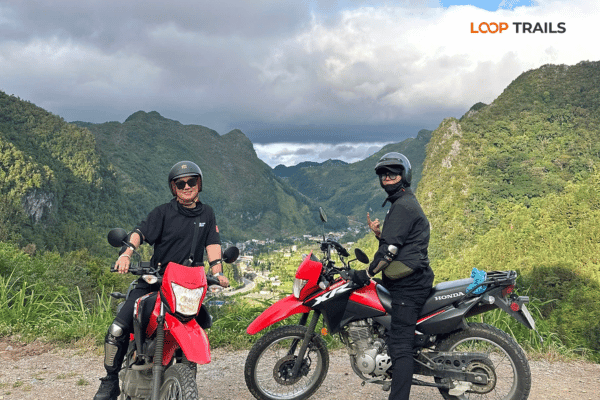
Motorbike rental: for experienced riders who want to set their own pace and linger at places like the palace. Plan your stops so you reach Dong Van before dark.
Learn more: Ha Giang Cao Bang Loop Cost
Prices include VAT, dormitory accommodation and everything listed in the itinerary. Private room upgrades, round trip bus tickets, and the border area permit for foreign visitors (260,000 VND per person) are extra.
Motorbike tours (price per person):
| Tour | Easy Rider | Self Drive |
|---|---|---|
| Ha Giang Loop 3 days 2 nights | 4,290,000 VND | 3,690,000 VND |
| Ha Giang Loop 4 days 3 nights | 5,690,000 VND | 4,890,000 VND |
| Ha Giang Cao Bang 5 days 4 nights | 10,990,000 VND | 10,590,000 VND |
Jeep Wrangler Rubicon tours (total price per vehicle, shared between passengers):
| Tour | 1 passenger | 2 passengers | 3 passengers | 4 passengers |
|---|---|---|---|---|
| Ha Giang Loop 3 days 2 nights | 17,490,000 VND | 20,990,000 VND | 24,990,000 VND | 28,490,000 VND |
| Ha Giang Loop 4 days 3 nights | 21,490,000 VND | 26,990,000 VND | 32,990,000 VND | 38,990,000 VND |
| Ha Giang Cao Bang 5 days 4 nights | 32,990,000 VND | 40,990,000 VND | 46,990,000 VND | 54,990,000 VND |
For jeep tours, most guests book one to three months ahead, because jeep availability is limited. Motorbike tours can often be booked closer to the date, but peak autumn weekends fill early.
Want to see Vuong Palace with someone who knows the story? Our 3 days 2 nights and 4 days 3 nights Ha Giang Loop tours both include the palace, with a guide or driver who will walk you through the history of the Vuong family. Choose Easy Rider, Self Drive or the Jeep Wrangler Rubicon, or message us on WhatsApp and we will help you pick.
Learn more: Ha Giang Motorbike Rental
Vuong Palace is the former residence of the Vuong family, H’Mong leaders who controlled much of the Dong Van plateau in the early 20th century. It was built between 1898 and 1903 and mixes Chinese, French and H’Mong architecture. Travellers often call it the H’Mong King Palace.
It is in the Sa Phin valley, roughly 15 kilometres west of Dong Van town, on the road between Yen Minh and Dong Van. It sits on the Dong Van Karst Plateau, close to the border with China.
Vuong Chinh Duc (1867 to 1947) was a H’Mong leader whose power on the plateau came from local authority, armed followers and trade, including opium. The French colonial administration recognised his control of the area. His son, Vuong Chi Sinh, later supported the revolution and served in the National Assembly
There is a small entrance fee paid at the gate, but the price changes, so check on arrival. On our Ha Giang Loop tours, the entrance ticket is included in the tour price
The palace is open during the day. Opening hours are not always reliably published online, so check locally and arrive well before late afternoon.
Allow 45 minutes to an hour to walk through all three sections. Give yourself longer if you want photos in good light or a detailed explanation from a guide
The 3 days 2 nights tour visits on Day 1 and the 4 days 3 nights tour on Day 2. The Ha Giang Cao Bang 5 days 4 nights tour visits on the morning of Day 2. The 2 days 1 night tour does not include the palace visit.
Vuong Chinh Duc was so powerful on the plateau that people called him a king. You may also see the name “Meo King palace” in older sources, but Meo is an outdated term that many H’Mong people find disrespectful.
Yes, especially if you want to understand the history of the plateau and not just its scenery. The building is unique in northern Vietnam, and the story of the family covers colonial rule, the opium trade and the revolution
Yes. The palace is a short, signposted detour from the main road through Sa Phin. You need a home motorcycle licence and a 1968 International Driving Permit to ride legally in Vietnam, and rules can change, so check the latest requirements.
Lao Sa village, Sung La valley, Tham Ma Pass, Lung Cu Flag Tower, Lo Lo Chai village and Dong Van old quarter are all on the same stretch of the loop. Most tours combine several of them in one day.
Yes. The palace is walked on foot through courtyards with some steps between sections, but there is no long climb. The jeep tour is a comfortable way for families and older travellers to reach it.
Contact information for Loop Trails
Website: Loop Trails Official Website
Email: looptrailshostel@gmail.com
Hotline & WhatSapp:
+84862379288
+84938988593
Social Media:
Facebook: Loop Trails Tours Ha Giang
Instagram: Loop Trails Tours Ha Giang
TikTok: Loop Trails
Office Address: 54A Tran Phu, Ha Giang 2, Tuyen Quang
Address: 54A Tran Phu, Ha Giang 2, Tuyen Quang
Facebook X Reddit Table of Contents Learn more: Ha Giang Loop Tours Every week someone messages us with the same two questions,

Facebook X Reddit Table of Contents Learn more: Ha Giang Loop Tours The Ha Giang Loop is a road built on bends.
Facebook X Reddit Table of Contents Learn more: Ha Giang Loop Tours If you could pick one month to see the Ha