

Lung Khuy Cave Ha Giang: The Hidden Underground World
Facebook X Reddit Table of Contents Learn more: Ha Giang Loop Tours Most people riding the Ha Giang Loop are focused on

Thúy Kiều (Grace) is a travel blogger and content contributor for Loop Trails Tours Ha Giang. She holds a bachelor’s degree in Sustainable Tourism from Vietnam National University, Hanoi, and has a strong passion for exploring and promoting responsible travel experiences in Vietnam’s northern highlands.
Learn more: Ha Giang Loop Tours
Most travelers spending weeks in Vietnam pack for heat — light clothes, breathable fabrics, the minimum they can get away with. Then they arrive in Ha Giang in October, step outside at 7am, and immediately wish they’d read a clothing guide.
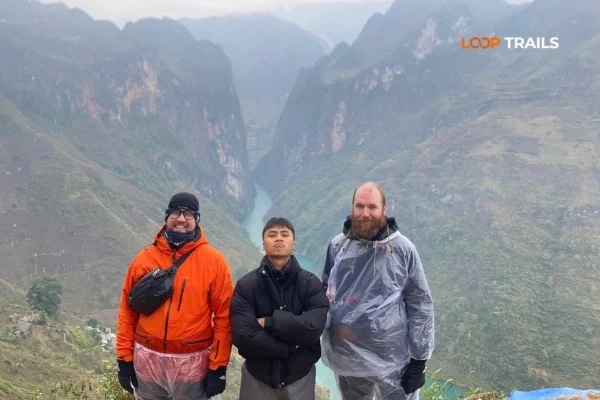
Ha Giang is not beach Vietnam. It sits in the country’s far north, at elevations that climb well above 1,500 meters on the main circuit. The wind on exposed mountain passes bites hard even in what’s technically “dry season.” And if you’re riding — whether on your own bike or pillion with a guide — you’ll be exposed to that wind for hours at a stretch.
Getting your clothing right isn’t about aesthetics. It’s about being comfortable enough to actually enjoy the ride, staying safe on a motorbike, and being able to move between very different contexts — road, market, village, homestay — without packing a 20kg bag.
This guide walks through everything: what the climate actually does across different months and elevations, what to wear riding versus exploring on foot, what to pack per season, and what you can sort out when you arrive versus what you really need to bring from home.
Learn more: Ha Giang Loop for Families & Groups
Before getting into specific clothing, it helps to understand what Ha Giang’s weather actually does — because it doesn’t follow the simple “hot and rainy” pattern that most of Vietnam does.
October through April is the main travel window, and the one where weather expectations go most wrong. Travelers arrive expecting warm Asian sunshine and get something considerably more nuanced.
October–November: Ideal conditions for many — pleasant temperatures during the day, cool evenings, the buckwheat flower bloom across the Dong Van Plateau. But “pleasant” at the plateau elevation means you’ll want a light jacket by late afternoon, and a proper one in the morning.
December–February: This is genuinely cold, especially at night and at elevation. Temperatures in Dong Van and Meo Vac can drop to single digits Celsius overnight. Frost is possible on the highest sections. Riding in these months without warm layers is miserable and, at speed, potentially dangerous because you tense up in the cold and your reaction times suffer.
March–April: Warming up, but still variable. Morning mist and haze are common. Temperatures are more comfortable for riding, though nights remain cool.
Rain is the defining factor here, and Ha Giang’s wet season is serious. You’re not dealing with tropical afternoon showers that clear in twenty minutes — you can get sustained rain over multiple days, with low cloud sitting on the passes and turning everything slippery and grey.
That said, the landscape in wet season is dramatically lush — rice terraces in full growth, waterfalls in full force, the mountains almost impossibly green. Travelers who go in this window and dress appropriately often love it.
The clothing priority shifts: less about warmth, more about waterproofing and quick-drying fabrics.
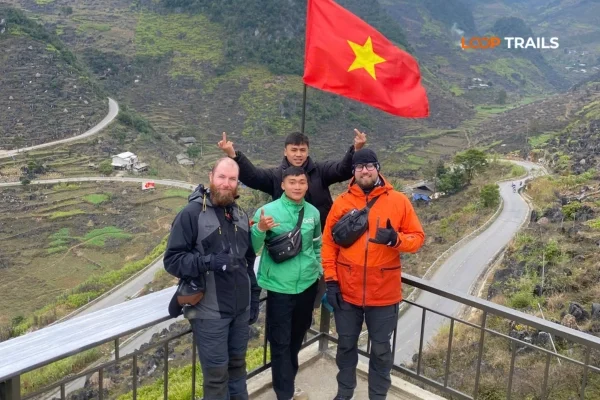
Ha Giang city sits at roughly 100m elevation. By the time you’re on the Dong Van Plateau or approaching Lung Cu, you’re well above 1,000m, with the highest road points touching 1,500m+. Every 1,000m of elevation drops the temperature by roughly 6–7°C.
Do the math: if it’s 25°C in Ha Giang city when you set off, it may be 15°C or cooler on the plateau — before accounting for wind chill from riding at speed. People who leave their guesthouse in a t-shirt in what feels like mild weather, then spend four hours on a mountain pass, understand this quickly.
Layering is the practical solution. It lets you adapt as elevation and conditions change throughout a riding day.

Learn more: Ha Giang Loop 4 Days 3 Nights
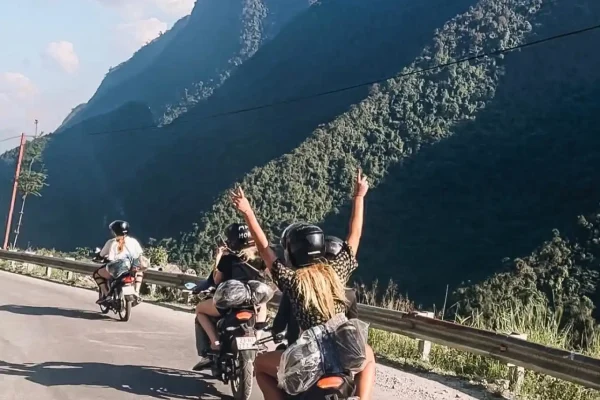
This is where the clothing choices have real consequences. On a motorbike — whether you’re self-driving or riding pillion with an Easy Rider guide — you’re exposed to wind, cold, sun, and occasional rain for extended periods. Your clothing is functional gear, not just fashion.
The Ha Giang approach that works in most seasons:
Base layer: A moisture-wicking long-sleeve top. Not cotton — cotton holds sweat and gets cold fast. Merino wool or synthetic athletic fabric works well. This is the layer that stays on all day and regulates your temperature as conditions change.
Mid layer (for cool/cold conditions): A fleece or light insulating layer. Compressible down jackets work excellently here — they pack small enough to go in a daypack when you don’t need them and provide serious warmth when you do. If you’re visiting December through February, this isn’t optional.
Outer layer: A windproof jacket. The wind at speed on exposed mountain passes cuts through fleece with no resistance. A riding jacket — ideally with CE-rated armor at the elbows, shoulders, and back — serves double duty as wind protection and crash protection. If you’re self-driving, a proper riding jacket is strongly recommended, not just a windbreaker.
For the warmest months (June–August), a light long-sleeve layer and rain jacket will often be enough. But even in summer, carry something with more warmth for early mornings and altitude.
Shorts on a motorbike in Ha Giang is a combination of two bad ideas: abrasion protection if you come off, and thermal comfort across all those elevation changes.
What to wear instead:
For self-drive riders particularly: long trousers are non-negotiable. Exposed legs at speed, over hours, in cold and wind, are uncomfortable at best and a safety liability at worst.

Learn more: Ha Giang Loop 2 Days 1 Night
Closed-toe shoes are the minimum standard. Sandals and flip-flops on a motorbike are a bad idea anywhere; on mountain roads they’re genuinely reckless — you need solid ankle support and foot protection if you’re touching the road at low speed or in an emergency.
What actually works:
Avoid: pure fashion sneakers (no ankle support), sandals of any kind for riding, and bulky waterproof boots that are hard to walk in.
Helmet: If you’re riding — even pillion — you’re wearing a helmet. That’s Vietnamese law and basic common sense. The question is what kind. The helmets provided with many rental bikes are open-face options that meet legal minimums but don’t provide chin protection. If you’re self-driving and taking the Loop seriously, a full-face helmet is the right call. You can buy decent options in Hanoi before heading north — don’t count on finding what you want in Ha Giang.
Neck/face covering: A buff or neck gaiter is one of the most useful things you can pack for Ha Giang. It covers the gap between your jacket collar and helmet, keeps wind off your neck and lower face, and pulls down when you don’t need it. In cold weather months, some riders wear it pulled up over their nose and mouth. Cheap, lightweight, makes a disproportionate difference.
Gloves: Non-negotiable for cold months; strongly recommended year-round. Your hands are on handlebars for hours, fully exposed to wind. Even in mild conditions, hands get cold faster than the rest of your body when riding. Lightweight riding gloves or liner gloves cover most conditions. For December–February, proper insulated riding gloves are worth packing.
Sun protection: The plateau has strong UV exposure, especially October through March when the air is clear and the sun is intense even when it doesn’t feel hot. A buff or face covering doubles as sun protection. Sunscreen on exposed skin, reapplied throughout the day.
Learn more: Ha Giang Homestay Guide
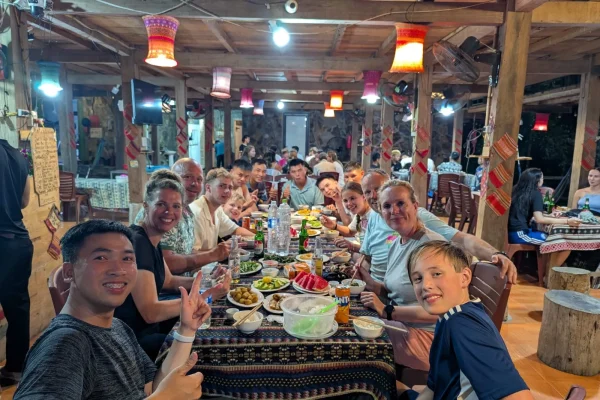
Riding gear solves the road problem. But the Ha Giang Loop is also about spending time in highland markets, wandering villages, and eating dinner with homestay families — and for those contexts, different considerations apply.
Ha Giang’s communities — Hmong, Dao, Tay, Lo Lo, and others — have their own dress cultures and social norms. You’re a guest in their spaces, and how you present yourself matters.
The practical guidelines are simple and not restrictive:
None of this means you need to overhaul your wardrobe. It just means your default setting for non-riding time should be modest and practical rather than beach-casual.
Evenings at homestays and guesthouses can be genuinely cold, especially at elevation in the cooler months. Have something comfortable and warm for after the riding day ends:

Learn more: Ha Giang Cao Bang 5 Days
Rain on the Ha Giang Loop is not a possibility you can plan around avoiding. Even in dry season, sudden downpours happen at elevation. In wet season, extended rain is the norm.
Good rain gear makes the difference between a miserable day and a wet-but-fine one.
What you need:
Rain jacket: Packable, proper waterproofing (look for a durable water repellent (DWR) coating and taped seams — not just “water resistant”). This should fit over your riding jacket. Most riding jackets are not waterproof on their own. A compact rain jacket that packs into its own pocket is the sweet spot.
Rain trousers: The often-forgotten half of rain gear. Wet jeans for an entire afternoon of riding is deeply unpleasant and cold. Lightweight rain trousers (also called waterproof overpants) pull on over your regular trousers in minutes and pack very small. Don’t skip these.
Waterproof bag cover or dry bag: Your daypack will get soaked if you’re caught in serious rain without a cover. A cheap rain cover for your bag, or a dry bag liner, keeps your phone, documents, and spare layers dry.
Waterproof glove liners: Optional but appreciated in sustained wet-season rain. Regular gloves become cold and heavy when wet.
You can buy basic rain gear in Ha Giang city and some towns on the loop. Quality varies — if you have specific gear you trust, bring it from home.
Learn more: Ha Giang in September & October
Here’s how the packing list shifts depending on when you’re going.
This is the most popular window — buckwheat flowers in October, clear skies, beautiful light. Also the coldest nights of the year approaching December.
Priority additions:
What you can leave home: Heavy rain gear (though pack a light rain layer regardless).
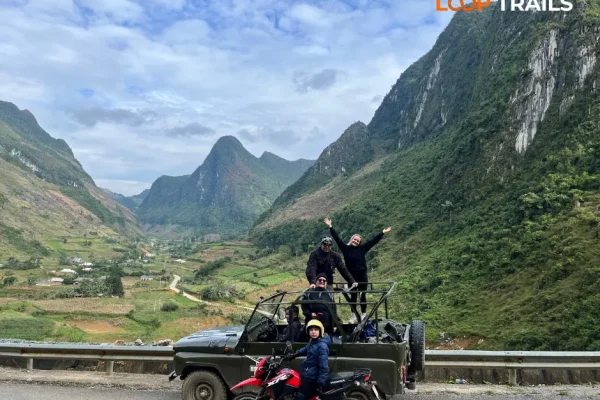
Learn more: Ha Giang Cao Bang by Jeep and motorbike
January and February are the coldest months. Frost is possible at the highest elevations. Fog and low cloud are common, which reduces visibility and adds to the cold feeling.
Priority additions (on top of Oct–Dec list):
What to expect: Some travelers in this window are surprised by how cold it actually gets. “Tropical Vietnam” assumptions need a full reset for Ha Giang in winter.
Conditions are more forgiving — temperatures are mild to warm, less cold at elevation, some rain but not sustained. The most flexible packing window.
Core list is sufficient: Light-to-mid layers, light rain gear, full riding gear. Check conditions closer to your trip as shoulder seasons can vary significantly year to year.
Warmest temperatures but regular, sometimes sustained rain. The focus shifts entirely to waterproofing and quick-drying fabrics.
Priority for wet season:
What you don’t need: Heavy insulation, thick socks, balaclava. Save the bulk for a cooler season trip.
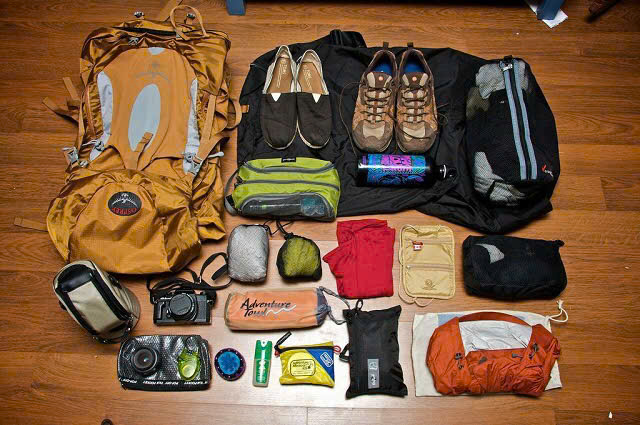
Learn more: Ha Giang Packing List
Use this as a starting point and adjust for your season.
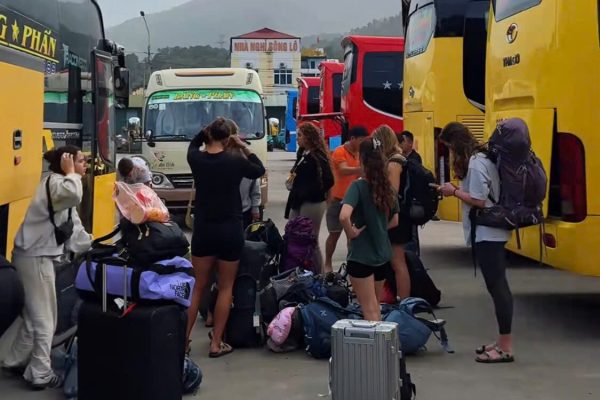
Learn more: Ha Giang Sleeper Bus from Hanoi
Buy in Ha Giang city or Hanoi:
Buy in Hanoi before heading north:
Bring from home:
Hanoi has a good selection of outdoor and sporting gear — both local brands and imported — particularly around the Old Quarter and in the sports equipment shops near the north of the city. If you’re coming into Vietnam through Hanoi before heading to Ha Giang, this is your best opportunity to fill gaps.
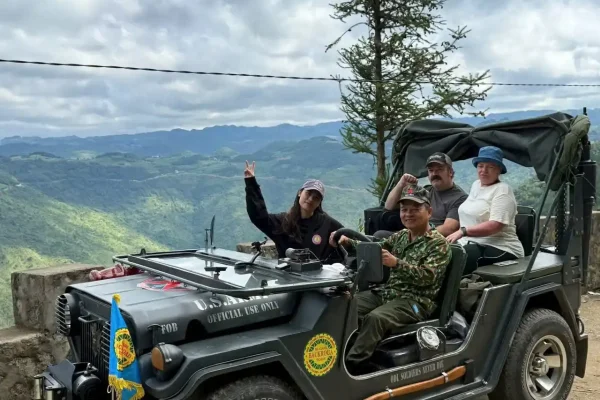
Learn more: Ha Giang Jeep Tours
Your packing list isn’t identical regardless of how you’re doing the Loop. How you travel genuinely affects what you need.
Easy Rider (guided, riding pillion): You’re a passenger, not a rider. The abrasion-protection considerations for self-drive don’t apply in the same way — but you’re still on a motorbike, still exposed to wind and cold, and still need the thermal and rain layers. You can get away with less armor and more focus on warmth and comfort. A windproof jacket and good rain gear matter more than a CE-rated riding jacket.
Jeep Tour: You’re in an enclosed vehicle. Wind exposure is minimal. Temperature regulation happens in the vehicle. Your clothing priority shifts almost entirely to: comfort, layers for when you’re out of the vehicle at viewpoints, appropriate dress for market and village stops, and rain gear for when you’re walking around. You can pack lighter on technical riding gear and focus more on versatile everyday clothing.
Self-Drive Motorbike: Full riding kit. No compromises on abrasion protection, helmet quality, gloves, or rain gear. You’re responsible for your own safety and comfort across long days in variable conditions — your gear reflects that. This is the heaviest packing scenario, but also the one where gear matters most.
→ Still figuring out which option is right for you? [Browse Ha Giang Loop tour options] or [send us a message on WhatsApp] — we can help you match the right tour style to your riding experience, group size, and what you want out of the trip.

Pack light overall. Luggage goes on a motorbike or in a jeep — neither rewards a 20kg backpack. Aim for a bag you can manage on a bike rack. Most homestays and guesthouses have basic laundry facilities or can point you to someone who does.
Layers beat single heavy items. A base layer, mid-layer, and shell jacket give you flexibility across wildly different conditions within a single day. One massive parka does not.
Silk liners are underrated. A silk sleeping bag liner adds warmth at homestays where blankets can be thin, and it packs to almost nothing.
Cotton is the enemy in Ha Giang. Cotton traps moisture — from sweat, from rain, from morning mist — and stays cold and damp for hours. In a market in the midday heat, fine. On a motorbike at altitude after rain, genuinely miserable. Merino wool and synthetic athletic fabrics are what you want for layers that need to perform.
Take photos of your outfit before you go. This sounds odd, but for insurance purposes — if gear is damaged or lost — documentation helps.
Learn more: Ha Giang Loop Photography guide
In peak winter (December–February), temperatures at the Dong Van Plateau can drop to 5–8°C overnight and stay cool through the morning. During riding hours in winter, wind chill brings the effective temperature lower. Summers are warm but elevation means mornings and evenings are cooler than lowland Vietnam.
For self-drive riders, a jacket with CE-rated armor (elbows, shoulders, back) is the right choice — both for abrasion protection and as a windproof layer. Easy Rider and jeep travelers can use a regular windproof jacket. Whatever you wear, it needs to be windproof enough to handle hours of exposure at speed.
For basics — socks, simple layers, thin rain ponchos — yes. For technical gear like proper riding jackets, high-quality rain gear, or insulated riding gloves, Ha Giang’s selection is limited. Hanoi before your trip is the better place to stock up on anything technical.
No enforced dress code, but covering shoulders and knees is the right call for markets, villages, and any community spaces. It’s simple respect for the communities you’re visiting, and locals notice the difference.
Rain trousers. Travelers remember to bring a rain jacket but skip the bottom half. Wet jeans for an afternoon on a motorbike is one of those experiences that makes you regret the oversight immediately.
Ankle boots or trail shoes with ankle support are the minimum. Sandals and flip-flops are genuinely not appropriate for motorbike riding — you need foot and ankle protection. Hiking boots work well and double for walking around villages and viewpoints.
If you already own one and can pack it, yes — helmet standards and fit vary and bringing your own means you know exactly what you’ve got. If not, buy one in Hanoi before heading north rather than relying on rental helmets, which range from acceptable to mediocre.
Merino wool for base layers — it regulates temperature across a wide range, wicks moisture, resists odor, and doesn’t feel cold when damp. Synthetic fleece for mid-layers. Avoid cotton for anything that needs to perform on a riding day.
A backpack (40–50L) that can sit on a bike rack or in a jeep boot is ideal. Rolling suitcases are unwieldy on motorbike transport and impractical if you’re doing any walking on unpaved paths. Keep it compact — you can do laundry on the road.
This is peak season and conditions are ideal — light-to-mid layers for riding days, something warmer for evenings, and light rain gear. The buckwheat bloom season has pleasant daytime temperatures but cool mornings and evenings at elevation. A packable down jacket, base layers, and a windproof shell covers most conditions.
Some travelers buy cheap gear in Vietnam, use it on the Loop, and leave it at a guesthouse for the next traveler. This works fine for basic items like thin gloves, socks, or rain ponchos. For anything technical (riding jackets, proper rain gear), buying cheap can mean it fails when you need it — better to bring quality gear and take it home.
In peak summer (July–August), daytime temperatures are warm and you won’t need heavy layers. But a long-sleeve layer is still advisable for UV protection and because the temperature drops when you gain elevation or when it rains. Rain gear is non-negotiable in summer — a t-shirt in a sustained downpour on a mountain road is dangerous as well as miserable.
Contact information for Loop Trails
Website: Loop Trails Official Website
Email: looptrailshostel@gmail.com
Hotline & WhatSapp:
+84862379288
+84938988593
Social Media:
Facebook: Loop Trails Tours Ha Giang
Instagram: Loop Trails Tours Ha Giang
TikTok: Loop Trails
Office Address: 48 Nguyen Du, Ha Giang 1, Tuyen Quang
Address: 48 Nguyen Du, Ha Giang 1, Tuyen Quang
Facebook X Reddit Table of Contents Learn more: Ha Giang Loop Tours Most people riding the Ha Giang Loop are focused on
Facebook X Reddit Table of Contents Learn more: Ha Giang Loop Tours There’s a moment that happens to a lot of remote
Facebook X Reddit Table of Contents Learn more: Ha Giang Loop Tours Ha Giang doesn’t have five-star hotels with rooftop pools. There’s