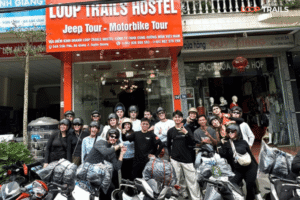


Thúy Kiều is a travel blogger and content contributor for Loop Trails Tours Ha Giang. She holds a bachelor’s degree in Sustainable Tourism from Vietnam National University, Hanoi, and has a strong passion for exploring and promoting responsible travel experiences in Vietnam’s northern highlands.
I’ve ridden the Ha Giang Loop four times now, and every single trip, someone asks me: “Which bike should I rent?”
It’s not a simple answer. I’ve watched travelers nail Ma Pi Leng Pass on Honda Waves. I’ve also seen experienced riders struggle with Winner Xs on the same stretch. The bike matters, but it’s not everything.
Here’s what actually makes a difference when you’re covering 300+ kilometers of mountain roads, navigating 15-hairpin passes, and dealing with everything from perfect tarmac to gravel washouts.

Learn more: Ha Giang Jeep Tours
Learn more: Ha Giang Loop tours
Before we compare bikes, you need to know what you’re riding into. Ha Giang isn’t a coastal cruise. The roads demand respect.
Ma Pi Leng Pass is the one everyone photographs. Eleven kilometers of switchbacks carved into cliffs, with drops that make your passenger grip tighter. The road itself? Mostly paved now, but narrow. You’ll encounter tour buses around blind corners, and the wind can genuinely push you toward the edge.
Bac Sum Pass hits you on Day 1. It’s your warm-up – steep climbs testing your bike’s low-end torque and your comfort with engine braking on descents.
Tham Ma Slope (called a slope, but it’s definitely a pass) includes sections where you’re climbing at 15-20% gradients. This is where underpowered bikes start to wheeze.
The Khau Coc Cha stretch on the Cao Bang extension features 15 distinct hairpin turns. Locals call it “Ma Thien Lanh” (Cold Devil Pass). Your bike needs responsive handling here – you’re constantly shifting, braking, accelerating out of tight corners.
Let me be straight: road quality varies massively, sometimes on the same kilometer.
The main loop between Ha Giang City → Dong Van → Meo Vac → back via Du Gia is mostly paved. “Mostly” means 85-90%. The rest includes:
The Cao Bang extension adds more unpredictability. Some sections near Ban Gioc are beautifully maintained. Others, particularly between Ha Quang and Tra Linh, can be rough.
Your bike needs ground clearance for unexpected obstacles and suspension that won’t punish you after 6-7 hours of riding.
October through March brings dry, cooler conditions. Roads are predictable. Visibility is excellent. Any bike will perform close to its potential.
May through September introduces rain. Not constant downpours, but afternoon storms are common. Wet roads amplify any bike’s weaknesses – poor brakes become dangerous, heavy bikes become harder to control, minimal tread depth means sliding.
I rode a Honda Wave in June. First two days were perfect. Day three brought rain. Going downhill on wet switchbacks, I was feathering brakes constantly, feeling the rear tire wanting to step out. A bike with better braking would’ve made that significantly less stressful.

Learn more: Ha Giang motorbike rental
Walk into any Ha Giang rental shop, and you’ll see three bikes dominating the fleet.
Engine: 149cc, air-cooled, single-cylinder
Type: Dual-sport / light enduro
Transmission: 6-speed manual
Weight: Approximately 125kg
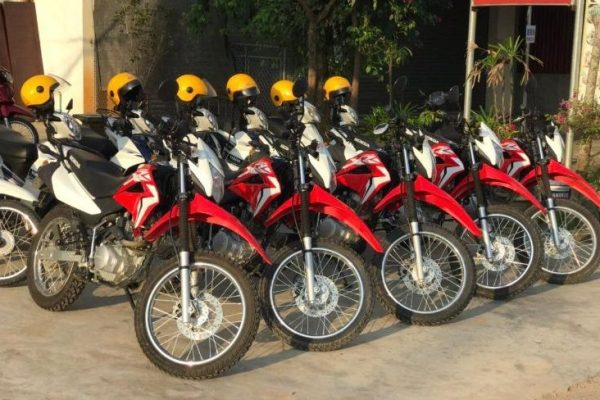
The XR150L is Vietnam’s go-to adventure bike. You’ll see it everywhere from Sapa to the Mekong Delta. For Ha Giang specifically, it’s probably 60% of all rental bikes.
Engine: 110cc, air-cooled, single-cylinder
Type: Underbone / semi-automatic
Transmission: 4-speed semi-automatic (no clutch)
Weight: Approximately 95kg
Vietnam’s commuter workhorse. Every Vietnamese family has owned one. Reliable, simple, economical – but is it enough for mountains?
Engine: 150cc, liquid-cooled, single-cylinder
Type: Sport / street bike
Transmission: 5-speed manual
Weight: Approximately 130kg
Honda’s sporty 150cc model. More power than the Wave, modern features, aggressive styling. But it’s designed for city streets and highways, not mountain passes.

Let’s talk about why this bike dominates Ha Giang rentals.
I’ve spoken with guides from multiple tour operators. They all say the same thing: the XR150L minimizes problems.
The engine produces power smoothly across the rev range. You don’t need to scream it to climb Tham Ma Pass. Third gear at 4,000-5,000 RPM pulls you up steadily. That matters when you’re riding for 6-8 hours daily.
Ground clearance is genuinely useful. There’s a section between Du Gia and Quan Ba where a small stream crosses the road during rainy season. The XR’s 250mm+ clearance means you ride through. Lower bikes require creative lines or stopping to assess depth.
The riding position is upright. Your weight is centered, not leaned forward like a sport bike. After four hours, your back and shoulders feel significantly better than they would on a Winner X.
Suspension travel handles the rough stuff. When you hit a pothole you didn’t see (because you were looking at the insane valley view), the XR absorbs it. Your passenger might not even notice.
I rode Ma Pi Leng on an XR150L during a clear December morning. Here’s what stood out:
Climbing the initial ascent: The bike didn’t struggle. Second and third gear did all the work. I could maintain 30-40 km/h comfortably while tour buses did their thing.
Navigating switchbacks: The XR’s weight helps here. It’s stable. You’re not fighting wobbles or feeling like the wind will push you around. The wide handlebars give leverage for tight turns.
Engine braking on descents: This is where the XR shines. Dropping down the Meo Vac side, I primarily used engine braking in second gear, touching the actual brakes only for hairpins. The bike stayed controlled, never felt like it was running away.
Fuel efficiency: I covered approximately 280 kilometers on about 9 liters of fuel. That’s roughly 31 km/L. Not spectacular, but the tank holds 12 liters, so range isn’t a concern.
The XR150L isn’t perfect.
It’s heavy for beginners. If you’ve never ridden, that 125kg feels like a lot when you’re trying to U-turn on a steep incline or recovering from a near-drop. I watched a German traveler struggle for 10 minutes trying to pick up his XR after a low-speed tip-over near Lung Cu. A Wave would’ve been back upright in 30 seconds.
Highway cruising is buzzy. The air-cooled single-cylinder vibrates noticeably above 70 km/h. Your hands go numb after extended highway stretches. Ha Giang Loop keeps you under 60 km/h most of the time, so this matters more if you’re riding from Hanoi.
Seat comfort is mediocre. The seat is firm. By hour five, you’re feeling it. Some rental shops provide seat cushions – take them.
Maintenance matters. A poorly maintained XR (loose chain, worn brake pads, old oil) loses its advantages. You’re trusting your rental shop did proper service.

Learn more: Ha Giang Loop Self-Driver
The Wave surprises people. It’s more capable than it looks..
Short answer: yes, with caveats.
The 110cc engine produces around 8.5 horsepower. That’s roughly half the XR’s output. But the Wave weighs 30kg less, so the power-to-weight ratio isn’t catastrophically different.
I rode a Wave Alpha (the 110cc version) from Ha Giang to Dong Van. Bac Sum Pass required momentum management. I kept the throttle pinned in third gear, occasionally dropping to second for the steepest sections. The bike made it without drama, but I wasn’t carrying a passenger.
With a passenger: The math changes. Add 60-70kg, and now you’re asking 8.5 horsepower to move 165kg up 15% grades. It’ll do it, but slowly. You’ll be in second gear a lot, and faster traffic will stack up behind you.
The semi-automatic transmission is actually an advantage for beginners. No clutch to worry about. You focus on throttle, brakes, and steering. On technical sections where you’re constantly speed-adjusting, just twisting the throttle and letting the bike figure out gearing is genuinely easier.
You’re solo and lightweight. If you’re 65kg with a small backpack, the Wave handles the loop fine.
You’ve never ridden a manual. Learning clutch control on Ha Giang’s hills is stressful. The Wave eliminates that variable.
Budget is tight. Wave rentals run 150,000-200,000 VND per day versus 250,000-350,000 VND for XRs. Over four days, that’s 400,000-600,000 VND saved.
You’re doing the 2-day express loop. Less total riding time means less fatigue. The Wave’s comfort deficits matter less.
Power limitations are real. Passing slow vehicles on uphill sections becomes impossible. You’re stuck behind that overloaded truck doing 15 km/h until the road flattens.
Braking isn’t confidence-inspiring. The Wave has drum brakes front and rear. They work, but modulation is less precise than disc brakes. On steep descents, you’re squeezing harder and heat buildup reduces effectiveness.
Gravel and loose surfaces are sketchy. The Wave’s smaller tires and lighter weight make it less stable on gravel patches. I nearly lost the front end on a dusty section near Sung La village.
Two-up riding is borderline. The suspension is tuned for commuting, not loaded touring. With a passenger and luggage, the rear sags noticeably. Bottoming out on bumps becomes common.
I’ve seen plenty of travelers complete Ha Giang on Waves successfully. I’ve also seen people struggle, arriving each evening exhausted and stressed. The bike can do it, but it’s working harder, and so are you.
Learn more: Ha Giang Cao Bang Loop Jeep tour Guide
The Winner X divides opinion sharply.
The Winner X’s 150cc liquid-cooled engine makes legitimate power. On paper, it matches the XR. In practice, the power delivery is different.
The Winner’s engine loves revs. Peak power arrives around 8,000 RPM. For highway acceleration or spirited riding on good roads, this is great. For crawling up a rocky incline at 2,000 RPM, it’s less ideal.
The gearing is designed for speed. First gear on a Winner X is taller than first on an XR. That means less mechanical advantage for steep starts. I watched a British rider on a Winner struggle to pull away from a stopped position mid-climb on Tham Ma. He needed three attempts, clutch slipping hard. An XR would’ve walked up.
The Winner X is a sport-oriented street bike. The riding position puts you leaned forward, weight on your wrists. This is sporty and engaging for an hour. For eight hours of mountain riding, it’s tiring.
The low handlebars limit leverage for slow-speed maneuvering. Tight U-turns feel awkward. The XR’s wide, high bars give you more control at walking pace.
Ground clearance is adequate but not generous. The Winner sits lower than the XR. On that stream crossing I mentioned earlier, you’d need to be careful. Scraping the undercarriage is possible.
The upside? The Winner handles beautifully on smooth tarmac. The sections of new road near Dong Van let you actually use the bike’s capabilities. It corners sharply, tracks precisely, and feels more planted than the XR at speed.
Experienced riders who value handling. If you’ve got 10,000+ km of riding experience and you know you can manage a slipping clutch on steep hills, the Winner rewards skill.
You’re mostly on good roads. If you’re doing a custom route that emphasizes the paved sections, the Winner makes sense.
You want modern features. The Winner has digital instruments, LED lights, and generally feels more contemporary.
You’re not carrying a passenger. Solo, the Winner is playful and fun. Two-up, it’s uncomfortable and lacks the power advantage over the XR.
Learn more: Ha Giang Cao Bang by Jeep and motorbike
Let’s get specific about how these bikes actually perform where it matters.
Climbing performance:
Descending control:
Switchback agility:
I tracked actual consumption over a 4-day loop:
XR150L: ~28-32 km/L depending on riding style and elevation changes. Tank range: 330-380 km.
Wave 110: ~45-50 km/L. Incredibly economical. Tank range: 180-200 km (smaller tank).
Winner X: ~30-35 km/L. Liquid cooling helps efficiency. Tank range: 180-200 km.
Gas stations appear regularly enough that range isn’t critical. But the Wave’s efficiency means spending roughly 200,000 VND less on fuel over four days compared to the others.
This is subjective, but here’s my experience and what other riders told me:
XR150L: Upright position saves your back. Seat gets hard by hour 5-6. Hand vibration is noticeable above 60 km/h. Overall: 7/10.
Wave 110: Relaxed riding position. Seat is basic but not terrible. Smaller wheels transmit bumps more directly. Footpegs are cramped for taller riders. Overall: 6/10.
Winner X: Sporty position strains wrists and lower back on long days. Seat is firmer than XR. Better for shorter, more aggressive riding sessions. Overall: 5/10 for touring, 8/10 for spirited riding.
Wave 110: Wins here. Semi-automatic transmission removes clutch complexity. Lighter weight is less intimidating. Power is manageable. If you’ve never ridden before, this is the safest choice.
XR150L: Forgiving but requires basic clutch skills. The weight can be intimidating for shorter or less confident riders. Once moving, it’s very stable.
Winner X: Least beginner-friendly. Requires decent clutch control on hills. Sportier ergonomics are less intuitive. More bike than a new rider needs.

If you’re booking an Easy Rider tour (you’re the passenger, experienced Vietnamese driver controls the bike), the bike choice is irrelevant to you. Your guide handles everything. You focus on the views.
For self-drive, the bike matters significantly more.
Easy Rider advantages:
Self-drive advantages:
If you’re considering self-drive but worried about bike choice, here’s my advice: your riding experience matters more than the bike. A confident rider on a Wave will have a better time than a nervous beginner on an XR.
Loop Trails offers both Easy Rider and self-drive options across all tour lengths. The guides know Ma Pi Leng Pass better than most people know their own neighborhood.
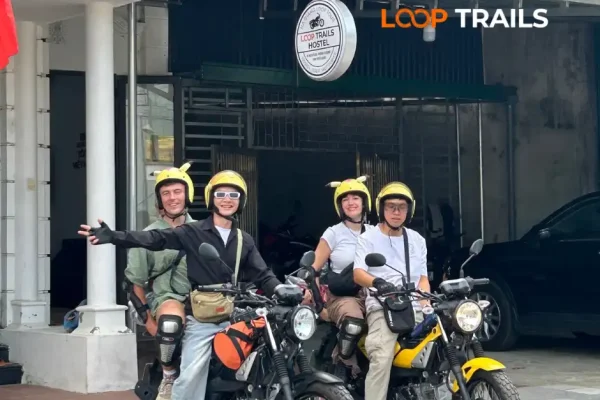
Learn more: Ha Giang Loop Easy Rider
I’ve talked to dozens of riders at Loop Trails Hostel and other stops. Here’s what I’ve noticed:
Southeast Asian riders (Thai, Indonesian, Malaysian travelers) often prefer the XR150L. They’re familiar with similar bikes at home, and they value the ground clearance and torque.
European riders split between XRs and Winners. Germans and Austrians often go for XRs. British and French riders sometimes pick Winners, especially if they’re experienced on sport bikes.
American and Australian riders lean toward XRs. Many have dirt bike or adventure bike experience back home.
First-time motorbikers overwhelmingly choose Waves or book Easy Rider tours. Smart decision.
Two-up couples almost always take XRs or book Jeep tours. The power and comfort difference matters significantly with a passenger.
One interesting pattern: riders doing Ha Giang + Cao Bang 5-day tours almost exclusively use XRs. The extra distance and rougher sections near Ban Gioc make the XR’s comfort and capability worthwhile.
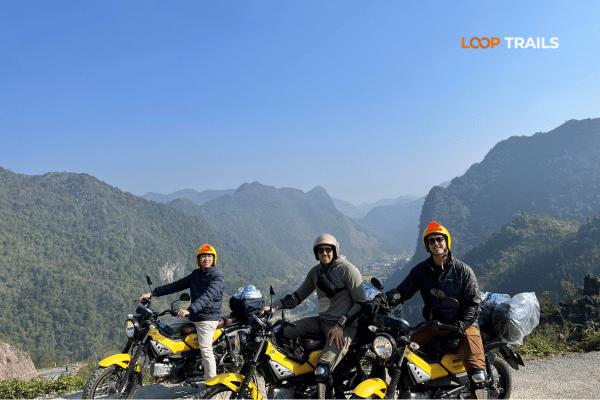
Learn more: Cao Bang Loop Tours Vietnam best kept secret
Let’s simplify this.
✓ You’re carrying a passenger
✓ You have basic manual transmission experience
✓ You want the most versatile, proven option
✓ You’re doing 3-4 days or more
✓ You value stability over agility
✓ Budget allows 250,000-350,000 VND/day for rental
✓ You’re extending to Cao Bang
✓ You’re over 180cm tall (the ergonomics suit taller riders)
✓ You’re riding solo
✓ You’ve never used a clutch
✓ Budget is a primary concern
✓ You’re doing the 2-day express loop
✓ You’re under 70kg and not carrying much luggage
✓ You prioritize simplicity and fuel economy
✓ You’re comfortable riding slower and letting traffic pass
✓ You’re an experienced rider (5,000+ km)
✓ You enjoy spirited riding on good roads
✓ You’re riding solo without much luggage
✓ You’re comfortable with clutch control on steep hills
✓ You want modern features and sharper handling
✓ You’re doing a custom route emphasizing paved sections
Here’s what nobody says enough: renting a bike in Ha Giang carries real risks.
Road accidents happen. Every week, someone crashes. Usually minor, sometimes serious. Mountain roads are unforgiving.
Bike problems happen. Broken clutch cables, flat tires, chain issues – I’ve seen all of these strand riders.
Police checkpoints happen. International Driving Permits aren’t always accepted. Fines range from negotiable “fees” to actual citations.
Stress happens. If you’re not a confident rider, 6-8 hours of nervous riding isn’t fun.
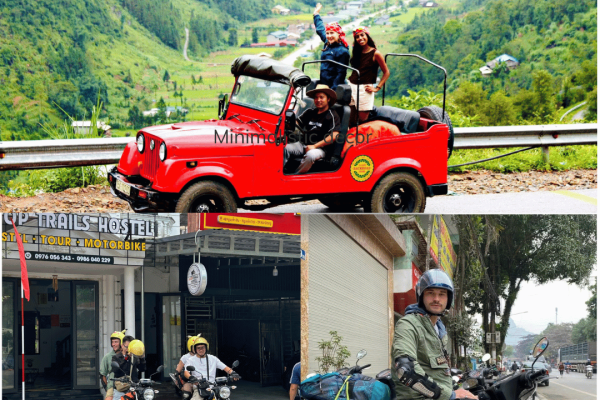
Jeep tours solve all of this. You get the full loop experience, better photo opportunities (your hands aren’t on handlebars), local guide insights, and zero riding stress. Loop Trails runs Jeep tours for 1-4 passengers with experienced drivers who’ve done the route hundreds of times.
Jeep pricing from Loop Trails:
Prices include dorm accommodation, all meals, entrance fees, and guide. Private room upgrades and bus tickets from/to other cities available separately.
Is it more expensive than self-drive? Yes. Is it worth it if you’re unsure about riding? Absolutely.

Learn more: Ma Pi Leng Pass
If you’re committed to self-drive, rent smart.
Inspect everything before leaving:
Red flags to avoid:
Get clear answers on:
Documentation you need:
Vietnamese law technically requires a Vietnamese motorcycle license for anything over 50cc. IDPs are accepted by some police, rejected by others. This is a gray area. Be prepared to negotiate or pay fines (usually 500,000-1,000,000 VND if stopped).
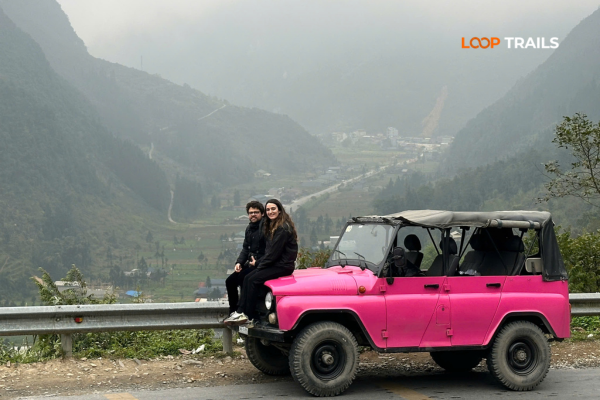
Learn more: Ha Giang Cao Bang by Jeep and motorbike
There’s no single “best” bike for Ha Giang Loop. The best bike is the one that matches your skill level, physical build, riding experience, and trip length.
For most riders, most of the time: The Honda XR150L is the safe choice. It’s capable everywhere, comfortable enough, reliable, and proven on these roads. You won’t regret it.
For confident beginners or solo budget travelers: The Honda Wave is more capable than people assume. Ride within its limits, and it’ll get you around the loop successfully.
For experienced riders wanting engagement: The Honda Winner X rewards skill. You’ll enjoy the handling and power on good sections, but you’ll work harder on technical ones.
For everyone else: Seriously consider an Easy Rider tour or Jeep tour. The mountains don’t care about your ego. Getting around safely while actually enjoying the incredible scenery beats struggling on a bike that’s too much or too little for your abilities.
I’ve done Ha Giang on a Wave, an XR, and as an Easy Rider passenger. Each had merits. But if I’m honest, the Easy Rider trip was the one where I actually remembered the views instead of the road.
Whatever you choose, Ha Giang Loop delivers. The bike is just how you get there. The destination – those impossible mountain vistas, the hilltribe villages, the feeling of being genuinely remote – that’s what you’ll remember years later.
Need more personalized advice? Loop Trails staff can help you choose based on your specific situation. They’ve seen every combination of rider skill, bike choice, and trip outcome. Talk to them before you commit.
Technically yes, but I don’t recommend it. If you’ve never ridden before, Ha Giang’s steep passes, tight corners, and unpredictable traffic are genuinely dangerous for learning. If you’re determined to try, choose a Honda Wave for its semi-automatic transmission, ride solo without a passenger, and consider doing just the 2-day loop. Better option: book an Easy Rider tour where you’re the passenger, enjoy the experience, then decide if you want to attempt self-ride on a future trip.
110cc is the absolute minimum, and only if you’re riding solo. Anything smaller lacks the power for steep climbs. Most riders do better with 125-150cc bikes like the XR150L. Don’t rent a 50cc scooter – you’ll struggle constantly and create traffic hazards.
The XR150L is better suited for Ha Giang’s mixed terrain. The Yamaha Exciter is a street-oriented bike similar to the Winner X – good on paved roads, less capable on rough sections. The XR’s ground clearance, suspension travel, and low-end torque give it advantages on mountain roads. Exciters are fine if you’re experienced and sticking to paved routes.
Yes, legally you do. An IDP with motorcycle endorsement is required for bikes over 50cc. Some police checkpoints accept IDPs, others don’t. Without proper documentation, expect fines ranging from 500,000-1,000,000 VND if stopped. Some rental shops rent without checking licenses – that’s risky for you legally. Get an IDP before traveling to Vietnam.
Expect 150,000-250,000 VND per day for a Honda Wave, 250,000-350,000 VND per day for a Honda XR150L, and similar pricing for Winner X models. Always includes helmet. Damage deposit is usually 3-5 million VND or your passport. Cheaper rates often mean poorly maintained bikes. Prices are fairly standardized across reputable shops.
It can, but it’s not ideal. With a passenger and luggage, you’re asking 8.5 horsepower to move 160-180kg up steep grades. The bike will manage in second gear, but slowly (15-20 km/h on steepest sections). You’ll hold up traffic and work the engine hard. Solo on a Wave? Totally fine. Two-up? Upgrade to an XR150L for everyone’s comfort and safety.
Depends on your rental shop. Reputable operators like those Loop Trails recommends provide rescue services or bike replacement. They have partners along the route. Budget shops might leave you stranded. Before renting, ask explicitly: “What support do you provide if the bike breaks down in Dong Van?” Good shops have clear answers. Also verify their phone support is available 24/7.
Rent in Ha Giang city. The 300km ride from Hanoi to Ha Giang on a rented bike is mostly boring highway riding, which tires you before the good stuff begins. It also adds unnecessary breakdown risk and riding time. Take a sleeper bus from Hanoi to Ha Giang (included in Loop Trails tour packages), rent locally, do the loop, then return the bike before your bus back. Much smarter logistics.
Yes, but they’re not recommended. Automatic scooters (typically 125-150cc) lack the engine braking that manual bikes provide on steep descents. You’ll burn through brake pads and risk brake fade. The Wave’s semi-automatic is a better compromise – still no clutch, but proper gearing for mountains. If you absolutely need an automatic, at least get a 150cc model and avoid carrying passengers.
Most Easy Rider guides use Honda XR150L or similar 150cc bikes. Some use Honda Winner X if they’re experienced and the route is primarily paved. The guides are extremely skilled – they can handle bikes that would challenge tourists. When you book with Loop Trails, guides use well-maintained XR150s that are comfortable two-up and reliable over multi-day trips.
Most rental shops include basic third-party insurance. It rarely covers you as the rider, though. Travel insurance with adventure sports coverage is smarter. Confirm your policy covers motorcycles over 125cc if renting an XR or Winner. Standard travel insurance often excludes motorbikes entirely. World Nomads and SafetyWing offer plans covering motorcycles up to 200cc in Vietnam – verify current policies before your trip.
Some rental shops allow one-way rentals, usually with an extra fee (500,000-1,000,000 VND). Not all shops have this option. If you’re doing the 5-day Ha Giang + Cao Bang tour, ask specifically about drop-off flexibility when renting. Loop Trails can arrange bike rentals that accommodate the extended route, or you can do the tour as an Easy Rider/Jeep option and avoid the logistics entirely.
Contact information for Loop Trails
Website: Loop Trails Official Website
Email: looptrailshostel@gmail.com
Hotline & WhatSapp:
+84862379288
+84938988593
Social Media:
Facebook: Loop Trails Tours Ha Giang
Instagram: Loop Trails Tours Ha Giang
TikTok: Loop Trails
Office Address: 48 Nguyen Du, Ha Giang 1, Tuyen Quang
Address: 48 Nguyen Du, Ha Giang 1, Tuyen Quang

Facebook X Reddit Table of Contents Learn more: Ha Giang Loop Tours This is the question that sits in almost every Ha

Facebook X Reddit Table of Contents Learn more: Ha Giang Loop Tours Most people drive past the Quan Ba area twice on