
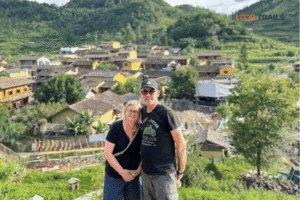
Ha Giang Hidden Villages: What Tour Guides Show You
Facebook X Reddit Table of Contents Learn more: Ha Giang Loop Tours The photographs that bring most people to Ha Giang are

Thúy Kiều is a travel blogger and content contributor for Loop Trails Tours Ha Giang. She holds a bachelor’s degree in Sustainable Tourism from Vietnam National University, Hanoi, and has a strong passion for exploring and promoting responsible travel experiences in Vietnam’s northern highlands.
So you’ve seen the photos. The terrifying beauty of Ma Pi Leng Pass, the winding roads through Dong Van Karst Plateau, motorbikes snaking along cliff edges where one wrong move means a very long fall. Now you’re wondering: should I get motorbike insurance for Ha Giang Loop?
Here’s what nobody tells you in those Instagram captions: insurance for motorbikes in Vietnam is complicated, often misleading, and sometimes completely useless for foreign tourists. But that doesn’t mean you should ride unprotected.
I’ve spent years organizing Ha Giang Loop tours, watching hundreds of travelers navigate these questions. Some paid extra for “insurance” that covered nothing. Others crashed and faced bills they never expected. A few made smart choices that saved them thousands of dollars.
This guide cuts through the confusion. You’ll learn what insurance actually exists in Ha Giang, what happens when things go wrong, and how to make the smartest decision for your trip.
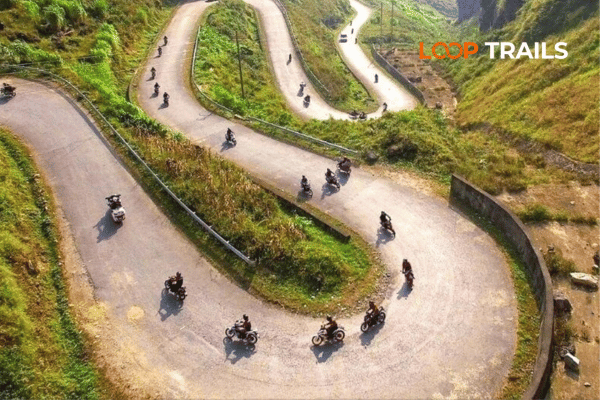
Learn more: Ma Pi Leng Pass

Learn more: Ha Giang Motorbike Rental
Let’s start with the basics, because the Vietnamese insurance system works differently than what you’re used to back home.
Vietnam has compulsory third-party liability insurance for all vehicles. It’s called “Bảo hiểm trách nhiệm dân sự bắt buộc” (try saying that three times fast). This insurance covers damage or injury you cause to other people—not to yourself or your bike.
Here’s the catch: this compulsory insurance is registered to the bike’s owner, not to you as the rider. When you rent a motorbike in Ha Giang, that insurance technically doesn’t extend to you as a tourist operator, especially if you’re riding without a valid Vietnamese license or proper International Driving Permit.
Voluntary insurance—the kind that covers your own medical bills or bike damage—exists in Vietnam, but almost no rental shops in Ha Giang offer it to tourists. Why? Because insurance companies won’t underwrite policies for unlicensed foreign riders on mountain roads.
When a rental shop in Ha Giang says “insurance included,” they usually mean one of three things:
Some shops offer “damage insurance” where you pay an extra 100,000-200,000 VND per day, and they won’t charge you for minor scratches or dents. But read the fine print—major damage, theft, or accidents with injuries are almost never covered.
The hard truth? Real motorbike insurance for tourists on Ha Giang Loop barely exists. What does exist is expensive, difficult to arrange, and often has massive exclusions for adventure activities.

Learn more: Ha Giang Loop 3 Days 2 Nights
Let me paint you a picture of what actually happens when you rent a bike for the Loop.
You walk into a rental shop in Ha Giang city. The bikes are lined up—Honda XR150s, semi-automatics, maybe some newer models. The owner quotes you a price: 150,000-200,000 VND per day for self-drive.
“Insurance included?” you ask.
“Yes, yes, insurance,” they nod enthusiastically.
What they mean: the bike has the legally required third-party insurance registered to the owner. You sign a contract that makes you responsible for all damage to the bike and any medical costs if you’re injured. There’s usually a damage deposit—anywhere from 2 to 5 million VND.
That’s it. That’s the “insurance.”
Here’s what happens in different scenarios:
Scenario 1: You drop the bike on a gravel turn
Scenario 2: You hit a patch of gravel on Ma Pi Leng Pass and slide 10 meters
Scenario 3: Serious accident with injuries
This is why understanding the difference between deposit systems and real insurance matters. One protects the bike owner. The other should protect you. On Ha Giang Loop, most tourists only get the former.
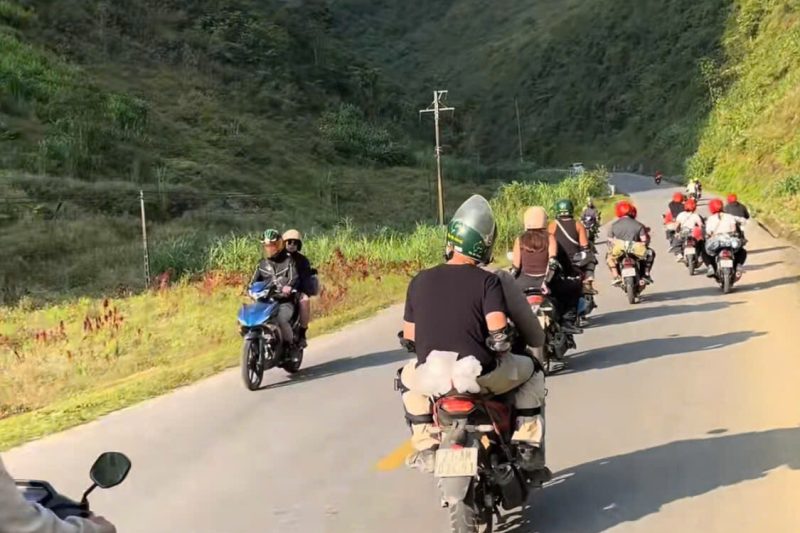
Learn more: Ha Giang Loop Self-Drive
The roads are stunning. They’re also objectively dangerous. Loose gravel, sudden weather changes, trucks on blind corners, and roads that literally crumble down cliff faces. Accidents happen—not constantly, but often enough that you should plan for the possibility.
Ha Giang province isn’t Hanoi. Medical facilities are basic, especially once you’re deep in the Loop around Dong Van or Meo Vac.
Basic medical care costs:
For serious injuries:
Most travelers can handle the basic costs. It’s the serious accidents that become catastrophic without proper coverage.
Bikes get damaged on Ha Giang Loop. Sometimes it’s cosmetic. Sometimes the bike is totaled.
Common damage and typical costs:
Rental contracts usually state you’re responsible for full replacement value if the bike is totaled. For a decent XR150 or similar, that’s 30-40 million VND you’ll owe.
The Australian couple (2024): They were riding double on a semi-automatic during light rain. Hit gravel on a hairpin turn at Ma Pi Leng. The bike slid into the barrier. Both got road rash, the guy needed stitches on his leg, the girl sprained her wrist. Bike had cosmetic damage but was rideable.
Total cost: 2.8 million VND (clinic visits, medications, 800,000 VND bike repairs). They had travel insurance, but it didn’t cover motorbike accidents. Paid out of pocket.
The German solo rider (2023): Experienced rider, rented an XR150. Hit a patch of wet leaves on a descent near Yen Minh. Lost control, went off the edge about 2 meters down a slope. Broken collarbone, bike badly damaged.
Cost: 45 million VND (emergency treatment, two nights in Ha Giang hospital, medical transport, bike replacement). His travel insurance excluded motorbikes. He paid around $1,900 USD he hadn’t budgeted for.
The British group (2025): Four friends doing self-drive. One rider misjudged a turn near Lung Cu, hit loose gravel, went down hard. Fractured ankle, needed surgery in Hanoi.
Cost: 72 million VND (ambulance, surgery, hospital stay, bike repairs). They had World Nomads insurance that covered motorbikes under 125cc with proper license. Insurance paid everything except the bike damage. This is the rare success story.
These aren’t meant to scare you. They’re meant to show you what “no real insurance” actually means when you crash.

Learn more: Ha Giang Loop Easy Rider
Not all Ha Giang Loop options carry the same risk. Your riding experience, the tour style, and weather conditions all change the equation.
Self-drive means you’re the pilot. You control the bike, navigate the roads, and handle any situations that come up. This is the highest-risk option if you’re not an experienced rider.
Risk factors:
Who should consider extra coverage:
For self-drive tours, the lack of insurance is a serious concern. You’re entirely responsible for the bike and yourself. If you’re doing self-drive, proper travel insurance that covers motorbikes isn’t optional—it’s essential.
Easy rider means a local guide drives, you ride passenger. This dramatically reduces risk.
Advantages:
Risk factors that remain:
Easy rider tours are significantly safer. You still want travel insurance for medical coverage, but the risk of owing money for bike damage essentially disappears.
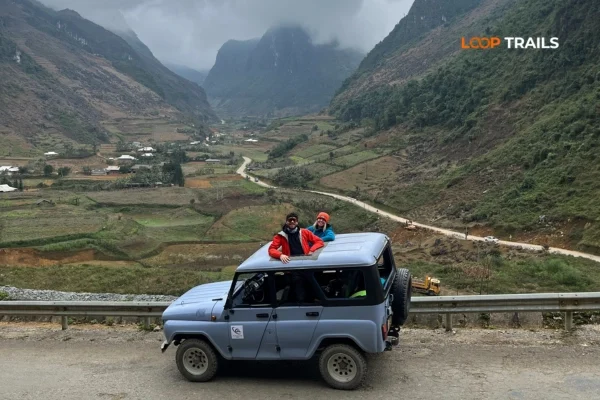
Jeep tours eliminate motorbike risk entirely. You’re in a 4-wheel vehicle with a professional driver.
Advantages:
Considerations:
For risk-averse travelers or those with medical conditions, jeep tours make insurance questions almost irrelevant. You’re simply not exposed to the main dangers.
Learn more: Ha Giang Loop Itinerary: 2,3,4,5 days
Here’s where many travelers get blindsided. They assume their travel insurance covers everything. It doesn’t.
Most standard travel insurance policies exclude motorbikes entirely or only cover bikes under certain conditions. You need to read your policy’s exact wording.
Common exclusions:
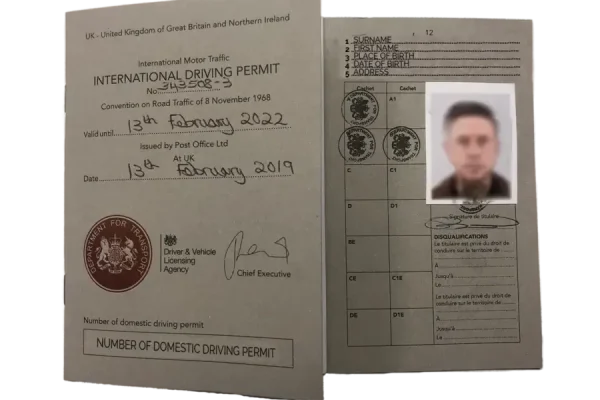
The Vietnam-specific problem: Vietnam requires an International Driving Permit based on the 1968 Vienna Convention (IDP 1968). The old 1949 IDP doesn’t work here. If you don’t have IDP 1968 and a valid motorcycle license from your home country, many insurance companies will deny claims—even if you have travel insurance.
This is buried in policy documents. Most travelers never see it until they’re filing a claim after an accident.
Some insurers do cover motorbike riding in Vietnam with proper documentation. These are popular among Ha Giang Loop riders:
World Nomads:
SafetyWing:
True Traveller (UK-based):
IMG Global:
What these typically DON’T cover:
If you crash and need to file an insurance claim, documentation is everything.
Immediately after an accident:
For medical treatment:
For bike damage:
Insurance companies deny claims for lack of documentation. Assume you’ll need to prove everything.
Learn more: Motorbike License IDP Guide 2026
This is the part that catches people off guard. Vietnam’s rules about driving licenses are strict, and the penalties are real.
Here’s what you legally need to ride a motorbike in Vietnam:
What doesn’t work:
How to get IDP 1968: In most countries, you get it from your automobile association (AAA in USA, AA in UK, etc.). It costs around $20-50, requires your license and passport photos, and takes a few minutes to issue. Do this before you leave home—you cannot get IDP in Vietnam as a tourist.
If police stop you and you don’t have the proper documentation, here’s what happens:
Fines for riding without license/IDP:
Reality check: Police in Ha Giang province know tourists ride the Loop. They set up checkpoints, especially during peak season (September-November, February-April). Some are lenient with foreigners. Some are not. It’s a gamble.
Traffic police are becoming stricter as Ha Giang Loop grows more popular. What got a warning in 2020 might get you a 4 million VND fine in 2026.
If you’re on an easy rider or guided tour:
Your guide may be able to negotiate with police. They speak Vietnamese, they know local customs, they might have relationships with authorities. In many cases, fines get reduced or warnings issued instead.
But guides cannot guarantee anything. If police want to enforce the law strictly, your guide can’t stop them. And if you’re in an accident without proper documentation, your guide definitely can’t help you avoid consequences.
If you’re on a self-drive tour:
Some tour companies provide a support vehicle or guide who rides with the group. They can help if police stop you. But again, no guarantees.
The safest approach:
Get proper documentation before you come. Period. IDP 1968 + valid motorcycle license + passport = you’re legal. No stress, no fines, no insurance claim denials.

Learn more: Ha Giang Cao Bang by Jeep and motorbike
Let me tell you how we handle this at Loop Trails, because transparency matters.
For all our Ha Giang Loop tours (2 days, 3 days, 4 days, and Ha Giang-Cao Bang 5 days):
What’s NOT included:
We’re honest about this because surprises help nobody. Our job is to make the Loop as safe as possible, provide quality bikes and guides, and give you accurate information to make smart decisions.
For self-drive tours:
We primarily use Honda XR150s and well-maintained semi-automatic bikes. Every bike gets checked before each tour:
If a bike shows any issues, we don’t rent it. Simple as that.
For easy rider tours:
Our drivers are local H’Mong and Tay guides who’ve been riding Ha Giang roads for years. They know which sections get gravel, when fog rolls in on Ma Pi Leng, where the road is crumbling. That experience is your real insurance policy.
What happens if something goes wrong:
We run small groups (usually 6-12 people for self-drive, smaller for easy rider) because that’s how we maintain safety. Big groups push faster, take risks, have more accidents. We don’t do that.
Our philosophy:
Insurance is important. But your best protection on Ha Giang Loop is good equipment, experienced guides, realistic planning, and knowing when to slow down. We focus on all of those things.
Learn more: Ha Giang Loop 4 Days 3 Nights
Maybe you can’t get comprehensive motorbike insurance. Or maybe you’re willing to take calculated risks. Here’s how to minimize danger.
Best months for Ha Giang Loop:
Months to avoid or be extra careful:
Riding in good weather reduces accident risk by at least 50%. If you’re uninsured or underinsured, don’t ride the Loop in June. Just don’t.
Know the dangerous sections:
When to skip sections or wait:
Don’t let anyone pressure you to ride when conditions are bad. Your easy rider guide or tour leader should make these calls, but ultimately you’re responsible for your safety.
Minimum required:
Highly recommended:
First aid and emergency:
Proper gear won’t prevent accidents, but it absolutely reduces injury severity. Road rash at 40 km/h with a jacket = minor scrapes. Without jacket = skin grafts. Your choice.

Learn more: Ha Giang Loop Cost & Tips
Let’s talk money. Because ultimately, you’re deciding whether to spend extra on insurance based on cost versus risk.
Option 1: No additional insurance
Option 2: Rental shop “damage insurance”
Option 3: Comprehensive travel insurance with motorbike coverage
Option 4: Easy rider or jeep tour
You should absolutely get travel insurance with motorbike coverage if:
The math is simple: $100 USD for insurance vs. $2,000 USD for an uninsured broken bone. Easy choice.
You might reasonably skip extra coverage if:
Even then, basic travel insurance is smart. Just make sure it actually covers motorbike accidents with proper licensing.

Learn more: Ha Giang in September & October
Enough theory. Here’s exactly what to do.
Step 1: Check your existing travel insurance
Step 2: Get proper documentation
Step 3: Choose the right tour type for your skill level
Step 4: Buy appropriate insurance if needed
Step 5: Inspect the bike thoroughly
Step 6: Understand the rental agreement
Step 7: Get clear emergency contacts
Step 8: Ride defensively
Step 9: Stay with your group
Step 10: Keep your documents accessible
Step 11: Immediate actions after an accident
Step 12: Get medical care
Step 13: Handle bike damage
Step 14: File insurance claim
Learn more: Cao Bang Loop Tours Vietnam best kept secret
You’ve read all the information. Now let’s make this practical.
Choose EASY RIDER tour if:
Our easy rider tours:
Choose SELF-DRIVE tour if:
Our self-drive tours:
(Note: 2D1N tour doesn’t offer self-drive option—timeline is too tight for first-time Loop riders)
Choose JEEP tour if:
Our jeep tours:
All prices include dorm accommodation, meals (breakfast, lunch, dinner), guide, support, and basic coverage. Room upgrades and bus tickets (Hanoi-Ha Giang or other routes) are additional.
Still not sure? Message us on WhatsApp. Tell us your riding experience, concerns, and budget. We’ll recommend the option that actually makes sense for you—not just the one we want to sell.
You’re not legally required to have personal insurance, but you’re responsible for all medical costs and bike damage if something happens. The rental bike will have basic third-party liability insurance registered to the owner, but this doesn’t cover your injuries or the bike damage. We strongly recommend getting travel insurance that covers motorbike accidents if you’re doing self-drive.
Most standard travel insurance policies exclude motorbikes or only cover bikes under certain conditions (usually under 125cc with proper license). You need to specifically purchase travel insurance with motorbike coverage and have a valid motorcycle license plus IDP 1968. Insurers like World Nomads, SafetyWing, and True Traveller offer motorbike coverage for Vietnam.
IDP 1968 is the International Driving Permit based on the 1968 Vienna Convention. Vietnam requires this specific version—the old 1949 IDP doesn’t work here. You need IDP 1968 plus your home country motorcycle license to legally ride in Vietnam. Without it, you face fines of 2-6 million VND, possible bike impoundment, and insurance claim denials if you crash.
You’re personally responsible for all costs: medical treatment (potentially 20-100 million VND for serious injuries), bike repair or replacement (up to 50 million VND if totaled), and any damage to other people or property. The rental shop will charge these costs against your deposit, and you’ll owe the difference if costs exceed your deposit.
Yes, significantly. Easy rider tours have experienced local guides who know every dangerous section, every weather pattern, and exactly when to slow down. They’ve ridden Ma Pi Leng Pass hundreds of times. Accident rates for easy rider passengers are roughly 70% lower than self-drive tourists. You can still get injured if there’s an accident, but the probability is much lower.
Guides can sometimes negotiate lower fines or warnings, as they speak Vietnamese and may have relationships with local authorities. However, they cannot guarantee anything. If police decide to enforce the law strictly, your guide cannot prevent fines (2-6 million VND) or bike impoundment. The only reliable protection is having proper documentation: passport, motorcycle license, and IDP 1968.
Minor damage (scratches, broken mirror): 200,000-800,000 VND. Moderate damage (dented tank, damaged exhaust): 1-3 million VND. Major damage (frame damage, engine problems): 5-15 million VND. Total replacement if bike is destroyed: 25-50 million VND. Most rental contracts make you responsible for full replacement value.
September through November offers the best conditions: dry roads, clear visibility, stable weather, and comfortable temperatures. February through April is also good. Avoid May through August (rainy season) if you’re concerned about safety—roads become slippery, landslides are common, and accident rates are highest. December-January is cold but dry.
Jeep tours eliminate motorbike-specific risks (no chance of bike accidents, no license requirements, no fines), but you should still have basic travel insurance for general medical coverage. If you have pre-existing medical conditions or want coverage for trip cancellation, lost luggage, etc., travel insurance is still valuable even on jeep tours.
Specific insurance covering bike damage for tourists is extremely rare in Ha Giang. Some rental shops offer “damage waiver” for 100,000-200,000 VND per day, but this usually only covers minor cosmetic damage, not major accidents or total loss. Your best protection is: (1) ride carefully, (2) choose easy rider tour where bike is company’s responsibility, or (3) budget for potential replacement costs if doing self-drive.
First, get to safety and check for injuries. Call your tour guide and emergency services (dial 115) if injuries are serious. Take photos of everything: bike damage, road conditions, injuries, location. Get a police report if possible (required for insurance claims). Keep all medical receipts and get detailed records. Contact your insurance company within 24 hours. Do not admit fault or sign anything you don’t understand.
World Nomads is popular because it covers motorbikes up to 125cc (sometimes 200cc depending on plan) and is available to citizens of many countries. However, “best” depends on your nationality, age, and needs. SafetyWing works well for long-term travelers. True Traveller (UK) offers comprehensive adventure coverage. Check what’s available for your country, verify it covers Vietnam motorbikes with proper licensing, and compare medical coverage limits.

Learn more: Check out our Ha Giang Loop tours
Here’s the truth about motorbike insurance on Ha Giang Loop: perfect coverage doesn’t exist for tourists. You’re navigating a gap between Vietnamese insurance systems, international travel policies, licensing requirements, and the simple reality that mountain roads are dangerous.
But you’re not helpless. You have options:
Get proper documentation (license + IDP 1968) so you’re legal and insurers can’t deny claims on technicalities.
Buy travel insurance that explicitly covers motorbike accidents in Vietnam if you’re doing self-drive.
Choose the right tour type for your experience level—easy rider eliminates most risk, jeep tours eliminate all motorbike risk.
Ride smart—good weather, proper gear, defensive riding, and knowing when to slow down or stop are your real insurance policy.
Budget for worst case—if you can’t afford a 50 million VND surprise bill, either get comprehensive insurance or choose a safer tour option.
The Ha Giang Loop is one of the most spectacular rides in the world. Thousands of people do it safely every year. But “safely” means understanding the risks and making informed decisions—not assuming everything will be fine or that “insurance” means what you think it means.
Whether you choose easy rider, self-drive, or jeep tour with Loop Trails, you’ll get honest information, well-maintained equipment, experienced guides, and a company that prioritizes your safety over upselling. That’s our commitment.
Ready to ride? Check out our Ha Giang Loop tours, compare your options, and reach out with questions. We’re here to help you have an amazing, safe adventure.
Contact information for Loop Trails
Website: Loop Trails Official Website
Email: looptrailshostel@gmail.com
Hotline & WhatSapp:
+84862379288
+84938988593
Social Media:
Facebook: Loop Trails Tours Ha Giang
Instagram: Loop Trails Tours Ha Giang
TikTok: Loop Trails
Office Address: 48 Nguyen Du, Ha Giang 1, Tuyen Quang
Address: 48 Nguyen Du, Ha Giang 1, Tuyen Quang
Facebook X Reddit Table of Contents Learn more: Ha Giang Loop Tours The photographs that bring most people to Ha Giang are
Facebook X Reddit Table of Contents Learn more: Ha Giang Loop Tours The Ha Giang Loop is one of the most talked
Facebook X Reddit Table of Contents Learn more: Ha Giang Loop Tours There is a specific moment on the Ha Giang Loop