
Thúy Kiều is a travel blogger and content contributor for Loop Trails Tours Ha Giang. She holds a bachelor’s degree in Sustainable Tourism from Vietnam National University, Hanoi, and has a strong passion for exploring and promoting responsible travel experiences in Vietnam’s northern highlands.
Ha Giang ruins you for other destinations. After shooting these mountains—the way morning light catches the terraced rice fields, how mist pours through valleys like slow-motion waterfalls, the sheer verticality of Ma Pi Leng Pass—everything else feels flat. Literally and metaphorically.
I’ve watched photographers arrive with expensive gear and leave with memory cards full of shots they can’t quite believe they captured. The loop delivers the kind of dramatic landscapes that make your Instagram followers ask “is that even real?” Yes, it’s real. And yes, you can shoot it.
But Ha Giang photography isn’t just about showing up with a camera. The light changes fast at elevation. Weather shifts from golden sunshine to dense fog within an hour. The best shots often require hiking off the main road or waking up before dawn. And if you’re riding a motorbike while trying to protect thousands of dollars in camera gear, you need a strategy.
This guide covers the photography locations that consistently deliver, the technical considerations specific to mountain shooting, and how to balance getting great shots with actually enjoying (and safely completing) the loop. Whether you’re shooting on a phone, a mirrorless setup, or bringing a drone, here’s what you need to know.
Learn more: Ha Giang Loop Tours
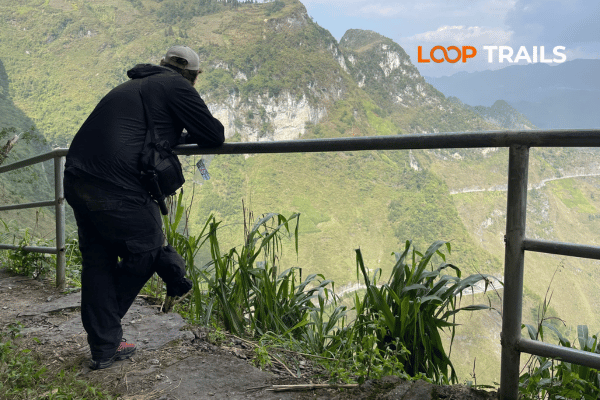
Let’s start with the obvious: Ha Giang offers visual drama at a scale most destinations can’t match. We’re talking roads carved into vertical cliff faces, valleys so deep they create their own weather systems, and mountain ranges that layer into the distance like a Chinese painting.
The elevation changes create constantly shifting perspectives. At Heaven Gate, you’re shooting down into valleys. On Ma Pi Leng Pass, you’re shooting across at eye-level mountains. In Du Gia, you’re looking up at peaks surrounding rice terraces. This variation means every few kilometers offers completely different compositions.
The cultural element adds another layer. This isn’t pristine wilderness—it’s a lived-in landscape. H’Mong and Tay villages cling to hillsides, their traditional homes creating focal points in otherwise overwhelming vistas. Market days bring bursts of color. Daily life unfolds against backdrops of limestone karst formations.
Seasonal changes transform the scenery entirely. May through September brings green everywhere—terraced rice fields glowing emerald. October sees rice harvest, adding golden tones. Winter (December-February) can bring fog and occasional frost that creates ethereal atmospheres. Each season offers different photographic opportunities.
The accessibility factor matters too. Unlike remote mountain regions requiring multi-day treks, Ha Giang’s best photography locations sit right on the road. You can shoot Ma Pi Leng Pass from the actual pass road. Heaven Gate has a parking area 50 meters from the viewpoint. Lung Cu Flag Tower? Drive to within sight of it.
That said, “accessible” doesn’t mean “easy.” The combination of challenging roads, unpredictable weather, and the physical demands of carrying camera gear while riding requires planning. Which is exactly what the rest of this guide addresses.
Learn more: Ha Giang Loop 2 Days 1 Night
Here’s the truth about gear: the Ha Giang loop is hard on equipment. Dust gets everywhere, rain can appear without warning, and if you’re riding a motorbike, vibration is constant. Pack smart or spend your trip worried about your cameras instead of using them.
Camera Body: A weather-sealed mirrorless or DSLR is ideal but not essential. If your camera isn’t weather-sealed, bring rain covers and ziplock bags. Many photographers successfully shoot the loop on Fuji, Sony, Canon, or Nikon mirrorless systems.
Wide-angle (16-35mm or similar): This is your landscape workhorse. Most of Ha Giang’s drama requires wide focal lengths to capture the scale. Scenes like Ma Pi Leng Pass or Heaven Gate need wide glass to include both foreground elements and distant mountains.
Standard zoom (24-70mm or 24-105mm): Versatility matters when you can’t bring your entire lens collection on a motorbike. This range handles landscapes, environmental portraits, and detail shots of village life.
Telephoto (70-200mm): Compresses mountain layers beautifully and lets you shoot candid portraits without being intrusive. Also useful for isolating distant valley details or picking out specific elements in vast landscapes.
If you’re traveling ultra-light, a single 24-105mm or 24-200mm handles most situations. You’ll miss some wide-angle drama and telephoto compression, but you’ll also have less weight and complexity to manage.
Tripod: A lightweight travel tripod makes a huge difference for golden hour and blue hour shots. Carbon fiber keeps weight down. Many photographers skip tripods to save space—I get it, but you’ll regret it when trying to shoot in low light or do long exposures of waterfalls.
Filters: Circular polarizer (CPL) is nearly essential—it cuts haze in the mountains, deepens blue skies, and manages reflections on water. Neutral density (ND) filters help with motion blur in waterfalls or bright midday long exposures, though less critical than the CPL.
Batteries and Memory Cards: Bring more than you think you need. Cold weather drains batteries faster. If you’re shooting RAW at high resolution, memory cards fill up quickly. Minimum: 3-4 batteries, 128GB+ of card storage (more if shooting video).
Weather Protection: Rain covers for your camera, dry bags for your backpack, lens cloths for constant cleaning. The dust on these roads is persistent—you’ll be cleaning your sensor after the trip regardless, but protect what you can during it.
Don’t underestimate modern smartphone cameras. iPhone 15 Pro, Samsung S24 Ultra, Google Pixel 8 Pro—all capable of stunning landscape shots. Advantages include always having it accessible, excellent computational photography, and no worry about expensive gear damage.
Bring a small phone tripod for stability and consider a polarizing filter attachment. The biggest phone limitation in Ha Giang is zoom range for distant details and low-light performance compared to larger sensors.
This is where theory meets reality. You’re riding mountain passes with expensive equipment strapped to your back or bike. Here’s what works:
Camera Backpack Strategy: Wear it properly with both straps, not slung over one shoulder. A good camera backpack (Lowepro, Peak Design, f-stop) distributes weight and includes rain covers. Keep it under 10kg total if possible—you’re wearing it for hours.
Quick Access: Keep one camera body with your most-used lens accessible. Having to stop, dig through your bag, swap lenses, pack everything back, and restart gets old quickly. Many photographers ride with a camera in a Peak Design Capture Clip on their backpack strap for instant access.
Jeep Tour Advantage: If photography is your primary goal and you’re bringing serious gear, jeep tours offer more space, less vibration, and easier stops at prime locations. You’re not worried about balance while wearing a heavy pack or protecting gear from road vibration.
Learn more: Ha Giang Loop for Beginners
The loop offers dozens of incredible shooting locations. These fifteen consistently deliver the shots that define Ha Giang photography.
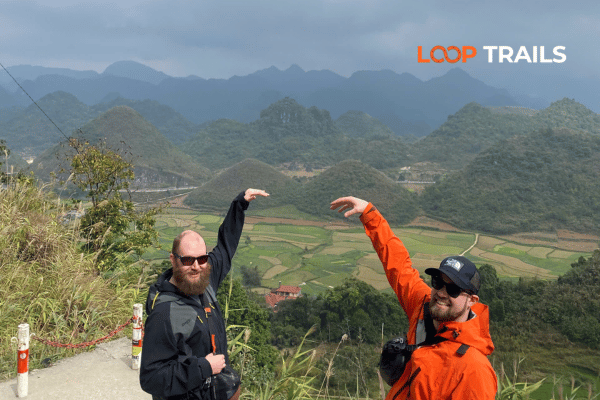
What makes it special: Your first major viewpoint on the loop, Heaven Gate offers sweeping panoramas of the Quan Ba valley with its distinctive twin mountains called “Fairy Bosom” by locals. The elevation provides a commanding perspective over terraced fields and village clusters.
Best time: Early morning (6:30-8:00 AM) when mist fills the valley and morning light is soft. Late afternoon (4:00-5:30 PM) for warm golden hour illumination.
Photography tips: The official viewpoint gets crowded. Walk 100 meters north along the road for alternative angles. Use a wide-angle lens (16-24mm) to capture the full valley sweep. Include the winding road as a leading line in your composition.
Learn more: Ha Giang Loop 4 Days 3 Nights
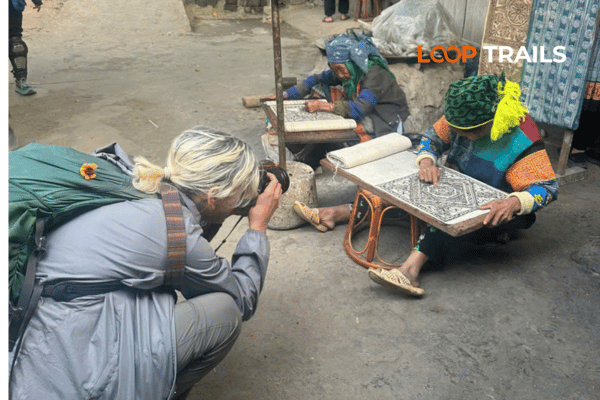
What makes it special: Traditional H’Mong weaving village where women work hand looms in wooden houses. Authentic cultural scenes without feeling staged, plus colorful textiles that photograph beautifully.
Best time: Mid-morning (9:00-11:00 AM) when weavers are actively working and light enters through wooden house windows.
Photography tips: Ask permission before shooting portraits. The textiles and weaving process make excellent detail shots. Use a standard lens (35-50mm) for environmental portraits showing weavers in their workspace.
Learn more: Ha Giang Cao Bang 5 Days
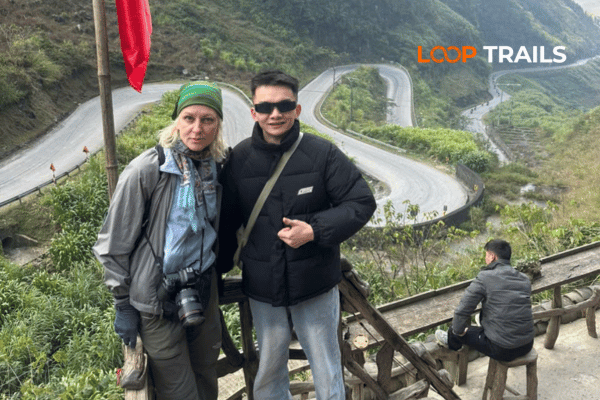
What makes it special: Nine switchback turns visible simultaneously create a serpentine pattern that’s visually striking from above. The road literally zigzags down the mountain face.
Best time: Afternoon (2:00-4:00 PM) when the sun illuminates the road surface and creates shadows that define the switchbacks.
Photography tips: Shoot from the upper section looking down to compress all nine turns into one frame. A moderate telephoto (70-100mm) compresses the perspective nicely. Include a motorbike or vehicle navigating the curves for scale.
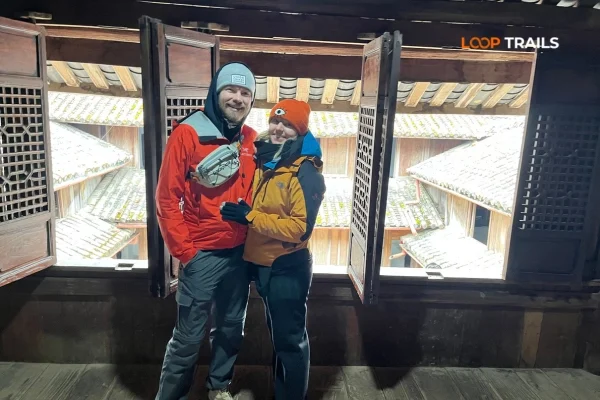
Learn more: Ha Giang Loop for Couples
What makes it special: Historic residence of the H’Mong king, this architectural complex combines traditional design with Chinese influences. Ornate wooden carvings, courtyards, and period details offer cultural photography opportunities.
Best time: Morning (8:00-10:00 AM) before tour groups arrive, with softer light for architectural details.
Photography tips: Focus on architectural details—carved doors, roof lines, courtyard compositions. Wide-angle lenses (16-24mm) work for full building shots, but the real interest is in details captured with standard to short telephoto lenses (35-85mm).
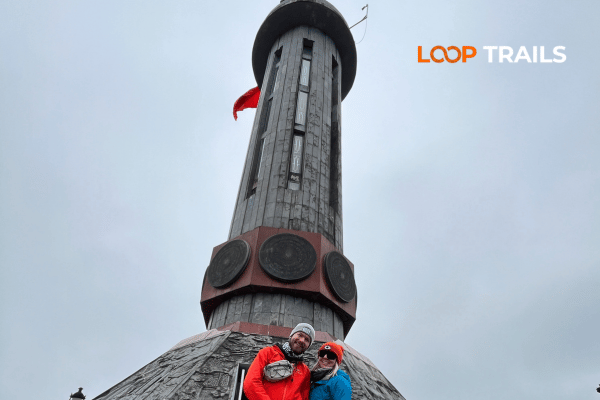
Learn more: Ha Giang Loop Cost & Tips
What makes it special: Vietnam’s northernmost point, marked by a massive flagpole on a hilltop with 360-degree views to China border mountains. The symbolic significance and panoramic vistas make it compelling.
Best time: Late morning to early afternoon (10:00 AM-2:00 PM) when the sun is high enough to illuminate all directions.
Photography tips: The tower itself photographed from below with blue sky makes a strong image. Climb to the top for landscape panoramas—bring a wide-angle lens. The staircase leading up creates interesting leading lines.
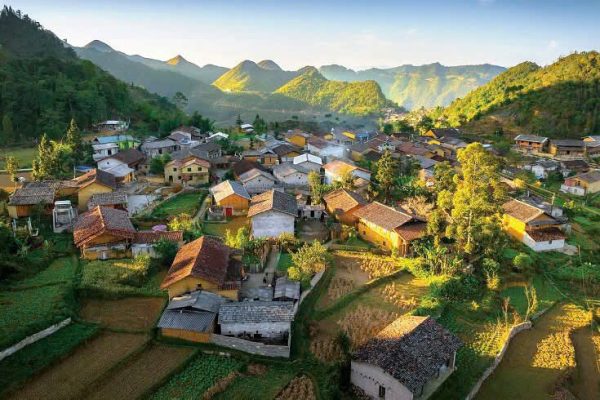
Learn more: Ha Giang Loop Weather
What makes it special: One of the few remaining Lo Lo ethnic minority villages, featuring traditional clay houses painted in earth tones. The architecture is distinct from H’Mong villages and the village setting against mountain backdrop is photogenic.
Best time: Afternoon (3:00-5:00 PM) when light warms the earth-toned houses.
Photography tips: Respectful distance is important—this is a real village, not a tourist attraction. Photograph houses and setting first, people only with permission. The village layout against the hillside creates strong compositions.
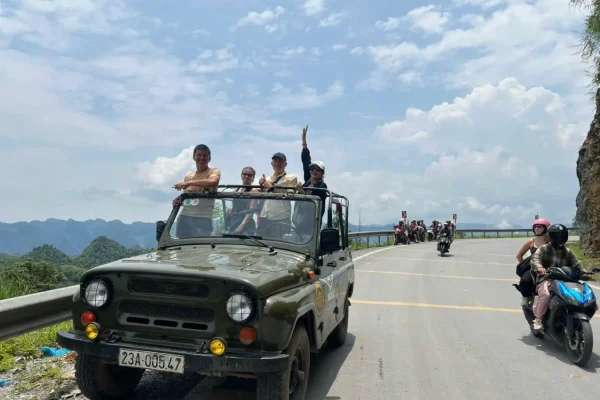
Learn more: Ha Giang Cao Bang Loop Jeep tour Guide
Ma Pi Leng deserves its own section because it’s the photographic crown jewel of the loop. Twenty kilometers of road carved into sheer cliff faces, with drops of 500+ meters and the Nho Que River threading through the valley below. This is what people imagine when they think “Ha Giang photography.”
The Entry Point (Dong Van Side): First views as you climb up from Dong Van offer dramatic perspectives of what’s ahead. The road starts hugging the cliff and you can see the full pass stretching into the distance. Shoot early (8:00-9:00 AM) before traffic builds.
Mid-Pass Viewpoints: Several pullouts exist along the pass—watch for other stopped vehicles indicating good spots. The classic shot captures the ribbon of road cutting across vertical cliff faces with multiple layers of mountains fading into hazy distance. Midday (11:00 AM-1:00 PM) can work here despite harsh light because the haze adds atmospheric depth.
Ma Pi Leng Skywalk: Glass platform jutting from the cliff provides a unique elevated perspective looking down the valley. The structure itself isn’t particularly photogenic but the view is exceptional. Shoot the valley, not the platform. Morning light (9:00-10:00 AM) works best.
Nho Que River View: As you descend toward Meo Vac, viewpoints overlook the river directly. The jade-green water against dark stone canyon walls creates stunning color contrast. Best in even lighting (cloudy days) or late afternoon (4:00-5:00 PM).
Lens Choice: Wide-angle (16-24mm) captures the dramatic scale, but don’t ignore telephoto options. A 70-200mm compresses the road ribboning through the cliffs beautifully and isolates distant valley details.
Exposure Challenges: Massive dynamic range between bright sky and shadowed valley. Bracket your exposures or shoot RAW with plenty of headroom for recovery. Graduated ND filters help but aren’t essential with modern sensors and post-processing.
Safety While Shooting: Traffic doesn’t stop for your photography. Stay fully off the road. The cliff edges lack barriers in many spots—watch your step while looking through the viewfinder. If riding, don’t try to shoot while moving.
Weather Variables: Fog can roll in and completely obscure the view within 30 minutes. If this happens, wait it out—fog often clears as morning progresses. Alternatively, embrace fog photography for moody, minimal compositions.
Classic: The Ribbon Road Yes, shoot the iconic view of the road carved into the cliff. To elevate it beyond the standard Instagram shot: include a vehicle or rider for scale, shoot during dramatic weather (fog, storm light), or use long exposure to blur passing traffic while keeping the landscape sharp.
Alternative: Valley Details Instead of always shooting the big vista, zoom in on valley details—the river far below, terraced fields on distant slopes, individual houses clinging to hillsides. These intimate landscapes often make more interesting images than the obvious wide shots.
Timing: Blue Hour Most photographers shoot Ma Pi Leng during daytime. The pass at dawn or dusk (if you can safely be there) offers extraordinary light and far fewer people. Blue hour when ambient light balances with remaining sky glow creates magical atmospheric conditions.
Learn more: Ma Pi Leng Pass
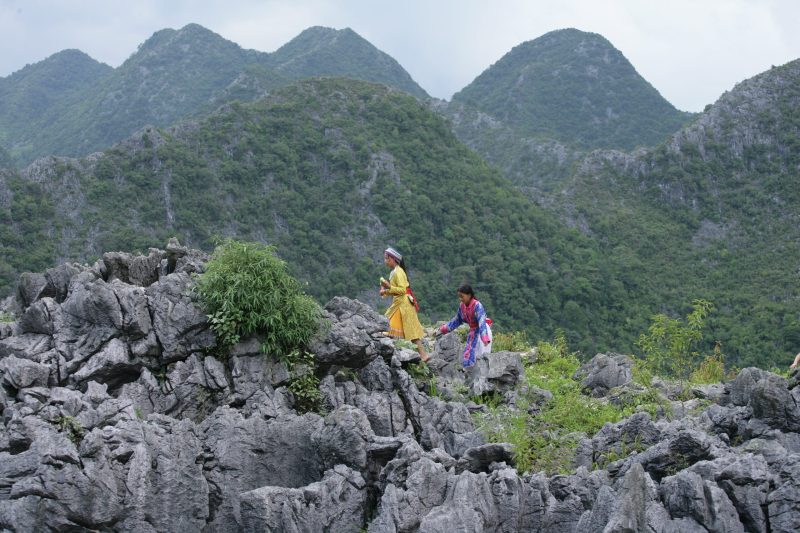
The Dong Van Karst Plateau Geopark designation isn’t just bureaucratic—this area’s geology creates photography opportunities unlike anywhere else in Vietnam. Limestone formations eroded into towers, peaks, and karst pillars dominate the landscape.
Karst Formations: Vertical limestone pillars rise from valleys like stone forests. The Quan Ba area shows this particularly well, with distinct peaks against sky. Best shot with moderate telephoto lenses (70-135mm) to compress the peaks and emphasize their vertical drama.
Rock Textures: Close examination reveals incredible limestone textures—weathering patterns, erosion channels, vegetation clinging to impossible angles. Macro or close-focus capabilities help capture these details.
Stone Fields: Areas where limestone breaks through the surface create lunar landscapes. The contrast between stone and surrounding vegetation offers compositional opportunities.
Limestone responds dramatically to directional light. Overcast conditions that work well for forest photography can make limestone look flat and gray. You want sunshine to create shadows that define the rock formations’ three-dimensional structure.
Golden hour (first and last hour of sunlight) provides warm tones that complement the gray stone beautifully and creates long shadows that emphasize texture.
Midday light (11:00 AM-2:00 PM), usually harsh for photography, actually works for limestone because strong overhead sun creates crisp shadows in rock crevices and emphasizes geological features.
Dong Van’s old quarter offers night photography opportunities that most loop travelers miss because they’re focused on daytime landscapes. The stone houses lit by lanterns, market activity at dusk, and the plaza area create atmospheric urban scenes.
Bring a tripod and shoot between 6:00-7:30 PM when there’s still some ambient light in the sky to balance artificial lighting. ISO 1600-3200 with wide apertures (f/1.8-2.8) if you don’t have a tripod.
Learn more: Ha Giang Loop Itinerary: 2,3,4,5 days
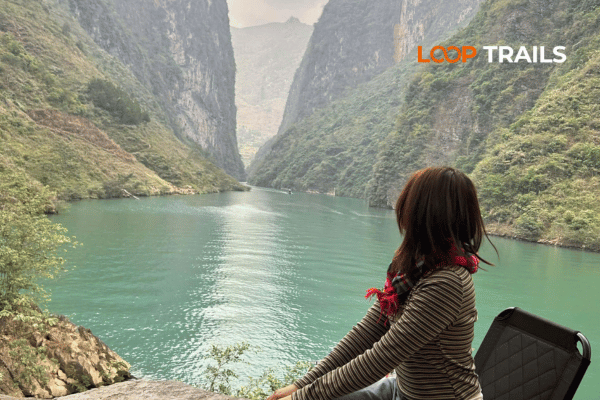
The Nho Que River system creates dramatic valleys that slice through the karst landscape. The river’s distinctive jade-green color against dark canyon walls offers strong color contrast for photography.
Between Meo Vac and the Skywalk area, boat tours operate on the Nho Que River through Tu San Canyon—one of Southeast Asia’s deepest gorges. From river level, you’re shooting up at vertical canyon walls towering 600-800 meters above.
Camera considerations for the boat:
Best timing: Morning (9:00-11:00 AM) when sun illuminates canyon walls without creating harsh shadows. Avoid midday when portions of canyon are in deep shadow while others are in bright sun—challenging dynamic range.
Several points along the road offer high perspectives looking down into the Nho Que valley:
M Pass Viewpoint: Named for the M-shaped curves of the road below, this viewpoint provides stunning aerial perspective of the river valley. The view works best in afternoon light (3:00-5:00 PM) when the sun illuminates the valley floor.
Lung Ho Viewpoint: Another elevated perspective with the river visible far below winding through the canyon. Morning to midday (9:00 AM-1:00 PM) lighting works well here.
The Nho Que’s distinctive jade-green color comes from mineral content and depends on season and water levels. Color is most vivid during dry season (October-April) with lower water levels. Wet season dilutes the color somewhat but creates more dramatic water flow.
Use a polarizing filter to reduce surface glare and enhance the water color. Underexpose slightly (⅓ to ⅔ stop) to maintain color saturation—blown-out water loses the distinctive green entirely.
Learn more: Ha Giang Loop for Seniors
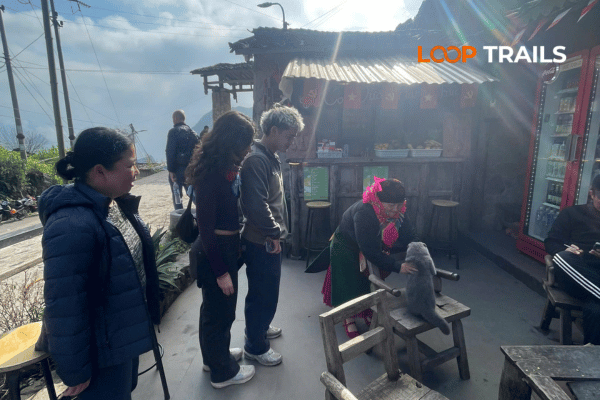
Ha Giang’s ethnic diversity—H’Mong, Tay, Lo Lo, Nung, and others—offers cultural photography opportunities. But photographing people and their daily lives requires sensitivity and awareness that goes beyond technical camera skills.
Let’s address this directly: local people aren’t props for your photography. The elderly woman in traditional dress sitting outside her home isn’t there for your Instagram. Children aren’t background elements.
Always ask permission before photographing people. A smile and gesture toward your camera usually communicates the request even without shared language. If someone declines or seems uncomfortable, respect that immediately and move on.
Understand transaction expectations. In some tourist-heavy areas (Lung Cu, popular viewpoints), people in traditional dress may expect payment for photos. This isn’t wrong or “inauthentic”—it’s a reasonable exchange when tourism is part of local economy. Typical is 20,000-50,000 VND for posed portraits.
Candid vs staged. The best cultural photography often comes from observing daily life rather than posed portraits. Women weaving, farmers working fields, market transactions—these authentic moments create more compelling images than stiff posed shots. Use longer focal lengths (85-200mm) to shoot candidly from a respectful distance.
Ha Giang region markets—Dong Van Sunday market, Meo Vac Sunday market, and others—bring together ethnic minorities in traditional dress for trading. These markets offer incredible photography but get crowded with tour groups.
Arrive early: 6:30-8:00 AM before the tour buses unload. Early morning has better light and more authentic market activity rather than just tourists photographing each other.
Focus on details: Close-ups of goods for sale, hands exchanging money, baskets of vegetables, weathered faces in conversation. These intimate details often tell better stories than wide environmental shots of the crowded market.
Be invisible: Using a moderate telephoto (70-135mm) from the market edges captures candid moments without your camera presence affecting the scene.
Farming activities: Plowing with water buffalo, rice planting, harvesting—all photogenic and appreciated as documentation of traditional practices. Best in early morning (6:00-8:00 AM) or late afternoon (4:00-6:00 PM) when farmers are active.
Traditional crafts: Weaving, corn drying, textile making. These activities happen around homes and require permission to photograph up close, but villagers are often proud to show their skills.
Children: Extremely photogenic but also most sensitive ethically. Many parents are happy for their children to be photographed, but always ask. Never photograph children if parents seem uncertain or uncomfortable.
Learn more: Ha Giang in September & October
Mountain photography has specific technical requirements. What works for beach sunsets or urban scenes doesn’t directly translate to shooting at 2,000 meters elevation with massive depth and scale.
The scale problem: Mountains are big. Obvious, but photographically challenging. Without reference points indicating scale, mountain landscapes can look oddly flat. Solutions:
Layering: The mountains create natural layers receding into distance. Emphasize this by ensuring your composition includes distinct foreground, middle ground, and background elements. This creates depth in what otherwise becomes a flat image despite being of 3D mountains.
Leading lines: Roads, rivers, terraced rice field contours—Ha Giang has abundant leading lines. Use them to pull the viewer’s eye through the frame toward your main subject or vanishing point.
Distance creates atmospheric haze—the farther away an object, the more air between you and it, making distant mountains appear lighter and less contrasty. This isn’t always bad (it creates sense of depth and distance) but can be managed.
Polarizing filter: Cuts haze significantly, especially when shooting perpendicular to the sun. Rotate the polarizer while looking through your viewfinder to see the effect.
Contrast in post-processing: Adding contrast specifically to distant areas helps define layers. Tools like Lightroom’s range masking or luminosity masks in Photoshop target this precisely.
Shoot earlier/later: Haze increases through the day as heat builds. Early morning typically has clearest air. After rain passes through, air clarity improves dramatically.
When you want sharp focus from foreground rocks 2 meters away to mountains 20 kilometers distant, your camera’s depth of field has limits even at f/16. Focus stacking solves this:
This technique creates technically perfect sharpness throughout. Whether the “hyper-real” look fits your artistic vision is personal preference, but the option exists.
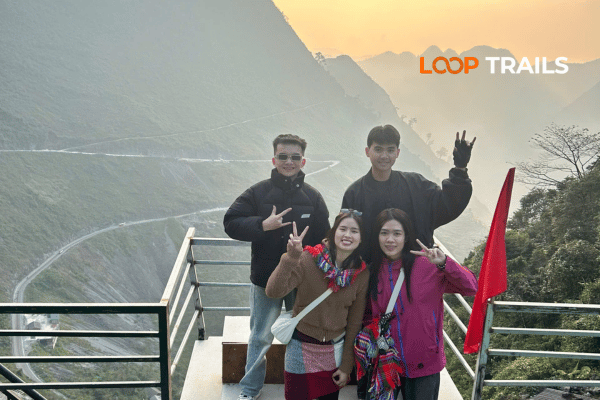
Learn more: Motorbike License IDP Guide 2026
Golden hour—the first hour after sunrise and last hour before sunset—transforms Ha Giang’s already dramatic landscapes into something magical. The warm light flatters everything, shadows are long and interesting, and the quality of light makes mediocre compositions look good.
Heaven Gate: Faces east, catching first light beautifully. Arrive 30 minutes before sunrise to set up. The mist in the valley below often creates a sea of clouds effect as sunrise hits.
Dong Van Area: High elevation means sunrise happens spectacularly. Any elevated position around town works. The karst formations catch first light while valleys remain in shadow, creating strong contrast.
Du Gia Valley: If you’re staying in Du Gia, the rice terraces and surrounding peaks at sunrise are stunning. Walk 10 minutes from most homestays to find elevated positions.
Ma Pi Leng Pass: Faces roughly west, so sunset light works beautifully. The challenge is timing—you need to finish shooting and navigate off the pass before dark. Sunset is around 6:00 PM in summer, 5:30 PM in winter.
Lung Ho and M Pass Viewpoints: Both catch evening light well. The Nho Que River valley illuminated by golden hour is spectacular.
Any high point near your homestay: Don’t underestimate simply walking uphill from wherever you’re staying for sunset. Local knowledge helps—ask your guide or host where nearby sunset views exist.
Exposure: Golden hour’s warm light can fool your camera’s meter. Shoot in RAW for maximum flexibility. Consider slight underexposure (⅓ to ½ stop) to preserve highlight detail in bright sky and bring up shadows in post.
White balance: Auto white balance often overcorrects the warm tones you actually want. Try “Daylight” or “Cloudy” white balance to preserve golden warmth, then fine-tune in post.
Graduated ND filter: Helps balance bright sky with darker foreground, though with RAW files and modern dynamic range, less essential than it used to be.
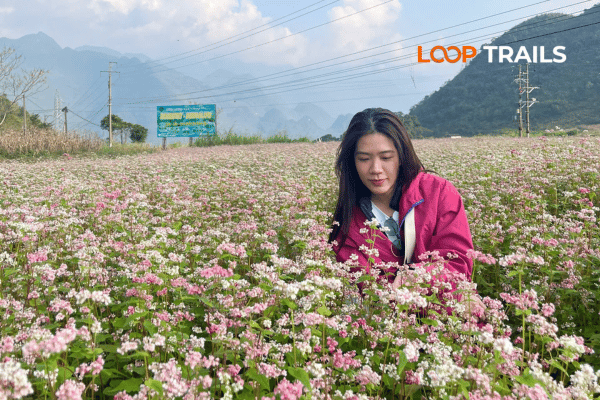
Learn more: Ha Giang Buckwheat Flowers
Ha Giang’s weather directly impacts photography quality. Understanding patterns helps you plan shooting around optimal conditions.
Dry season (October-April):
Wet season (May-September):
Overcast conditions: Not ideal for mountain landscapes (flat light makes mountains look two-dimensional) but excellent for:
Partial clouds: Actually beneficial—clouds create interest in sky, produce dramatic light when sun breaks through, and create constantly changing conditions. Stay alert for moments when sunlight spotlights specific landscape features.
Heavy fog: Can completely obscure views you traveled specifically to photograph. Patience helps—fog often lifts by 9-10 AM. Alternatively, embrace fog for minimal, atmospheric compositions. Fog simplifies landscapes by hiding backgrounds and can create powerful moody images.
The moments before, during, or after storms produce incredible light—dramatic skies, shafts of sunlight breaking through clouds, rainbows, enhanced color saturation. If you see storm clouds building, position yourself at a good viewpoint and wait.
Safety note: Don’t stand exposed on high passes during actual thunderstorms. Shoot from vehicle or covered area. Lightning strikes on exposed ridges are real danger.
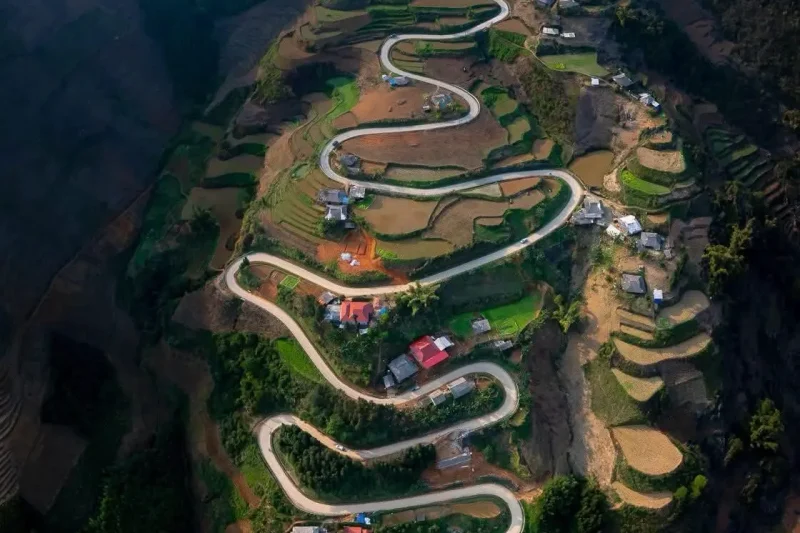
Learn more: Ban Gioc Waterfall Guide
Drones open aerial perspectives impossible from ground level. Ha Giang’s vertical terrain especially benefits from bird’s-eye views showing the full drama of valleys, passes, and villages.
Important: Drone laws can change. Check current regulations before traveling. As of 2025, general understanding is:
Practical reality: Enforcement in remote areas like Ha Giang is less stringent than major cities, but flying responsibly and legally protects you and other drone users. If asked to land by authorities, comply immediately.
Heaven Gate area: Aerial perspective of the valley and twin peaks is stunning. Launch from the parking area, fly out over the valley (not over the road/traffic).
Ma Pi Leng Pass: Aerial shots of the road carved into cliff face are spectacular. Critical safety: Do not fly over the actual road with traffic. Fly out over the valley parallel to the road. A drone crash onto the road could cause serious accidents.
Du Gia and rice terrace areas: Overhead views of the terraced patterns, villages, and valley systems work beautifully. Plenty of space away from people and roads.
Nho Que River valley: Aerial perspective showing the river threading through the canyon from above. Launch from viewpoint areas, not while on the pass itself.
Respect privacy: Don’t hover over villages or focus closely on individual homes/people without permission.
Weather awareness: Wind at elevation is stronger than at ground level. Many budget drones struggle with mountain winds. Check wind speed before launching.
Battery life: Cold temperatures and elevation both reduce battery performance. Don’t trust manufacturer stated flight times—assume 20-30% less in Ha Giang conditions.
Backup plan: Bring spare batteries and propellers. Nearest replacement parts are in Ha Giang city or Hanoi.
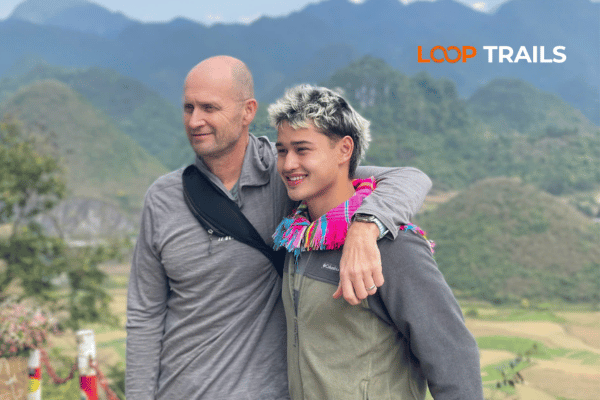
Learn more: Ha Giang Loop Easy Rider
The technical aspects of portrait photography are straightforward—fast lens, good light, focused on the eyes. The harder part is the human connection that makes portrait photography in Ha Giang meaningful rather than exploitative.
Time matters: The best portraits come from spending time with people, not drive-by shooting. If you’re with an easy rider guide who speaks local languages, you have an enormous advantage for making genuine connections.
Show interest beyond the photo: Ask about their craft, their village, their family (through your guide if needed). Show photos on your camera screen. This changes the dynamic from “photographer taking from subject” to “shared experience.”
Follow their lead: If someone opens up and seems happy to be photographed, great. If they remain reserved, maybe get one respectful environmental portrait and move on. Not everyone wants their photo taken by strangers.
Focal length: 50-135mm works well for portraits. Longer focal lengths (85mm+) allow comfortable working distance and flattering compression. Avoid very wide lenses close to people—distortion isn’t flattering.
Aperture: f/2-f/4 creates nice background blur (bokeh) that isolates your subject. Ensure eyes are sharp—use single-point focus on the nearest eye.
Light: Open shade or cloudy conditions provide soft, flattering light. Direct harsh sunlight creates unflattering shadows. If shooting in bright sun, move subjects into shade or shoot backlit with fill flash/reflector.
Environmental portraits: Including context about the person’s life (their home, workspace, village) often tells better stories than isolated headshots. Use wider apertures (f/4-f/8) to keep background recognizable but not distractingly sharp.
In tourist-heavy areas, some people expect payment for posed portraits. This is neither right nor wrong—it’s economic reality. If photography is your livelihood or serious hobby, consider whether expecting free access to photograph people while potentially profiting from those images is entirely fair.
If someone asks for payment and you’re uncomfortable with that, politely decline and move on. If you’re happy to pay a small amount (20,000-50,000 VND typical) for someone’s time and beautiful portraits, that’s reasonable too.
Candid street photography and documentary work is different—you’re capturing life as it unfolds, not arranging poses. But even then, cultural sensitivity and respect matter.
Learn more: Ha Giang Loop Solo Travel
Here’s where Ha Giang photography gets real: you’re on a motorbike navigating challenging roads while carrying expensive, fragile equipment. Some practical strategies:
Camera backpack worn properly: Both shoulder straps, waist belt fastened, weight distributed. A pack bouncing around on one shoulder all day is miserable and unsafe. Quality camera backpacks (Lowepro ProTactic, Peak Design Travel, F-Stop Ajna) are worth the investment.
Quick-access organization: One camera with most-used lens should be immediately accessible without unpacking everything. Peak Design dividers and packing cubes help organize efficiently.
Vibration protection: Wrap lenses in soft clothing. Ensure nothing is rattling around loose in your bag. Extended vibration over hours of riding can loosen lens elements over time.
Safety first: Pull completely off the road. Vietnam’s mountain roads don’t have wide shoulders in many places. Park where you’re not creating hazards for other vehicles.
Efficiency: You can’t stop at every single view or you’ll never complete the day’s ride. Choose your moments. Sometimes it’s better to ride past a good shot to reach a great location rather than stopping constantly for incremental improvements.
Pace: If you’re on a self-drive tour or with an understanding guide, communicate that photography is priority and you need time at key locations. Rushing through Ma Pi Leng Pass because you’re behind schedule means missing the shots you came for.
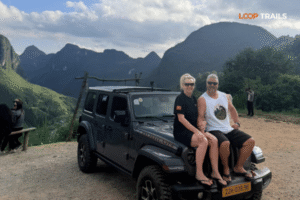
If photography is your primary goal and you’re bringing serious gear (multiple bodies, several lenses, tripod, drone), jeep tours make a lot of sense:
You sacrifice the “riding experience” but gain photographic flexibility. Many serious photographers choose jeeps specifically for this reason.
Learn more: Ha Giang Motorbike Rental
Your tour choice affects your photography opportunities significantly. Each option has advantages and tradeoffs for photographers.
Photography benefits:
Tradeoffs:
Best for: Photographers wanting cultural access, local knowledge, and who prioritize people/cultural photography alongside landscapes.
Pricing: Easy rider tours run from 3,490,000 VND for 2-day loop to 10,990,000 VND for the 5-day Ha Giang-Cao Bang combination.
Photography benefits:
Tradeoffs:
Best for: Experienced riders who know exactly what they want photographically and have the skills to find it.
Pricing: Self-drive tours from 3,590,000 VND (3-day) to 10,590,000 VND (5-day route).
Photography benefits:
Tradeoffs:
Best for: Photographers prioritizing image quality over riding experience, those with extensive gear, or anyone doing serious video work.
Pricing: Jeep tours from 8,990,000 VND (solo, 3-day) to 40,990,000 VND (4 people, 5-day Ha Giang-Cao Bang). Includes dorm accommodation (private room upgrades available).
Some photographers do key photo days (Ma Pi Leng Pass, drone flights) via jeep for gear access, then switch to easy rider or self-drive for other sections. Most tour operators can accommodate custom approaches—just ask when booking.
Learn more: Ha Giang Loop Self-Driver
Getting the shot in-camera is half the work. Post-processing brings out Ha Giang’s drama without crossing into unrealistic over-processing.
Mountain landscapes frequently have extreme dynamic range—bright sky, dark valleys. Modern cameras handle this well if you shoot RAW. Key adjustments:
Graduated adjustments: In Lightroom, use graduated filters to darken skies and brighten foregrounds selectively. More natural-looking than global exposure adjustments.
Shadow/highlight sliders: Recover shadow detail without making the image look unnaturally flat. Ha Giang’s mountains have deep shadows—embracing some darkness maintains mood.
HDR caution: Multiple exposures blended can work but easily looks overdone. If using HDR, be subtle. Natural-looking light behavior should be your guide.
Ha Giang’s colors are already strong—jade rivers, green terraces, blue skies. Enhancement should emphasize what’s there, not invent colors.
Vibrance vs Saturation: Vibrance boosts muted colors while protecting already-saturated ones. Saturation boosts everything equally and can quickly look cartoonish. Start with vibrance.
Selective color: Boost specific colors that matter (green for fields, blue for sky) while leaving others neutral. HSL panel in Lightroom is perfect for this.
White balance warmth: Slightly warming golden hour shots enhances the mood. Be careful not to push too warm—orange skies look fake.
Dehaze slider: Lightroom’s dehaze tool is powerful for mountain photography but easy to overuse. Start around +10 to +20 and evaluate. Too much creates strange halos and artifacts.
Clarity: Adds midtone contrast, which can enhance rock textures and define mountain forms. Again, moderation—too much looks gritty and overdone.
Targeted dehaze: Use local adjustments to apply dehaze specifically to hazy areas rather than globally.
Ha Giang doesn’t need exaggeration—the reality is dramatic enough. Your processing should reveal what was there, not transform it into fantasy. When in doubt, pull back. Images should still look like photographs, not paintings.
The goal is images that make people say “I want to see that in person,” not “that can’t possibly be real.”
Learn more: Loop Trails Tour Ha Giang
Ha Giang rewards photographers who come prepared, respect the culture and environment, and understand that the best images often require patience, early mornings, and willingness to get off the obvious path. You’re not just documenting a place—you’re capturing one of Southeast Asia’s most visually dramatic regions.
The technical aspects matter: right gear, understanding light, knowing composition. But what separates memorable Ha Giang photography from generic travel snapshots is connection—to the landscape, the culture, and the moment. That requires being present rather than constantly viewing everything through a lens.
Shoot intentionally. Take time to actually look at places before raising your camera. Talk to people. Experience the journey. The photographs will be better for it.
Ready to capture Ha Giang’s incredible landscapes? Choose a tour option that matches your photography style and gear requirements. Whether you need the local knowledge of an easy rider guide, the flexibility of self-drive, or the gear-hauling capacity of a jeep tour, there’s an approach that lets you focus on creating images you’ll treasure.
The mountains are waiting. Bring your camera and let’s make some photographs.
At minimum, bring a camera (phone cameras work but larger sensors give better results), a wide-angle lens or capability (16-35mm range), spare batteries, and memory cards. A circular polarizing filter dramatically improves landscape shots by cutting haze and deepening colors. Everything beyond that—tripods, drones, multiple lenses—enhances your options but isn’t strictly essential. The most important element is actually being there at the right time with whatever camera you have.
Yes, with proper precautions. Use a quality camera backpack with rain cover, ensure gear is padded against vibration, and wear the pack properly with both straps and waist belt. Many photographers successfully complete the loop with $5,000+ of gear. That said, if you’re extremely nervous about equipment or bringing extensive gear, jeep tours offer more space and protection while accessing the same locations.
October through April offers the most reliable weather and clearest light for landscapes. October specifically brings harvest season with golden rice terraces. December through February can be cold with fog but creates dramatic atmospheric conditions. May through September is wet season—more challenging for photography due to rain and clouds, but the landscape is intensely green and storm light can be spectacular. Each season has merits depending on what you want to shoot.
Technically, yes—Vietnam requires drone registration and permits. Enforcement in remote areas is less strict than cities, but you should follow regulations: register your drone, respect no-fly zones (military areas, government buildings), stay under 100m altitude, maintain visual line of sight, and never fly over roads with traffic or crowded areas. If authorities ask you to land, comply immediately. Check current regulations before traveling as rules evolve.
Not if done respectfully with permission. Always ask before photographing people—gesture toward your camera and wait for acknowledgment. If someone declines or seems uncomfortable, respect that immediately. In some tourist-heavy areas, people may expect small payment (20,000-50,000 VND) for posed portraits, which is reasonable. Candid photography of daily life from a respectful distance is generally acceptable, but use judgment and local knowledge from your guide.
Early morning (7:00-9:00 AM) offers soft light, less traffic, and often dramatic mist in the valley. Late afternoon (3:00-5:00 PM) provides warm golden hour light, though you need to finish before dark for safety. Midday works despite harsh light because atmospheric haze actually adds depth to distant layers. Avoid heavy fog—wait it out if possible as it often clears by mid-morning.
Wear a proper camera backpack with both shoulder straps and waist belt fastened—never sling it over one shoulder. Keep one camera with your most-used lens accessible for quick stops. Wrap lenses in soft clothing for vibration protection. Consider a Peak Design Capture Clip on your backpack strap for ultra-quick access. Accept that you can’t stop at every single viewpoint—choose your moments strategically.
Absolutely. Modern flagship smartphones (iPhone 15 Pro, Samsung S24 Ultra, Google Pixel 8 Pro) produce excellent landscape photos. Advantages include always having it accessible, great computational photography, and no worry about expensive gear damage. Bring a small phone tripod for stability and consider a polarizing filter attachment. Main limitations are zoom range for distant details and low-light performance compared to larger camera sensors.
Shoot RAW if your camera supports it and you’re comfortable with post-processing. Mountain landscapes have extreme dynamic range (bright skies, dark valleys) and RAW files give you maximum flexibility to recover highlights and shadows. If you prefer minimal editing or your camera/phone only does JPEG, that works too—just be more careful with exposure to avoid blown highlights.
Easy rider tours provide local knowledge, language skills for cultural photography, and guides who know the best spots and timing. Self-drive offers complete flexibility to stop whenever you want and wait for perfect light. Jeep tours give maximum gear capacity and easier stops but slightly less intimate access. For serious photographers with extensive gear, jeeps often make the most sense despite higher cost.
Wake up early. The best light happens in the first 1-2 hours after sunrise—softer light, dramatic mist, fewer people, and golden warm tones. Most travelers sleep until 7-8 AM and miss the magic. Set your alarm for 30 minutes before sunrise, find an elevated viewpoint near your homestay, and shoot. This one habit improves your Ha Giang photography more than any piece of gear.
Avoid photographing military installations, border checkpoints (especially near China border), or government buildings—doing so can cause problems. When photographing people, always seek permission first. Some villages or cultural sites may have restrictions—follow local guidance. Otherwise, photography is generally welcomed. Use common sense and cultural sensitivity.
Contact information for Loop Trails
Website: Loop Trails Official Website
Email: looptrailshostel@gmail.com
Hotline & WhatSapp:
+84862379288
+84938988593
Social Media:
Facebook: Loop Trails Tours Ha Giang
Instagram: Loop Trails Tours Ha Giang
TikTok: Loop Trails
Office Address: 48 Nguyen Du, Ha Giang 1, Tuyen Quang
Address: 48 Nguyen Du, Ha Giang 1, Tuyen Quang
Facebook X Reddit Table of Contents Learn more: Ha Giang Loop Tours The Ha Giang Loop has a reputation problem with older
Facebook X Reddit Table of Contents The passes get the photos. The homestay nights get the stories. Ask anyone who’s done the