
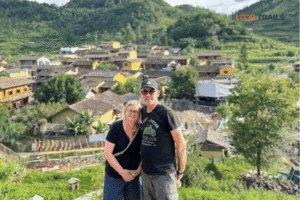
Ha Giang Hidden Villages: What Tour Guides Show You
Facebook X Reddit Table of Contents Learn more: Ha Giang Loop Tours The photographs that bring most people to Ha Giang are

Thúy Kiều (Grace) is a travel blogger and content contributor for Loop Trails Tours Ha Giang. She holds a bachelor’s degree in Sustainable Tourism from Vietnam National University, Hanoi, and has a strong passion for exploring and promoting responsible travel experiences in Vietnam’s northern highlands.
You’ve just finished the Ha Giang Loop—three or four days of mountain passes, karst formations, and roads that made you question your decision-making skills at least twice. You’re back in Ha Giang City, legs sore from gripping the bike, and now you’re wondering: what’s next?
Most travelers head straight back to Hanoi. But there’s another option that extends the adventure without repeating the same scenery: continue east to Cao Bang Province.
Cao Bang offers what Ha Giang doesn’t—massive waterfalls, accessible caves, and a landscape that shifts from barren karst peaks to lush valleys and rivers. It’s less famous than Ha Giang, which means fewer tourists and guesthouses that aren’t booked solid months in advance. The riding is generally easier too, with better roads and less dramatic elevation changes.
This guide covers everything you need to know about continuing from Ha Giang to Cao Bang: which route to take, what you’ll see along the way, how to plan your itinerary, and whether it makes sense to add this to your northern Vietnam trip.

Learn more: Ha Giang Loop Tours
Learn more: Ha Giang Cao Bang by Jeep and motorbike
If you enjoyed the Ha Giang Loop, Cao Bang is a natural extension. But it’s not just “more of the same.” The two regions complement each other with different landscapes and experiences.
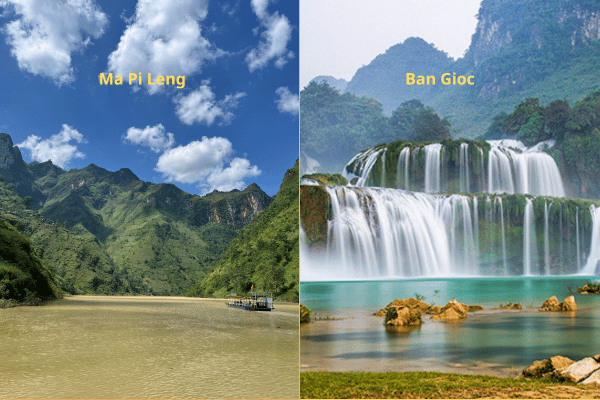
Ban Gioc Waterfall alone justifies the trip. It’s Vietnam’s largest waterfall and one of the most impressive in Southeast Asia—a 30-meter cascade that spans 300 meters wide across the border with China. The scale is hard to grasp from photos. When you’re standing at the base with mist in your face and water thundering down, you get it.
The riding is different. Ha Giang throws technical mountain passes and cliff-edge roads at you. Cao Bang gives you winding valley routes alongside rivers, through tea plantations, and past rice paddies. It’s still scenic, still rewarding, but less intense. If Ha Giang tested your skills, Cao Bang lets you enjoy the ride without constant white-knuckling.
It’s quieter. Ha Giang has gone from hidden gem to well-known in the past few years. Cao Bang is following that trajectory but hasn’t reached critical mass yet. You’ll have viewpoints mostly to yourself, guesthouses with available rooms, and villages where seeing a foreign face is still noteworthy.
The caves are accessible. Nguom Ngao Cave is a proper show cave with walkways and lighting, letting you explore impressive limestone formations without serious caving equipment. Ha Giang has caves too, but they’re less developed.
Different culture. While Ha Giang is dominated by Hmong communities, Cao Bang has more Tay, Nung, and Dao populations. Markets look different, traditional houses have different architecture, and the food shifts from corn-based dishes to more rice and river fish.
Ha Giang’s signature is the Dong Van Karst Plateau—dramatic limestone peaks, high-altitude passes, terraced mountains that seem to drop into oblivion. It’s spectacular but also harsh, especially around Dong Van where the landscape turns almost lunar.
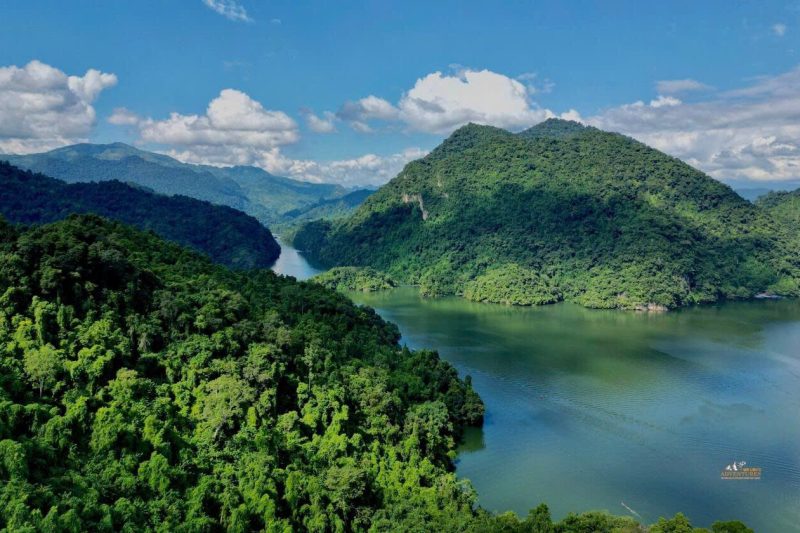
Cao Bang is lusher and more varied. You’re at lower elevations with more rainfall, which means denser vegetation. The karst formations continue but they rise from green valleys instead of bare rock. Rivers are more prominent—you’ll follow the Quay Son River toward Ban Gioc, cross tributaries, and see waterfalls that Ha Giang doesn’t have.
The overall vibe shifts from “epic mountain adventure” to “exploratory valley riding.” Both are worth experiencing. Doing Ha Giang then Cao Bang gives you the full spectrum of what northern Vietnam offers without backtracking or repeating routes.
Learn more: Cao Bang Loop Tours Vietnam best kept secret
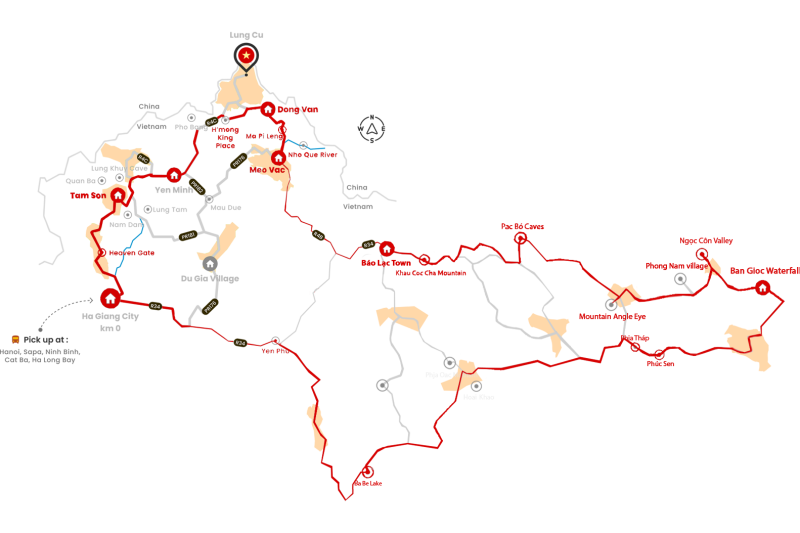
The journey from Ha Giang City to Cao Bang City covers roughly 150-200km depending on which route you take. That sounds short, but this is mountain riding—plan for a full day or break it into two days with an overnight stop.
Direct route (via QL4A): 150km, 4-6 hours riding time
Scenic route (via Bao Lac): 180-200km, 5-7 hours riding time
Those time estimates are actual saddle time. Add stops for photos, meals, fuel, and getting temporarily lost in unmarked villages, and you’re looking at 6-9 hours total for the journey.
Starting early (6-7am) gets you to Cao Bang City by mid-afternoon with time to find accommodation and explore. Starting late (10am or later) means you might be riding into dusk, which isn’t ideal on unfamiliar roads.
You’ve got two main ways to reach Cao Bang from Ha Giang.
The direct route follows Highway QL4A, cutting southeast from Ha Giang City through Quang Binh and Tra Linh before reaching Cao Bang City. It’s the faster option with better road quality—mostly paved, decent signage, and services available in towns along the way.
The scenic route heads east through Meo Vac (if you’re coming from the loop), drops down to Bao Lac, then continues through the Bao Lac Valley before connecting to the main road toward Cao Bang. This adds 30-50km and 1-2 hours but gives you completely different scenery, including some of the most photogenic rice terraces in the region.
Which to choose?
If you’re short on time or tired from the Ha Giang Loop, take the direct route. It’s straightforward and gets you to Cao Bang efficiently.
If you have an extra day and want to maximize scenery, the Bao Lac route is worth it—especially during rice planting (May-June) or harvest season (September-October) when the terraces are at their best.
Most people go Ha Giang → Cao Bang → Hanoi because it makes a logical circuit without backtracking. You complete the Ha Giang Loop, continue east to Cao Bang, then return to Hanoi from there.
Going the opposite direction (Hanoi → Cao Bang → Ha Giang) works fine too, but psychologically it’s harder to justify adding Ha Giang after seeing Ban Gioc Waterfall. The loop is the bigger commitment, so doing it first makes sense.
The ideal northern Vietnam route:
Hanoi → Ha Giang → Ha Giang Loop (3-4 days) → Cao Bang (2-3 days) → Hanoi
Total: 7-10 days for the full circuit
Learn more: Ha Giang Cao Bang Loop Jeep tour Guide
This is the route most travelers and tours use. It’s efficient, well-maintained, and passes through enough interesting terrain to keep the ride engaging without being exhausting.
Highway QL4A from Ha Giang to Cao Bang is in good condition—mostly smooth asphalt with occasional patched sections. The road quality is noticeably better than parts of the Ha Giang Loop, which means you can maintain steady speed and don’t need to constantly scan for potholes or gravel.
The route climbs out of Ha Giang City with some switchbacks, levels out through mountain valleys, then descends gradually as you approach Cao Bang. No extreme passes, no cliff-edge sections that require maximum focus. It’s comfortable riding.
Terrain:
Traffic: Light to moderate. You’ll encounter some trucks hauling goods between provinces, occasional tour buses, and local traffic near towns. Nothing like Hanoi streets or even Ha Giang City.
The direct route doesn’t have major tourist sights, but there are worthwhile stops to break up the journey.
Quang Binh town (60km from Ha Giang): First significant town on the route. Has fuel, food, and basic services. Not much to see, but a logical coffee stop.
Tra Linh (30km before Cao Bang): Larger town with markets, restaurants, and guesthouses if you need to overnight. The Sunday market here is worth timing if possible—Nung and Tay vendors selling local produce and goods.
Roadside viewpoints: Several unmarked pullouts along the route offer views over valleys and distant mountains. Watch for locals selling fruit, grilled corn, and snacks—decent spots for photos and leg stretches.
Villages: The route passes through small villages where you’ll see traditional Tay stilt houses, water buffalo in rice paddies, and daily rural life that doesn’t depend on tourism.
Most riders complete Ha Giang to Cao Bang in one day, overnighting in Cao Bang City. But if you prefer shorter days or want to explore along the way, here are your options:
Bao Lac (if taking scenic route): Small town with basic guesthouses, good base for exploring the Bao Lac Valley terraces.
Tra Linh: Has several guesthouses and small hotels. Convenient if you’re splitting the journey into two easy days.
Cao Bang City: Full range of accommodation from budget guesthouses (200,000-300,000 VND) to mid-range hotels (400,000-800,000 VND). This is where most people stay to explore the Cao Bang area.
Learn more: Ha Giang Cao Bang 5 Days
If you’ve got time and the Ha Giang Loop left you wanting more mountain scenery, the Bao Lac route delivers.
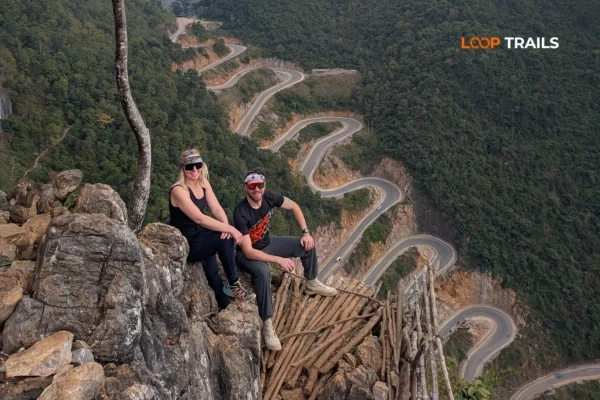
The Bao Lac Valley is stunning. Rice terraces cascade down mountainsides in layers that rival anything in Sapa but with a fraction of the tourists. During planting season, the flooded terraces reflect clouds and mountains. During harvest, the entire valley turns golden.
The road itself is scenic. You’re riding through a valley surrounded by limestone peaks, following the Nho Que River downstream, passing through Tay and Lo Lo villages. It’s photogenic the entire way.
It connects naturally if you’re coming from Meo Vac. Instead of backtracking to Ha Giang City after the loop, you can continue east from Meo Vac directly to Bao Lac, making your route more efficient.
The terraced rice fields are the main draw. They’re most impressive around Nam Khoa village and along the valley floor. Early morning (6-8am) gives you the best light and often mist rising from the paddies.
Local villages maintain traditional architecture—wooden stilt houses with thatched or tin roofs, communal areas, and working rice mills. People here aren’t accustomed to constant tourist traffic, so interactions feel more genuine.
The descent from Meo Vac to Bao Lac offers continuous viewpoints. The road switchbacks down the mountainside with the valley spreading out below. It’s technical riding but nothing like Ma Pi Leng—just requires attention on the corners.
The Bao Lac route is mostly paved but expect some rough sections, especially between Meo Vac and Bao Lac town. Road quality varies—smooth asphalt transitions to patched areas and occasional gravel stretches where they’re doing roadwork.
Difficulty level: Moderate. Easier than the Ma Pi Leng section of Ha Giang but more challenging than the direct QL4A route. The main demands are:
Best for: Riders who completed the Ha Giang Loop comfortably and want to extend the adventure. Not recommended if you struggled with the challenging sections around Dong Van.
Learn more: Ban Gioc Waterfall Guide
Cao Bang Province is larger than Ha Giang and more spread out. The main attractions cluster around Cao Bang City and the area near the Chinese border.
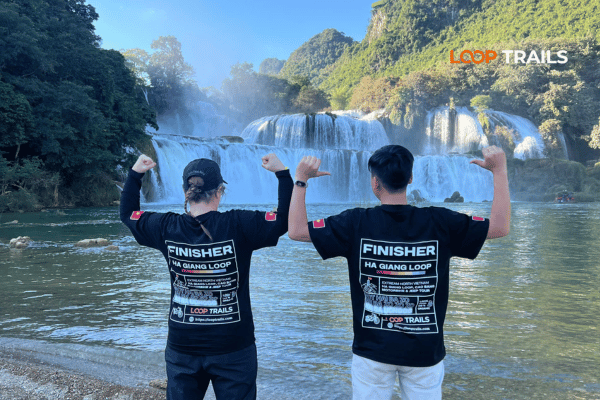
Ban Gioc (Thác Bản Giốc) is why most people add Cao Bang to their itinerary. It’s Vietnam’s largest waterfall and sits right on the Vietnam-China border—half the waterfall is technically in China.
The stats: 30 meters high, 300 meters wide (though it splits into multiple cascades), flows year-round with highest volume during rainy season (May-September).
What it’s like: You arrive at the parking area, walk through a short market area selling souvenirs and snacks, then emerge to see the waterfall filling your entire field of vision. The sound hits you first—a continuous roar of water. Then you notice the scale. The main cascade is massive, but there are smaller falls to the sides, water rushing over multiple levels of limestone, and a river that seems too small to produce this much force.
You can walk right up to the base. There are viewing platforms, paths along the river, and bamboo raft rides that take you closer to the falls (optional, costs extra). The area gets crowded mid-morning when tour groups arrive, so early or late visits are better.
Getting there from Cao Bang City: 85km, roughly 2 hours each way. The road is good quality (QL4A then turn onto TL206). Most people make it a day trip from Cao Bang—leave in the morning, spend 2-3 hours at the falls, return afternoon.
Entrance fee: Expect to pay for parking and entry (amounts change, check current rates). The area is developed with facilities but not overdone.
Best time: September to November for good weather and high water flow. April-May can be impressive after winter rains. Avoid visiting immediately after heavy storms when the water turns muddy brown.
Learn more: Ha Giang Loop route and itinerary
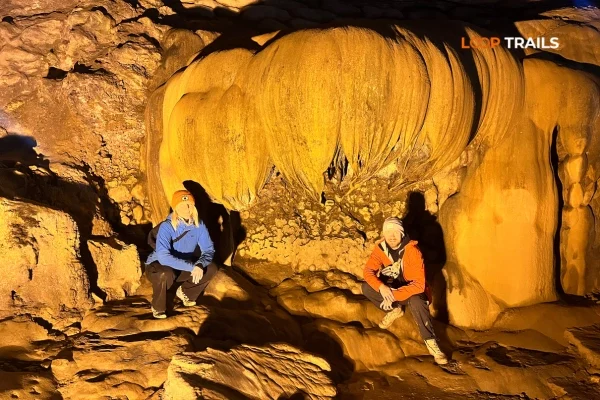
Nguom Ngao (Hang Ngườm Ngao) is a 3km limestone cave system, though only 1km is open to visitors on a paved walkway with lighting.
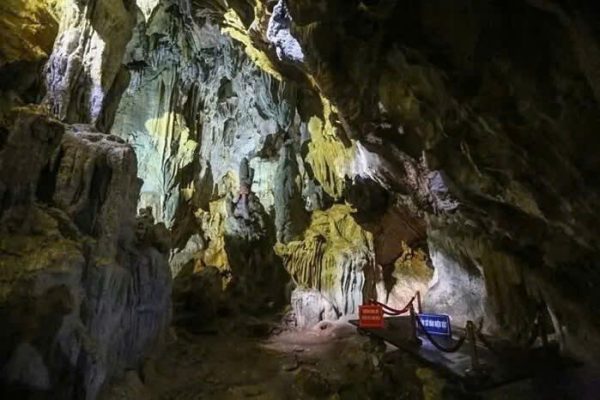
The cave is impressive—cathedral-like chambers, massive stalagmites and stalactites, natural skylights where light filters through holes in the ceiling, and rock formations that look engineered but are entirely natural. The Nung people who live nearby believe spirits inhabit the cave, which adds cultural context beyond just geological interest.
Location: About 5km from Ban Gioc Waterfall, so most people visit both on the same day.
What to expect: Paved walkway, decent lighting, handrails on steep sections. You can walk through in 30-45 minutes or take longer if you’re into geology and photography. The cave stays cool year-round (around 18-20°C), which is refreshing after riding in heat.
Worth it? Yes, especially if you’ve never explored a proper show cave. It’s easy, accessible, and genuinely impressive without requiring caving skills or equipment.
Learn more: extend your rental bike from Ha Giang
Pac Bo is where Ho Chi Minh returned to Vietnam in 1941 after 30 years abroad, living in this cave while organizing the independence movement.
For history buffs: This is significant. The cave itself is small but the site includes a museum, replica of Ho Chi Minh’s living quarters, and the “Lenin Stream” where he reportedly bathed (renamed from the original name to honor Lenin).
For casual visitors: It’s interesting but less impressive than Nguom Ngao from a natural standpoint. The draw is historical context rather than cave formations.
Location: 50km north of Cao Bang City, can be combined with other northern sites or done as a half-day trip.
Learn more: Ha Giang Loop for Beginers
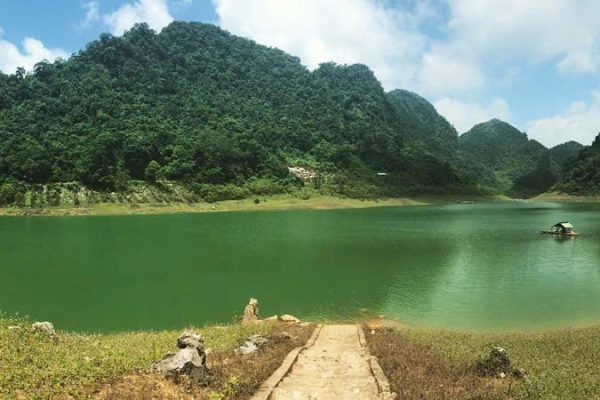
Thang Hen is actually a system of 36 interconnected lakes in a valley surrounded by limestone mountains. The lakes are known for changing water levels seasonally—connected during rainy season, separate pools during dry season.
The scenery is beautiful—calm water reflecting mountains, caves around the shoreline, hiking trails, and boat rides available. It’s less visited than Ban Gioc, which means it’s quieter and more peaceful.
Location: 25km west of Cao Bang City on the road toward Nguyen Binh.
Best for: People who want a relaxing break from riding, nature walks, or photography without crowds. Not as dramatic as Ban Gioc but offers a different experience.
Learn more: Ha Giang Loop for Couples
Cao Bang has less touristy markets than Ha Giang’s famous Dong Van and Meo Vac Sunday markets, but they’re more authentic for that reason.
Cao Bang City Market: Daily market in the city center. Mainly local shoppers buying produce, meat, household goods. Interesting to walk through but not a major sight.
Tra Linh Market: Better on Sundays when it becomes a larger trading hub for surrounding villages.
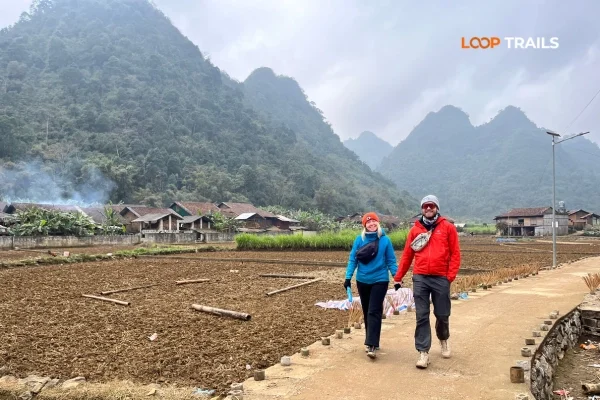
Nung and Tay Villages: The road to Ban Gioc passes through several traditional villages. No formal “attractions” but interesting to observe daily life—rice drying on mats, traditional stilt houses, water buffalo, small workshops.

Learn more: Explore just the Cao Bang Loop
How you structure your itinerary depends on how much time you have and what pace you prefer.
3-Day Quick Add-On (Ha Giang Loop + Cao Bang):
This is rushed but doable if you’re short on time. You’ll see Ban Gioc but miss most other Cao Bang sights.
5-Day Comfortable Combo:
This gives you proper time in both regions without constant rushing. Recommended pace.
7-Day Extended Northern Loop:
This is the full northern Vietnam experience. You’ll see everything without rushing and have time for detours.
Alternative structure: Some travelers do Cao Bang first (2-3 days) then Ha Giang Loop (3-4 days), ending back in Ha Giang City before returning to Hanoi. This works but means backtracking geographically.
Cao Bang shares Ha Giang’s general weather patterns but is at lower elevation, which moderates temperature extremes.
September to November (Peak Season):
December to February (Cool Season):
March to May (Spring):
June to August (Rainy Season):
Best overall: October for reliable weather, good waterfall flow, and harvest scenery.
Best for waterfall: July-September for maximum water volume (though weather is less predictable).
Cao Bang City is the practical base for exploring the region. It’s a working provincial capital, not a tourist town, so don’t expect charming old quarters or backpacker hostels with social atmospheres.
Budget options (200,000-350,000 VND/night):
Mid-range (400,000-700,000 VND/night):
Where to book: Booking.com and Agoda have listings, though many places accept walk-ins. During peak months (October-November), booking a day ahead is wise. Rest of the year, you can usually find something on arrival.
Alternative: Stay near Ban Gioc. There are guesthouses and homestays near the waterfall, which saves the 2-hour ride each way from Cao Bang City. Facilities are more basic but you get sunrise/sunset at the falls and a quieter experience.
Learn more: Ha Giang Loop Self-Drive
Just like Ha Giang, you’ve got options for how to tackle Cao Bang.
How it works: Book a multi-day tour that covers both regions in one package. You’ll have a guide/driver for the entire trip, predetermined itinerary, and group accommodation arranged.
Typical package:
Pros:
Cons:
Best for: First-time Vietnam travelers, people without licenses, anyone who wants the experience without the logistics.
How it works: After completing the Ha Giang Loop, keep your rental bike and continue to Cao Bang on your own. Some rental shops allow multi-day extensions for this purpose.
What to arrange:
Pros:
Cons:
Best for: Confident riders who enjoyed self-driving Ha Giang and want to continue independently.
How it works: Skip Ha Giang and do just Cao Bang on a 2-3 day tour from Hanoi or after arriving in Cao Bang City independently.
Why consider this:
Typical structure:
Best for: Travelers with limited time who want to see Ban Gioc but can’t commit to the full Ha Giang Loop.
Choose combined tour if:
Choose self-drive extension if:
Choose Cao Bang-only tour if:
Still deciding? Think about your Ha Giang experience. If you loved the self-drive freedom and felt comfortable on the roads, extend independently. If you found it stressful or challenging, book the combined tour for Cao Bang portion.
Learn more: Motorbike License IDP Guide 2026
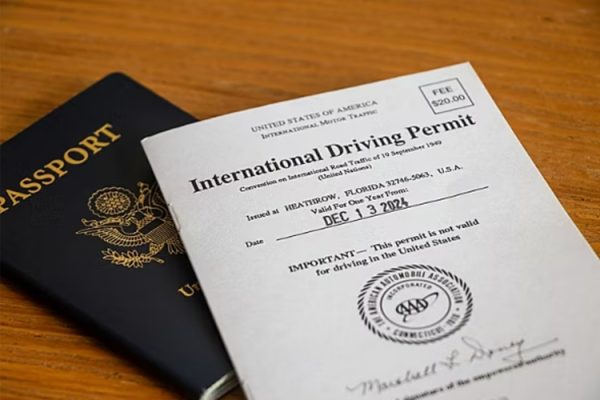
Same rules apply as Ha Giang: you need a valid motorcycle license or International Driving Permit (IDP) to legally ride in Vietnam.
Cao Bang checkpoints: Less frequent than Ha Giang but they exist, especially on main highways and approaching border areas near Ban Gioc. Police check licenses and bike registration.
Border sensitivity: Ban Gioc is right on the China border. You’ll pass through checkpoints approaching the falls. Have your passport, bike registration, and license ready. Foreigners need permits to enter certain border zones, but the Ban Gioc tourist area is open—just follow the main road and don’t try exploring restricted zones.
Fuel availability: Good along main routes. Cao Bang City has multiple stations, as do larger towns like Tra Linh. The ride to Ban Gioc has fuel stops halfway.
Rule of thumb: Fill up in Cao Bang City before heading to Ban Gioc. Don’t let your tank drop below quarter-full on rural routes.
Mechanical services: Cao Bang City has bike mechanics who can handle common issues. Remote areas have basic repair skills in villages, but don’t expect specialized work.
Extending your trip to Cao Bang adds:
If self-driving:
If booking tour extension:
Ban Gioc day trip from Cao Bang City (if hiring driver): $30-50 for car/driver for the day (split among group).
Budget tips:
Road safety: The Ha Giang to Cao Bang routes are less technical than the Ha Giang Loop itself. Main hazards are:
Border areas: Ban Gioc and surrounding regions are border zones. Stick to tourist areas and marked roads. Don’t wander into restricted zones or try to cross into China unofficially. Penalties are serious.
Weather: Afternoon storms are common May-September. If you’re caught in heavy rain, pull over and wait rather than riding through limited visibility and slippery roads.
Scams: Minimal. Cao Bang sees fewer tourists so scam infrastructure hasn’t developed. Main things to watch:
Learn more: Ha Giang Loop Itinerary: 2,3,4,5 days
Cao Bang isn’t your only option for extending the northern adventure. Here are alternatives depending on your interests and direction.
Ba Be National Park sits between Ha Giang/Cao Bang and Hanoi, making it a logical stop on the return journey.
What it offers: Vietnam’s largest natural lake, surrounded by limestone mountains and forest. Activities include boat trips, kayaking, visiting waterfalls and caves, and staying in Tay stilt house homestays.
The route: Cao Bang → Ba Be Lake (100km) → Hanoi (240km). This breaks the long return ride into two days with an overnight at the lake.
Best for: People who want nature and relaxation after mountain riding. Less adrenaline than Ha Giang or Ban Gioc, more peaceful.
Instead of retracing the QL2 route you took north, you can vary your return:
Eastern route via Thai Nguyen: Cao Bang → Bac Kan → Thai Nguyen → Hanoi. Passes through tea plantation regions, less mountainous, faster riding.
Northern route via Lang Son: Cao Bang → That Khe → Lang Son → Hanoi. Takes you through different mountain scenery and border regions. Slightly longer but avoids retracing steps.
Both options add variety and prevent the return ride from feeling repetitive.
Learn more: Ha Giang Loop for Families & Groups
Ha Giang and Cao Bang together create a northern Vietnam trip that covers the spectrum of what the region offers—challenging mountain passes, cultural immersion, natural wonders, and varied landscapes that shift from harsh karst plateaus to lush river valleys.
The key to making it work is pacing. Rushing through either region to check boxes means missing what makes them special. Better to spend 7 days and actually experience both than cram 10 destinations into 4 days and remember nothing but fatigue.
What makes the combination work:
Contrast: Ha Giang tests your skills and nerve. Cao Bang gives you a breather while still delivering scenery and sights worth the journey. Together they balance each other.
Logistics: The route makes geographical sense—Ha Giang to Cao Bang to Hanoi forms a logical loop without excessive backtracking.
Value: You’ve already made the effort to reach northern Vietnam. Adding 2-3 days to see Ban Gioc and explore Cao Bang maximizes the trip without requiring another separate journey later.
Variety: By the time you’ve finished Ha Giang, you’ve seen a lot of mountain roads and rice terraces. Cao Bang’s waterfalls and caves offer different experiences that prevent scenery fatigue.
Practical considerations for success:
Allow flexibility. Weather changes plans, bikes break down, that random village festival you stumble into deserves extra time. Build buffer days.
Manage fatigue. You’ll be riding for multiple consecutive days. Some mornings you’ll wake up sore. It’s okay to take a rest day in Cao Bang City instead of forcing another long ride.
Stay hydrated and fed. Mountain riding burns energy. Eat proper meals, drink water constantly, and listen when your body says it needs a break.
Capture it but don’t obsess over it. Yes, get photos of Ban Gioc and the Bao Lac terraces. But don’t spend so much time framing the perfect shot that you forget to actually look at the waterfall or notice the woman laughing at your parking attempt.
Talk to locals and other travelers. Some of the best parts of these trips are the random conversations—with a guide who explains why that festival matters, a guesthouse owner who shows you how to make local rice wine, another rider who tells you about the unmarked road that leads to an incredible viewpoint.
The Ha Giang to Cao Bang route isn’t just a connection between two provinces. It’s the thread that ties together a week of riding through northern Vietnam that you’ll reference in travel conversations for years. It’s the trip where you realize that Vietnam has mountains that rival anywhere in Southeast Asia, that you’re more capable on a motorbike than you thought, and that sometimes the best travel decisions are the ones where you don’t immediately head back to the city.
Pack an extra day of clothes, make sure your rental bike is in good shape, charge your phone, and point yourself east from Ha Giang. Cao Bang and Ban Gioc are waiting.
Ha Giang City to Cao Bang City is approximately 150km via the direct route (QL4A) or 180-200km if taking the scenic route through Bao Lac. Riding time is 4-6 hours direct or 5-7 hours scenic, not including stops. Most riders complete this in one day, though splitting it into two days with an overnight in Bao Lac or Tra Linh makes for a more relaxed pace.
Yes, if you have the extra 2-3 days. Cao Bang offers different experiences—Ban Gioc Waterfall is genuinely impressive and unlike anything in Ha Giang, the riding is easier and more relaxing, and the region is quieter with fewer tourists. The combination gives you both challenging mountain passes and accessible natural wonders without repeating scenery.
Absolutely. A typical 7-day itinerary would be: Days 1-3 Ha Giang Loop, Day 4 Ha Giang to Cao Bang, Day 5 Ban Gioc Waterfall and Nguom Ngao Cave, Day 6 return to Hanoi or add Ba Be Lake, Day 7 arrive Hanoi. This gives you both regions at a comfortable pace without excessive rushing.
No special permit is required for tourists visiting Cao Bang or Ban Gioc Waterfall. The area is open to foreign visitors. You will pass through checkpoints approaching the border zone (Ban Gioc is on the Vietnam-China border), where you should have your passport, bike registration, and valid license ready for inspection. Stay on marked tourist routes and don’t attempt to enter restricted border zones.
They’re different rather than one being objectively better. Ha Giang offers more challenging riding, more dramatic mountain scenery, and stronger cultural immersion in minority villages. Cao Bang has the impressive Ban Gioc Waterfall, easier riding, accessible caves, and quieter tourism. Most people who compare them prefer Ha Giang for adventure, Cao Bang for specific sights. Doing both gives you the complete northern Vietnam experience.
Ride from Ha Giang City to Cao Bang City (150km, one day), overnight in Cao Bang, then take a day trip to Ban Gioc Waterfall (85km each way from Cao Bang City, roughly 2 hours each direction). The road is good quality. You can ride yourself, join a tour from Cao Bang, or hire a car with driver. Most people visit Ban Gioc and Nguom Ngao Cave on the same day.
Most Ha Giang rental shops do not allow one-way drop-offs in Cao Bang. You’ll need to return the bike to Ha Giang City or arrange a special agreement (which typically costs extra and isn’t always available). The standard approach is to rent in Ha Giang, extend the rental for extra days, ride to Cao Bang and back, then return the bike in Ha Giang before traveling to Hanoi by bus.
The direct route via QL4A is faster, better paved, and more straightforward—good if you’re tired from Ha Giang Loop or short on time. The scenic route via Bao Lac adds 30-50km but gives you beautiful rice terraces and valley scenery—worth it if you have an extra day and want to maximize scenery. Most tours take the direct route; self-drive riders can choose based on time and energy levels.
No, the Ha Giang to Cao Bang route is significantly easier than the Ha Giang Loop itself. The direct route on QL4A is mostly gentle hills with good road quality, no extreme passes, and moderate traffic. The scenic route via Bao Lac has some steep descents and gravel sections but nothing as technical as Ma Pi Leng Pass. If you completed Ha Giang Loop comfortably, the ride to Cao Bang will feel easy.
October and November offer the best overall conditions—dry weather, comfortable temperatures, and good waterfall flow. For maximum waterfall volume, visit July-September during rainy season (though expect afternoon storms). December-February is quieter and cooler but waterfall flow is lower. Spring (March-May) is pleasant shoulder season. Avoid visiting Ban Gioc immediately after heavy storms when the water turns muddy.
Budget an extra $50-80 per person for 2 additional days if self-driving (includes extra bike rental, fuel, accommodation, food, and entrance fees). Tour extensions add $80-120 for 2 days all-inclusive. The main costs are accommodation in Cao Bang City ($10-25/night), fuel ($8-12), Ban Gioc entrance fee, and meals. It’s an affordable extension that adds significant value to your northern Vietnam trip.
Yes, Cao Bang works as a standalone 2-3 day trip from Hanoi. You can take a bus or ride directly to Cao Bang City (300km from Hanoi, 6-7 hours), spend a day visiting Ban Gioc and Nguom Ngao Cave, explore other sights like Thang Hen Lake or Pac Bo Cave, then return. This is less physically demanding than the Ha Giang Loop and suitable for travelers who want to see Ban Gioc Waterfall without committing to extended mountain riding.
Contact information for Loop Trails
Website: Loop Trails Official Website
Email: looptrailshostel@gmail.com
Hotline & WhatSapp:
+84862379288
+84938988593
Social Media:
Facebook: Loop Trails Tours Ha Giang
Instagram: Loop Trails Tours Ha Giang
TikTok: Loop Trails
Office Address: 48 Nguyen Du, Ha Giang 1, Tuyen Quang
Address: 48 Nguyen Du, Ha Giang 1, Tuyen Quang
Facebook X Reddit Table of Contents Learn more: Ha Giang Loop Tours The photographs that bring most people to Ha Giang are
Facebook X Reddit Table of Contents Learn more: Ha Giang Loop Tours The Ha Giang Loop is one of the most talked
Facebook X Reddit Table of Contents Learn more: Ha Giang Loop Tours There is a specific moment on the Ha Giang Loop