

Thúy Kiều( Grace) is a travel blogger and content contributor for Loop Trails Tours Ha Giang. She holds a bachelor’s degree in Sustainable Tourism from Vietnam National University, Hanoi, and has a strong passion for exploring and promoting responsible travel experiences in Vietnam’s northern highlands.
After two days of riding mountain passes and breathing dust on the Ha Giang Loop, jumping into cold water starts sounding really good. Du Gia Waterfall delivers exactly that—a legitimate swimming hole where you can cool off, wash the road grime away, and give your body a break from being on a motorbike for six hours.
This isn’t a dramatic multi-tiered cascade or a hidden jungle secret. Du Gia is straightforward: a waterfall pouring into a natural pool that’s deep enough to swim in, surrounded by rocks where you can leave your stuff and dry off afterward. It sits right off the main loop route between Meo Vac and Dong Van, which means it’s convenient without requiring a difficult detour or special effort to reach.
The waterfall has become a standard stop on most Ha Giang Loop itineraries, which means it’s not empty or undiscovered. During peak season, you’ll share the pool with other travelers. But the water is still cold, the setting is still pleasant, and the break from riding is still valuable. Du Gia isn’t trying to be an Instagram-famous secret spot—it’s a functional, accessible place to swim that happens to be positioned perfectly on the loop route.
This guide covers the practical details: where exactly it is, how to get there, what the swimming conditions are like, what to bring, how it compares to other stops on the loop, and how to fit it into your itinerary without throwing off your timing.
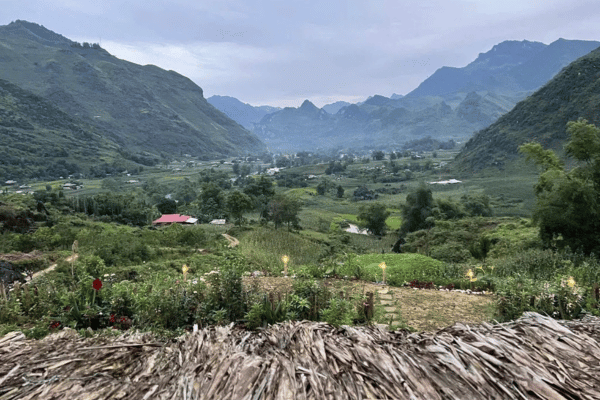
Learn more: Ha Giang Loop Tours
Learn more: Ha Giang Motorbike Rental
The Ha Giang Loop is primarily about riding and viewpoints. Ma Pi Leng Pass gets the attention, Dong Van provides the culture, Quan Ba gives you the iconic Twin Mountains photo. Du Gia Waterfall serves a different purpose—it’s where you actually interact with the landscape instead of just looking at it from a viewpoint platform.
Physical relief matters. By the time most riders reach Du Gia (typically Day 2 or 3 of the loop), your body needs a break. Your back hurts from the motorbike seat, your arms are tired from gripping the handlebars on rough sections, and you’re dusty from the road. Getting into the water provides real physical relief—the cold water on sore muscles, the ability to stretch and move differently, the psychological reset that comes from changing activity completely.
The waterfall is accessible without being challenging. You’re not hiking for an hour through jungle or climbing down steep trails. From the parking area, it’s a short walk to the water. This accessibility means it works for a wide range of travelers—from serious backpackers to older riders who just want to cool off without an adventure.
Timing on the route is ideal. Du Gia sits roughly halfway between Meo Vac and Dong Van, which for most itineraries means you hit it mid-morning or early afternoon on Day 2. That’s perfect timing—you’ve been riding for a few hours, you’re warmed up and ready for a break, and you have time to swim without rushing to reach your overnight destination.
The setting is genuinely pleasant. The waterfall flows over mossy rocks into a clear pool surrounded by greenery and karst cliffs. It’s not wilderness—there are some basic facilities and vendor stalls—but it hasn’t been overdeveloped either. You get a natural swimming experience without feeling like you’re at a constructed tourist attraction.
Practical amenities exist. Unlike truly remote swimming spots, Du Gia has changing areas (basic but functional), bathrooms (squat toilets), and vendors selling drinks and snacks. You’re not roughing it completely, which matters when you’re traveling with limited gear on a motorbike.
For many travelers, Du Gia becomes a highlight of the loop specifically because it’s so different from everything else. You’re not taking photos from a viewpoint or walking through a market or checking out architecture. You’re just swimming in a mountain waterfall, which feels more active and engaging than passive sightseeing.
The waterfall also provides social interaction. Because it’s a common stop, you’ll meet other riders, exchange route information, compare experiences, and sometimes coordinate riding plans for the rest of the day. That casual traveler interaction can be valuable, especially if you’re riding solo.
Learn more: Ha Giang Cao Bang 5 Days
Du Gia Waterfall is located about 15 kilometers south of Dong Van and roughly 10 kilometers north of Meo Vac on the main Ha Giang Loop route (QL4C). The waterfall sits just off the highway in Du Gia village.
GPS coordinates: approximately 23.1947° N, 105.2783° E
The location is easy to find because it’s directly on the main route. You’re not turning onto side roads or navigating complex directions. If you’re riding from Meo Vac toward Dong Van, you’ll see the waterfall area on your right side. If you’re coming from Dong Van toward Meo Vac, it’s on your left.
Signage: There are multiple signs along the road indicating “Du Gia Waterfall” in Vietnamese and English. The signs appear about 500 meters before the actual turnoff, giving you advance notice. The parking area is obvious—a cleared dirt lot where you’ll see other motorbikes and possibly jeeps or vans if tour groups are there.
From the parking area, you’ll hear the waterfall before you see it. Follow the short path (maybe 50-100 meters) down toward the water. The path is uneven dirt and rocks—watch your footing, especially if you’re wearing flip-flops.
Distance from major points:
The waterfall is positioned between two of the loop’s major overnight stops, which makes it a natural break point regardless of which direction you’re traveling.
One note: Google Maps shows the waterfall accurately, but the pin placement can vary depending on the map version. If you’re navigating by GPS, use the coordinates above or just watch for the signs along QL4C. You won’t miss it if you’re paying attention.
Learn more: Ha Giang to Cao Bang
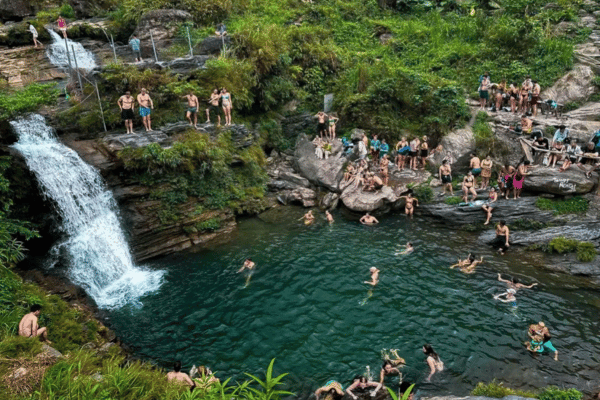
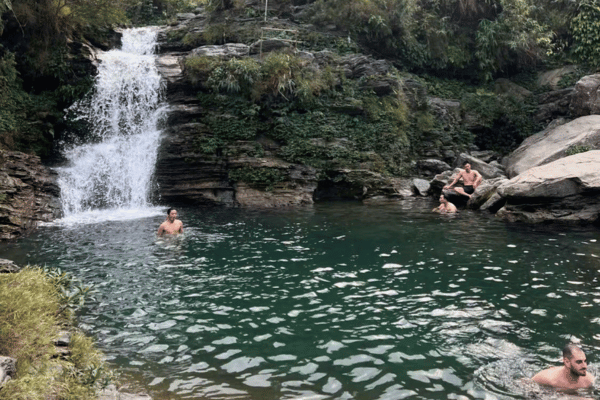
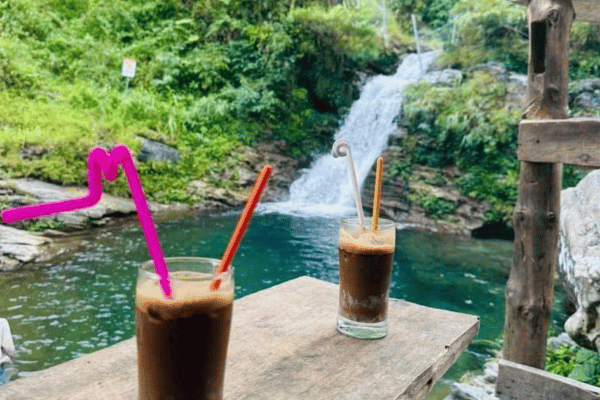
Du Gia Waterfall drops maybe 8-10 meters over mossy rocks into a natural pool. The waterfall isn’t massive or thundering—water flow depends on the season and recent rainfall—but it’s consistent enough to create a legitimate swimming area.
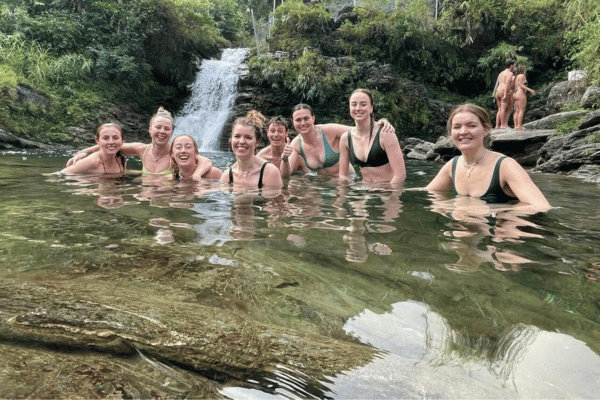
The pool is roughly circular or kidney-shaped, maybe 15-20 meters across at the widest point. Depth varies: shallow areas near the edges where you can stand or sit on rocks, deeper sections in the middle where you need to swim or tread water. The deepest part is probably 2-3 meters, though this changes with water levels.
The water is clear. You can see the bottom in most places—rocks, some aquatic plants, the occasional fish. It’s mountain stream water, so it’s cold. Not painfully cold, but definitely refreshing to the point of being slightly shocking when you first get in.
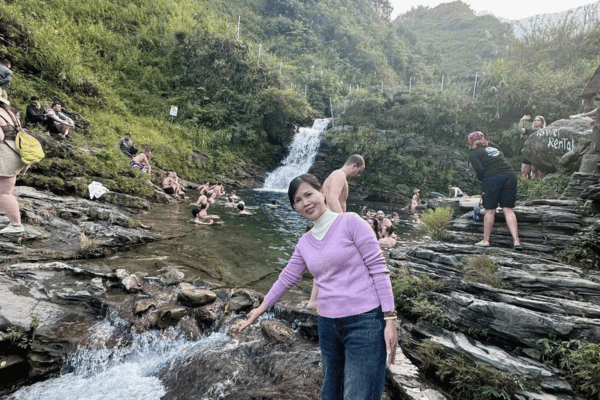
Rocks surround the pool at varying heights. Some are flat and good for sitting or laying out your stuff. Others are irregular and mossy—careful walking on those, they’re slippery. The rocks provide natural seating and changing areas, though there are also some basic wooden structures nearby.
The immediate area includes:
Crowds: During peak season (September-November), you’ll rarely have Du Gia to yourself. Expect 5-30 people at any given time during mid-morning through afternoon. Early morning (before 9am) or late afternoon (after 4pm) is quieter. Off-season, you might swim alone or with just a few others.
The atmosphere is casual and social. People swim, sun themselves on rocks, eat snacks, talk with other travelers. It’s not a party scene but it’s not reverently quiet either. Bring earbuds if you want to tune out and just relax.
What you won’t find: Showers, lockers, towel rental, lifeguards, safety equipment, WiFi, formal rules posted anywhere. This is a natural swimming spot with minimal infrastructure. You’re responsible for your own safety and belongings.
The setting is photogenic in a natural way. The waterfall cascading down mossy rocks, the pool reflecting sky and surrounding greenery, the karst cliffs rising in the background. It’s not as dramatic as some Ha Giang viewpoints, but it makes for good photos of actual activities rather than just landscapes.
Learn more: Ha Giang Loop for Beginners
Swimming at Du Gia is straightforward but there are specific things to understand about conditions and logistics.
The water is cold year-round because it’s fed by mountain streams. Temperature varies slightly by season but expect 15-20°C (60-68°F) regardless of when you visit. In summer when air temperatures are warm, this feels refreshing. In winter or early spring when air is cool, getting in requires mental preparation.
The initial shock passes quickly. Your body adjusts within a minute or two and the cold becomes tolerable, then pleasant. Getting out is when you feel it again—the air feels warm but you’ll be wet and potentially cold until you dry off.
Shallow areas: Around the edges and near some of the rocks, you can stand with water at knee to waist height. These sections are good for cautious swimmers or people who want to cool off without full immersion.
Deep sections: The center of the pool requires swimming or treading water. Depth is roughly 2-3 meters depending on water level. Strong swimmers can dive under and touch the bottom, but it’s not recommended—you can’t see what’s down there clearly and rocks can be sharp.
Current: Minimal in the pool itself. The waterfall creates some movement where it enters, but the pool is calm. You’re not fighting current or worrying about being swept anywhere.
Bottom surface: Rocky and uneven. Walk carefully if you’re standing in shallow areas. Rocks can be slippery with algae or moss. Water shoes help significantly if you have them.
Visibility: Good. The water is clear enough to see several meters down. This means you can spot rocks or sudden depth changes, which is useful for safety.
You don’t need to be a strong swimmer to enjoy Du Gia. If you can swim at all, you can handle the deep sections. If you can’t swim or aren’t confident, stay in the shallow areas around the edges where you can stand.
There’s no formal supervision or lifeguards. You’re swimming at your own risk. Use common sense—don’t jump from high rocks, don’t swim if you’re drunk or overly tired, watch out for other swimmers.
Basic wooden/bamboo structures provide minimal privacy for changing into and out of swimwear. These are open-air enclosures with gaps—enough privacy to change without being fully exposed, but not private in the way a locker room would be.
Many people just change carefully behind rocks or use a towel/sarong for coverage. Some wear swimwear under their clothes for the ride and just remove outer layers at the waterfall.
For women: Modest one-piece swimsuits or tankinis work well. Bikinis are fine and common among foreign travelers, though you’ll notice some local Vietnamese women swim fully clothed or in shorts and t-shirts. Do what you’re comfortable with.
For men: Board shorts, swim trunks, whatever works. Some guys swim in regular shorts, which is fine though they take longer to dry.
There are no lockers or secure storage. You leave your stuff on rocks or in the changing area and hope for the best. Theft isn’t common but it’s not impossible either.
Strategy:
Most travelers don’t have problems, but basic precautions make sense. If you’re solo and have no one to watch your stuff, be strategic about what you bring down to the water.
You’ll be wet. Bring a towel or sarong to dry off. Find a sunny rock and let the sun help with the drying process before getting dressed again.
Getting back on a motorbike when you’re damp is mildly uncomfortable but manageable. Your clothes will fully dry while riding in the sun and wind. Many people just accept being slightly damp for the next 30 minutes of riding.
Learn more: Ha Giang in September & October
September to November is peak Ha Giang Loop season and therefore the busiest time at Du Gia Waterfall. Water flow is reliable (rainy season has ended but streams are still full), air temperatures are comfortable (not too hot or cold), and weather is generally stable. Expect the most crowds during this period, especially on weekends.
The water is cold but air is warm enough that you’ll dry off comfortably after swimming. This is the best compromise between conditions and comfort.
June to August is monsoon season. Water flow is strongest—the waterfall can be quite impressive with high volume—but weather is unpredictable. It might rain while you’re there, which doesn’t prevent swimming but reduces the appeal. The landscape is incredibly green and lush. Fewer tourists overall.
Air temperatures are warm, so cold water feels good. Drying off might be slower if it’s humid or overcast.
March to May offers transitional conditions. Water flow depends on winter precipitation and early spring rains. Some years it’s strong, others it’s moderate. Air temperatures are mild to warm. Crowds are lighter than autumn but increasing as season progresses.
Good time for swimming if you prefer fewer people and don’t mind variable conditions.
December to February is cold season. Air temperatures can be quite low (5-15°C), which makes swimming less appealing for most people. The waterfall still flows but volume may be reduced. Very few tourists.
Hardy swimmers who don’t mind cold air and cold water can have the place nearly to themselves. For most people, this isn’t ideal swimming weather.
Time of day matters as much as season. The waterfall gets sun for most of the day, which is good for drying off. Early morning (7-9am) is coolest and quietest. Late afternoon (4-5pm) can have nice light but you need to consider your riding schedule to reach your overnight destination before dark.
Mid-morning to early afternoon (10am-2pm) is when most riders stop, so it’s busiest but also warmest and most social.
Water flow variation: After heavy rains, the waterfall has more volume and the pool level rises. During dry spells, flow decreases and water level drops. The pool remains swimmable under most conditions, but it’s most impressive when flow is strong.
If you rode through rain the day before or earlier that morning, expect better water flow. If it’s been dry for a week, the waterfall will be more modest.
Learn more: Ha Giang Loop Self-Driver
Getting to Du Gia is straightforward since it’s directly on the main Ha Giang Loop route. Your transportation method determines the specifics.
Most common approach. You’re riding the loop on a rented bike, following QL4C between Meo Vac and Dong Van, and you see the signs for Du Gia Waterfall.
From Meo Vac heading north:
From Dong Van heading south:
The road between Meo Vac and Dong Van is paved and in decent condition. Some sections are bumpy, some have potholes, but nothing extreme. The riding is relatively easy by Ha Giang Loop standards—no extreme climbs or technical sections near Du Gia.
Park your bike in the dirt lot with other vehicles. Lock it. Take your key and anything valuable with you. Leave your helmet on the bike (most people do this without issues, but if you’re worried, bring it with you to the waterfall).
If you’re traveling with an Easy Rider guide or on a self-drive tour, your guide will know exactly where Du Gia is and will stop there as part of the standard route unless you specifically request to skip it.
Learn more: Ha Giang Loop Easy Rider
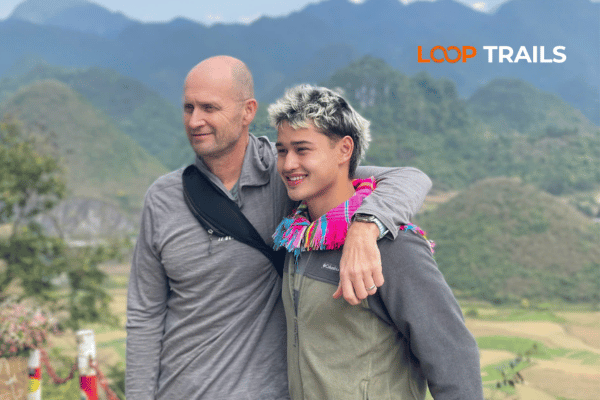
If you’re riding as a passenger with a guide, Du Gia is typically included in the Day 2 itinerary. The guide handles all navigation and timing. They’ll stop at the waterfall, give you time to swim (usually 30-60 minutes depending on group preference), and continue when ready.
Confirm with your guide that Du Gia is included in your route if it’s important to you. Most guides include it automatically, but some might skip it if they think their clients aren’t interested or if timing is tight.
Learn more: Ha Giang Jeep Tours
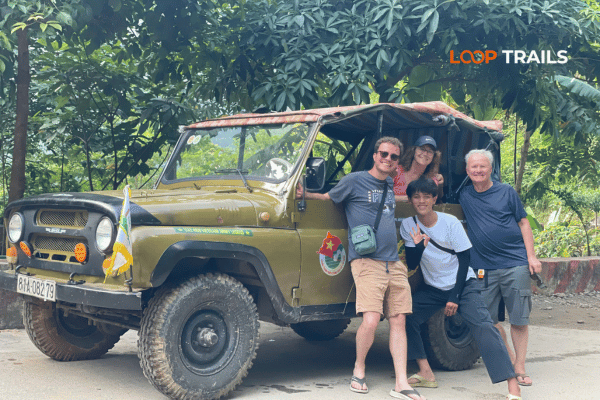
Jeep tours and group tours also typically include Du Gia as a standard stop. You’ll arrive in a vehicle with other travelers, have a set amount of time at the waterfall (usually 45-60 minutes), then continue as a group.
The downside of group tours is less flexibility—you stop when the group stops and leave when they leave. If you want more or less time swimming, you’re stuck with the schedule.
If you’re staying in Du Gia village itself (some homestays and guesthouses exist), the waterfall is walking distance—maybe 1-2 kilometers depending on exactly where you’re staying. Ask your hosts for directions. It’s a small village, so locals can point you the right way.
Learn more: Ha Giang Paking List
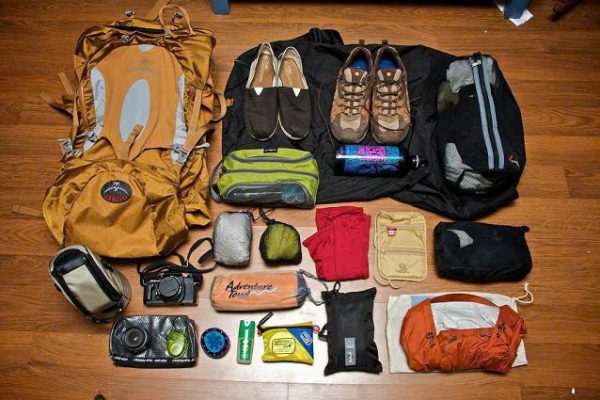
Swimming essentials:
Practical items:
Photography:
Clothing considerations:
Don’t bring:
What you don’t need to bring:
Pack light. You’re on a motorbike with limited storage. Bring what’s essential and leave the rest.
Learn more: Ha Giang Loop 3 Days 2 Nights
Most travelers see Du Gia purely as a waterfall stop and move on. The village itself gets less attention, which is understandable—it’s small and doesn’t have obvious tourist attractions beyond the water. But if you’re spending a night or have extra time, Du Gia offers a glimpse of actual mountain village life.
The village is a scattered collection of houses along and just off the main road. It’s primarily Tay and H’mong residents engaged in farming—corn, rice, vegetables—and some tourism-related services for loop travelers.
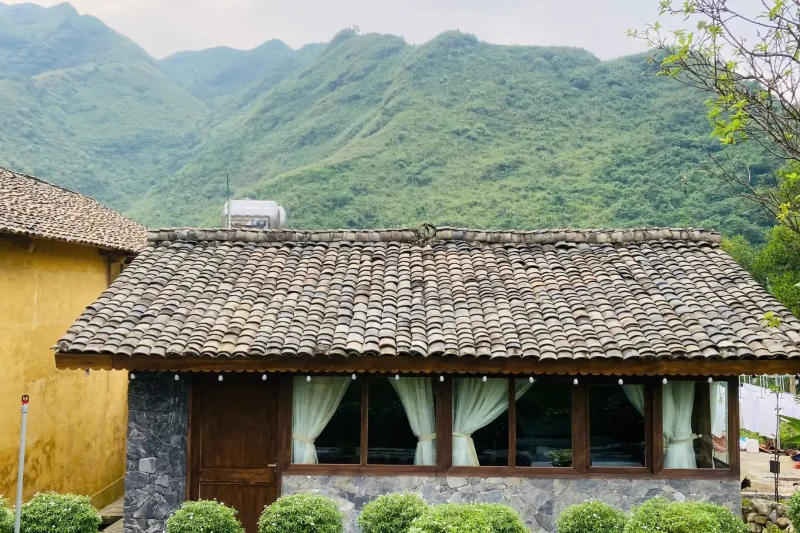
There’s no real town center. You’ll see houses, small shops, a few guesthouses, motorcycle parking areas, and people going about daily life. It’s functional rather than picturesque, though the surrounding landscape—karst cliffs, green valleys—provides the scenic backdrop.
Local guesthouses in Du Gia are basic. We’re talking family-run places with simple rooms, shared bathrooms, minimal English, and home-cooked meals. Prices run 100,000-150,000 VND per person per night including dinner and breakfast.
Why stay here instead of Meo Vac or Dong Van? Mainly if you want to break up the riding into shorter days, if you’re interested in quieter village life away from the more touristy towns, or if you’re specifically interested in early morning or late afternoon access to the waterfall when it’s less crowded.
Food in Du Gia is limited to what guesthouses serve (if you’re staying) or what small roadside stalls offer. Expect basic Vietnamese dishes—rice, noodles, vegetables, meat if available. Nothing fancy, portions are generous, everything is affordable.
Some vendors near the waterfall sell instant noodles, banh mi, snacks, and drinks. Quality is what you’d expect for roadside vendors—fine for a quick bite, not memorable cuisine.
There’s no nightlife. Du Gia goes quiet after dark. If you’re staying, you’ll eat dinner with your hosts, maybe drink some rice wine if offered, and go to bed early. It’s a restful, low-key experience.
What to do in Du Gia beyond the waterfall:
Du Gia isn’t a destination itself. It’s a waypoint with a nice waterfall that happens to have basic services for travelers. Set expectations accordingly.
Learn more: Ha Giang Loop Weather
Most travelers don’t overnight in Du Gia specifically. The standard Ha Giang Loop itinerary has you staying in Meo Vac, Dong Van, or Yen Minh instead. But options exist if Du Gia fits your schedule better.
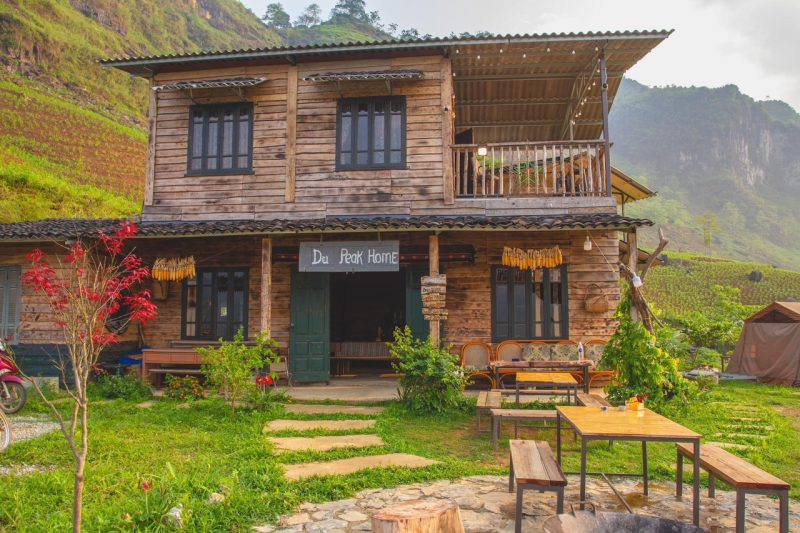
A handful of homestays and basic guesthouses operate in Du Gia, catering primarily to self-drive riders or Easy Rider groups looking for overnight accommodation.
Typical setup:
Quality and comfort vary significantly between properties. Some are well-maintained with relatively clean facilities, others are quite rustic. Don’t expect amenities like WiFi, hot water, or air conditioning.
The appeal is cultural immersion and convenience to the waterfall. You can swim early morning or late afternoon when it’s quiet, and you experience genuine village hospitality.
Meo Vac is the larger town option south of Du Gia. It has more accommodation choices ranging from basic homestays to small hotels.
Advantages of Meo Vac:
Distance to Du Gia Waterfall: 10km, 15-20 minutes by bike. Easy to ride from Meo Vac to the waterfall for a swim, then continue toward Dong Van.
Dong Van is the most developed town option, with the widest range of accommodation and services.
Advantages of Dong Van:
Distance to Du Gia Waterfall: 15km, 20-25 minutes by bike. Slightly farther but still easily accessible for a swimming stop.
Stay in Du Gia if:
Stay in Meo Vac if:
Stay in Dong Van if:
For most travelers, Meo Vac or Dong Van makes more sense than Du Gia itself. The waterfall is easy to access from either location, and both towns offer better services.
Learn more: Tu San Canyon & Nho Que River Boat Trip
The Ha Giang Loop has several places where you can swim, each with different characteristics.
Du Gia Waterfall is the most accessible and well-known. It’s directly on the main route, has basic facilities, and requires no hiking or difficult access. The pool is adequate for swimming, water is cold and clean, and it’s positioned perfectly for a mid-route break.
Pros: Easy to reach, reliable swimming conditions, facilities available, social atmosphere with other travelers
Cons: Can be crowded, not pristine or remote, somewhat developed/touristy
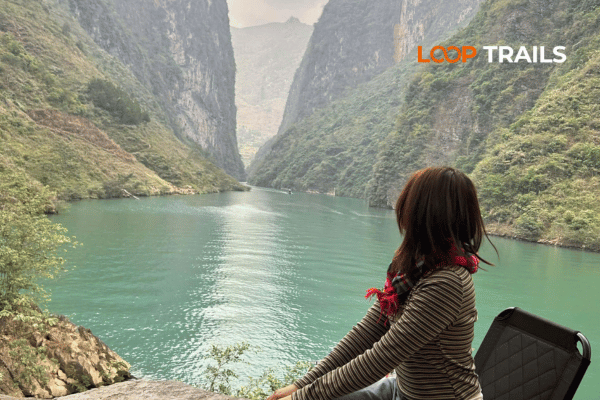
Nho Que River below Ma Pi Leng Pass is another swimming option. The river is turquoise and beautiful, accessible from a few points along the Ma Pi Leng road, but getting to the water requires hiking down steep trails (30-45 minutes descent, longer climbing back up).
Pros: Stunning scenery, beautiful water color, feels more remote
Cons: Difficult access, much more effort required, not ideal if you’re on a tight schedule
Comparison: Du Gia is easier but less dramatic. Nho Que is more spectacular but requires significant effort.
Random streams and pools along the loop: Some riders stop at smaller streams or pools they encounter while riding. These are hit or miss—sometimes perfect for a quick dip, sometimes too small or rocky to be practical.
Pros: Empty, spontaneous, adventurous feeling
Cons: No facilities, unpredictable conditions, might not be deep enough for real swimming
Comparison: Du Gia is more reliable and practical. Random streams are more adventurous but less predictable.
Ban Gioc Waterfall (on the Cao Bang Loop, not Ha Giang Loop): Much larger and more impressive waterfall, but swimming is restricted in many areas. It’s primarily a viewing attraction rather than a swimming destination.
If you’re only doing the Ha Giang Loop and want to swim, Du Gia is your best bet. It’s accessible, reliable, and positioned well on the route. Other options exist but require more effort or spontaneity.
Learn more: Ha Giang Loop 4 Days 3 Nights
Du Gia Waterfall naturally fits into the standard Ha Giang Loop routing regardless of whether you’re doing the 3-day or 4-day version.
Day 1: Ha Giang City → Quan Ba → Yen Minh → Dong Van (120-140km)
Day 2: Dong Van → Du Gia Waterfall → Meo Vac → Du Gia village or back toward Ha Giang City
On Day 2, most riders leave Dong Van in the morning, ride south toward Meo Vac, stop at Du Gia Waterfall for swimming (typically mid-morning or early afternoon), then continue to their overnight destination.
Alternative Day 2: Dong Van → Lung Cu (if adding the flag tower) → back to Dong Van → Du Gia Waterfall → Meo Vac
Day 3: Meo Vac → Ma Pi Leng Pass → Meo Vac → Yen Minh → Quan Ba → Ha Giang City
If you’re doing the loop in reverse (starting from Meo Vac), you hit Du Gia on Day 1 or 2 depending on your routing.
With an extra day, you have more flexibility:
Day 2: Dong Van → Du Gia Waterfall (swim and rest) → overnight in Du Gia village or Meo Vac
This gives you more time at the waterfall without rushing, and you can explore the village if staying there.
The extra day reduces the pressure to cover distance quickly, so you can spend 60-90 minutes at Du Gia instead of feeling like you need to swim quickly and move on.
Best timing for Du Gia stop:
How long to budget: 45-90 minutes total including parking, walking to waterfall, swimming, drying off, changing, getting back on the road. More if you’re relaxing and social, less if you’re just cooling off quickly.
Avoid: Stopping at Du Gia late afternoon (after 4pm) if you still have significant riding to do. You want to reach your overnight destination before dark, and swimming delays you.
If your itinerary is tight and you’re debating whether to include Du Gia:
Skip it if:
Include it if:
Du Gia is nice but not mandatory. The Ha Giang Loop remains excellent even if you skip the waterfall.
Learn more: Ha Giang Loop Cost & Tips
Swimming at Du Gia is generally safe if you’re sensible, but it’s a natural environment with no lifeguards or safety supervision. You’re responsible for yourself.
Swimming safety:
Personal safety:
Health considerations:
Environmental responsibility:
Cultural sensitivity:
Riding after swimming:
What to do if something goes wrong:
Common mistakes to avoid:
Use common sense. Du Gia has been a safe swimming spot for thousands of travelers. Most people have zero issues. The few problems that do occur usually involve preventable mistakes like jumping without looking, leaving valuables unattended, or swimming beyond their ability.
Learn more: Ha Giang Cao Bang by Jeep and motorbike
Yes, for people who can swim and use common sense. The pool has shallow and deep sections, water is clear, and there’s no dangerous current. Main risks are slippery rocks and depth in the center. If you’re not a confident swimmer, stay in shallow areas near the edges where you can stand.
Depth varies throughout the pool. Edges and shallow areas are knee to waist deep. The center sections reach approximately 2-3 meters deep depending on water level. You need to swim or tread water in the deeper parts. Always test depth before entering unfamiliar areas.
Highly recommended. There are no towels for rent or purchase, and drying off after swimming makes getting back on a motorbike much more comfortable. Quick-dry travel towels work great. If you forget, you’ll have to air-dry on rocks in the sun, which takes longer.
Yes, there are basic changing structures (wooden/bamboo enclosures) providing minimal privacy. Many people also change behind rocks or use a towel for coverage. Alternatively, wear your swimsuit under your clothes when you arrive and just remove outer layers. Facilities are rustic but functional.
Most visitors spend 45-90 minutes total. This includes parking, walking to the waterfall, swimming, drying off, changing, and getting back on the road. Budget at least one hour if you actually want to enjoy the swimming rather than just jumping in and out quickly. Longer if you’re relaxing and not in a hurry.
As of current information, there is no formal entrance fee for accessing the waterfall and swimming area. Some parking areas might request a small parking fee (typically 5,000-10,000 VND), but this isn’t consistent. Vendors sell food and drinks, but that’s optional. Policies can change—bring small bills just in case.
Park your motorbike in the dirt parking area with other vehicles. Lock it and take the key with you. For belongings, you’ll need to bring them down to the waterfall area and leave them on rocks while swimming, or have someone from your group watch them. There are no lockers or secure storage facilities.
Cold year-round, typically 15-20°C (60-68°F). It’s mountain stream water fed by higher elevation sources. The initial shock is bracing, but most people adjust within a minute or two. On warm days this feels refreshing. On cooler days it requires more mental preparation to get in.
Yes, though conditions vary. During monsoon season (June-August), the waterfall has stronger flow and water levels rise. Swimming is still possible and the landscape is very green. Main concern is weather while you’re there—swimming in rain is fine for some people, uncomfortable for others. Check conditions before committing.
Yes, basic squat toilets are available near the parking area. They’re functional but not pristine. Changing areas are minimal wooden/bamboo structures providing basic privacy. Don’t expect Western toilets or clean facilities with running water. It’s very basic infrastructure.
Depends on season and time of day. Peak season (September-November) between 10am-2pm can have 20-30+ people. Early morning (before 9am) or late afternoon (after 4pm) is quieter. Off-season (December-February, June-August) you might have it mostly to yourself. It’s never completely empty during riding season but rarely unbearably crowded.
Yes, vendors near the waterfall sell drinks (water, soft drinks, beer), snacks, and instant noodles. Prices are slightly higher than in towns but reasonable. Selection is limited. Bring your own food if you’re particular about what you eat, but basic refreshments are available.
Contact information for Loop Trails
Website: Loop Trails Official Website
Email: looptrailshostel@gmail.com
Hotline & WhatSapp:
+84862379288
+84938988593
Social Media:
Facebook: Loop Trails Tours Ha Giang
Instagram: Loop Trails Tours Ha Giang
TikTok: Loop Trails
Office Address: 48 Nguyen Du, Ha Giang 1, Tuyen Quang
Address: 48 Nguyen Du, Ha Giang 1, Tuyen Quang
Facebook X Reddit Table of Contents Learn more: Ha Giang Loop Tours If you are a UK traveler planning to ride a
Facebook Twitter LinkedIn Table of Contents Learn more: Ha Giang Loop Tours Most people planning the Ha Giang Loop focus entirely on