









Picture of  Triệu Thúy Kiều

Triệu Thúy Kiều

Thúy Kiều (Grace) is a travel blogger and content contributor for Loop Trails Tours Ha Giang. She holds a bachelor’s degree in Sustainable Tourism from Vietnam National University, Hanoi, and has a strong passion for exploring and promoting responsible travel experiences in Vietnam’s northern highlands.

Ha Giang vs Hai Van Pass: Which Vietnam Motorbike Route Wins?

Facebook
X
Reddit
ma pi leng skywalk

Table of Contents

There’s a conversation that happens in every hostel common room from Hanoi to Ho Chi Minh City. Someone’s looking at a map, pointing at the north, pointing at the centre, and asking: “So which one should I actually do?”

Ha Giang Loop or Hai Van Pass. Both are legendary. Both get shared endlessly on Instagram. Both will give you the kind of riding day you’ll describe for years. But they are very different experiences — and the wrong choice for your trip is a real possibility if you just go off vibes.

This guide is built to end that confusion. We’ll break down both routes honestly: scenery, difficulty, logistics, cost, crowds, and the type of traveller each one actually suits. By the end, you’ll know exactly which one (or both) belongs on your Vietnam itinerary.

Why This Comparison Actually Matters

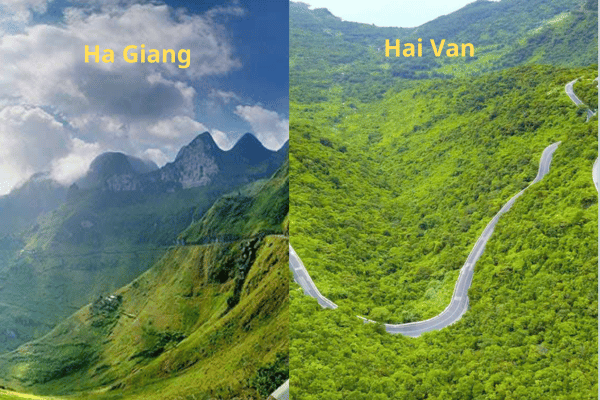
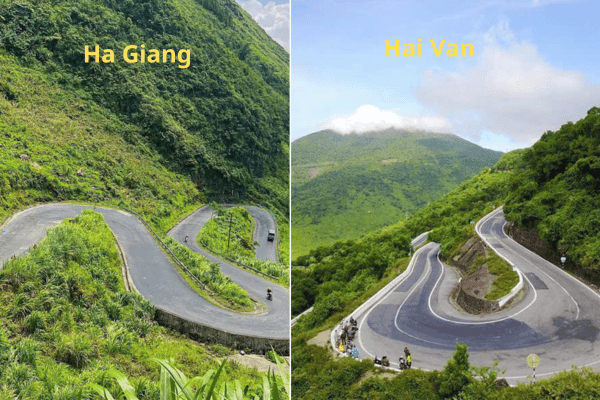
Ha Giang Loop vs Hai Van Pass — Vietnam's two best motorbike routes compared

Most “best motorbike routes in Vietnam” articles list five or six roads and call it a day. That’s not useful when you have limited time and need to make a real decision.

Ha Giang and Hai Van Pass keep coming up together because they represent the two ends of the Vietnam motorbike spectrum. One is a multi-day wilderness loop in the far north, requiring planning, permits (for foreigners entering certain zones), and a real time commitment. The other is a single mountain pass — rideable in under an hour — that happens to sit between two major cities on the classic north-to-south backpacker trail.

They’re not actually competing for the same slot in your trip. But understanding why they’re different is what helps you plan smarter.

What Is the Ha Giang Loop?

Rider on Ma Pi Leng Pass above Nho Que River, Ha Giang Loop Vietnam

Ha Giang Loop is a roughly 350km circuit through Ha Giang Province — Vietnam’s northernmost region, bordering China. It’s not just a road; it’s a full destination.

The standard route runs from Ha Giang City through Quan Ba, Yen Minh, Dong Van, and Meo Vac before looping back. Most riders take 3 to 4 days minimum, though 5 to 7 days gives you breathing room to stop properly, hike, talk to locals, and not feel like you’re just ticking a box.

The terrain is the Dong Van Karst Plateau — a UNESCO Geopark of ancient limestone formations, deep river canyons, and high-altitude passes that top out above 1,500 metres. The most famous section is Ma Pi Leng Pass, a jaw-dropping stretch of road carved into the cliffside above the Nho Que River. On a clear day, that turquoise water in the canyon below it looks photoshopped.

Beyond the landscape, Ha Giang is home to multiple ethnic minority communities — H’Mong, Tay, Lo Lo, Giay — with distinct cultures, markets, and architecture. Dong Van Old Quarter is a surprisingly charming French colonial-era market town. Lung Cu Flag Tower marks the northernmost point of Vietnam. Meo Vac Sunday Market draws traders from surrounding villages.

This is not a drive-by experience. Ha Giang rewards slow travel.

What Is Hai Van Pass?

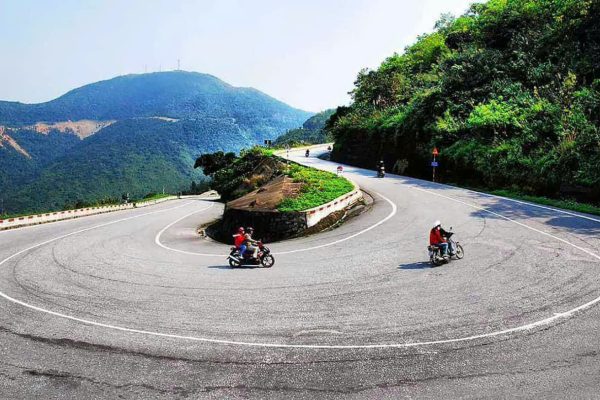
Hai Van Pass Vietnam coastal motorbike route Da Nang Hue

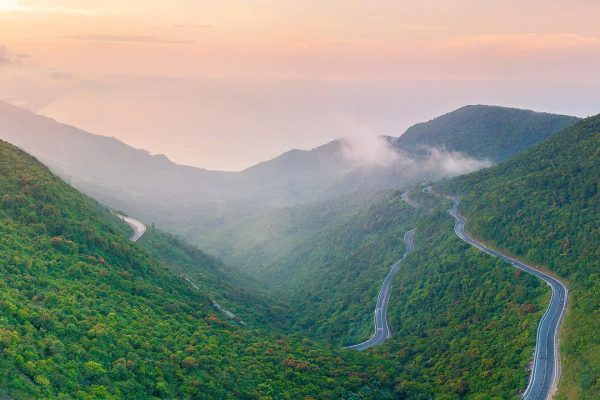
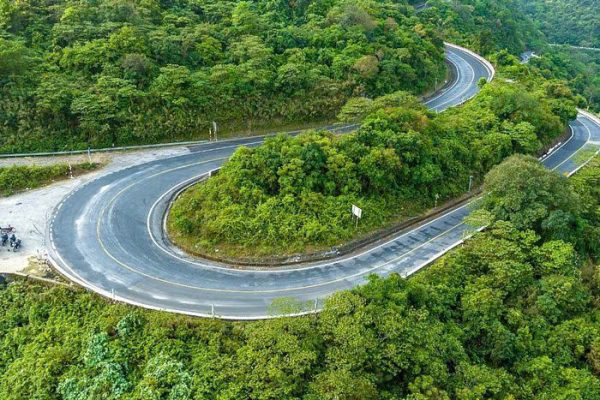
Hai Van Pass (Đèo Hải Vân — “Ocean Cloud Pass”) is a mountain pass that cuts across the Trường Sơn range between Da Nang and Hue. At roughly 21 kilometres, it’s a short but spectacular piece of road that climbs to about 500 metres before dropping back to the coast.

Most travellers ride it as part of the Hue–Da Nang (or reverse) leg of their north-to-south Vietnam trip. The scenery is a completely different flavour from Ha Giang: lush jungle dropping to turquoise ocean, with Da Nang Bay and the Lang Co Lagoon both visible from the summit on clear days.

It became globally famous after appearing on Top Gear — Jeremy Clarkson called it one of the best roads in the world. That was 2008. The audience hasn’t forgotten.

The old Hai Van Pass road is now mostly bypassed by the Hai Van Tunnel for regular traffic, which means the pass itself has less truck traffic than it once did — a genuine improvement for riders.

A single crossing takes 45 minutes to 1.5 hours depending on pace and photo stops. Some people ride it twice (both directions) in a day.

Ha Giang vs Hai Van Pass: Key Differences at a Glance

Dong Van Old Quarter in Ha Giang Province, northern Vietnam motorbike loop
FeatureHa Giang LoopHai Van Pass
Total distance~350km (loop)~21km (pass only)
Duration3–7 daysHalf day to 1 day
ElevationUp to ~1,500m+~500m
Scenery typeMountains, canyons, karstCoastal, jungle, ocean views
Crowd levelModerate (growing)High on peak seasons
Riding difficultyModerate–ChallengingEasy–Moderate
Trip planning requiredSignificantMinimal
Permit required (foreigners)Some restricted zones — check current rulesNo
Best combined withHanoi, Cao Bang, SapaHue, Da Nang, Hoi An

Scenery & Landscapes: Which Looks More Epic?

uckwheat flowers in bloom on Ha Giang Loop, October Vietnam

This is the question people really want answered, and the honest answer is: they’re not comparable. It’s like asking whether the Scottish Highlands or the Amalfi Coast looks better. Different palette, different scale, different feeling.

Ha Giang is raw and massive. The Dong Van Karst Plateau feels ancient in a way that’s hard to put words to — jagged limestone peaks, terraced hillsides with buckwheat flowers turning pink and red in autumn, switchback roads that seem to fold back on themselves endlessly. Ma Pi Leng Pass doesn’t give you a single viewpoint — it’s a continuous 20km experience where every bend produces something you need to stop for.

The canyon section above the Nho Que River is one of those rare places where the scale of things genuinely messes with your sense of distance. The river is hundreds of metres below. The road is cut straight into the cliff. Motorbikes ahead of you look like toys.

Hai Van Pass is beautiful in a more immediate, accessible way. You’re not isolated from civilisation — you can see the city and the coastline below you, and that contrast (urban bay, wild mountain) is its own kind of striking. The views from the summit on a clear morning are genuinely world-class. The vegetation is lush and dense, the road smooth and satisfying to ride.

If you’ve seen one type of stunning mountain scenery before (Alps, Andes, Rockies), Ha Giang will feel like something genuinely new. Hai Van Pass will feel like a very good version of something you recognise.

Verdict on scenery: Ha Giang, by a significant margin — but Hai Van Pass absolutely delivers for a half-day ride.

Road Difficulty & Riding Experience

Easy Rider guided tour stopping at viewpoint on Ha Giang Loop

Hai Van Pass is a manageable ride for anyone with basic motorbike experience. The road is sealed and relatively well-maintained. The climb is sustained but not extreme. There are tight bends, but nothing that requires technical skill beyond what a reasonably confident rider handles. Traffic can be an issue — tour buses, motorbikes, the occasional truck — but the pass has become noticeably more pleasant since the tunnel took away most of the heavy vehicles.

Ha Giang Loop is a different conversation. The roads range from smooth sealed sections (most of the main circuit now) to rough, potholed mountain roads in places, particularly on secondary routes and detours. In wet conditions, some sections can become genuinely treacherous — landslide risk is real during heavy rain, and some mountain roads become slippery enough that stopping is your only sensible option.

The riding is physically demanding. Days of 80–120km might not sound like much, but when that distance involves continuous elevation changes, tight hairpins, and high-altitude cold, it takes a toll. First-timers on semi-automatic bikes (the so-called “Easy Bikes”) often underestimate the fatigue.

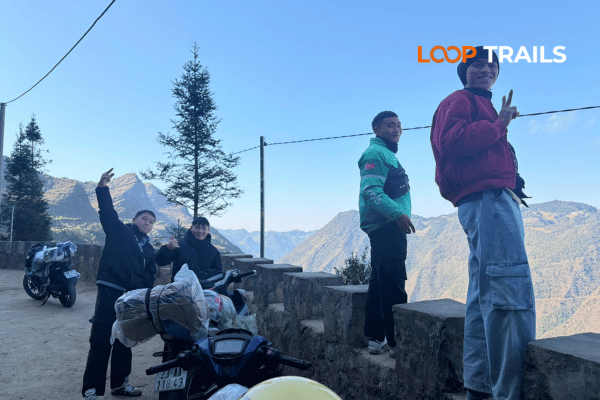
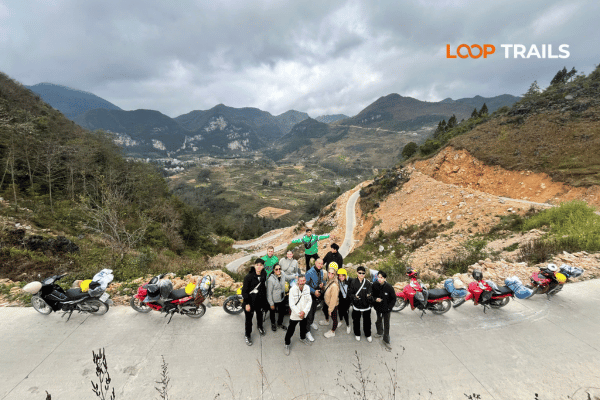
That said, Ha Giang is not technically beyond a competent beginner — especially on an Easy Rider tour where an experienced local guide leads the way on their own bike and you follow. Self-drive requires genuine competence and ideally some experience riding in Vietnam before attempting Ha Giang.

Verdict on difficulty: Hai Van Pass is beginner-accessible. Ha Giang Loop is intermediate-to-experienced rider territory, especially self-drive.

Duration & Trip Flexibility

Ha Giang Loop vs Hai Van Pass comparison guide for Vietnam motorbike travellers

This is where the practical difference becomes most obvious.

Hai Van Pass fits into any itinerary. Riding from Hue to Da Nang (or the other direction) takes the better part of a day if you’re stopping properly. You can start late, stop for a coffee at the French bunker on the summit, photograph the lagoon from above, and still arrive in time for dinner. It asks almost nothing of your schedule.

Ha Giang Loop asks for time. The minimum people attempt it in is 3 days, and those 3 days are rushed — long riding days, minimal stops, and a feeling of ticking boxes rather than experiencing a place. Four to five days is the sweet spot for most first-timers. Seven days opens up the detours: Du Gia, Lung Cu, side trails to villages, a boat trip on the Nho Que, extra nights in Dong Van.

If you’re on a tight Vietnam itinerary (2–3 weeks total), Ha Giang is a 5–7 day commitment by the time you account for getting there and back from Hanoi. Hai Van Pass costs you an afternoon.

Verdict on flexibility: Hai Van Pass wins easily. Ha Giang requires genuine schedule commitment.

Crowds, Vibe & Tourist Density

Nho Que River turquoise water from Ma Pi Leng Pass viewpoint, Ha Giang

Ha Giang has gotten more popular in the last five years — noticeably so. The Loop is no longer the secret it was. You’ll encounter other travellers at homestays, viewpoints, and in Dong Van. During peak season (October buckwheat flower season, Lunar New Year, summer school holidays), some guesthouses fill up fast.

That said, the scale of the region absorbs visitors in a way that smaller attractions can’t. On a road that’s 60km long and climbs to 1,500 metres with no towns, “crowded” doesn’t apply the same way. You’ll have the canyon viewpoints mostly to yourself if you ride early.

The local communities are genuine and largely unchanged by tourism — not in a museum-piece sense, but in the sense that life here continues at its own pace and most villages haven’t been flipped into souvenir markets yet.

Hai Van Pass is popular. Very popular. In peak season, the summit area has several small cafes, souvenir sellers, and a steady stream of Easy Rider bikes pulling in for photos. The French/American war-era bunker complex at the top functions as an attraction in its own right. It’s not unpleasant — it’s just a famous place that’s visited like a famous place.

The pass road itself offers escape from the tourist concentration, and early morning (before 8am) is a different experience to mid-afternoon.

Verdict on crowds: Ha Giang still wins for raw remoteness. Hai Van Pass can feel touristy in high season.

Cost Comparison: Budget vs Value

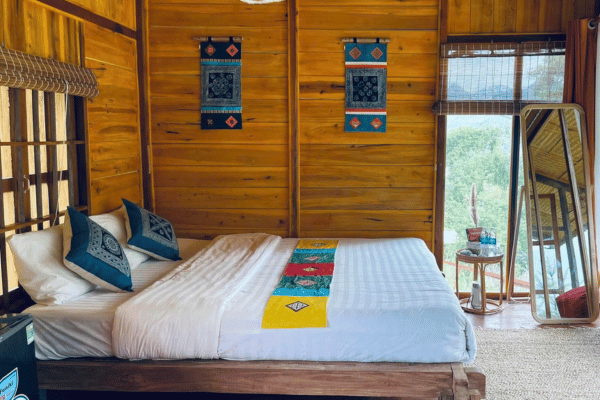
Homestay accommodation on the Ha Giang Loop motorbike route

Hai Van Pass costs whatever your motorbike rental in Hue or Da Nang costs for the day, plus fuel, food, and optional entrance to the bunker area (small fee, check locally). Budget travellers can do it comfortably for very little.

Ha Giang Loop involves more. Budget breakdown (rough guide only — check current prices):

  • Getting to Ha Giang from Hanoi: overnight bus or private transfer
  • Motorbike rental in Ha Giang (if self-driving): varies by bike type
  • Accommodation: guesthouses and homestays along the route — ranging from budget to mid-range
  • Food and petrol: modest, as most meals on the route are simple local food
  • Tour cost if going with a guide: depends heavily on format (Easy Rider, jeep, group size)

Ha Giang is not expensive by European or North American standards. But it costs more than Hai Van Pass simply because you’re spending multiple days and nights in a region instead of crossing a single mountain.

The more useful framing: Ha Giang delivers significantly more experience per dollar than almost anything else you can do in Vietnam. It’s a commitment, but it’s not a budget-breaker.

Who Should Ride Ha Giang?

Lung Cu Flag Tower, northernmost point of Vietnam, Ha Giang Province

Ha Giang is for you if:

  • You have at least 4–7 days to spare
  • You want remote — real mountain roads, minority communities, landscapes that don’t feature in mainstream Vietnam tourism
  • You’re comfortable on a motorbike (or willing to go with an experienced Easy Rider guide)
  • You want to feel like you’ve actually been somewhere, not just passed through
  • You’re interested in the culture and history of Vietnam’s border regions
  • You’re travelling solo or in a small group and want flexibility

Ha Giang is not ideal if:

  • Your Vietnam trip is tightly scheduled
  • You’ve never ridden a motorbike and don’t want to start in the mountains
  • You’re primarily interested in beaches, cities, or food scenes (though you can combine it — just needs planning)

Thinking about the Ha Giang Loop? Loop Trails runs Easy Rider tours, self-drive supported tours, and private jeep options — all with small groups and local guides who actually know every village on the route. [Check our Ha Giang Loop tours →]

Who Should Ride Hai Van Pass?

Hai Van Pass coastal road with Da Nang Bay in background, central Vietnam

 Learn more: Ha Giang Loop Weather

Hai Van Pass is for you if:

  • You’re already travelling between Hue and Da Nang (or Hoi An)
  • You want a scenic ride that fits in a day or half-day
  • You’re a motorbike beginner or someone who hasn’t ridden much
  • You want the feeling of a mountain road without a multi-day commitment
  • You want coastal scenery and the classic central Vietnam backdrop

Hai Van Pass is not ideal if:

  • You’ve already been to similar coastal-mountain passes elsewhere
  • You’re hoping for remoteness and escape from other travellers

Can You Do Both on One Vietnam Trip?

a couple in nho que river view point

Yes — and honestly, you should if you have the time.

Ha Giang and Hai Van Pass cover different geographies, different cultural contexts, and offer different types of riding experience. They don’t compete; they complement. A logical Vietnam itinerary that includes both might look something like:

  1. Arrive Hanoi → 2–3 days city exploration
  2. Ha Giang Loop → 5–7 days
  3. Return Hanoi → overnight train or bus south
  4. Hue → 2 days
  5. Hai Van Pass ride to Da Nang → 1 day
  6. Hoi An → 2–3 days
  7. Continue south or fly home

The total above is a comfortable 18–20 day trip. More time means more breathing room. Less time means prioritising — and if you can only do one, Ha Giang delivers more for your investment.

If Cao Bang is on your radar, it pairs naturally with Ha Giang as a combined northern route — the Ban Gioc Waterfall and Phia Oac National Park add another dimension to the far north. That’s the kind of trip that takes 10+ days for the north alone, but it’s extraordinary.

How to Ride the Ha Giang Loop (Your Options)

Ha Giang easy rider tour guide with passenger on Loop road Ha Giang Motorbike Rental Scams

There are three main ways to tackle the Loop, each suited to a different type of traveller.

Easy Rider (Guided Motorbike Tour)

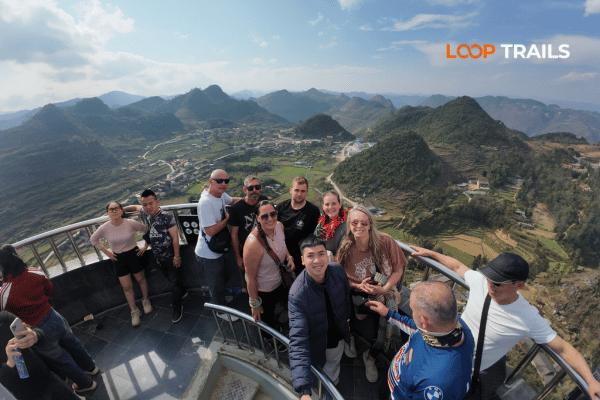
You ride on the back of an experienced local guide’s motorbike. This is not the same as being a passive passenger — good Easy Rider guides stop at viewpoints, explain what you’re seeing, translate, introduce you to local families, and navigate all the decisions for you. You’re free to experience without the mental overhead of navigation and route-finding.

Best for: First-timers, solo travellers, people who want cultural depth, those uncomfortable with self-driving mountain roads.

Self-Drive Motorbike

ha giang loop self-drive

You rent a bike in Ha Giang City and ride the Loop independently or with friends. This is the most popular format among experienced travellers — maximum freedom, go at your own pace, stop when you want.

Requires: Genuine motorbike confidence, ideally prior experience in Vietnam (city traffic is chaotic before you even get to mountain roads), offline maps or a GPS setup, and some mechanical basic knowledge (knowing how to check tyre pressure, handle a minor puncture situation).

Best for: Experienced riders, groups of friends, people who want full independence.

Jeep Tour

take photo in pho cao by jeep

Learn more: Ha Giang Jeep Tours

A private or small-group jeep tour covers the same route in an enclosed 4×4 vehicle with a local driver. You see everything, don’t need to ride, and can go in weather conditions that would make motorbike riding genuinely dangerous.

Best for: Non-riders, couples, older travellers, those travelling with limited mobility, anyone wanting a premium experience without the physical demands of riding.

Not sure which format fits your trip? Drop us a message on WhatsApp and we’ll help you figure it out in 5 minutes. No pressure, just honest advice. [Contact Loop Trails →]

How to Tackle Hai Van Pass

Hai Van Pass coastal road with Da Nang Bay in background, central Vietnam

Renting a motorbike in Hue or Da Nang is straightforward — most hostels and many dedicated rental shops offer semiautomatic bikes by the day. Fuel up before the climb, check tyre pressure, and start early if you want the best light and fewer crowds.

Riding direction matters slightly: Hue to Da Nang (northernmost to south) puts you on the ocean side of the road for most of the descent, which is the more dramatic view. Da Nang to Hue gives you the better climb and the lagoon view on the way up.

The summit area has a French-colonial military fortification and later American bunkers — worth a short wander. Several small cafes have sprung up here; the coffee-with-a-view situation is good.

Important: The Hai Van Tunnel handles most vehicle traffic, but the pass road still sees motorbikes, tourist vans, and some buses. Stay alert on the bends.

Alternative: Several Easy Rider operators in Hue run organised Hai Van Pass day trips that include stops at fishing villages, the lagoon, and the summit — useful if you don’t want to navigate independently.

Best Time to Ride Each Route

ma pi leng views point ha giang to cao bang

Ha Giang Loop

October–November: The buckwheat flower season — fields of pink and white flowers on the plateau, dramatic light, cooler temperatures. Widely considered the most photogenic period.

March–May: Spring sees the terraces green up, temperatures warm but not oppressive, and the roads drying out after winter. Good overall.

December–February: Cold at altitude — genuinely cold, frost-on-the-road cold at night, especially around Dong Van. Not impossible, but pack accordingly. Views can be exceptional on clear days.

June–August: Hot and humid in the valleys, wet season brings rain and landslide risk on mountain roads. Possible, but requires flexibility and accepting that conditions can close roads unexpectedly.

Worst period: July–August peak rainy season. Not recommended unless you’re experienced and very flexible.

Hai Van Pass

February–April: Driest and clearest for central Vietnam. Best visibility from the summit.

May–August: Hot, but often clear. Busy tourist season.

September–January: Wet season for central Vietnam — the pass is frequently shrouded in cloud (hence the name — “Ocean Cloud Pass”), and heavy rain can make the road unpleasant or briefly dangerous. The cloud mist is atmospheric, but you won’t see the views.

Safety Tips for Both Routes

stop in can ty pass

Ha Giang:

  • Don’t ride after dark, full stop. Mountain roads at night with local trucks is not a situation you want.
  • Check road conditions before setting out each day if it’s been raining. Landslides can close sections without warning.
  • Carry a basic first aid kit, a spare inner tube (if self-driving), and offline maps (Maps.me or OsmAnd work well for the Loop).
  • Don’t over-schedule. If you’re tired, slow down. There’s no timeline that’s worth an accident.
  • Hire a guide if you’re not confident. Not as a cop-out — as a practical decision that keeps you safer and gives you more.
  • Document requirements for foreigners in restricted border areas may apply in some parts of Ha Giang — rules can change, so check the latest guidance before your trip.

Hai Van Pass:

  • The road surface is generally good but wet weather makes bends slippery.
  • Watch for tour buses taking wide lines on tight corners — give them space.
  • Check your rental bike’s brakes before the descent. Not negotiable.
  • A helmet is legally required in Vietnam. Wear one that actually fits.

Both routes:

  • Vietnamese traffic law applies on all roads. Requirements around international driving licences have shifted over the years — check current regulations with your rental provider and, if needed, your country’s travel advisory service. Rules change, and “I read online it was fine” is not a legal defence.
  • Travel insurance that explicitly covers motorbike riding is essential. Many standard policies exclude it — read your policy before you leave home.

Which Is Vietnam's Best Motorbike Route? Our Verdict

Ha Giang Loop self-drive motorbike tour mountain road

We’ll be direct: Ha Giang Loop is Vietnam’s best multi-day motorbike route. On raw scale, remoteness, cultural depth, and lasting impression, nothing else in the country competes. If you have the time and the inclination, it should be on your Vietnam list.

Hai Van Pass is Vietnam’s best single-day motorbike ride. It’s short, accessible, genuinely beautiful, and slots into any itinerary. The fact that it’s become touristy doesn’t diminish the road itself.

The real answer to “which is best” is the one that fits your trip. A traveller with five days to spare and intermediate riding ability should be booking Ha Giang right now. A traveller riding south from Hue to Da Nang should not skip Hai Van Pass just because it’s well-known.

They’re different things. They’re both worth doing

Ready to Ride the Ha Giang Loop?

Ha Giang Loop jeep tour safe travel option

Loop Trails runs small-group and private tours of the Ha Giang Loop in Easy Rider, self-drive, and jeep formats. We also offer motorbike rentals for experienced riders heading out independently.

We’re a locally-run operation based in Ha Giang — we know every section of this road, every good homestay, and exactly which parts get sketchy in bad weather.

[Browse Ha Giang Loop Tours →] | [See Motorbike Rental Options →] | [Message us on WhatsApp →]

faq

tourist with waterfall in ha giang city

They’re different experiences, not direct competitors. Ha Giang Loop is a multi-day mountain wilderness circuit in the far north. Hai Van Pass is a single mountain crossing in central Vietnam. Ha Giang offers more on almost every dimension — but it requires 4–7 days. If time is your constraint, Hai Van Pass is the better fit.

It’s possible, but it deserves honest consideration. If you’re new to motorbikes or haven’t ridden much in Vietnam, the Easy Rider format (riding pillion with a local guide) is the safest and most rewarding option. Self-driving Ha Giang on your first week in Vietnam is a risk many people take — some are fine, some have accidents. The roads are challenging in wet conditions and at night.

There are permit requirements for foreigners in certain restricted zones near the Chinese border in Ha Giang Province. Requirements and enforcement have varied over time. Check the current rules with your tour operator or guesthouse — they’ll have the most accurate and up-to-date information.

The minimum is 3 days, but 4–5 is the sweet spot for most travellers. 6–7 days opens up detours like Du Giang Waterfall, the full Nho Que boat trip, and Lung Cu. Don’t rush it — the Loop rewards slow travel significantly.

Yes, for most competent beginner-to-intermediate riders. The road is sealed, the pass is relatively short, and the gradients are manageable. Wet conditions add complexity, and the descent requires functional brakes. A basic level of riding confidence is enough for most people.

Ha Giang is generally considered safe for solo female travellers. Easy Rider tours and small-group tours add an extra layer of security and community. The local communities are hospitable. Standard travel safety awareness applies — as anywhere.

October and November (buckwheat flower season) are peak for photography and scenery. March to May offers great conditions with fewer crowds. December to February is cold but clear. Avoid peak rainy season (July–August) unless you’re experienced and flexible about delays.

Yes, and it’s a fantastic pairing. The Ha Giang–Cao Bang combined route takes you from the karst plateau of the north to the Ban Gioc Waterfall area and Phia Oac National Park in Cao Bang. Plan for 8–12 days total for both provinces. Loop Trails runs combined tours covering both regions.

Driving regulations in Vietnam — including requirements around international driving permits and local licences — are subject to change and enforcement varies. Check current rules with your rental provider and consult your country’s official travel advisory. This is something you want clarity on before you rent, not after.

The main circuit roads are largely sealed and significantly improved from how they were a decade ago. Some sections, particularly secondary routes and detours, can be rough, potholed, or narrow. In wet weather, certain passes can become slippery. Overall: better than the reputation suggests, but still demanding.

Overnight buses (sleeper buses) from Hanoi to Ha Giang City are the most common option for budget travellers — journey time is approximately 6 hours. Private transfers and minivans are available for more comfort. No direct train service.

Easy Rider is best for cultural immersion and those not confident self-driving. Self-drive is best for experienced riders wanting full independence. Jeep is best for non-riders, couples, families, or anyone who wants luxury and flexibility regardless of weather. Loop Trails offers all three — contact us and we’ll recommend the right option for your group.

Contact information for Loop Trails
Website: Loop Trails Official Website

Email: looptrailshostel@gmail.com

Hotline & WhatSapp:
+84862379288
+84938988593

Social Media:
Facebook: Loop Trails Tours Ha Giang
Instagram: Loop Trails Tours Ha Giang
TikTok: Loop Trails

Office Address: 48 Nguyen Du, Ha Giang 1, Tuyen Quang
Address: 48 Nguyen Du, Ha Giang 1, Tuyen Quang

More to explorer