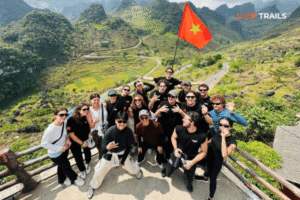


Thúy Kiều (Grace) is a travel blogger and content contributor for Loop Trails Tours Ha Giang. She holds a bachelor’s degree in Sustainable Tourism from Vietnam National University, Hanoi, and has a strong passion for exploring and promoting responsible travel experiences in Vietnam’s northern highlands.
Learn more: Ha Giang Loop Tours
Most people riding the Ha Giang Loop are focused on what’s above ground — the cliff roads, the canyon views, the plateau stretching out under dramatic skies. Fair enough. The above-ground scenery here is extraordinary enough to fill a week without ever looking down.
But under the limestone karst that defines Ha Giang Province, there’s another world entirely. And Lung Khuy Cave — tucked into the hills of Quan Ba District — is one of the most impressive and least-visited windows into it.
This is not a tourist-polished show cave with a gift shop at the exit. It’s a genuine limestone cave system with formations that took millions of years to build, sitting in a region that most Vietnam itineraries skip entirely. If you’re already riding the Ha Giang Loop, adding Lung Khuy to your route is one of the better detour decisions you’ll make.
Here’s everything you need to know.
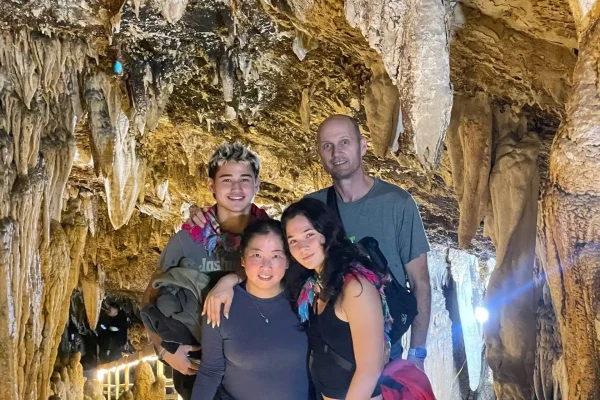
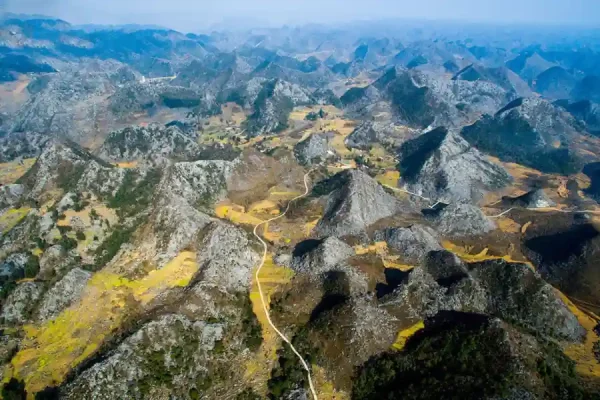
Lung Khuy Cave (Hang Lung Khuy in Vietnamese) is a natural limestone cave system located in Quan Ba District, Ha Giang Province. It sits within the Dong Van Karst Plateau UNESCO Global Geopark — the same ancient geological formation that produces the dramatic above-ground landscape that draws riders to the Ha Giang Loop.
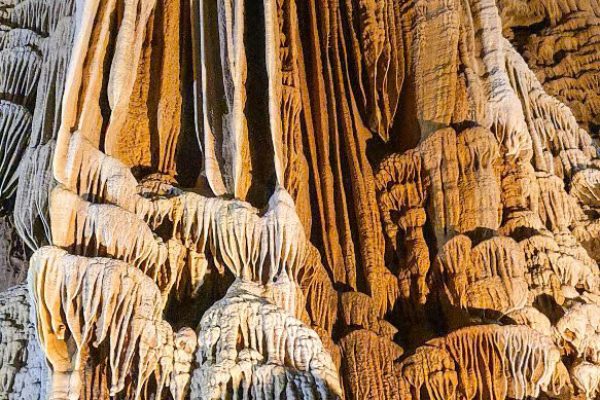
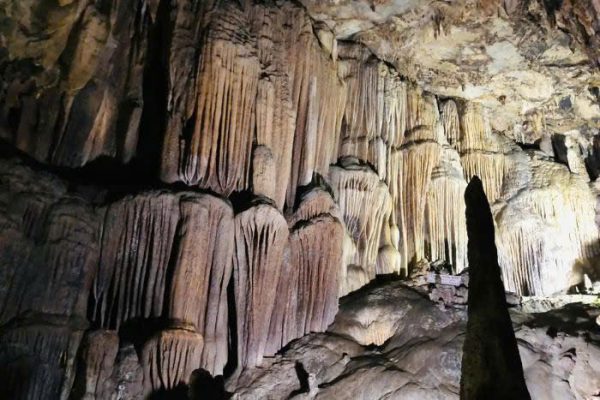
The cave is characterised by extensive stalactite and stalagmite formations — some of which have grown into extraordinary shapes over geological timescales — along with large interior chambers that give the space a cathedral-like scale. In terms of visual impact per visitor, it’s one of the more impressive caves in northern Vietnam.
What makes Lung Khuy genuinely special is its relative obscurity. Vietnam has several famous show caves — Phong Nha in the centre, Thien Cung in Halong Bay — that attract enormous visitor numbers and are managed accordingly. Lung Khuy is on a completely different scale of visitation. On most days, you’ll share it with very few other people, possibly none at all. That kind of quiet in a space this dramatic is increasingly rare.
Learn more: Ha Giang Loop route and itinerary
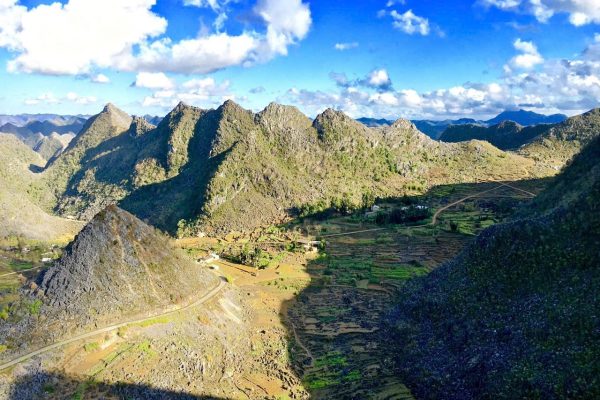
Lung Khuy Cave is in Quan Ba District, Ha Giang Province — the first major section of the Ha Giang Loop after leaving Ha Giang City heading north.
Quan Ba is best known for the Heaven’s Gate viewpoint (Cổng Trời) and the twin rounded hills of the Quan Ba Valley known as the “Fairy Breast” mountains (Núi Đôi). The cave sits in this same district, set into the hillside a short distance off the main Loop road.
The precise access point and signage can vary — as with many Ha Giang attractions, infrastructure updates happen incrementally and what’s clearly marked one year may be different the next. A local guide or up-to-date information from your guesthouse is the most reliable navigation source. If you’re riding independently, asking locally in Quan Ba town for directions to Hang Lung Khuy will get you there.
Distance from Ha Giang City: approximately 40–50km depending on the exact access road taken. It’s well within a day-trip range, or a natural stop on Day 1 of the Loop heading north.
Learn more: Ha Giang Motorbike tour
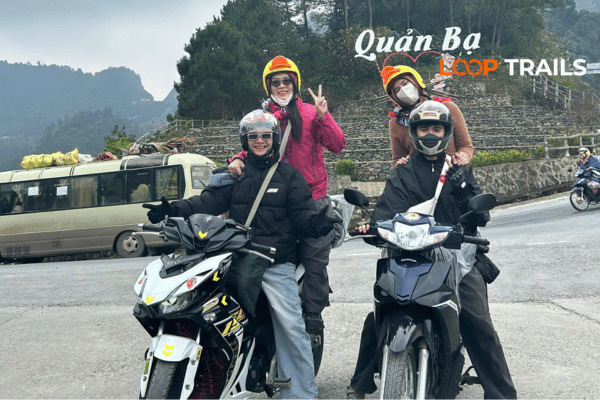
Lung Khuy Cave is most naturally accessed as part of the Ha Giang Loop. Riders heading north from Ha Giang City pass through the Quan Ba area on Day 1 of the classic route. The cave can be added as a stop before or after the Heaven’s Gate viewpoint — both are in the same general district and fit naturally into the same morning or afternoon.
Self-drive: Follow the main Loop road north toward Quan Ba. The turnoff and access road to the cave requires local knowledge or a current map — GPS apps (Maps.me or Google Maps with offline data) may or may not have the precise entry point depending on when they were last updated. Ask at your guesthouse in Ha Giang City the evening before, or at a local cafe in Quan Ba town. Vietnamese locals universally know Hang Lung Khuy and can point you right.
With a guide: Any quality Easy Rider guide running the Ha Giang Loop will know Lung Khuy Cave and can include it in the first day’s route. This is one of the clearest arguments for having a local guide for at least part of the Loop — attractions like this don’t appear on the standard tourist leaflet and are easy to miss without local knowledge.
By jeep: Lung Khuy is equally accessible by jeep — the access road is manageable for a proper 4×4 vehicle. If you’re on a private jeep tour, the cave is a natural addition to a Quan Ba stop.
Lung Khuy is close enough to Ha Giang City to visit on a day trip, particularly if you’re based in town for a longer nomad-style stay and want to explore the Loop in sections. Depart Ha Giang City in the morning, visit the cave and the Quan Ba viewpoint, and return to the city by afternoon.
Learn more: Ha Giang Road Conditions 2026
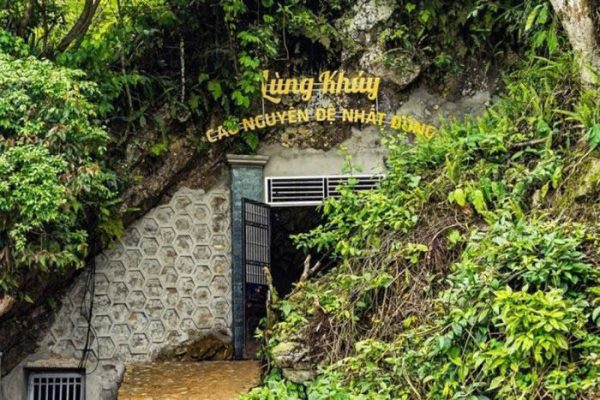
Lung Khuy Cave is entered via a path from the hillside — the approach itself involves some uphill walking, which is worth noting if you’re bringing people with limited mobility. The path is generally manageable but wear appropriate footwear.
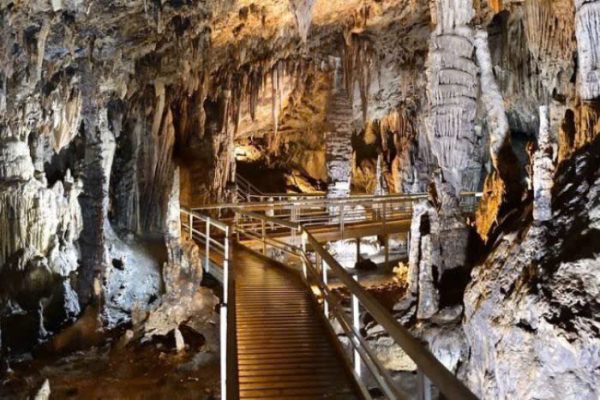
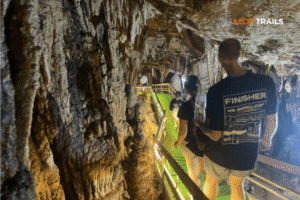
Inside the cave, you move through a sequence of chambers connected by passages. The cave is not a short walk-in, look-around, walk-out experience. It has depth to it — both physically and visually. The chambers vary in scale, from lower passages where you need to watch your head to larger open areas where the ceiling disappears into darkness above you.
What you’ll encounter:
The cave is lit — lighting has been installed to allow visitor access — but the mood is atmospheric rather than brightly illuminated. Bring a torch (flashlight) regardless, both to supplement lighting in deeper sections and to see formations from angles the fixed lights don’t cover.
Time inside: Expect to spend anywhere from 45 minutes to 2 hours depending on your pace and interest level. Photographers will want longer. Groups that are genuinely engaged with what they’re seeing tend to linger.
Learn more: Ha Giang Loop 4 Days 3 Nights
The geological story of Lung Khuy Cave is the story of the Dong Van Karst Plateau as a whole. The limestone here is ancient — some of the oldest exposed rock in Vietnam, formed in shallow tropical seas hundreds of millions of years ago. Over time, slightly acidic groundwater percolated through fractures in the limestone, dissolving it and carving out the cave system.
The formations that fill the cave today are the result of the opposite process — mineral-rich water dripping and depositing calcium carbonate slowly, grain by grain, over geological spans of time. A stalactite the length of your arm might represent a hundred thousand years of deposition.
What sets Lung Khuy apart visually from many caves in Vietnam is the density and variety of its formations. Several chambers have formations covering almost every surface — ceiling, walls, floor — creating an environment that feels genuinely alien, like a different planet compressed underground.
The cave also benefits from its relative youth as a visitor attraction. In heavily visited caves, formations inevitably suffer from accidental contact, flash photography bleaching, and atmospheric changes from thousands of breath-sighing tourists. Lung Khuy’s lower visitor numbers have kept it in better condition than its more famous counterparts.
Learn more: Ha Giang Loop for Beginners
Note: Specific entry fees, opening hours, and permit requirements for Lung Khuy Cave should be verified locally before your visit — these can change and published figures online are not always current. Your guesthouse in Ha Giang City or a local tour operator will have the most up-to-date information.
What to expect practically:
Learn more: Ha Giang in September & October
Lung Khuy Cave is accessible year-round, and the interior temperature is naturally cool and consistent regardless of outside weather — one of the genuine advantages of a cave visit in a mountain region.
That said, the approach matters:
Time of day: Earlier in the morning is better for two reasons. First, you’re more likely to have the cave to yourself before any group tours arrive. Second, if you’re combining the cave visit with the Quan Ba viewpoint (which you should — they’re in the same area), morning light is better for the above-ground photography.
Learn more: What to wear on Ha Giang Loop
The cave environment calls for specific preparation — different from what you’d pack for a road riding day.
Essential:
Good to have:
Leave behind:
Learn more: Quan Ba Heaven Gate
Lung Khuy Cave is not a standalone destination — it works best as part of a Ha Giang Loop itinerary, and the Quan Ba District provides a natural cluster of worthwhile stops.
A logical Quan Ba Day itinerary (Day 1 of the Loop):
This itinerary is achievable comfortably if you depart Ha Giang City by 8–9am. It’s not rushed, it covers the main Quan Ba highlights, and it positions you for a good second day heading toward Dong Van and Ma Pi Leng Pass.
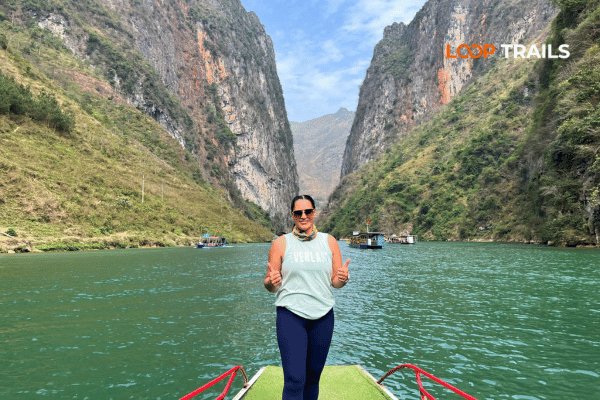
If you’re on a tighter schedule — say, 3 days total for the Loop — the cave visit competes with time at other key stops. In that case, be honest about priorities. Ma Pi Leng Pass and the Nho Que River canyon are non-negotiable; Lung Khuy is a bonus that rewards a slower pace.
Planning to ride the Ha Giang Loop? Loop Trails runs Easy Rider tours, private jeep tours, and supported self-drive options — all with guides who know every stop on the route, including the ones that don’t make the tourist pamphlets. [See our Ha Giang Loop tours →]
Learn more: Tu San Canyon & Nho Que River Boat Trip
To help you prioritise, here’s where Lung Khuy sits relative to other Ha Giang highlights:
| Attraction | Type | Must-Do? | When to Add Lung Khuy |
|---|---|---|---|
| Ma Pi Leng Pass | Road/viewpoint | Absolutely | Always — different category |
| Heaven’s Gate (Quan Ba) | Viewpoint | Yes | Same day as Lung Khuy |
| Dong Van Old Quarter | Town/culture | Yes | Different day, same loop |
| Meo Vac Sunday Market | Culture/market | Highly recommended | Different day, same loop |
| Nho Que River boat trip | Boat/nature | Highly recommended | Different day (Meo Vac area) |
| Lung Cu Flag Tower | Landmark | Yes (for northern tip) | Different day |
| Du Gia Waterfall | Nature/hiking | Recommended | Southern loop section |
| Lung Khuy Cave | Cave/geology | Strongly recommended | Quan Ba day (Day 1) |
Lung Khuy Cave doesn’t compete with Ma Pi Leng or the Loop’s main road experience — it’s a complementary layer that adds underground depth to a trip built around above-ground drama.
Learn more: Ma Pi Leng Pass
While you’re in the Quan Ba area, several other sights cluster naturally with a Lung Khuy visit:
The classic panoramic overlook above the Quan Ba Valley — looking north into the mountains as the road descends from the gate gives one of the first “the scale of this is actually insane” moments on the Loop. Most riders stop here. Make time for it.
The twin rounded hills rising from the valley floor — their unusual shape (hence the name) is best viewed from the valley itself. A short walk off the main road gets you the full visual.
A local weekly market in Quan Ba town that draws ethnic minority vendors from the surrounding area. If your timing aligns with market day, it’s worth the stop.
The broader UNESCO Geopark designation covers the whole region you’re moving through. The limestone landscape that created Lung Khuy Cave is the same landscape you’re riding across — understanding one helps contextualise the other.

Learn more: Ha Giang Jeep Tours
Lung Khuy Cave is accessible on any standard Ha Giang Loop format, but the experience varies meaningfully by how you’re travelling.
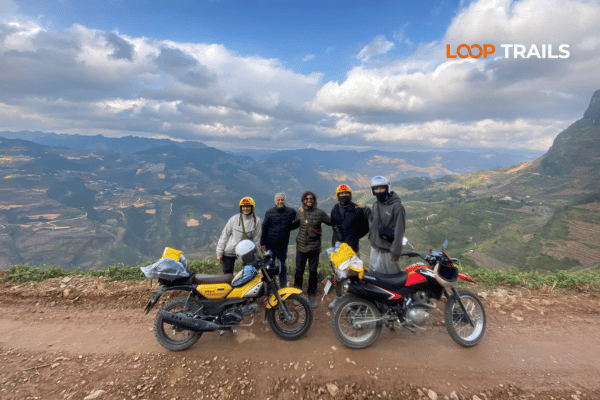
The most likely format to include Lung Khuy as a natural stop. A good Easy Rider guide will suggest the cave as part of the Quan Ba day — they know the site, the access point, and often have a relationship with the local guide at the cave. You won’t need to find it yourself; it’ll be part of the day.
Best for: Anyone who wants the cave visit handled without logistical stress, or who wants cultural context and storytelling added to what they’re seeing.
Completely doable — but requires knowing where to turn off and having current local directions. Do your research the night before in Ha Giang City. Ask your guesthouse, look at offline maps, and write down the Vietnamese name (Hang Lung Khuy) to show locals if you need help finding the access point.
Best for: Experienced, independent riders who are comfortable navigating off the main route and asking for directions in Vietnamese or by gesture.
An excellent format for Lung Khuy — the jeep handles the access road easily, the private guide manages all logistics, and you have the flexibility to spend as long as you want in the cave without a group schedule. Premium jeep tours with good operators will include the cave if it’s on your interests list.
Best for: Non-riders, couples, groups wanting maximum comfort and flexibility.
Not sure which Loop format works for your group? Send us a message — we’ll give you a straight recommendation based on your experience level and timeline. No obligation. [Contact Loop Trails on WhatsApp →]
Learn more: Ha Giang Loop Photography
Lung Khuy Cave rewards patience and a little technical preparation. The environment is challenging — low light, high contrast between lit formations and dark backgrounds — but the results are worth the effort.
Practical tips:
A note on ethics: Don’t touch formations for positioning or balance. Decades of skin oil from touching has permanently stained and damaged formations in caves worldwide. Look, don’t touch.
Learn more: Ha Giang Cao Bang 5 Days
Lorem ipsum dolor sit amet, consectetur adipiscing elit. Ut elit tellus, luctus nec ullamcorper mattis, pulvinar dapibus leo.
A few details about Lung Khuy Cave that tend to fall through the cracks of standard visitor information:
The approach itself has scenery. The path to the cave entrance passes through forest on the hillside — worth slowing down for rather than treating as mere transit. The vegetation in this part of Quan Ba is distinct from the more open limestone plateau further north.
The cave has more depth than the first chamber suggests. First-time visitors sometimes turn around after the main entrance area, assuming they’ve seen the highlight. Go deeper. The interior chambers are more extensive than the entrance section implies.
Ask your guide about the geology, not just the shapes. Every stalactite formation has a story about water movement, mineral content, and time. A guide who knows the cave will explain what you’re actually looking at, not just point at formations and name them “elephant” or “lotus.” The geological context makes the visual experience significantly richer.
Visit on a weekday if possible. Weekends during peak season (October, November, holiday periods) occasionally bring small group tours from Ha Giang City. The cave is better with fewer people in it — a quiet weekday morning is the ideal.
Combine it with time in Quan Ba town. Most Loop riders pass through Quan Ba quickly on the way north. The town itself is worth a brief stop — a coffee, a walk around the market area — to get a feel for a working Ha Giang valley town before the landscape becomes wilder past Yen Minh.
Learn more: Ha Giang Motorbike tour
Yes. Unambiguously.
Lung Khuy Cave doesn’t compete with Ma Pi Leng for the title of Ha Giang’s defining experience — the above-ground road scenery of this region is in a category of its own. But it adds a dimension to a Ha Giang trip that nothing else on the Loop provides: a direct encounter with the geological processes that created the landscape you’ve been riding through.
Standing inside a cave chamber filled with million-year formations, in a region most international tourists haven’t visited, with few other people around — that’s a genuinely uncommon travel experience. Ha Giang rewards those who go beyond the highlight reel. Lung Khuy Cave is one of the better examples of that reward.
Build it into your Day 1 Quan Ba itinerary. You won’t regret the time.
Loop Trails runs locally-operated Ha Giang Loop tours that cover the full region — including the stops that most standard tours skip. Easy Rider, private jeep, and self-drive supported formats available. Small groups, experienced guides, flexible itineraries.
[Browse Ha Giang Loop Tours →] | [See Motorbike Rental Options →] | [Chat with us on WhatsApp →]
Learn more: Ha Giang Loop with Kids
Lung Khuy Cave (Hang Lung Khuy) is in Quan Ba District, Ha Giang Province, northern Vietnam. It’s approximately 40–50km north of Ha Giang City along the Ha Giang Loop route, making it a natural stop on Day 1 of the classic Loop itinerary.
Most visitors reach Lung Khuy Cave as part of the Ha Giang Loop — either by motorbike (self-drive or Easy Rider guided) or by jeep. The cave sits a short distance off the main Loop road in the Quan Ba area. The access point requires local directions — ask your guesthouse in Ha Giang City the night before, or check with a local guide. GPS apps may not have the precise turnoff updated.
Allow 1.5 to 2 hours minimum for a proper visit — including the walk up to the cave entrance and time inside to explore the chambers at a comfortable pace. Photographers and geology enthusiasts will want longer. If you’re combining it with the Heaven’s Gate viewpoint and the Quan Ba valley stop, plan a full morning for the area.
The cave requires some uphill walking to reach the entrance — the path is manageable but not trivial. Proper footwear (closed-toe, gripped soles) is essential. The interior cave path has uneven sections and can be slippery in places. People in reasonable health without mobility restrictions should find it accessible. Those with significant mobility limitations should check conditions locally before committing.
Closed-toe shoes with grip, a head torch or handheld flashlight, a light jacket (the cave interior is cool year-round), a water bottle, and a camera if photography matters to you. A small daypack for the approach walk is useful. Don’t wear sandals or open-toe footwear.
Yes, an entrance fee applies. The exact amount should be confirmed locally before your visit — fees in Ha Giang can change, and published figures online are not always current. Your guesthouse in Ha Giang City or your tour guide will have the current rate.
Visiting with a local guide or the site’s own staff escort is strongly recommended — both for navigation inside the cave and for safety in the deeper sections. If you arrive independently, there is typically a local caretaker at the site who can guide you through. Easy Rider and jeep tour guides will handle this as part of their service.
The cave itself is accessible year-round — interior conditions are stable regardless of outside weather. The best time to visit in terms of overall trip conditions is October to April (dry season), when the access road and path to the cave entrance are in better condition. Wet season visits are possible but the approach can be muddy and slippery.
Yes — Lung Khuy is about 40–50km from Ha Giang City and can be combined with the Quan Ba viewpoint for a full day trip. Depart in the morning, visit Heaven’s Gate and Lung Khuy Cave, and return to the city in the afternoon. This is a good option for nomads or longer-stay visitors who want to explore the Loop in sections.
Lung Khuy is a genuinely impressive cave with extensive stalactite and stalagmite formations, but it’s not on the same scale as Phong Nha (Son Doong, Phong Nha Cave) in central Vietnam. What it offers that major Vietnamese caves don’t is low crowds and a raw, relatively unmanicured experience. For visitors in Ha Giang, it’s one of the best cave experiences in the north.
It’s close to the standard Loop route but not always included on packaged group tours, which is partly what makes it a hidden gem. Quality local guides and operators who know the region well will include it. If you’re self-driving, you’ll need to make the detour intentionally — it won’t happen automatically just by following the main road.
The cave sits in Quan Ba District, which also includes Heaven’s Gate viewpoint (Cổng Trời), the Fairy Breast Mountains (Núi Đôi), and Quan Ba town market. All are in the same general area and can be combined into a single day. Further north on the Loop, the route continues to Yen Minh, Dong Van Old Quarter, Ma Pi Leng Pass, and Meo Vac.
Contact information for Loop Trails
Website: Loop Trails Official Website
Email: looptrailshostel@gmail.com
Hotline & WhatSapp:
+84862379288
+84938988593
Social Media:
Facebook: Loop Trails Tours Ha Giang
Instagram: Loop Trails Tours Ha Giang
TikTok: Loop Trails
Office Address: 48 Nguyen Du, Ha Giang 1, Tuyen Quang
Address: 48 Nguyen Du, Ha Giang 1, Tuyen Quang
Facebook X Reddit Table of Contents Learn more: Ha Giang Loop Tours Most people drive past the Quan Ba area twice on

Facebook X Reddit Table of Contents Learn more: Ha Giang Loop Tours The Ha Giang Loop has a reputation problem with older